• AFL-CIO: The fights for climate justice and racial justice are intertwined

    Original article by Blake Skylar [good name] republished from People’s World under http://creativecommons.org/licenses/by-nc-nd/3.0/us/.

    Fred Redmond and Liz Shuler. Jay Mallin/iatse.net

    WASHINGTON – Global warming, in itself, affects everyone but in a world where discrimination along lines of race and class is rampant, it falls hardest on those who are most oppressed, the poor, working-class, and non-white people here at home and around the world. Rather than solve the problem, fossil fuel interests would sooner put blinders on the eyes of those who bear the brunt of global warming’s effects and on everyone else.

    On Earth Day, Apr. 22, and in the days since then, the AFL-CIO is reminding the world that on the contrary, the eyes of the working class, the poor, and minorities are wide open, and they are fighting back.

    “Thinking about movements coming together in the same room today made me think of Dr. King and what he said,” remarked AFL-CIO Secretary-Treasurer Fred Redmond, the highest-ranking African-American leader in the labor movement. “During his days, a term like environmental justice didn’t really exist, but he understood how interconnected these challenges were. Structural racism, economic injustice, and underinvestment in Black and brown communities. He told us in 1967 that the cities were gasping in polluted air and enduring contaminated water. What’s equally important is that he knew the solution, how important it was to stand together in solidarity. Organized labor can be one of the most powerful interests to do away with this evil that confronts our nation that we refer to as discrimination.

    “The same forces that are against [equality] are also anti-labor. We are evolving, and so many of our 60 affiliated unions are prioritizing issues that we never would have imagined years ago. Yet even as we take on as a labor movement these new issues, we are still guided by the old values that helped define the labor and civil rights movements for years.

    “Just a few generations ago, this movement lifted families into the middle class, especially many black workers who had migrated from down south. It provided those newly migrated Black Southerners access to well-paying jobs and upward mobility in our economy.”

    “There is a long history of important collaboration between labor and the fight for racial justice,” said Professor Carlton Waterhouse, Director of Environmental and Climate Justice at Howard University School of Law. “When I was a student and first started fighting for the rights of people in need, I was involved in the anti-apartheid efforts at Penn State University. And when we were out on the campus having built a shanty-town, there were labor representatives from local unions who came out to spend time with us, and in doing that, they planted important seeds; the idea that the fight for people is not just one fight, it’s many fights.

    Fighting on multiple levels

    “And the fight for people means fighting on multiple levels with multiple partners. If we’re going to see success in fighting the climate crisis, it’s only gonna happen if we’re able to see our shared need for collaboration when it’s not always so obvious. Like when labor representatives come to work with students fighting for anti-apartheid. If we’re going to be successful in the fights for racial justice and climate equity, we’re going to have to invest in one another.”

    Patrice Willoughby, the Senior Vice President of Global Policy and Impact with the NAACP, highlighted a tool that can be added to the collective arsenal in this battle against global warming. Called the Justice40 Initiative, it’s a move by the Biden administration that aims to ensure that 40 percent of the benefits derived from clean energy and affordable, sustainable housing goes to the most disadvantaged communities. Specifically, this refers to communities that have endured the lion’s share of disinvestment and pollution.

    “These investments are catalytically important now,” said Willoughby. “You cannot save the planet unless you uplift the needs of the people.” She added that there are also mechanisms that have to be built to ensure that the initiative is being applied fairly and constructively. “We need to actually have an accounting because many times when these funds go into states it’s up to those states to determine how those funds are used.

    “It’s also a matter of equipping the communities, so we’re spending a lot of time with activists and community-based organizations. Many times people read about these things and don’t know how it can affect them, so we’re spending a lot of time in a critically important year in states whose legislatures are voting in ways that are not favorable to the people most affected by greenhouse gas and climate change. So it’s important to link the issues to the power of the ballot and the fact that people have the ability to make change on their own behalf.”

    The vulnerability of people in marginalized communities to the havoc of the climate crisis is a situation that the AFL-CIO’s Fred Redmond knows well. “It’s my family’s story,” he said. “They grew up in the Mississippi delta and made that great migration in the 50s and landed in Chicago. It was tough. They worked hard and worked long hours to support their families. We were poor, but that changed when my father got a good job at an aluminum mill in Chicago, with good wages and health care, and had a chance to retire with dignity and respect. Most importantly, he had a voice on the job.

    “But even then, union jobs had a legacy of discrimination and bias. Blacks had the hardest jobs and had very few opportunities for advancement. My dad was on the union grievance committee and protested job discrimination and disparate treatment and was committed to making the union more inclusive. When I took a job at the mill after high school he challenged me to have that same commitment.

    “That’s my story, and that’s the story of the creation of the Black middle class and the power of holding a union card. Now equity and opportunity are baked into unions, so we recognize the need to connect those values and align our work with our partners in environmental activism. It’s the only way we’ll be able to deliver justice for our communities, and the only way we can move with the speed and urgency that we need in this climate crisis.”

    “That’s the unique thing about this,” AFL-CIO President Liz Shuler agreed. “It’s the urgency of the crisis. Many of you know I grew up in Portland, Oregon. When I was a kid in the summer the temperatures were around the 70s and 80s, nobody had air conditioning. Maybe we’d get into the 90s once in a while, but that was a rare day. Fast forward to today, and things have changed. Now it’s not unusual to have temperatures in the 100s for weeks at a time.

    “In 2021, one of the most heartbreaking stories I remember was about Sebastian Francisco Perez, a worker from Guatemala who came to the U.S. to support his family. Just months later on a farm in St. Paul, Oregon, the temperature hit 115 degrees. He kept going because that’s what the bosses demanded. His coworkers found him unconscious that afternoon and he died one day after his 38th birthday.

    “That story gutted me. These stories are often spun as ‘this is the effect of climate, climate is to blame.’ Yes, but the climate isn’t a person. Greedy corporations are also to blame when they make you work in 115-degree heat without water breaks or shade so they can make even more profit. We are the ones out there building factories and schools when it’s 110 degrees. We are the responders who show up after a hurricane or a flood destroys a community. We’re the ones getting sick on the job, choking on polluted air and toxic water.

    “The flip side of that coin is that we as workers, unions, and environmental and civil rights leaders, can bring about the change we are hungry for. We have a historic opportunity with the federal investments of the Biden administration to use clean energy to transform the economy and create good safe union jobs, but we have to get it right. And we won’t buy into this false choice that companies and right-wing politicians give us. It’s not an ‘either-or’. It’s climate and workers, economy and environment, jobs and justice.”

    Original article by Blake Skylar [good name] republished from People’s World under http://creativecommons.org/licenses/by-nc-nd/3.0/us/.

  • UK professor condemns own university over collaboration with oil giant

    Original article by Ben Webster republished from Open Democracy under a Creative Commons Attribution-NonCommercial 4.0 International licence.

    Fawley oil refinery in Southampton

    Southampton University slammed after openDemocracy uncovered its involvement in Exxon’s ‘greenwashing’ project

    A senior professor has accused his own university of betraying its values by working with ExxonMobil on a project that has been condemned as greenwash.

    Ian Williams, professor in applied environmental science at the University of Southampton, made the allegations after openDemocracy revealed that Exxon had made misleading claims about capturing carbon at the UK’s biggest oil refinery at Fawley in Hampshire.

    We reported last month that Paul Greenwood, Exxon’s UK lead, had admitted that the oil giant would need a “magic wand” to deliver the project, which has no funding and no licence to store carbon.

    Exxon refers prominently to its collaboration with the University of Southampton in publications about the scheme.

    Williams suggested the university had been “fooled” into joining forces with the oil giant to launch the ‘Solent Cluster’, an industrial decarbonisation scheme focused on CCS.

    Lindsay-Marie Armstrong, the academic cluster lead at the University of Southampton, has joined senior Exxon executives at several events to promote the scheme, including a reception at the House of Commons in February.

    Williams hit out at the partnership during a lecture entitled “Working with the enemy: Why universities should not work with ‘Big Oil’” on 24 April, as part of the University of Southampton’s annual Green Week.

    He said Exxon had a long history of undermining climate science and funding groups that promoted climate scepticism, asking: “Why does the University of Southampton work with companies that operate against our values and deny our research data?”

    Williams pointed out the university’s collaboration with Exxon is at odds with two of its stated core values: its commitment to “embed environmental sustainability in everything we do” and its pledge to work with partners to “improve the environment”.

    He added that his decision to speak out means he is “not very popular in some quarters of the university” and might be branded a “rogue academic”.

    But Southampton University’s decision to partner with Exxon has also been criticised by many who study there. Heidi Wheatley, a second-year environmental science student, told openDemocracy that “the university’s relationship with the fossil fuel industry undermines my whole reasoning for studying this subject at this institution”.

    Wheatley added: “Students are already calling for the university to re-evaluate its relationship with the industry through its research activities and are petitioning the university to withdraw its multimillion-pound investments in fossil fuel companies. I implore the university to listen to its students and live up to its own strategic commitments to sustainability.”

    Williams quoted from openDemocracy’s investigation during his Green Week lecture, including our revelation that Exxon had so far refused to commit its own money to build the CCS plant and had instead focused investment on increasing diesel production at the refinery, spending £800m to produce an extra six million litres a day.

    He also quoted Doug Parr, chief scientist for Greenpeace UK, who told openDemocracy that Exxon’s CCS scheme “stands out as greenwashing”.

    openDemocracy revealed in November that fossil companies had ploughed more than £147m into British universities in seven years.

    Williams said: “Universities must be robust and healthy enough to resist commercial lobbying and greenwash. We must not be fooled again.”

    Urging Southampton University to extend its ban on working with tobacco companies to fossil fuel firms, he added: “Universities should say no to collaboration with fossil fuel companies, no to funding from or with fossil fuel companies, no to green washing, no to climate washing.”

    He also recommended the university commit to “not work[ing] on any form of greenwash project”, including “CCS” and “blue hydrogen” – a product made from natural gas, where most of the carbon dioxide from the gas is captured and stored. Blue hydrogen has come under fire from scientists, who have branded it a distraction from proven low-carbon alternatives to fossil fuels based on renewable energy.

    Williams also called on Southampton University to sign up to the People and Planet Fossil Free Campaign, which demands universities stop investing in and accepting funds from fossil fuel companies.

    A University of Southampton spokesperson did not respond to any of Williams’ recommendations when contacted by openDemocracy.

    Instead, they said: “Decarbonisation necessitates engagement with the sector that produces carbon and universities have a vital role to play in applying knowledge and expertise to address real areas of environmental concern.

    “This is what the Solent Cluster was set up and receives government funding for, with our role here to work alongside 120 organisations and businesses, including nine local governments and three other universities.

    “We uphold our value to embed environmental sustainability in everything that we do and require that all outputs from research undertaken with energy companies – and industry more widely – can be published, following our stated policies for responsible and open research.”

    An Exxon spokesperson said the company would give further detail on the CCS project “in due course”.

    Another recent openDemocracy investigation found that more than £281m of anonymous donations had poured into so-called Russell Group universities, including Southampton, since 2017. This prompted more than 120 academics, politicians and campaigners to sign an open letter calling for transparency over university funding in the UK.

    The universities’ secrecy over donations means any potential conflicts of interest and commercial influences, including those related to fossil fuel production, remain hidden.

    Some universities routinely invite fossil fuel companies to attend private meetings after donating millions of pounds.

    Original article by Ben Webster republished from Open Democracy under a Creative Commons Attribution-NonCommercial 4.0 International licence.

  • People with depression or anxiety could lose access to benefits in Tory welfare reforms

    https://morningstaronline.co.uk/article/people-depression-or-anxiety-could-lose-access-benefits-tory-welfare-re

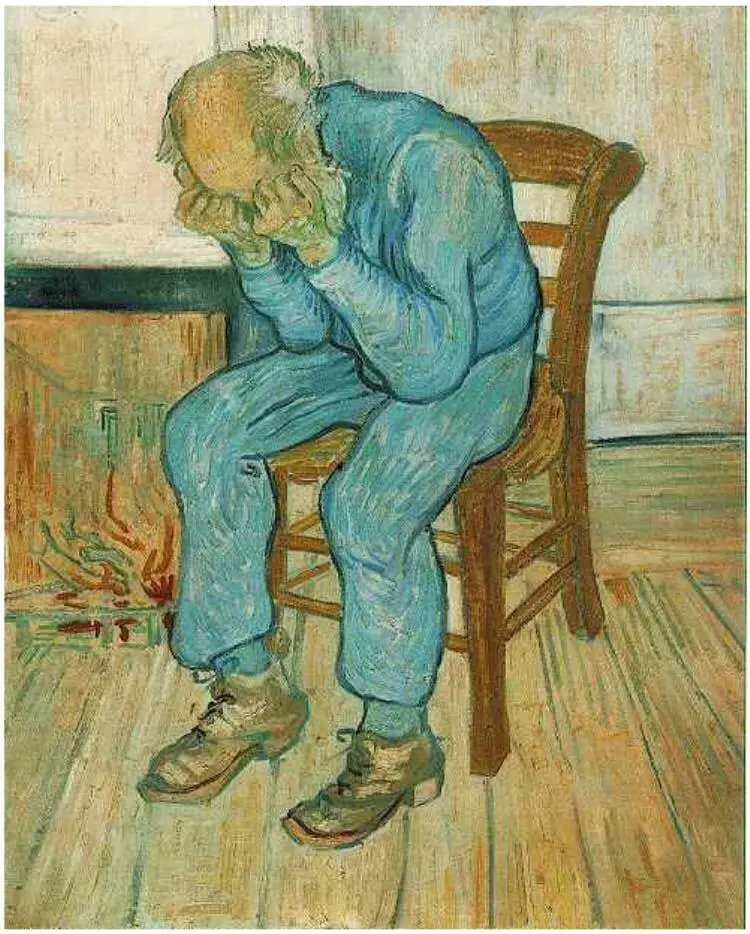
    At eternity's gate by Vincent Van Gogh portreys depression. Copyright expired.
    At eternity’s gate by Vincent Van Gogh portreys depression. Copyright expired.

    PEOPLE suffering from depression or anxiety could lose access to sickness benefits as part of the government’s major welfare reforms, the Work and Pensions Secretary said today.

    Mel Stride announced plans to overhaul disability benefits in a statement to the Commons, with proposals aimed at providing “more tailored support in line with their needs.”

    In a green paper published alongside Mr Stride’s statement, ministers set out plans to reform personal independence payments (PIP), the main disability benefit, through changes to eligibility criteria and assessments.

    The proposals follow Prime Minister Rishi Sunak’s announcement of major changes to the welfare system earlier this month, saying that “people with less severe mental health conditions should be expected to engage with the world of work.”

    Tom Marsland, policy manager at the national disability charity Sense, said recent government narrative around disability benefits has been “divisive and deeply damaging.”

    …

    https://morningstaronline.co.uk/article/people-depression-or-anxiety-could-lose-access-benefits-tory-welfare-re

  • Taxing big fossil fuel firms ‘could raise $900bn in climate finance by 2030’

    https://www.theguardian.com/environment/2024/apr/29/taxing-big-fossil-fuel-firms-raise-billions-climate-finance

    Grangemouth oil refinery in Scotland. The report authors say the proposed levy could be easily administered within existing tax systems. Photograph: Murdo Macleod/The Guardian

    A new tax on fossil fuel companies based in the world’s richest countries could raise hundreds of billions of dollars to help the most vulnerable nations cope with the escalating climate crisis, according to a report.

    The Climate Damages Tax report, published on Monday, calculates that an additional tax on fossil fuel majors based in the wealthiest Organisation for Economic Co-operation and Development (OECD) countries could raise $720bn (£580bn) by the end of the decade.

    The authors say a new extraction levy could boost the loss and damage fund to help vulnerable countries cope with the worst effects of climate breakdown that was agreed at the Cop28 summit in Dubai – a hard-won victory by developing countries that they hope will signal a commitment by developed, polluting nations to provide financial support for some of the destruction already under way.

    David Hillman, the director of the Stamp Out Poverty campaign and co-author of the report, said it “demonstrates that the richest, most economically powerful countries, with the greatest historical responsibility for climate change, need look no further than their fossil fuel industries to collect tens of billions a year in extra income by taxing them far more rigorously. This is surely the fairest way to boost revenues for the loss and damage fund to ensure that it is sufficiently financed as to be fit for purpose.”

    …

    https://www.theguardian.com/environment/2024/apr/29/taxing-big-fossil-fuel-firms-raise-billions-climate-finance

  • US Reportedly Working to Stop ICC From Issuing Arrest Warrant for Netanyahu

    Original article by JAKE JOHNSON republished from Common Dreams under Creative Commons (CC BY-NC-ND 3.0).

    “There is absolutely no reason for Biden to be involved in this,” said one analyst. “But once again, Biden steps in to protect Netanyahu from the consequences of the war crimes he commits.”

    Israeli Prime Minister Benjamin Netanyahu is reportedly growing increasingly concerned that the International Criminal Court is preparing to issue arrest warrants for him and other top government officials for committing war crimes in the Gaza Strip.

    The Times of Israel reported Sunday that the Israeli government, in partnership with the U.S., is “making a concerted effort to head off” possible arrest warrants from the ICC, which first launched its war crimes investigation in the occupied Palestinian territories in 2021.

    Israel does not recognize the ICC’s jurisdiction and has refused to cooperate with the probe. The ICC says it has jurisdiction over Gaza, the West Bank, and East Jerusalem.

    Citing an unnamed Israeli government source, The Times of Israel reported that “a major focus of the ICC allegations will be that Israel ‘deliberately starved Palestinians in Gaza.’” Other officials who could face arrest warrants are Defense Minister Yoav Gallant and Israel Defense Forces (IDF) Chief of Staff Herzi Halevi.

    The Times of Israel‘s reporting came shortly after Israeli journalist Ben Caspit wrote that Netanyahu is “under unusual stress” over the possibility of arrest warrants and is leading a “nonstop push over the telephone” to forestall ICC action.

    Like Israel, the U.S. is not a party to the Rome Statute, which established the ICC in 2002. The legal body is tasked with investigating individuals, not governments.

    The U.S., Israel’s leading arms supplier, has opposed the ICC’s Palestine investigation from the start, with Secretary of State Antony Blinken saying in a 2021 statement that the court “has no jurisdiction over this matter” because “Israel is not a party to the ICC.”

    But the Biden administration vocally supported the ICC’s decision to issue an arrest warrant for Russian President Vladimir Putin over war crimes committed in Ukraine, even though neither Russia nor Ukraine are parties to the Rome Statute.

    https://twitter.com/BCFinucane/status/1784383907095326892?ref_src=twsrc%5Etfw%7Ctwcamp%5Etweetembed%7Ctwterm%5E1784383907095326892%7Ctwgr%5E4f93e3d06be3cc05ed63dd54337a632557eb7c24%7Ctwcon%5Es1_c10&ref_url=https%3A%2F%2Fwww.commondreams.org%2Fnews%2Fnetanyahu-arrest-warrants

    The Israeli government has been accused of committing numerous war crimes in Gaza since the October 7 Hamas-led attack, including genocide, ethnic cleansing, and using starvation as a weapon of war. Late last year, the human rights group Democracy for the Arab World Now submitted to the ICC the names of dozens of Israeli military commanders who are believed to have been directly involved in violations of international law.

    Reports of potentially imminent ICC action have sparked alarm among conservatives in the United States.

    U.S. House Speaker Mike Johnson (R-La.) wrote on social media Friday that the court should “should stand down on this immediately.”

    In an editorial published that same day, The Wall Street Journal suggested the U.S. and United Kingdom could “risk finding Americans and Britons under the gun” next if they don’t warn ICC Prosecutor Karim Khan against issuing arrest warrants for Israeli officials. Human rights organizations and legal experts have said Biden and other U.S. officials could be held liable under international law if they continue supporting Israel’s war on Gaza.

    “Mr. Khan’s candidacy was championed by his native Britain and supported by the U.S.,” continues the Journal editorial, “so both countries may have influence if they warn Mr. Khan of what will happen if he proceeds.”

    The Times of Israel noted Sunday that according to reports in several Israeli media outlets, the U.S. is “part of a last-ditch diplomatic effort to prevent the International Criminal Court from issuing arrest warrants against Prime Minister Benjamin Netanyahu and other Israeli officials.”

    Trita Parsi, executive vice president of the Quincy Institute for Responsible Statecraft, argued Sunday that “there is absolutely no reason for Biden to be involved in this.”

    “But once again,” Parsi added, “Biden steps in to protect Netanyahu from the consequences of the war crimes he commits, which Biden claims he privately is frustrated about.”

    Original artticle by JAKE JOHNSON republished from Common Dreams under Creative Commons (CC BY-NC-ND 3.0).

    Leaked State Department Memo: Israeli Assurances ‘Neither Credible Nor Reliable’

    Disgust Greets White House Correspondents’ Dinner as Israel Kills Journalists in Gaza

    Columbia Climate School Alumni Slam ‘Violent Repression’ of Gaza Solidarity Protests