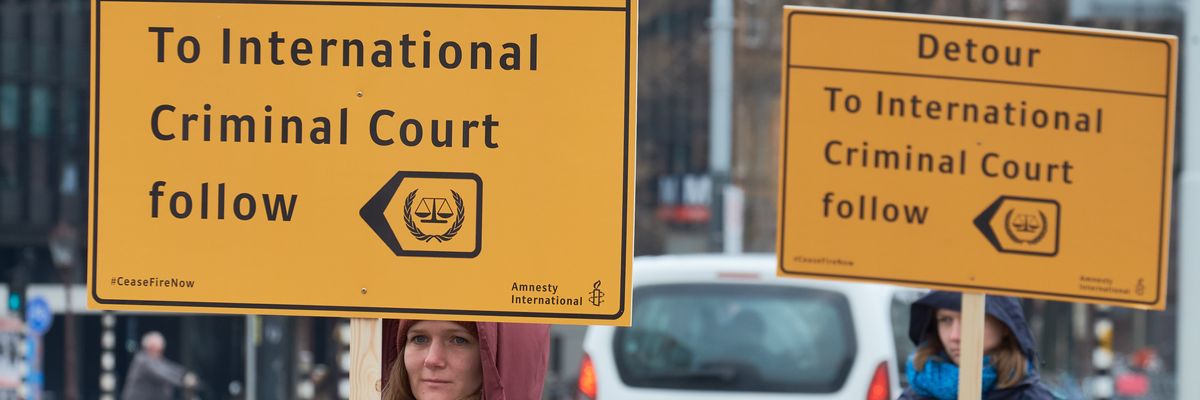
Original article by Anita Mureithi republished from OpenDemocracy under a Creative Commons Attribution-NonCommercial 4.0 International licence.
Daughter of terror attack victim Makram Ali says politicians are ‘fuelling fire’ by equating Muslims with extremism
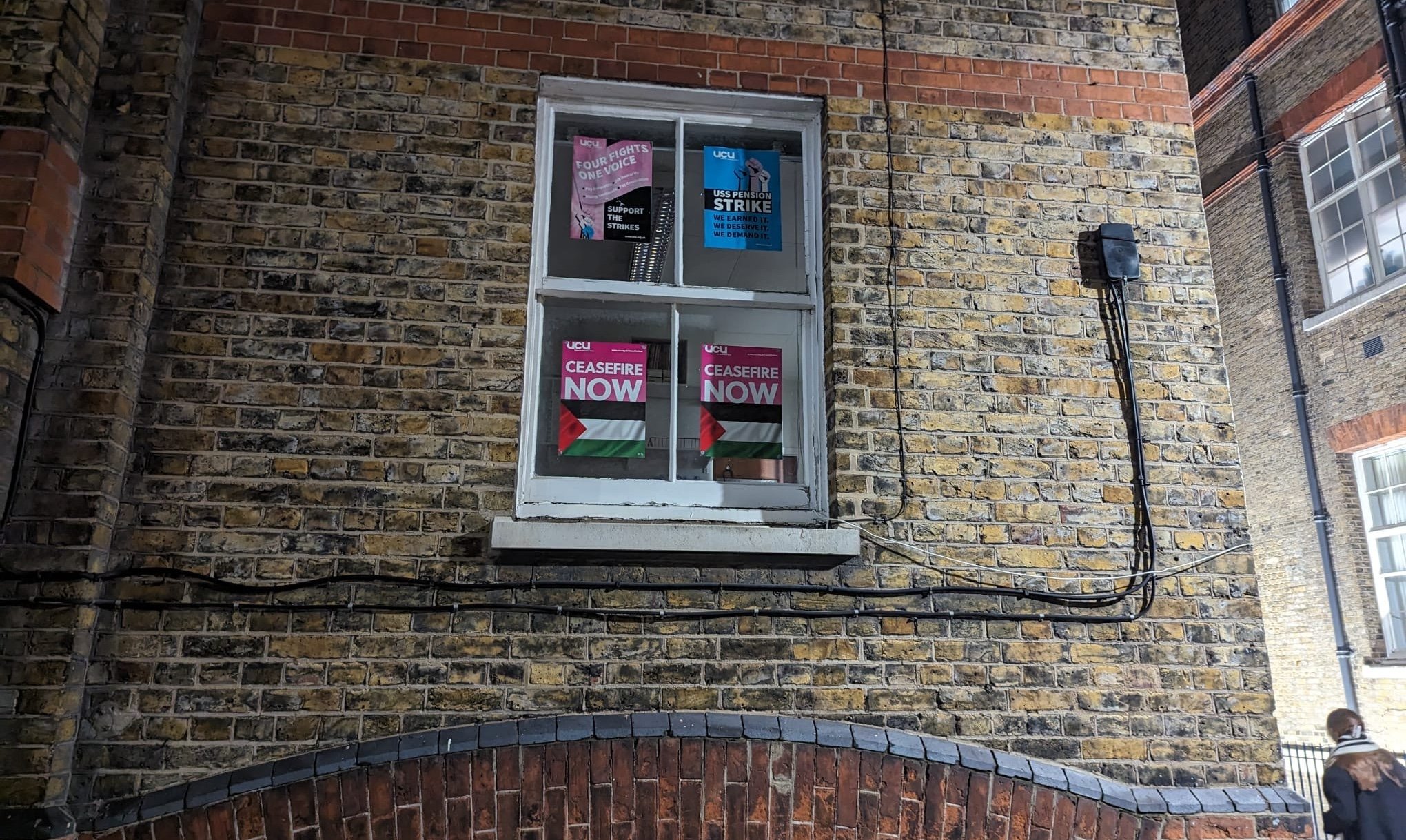
James Eastwood and his union colleagues got to their office one Tuesday afternoon to find that someone had broken in. The intruder hadn’t taken personal valuables or expensive equipment: all they had done was pull down the pro-Palestine posters in the window.
The break-in didn’t come as a huge shock to Eastwood, co-chair of the University and College Union (UCU) branch at Queen Mary University in east London. A day earlier, uni bosses had called him asking for access to the office so they could remove the posters, one of which had a Palestinian flag on it, and another of which read: “From the river to the sea, Palestine will be free.” Eastwood had agreed, requesting only that he be allowed to make the case before any action was taken.
The university was unwilling to wait, and forced the lock the next day. But Eastwood lays the blame beyond the office of the president and principal, Colin Bailey, who last year took home nearly £359,000. Instead, he holds the government responsible, feeling ministers have decided that “it’s not OK to be in solidarity with Palestine”. The university admits it took the posters down, telling openDemocracy that “such permanent displays… can stifle freedom of speech and make members of our community feel unsafe”.
Communities secretary Michael Gove is this week expected to widen the government’s definition of extremism to include “promotion or advancement of ideology based on hatred, intolerance or violence or undermining or overturning the rights or freedoms of others, or of undermining democracy itself”.
This might sound reasonable in isolation. But Gove’s intervention is the culmination of a months-long campaign by Tory politicians to paint pro-Palestine protesters as extremists.
Ahead of a march on 11 November, then home secretary Suella Braverman called the demonstrations “hate marches” and suggested the sanctity of Armistice Day was under threat. This led hundreds of far-right thugs – more than 90 of whom were arrested – to gather in Whitehall to “protect” the cenotaph from a march for Palestine that was taking place in another part of the city.
Emboldened by this narrative, former deputy Tory Party chair Lee Anderson last month claimed “Islamists” had “got control” of Sadiq Khan, London’s first Muslim mayor. He later doubled down and refused to apologise, after which he was suspended for conflating “all Muslims with Islamist extremism”. The prime minister described Anderson’s comments as “wrong” but avoided calling them Islamophobic.
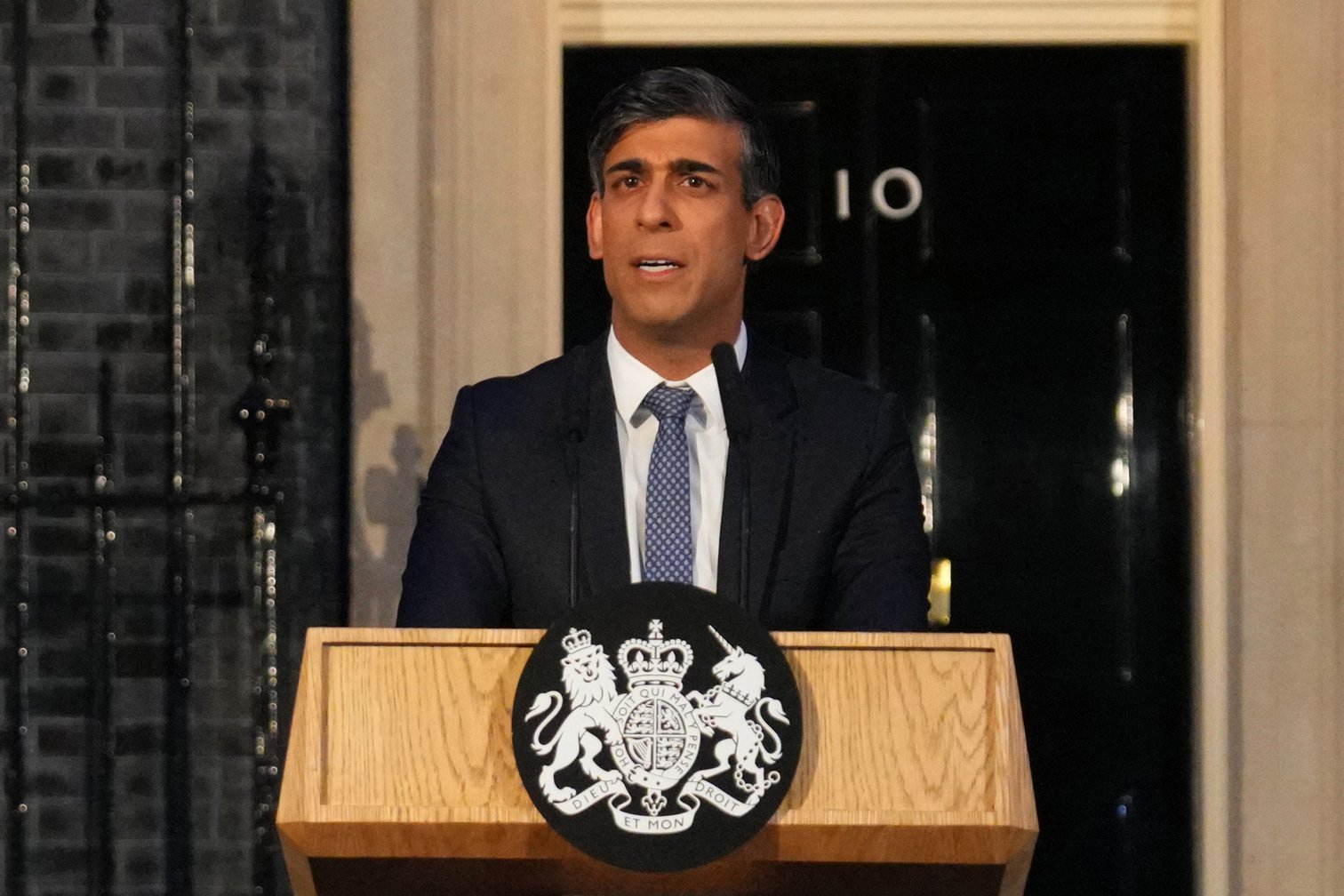
This rhetoric, which also included false claims from MPs that there were “no-go” Muslim-majority areas in Birmingham and east London, climaxed in a hastily-arranged, Friday night speech from Sunak outside 10 Downing Street at the beginning of March. This was a significant intervention – it was the first time he had addressed the nation in this way since becoming PM 18 months ago.
He warned that “extremists” were “spewing hate” and “hijacking” protests. He also called on protesters “to stand together to combat the forces of division and beat this poison”.
Campaigners believe the new definition of “extremism” will in practice mean public authorities being forced to cut links with a widening circle of proscribed pro-Palestine groups. Even three former Tory home secretaries said yesterday the politicisation of extremism had gone too far.
Eastwood said the mood music from the government “filters down and creates a climate where organisations including universities feel pressure to show that they’re doing something”.
“You see a reproduction of some of the government lines on what’s acceptable speech, what’s offensive speech, what speech is to be allowed or not allowed,” he added.
Fuelling the fire
On 18 June 2017, Darren Osborne drove a van from Cardiff to London with plans to attack a pro-Palestinian march. A jury would go on to hear he had wanted to kill then Labour leader Jeremy Corbyn, as well as Sadiq Khan.
Osborne, 48, had viewed posts on social media by former English Defence League leader Stephen Yaxley-Lennon (also known as Tommy Robinson) and Britain First before driving his van directly into a crowd of people leaving the Muslim Welfare House in Finsbury Park – Corbyn’s constituency – following evening Ramadan prayers. He killed 51-year-old Makram Ali and injured 12 others.
As he tried to escape, he is reported to have said: “I want to kill more Muslims.”
Ali’s daughter, Ruzina Akhtar, says politicians’ attempts to equate Islam with extremism are “fuelling the fire” and “inciting more hatred” towards Muslims.
“Every day, that’s going into someone’s ears who doesn’t have positive feelings towards Muslims,” she told openDemocracy. “It only takes one comment, or one thing to push someone over the edge. It’s not just actions – words speak loudly as well. Politicians need to be really careful with what they say and how they say it, because every single word could potentially be a threat to someone’s life.”
While politicians pontificate over definitions, Akhtar warned: “They’re in their own political bubble. They’re not thinking about the wider effect their words could have.
“Instead of inciting hatred, they need to be working together with communities. On the one hand, they’ll talk about how Britain is multicultural and so inclusive, but then they’re putting targets on people’s backs.”
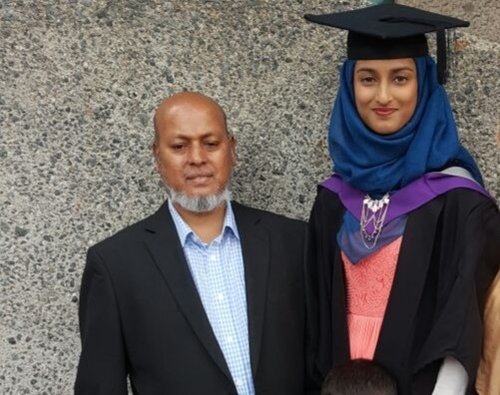
Akhtar will be easing into yet another Ramadan without her dad today. The one thing she wants people to remember is how dangerous these dehumanising, Islamophobic tropes can be. “Muslims can be targets as well,” she said. “It doesn’t matter who you are. At the end of the day, we’re all human beings.”
Of course, the UK government’s rebranding of pro-Palestine voices and peaceful protesters as extremists is not a new phenomenon.
For years, people who support Palestine vocally and publicly have been targeted under Prevent – the UK government-led counter-terrorism programme, which human rights organisations say is discriminatory and ineffective. In his speech, Sunak doubled down on his support for the programme.
In 2016, Rahmaan Mohammadi – a schoolboy from Luton – was referred to Prevent and questioned by anti-terrorism police for wearing ‘free Palestine’ badges and wristbands to school. He also claimed that he was told to stop talking about Palestine in school.
And openDemocracy revealed in January that more than 100 schoolchildren and university students had experienced “harsh repression and censorship” following the Hamas attacks on Israel on 7 October.
Now, ahead of a general election, Fatima Rajina, an academic specialising in issues on identity, race, British Muslims and postcolonialism, says long-standing Islamophobic and anti-Muslim tropes have been invoked in order to win votes and deflect from government failures.
“It’s stoking fear, because that is what has been done for the last 20-plus years,” she said. “The ‘war on terror’ rhetoric has meant that politicians rely on very well established tropes about Muslims. And they proceed with that because that is what gets into people’s minds.”
War on terror
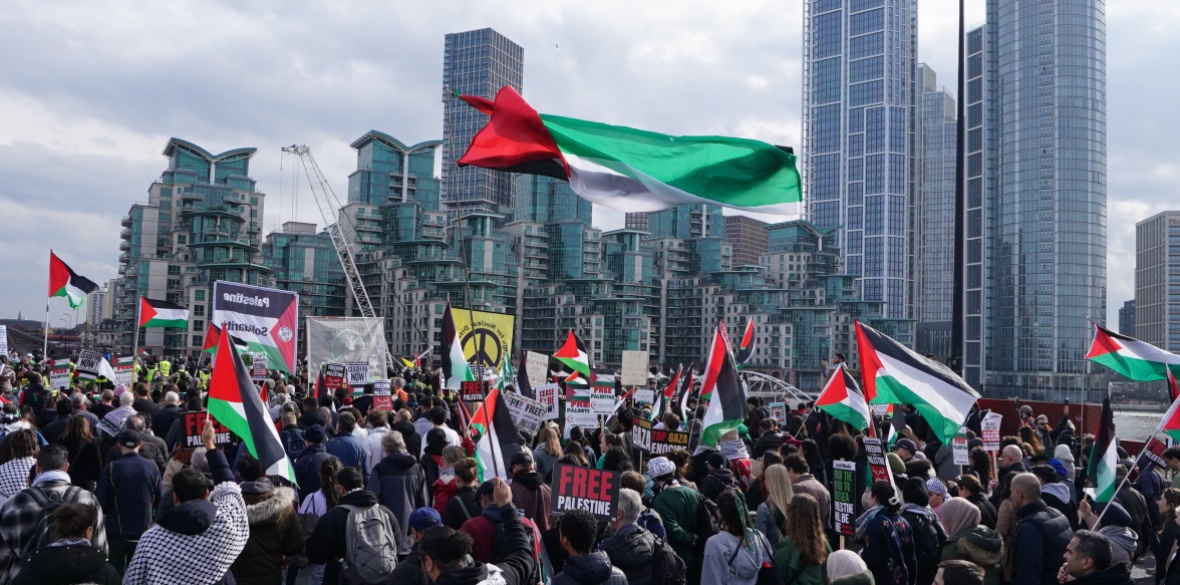
If you’ve ever been to a march for Palestine you might have watched the prime minister’s Downing Street address and wondered if you were being gaslit. For many, the marches have been largely peaceful, with people of different faiths, backgrounds and ethnicities coming together to call for a ceasefire in Gaza.
openDemocracy recently revealed that, despite attempts by some MPs to form a narrative that the marches amounted to “mass extremism” and were “openly criminal”, only 36 people out of the millions who attended last year had been charged with a crime.
The post 9/11 so-called ‘war on terror’ touched all aspects of day-to-day life for Muslims in the UK, from Prevent referrals to surveillance in mosques and schools, as well as so-called ‘schedule 7’ stops at UK ports and airports and increased use of stop and search.
Rajina says the government relies on convincing people that such measures are for the sake of “safety” and the public good, and calls this framing “very sinister”.
“All of these concerns are packaged into ‘the Muslim is the problem’,” she said. As children starve to death in Gaza, more airtime is given to the concerns of politicians who say they feel threatened by constituents who want the attacks in Palestine to stop.
But the mood music isn’t just coming from the government. Labour politicians including deputy leader Angela Rayner and shadow chancellor Rachel Reeves last month reported feeling “unsafe” and “intimidated” by members of the public protesting the siege on Gaza, while Commons speaker Lindsay Hoyle suggested MPs could be in danger from pro-Palestinian constituents for voting against a ceasefire.
“It’s Muslims who are being targeted as the ones who are causing all this trouble outside MPs’ offices, scaring them,” said Rajina. “And that is because there’s already an established fear. Tapping into that then makes people think: ‘Oh my God, these Muslims don’t know how democracy works’.
“I think this idea of it being a Muslim issue, and framing it in that way, is really and truly about the upcoming election. It is about stoking fear and playing with established fear. It’s also to deflect from the fact that we’re going through a cost of living crisis.”
What’s also clear is that the UK government’s branding of activists and protesters as ‘extremists’ hasn’t been limited to Muslims and pro-Palestine voices.
When Black Lives Matter protests swept through the UK in 2020 following the murder of George Floyd, then prime minister Boris Johnson similarly claimed that anti-racism protests in the UK had been “hijacked by extremists intent on violence”.
And when Extinction Rebellion (XR) gained prominence after its first action in 2018, its activists were labelled as “eco-terrorists”.
The backlash bears the fingerprints of right-wing think tanks. In a 2019 report, influential right-wing think tank Policy Exchange called XR an “extremist group” that wanted to overturn democracy and ran the risk of “[breaking] with organisational discipline and [becoming] violent”. Months later, XR was designated an extremist group by counter-terror police, while openDemocracy revealed in 2022 that a controversial anti-protest law appeared to have come directly from the Policy Exchange report.
Policy Exchange has now turned its attention to pro-Palestinian voices, briefing politicians that academics on the board of equality and diversity at Research England – a government science and research body – had showed “support for radical anti-Israeli views”.
The document appears to have made its way into the hands of cabinet minister Michelle Donelan, who was last week forced to pay damages to one of the academics in question after wrongly accusing her of supporting Hamas. Her £15,000 libel bill is being footed by the taxpayer.
As well as arrests under the Policing Act – and its sequel, the Public Order Act, which also gives police more powers to restrict protests – an increased number of activists with groups such as XR and Just Stop Oil have been referred to the Prevent anti-terror scheme.
Ban
This narrative that activist movements are undemocratic or opposed to British values is underlined by John Woodcock, a peer and former Labour MP who now serves as the government’s adviser on political violence. Woodcock believes a ban on MPs and councillors having contact with groups like Palestine Solidarity Campaign, Extinction Rebellion, and Just Stop Oil, would restore faith in liberal democracy.
But the attempt to turn supposedly ‘ordinary’ Brits against ‘extremist’ protesters has very real human consequences, particularly when layered with Islamophobia and anti-Muslim hate.
As recently as last month, amid a wave of Islamophobic and antisemitic hate crime since October 7, an east London mosque reported its second bomb threat in two months.
And citing experiences of Islamophobia reported by MPs Apsana Begum and Zarah Sultana, Rajina said: “These are prominent and well known public figures here in Britain. So then imagine what it looks like when it trickles down to the ordinary person who is just going about their everyday activities, doing their shopping and catching the train and whatever other mundane activity, and then suddenly they are at the receiving end of Islamophobic abuse.”
The demonisation of protesters has also laid the foundation for violence against peaceful climate activists.
“We’re trying to teach young people to go out there, make sure you’re holding your MP to account… put pressure on councils. And now suddenly, we’re saying: ‘Hold on a second, that’s not the way to do it’. But what are we saying? What sort of citizenship are we looking for? What do you want people to do?”
Original article by Anita Mureithi republished from OpenDemocracy under a Creative Commons Attribution-NonCommercial 4.0 International licence.