Protesters hold up flags and placards during a demonstration in support of Palestinian people in Gaza, in London [Alberto Pezzali/AP]
Protests took place in major world cities, including London, Madrid and Istanbul.
Thousands of people have taken to the streets around the world to protest against the war in Gaza as Israel pledges to go forward with its offensive in Rafah in southern Gaza.
Waving pro-Palestinian flags and banners, thousands marched through the streets of Madrid, Spain to demand an immediate ceasefire in Gaza.
…
In the UK’s capital London, approximately 250,000 people took part in the protest demanding a ceasefire in Gaza, according to the Palestine Solidarity Campaign (PSC).
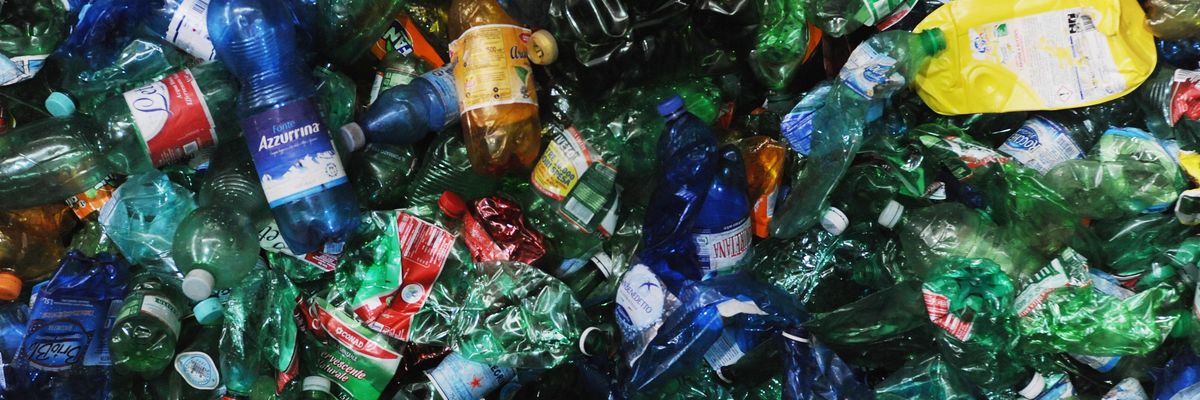
More than 90% of plastics disposed of between 1950 and 2015 were not recycled. (Photo: Laura Lezza/Getty Images)
“The oil industry’s lies are at the heart of the two most catastrophic pollution crises in human history,” one advocate said.
The petrochemical industry—including major oil companies like ExxonMobil—knew for decades that recycling was not a sustainable solution to the problem of plastic waste, yet continued to promote it in order to avoid regulation and deceive consumers into continuing to buy and use their products, a report released Thursday by the Center for Climate Integrity reveals.
The report, titled The Fraud of Plastic Recycling: How Big Oil and the Plastics Industry Deceived the Public for Decades and Caused the Plastic Waste Crisis, includes newly disclosed industry documents proving that companies and trade groups knew that plastics could not be recycled indefinitely in the 1980s and 90s even as they launched a massive public relations campaign to sell voters and policymakers on the process.
“This evidence shows that many of the same fossil fuel companies that knew and lied for decades about how their products cause climate change have also known and lied to the public about plastic recycling,” Center for Climate Integrity (CCI) president Richard Wiles said in a statement. “The oil industry’s lies are at the heart of the two most catastrophic pollution crises in human history.”
Big Oil and the plastics industry 🤯knew decades ago that recycling plastic is not viable at scale 🧐deceptively promoted plastic recycling as a false solution 😡directly fueled the plastic waste crisis
Plastic pollution is a major environmental and public health crisis. If current trends continue, plastics are expected to outweigh fish in the ocean by 2050, and the toxic fumes from plastic production facilities and incineration are a major environmental justice hazard for frontline communities. Humans in general also ingest an estimated credit-card’s worth of plastic each week, with unknown but potentially serious health impacts.
Recycling is often touted as a solution for keeping plastic out of the environment, but this has proven to be ineffective and insufficient: More than 90% of the plastics disposed of between 1950 and 2015 were either burnt, sent to landfills, or dumped into the environment. There are several technical and economic reasons why plastic recycling doesn’t work at scale. Plastics lose quality as they are recycled and can only really be reused once or potentially twice. The decline in quality also means that recycled plastics are more likely to leach toxins added during production or picked up from other waste items. Economically, it is cheaper to produce new plastics than recycle older ones, and only two types of plastic—PET and HDPE—actually attract markets that will recycle them.
The industry has long been aware of these limitations. In 1969, the American Chemical Society declared, “It is always possible that scientists and engineers will learn to recycle or dispose of wastes at a profit, but that does not seem likely to happen soon on a broad basis.”
“We are committed to the activities, but not committed to the results.”
Despite this, petrochemical companies and their trade groups began to push plastic recycling in the 1980s and 90s as a response to growing public concern over plastic waste, and the threat that this would lead to bans on plastic products.
“No doubt about it, legislation is the single most important reason why we are looking at recycling,” Wayne Pearson, the executive director of industry front group the Plastics Recycling Foundation and a DuPont marketing director, said in 1988.
The plastics industry used various strategies to sell the public on recycling, according to the report. These included:
Funding front groups to promote recycling;
Running ad and PR campaigns;
Investing in recycling research to convince the public that it was taking action;
Setting unrealistic internal recycling goals;
Writing educational material promoting recycling to school children;
Advocating for “advanced recycling,” a term for breaking plastics down to chemical components that can theoretically be reused but are not in practice; and
Claiming, against evidence, that recycling can be part of a “circular economy.”
CCI provides new evidence that, while the industry was employing these strategies, it was simultaneously aware of recycling’s limitations.
For example, a report from the Vinyl Institute trade group concluded in 1986 that “recycling cannot be considered a permanent solid waste solution, as it merely prolongs the time until an item is disposed of.”
In 1994, Exxon Chemical Vice President Irwin Levowitz told employees of the American Plastics Council that “we are committed to the activities, but not committed to the results.”
CCI argued that the petrochemical industry should face legal consequences for its “campaign of deception” similar to suits brought against tobacco and opioid companies.
“When corporations and trade groups know that their products pose grave risks to society, and then lie to the public and policymakers about it, they must be held accountable,” Wiles said. “Accountability means stopping the lying, telling the truth, and paying for the damage they’ve caused.”
CCI vice president of legal and general counsel Alyssa Johl added: “Big Oil and the plastics industry’s decades-long campaign to deceive the public about plastic recycling has likely violated laws designed to protect consumers and the public from corporate misconduct and pollution.”
“Attorneys general and other officials should carefully consider the evidence that these companies defrauded the public and take appropriate action to hold them accountable,” Johl said.
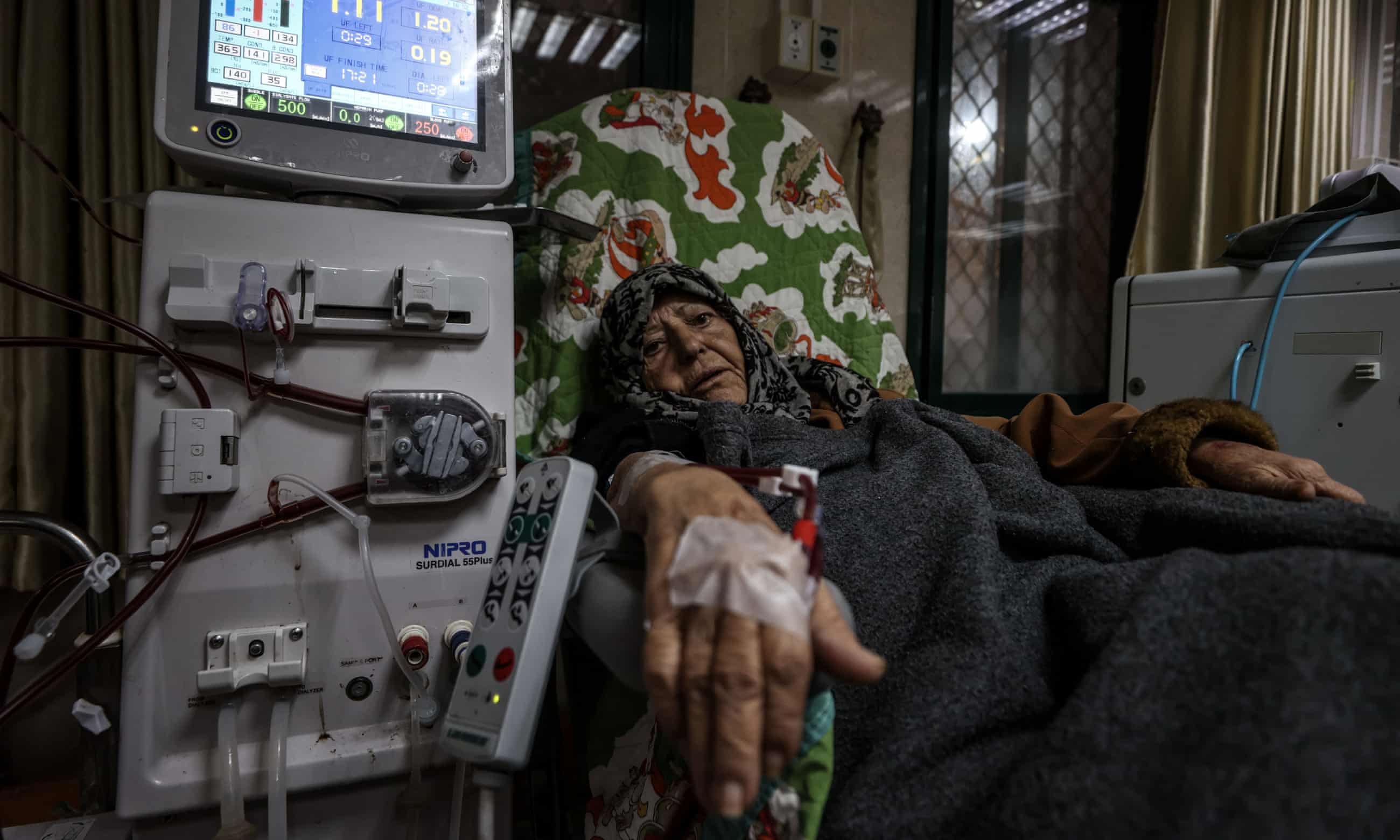
A Palestinian woman receives dialysis treatment at the Al-Aqsa Martyrs Hospital on February 8, 2024. Photograph: Anadolu/Getty Images
The lack of medicine, food and water means thousands of people with asthma, kidney disease or diabetes are unable to treat or control their conditions
Four months of conflict in Gaza is jeopardising the health of thousands of people with chronic illnesses such as kidney disease, diabetes and asthma, doctors have warned.
The chronically ill are the hidden casualties of the war, as access to water, food and medicine is severely restricted, said Guillemette Thomas, the Médecins Sans Frontières (MSF) medical coordinator for Palestine.
“Hospitals that are still functioning are overwhelmed with injured people, they are not able to deal with chronic illness at all,” she said. “Before the war there were 3,500 hospital beds in Gaza, now there are fewer than 1,000, and hundreds and hundreds of injured. We don’t know how many people are dying because they can’t access healthcare.”
When medication is allowed into the territory there are no safe ways of distributing it, Thomas said. “We have some insulin coming in aid trucks, but patients can’t get to the places where it is stocked because of the airstrikes. People are bombed on their way to the hospital.”
Experts struggle to explain how rises in sea-surface temperatures have accelerated so quickly. Photograph: PPAMPicture/Getty Images
Rapid ocean warming and unusually hot winter days recorded as human-made global heating combines with El Niño
February is on course to break a record number of heat records, meteorologists say, as human-made global heating and the natural El Niño climate pattern drive up temperatures on land and oceans around the world.
A little over halfway into the shortest month of the year, the heating spike has become so pronounced that climate charts are entering new territory, particularly for sea-surface temperatures that have persisted and accelerated to the point where expert observers are struggling to explain how the change is happening.
“The planet is warming at an accelerating rate. We are seeing rapid temperature increases in the ocean, the climate’s largest reservoir of heat,” said Dr Joel Hirschi, the associate head of marine systems modelling at the UK National Oceanography Centre. “The amplitude by which previous sea surface temperatures records were beaten in 2023 and now 2024 exceed expectations, though understanding why this is, is the subject of ongoing research.”
Humanity is on a trajectory to experience the hottest February in recorded history, after a record January, December, November, October, September, August, July, June and May, according to the Berkeley Earth scientist Zeke Hausfather.
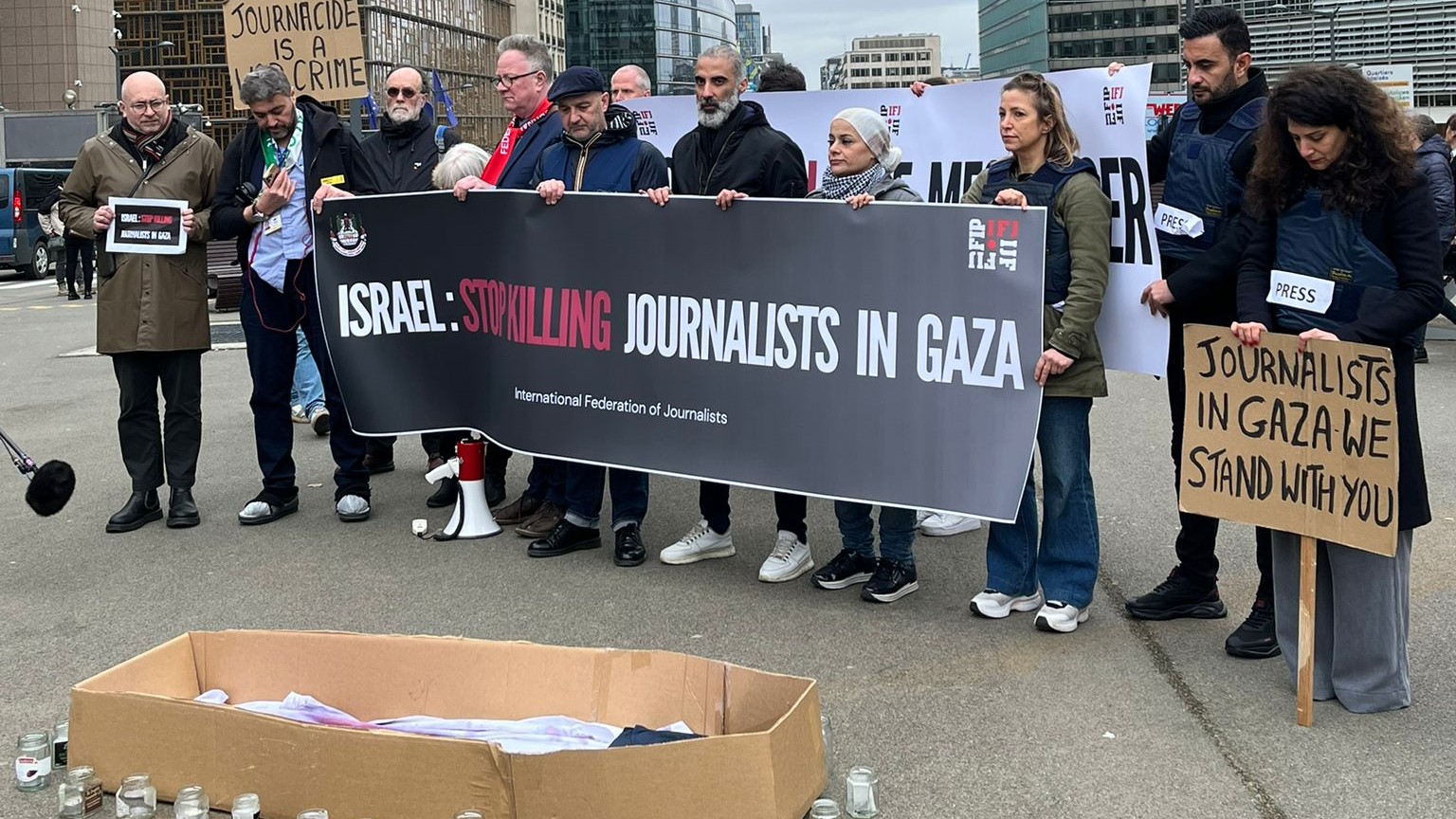
A protest against the killing of journalists in Gaza. Photo: International Federation of Journalists/X
A report by the Committee to Protect Journalists said that 78 journalists and media workers were killed in Gaza in the first three months of Israel’s war. The report added that the circumstances leading to the killing of these media professionals were difficult to ascertain due to Israel’s refusal to cooperate
Nearly three fourths of all journalists and media workers killed in 2023 were Palestinians who were killed in the first three months of the Israeli war in Gaza, said the annual report of Committee to Protect Journalists (CPJ) released on Thursday, February 15.
According to the CPJ, at least 99 journalists and media workers were killed in 2023. This is the highest number of journalists and media persons killed in a year since 2015 and was a 44% increase from last year when the figure was 69.
Among the 78 journalists and media workers killed in the Israeli war on Gaza, 72 were Palestinians, three were Lebanese and two were Israeli journalists.
The report stated that the details of the circumstances leading to the killing of most of the journalists and media workers in Gaza were difficult to obtain due to Israel’s refusal to cooperate. A large number of family members of those journalists and media workers were also killed in the Israeli bombings and ground offensive which made the task of investigating the circumstances of their killing difficult.
A total of more than 28,700 Palestinians have been killed and nearly 69,000 others have been wounded in the Israeli war in Gaza since October 7. Many journalists have lost their entire families in Israeli attacks.
CJP claimed that at least 78 of the journalists and thirteen media workers were killed on duty in 2023. It also claimed that there were eight more journalists killed last year but the investigation into the circumstances in which they were killed was still not complete.
CJP claimed that a large number of journalists in Palestine were killed deliberately and it has raised the issue with the Israelis.
Most of the Palestinian journalists killed on duty in Gaza were in full gear and easily identifiable when they were targeted in air strikes or during Israeli ground offensives.
Deliberately targeting and killing journalists on duty is a war crime as per international law. Israel often claims that journalists killed in Gaza were members of “terrorist groups” without providing any evidence.
The numbers are much higher, say other groups
Several more journalists and media workers have been killed in Gaza by Israeli forces since December, including Al-Jazeera journalist Hamza al-Dahdouh who was targeted and killed by a missile attack on the car in which he was traveling with another freelance journalist Mustafa Thuraya.
Hamza was the son of prominent journalist Wael Dahdouh, most of whose family members were killed in Israeli strikes earlier. Wael himself was injured in one of the attacks carried out by the Israelis while on duty.
According to estimates by other organizations, the number of Palestinian journalists killed is higher. The Palestinian Journalists Syndicate (PJS) claimed at least 95 journalists or around 8% of all registered journalists in Palestine have been killed by Israel between October 7 and December 19.
According to Palestinian Authority’s media office, the total number of media workers killed in Palestine since October 7 is 126.
PJS claims that most of the journalists killed in Gaza were deliberately targeted by Israeli forces with the intention of “assassination and murder.” Some of the journalists were also threatened by Israeli forces before they were actually killed for covering the Israeli genocide, PJS alleged.
In addition to killing Palestinian journalists, Israel has also resorted to other means of shutting down the spread of information, including media gags, denial of visas to foreign journalists, and repeated shutdowns of the internet and telecommunication services, sometimes for weeks.
“The war [Israeli war in Gaza] is unprecedented in terms of threats to journalists” Jodie Ginsberg, Chief Executive Officer of the CPJ, told Al-Jazeera.
Israel has a long history of targeting and killing journalists. In 2022, Al-Jazeera journalist Shireen Abu Akleh was killed when she was reporting the Israeli military raid on Jenin. CPJ claims there were at least 20 such cases before the current war in Gaza but no one has ever been charged or held responsible for these killings.