Skip to content

… on a quiet day, I can hear her breathing

  • Home
  • About

  • Trump’s Venezuela: Why seek regime change if you can get regime compliance?

    Article by Aman Sethi republished from OpenDemocracy under a Creative Commons Attribution-NonCommercial 4.0 International licence.
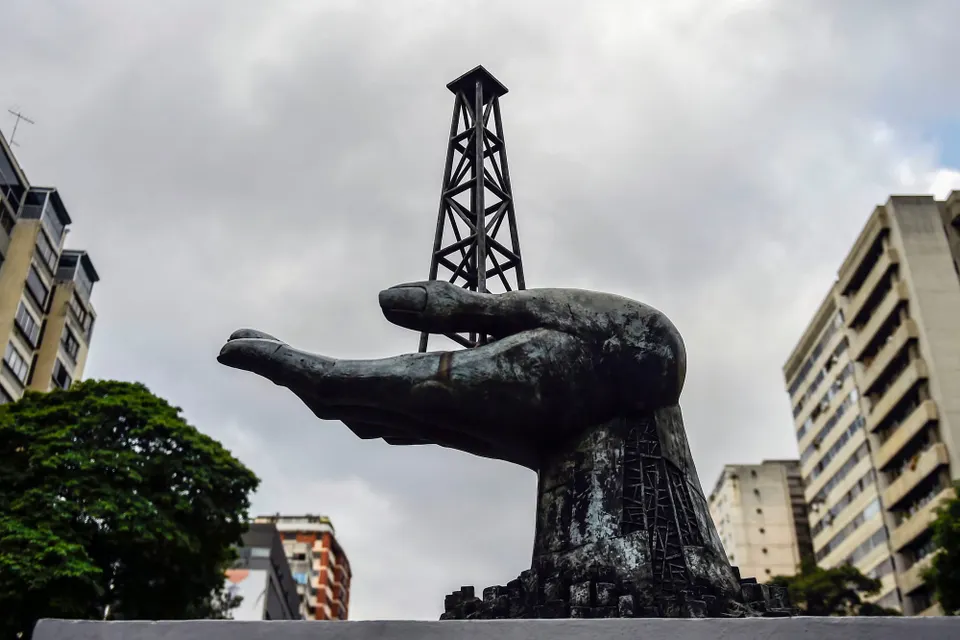
    A monument in homage to the struggles of the Venezuelan people for the conquest of their oil | by LUIS ROBAYO/AFP/Getty Images

    The Trump administration’s forcible appropriation of a fifth of Venezuela’s oil reserves is worse than the theft of national assets in post-Soviet Russia.

    Nine months after United States special forces abducted Venezuelan President Nicolás Maduro and his wife in an early morning raid, the US claims to have struck a highly unusual deal to take control of about a fifth of Venezuela’s oil reserves, or about 65 billion barrels, over the course of a 100-year lease period.

    The deal, which is structured through the US Department of Defense (which the Trump administration calls the Department of War), has no recent precedent. While the United States has often engineered military and covert regime change in countries around the world to appropriate resources, the Trump administration’s actions in Venezuela recalls the sorts of 20th century US interventions that lead to a series of revolutions in Latin America and also Iran in the 1950s.

    To make sense of this moment, I caught up with Francisco Rodríguez, a Venezuelan economist, a senior research fellow at the Center for Economic and Policy Research, and professor of public and international affairs at the University of Denver. Rodriguez is also the author of four books, including his latest, The Collapse of Venezuela: Scorched-Earth Politics and Economic Decline. 

    The following is an edited excerpt of our interview. You can listen to the whole  interview on our In Solidarity podcast.

    Aman Sethi: I’d like us to start with just getting your reactions to this, this oil deal. Specifically, if you could just talk through what you know so far, what this means, and whether this is how oil deals are normally done in Venezuela.

    Francisco Rodriguez: Okay, a bit of the background. Venezuela had been under oil sanctions from the US between 2019 and this year. And the US after it carried out a military operation to capture Nicolás Maduro, it decided that it was going to try to forge, let’s call it a “cooperative relationship,” with the government of Delcy Rodriguez, who was Maduro’s vice president.

    And what the US has been trying to do is sell the idea of ‘Now we’re gonna help the Venezuelan oil sector recover’. Venezuela is sitting on the world’s largest oil reserves , but it produces just 1% of world oil output. 

    January of this year just a few days after the military operation to take out Maduro, President Trump actually calls a lot of oil industry executives to the White House, says, “I want you to invest in Venezuela.” Many of these executives say, “We’re not so sure.” One of them actually says this country is really uninvestable under current conditions. So he gets a lukewarm reaction. 

    So now we have the announcement of this plan, and this plan — it promises that Venezuela is going to get $100 billion in oil investment. And that’s really important here, because that’s what most experts have said is needed to get Venezuela to produce what it was producing before the sanctions back in 2016 which was around two and a half million barrels. 

    Now it’s producing roughly one [million barrels per day]. It’s increased a bit to 1.2 million. So you want to get that up by 1.5 million barrels. You need 100 billion to do that. That sounds fine. Actually, that sounds great. If I’m Venezuela, and I’m told, “Hey, here’s the $100 billion you can put into your oil industry, and you’ll get more tax revenue. We’ll benefit.” I say, “Where do I sign?” So that part looks good. 

    But then let’s look at it in more detail because President Trump actually says two things almost in the same breath. He says Venezuela’s gonna get $100 billion of investment in the oil sector, but this is not going to cost a dime to US taxpayers. 

    Okay, wait. 

    So the US is not gonna pay for it. Venezuela is broke, so Venezuela is not gonna pay for it. Who is going to pay for it? Well you would think oil companies, large oil companies, right? Chevron, Exxon, Conoco. But they’re not here. They’re nowhere in the deal. No, they don’t wanna be part of this. 

    So where are these 100 billion going to come out of ?

    Here’s where it gets really interesting and really murky. These $100 billion are going to be put out by a Barbados-based company that was created just a few years ago. It’s a company owned by a businessman with not the best reputation in the world. His name is Alejandro Betancourt. He’s best known for getting billions of dollars in no-bid contracts from the Chavez administration to build electrical plants, at least one of which was never completed. And he’s offering to the US a thirty-five percent stake in his company.

    So the US Department of War is going to now own thirty-five percent of that company. And it’s also going to have the right to purchase at cost twenty percent of the company’s output. So that’s the deal.

    The White House yesterday put out a statement saying that Venezuelan barrels of oil are going to start flowing into US reserves as of November. And basically, President Trump had already said that they were going to replenish the US Strategic Petroleum Reserve with oil that was a gift from Venezuela.

    That’s the word that President Trump used.

    So that means that probably as of today you will have Venezuela sending 40,000 barrels of oil to the US at cost. That’s a loss of about $500 million a year for Venezuela. 

    What is Venezuela getting in return? A promise that somebody, someday, is going to come up with $100 billion is going to be willing to lend them to Mr. Betancourt so that he can invest in the oil sector. 

    This deal is all wrong. This is the most impoverished country in Latin America. 

    How legal is this? Like, is this from a Venezuelan perspective, from an international contracts perspective?

    There’s a set of legal objections to it. Now of course the problem is that in developing countries Venezuela ranks 146 out of 146 countries in terms of the rule of law.

    Asking what is legal or not in a country that has no rule of law, this is almost like a theological question, really.

    Because when we think about the law, laws are interpreted by courts, but the courts are controlled by the government. Article 150 of the Venezuelan Constitution says that the National Assembly has to approve the deal.

    The National Assembly is 90% controlled by the government, so they could have taken the deal before the National Assembly. They didn’t. Why didn’t they do it? Because then they’d have to publish the contract, but they don’t want to publish the contract. Nobody wants to publish the contract.

    There’s a set of other problems I could go down out of all of the different laws that have been violated. But one important one is Article 39 of the country’s hydrocarbons law states that you have to assign contracts in the oil sector through public competitive bidding. There was no public competitive bidding here.

    In fact, a government vice-minister recently said, “The thing is that we’re under an economic emergency decree that we declared after the earthquake.” Really? You’re gonna use the earthquake as an excuse to give away 20% of the country’s reserves?

    What does it smell like to you?

    It smells like Trump essentially said, “I wanna do something about gas prices before the midterm and I wanna claim that I’m getting some of this oil from Venezuela. So I want some of that oil from Venezuela to come in and for me to say that I’m putting it into a strategic reserve, and this is bringing down oil prices. I wanna do that before the midterms. Sign me a deal.” 

    I think that’s essentially all there is. But from the standpoint of Venezuela, Venezuela has just given away 20% of its reserves to a company owned by a very shady figure.

    After the invasion of Iraq when you had the occupation there was a public bidding round for the rights to exploit Iraqi oil. This was a competitive bidding process, it was transmitted through public television, so Iraqis could actually see the bidding taking place in real time.

    This process was transparent. This is the complete opposite. This firm is going to get, over the life of the concession, the equivalent of $303 billion.

    That’s the, that, that is what the private firm gets in profits.

    That is what it’s going to get. That is the equivalent of three years of Venezuelan GDP. 65 billion barrels. Venezuela has a huge level of reserves. The Russian privatization program of 1996 was for 20 billion barrels of oil.

    This is more than three times the size. And in Russia, which was a steal, which was horrible, there was a free-for-all. That’s what led to the rise of the Russian oligarchs. They at least had the decency to rig an auction. Here, there was no auction. They didn’t even pretend.

    So this is not going to end up well. If you’re handing over these massive resources to connected political insiders this is not helping create a democracy. This is consolidating a crony capitalist oligarchy. 

    In your book you’ve likened studying the Venezuelan economy to the equivalent of being a rare disease specialist. For all of us outside who honestly don’t know very much about Venezuela, what is your analysis of the regime in power right now? 

    What is the point at which the people just say, “We’re done with this regime,” and they just get swept out?

    We can understand the American motivations. We can understand Delcy Rodriguez is some kind of captive, but what about the entire country that sits below her? How are people taking this?

    That’s a great question. And it forces one to think about how we got here. So Venezuela got here after about a quarter of a century of very deep polarization. Hugo Chávez, who came into power in 1999 was a populist and popular politician.

    And, like many populist politicians, his message was, “Throw the bums out, people are tired of the old politics. You need change. You need to refound the republic.” And that convinced a lot of people. He was able to get a clear electoral mandate. He reformed the constitution.

    He did what many leaders who have at least an authoritarian bent will do in those circumstances, which is say “We really need to change this, give more power to me.” So he really made the Venezuelan presidency all-powerful in that constitutional reform. And that really shaped Venezuelan politics over the next quarter century because you created a winner-take-all political system in which the opposition was completely out of anything.

     So you ended up in this, this politics which was very polarized between the government and the opposition. Now, Chávez did some things that a lot of Venezuelans liked at the time. He was definitely somebody who sought out ways to let very large disadvantaged majorities which had been excluded from Venezuelan social, economic, and political life have a stake.

    He also did a lot of things very badly.

    He got a huge oil boom. He spent a lot of that money. He ran the country into debt. He hired people like Alejandro Betancourt to build electrical plants, some of which were never built. So the country lived through this deep polarization. And then Chávez died, and then he leaves Maduro. Then the economy starts doing poorly. Then he [Maduro] becomes more repressive because the opposition is really going after him. And then the opposition goes to the US, and the US says “Let’s get tough on this, let’s impose sanctions.” 

    They hurt the country’s oil industry. It leads to a huge decline in the country’s oil production. So they, they effectively create an economic catastrophe. So you end up in this trap, which is what in my book I call the trap of economically destructive political conflict. 

    And the whole– the puzzle that I try to explain in my book is, how is it that you get an economy to collapse, to lose seventy-one percent of per capita income? This is the equivalent of three consecutive great depressions without a war. And my answer is that this happens because there’s a moment in which this politics becomes so destructive that both sides are essentially playing scorched earth.

    So you end up having this battle for the country that turns the economy into a political battlefield, and that’s where it collapses. 

    Then all of a sudden Trump decides to send in US forces, captures Maduro, and decides that he’s going to run the country with the people who are there. What we know and what he has said literally is that he’s put a gun to Delcy Rodriguez’s head. We also know that Delcy Rodriguez is complying with everything that Trump is asking for. 

    Is she doing it because she has a gun to her head, or is she doing it because this actually works in her favor and she can stay in power? Probably both.

    I have, well, several questions from this, but, but let’s start with the question of sanctions. It’s possible for many governments to make many bad decisions and to do bad things to the economy.

    But there is a very specific kind of bad thing that happens once sanctions are imposed, right? When you’re cut out of the US financial system, for example, that is a very, very particular form of economic punishment.

    What is your assessment of the role that, that sanctions have actually played here? Because one thing that I’m struggling with is this narrative of “Venezuela let its oil industry completely collapse, and now we’re gonna fix it, and now everything will be fine”. I’m struggling with the dissonance, but maybe I don’t know enough.

    That’s a very interesting question. It’s a very important question. It’s not an easy question to answer because well, you have many factors going on, and definitely there was a lot of mismanagement.

    There were poor economic policies, so you have to disentangle the effects of those poor policies from the effect of sanctions. 

    My estimate is that approximately half of Venezuela’s economic contraction during its collapse period between 2012 and 2020 can be attributed to sanctions.

    So in other words, this is a country that in the absence of sanctions would have gone through a major crisis. It would have seen, by my estimates, GDP decline by thirty-six percent, but not by seventy-one percent. And in fact, that thirty-six percent decline that would have occurred in the absence of sanctions actually puts it in line with other collapses generated by similar episodes of protracted exercise of bad policies particularly in Latin America.

    And all of them have a very similar pattern. You have a commodity-dependent economy. You have a period in which deep imbalances accumulate. You start getting high levels of debt.

    The country starts going into a current account deficit. You start seeing high levels of capital flight, and then you get a decline in the price of the commodity like what you got between 2014 and 2016. And there you get this deep economic crisis. 

    That is what happened in Venezuela between 2012 and 2016, which were the first three years of Maduro in power. In 2017 something different starts happening. And you start seeing that markets are expecting that the Venezuelan economy will begin to recover.

    Because oil prices had fallen from $100 to $30, and then they had recovered to around $50, $60. What history teaches us is that the economy stabilizes and then begins to recover in that situation. That’s not what happened in Venezuela. In Venezuela, the economy continued shrinking at an accelerating rate. And the difference was that was the year in which sanctions began to be imposed.

    So yes, sanctions did deep damage to this economy. These sanctions didn’t come out of the blue. These sanctions were part of a political strategy by the country’s opposition that was reacting to things that Maduro was doing which were very bad and were very evil and very authoritarian, and said, “We need to up the ante here by doing what we can do. We have allies in the US, that can help us start taking Maduro’s control from the country’s purse strings away.” 

    So in 2019, the Trump administration decided to recognize Juan Guaido, an opposition legislator, as Venezuela’s legitimate President. This is something that the US had never done before. The US had never recognized somebody with no de facto control over the territory as the President. And what happened as a result of that was that all of the country’s offshore assets, including all of the assets of PDVSA, the state-owned oil company, were transferred to the management of Guaido or his appointees. What that meant is that the country no longer had access to its funds. These funds were essentially handed over to the opposition. It made it impossible for the government even to carry out the most basic economic policy.

    There’s nothing in politics that is for free, right? So you acquire a commitment when you have an external power like that, that is helping you. And that means that you can’t question what that external power is doing in your country because you essentially live off of them, right? And this, by the way, was literally true. The Venezuelan opposition — the Venezuelan National Assembly elected in 2015, whose term ended in 2020 — had around 80 opposition legislators who were getting paid monthly salaries out of an account in the Federal Reserve. So the US could literally cut the salaries of the opposition politicians if the opposition decided to go against it.

    This is the typical Faustian bargain, right? You say, “I’m willing to do anything if you will help me regain power,” for good reasons.

    But the reality is that these Faustian bargains don’t end well. 

    I’m imagining an Indian opposition leader touring Europe and America and asking for support to become the Prime Minister of India, and they would be, you know, laughed out of the country.

    I understand that the dynamics are different but it does strike me as an unusual theory of power.  In your book, you also talk about the fact that while Venezuela is shown as an exception to kind of ordinary politics, it in many ways is almost like a weather vane that shows you where politics is going.

    But what does this moment in Venezuela tell us if we say Venezuela is, in some ways, the country of the future? What is it telling us now, especially in light of this deal?

    I would love to be wrong but I do think that Venezuela might be initiating a model that the US is probably going to try to imitate in other countries. 

    President Trump actually considers Venezuela a success story, and he’s been trying to produce similar outcomes in Cuba and Iran. And there have been negotiations between Trump administration officials and officials in those countries where they’re proposing this type of deal. The type of deal is you stay in power, the opposition doesn’t come to power but you change completely the way in which you’re doing things, and you follow our orders essentially.

    And I want to emphasize that this isn’t a government that rules the country with US support. This is a government that is carrying out the orders of the US . This is a government that has carried out military operations with US troops and Venezuelan troops in Venezuelan territory. It recognized Israel. And three days after Marco Rubio announced that the US was launching a campaign to dismantle the International Criminal Court, Venezuela says, “We’re leaving the International Criminal Court.” The first Latin American country to do so.

    So this has become the most dependable US ally in the region. And it’s led to this thesis in Washington of, why seek regime change if you can get regime compliance? That’s essentially what they’re trying to do. 

    You were saying this looks like a somewhat of an odd concept coming from India and thinking about it in terms of the dynamics in that region.

    I would say it’s not that foreign in Latin America. But you have to dig a little bit into history to go there. What the US did in Venezuela was actually what the US did in a number of countries at the beginning of the [20th] century including Cuba, Dominican Republic, Haiti, Panama. It basically imposed protectorates in these countries. 

    The Cuban one is interesting because Cuba, the US kind of occupied and took control of after the Spanish-American War. And then what the US did is that it forced the Cubans as a condition for independence to accept into their constitution to grant the US a standing right of intervention.

    So basically, if the US disagreed, if it took exception to any key decisions of the Cuban government, the US had the right to intervene militarily, and the US, in fact, exercised that right four times in the subsequent twenty years from the signing of that amendment, known as the Platt Amendment.

    And one of the problems with that, it’s no coincidence that it was precisely Cuba that saw the political movement that has been most antagonistic to the US emerge. 

    If you study the early 20th century in Cuba what you find is that Cuban politicians were acting very much in the way in which Venezuelan politicians are acting now

     They understood that whoever was in power needed the support of the US. So they became politicians who were adept at lobbying Washington and at building political coalitions between Washington stakeholders to support them. And this means that they were not politicians that built a domestic political base, that were trying to answer the demands of their constituencies. So the protectorate regime, what it does is that it stifles institutional development in a way that basically doesn’t let the institutions of a democracy emerge.

    And of course, if you have an electorate that cannot express its grievances, cannot express its demands through the political system, a big part of that electorate is going to become very angry, and then you end up with something like the Cuban Revolution. I think that is a very distinct risk now.

    It’s a risk that we will enter into a pattern as a result of Washington’s idea that it can run Latin American countries by remote control, that we’re going to enter into a very similar political dynamics, which, in the end, is going to be bad for the region, but it’s also going to be very bad for the US standing in the region.

    Article by Aman Sethi republished from OpenDemocracy under a Creative Commons Attribution-NonCommercial 4.0 International licence.

    Climate science denier Donald Trump confirms that he knows nothing about democracy and that more liquid gold is being secured according to his policy of global privateering.
    Climate science denier Donald Trump confirms that he knows nothing about democracy and that more liquid gold is being secured according to his policy of global privateering.
    Orcas discuss Donald Trump and the killer apes' concept of democracy. Front Orca warns that Trump is crashing his country's economy and that everything he does he does for the fantastically wealthy.
    Orcas discuss Donald Trump and the killer apes’ concept of democracy. Front Orca warns that Trump is crashing his country’s economy and that everything he does he does for the fantastically wealthy.
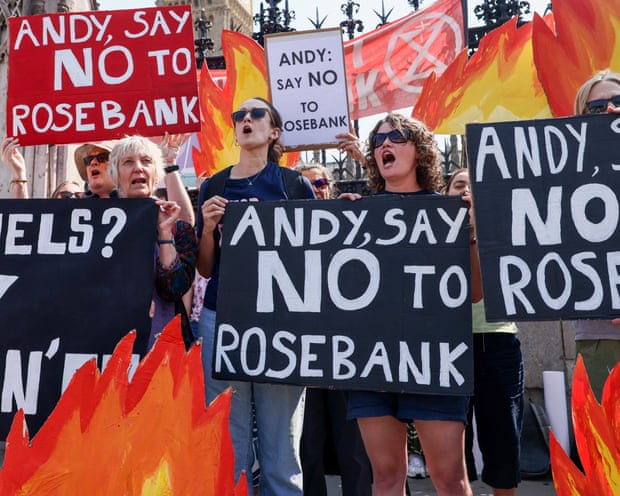
    Donald Trump urges you to ignore facts and reality and be a Climate Science denier like him. He says that he makes millions and millions for destroying the planet, Burn, Baby, Burn and Flood, Baby, Flood.
    Donald Trump urges you to ignore facts and reality and be a Climate Science denier like him. He says that he makes millions and millions for destroying the planet, Burn, Baby, Burn and Flood, Baby, Flood.

    14 September 2026
  • George Monbiot: Is Burnham trying to appease Trump? Or Reform? What other reason is there for these North Sea oil plans?

    https://www.theguardian.com/commentisfree/2026/sep/10/andy-burnham-north-sea-oil-plans-labour-climate-drilling-trump-reform

    Climate catastrophe is on our doorstep – yet Labour’s impending approval of further drilling will bring more pain for negligible gains

    Pinch yourself, it’s happening again. Here is a Labour government spending a vast amount of political capital to earn tiny material gains while risking huge political losses. It occurred repeatedly under Keir Starmer, and now – with the impending decision to approve further gas and oil drilling in the North Sea – it is happening under Andy Burnham. You rack your brains to explain it, but no rational explanation comes.

    …

    the two greatest threats to the global economy might now be climate breakdown, which, as a wide range of economists and eminent organisations forecast, threatens comprehensive economic collapse, and the AI bubble, which the governor of the Bank of England warns could burst with dire consequences. Then people will really be struggling. Yet our government and others cheerfully accelerate both forces – claiming, as ever, that the industries driving them will unleash “growth”. Growth in home repossessions, perhaps.

    …

    The sense in almost every nation is of governments failing to take seriously the most serious of issues, while spending immense political resources on topics that scarcely affect our welfare (such as a few thousand people crossing the Channel in small boats). Or even – as is the case with North Sea oil and gas – using their scarce political capital to make things worse for everyone, including themselves.

    Our government is not a doomsday cult like the Trump government, creepily fascinated by the “end times”, as the US vice-president seems to be. But in terms of outcome, is there much difference?

    See the original article at https://www.theguardian.com/commentisfree/2026/sep/10/andy-burnham-north-sea-oil-plans-labour-climate-drilling-trump-reform

    UK Prime Minister Andy Burnham says that he's going to permit the Jackdaw and Rosebank North Sea fossil fuel projects. He urges you to ignore facts and reality and be a climate science denier like him
    UK Prime Minister Andy Burnham says that he’s going to permit the Jackdaw and Rosebank North Sea fossil fuel projects. He urges you to ignore facts and reality and be a climate science denier like him
    Rapture, dah, dah, dah, dah, dah-da, it's the final countdown (actually a pre-final countdown).
    Rapture, dah, dah, dah, dah, dah-da, it’s the final countdown (actually a pre-final countdown).
    Donald Trump urges you to be a Climate Science denier like him. He says that he makes millions and millions for destroying the planet, Burn, Baby, Burn and Flood, Baby, Flood.
    Donald Trump urges you to be a Climate Science denier like him. He says that he makes millions and millions for destroying the planet, Burn, Baby, Burn and Flood, Baby, Flood.

    14 September 2026
  • How Israel’s arms industry is integrated into Britain’s military

    https://www.declassifieduk.org/how-israels-arms-industry-is-integrated-into-britains-military/

    Elbit has an MoD contract to provide a simulation trainer for Challenger 3 tanks (Photo: Stephen Bardens / Alamy)

    Ed Miliband’s decision to leave the military relationship with Israel intact raises serious concerns about Britain’s compliance with international law.

    …

    Genocide scholar Martin Shaw told Declassified: “The government’s acceptance that the occupation is illegal means that it should act against Israel itself, not just the settlers it has installed. 

    “The ICJ was clear that states must do nothing that provides ‘aid or assistance’ to Israel in maintaining the occupation, and must ‘ensure that any impediment’ that the occupation causes to the right of the Palestinian people to self-determination ‘is brought to an end’. 

    “Through the UK’s military alliance with Israel and its comprehensive military-industrial cooperation, Labour still appears to be failing in these legal duties, despite Miliband’s announcements”.

    …

    Omar Barghouti, co-founder of the Boycott, Divestment and Sanctions (BDS) movement for Palestinian rights, told Declassified: “This important investigation exposes precisely why the UK government’s recent measures are largely performative and designed to whitewash the multifaceted, shameless complicity of the UK with Israel’s regime of settler-colonialism, illegal occupation, apartheid and genocide.

    “The UK has failed to end the economic relationships, trade agreements and academic relations with Israel that may contribute to its unlawful presence and apartheid regime in the occupied Palestinian territory, as it is obliged to do in order to comply with the ICJ ruling. 

    “It is absurd for the UK to sanction settlements while simultaneously purchasing and integrating Israeli surveillance and weapon systems that are field-tested on Palestinians into its own armed forces.

    “Comparing these largely symbolic measures with the far-reaching sanctions imposed by the UK on Russia after its invasion of Ukraine affirms the UK’s colonial hypocrisy and loss of credibility on the international stage”.

    …

    In addition to military collaboration, Britain’s intelligence relationship with Israel will be untouched, according to Miliband, and there are no signs that either the 2020 UK-Israel military cooperation agreement, nor the 2023 Road Map for UK-Israel bilateral relations will be suspended.

    In response to Britain’s sanctions, Israel has said it will close the British consulate in East Jerusalem, remove UK representatives from the International Gaza Support Centre in Kiryat Gat, and terminate Britain’s role in training Palestinian Authority forces in the West Bank.

    Omar Barghouti added: “The UK has very clear obligations under international law, as triggered by the ICJ decisions of 2024 about Israel’s plausible genocide and its illegal occupation and apartheid.

    “The UK must end all military, intelligence, trade, financial, academic and other relations with Israel that enable its illegal occupation, apartheid or genocide, as the ICJ has called for”.

    See the original article at https://www.declassifieduk.org/how-israels-arms-industry-is-integrated-into-britains-military/

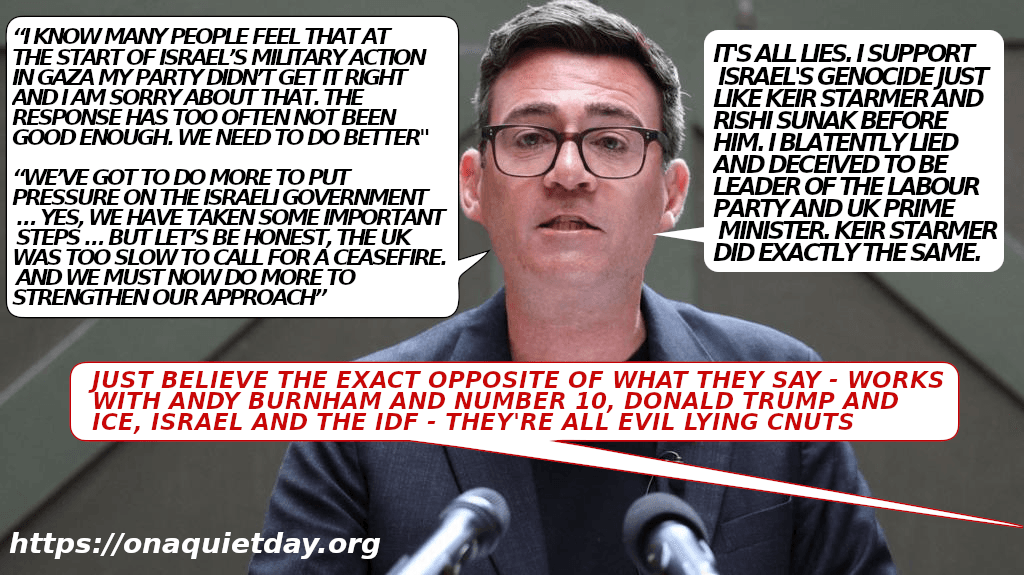
    UK Prime Minister Andy Burnham admits to blatently lying and engaging in deception to become leader of the UK Labour Party and Prime Minister.
    UK Prime Minister Andy Burnham admits to blatently lying and engaging in deception to become leader of the UK Labour Party and Prime Minister.
    Keir Starmer objects to criticism of the IDF. He asks how could anyone object to them starving people to death, forced marches like the Nazis did, bombing Gaza's hospitals and universities, mass-murdering journalists, healthworkers and starving people queuing for food, killing and raping prisoners and murdering children. He calls for people to stop obstructing his genocide for Israel. New Labour UK Prime Minister Andy Burnham continues Labour party policy of active support and complicity in Israel's genocide.
    Keir Starmer objects to criticism of the IDF. He asks how could anyone object to them starving people to death, forced marches like the Nazis did, bombing Gaza’s hospitals and universities, mass-murdering journalists, healthworkers and starving people queuing for food, killing and raping prisoners and murdering children. He calls for people to stop obstructing his genocide for Israel. New Labour UK Prime Minister Andy Burnham continues Labour party policy of active support and complicity in Israel’s genocide.
    Experiencing issues with this image not appearing. I suspect because it's so critical of Zionist Keir Starmer's support of and complicity in Israel's genocides.
    Genocide denier and Current UK Prime Minister Keir Starmer is quoted that he supports Zionism without qualification. He also confirms that UK air force support has been essential in Israel’s mass-murdering genocide. Includes URLs https://www.declassifieduk.org/keir-starmers-100-spy-flights-over-gaza-in-support-of-israel/ and https://youtu.be/O74hZCKKdpA
    13 September 2026
  • Israel blows up school, destroys tunnels in southern Lebanon despite framework agreement

    This work by Middle East Monitor is licensed under a Creative Commons Attribution-NonCommercial-ShareAlike 4.0 International License.

    Lebanese Civil Defense and fire crews respond as local residents inspect the site in the town of Kfar Shouba in the Nabatieh Governorate of southern Lebanon following an incursion and subsequent withdrawal by Israeli forces, on September 10, 2026. [Ramiz Dallah – Anadolu Agency]

    The Israeli army carried out a series of explosions and shelling in southern Lebanon early Friday, including demolishing part of a school, despite the US-mediated framework agreement, Anadolu reports.

    The escalation comes as Israel’s election campaign intensifies, with Prime Minister Benjamin Netanyahu seeking to rally and unite his right-wing bloc ahead of the Oct. 27 elections.

    “Israeli forces blew up most of the public school in the town of Mansouri in Tyre district, leaving only a small part of the building standing,” Lebanon’s National News Agency (NNA) said.

    Israeli aircraft also launched a strike on Mansouri at the same time as the large explosion at the school, the agency added.

    At dawn, the Israeli army detonated explosives on the hill of Baraachit in Bint Jbeil district, coinciding with artillery shelling that targeted Wadi al-Hujair.

    On Thursday evening, the Israeli army carried out a powerful explosion in the Ali al-Taher heights, causing ground tremors. It claimed the blast targeted a tunnel network and Hezbollah infrastructure extending more than 1.2 miles (2 kilometers).

    Israeli Army Radio military correspondent Doron Kadosh said Israeli forces that had entered the Ali al-Taher heights had withdrawn and were stationed behind the front lines in the Beaufort Castle area.

    In a post on the US social media company X on Friday, Kadosh claimed that the Israeli army had given fighters in the area a chance to surrender, but they refused, and that nearly 50 fighters were killed as Israeli forces prepared to withdraw and remotely control the hilltop.

    READ: Israeli attacks damage 22.5% of agricultural land in southern Lebanon

    He further claimed that Israeli forces intercepted supply shipments that Hezbollah tried to send to the fighters by drones.

    Kadosh said the Israeli army destroyed the tunnels using 1,100 tons of explosives.

    He quoted a senior Israeli officer who led the operation, without naming him, as saying it was “one of the most complex operations carried out by the army in recent years.”

    On Thursday, Netanyahu claimed that Israel had destroyed what he described as “the largest Iranian site outside Iran,” referring to the Ali al-Taher tunnels.

    The Ali al-Taher hill is located between the towns of Kfar Tibnit and Nabatieh al-Fawqa, north of the Litani River. It rises around 1,970 feet (600 meters) above sea level, giving it strategic importance as it overlooks wide areas of southern Lebanon.

    Israeli attacks on southern Lebanon have continued despite a “framework formula” signed by Beirut and Tel Aviv on June 26, which provides for a gradual Israeli withdrawal from occupied territory in return for the deployment of the Lebanese army in those areas.

    Israel occupies areas in southern Lebanon, some of them for decades and others since the war between 2023 and 2024, while expanding its presence inside Lebanese territory during its ongoing assault.

    This work by Middle East Monitor is licensed under a Creative Commons Attribution-NonCommercial-ShareAlike 4.0 International License.

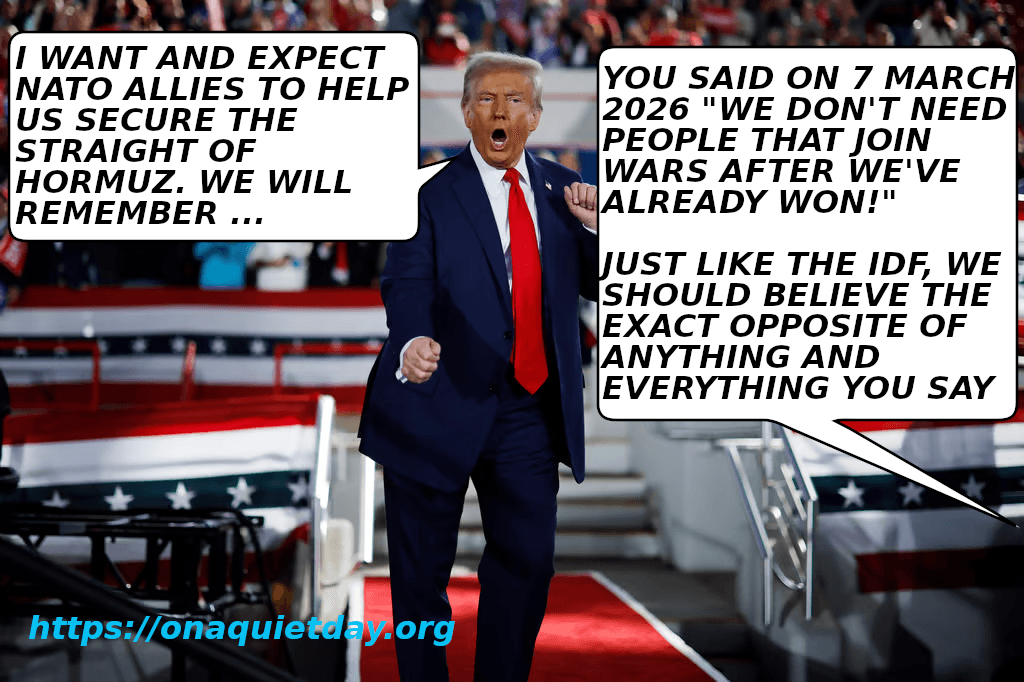
    Donald Trump calls for help from NATO allies in securing the Strait of Hormuz despite saying on 7 March 2026 that they don't need people to join wars after they've already won. He's challenged with the claim that he lies as much as the IDF.
    Donald Trump calls for help from NATO allies in securing the Strait of Hormuz despite saying on 7 March 2026 that they don’t need people to join wars after they’ve already won. He’s challenged with the claim that he lies as much as the IDF.
    • 2 Palestinians killed, 13 injured in Israeli drone strike on vehicle in Gaza
    • From maximum pressure to maximum leverage: What a US-Iran nuclear deal should look like
    • Pro-Palestinian protesters rally in Paris over Gaza war
    • Iraq announces phased reopening of Iran border crossings for passengers, trade
    • Egypt’s Sisi calls on Iran to halt escalation, seek peaceful settlement
    • Iran says ‘US attack’ on commercial vessel in Gulf kills 1, injures 3
    • Israeli forces raid Palestinian journalist’s home in northern West Bank
    • Podcast by Jasim Al-Azzawi with John Fozzie Miller: The stalemate in Gulf grinds on, what will Trump do next?
    • Indonesia must not become a platform for Israeli business
    • Super Sparta: Israel’s new military dependence on America
    • Israeli drone strike injures 9 Gazans in new ceasefire violation
    • Iraqi Prime Minister dismisses Maysan police chief after drone strikes on Saudi pipeline
    • GAFP slams Israeli entry ban on its chair, Jeremy Corbyn MP, and British public figures
    • Saudi Arabia ends ‘potential danger’ alert for southern, southwestern areas
    • US links Chinese satellite imagery to Iranian strike that killed 3 soldiers: Report
    • Iran says Arab foreign ministers to sign Hormuz navigation deal in Oman Monday
    • The illusion of redundancy: Why oil markets are misreading Gulf supply risk
    • Saudi Arabia’s key oil pipeline hit by projectiles, sparking fires: Report
    • UK sanctions on Israeli settlements to cover East Jerusalem, Syria’s Golan Heights: Report
    • Iranian president urges BRICS to prevent obstruction of legitimate trade
    • US defence chief vows to ‘finish this fight’ with Iran
    • Syria says 9 detained Assad-era pilots carried out strikes during 3,200 flight hours since 2011
    • New documentary exposes Israeli military’s AI-driven killing system in Gaza
    • Israel blows up school, destroys tunnels in southern Lebanon despite framework agreement
    • The Aegean’s new arms race isn’t about weapons anymore
    • Iran says Oman to host regional meeting on Hormuz shipping on Monday
    • Israeli occupiers attack Palestinian homes, injure family, steal sheep in Nablus
    • At least 46,000 displaced as fighting escalates in Yemen: UN migration agency
    • Morocco issues extreme wildfire warnings in 6 provinces
    • EU foreign policy chief backs ‘principled’ trade ban on illegal Israeli settlements
    • Norway’s foreign minister warns Netanyahu government driving Israel into ‘very dangerous place’
    • Iranian president says he does not support continued war, urges strengthening country’s resilience
    • Houthis seize strategic Perim Island in Bab el-Mandab Strait, Dhubab city
    • Saudi oil output plunges to lowest since 1990 amid fallout from US-Iran war
    • Lloyds Bank denies mortgage to mother of jailed Palestine Action activist over ‘adverse media’
    • Israel claims killing of 3 Hamas commanders in Gaza
    • Clinton urges tougher US stance on Netanyahu ahead of elections
    • Oil prices jump more than 6%, Brent crude tops $107
    • Israel’s energy paradox: Regional influence, strategic vulnerability
    • Houthis seize Mokha as Yemen’s presidential council calls for international action
    • Somali president thanks Turkey for supporting army restructuring
    • Iran discusses regional developments with Saudi Arabia, Pakistan
    • ICRC calls for urgent de-escalation as Middle East conflict risks further expansion
    • Tunisia’s UGTT reaffirms plans for general strike amid dispute with authorities
    • Houthi official warns Turkey and Pakistan against intervention on Saudi Arabia’s side
    • Israeli reserve General Ofer Winter criticises Netanyahu, says Hamas ‘still standing’
    • How 9/11 remade the Middle East
    • Ismail Haniyeh’s sister appears in Israeli court on incitement charges
    • Podcast by Jasim Al-Azzawi with Retired Col. Bill Keegan: Trump: We have defeated Iran, so why is the IRGC keep fighting?
    • We must challenge the UAE’s role as a haven for hostile state activity
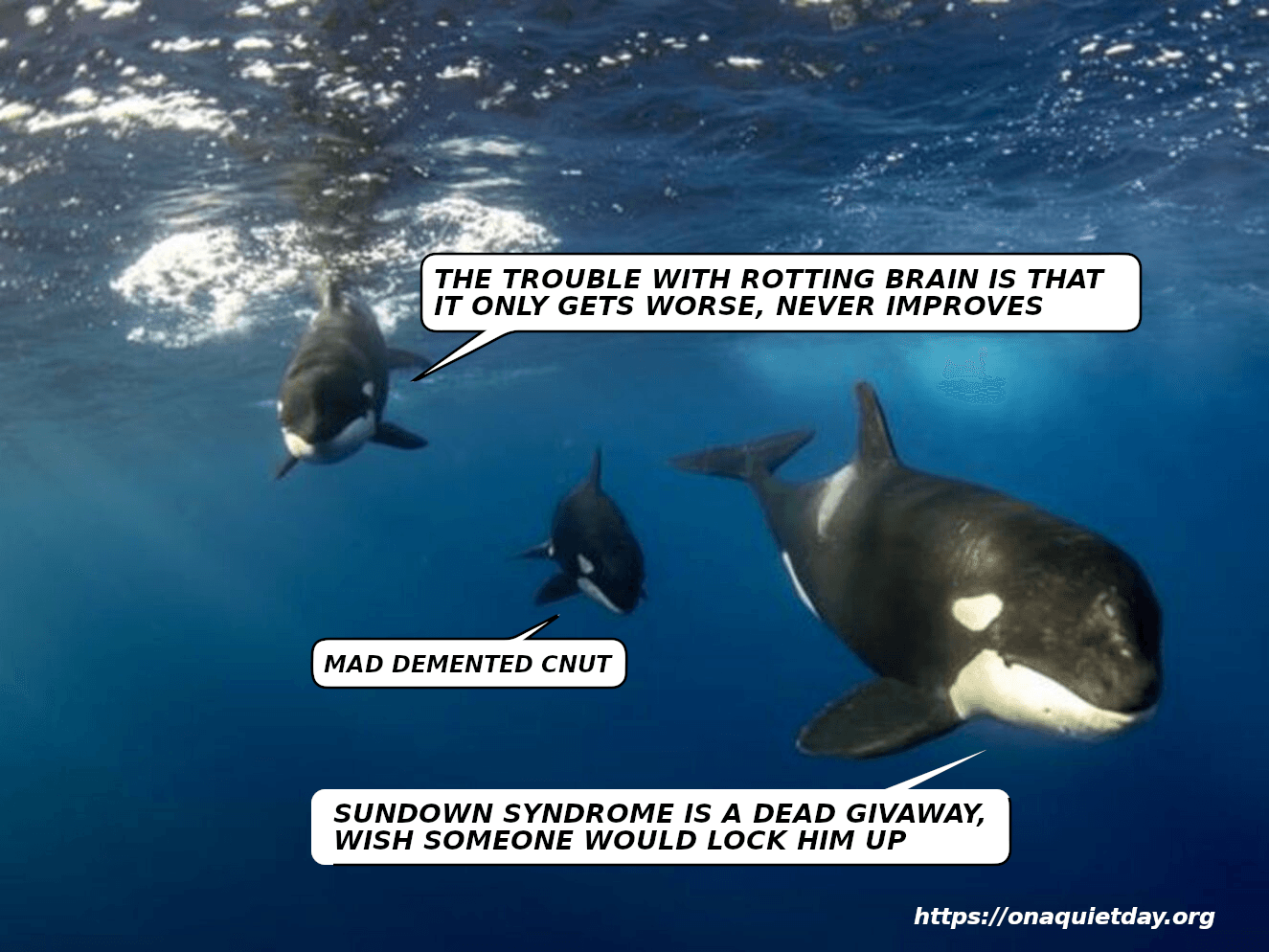
    Orcas discuss rotting brain, front Orca says Sundown Syndrome is a dead givaway and he wishes someone would Lock Him Up
    Orcas discuss rotting brain, front Orca says Sundown Syndrome is a dead givaway and he wishes someone would Lock Him Up
    13 September 2026
  • Israeli occupiers attack Palestinian homes, injure family, steal sheep in Nablus

    This work by Middle East Monitor is licensed under a Creative Commons Attribution-NonCommercial-ShareAlike 4.0 International License.

    Israeli forces look over a Palestinian Shepherd and his flock of sheep [Days of Palestine/Twitter]

    Israeli occupiers on Friday injured a Palestinian man and his children in an attack on their home in Beita, south of Nablus in the occupied West Bank, local sources and a rights group said, Anadolu reports.

    Others also stole sheep from the town under the protection of Israeli forces, the sources said.

    The occupiers assaulted the Palestinian man and his children, injuring them, Al-Baydar Organization for the Defense of Human Rights said.

    It did not specify the nature of their injuries or whether they were taken to hospital.

    Earlier Friday, local sources told Anadolu that occupiers attacked Palestinian homes in the Al-Dhahra and Sahl al-Hara al-Tahta areas in Beita, before stealing several sheep.

    READ: Israel advances plans for more than 1,000 settlement homes in central West Bank

    Palestinians documented the theft in videos seen by Anadolu.

    The attack comes amid rising occupier terrorism in the West Bank, including attacks on Palestinians and their property and the theft of livestock, under the protection of Israeli forces.

    In August, Israeli occupiers carried out 628 attacks, concentrated in Ramallah and Al-Bireh with 157 attacks, Nablus 137, Hebron 120, Bethlehem 73, Tubas 40, Jenin 36 and Jerusalem 31, according to official Palestinian data.

    UN rapporteurs have warned that the sharp rise in occupier terrorism, supported and enabled by the Israeli state in the occupied territory, poses an existential threat to Palestinian communities.

    Around 750,000 occupiers live in 194 illegal settlements and 400 settlement outposts across the West Bank, including East Jerusalem. They carry out near-daily attacks aimed at forcibly displacing Palestinians from their land.​​​​​​​

    READ: Israeli army arrests 33 Palestinians in occupied West Bank, including 2 journalists

    This work by Middle East Monitor is licensed under a Creative Commons Attribution-NonCommercial-ShareAlike 4.0 International License.

    Donald Trump calls for help from NATO allies in securing the Strait of Hormuz despite saying on 7 March 2026 that they don't need people to join wars after they've already won. He's challenged with the claim that he lies as much as the IDF.
    Donald Trump calls for help from NATO allies in securing the Strait of Hormuz despite saying on 7 March 2026 that they don’t need people to join wars after they’ve already won. He’s challenged with the claim that he lies as much as the IDF.
    • 2 Palestinians killed, 13 injured in Israeli drone strike on vehicle in Gaza
    • From maximum pressure to maximum leverage: What a US-Iran nuclear deal should look like
    • Pro-Palestinian protesters rally in Paris over Gaza war
    • Iraq announces phased reopening of Iran border crossings for passengers, trade
    • Egypt’s Sisi calls on Iran to halt escalation, seek peaceful settlement
    • Iran says ‘US attack’ on commercial vessel in Gulf kills 1, injures 3
    • Israeli forces raid Palestinian journalist’s home in northern West Bank
    • Podcast by Jasim Al-Azzawi with John Fozzie Miller: The stalemate in Gulf grinds on, what will Trump do next?
    • Indonesia must not become a platform for Israeli business
    • Super Sparta: Israel’s new military dependence on America
    • Israeli drone strike injures 9 Gazans in new ceasefire violation
    • Iraqi Prime Minister dismisses Maysan police chief after drone strikes on Saudi pipeline
    • GAFP slams Israeli entry ban on its chair, Jeremy Corbyn MP, and British public figures
    • Saudi Arabia ends ‘potential danger’ alert for southern, southwestern areas
    • US links Chinese satellite imagery to Iranian strike that killed 3 soldiers: Report
    • Iran says Arab foreign ministers to sign Hormuz navigation deal in Oman Monday
    • The illusion of redundancy: Why oil markets are misreading Gulf supply risk
    • Saudi Arabia’s key oil pipeline hit by projectiles, sparking fires: Report
    • UK sanctions on Israeli settlements to cover East Jerusalem, Syria’s Golan Heights: Report
    • Iranian president urges BRICS to prevent obstruction of legitimate trade
    • US defence chief vows to ‘finish this fight’ with Iran
    • Syria says 9 detained Assad-era pilots carried out strikes during 3,200 flight hours since 2011
    • New documentary exposes Israeli military’s AI-driven killing system in Gaza
    • Israel blows up school, destroys tunnels in southern Lebanon despite framework agreement
    • The Aegean’s new arms race isn’t about weapons anymore
    • Iran says Oman to host regional meeting on Hormuz shipping on Monday
    • Israeli occupiers attack Palestinian homes, injure family, steal sheep in Nablus
    • At least 46,000 displaced as fighting escalates in Yemen: UN migration agency
    • Morocco issues extreme wildfire warnings in 6 provinces
    • EU foreign policy chief backs ‘principled’ trade ban on illegal Israeli settlements
    • Norway’s foreign minister warns Netanyahu government driving Israel into ‘very dangerous place’
    • Iranian president says he does not support continued war, urges strengthening country’s resilience
    • Houthis seize strategic Perim Island in Bab el-Mandab Strait, Dhubab city
    • Saudi oil output plunges to lowest since 1990 amid fallout from US-Iran war
    • Lloyds Bank denies mortgage to mother of jailed Palestine Action activist over ‘adverse media’
    • Israel claims killing of 3 Hamas commanders in Gaza
    • Clinton urges tougher US stance on Netanyahu ahead of elections
    • Oil prices jump more than 6%, Brent crude tops $107
    • Israel’s energy paradox: Regional influence, strategic vulnerability
    • Houthis seize Mokha as Yemen’s presidential council calls for international action
    • Somali president thanks Turkey for supporting army restructuring
    • Iran discusses regional developments with Saudi Arabia, Pakistan
    • ICRC calls for urgent de-escalation as Middle East conflict risks further expansion
    • Tunisia’s UGTT reaffirms plans for general strike amid dispute with authorities
    • Houthi official warns Turkey and Pakistan against intervention on Saudi Arabia’s side
    • Israeli reserve General Ofer Winter criticises Netanyahu, says Hamas ‘still standing’
    • How 9/11 remade the Middle East
    • Ismail Haniyeh’s sister appears in Israeli court on incitement charges
    • Podcast by Jasim Al-Azzawi with Retired Col. Bill Keegan: Trump: We have defeated Iran, so why is the IRGC keep fighting?
    • We must challenge the UAE’s role as a haven for hostile state activity
    Orcas discuss rotting brain, front Orca says Sundown Syndrome is a dead givaway and he wishes someone would Lock Him Up
    Orcas discuss rotting brain, front Orca says Sundown Syndrome is a dead givaway and he wishes someone would Lock Him Up

    13 September 2026
←Previous Page
1 … 19 20 21 22 23 … 2,078
Next Page→
  • 7 July
  • 7/7
  • Adrian Ramsay
  • AI Artificial Intelligence
  • Airstrip One
  • Alba Party
  • Amber Rudd plc
  • Andrew Feinstein
  • Andrew Lansley
  • Andy Burnham
  • Angela Rayner
  • anti-austerity
  • austerity
  • Austerity 2
  • be afraid
  • be afraid of terrrists
  • bees
  • benefits
  • Benjamin Netanyahu
  • Blackstone
  • Blair government following 9/11 script
  • Boris 'Rice pudding' Johnson
  • Boris Johnson
  • BP
  • Brexit
  • Buller
  • Carla Denyer
  • Caroline Lucas
  • CCS carbon capture and storage
  • Chevron
  • Climate Crisis
  • Climate Emergency
  • Climate Science Denial
  • Communist Party
  • conservatives
  • COP26
  • COP27
  • COP28
  • COP29
  • COP30
  • COP31
  • COP31
  • Coronavirus
  • Cost of Living crisis
  • Count Binface
  • Covid-19
  • Craig Murray
  • crap pretend Labour
  • David Cameron
  • David Lammy
  • David Miliband
  • deregulaton
  • Diane Abbott
  • Donald Trump
  • Dubya Bush
  • dust explosions
  • Eat shit
  • economy
  • Ed Balls
  • Ed Davey
  • Ed Miliband
  • Edward Snowden
  • Ellie Chowns
  • Elon Musk
  • Emily Thornberry
  • Enough is Enough
  • environment
  • Equinor
  • Extinction Rebellion
  • ExxonMobil
  • fake manufactured terrorism
  • fake news
  • Fascism
  • FFF
  • fossil fuel subsidies
  • Freedom of Information
  • GCHQ
  • General Election
  • genocide
  • George Galloway
  • George Osborne
  • Google
  • Gordon Brown
  • Grant Shapps
  • Green Party
  • Greenpeace
  • Greta Thunberg
  • Hannah Spencer
  • Hinkley Point C
  • HP£
  • HP3
  • HS2
  • human rights violations
  • Hydrogen-Pyroxide
  • I think that I got the point that it was a premature announcement by BBC before it actually happened – they were following a script
  • Ian Blair
  • IDS Iain Duncan Smith
  • Independent Alliance
  • Insulate Britain
  • IPCC
  • Iran
  • Iraq wars
  • Israel
  • it was done for me
  • it's a myth
  • Jack Straw
  • James Cleverly
  • JD Vance
  • Jean Charles de Menezes
  • Jeffrey Epstein
  • Jeremy Corbyn
  • Jeremy Hunt
  • Joe Biden
  • John Healey
  • John McDonnell
  • John Reid
  • John Swinney
  • Julian Assange
  • Just Stop Oil
  • Kamala Harris
  • Keir Starmer
  • Kemi Badenoch
  • Ken Livingstone
  • King Charles III
  • Kwasi Kwarteng
  • Labour Party
  • Lebanon
  • Led by Donkeys
  • Leon Brittan
  • Liam Fox
  • Lib Dems
  • Liz Kendall
  • Liz Truss
  • lobbying non-register
  • lobbying secrecy and anti-democracy bill
  • Margaret Thatcher
  • money laundering
  • Monster Raving Loony Party
  • nationalise
  • neo-con
  • Neo-liberalism
  • new authoritarianism
  • NHS
  • Nick Clegg
  • Nicola Sturgeon
  • Nigel Farage
  • nuclear
  • nuclear filth
  • nuclear waste
  • paedo
  • Palestine
  • Pete Hegseth
  • Peter Mandelson
  • Plaid Cymru
  • plutocracy
  • political bigotry and intolerance
  • politics
  • premature collapsation
  • previous blog
  • Priti Patel
  • private medicine
  • privatise
  • Project 2025
  • Rachel Reeves
  • racism
  • Real Estate
  • Reform 2025 Ltd (Reform UK)
  • renewable energy
  • Richard Branson
  • ridiculously irresponsible attitude to nuclear waste
  • RIPA
  • Rishi 'Richy' Sunak
  • Rishi Sunak
  • Roger Hallam
  • Rosebank
  • Royal Mail
  • Rupert Murdoch
  • Sadiq Khan
  • Saudi Armaco
  • Scottish Greens
  • Scottish National Party (SNP)
  • Sellafield
  • serious joking
  • Shabana Mahmood
  • Shell
  • Siân Berry
  • Sinn Fein
  • Slinky … bike
  • Socialism
  • Socialist
  • Sue-Ellen Suella Braverman
  • Super-injunction
  • swears,
  • tax evasion
  • tax exemption
  • terrorism bullshit
  • Thatcher's paedos
  • the filthy rich
  • The Plot Against the NHS
  • the resistence
  • Theresa May
  • they made it up
  • thinks
  • this is Islamaphobia
  • Thoughts of the Day
  • to make me a terrorist
  • Tony Blair
  • Total
  • trade unionism
  • Trump
  • UK Coronavirus
  • UK history
  • Ukraine War
  • Uncategorized
  • universal credit
  • unofficial narrative
  • US Coronavirus
  • USUK
  • Venezuela
  • Vince Cable
  • virgin
  • Vladimir Putin
  • war crime
  • war on science
  • war on terrorism
  • war on terrorism bullshit
  • we are protecting you from evil terrrists (honest). We're not evilly manipulating your fears
  • Wes Streeting
  • what a load of crap
  • working-class history
  • Your Party
  • Youth Demand
  • Yvette Cooper
  • Zack Polanski
  • Zarah Sultana
  • Zionism

… on a quiet day, I can hear her breathing

A UK Socialist's blog

  • Blog
  • About
  • FAQs
  • Authors
  • Events
  • Shop
  • Patterns
  • Themes

Twenty Twenty-Five

Designed with WordPress