• Tory prejudice won’t deter our proud multiculturalism

    https://leftfootforward.org/2024/03/tory-prejudice-wont-deter-our-proud-multiculturalism/

    This war on multiculturalism is an affront to our country

    Sarah Owen is the Labour MP for Luton North

    What does Lee Anderson mean when he says “I want my country back?” Who does he want it back from – and why is it only his version of our country that matters?

    Because as far as I can see, there has been no take over. Most people in control of our country still look like Lee Anderson. They are his demographic and age, if perhaps not class. So who else could he possibly mean?

    This comes with the backdrop of his demonstrably Islamophobic comments about Sadiq Khan (which he still refuses to apologise for) and his most recent former Party receiving political donations from a man who says that Diane Abbott makes you want to ‘hate all Black women’ and wishes she was shot. Only some Conservatives have admitted it was racist, but stopped short of apologising for racism and no Ministers have indicated that the money should be handed back. It is a shameful lack of leadership that Sunak is having to be dragged to admit what is clear for everyone else to see. 

    The idea that any of this can be forgotten about, as the Prime Minister wants, is for the birds – not because it has dominated the media cycle for the last two weeks, but because this racism is the cold reality of too many people’s everyday lives in Tory Britain. Recorded incidents of both Islamophobia and Antisemitism have risen following the geo-political crises in the Middle East, and a 2022 study found that nearly two thirds of Black workers in the UK have encountered racism in their workplace.

    This war on multiculturalism is an affront to our country. I am from a multicultural, mixed heritage family – my father is white British and my mother is from Malaysia. I have considered it to be a blessing in many ways but the political discourse lately ignores the fact that our country is so much richer for its diversity – not just in culture, but also economically. Luton came third in JustGiving’s 2023 list of the highest donating areas. Our community is as generous as it is welcoming, and it comes as no surprise to me that the bulk of our donations are given during Ramadan.

    The town I live in, love and represent is Luton North. It is a town that knows the importance of community cohesion and that it doesn’t just come without trying, especially when those in power or particular media outlets seek division and distraction from government failure.

    …

    https://leftfootforward.org/2024/03/tory-prejudice-wont-deter-our-proud-multiculturalism/
  • Speaker Sir Lindsay Hoyle slammed for not calling Diane Abbott at PMQs after Frank Hester row

    https://leftfootforward.org/2024/03/speaker-sir-lindsay-hoyle-slammed-for-not-calling-diane-abbott-at-pmqs-after-frank-hester-row/

    “What was Lindsay Hoyle thinking?”

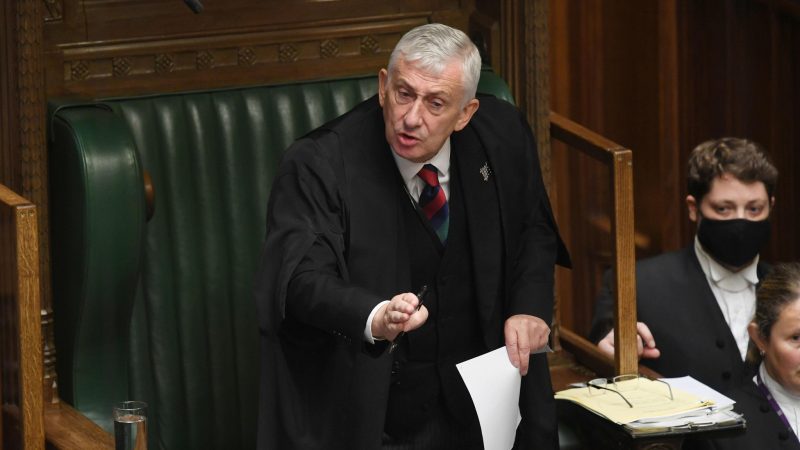
    The Commons Speaker Sir Lindsay Hoyle has been criticised after failing to call Diane Abbott at PMQs, despite the MP having racist remarks made about her by the Tory party’s biggest donor, a topic which dominated this week’s session.

    Labour leader Keir Starmer and Prime Minister Rishi Sunak clashed in the Commons over racism within the Tory party, after the Guardian revealed that the Conservative party’s biggest donor, Frank Hester, had said that said Diane Abbott made him “want to hate all black women” and that she “should be shot”.

    The Guardian revealed that Hester made the comments during a business meeting in 2019.

    He is reported to have said: “It’s like trying not to be racist but you see Diane Abbott on the TV, and you’re just like … you just want to hate all black women because she’s there.

    “And I don’t hate all black women at all, but I think she should be shot.”

    …

    https://leftfootforward.org/2024/03/speaker-sir-lindsay-hoyle-slammed-for-not-calling-diane-abbott-at-pmqs-after-frank-hester-row/

  • Shell CEO awarded £8m pay packet while climate targets dwindle

    https://morningstaronline.co.uk/article/shell-ceo-awarded-8m-pay-packet-while-climate-targets-dwindle

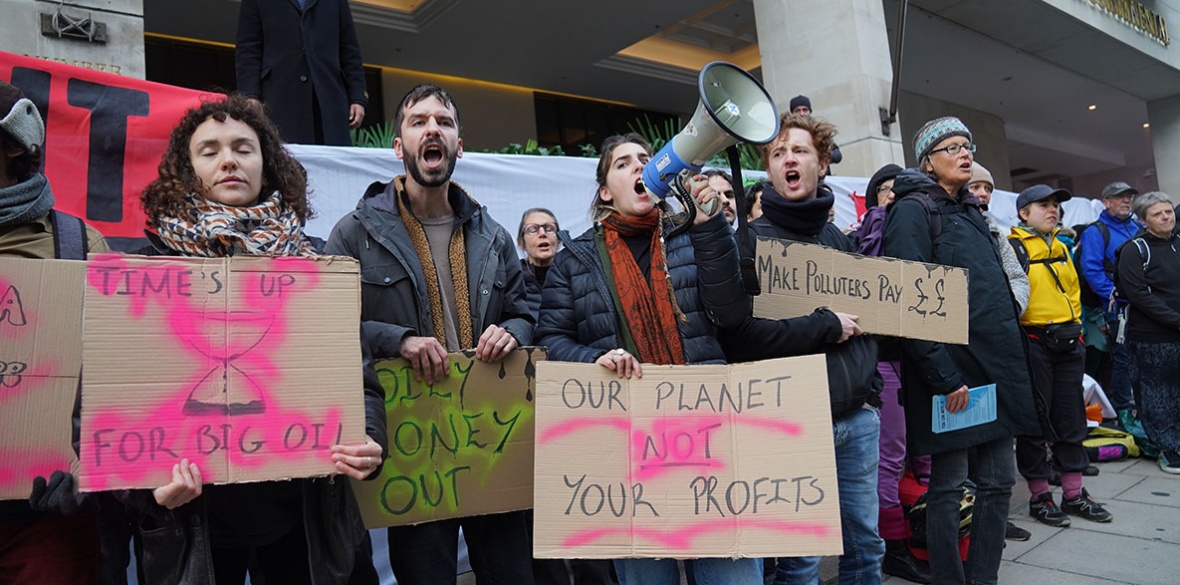
    Activists from Fossil Free London outside the InterContinental in central London, demonstrate ahead of the Energy Intelligence Forum, a gathering between Shell, Total, Equinor, Saudi Aramco, and other oil giants, October 17, 2023

    CAMPAIGNERS have branded Shell CEO’s multimillion pay packet a “bitter pill to swallow” after the corporation announced today it would be watering down its climate pledges.

    …

    It also revealed that CEO Wael Sawan pocketed £7.94 million in pay in 2023.

    Since taking charge last year, the executive oversaw plans to axe 25 per cent of Shell’s low-carbon solutions team and abandoned a policy to cut oil production each year for the rest of the decade.

    Greenpeace campaigner Philip Evans took aim at the new boss, saying he has “doubled down on fossil fuels while ruthlessly slashing jobs and investment from Shell’s renewables division — and personally pocketed a tidy £8m for his trouble.”

    …

    Global Witness campaigner Jonathan Noronha-Gant said Mr Sawan’s payout “is a bitter pill to swallow” for the millions struggling with energy costs.

    He said: “Our reliance on Shell’s dirty oil and gas make them rich whilst the rest of us get poorer.”

    …

    https://morningstaronline.co.uk/article/shell-ceo-awarded-8m-pay-packet-while-climate-targets-dwindle

    Image of InBedWithBigOil by Not Here To Be Liked + Hex Prints from Just Stop Oil's You May Find Yourself... art auction. Featuring Rishi Sunak, Fossil Fuels and Rupert Murdoch.
    Image of InBedWithBigOil by Not Here To Be Liked + Hex Prints from Just Stop Oil’s You May Find Yourself… art auction. Featuring Rishi Sunak, Fossil Fuels and Rupert Murdoch.
  • Aid Groups Condemn IDF ‘Humanitarian Islands’ Plan for Rafah Civilians

    Original article by JAKE JOHNSON republished from Common Dreams under Creative Commons (CC BY-NC-ND 3.0).

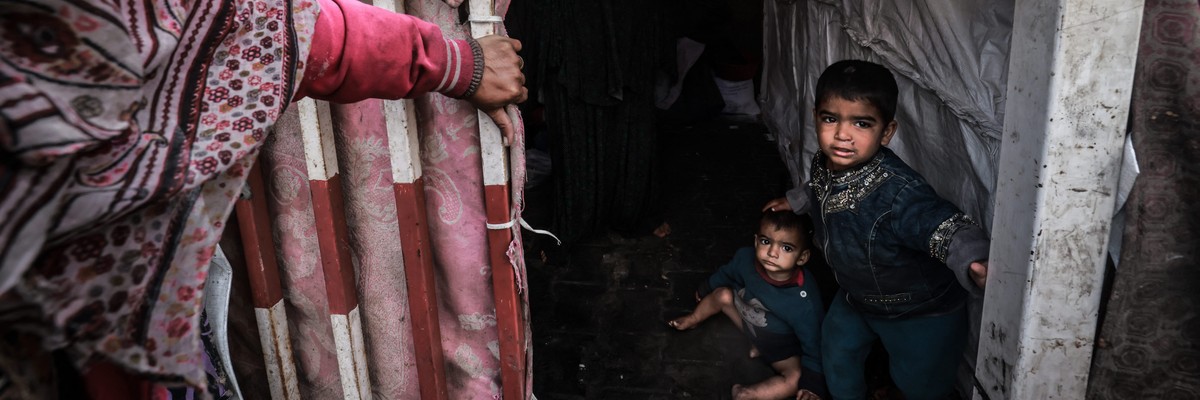
    Displaced Palestinian children are pictured inside a makeshift tent in Rafah, Gaza on March 13, 2024. (Photo: Mohammed Abed/AFP via Getty Images

    “There is nothing humanitarian about Israel’s proposal to push civilians into ‘humanitarian islands’ in Gaza.”

    Aid groups reacted with alarm Thursday to the Israeli military’s stated plan to transfer much of the population of Rafah—a small city in southern Gaza that’s currently packed with more than 1.5 million people—to so-called “humanitarian islands” in the central part of the enclave.

    William Bell, the head of Middle East policy and advocacy at Christian Aid, called the proposal “a preposterous idea” that the international community must reject in favor of an immediate, permanent cease-fire and a massive surge of humanitarian assistance.

    “The half-baked plan to force more than a million displaced civilians out of Rafah into so-called ‘humanitarian islands’ further north beggars belief,” said Bell. “And the suggestion that they will be safe simply cannot be given credence.”

    “How long will it take to build and equip these islands? And how much longer to get people to them?” Bell asked. “With Gaza on the brink of famine, children dying of malnutrition, and desperate families reportedly eating grass to survive, men, women, and children need lifesaving aid now.”

    “The past five months have taught us that places labeled ‘safe zones’ in Gaza quickly become death zones.”

    During a news briefing on Wednesday, Israel Defense Forces (IDF) spokesperson Daniel Hagari said the planned humanitarian zones would be created in concert “with the international community,” but he did not provide specifics or a timeline.

    Ahead of a planned ground invasion of Rafah, Hagari said the IDF intends to direct a “significant” portion of the city’s population—most of which is living in makeshift tents—to designated areas in central Gaza, where he claimed they would be provided with temporary housing, food, and other necessities that Israel has systematically restricted.

    Given that Rafah was once considered a relatively safe area for Palestinians displaced by Israel’s assault and is currently under IDF bombardment, aid campaigners expressed deep skepticism that the plan outlined by Hagari is in any way viable or humane.

    “There is nothing humanitarian about Israel’s proposal to push civilians into ‘humanitarian islands’ in Gaza,” said Melanie Ward, CEO of Medical Aid for Palestinians. “They are dangerous and must be stopped. The past five months have taught us that places labeled ‘safe zones’ in Gaza quickly become death zones.”

    An investigation published Wednesday by the London-based research firm Forensic Architecture shows how the Israeli military has used supposed humanitarian measures to advance its assault on Gaza’s civilian population.

    The investigation details the IDF’s repeated bombardment of so-called “safe zones” to which it has instructed desperate Gazans to flee and makes the case that Israel’s evacuation orders have functioned “as a tool of mass displacement, pushing civilians into unlivable areas that later come under attack.”

    “Military evacuation of civilian populations is only legal under select, rare circumstances, and requires that displaced civilians be temporarily relocated to areas safe from conflict and with access to fundamental provisions for their safety and survival,” the Forensic Architecture analysis said. “Where Israel’s evacuation orders might individually be framed as humanitarian in nature, in fact when closely analyzed and considered over time, they reveal patterns of systematic mass displacement, with Palestinians deliberately and repeatedly being expelled from one unsafe and under-resourced location to another.”

    “A ground invasion in Rafah,” the research firm argued, “would exacerbate the already dire humanitarian situation for the 1.5 million displaced Palestinians taking refuge there.”

    In an interview this past weekend, U.S. President Joe Biden said that an IDF incursion into Rafah would cross a “red line”—a remark that the White House has since tried to walk back after Israeli Prime Minister Benjamin Netanyahu vowed the planned assault would go ahead.

    Asked about Israel’s “humanitarian islands” proposal on Thursday, White House National Security Council spokesperson John Kirby said, “We can’t confirm that that is in fact a plan that they have.”

    “Our position has not changed,” Kirby said of a potential Rafah invasion. “We do not want to see large-scale operations in Rafah… unless there is [a] legitimate, executable plan to provide for the safety and security of the civilians that are there.”

    Original article by JAKE JOHNSON republished from Common Dreams under Creative Commons (CC BY-NC-ND 3.0).

  • ‘Another Flour Massacre’: IDF Reportedly Kills 20 Waiting for Aid in Northern Gaza

    Original article by JAKE JOHNSON republished from Common Dreams under Creative Commons (CC BY-NC-ND 3.0).

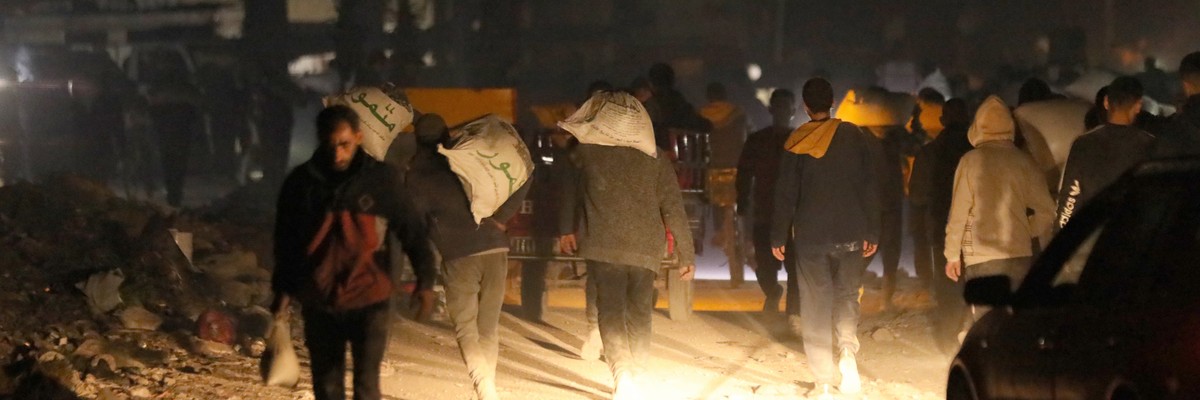
    Palestinians receive humanitarian aid supplies brought by trucks to Gaza City on March 13, 2024. (Photo: Dawoud Abo Alkas/Anadolu via Getty Images)

    “Our governments did nothing to hold Israel accountable last time it attacked desperate hungry people seeking aid in Gaza,” said one aid campaigner. “So why wouldn’t it do the exact same thing again?”

    Gaza health officials said Thursday that Israeli forces killed at least 20 people and injured over 150 more as they waited for humanitarian aid in the northern part of the Palestinian enclave, where deliveries of food, medicine, and other necessities have become virtually impossible due to Israel’s persistent obstruction and attacks.

    Mohammed Ghurab, the director of emergency services at a hospital in the area, told AFP that there were “direct shots by the occupation forces” at people waiting for a truck carrying food. Northern Gaza is in the grip of famine-like conditions, and desperate people there have resorted to eating weeds and livestock feed amid Israel’s suffocating blockade.

    Dozens of people, including children, have died of starvation and dehydration in northern Gaza in recent weeks.

    Thursday’s attack took place at the Kuwaiti Roundabout in Gaza City, according to the territory’s health ministry, which said nearby hospitals were “unable to deal with” the influx of wounded patients.

    Horrific video footage posted to social media shows bloody bodies lying motionless amid debris. Middle East Eye reported that “a truck transporting aid into Gaza” later “collided with a vehicle carrying victims” of Thursday’s attack to a hospital.

    “Eyewitnesses said the area was struck by what they said sounded like tank or artillery fire,” CNN reported. “The incident at the Kuwaiti Roundabout followed earlier violence at the same site on Wednesday, where large crowds were waiting for a food distribution. At least seven people were killed and 86 others injured after Israeli troops opened fire.”

    A day earlier, Israel allowed an aid convoy to enter Gaza’s north directly through an Israeli border crossing for the first time since the Hamas-led October 7 attack.

    https://twitter.com/i/status/1768379577418600694 [Video on X appears unavailable]

    Ziad Saeed Madoukh, who was shot in the foot during Thursday’s attack, told the Euro-Mediterranean Human Rights Monitor that Israeli forces started “heavily firing live ammunition towards the crowd of civilians as soon as aid trucks approached” the roundabout.

    “Another survivor of today’s massacre, Ibrahim Al-Najjar, was shot in the hand by Israeli forces,” the rights group said. “Al-Najjar told Euro-Med Monitor’s team that he tried to get a bag of flour for his children at the Kuwait Roundabout, but that he and others were subjected to live ammunition and artillery shells despite gathering in an area previously designated as safe by Israel’s army.”

    The Israel Defense Forces (IDF) denied attacking Gazans at the aid distribution point and said it was “analyzing” the incident.

    Thursday’s bloodshed drew comparisons to the February 29 attack in which Israeli forces opened fire on crowds of starving Gazans trying to get their hands on bags of flour. The attack was later dubbed the “flour massacre.”

    The Israeli military claimed that most of the deaths were caused by a stampede, but testimony from witnesses and hospital officials as well as bullets found at the scene refuted that narrative.

    “Our governments did nothing to hold Israel accountable last time it attacked desperate hungry people seeking aid in Gaza,” said Rohan Talbot, director of advocacy and campaigns at Medical Aid for Palestinians. “So why wouldn’t it do the exact same thing again?”

    Prior to Thursday’s attack—described as “another flour massacre”—Gaza authorities estimated that Israeli forces had killed at least 400 people waiting for humanitarian aid deliveries. Between mid-January and the end of February, the United Nations documented at least 14 instances of Israeli forces opening fire on crowds gathered to receive humanitarian aid.

    “This is something that is preventable and shouldn’t be happening,” Shaina Low, communications adviser for the Norwegian Refugee Council, told Al Jazeera.

    Asked Wednesday about Israel’s repeated attacks on Palestinians awaiting aid, U.S. State Department spokesperson Matthew Miller said that “we want to see it investigated promptly, and, if appropriate, see accountability.”

    “We also press them to take measures to keep it from happening again,” said Miller, who did not warn of any consequences for Israel’s military if it continues to massacre desperate civilians.

    A group of senators warned earlier this week that it is a violation of U.S. law to arm a government that is obstructing the delivery of humanitarian assistance.

    Original article by JAKE JOHNSON republished from Common Dreams under Creative Commons (CC BY-NC-ND 3.0).