A new Welsh electoral landscape puts Plaid Cymru within reach of power
Spread the love
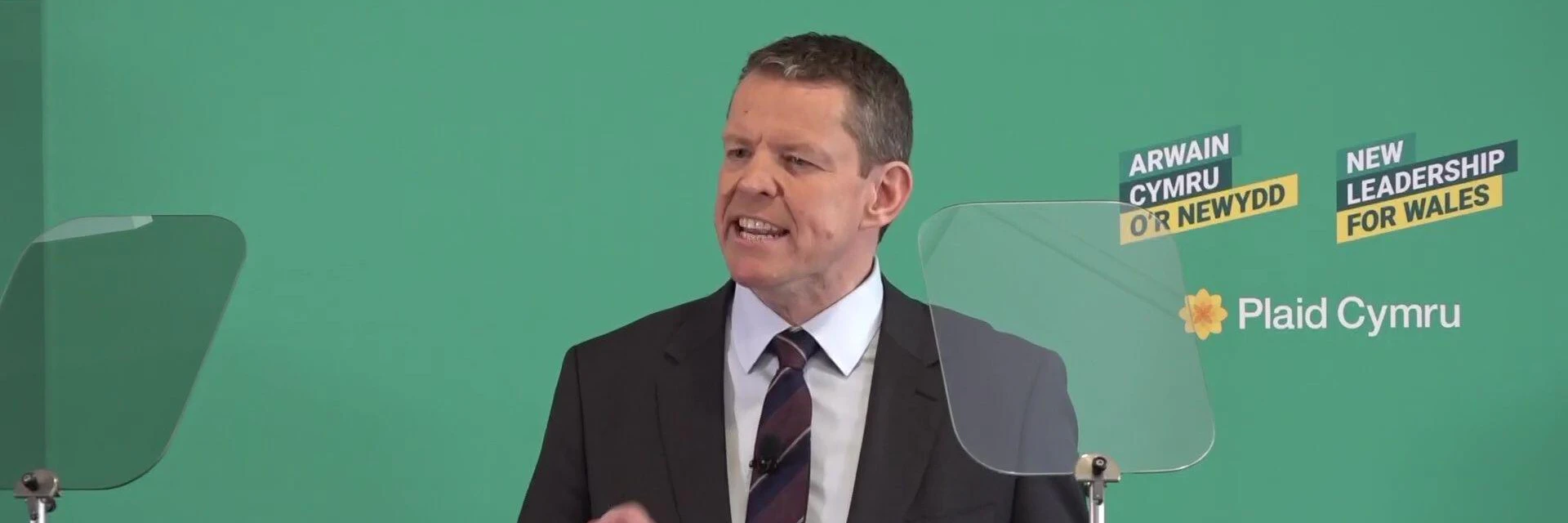
Rhun ap Iorwerth, the leader of Plaid Cymru. PA Images/Alamy

Anwen Elias, Aberystwyth University and Elin Royles, Aberystwyth University

Plaid Cymru’s electoral hopes for May’s Senedd election are high. Polls suggest the party is competing with Reform UK to emerge as the largest group in the next Welsh parliament, putting it, for the first time, within reach of leading a government in Wales.

This marks a striking shift in Plaid’s electoral fortunes. At the first election to what was then the National Assembly for Wales in 1999, the party won 28.4% of the vote. That remains its strongest performance to date in what was widely described at the time as a “quiet earthquake” in Welsh politics.

Since then, Plaid has struggled to match that breakthrough in devolved elections. From 2011 onwards it has consistently been the third-largest party in the Senedd, behind Welsh Labour – which has led every government since devolution – and the Conservatives.

Even so, the arithmetic of Welsh politics has occasionally worked in Plaid’s favour. The party entered government in coalition with Labour between 2007 and 2011, and more recently struck a co-operation agreement from 2021 to 2024. But if Plaid ends up leading a government outright after May 7, it would truly set this election apart.

Positioning itself for power

Plaid Cymru’s strategy is to present itself as a credible government-in-waiting. Its focus is less about being a party of protest and more about delivery. In other words, what it would do in office, how it would tackle Wales’s major policy challenges, and how it would represent Welsh interests at Westminster after nearly three decades of Labour dominance.

In February, the party set out its plan for its first 100 days in government. This focused on improving healthcare, raising education standards, boosting the economy and reforming government.

Alongside these priorities, its manifesto calls for further powers to be devolved to the Senedd. These include greater tax powers, justice and policing, rail services and infrastructure, and the Crown Estate, which oversees things like the sea bed and mineral rights in much of the countryside.

Yet there has also been a noticeable change in tone on the party’s long-term constitutional aims. Our research examined how Plaid Cymru covered these issues in the 2021 Senedd election. Compared with five years ago, Welsh independence is significantly less prominent in both its current manifesto and campaign.

The timetable has softened too. There’s no longer a commitment to holding a referendum on independence in its first term of government. Instead, Plaid describes Wales as being “on a journey” to independence. It has committed to producing a policy on Welsh independence but with no referendum timeframe.

By downplaying its long-term constitutional ambitions in this way, and focusing on the more immediate policy challenges facing Wales, Plaid Cymru is approaching this Senedd election as many other pro-independence parties have done across Europe. A similar strategy helped the Scottish National Party win power in 2007 and remain in government for the next 19 years.

A ‘degradation in belief that Labour stood for Wales,’ says Plaid Cymru leader – Sky News.

From polling strength to political power

Strong polling does not guarantee power, however, and Plaid faces several obstacles. Opponents continue to highlight its commitment to independence.

Support for independence among the Welsh public remains relatively low – only 26% of respondents in a recent YouGov poll agreed that Wales should be an independent country. Plaid’s challenge is to persuade sceptical voters that this isn’t the most important issue in Wales for the next four years.

The new electoral system also presents fresh uncertainties. This election will use a fully proportional model, with 96 members elected across 16 constituencies. Success will now depend on broad support across Wales. That’s a test for a party whose organisational strength has traditionally been concentrated in the north and west.

The new system is also likely to produce a more fragmented Senedd, with a wider range of parties represented. That could make post-election negotiations decisive, shaping who is able to lead a government and how stable it is.

Anwen Elias, Reader in Politics, Aberystwyth University and Elin Royles, Reader at the Department of International Politics and Centre for Welsh Politics and Society, Aberystwyth University

This article is republished from The Conversation under a Creative Commons license. Read the original article.

Keir Starmer says that the Labour Party under his leadership is intensely relaxed about assaulting those least able to defend themselves - the very poorest and most vulnerable.
Keir Starmer says that the Labour Party under his leadership is intensely relaxed about assaulting those least able to defend themselves – the very poorest and most vulnerable.
Nigel Farage explains the politics of Reform UK: Racism, Fake anti-establishmentism, Deregulation, Corporatism, Climate Change Denial, Mysogyny and Transphobia.
Keir Starmer refuses to be outcnuted by Nigel Farage's chasing the racist bigot vote.
Keir Starmer refuses to be outcnuted by Nigel Farage’s chasing the racist bigot vote.

Continue ReadingA new Welsh electoral landscape puts Plaid Cymru within reach of power

Morning Star Editorial: Attention turns to Wales: Labour’s long-term control under threat

Spread the love

https://morningstaronline.co.uk/article/attention-turns-wales-labours-long-term-control-under-threat

Wales Green Party Leader Anthony Slaughter, Reform UK’s Dan Thomas, Welsh Labour Leader and First Minister Eluned Morgan, Plaid Cymru of leader Rhun ap Iorwerth, Welsh Conservative leader Darren Millar and Welsh Liberal Democrat Leader Jane Dodds

RARELY has Wales featured so prominently in all-Britain election coverage as today in the run-up to polling day on May 7. Certainly, it is difficult recall such media interest in any of the six general elections to the National Assembly of Wales and its successor, the Senedd, over the past quarter of a century.

The London-based mass media usually show little interest in Wales unless a gruesome murder, a royal visit or a sporting spectacle has attracted journalistic attention beyond the M25 bubble.

What’s so different this time around? The big story is that the Labour Party is set to be replaced as the biggest electoral force in Wales for the first time in 100 years. The old certainty of a Labour victory (and most often a Labour landslide) is dying.

Welsh Labour is suffering from over-familiarity and its all-too-supine relationship with Keir Starmer’s government at Westminster. Many thousands of habitual Labour voters in the south Wales valleys are likely to switch to Plaid Cymru, despite not yet sharing that party’s aspiration for Welsh independence from the UK. A smaller number may go Green, and many more probably won’t vote at all.

They don’t feel the change promised by Starmer’s party. They dislike his lack of honesty and integrity. Many are repelled by his refusal to condemn US-Israeli massacres of the innocent in Palestine, Iran and Lebanon.

Neither do they remember — unless forcefully reminded — of the achievements of Welsh Labour and Labour-Plaid coalition governments despite the lack of powers and resources at the disposal of the Welsh parliament: free NHS prescriptions, free hospital parking, free bus travel for the elderly, the reintroduction of student maintenance grants, free museum entry, primary school breakfast clubs, financial penalties for holiday home ownership, aid for the Welsh steel industry, nationalisations to invest in Cardiff-Wales Airport and Transport for Wales rolling stock, etc.

https://morningstaronline.co.uk/article/attention-turns-wales-labours-long-term-control-under-threat

Keir Starmer says that the Labour Party under his leadership is intensely relaxed about assaulting those least able to defend themselves - the very poorest and most vulnerable.
Keir Starmer says that the Labour Party under his leadership is intensely relaxed about assaulting those least able to defend themselves – the very poorest and most vulnerable.
Nigel Farage reminds you that he's the man that brought you Brexit and asks what could possibly go wrong.
Nigel Farage reminds you that he’s the man that brought you Brexit and asks what could possibly go wrong.
Continue ReadingMorning Star Editorial: Attention turns to Wales: Labour’s long-term control under threat

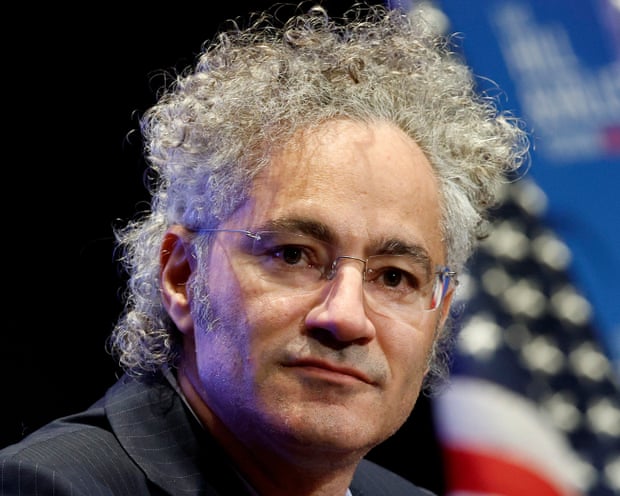
Palantir manifesto described as ‘ramblings of a supervillain’ amid UK contract fears

Spread the love

https://www.theguardian.com/technology/2026/apr/21/palantir-manifesto-uk-contract-fears-mps

Alarm caused by posts of Alex Karp, tech firm’s CEO, championing US military dominance and of AI weapons

The US spy tech company Palantir published a manifesto extolling the benefits of American power and implying some cultures are inferior to others – in what MPs have called “a parody of a RoboCop film” and “the ramblings of a supervillain”.

“Some cultures have produced vital advances; others remain dysfunctional and regressive,” wrote Palantir in a 22-point post on X over the weekend, which also called for an end to the “postwar neutering” of Germany and Japan.

The post exhorted the US to reinstate a military draft, saying that “free and democratic societies” need “hard power” in order to prevail.

It also predicted a future dominated by autonomous weapons: “The question is not whether A.I. weapons will be built; it is who will build them and for what purpose. Our adversaries will not pause to indulge in theatrical debates about the merits of developing technologies with critical military and national security applications. They will proceed.”

It led to criticism from several MPs, who said that it raised yet more questions about the UK’s portfolio of contracts with the company. Palantir has built up more than £500m in contracts in Britain, including a £330m contract with the NHS, as well as deals with the police and Ministry of Defence. These deals have come in for increasing criticism.

“Palantir’s manifesto, which embraces AI state surveillance of citizens along with national service in the USA, is either a parody of a RoboCop film, or a disturbing narcissistic rant from an arrogant organisation,” said Martin Wrigley, a Liberal Democrat MP who is a member of the commons science and technology select committee.

“Either way it shows that the company’s ethos is entirely unsuited to working on UK government projects involving citizens’ most sensitive private data.”

The original article is at https://www.theguardian.com/technology/2026/apr/21/palantir-manifesto-uk-contract-fears-mps

Continue ReadingPalantir manifesto described as ‘ramblings of a supervillain’ amid UK contract fears

Green Party responds to Reform UK’s ‘ill-thought-out and cruel’ plan to deport hundreds of thousands granted asylum

Spread the love
Rachel MiIlward, deputy leader of the Green Party of England and Wales. Image under Creative Commons CC0 1.0 Universal Public Domain Dedication by RandomCommons by Stuff via wikimedia.
Rachel MiIlward, deputy leader of the Green Party of England and Wales. CC image.

Responding to Reform UK’s latest attacks on asylum seekers, deputy leader of the Green Party of England and Wales, Rachel MiIlward said:

“Another superficial, ill-thought-out and cruel announcement by Reform UK, which will fail to tackle the roots of the asylum crisis whilst making sure more suffering is heaped on the most vulnerable. 

“We do not want to see people risking their lives crossing the channel in small boats. What we need is strong international cooperation to address the reasons that people are having to seek asylum in the first place: war, poverty and the climate crisis, and to provide safe & managed routes that would offer a real alternative to people smugglers.”

“We must remember our basic humanity. Many of those seeking asylum have endured horrendous trauma. They include mothers and children. We have a duty to offer compassion and sanctuary, not insecurity, fear and intimidation.

Millward also criticised the BBC for its recent reporting on asylum issues:

“We are disappointed that in recent days the BBC, with its own reports stretching over multiple days, failed to show the challenges those genuinely claiming asylum face. Of course applications for asylum must operate under a proper legal framework, but introducing ever more restrictive rules won’t make the system more efficient. What it would do is make life even harder for the most vulnerable.”

Continue ReadingGreen Party responds to Reform UK’s ‘ill-thought-out and cruel’ plan to deport hundreds of thousands granted asylum

Green MP Siân Berry: “If the Prime Minister has any integrity at all, he must go

Spread the love
Green Party MP for Brighton Pavilion Siân Berry. Image by Kelly Hill, Wikimedia CC BY-SA 4.0.

Reacting to Government Ministers’ denial of any knowledge of Peter Mandelson’s failed vetting, Green Party MP Siân Berry said:

“The Prime Minister’s denials simply do not ring true, and the outrageous moral failings of this entire appointment mean he must resign.

“Keir Starmer told us he would be the Prime Minister who restored trust in politics, not the one to leave ministerial ethics in tatters. It grows ever clearer that he has misled Parliament on the question of vetting, and possibly also the King, whose sign-off is required for ambassadorial appointments.

“It is also very clear in Yvette Cooper’s letter to the foreign affairs select committee that she knew the vetting had failed. No more buck passing and scapegoating. If the Prime Minister has any integrity at all, he must go.”

Continue ReadingGreen MP Siân Berry: “If the Prime Minister has any integrity at all, he must go