WARNING FROM HISTORY: Communists Robert Thompson and Benjamin Davis leave the Federal Courthouse in New York City during the 1949 ‘Foley Square Trial’ / Pic: CM Stieglitz/World Telegram & Sun/Library of Congress/CC
After Zohran Mamdani’s electoral win, BHABANI SHANKAR NAYAK points to the forgotten role of US communists in New York’s radical politics
AS THE dust of the recently concluded mayoral election settles in New York’s political consciousness, a new dawn begins.
Red babies are once again in the streets of Harlem, and it is now confirmed that 34-year-old Zohran Kwame Mamdani is the mayor-elect of New York City. Mamdani, a self-confessed socialist, is a member of both the Democratic Party and the Democratic Socialists of America.
His victory demonstrates that market-led bourgeois politics can be challenged and defeated by working people united around a clear, progressive political agenda.
New York is one of the richest cities in the world, yet one in four of its residents lives in poverty. The costs of housing, rent, childcare, transport, food and other essentials have become unaffordable for a dignified, basic life.
In this wealthy city, more than 500,000 children go to bed hungry each night. In response to such acute crisis, Mamdani offers politics of hope in the hopeless world of racialised capitalism in US.
Mamdani’s campaign promised to freeze rents, reduce the cost of childcare, double the minimum wage, provide free public transport and increase corporate tax rates. He also pledged to establish city-owned grocery stores, expand mental health services and promote community safety across New York.
These progressive policies are not radical enough for a total transformation but the policies are a necessary response to the times and essential for the survival and dignity of working people in New York.
Kerala’s LDF government celebrates the eradication of extreme poverty in the state. Photo: Pinarayi Vijayan
The Communist Party of India (Marxist)-led Left Democratic Alliance (LDF) government achieves a unique feat in India which, according to the World Bank, has the world’s largest number of extremely poor.
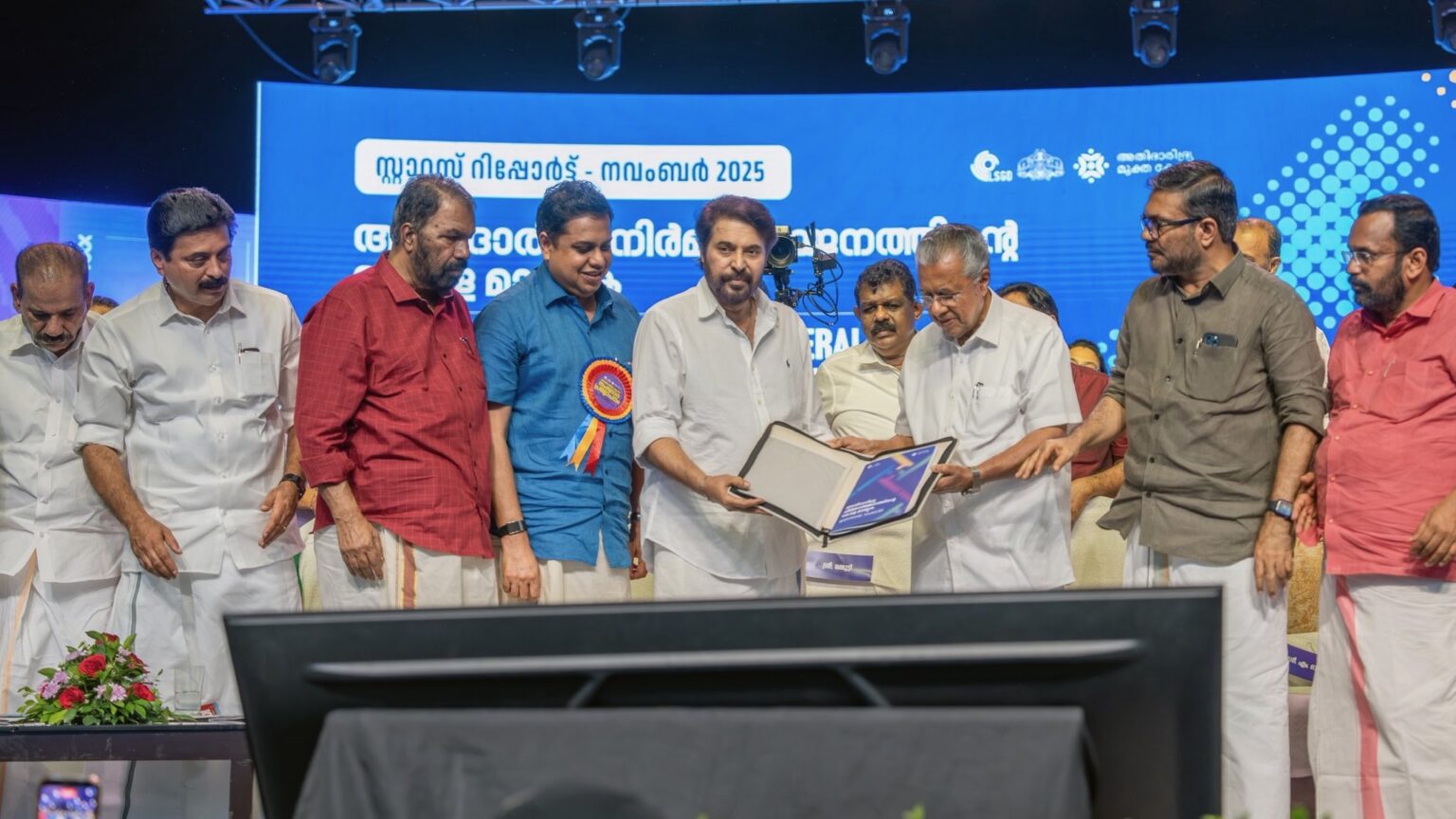
On Saturday, November 1, India’s southern state of Kerala officially declared itself free of extreme poverty. This makes the left-ruled state the first and only state in the country to achieve such a milestone.
Announcing the achievement during a session of the state’s legislative assembly, left leader and Chief Minister of the state Pinarayi Vijayan called it a “historic and proud moment” for the state and its people and hoped that “our experiments will become a model that states in the country can benefit from.”
India has the world’s largest population living in extreme poverty, as per the data released by the World Bank last year.
“Kerala has etched a new chapter in history—erasing extreme poverty to become the first place in India and the second in the world to achieve this milestone,”John Brittas, member of India’s parliament from the Communist Party of India (Marxist) said on X.
In February 2021, China became the first country in the world to announce the end of extreme poverty, a decade ahead of the UN schedule under its sustainable goals.
On Saturday, Chinese ambassador to India Xu Feihong also congratulated Kerala’s government for its achievement, saying “to eliminate poverty is the common mission of humanity.”
From long-term policies to micro planning
After being elected to power for the second time in a row in 2021, the Pinarayi-led Left Democratic Front (LDF) government proclaimed that it would eradicate extreme poverty in the state by the end of its term.
In May 2021, the LDF government launched the Extreme Poverty Eradication Project (EPEP). The project had initially identified over 100,000 households as extremely poor. However, after the final analysis on the basis of access to food, income, shelter, and healthcare the number of households in extreme poverty came down to 64,006.
In the last four years extensive targeted attempts were made to provide sustained access to whichever element a particular family was lacking among these 64,006 families. This involved different government agencies and local self government bodies across the state.
In April of this year, after declaring Dharmadam (his own constituency) the first to be free from extreme poverty in the state, Vijayan had announced that by the state formation day on November 1 the state will finally achieve its goal set four years ago.
Socialist policies deliver
Kerala, which has mostly hilly terrain and a very high population density was once one of the poorest states in India with close to 60% of its population living in poverty.
Due to long-term welfare and development policies based on socialist distribution, such as land reforms, decentralization, high social expenditure on health and education, a robust public distribution system, among others adopted by the successive left governments in the state, the percentage of poor decreased drastically to just over 11% in 2011-12, when the last pan-India census was held.
The figure has been substantially lowered even further in the 15 years since then.
According to the central government’s multidimensional poverty index released in 2021, Kerala had the least multidimensional poverty among the Indian states, with less than 1% of its population (0.7%) identified as poor.
Kerala’s achievement is a result of the sustained efforts of successive left governments and their policies, claimed Thomas Issac, former finance minister and a leader of the CPI(M).
“From 60% poverty in 1973, Kerala declares itself free from extreme poverty. This is the real Kerala story of land reforms, increase in wages, universal education, healthcare and social security. Finally, 4 years of micro planning to lift 64,006 from extreme poverty” Issac said in a post on X.
Vijayan also acknowledged the role of long-term policies in achieving zero extreme poverty in the state.
“The process of eradicating extreme poverty is a continuation of the steps taken earlier for universal public distribution system and for the eradication of landlessness and homelessness. Kerala has made remarkable progress in the sustainable development index envisioned by the UN by eradicating extreme poverty,” he said on Saturday.
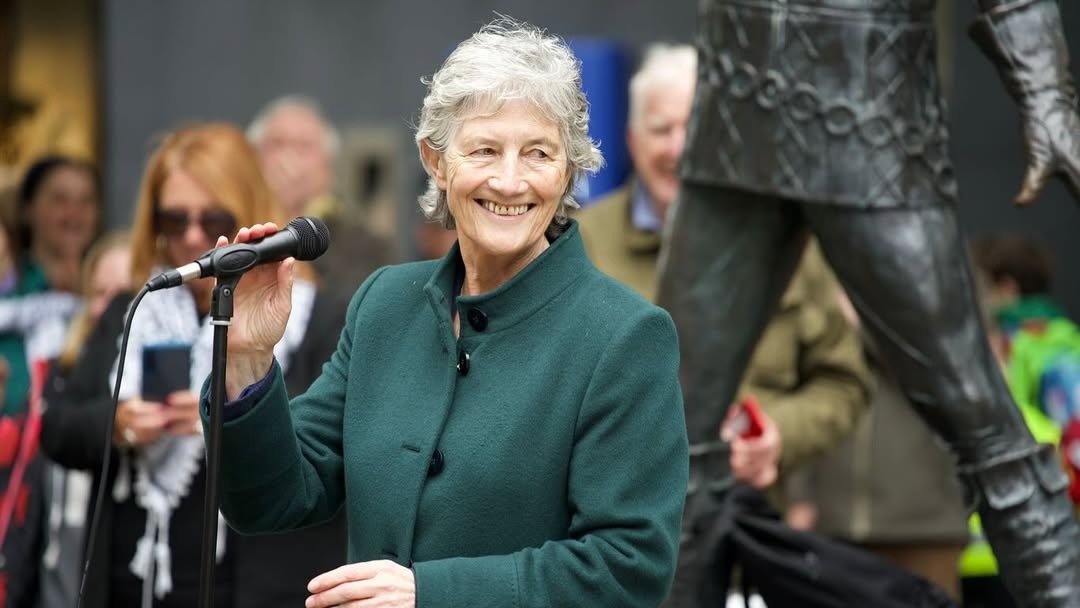
Recently elected Irish President Catherine Connolly. Photo: X
Both Catherine Connolly and Michael D are unabashedly left-wing, absorbed by the struggle for people to live with dignity in Ireland itself and gripped by severe global challenges, particularly those posed by US imperialism.
Catherine Connolly (born 1957) only became involved in active politics in 1999. Michael D. Higgins, the outgoing president of Ireland (2011-2025), encouraged Connolly to join the Labour Party and stand for election. Both Connolly and Higgins (known in Ireland as Michael D) come from Galway, a city on the west coast of Ireland. Connolly was born there, the ninth of fourteen children — seven girls and seven boys — in a working-class family. Her mother died when Catherine was only nine, and her father, a home builder, relied on his older children to care for the younger ones. In this household, Catherine Connolly developed a keen sense of service and discipline, which included involvement in local Catholic charities such as the Legion of Mary and the Order of Malta. This was, as she describes it, Connolly’s road to “her socialism”.
As a lawyer in Galway with a young family (two boys), Connolly ran for and won a seat on the Galway City Council in 1999, later becoming mayor of Galway from 2004 to 2005. Michael D had been mayor from 1990 to 1991. Just as she followed him to City Hall, Connolly has now followed Michael D to the presidency of Ireland.
Ireland is a country divided by British colonialism: most of the population lives in the Republic of Ireland (population 5.2 million), while a part of the island’s population lives in the northern counties still controlled by the United Kingdom (population 1.5 million). There are between 50 million and 80 million people around the world, mostly in the Americas, who claim Irish descent (the most famous person, now featured on an Irish stamp, was Che Guevara). Half the population in the six northern counties have Irish citizenship (while there are nearly three million diaspora Irish with citizenship), making them eligible to vote for the president.
While the president strictly speaking represents the Republic — and even then, in a largely ceremonial role — the post has been shaped by its previous nine holders as a pulpit from which to speak for all of Ireland. Micheal D, a poet as well as a politician, has transformed the post, shaping it into a moral lectern from which to advocate for Ireland’s role in the world based on larger values. This is a post that Catherine Connolly will undoubtedly enjoy.
Both Catherine Connolly and Michael D are unabashedly left-wing, absorbed by the struggle for people to live with dignity in Ireland itself and gripped by severe global challenges, particularly those posed by US imperialism. Connolly said she first entered politics twenty-six years ago because of the housing crisis, the “defining social crisis of our time”. This remains the most important problem for young people in Ireland, many of whom find it impossible to rent decent accommodation near their places of work.
In the 1990s, Ireland’s economy boomed through the liberalization of finance, earning the country the nickname “Celtic Tiger” (a phrase first used by a Morgan Stanley analyst). A low corporate tax rate and membership in the European Union allowed the country to attract tech money and real estate investment. This drove up housing prices, which have not collapsed despite the bust of the Celtic Tiger after the 2008 credit crisis (Ireland suffered a similar fate as Iceland, but with less prison time for its own banking elite). It is estimated that the country suffers a housing shortage of a quarter of a million units, that a new teacher in Dublin would have to use their entire salary to pay rent for a modest apartment, and that while wages rose at 27% between 2012 and 2022, property prices increased by 75%. Connolly spent most of her campaign focused on the direct problems faced by the Irish people, although the presidency can only lift issues into the public debate and advise the elected government.
When I visited Michael D in the presidential residence in 2014, he was gripped by the waste of human resources on war and war-making to the exclusion of solving problems of human life. He was interested in why so much of social wealth was being spent on warfare, when it was clear that war-making (such as with the US War on Terror) merely created more problems than it solved. We discussed the issue of Irish neutrality and how Ireland had slipped from that core principle by allowing the US permission to land warplanes and CIA planes at Shannon airport, the closest airport to Galway. Connolly will follow Michael D into the presidential office with this same concern. She has made vital statements not only against US war-making, but against the Israeli genocide of the Palestinians. In June, Connolly called Israel a “terrorist state”. It is likely that these sorts of statements will continue to be made from Dublin.
Since Éamon de Valera won the prime ministership in 1932 as the leader of Fianna Fáil (the Republican Party), the country has been led back and forth by Fianna Fáil and Fine Gael (the Irish Party). Both are now parties of the right (with close links to the political elite in the United States) and have, since 2020, been in a grand alliance for the prime ministership. Connolly ran against Fine Gael’s Heather Humphreys, who put up a very poor show.
Though running as “independent”, Connolly was backed by the broad left: 100% Redress, the Communist Party of Ireland, the Green Party, the Labour Party, People Before Profit, Sinn Féin, the Social Democratic Party, and the Workers Party, as well as a raft of organizations and movements. The backing of Sinn Féin, the second largest party in parliament, was crucial; the party brings to bear the weight of the republican tradition, which is focused on the unification of Ireland, and the weight of the party’s working-class roots in the cities where the housing question is paramount.
While Connolly has said that she will represent the entire country, she will be largely the voice of the working-class and the oppressed — not the Irish landlords and bankers. Nor will she be kind to US imperialism and its allies.
Though running as “independent”, Connolly was backed by the broad left: 100% Redress, the Communist Party of Ireland, the Green Party, the Labour Party, People Before Profit, Sinn Féin, the Social Democratic Party, and the Workers Party, as well as a raft of organizations and movements.
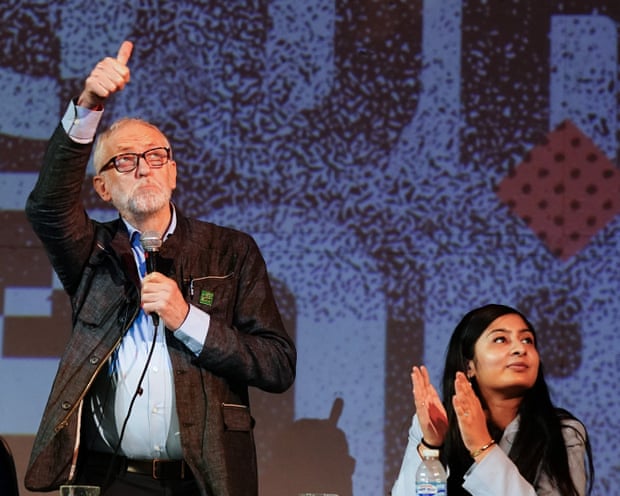
The movement, steered by Jeremy Corbyn and Zarah Sultana, plans to turn a loose and often fractious alliance into Britain’s first major party to the left of Labour in a generation. Photograph: Jacob King/PA
[Guardian] Exclusive: Proposals will bring ‘democratic revolution’ and transform ‘post-Labour left’ into formal political force, say organisers
Your Party, the leftwing movement steered by Jeremy Corbyn and Zarah Sultana, has set out draft constitution plans including a leadership contest in the new year and new governing structures, the Guardian has learned. …
The document introduces a digital democracy process, encouraging individual members to submit edits and suggestions online, with the text evolving “iteratively” over several weeks. Thousands of delegates will then be chosen by sortition (lottery) to vote on amendments at the Liverpool conference before the final version goes to an all-member vote.
Insiders said the draft would include recall clauses, allowing elected officers to be removed midterm if they lost the confidence of members, part of wider safeguards intended to prevent any leadership drift. They also confirmed that the constitution would contain strict procedures to guarantee that selection processes remained democratic and that “due diligence” could not be misused, a clear response to criticisms of candidate vetting under Labour’s current leadership.
From left to right: La France Insoumise deputy leader Nathalie Oziol, Die Linke general secretary Janis Ehling, Workers’ Party of Belgium general secretary Peter Mertens, British-Palestinian activist Leanne Mohamad, Jeremy Corbyn and Zarah Sultana
Jeremy Corbyn and Zarah Sultana discuss the formation of a new leftwing party
THE Tories and Labour’s grip on power must come to an end, people attending The World Transformed Festival 2025 in Manchester heard today.
A massive queue wrapped around the Niamos Radical Arts Centre in Manchester’s Moss Side in the afternoon as people waited eagerly to join a panel discussion with former Labour Party leader Jeremy Corbyn and independent MP Zarah Sultana focused on the formation of their new political party.
“For too long, our politics has been trapped in a cycle: the same two parties, the same tired promises, the same broken failures; a nightmare that keeps us stuck divided and ignored,” began prominent British-Palestinian activist Leanne Mohamad.
“The truth is that the two-party system has failed us all,” she said. “Everything that these two parties touch is corrupted. And that is why we have to break this duopoly and we will.”
Ms Sultana began a passionate speech by first addressing the new party’s rocky start. “Obviously, you’ve all seen what’s happened over the past few weeks,” she said. “But I’m here to tell you, the show is back on the road.”
Keir Starmer says that the Labour Party under his leadership all feel a small part of Scunthorpe.Keir Starmer objects to criticism of the IDF. He asks how could anyone object to them starving people to death, forced marches like the Nazis did, bombing Gaza’s hospitals and universities, mass-murdering journalists, healthworkers and starving people queuing for food, killing and raping prisoners and murdering children. He calls for people to stop obstructing his genocide for Israel.UK Conservative Party leader Kemi ‘not a genocide’ Badenoch explains her reality that the Earth is flat, the Moon is made of cheese and that she was born from
Unicorn horn dust



 From left to right: La France Insoumise deputy leader Nathalie Oziol, Die Linke general secretary Janis Ehling, Workers’ Party of Belgium general secretary Peter Mertens, British-Palestinian activist Leanne Mohamad, Jeremy Corbyn and Zarah Sultana

