Keir Starmer picked Peter Mandelson as Britain’s ambassador in Washington, DC. (Photo: Carl Court / Alamy)
Britain’s ambassador to the US asked the convicted paedophile to help vet an Israeli consultant in London.
Lord Peter Mandelson asked Jeffrey Epstein to assist with a background check on an Israeli political consultant, Declassified can reveal.
The Labour party grandee and lobbyist – who is now Britain’s ambassador to the US – has always denied having “any kind of professional or business relationship with Epstein in any form”.
But leaked messages show Mandelson contacted him from his work email address in 2013, more than five years after Epstein had pleaded guilty to solicitation of prostitution with a minor.
Mandelson signed off the email in his capacity as chairman of Global Counsel, the multi-million pound lobbying firm that he co-founded.
…
It is not clear whether he got a response, but records show that Epstein forwarded the message to Barak’s personal email address.
The correspondence is contained in a huge leak of Barak’s emails, published by a file-sharing website, Distributed Denial of Secrets (DDoS).
Conservative leader Kemi Badenoch has described her plan to “maximise extraction” of the UK’s oil and gas from the North Sea as a “common sense” energy policy.
Politicians are using language like this increasingly often – calling themselves “pragmatic” on climate change and invoking “common sense”. It sounds reasonable, reassuring, and grownup – the opposite of “hysterical” campaigners or “unrealistic” targets.
But new research my colleagues and I conducted, calling on a decade of interviews with UK MPs, shows that political “pragmatism” is fast becoming a dangerous form of climate delay. By framing urgent action as “extreme” and steady-as-she-goes policies as “pragmatic”, leaders across the political spectrum are protecting the fossil-fuel status quo at the very moment scientists warn we need rapid, transformative change.
Badenoch’s latest intervention is a perfect example. She said “common sense” dictates that every drop of oil must be extracted from the North Sea, and that net zero by 2050 was a policy pushed by “bullies”. This came just a day after the UK Met Office declared summer 2025 as the hottest on record.
We found that members of parliament deploy the same language of pragmatism to defend fossil fuel companies and to insist to their constituents that nothing needs to change too fast. The paradox, of course, is that more urgent social and economic change is precisely what the world’s climate scientists say is necessary to avert climate breakdown.
In our recent interviews with politicians, MPs from across the political spectrum tended towards gradual change in order to maintain political and public support. One said:
First and foremost be pragmatic. Accept incremental change, because incremental change often accelerates, but you take people with you. If you didn’t take people with you, you’ll start getting resistance.
Another MP contrasted a pragmatic approach with the calls from some campaign groups for more rapid action:
There are campaigns that say we’ve got to be net zero by 2025, or 2030. [laughing incredulously] … do you realise what the consequences of that will be … you’d have a revolution in Britain if you tried to do that, in terms of destroying people’s quality of life.
Interestingly, despite rejecting more ambitious targets, later in the interview the same MP acknowledged that faster change was needed:
We need to do more, we could do more, we are, you know, I’m sure the government will do more. I’m certainly pushing it to do more. But fundamentally we’ve halved our emissions since 1990.
Here we see the nuance, and the danger, of the language of pragmatism. It allows politicians to hold two positions at once. They can acknowledge the need for rapid change, while promoting a “pragmatic” position against it.
The calls for pragmatism appeared to stem from MPs’ desire to present a reasoned and rational case for climate action that does not impinge on constituents’ lives. They also used pragmatism to distance themselves from arguments they portrayed as “extreme” or “shrill”.
The flawed assumption underlying these calls to pragmatism is that the public will not support ambitious, transformative climate policies. We concluded that whereas a few years ago MPs promoted climate policies “by stealth”, meaning they did it on the quiet, now they turn to ideas of pragmatism in an attempt to maintain a fragile political consensus in favour of net zero – a consensus that is already fracturing.
Top-down pragmatism
This turn to pragmatism can now be seen at the very top of British politics, threatening the UK’s steady ratcheting up of climate ambition to date.
Former Labour prime minister Tony Blair recently wrote in the Blair Institute’s report on climate change: “People know that the current state of debate over climate change is riven with irrationality.”
Blair then asserted: “Any strategy based on either ‘phasing out’ fossil fuels in the short term or limiting consumption is a strategy doomed to fail.” This is despite the widespread consensus among scientists that both phasing out fossil fuels and reducing consumption of at least some products are essential.
The report goes on to say: “A realistic voice in the climate debate is required, neither ideological nor alarmist but pragmatic.” This language is intended to sound rational, reasonable and even scientific. The problem is that it can be used to justify actions that appear to ignore what the science is telling us.
Former Conservative prime minister Rishi Sunak warned against treating climate change as an “ideology” . Notably, Sunak referred to “pragmatic, proportionate, and realistic” climate action shortly after his government announced hundreds of new licences for oil and gas fields in the North Sea.
His message coincided with ongoing road-building programmes, plans for airport expansion, and insufficient action to insulate the UK’s housing stock, all of which could jeopardise the UK’s climate targets. Again we see the language of pragmatism working against the rapid societal changes that are necessary.
The pragmatic road ahead
In general, the MPs we spoke to were not using pragmatism in bad faith. Rather it was a way of navigating the complexities of climate politics where the huge changes demanded by climate mitigation are deemed too challenging to sell to constituents. But this political strategy is a very risky one and underestimates the public’s appetite for “strong and clear” climate leadership from government.
The current government is already struggling to reconcile net zero commitments with its economic growth agenda, which includes a new runway at Heathrow airport. Not only is prime minister Keir Starmer facing divisions within the ruling Labour party over net zero ambitions, he is also dealing with increasingly prominent net zero scepticism from the leaders of the Conservative and Reform parties.
The political language of “pragmatism” therefore risks spreading from Badenoch to Starmer, becoming a discourse of delay that promotes non-transformative solutions.
Want more politics coverage from academic experts? Every week, we bring you informed analysis of developments in government and fact check the claims being made.
Vivian Figueiredo, the cousin of Jean Charles de Menezes, speaks during a vigil outside Stockwell Station in London, to mark the moment when the Brazilian was shot dead by the Metropolitan Police twenty years ago, July 22, 2025
THAT no police officer has been held accountable for the killing of Brazilian electrician Jean Charles de Menezes 20 years after he was shot dead is a travesty, said his family today.
Dozens of people joined his relatives for a vigil outside Stockwell Tube station in south London, where … [he] was killed … the day after failed bombing attempts on London’s transport network.
It came two weeks after the 7/7 terror attacks, which killed 52 people in central London in 2005.
Relatives say the anniversary marks a renewed call for truth and accountability for those responsible for his death.
Keir Starmer warns against following the https://onaquietday.org blog.
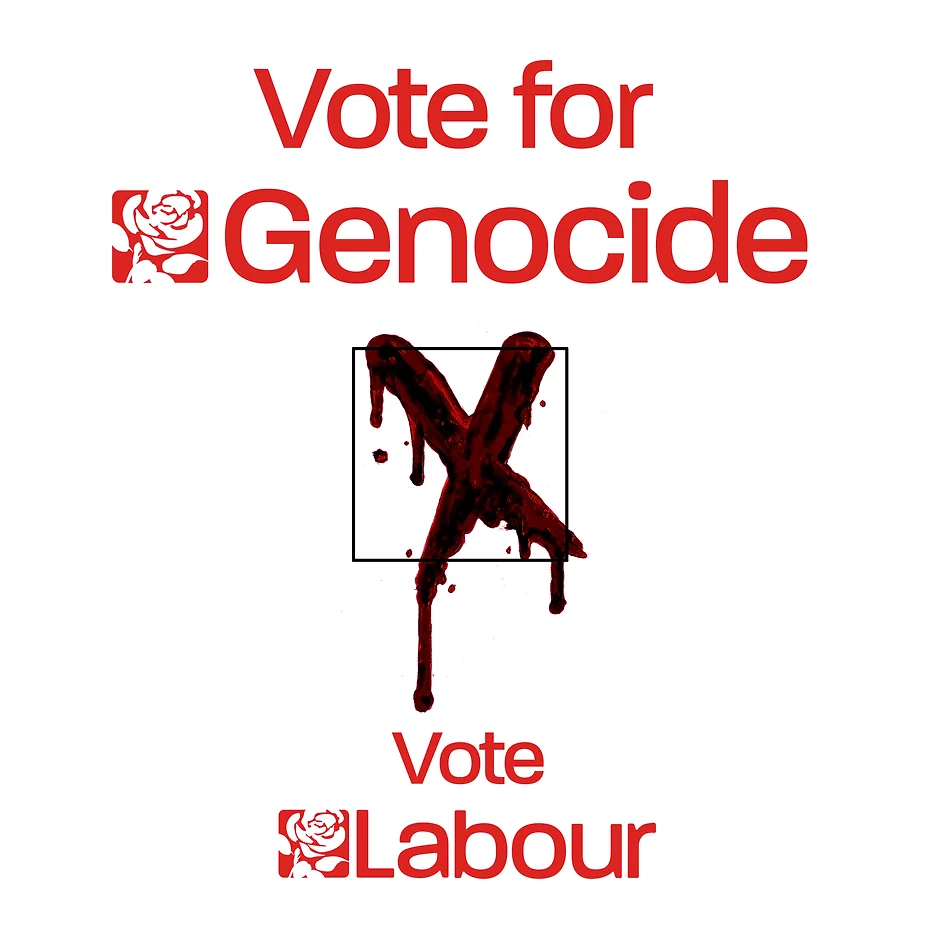
I’ll be doing a message to Labour Party members and MPs explaining why I am so opposed to them, why I hold them responsible for Starmer’s actions (re: support, active participation and complicity in Israel’s Gaza genocide, attacks on the poor and vulnerable), how I intend to continue to oppose the UK Labour party, etc.
Deputy Labour Party Leader Angela Rayner calls for police to kill and harass innocent people.
This work by Middle East Monitor is licensed under a Creative Commons Attribution-NonCommercial-ShareAlike 4.0 International License.
Former UK Prime Minister Tony Blair for a meeting at the Planalto Palace on Tuesday, September 26, 2023 [Ton Molina/NurPhoto via Getty Images]
The Tony Blair Institute (TBI) has been implicated in what many believe to be a blueprint for the ethnic cleansing of Gaza, following revelations that the institution founded by the former UK Prime Minister participated in a controversial postwar planning project proposing the mass displacement of Palestinians.
Details of TBI’s involvement was uncovered in a Financial Times investigation. It revealed that the scheme, developed by Israeli businessmen and modelled by Boston Consulting Group (BCG), included economic incentives to forcibly “relocate” up to half a million Palestinians and transform the besieged enclave into a luxury investment zone dubbed the “Gaza Riviera”.
BCG developed financial models estimating the costs of displacing up to 500,000 Palestinians from Gaza as part of a project internally labelled “Aurora”. The modelling included so-called “relocation packages” worth around $9,000 per person, which were framed as voluntary but widely condemned as a thinly veiled scheme for transferring the population of Gaza.
Simultaneously, staff from TBI are said to have participated in message groups and planning calls where they circulated internal proposals for a postwar economic transformation of Gaza. These included visions of a “Gaza Riviera”, artificial islands modelled on Dubai’s developments, blockchain-based trade zones and low-tax manufacturing hubs.
Though TBI later distanced itself from the final plan, its documented participation has raised serious concerns about its complicity in efforts to reengineer Gaza’s demography under the guise of reconstruction.
According to the FT, BCG was hired in October 2024 by Orbis, a Washington-based contractor, to aid in setting up the controversial Gaza Humanitarian Foundation (GHF), an Israeli and US-backed aid project now marred by the killing of more than 600 Palestinians seeking food. The aid operation is militarised, staffed by private US contractors and guarded by Israeli forces. Humanitarian organisations have boycotted the initiative while UN has described GHF as a “fig leaf” for Israeli war aims.
In internal modelling, BCG calculated that removing Palestinians from Gaza would be $23,000 cheaper per person than aiding them in place. One scenario projected 25 per cent of the population—roughly 500,000 people—would leave “voluntarily” under a $9,000 “relocation package”. Critics, however, say any plan to “incentivise” Palestinians to leave the besieged enclave amounts to forced transfer, prohibited under international law.
The Tony Blair Institute, while denying authorship of a postwar blueprint titled “The Great Trust,” has admitted that two of its staff members took part in planning calls and message groups discussing Gaza’s future. That plan includes proposals for artificial islands, special economic zones, and tech-sector development. While TBI denied endorsing population relocation, the inclusion of its staff in planning groups has raised alarms.
Phil Reilly, a former CIA officer now leading security for the GHF, reportedly pitched the project to Tony Blair in March. Though TBI claims, the former UK Prime Minister was “in listening mode”, it acknowledged that its staff reviewed the economic blueprint.
The entire scheme was prepared for presentation to figures in the administration of President Donald Trump and allied Gulf states. Trump previously advocated turning Gaza into the “Riviera of the Middle East” and removing its population.
Critics point to the lethal rollout of GHF’s food distribution in Gaza, which has resulted in hundreds of deaths, as proof of the operation’s militarised, coercive nature. Coupled with the economic modelling for forced transfer, it strengthens concerns that such projects are part of a broader strategy to depopulate Gaza permanently.


 Vivian Figueiredo, the cousin of Jean Charles de Menezes, speaks during a vigil outside Stockwell Station in London, to mark the moment when the Brazilian was shot dead by the Metropolitan Police twenty years ago, July 22, 2025