Tag: Equinor

  • Exclusive: Norway’s Equinor Forced to Withdraw Key Carbon Capture Claim

    Spread the love

    Original article by Edward Donnelly republished from De Smog.
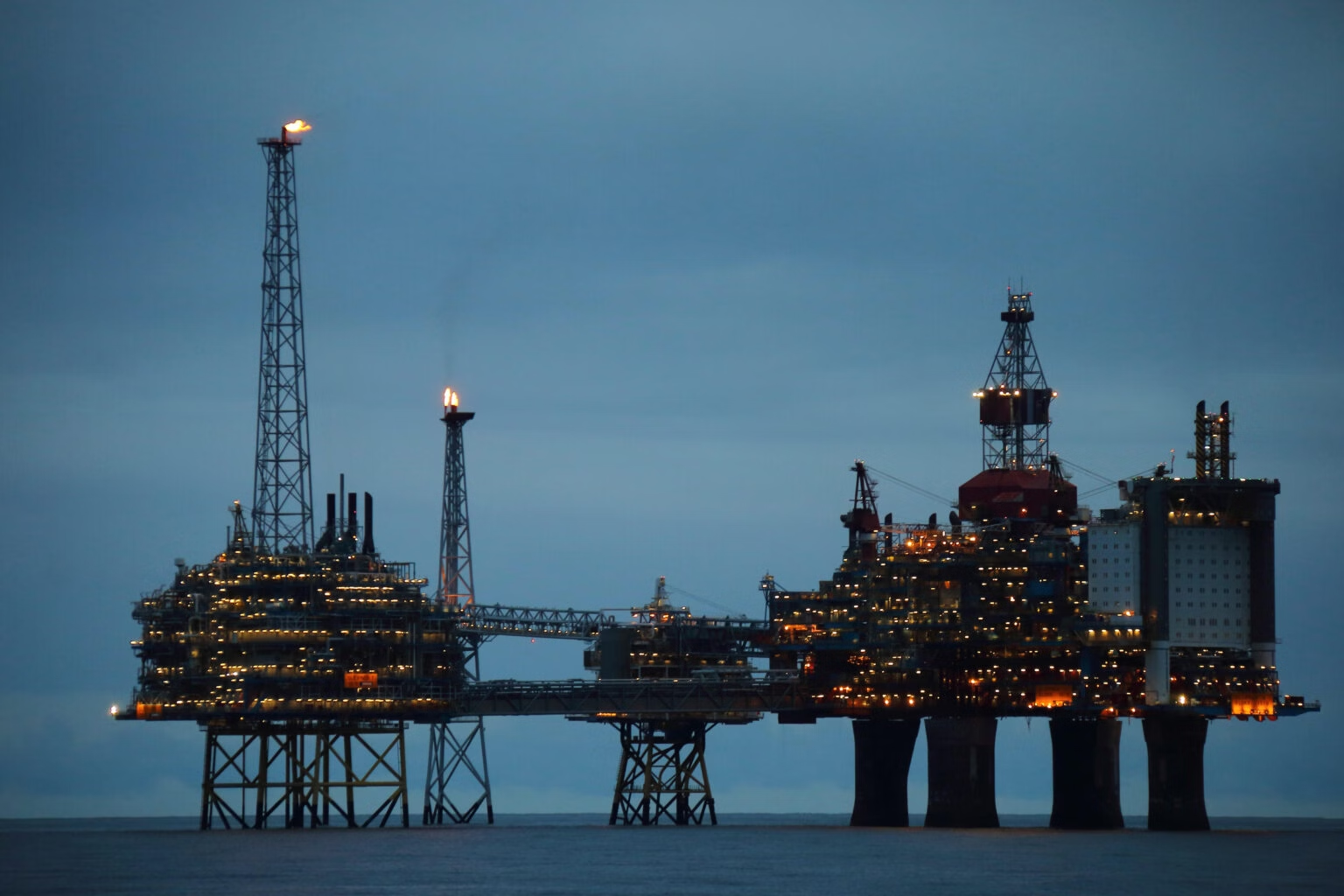
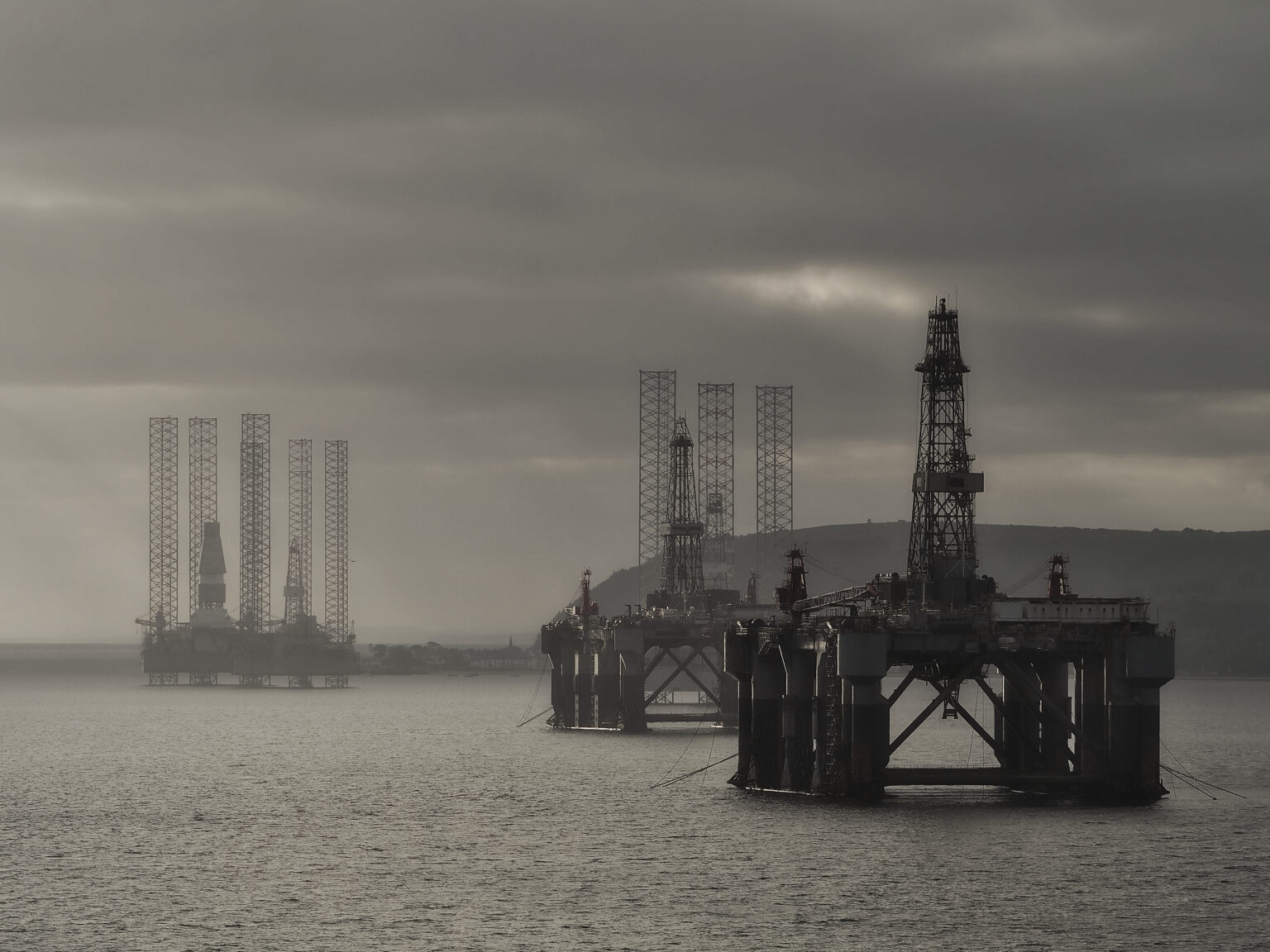
    Equinor’s Sleipner offshore gas field. Philip Stephen/ Nature Picture Library / Alamy Stock Photo.

    Oil company was storing a fraction of advertised amount of CO2 at offshore project, data shows.

    This story is the tenth part of a DeSmog series on carbon capture and was developed with the support of Journalismfund Europe.

    Equinor has retracted a claim that it stores about a million tonnes of carbon dioxide annually at its flagship carbon capture project after DeSmog obtained data showing the real figure was as little as a tenth of that amount. 

    The Norwegian oil company scrubbed the estimate from its website in November, when presented with official figures showing that it captured 106,000 tonnes of carbon dioxide (CO2) at its Sleipner carbon capture and storage (CCS) facility in 2023. 

    Equinor has not captured 1 million tonnes of CO2 per year at the site since 2001, according to the data, provided by the Norwegian Environment Agency.  

    The company put the reason for the discrepancy between the official figures and its public-facing claim to be capturing “about 1 million” tonnes of CO2 a year down to a failure to update a “static” webpage.

    “We have now removed this error from our website and updated this section with the correct information,” Equinor spokesman Gisle Ledel Johannessen said via email. 

    Equinor has been capturing CO2 from a gas processing plant at the Sleipner gas field in the North Sea since 1996. The field has particularly high concentrations of CO2, which Equinor filters out during the gas purification process and then injects below the seabed. 

    The project has been cited by carbon capture advocates, and Equinor itself, as evidence that the technology is reliable enough to help meet global climate goals, despite its long history of cost-overruns and failed targets.
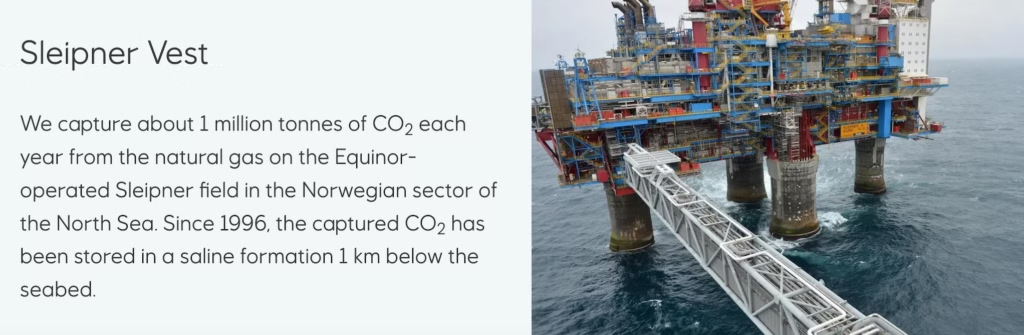
    A screenshot of Equinor’s website, taken on 13 October, 2024 Credit: Edward Donnelly.
    The claim has since been removed.

    Expansion Plans

    Equinor is positioning itself to play a key role in the European Union’s plans to massively increase carbon capture. The bloc has adopted an official target to deploy an annual 50 million tonnes of CO2 storage capacity by 2030 from roughly three million tonnes available across the continent today, though the pace of the existing roll-out is nowhere near on track to achieve that goal.

    Norway, not an EU member, is home to almost all of Europe’s operational carbon capture capacity, which is comprised of Sleipner and a similar project also operated by Equinor at its Snøhvit gas field in the Barents Sea. The two sites stored a total of 763,000 tonnes of CO2 in 2023, according to the Norwegian Environment Agency figures, less than half of their combined capacity of 1.7 million tonnes of CO2.

    Equinor’s statement that it was capturing “about 1 million tonnes of CO2 each year” at Sleipner alone appears to have first been published on the company’s “carbon capture and storage (CCS)” webpage in 2022, according to archived internet data. That year, the Sleipner field captured 260,000 tonnes of CO2, according to the Norwegian Environment Agency, which regulates the oil and gas industry.

    DeSmog asked Equinor for its data on carbon capture at Sleipner in October. When the company declined to provide it, DeSmog obtained the figures from the Norwegian Environment Agency, which collates companies’ self-reported data. 

    Equinor spokesman Johannessen said that Sleipner had been capturing less CO2 in recent years because of declining gas production at the site.
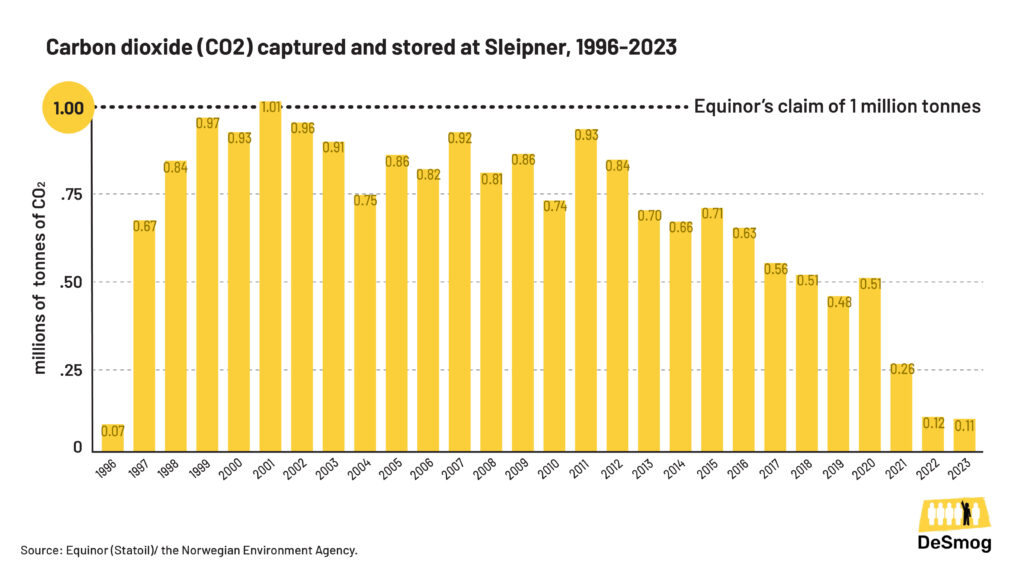
    Credit: Sabrina Bedford.

    Broken Equipment

    Equinor had previously acknowledged that faulty monitoring equipment at Sleipner caused it to over-estimate the amount of CO2 it was capturing at the field for several years, as DeSmog reported in October. During a more than four-year period from January 2017 through March 2021, the company said that it had captured a cumulative total of about 2.7 million tonnes of CO2 at the site. Equinor later amended the figure to 2.1 million tonnes, about a 28-percent decrease. 

    The gulf between Equinor’s public claims and Sleipner’s actual performance underscores concerns among climate advocates that the oil industry is hyping the potential of carbon capture as a climate solution to deflect pressure to cut production of fossil fuels. 

    At least 480 carbon capture lobbyists attended the latest annual UN climate conference in Azerbaijan in November, according to the nonprofit Center for International Environmental Law. In October, DeSmog revealed that Equinor had been holding more meetings with ministers to lobby the UK government over CCS than any other company, part of its plans to play a leading role in the country’s carbon capture plans. 

    Equinor suggested that carbon capture could be the “best-kept secret” for climate action in a 2019 video, concluding that renewable energy sources such as wind and solar were “not enough.” In sponsored content currently viewable on the Financial Times website, Equinor says that CCS “has emerged as one of the key technologies in mitigating global warming” and addresses “misconceptions,” such as concerns over high costs and links to continued oil and gas production. 

    Ketan Joshi, an Oslo-based climate consultant, said that the way Equinor presents its CCS operations as a climate solution is “misleading” because its existing projects only capture a small proportion of emissions, while total fossil fuel emissions in Norway remain high. 

    “Equinor uses ‘ambitious’ CCS targets as a way of simulating action without actually performing it,” Joshi said. “They report the amount of CO2 they capture each year and it does not increase.” 
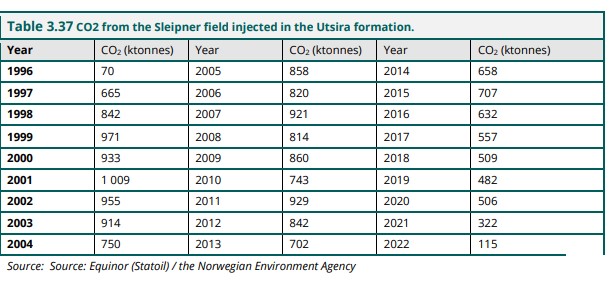
    *A screenshot of a table showing the amount of CO2 captured at Sleipner provided to DeSmog by the Norwegian Environment Agency. The agency noted in an email that the 2021 volume should be 260 kilotonnes and not 322 kilotonnes, and that it will correct the figure in the next edition. The 106 kilotonne figure (106,000 tonnes) for 2023 was provided separately by email.

    CO2 Tax

    The Sleipner CCS project was devised by Equinor (then Statoil) in the mid-1990s as a way to reduce its exposure to Norway’s newly implemented CO2 emissions tax. The company established its CCS project at Snøhvit in 2008 also to reduce its tax burden from CO2 released during gas processing.

    “Sleipner and Snøhvit are CCS projects with high quality that rightly enjoy worldwide recognition from academia, industry, governmental bodies and science institutions as proven and safe CO2 storages over decades where Equinor and our partners so far have stored over 25 million tonnes of CO2 since 1996,” said Equinor spokesman Johannessen.

    He added that over the past five years, the company has “injected 99.7 percent of the CO2 that has been captured on Sleipner into the ground.”

    The amount of CO2 captured by Equinor’s two CCS projects is dwarfed by the emissions released by burning the oil and gas sold by the company. In 2023, Equinor recorded a total of 262 million tonnes of CO2 emissions — including the emissions produced by its operations, and the emissions from burning the oil and gas those operations extracted, according to company sustainability data. 

    In contrast, the company captured and stored a total of about 0.8 million tonnes of CO2 at Sleipner and Snøhvit, more than 300 times less than the amount emitted into the atmosphere by burning its products. 

    And even with a functioning carbon capture facility onsite, net CO2 emissions at Sleipner far exceeded the amount of the gas that was stored. 

    The Sleipner offshore platform provides power to several nearby gas fields by burning gas in turbines — a process that released 658,000 tonnes of CO2 into the atmosphere in 2023, according to the company’s sustainability reporting. That’s more than six times the 106,000 tonnes of CO2 that Equinor captured and stored from gas processing at Sleipner that year. 

    To reduce the offshore platform’s CO2 footprint, Equinor announced last April that it would introduce an electrification plan for Sleipner, rather than opting to expand CCS operations at the field. The company is also planning an electrification project to reduce emissions from the gas export facility at Snøhvit.

    Government Subsidies

    In September, Equinor and partners Shell and TotalEnergies inaugurated the Northern Lights CO2 transport and storage facility near the Norwegian port of Bergen, which the companies say will store 1.5 million tonnes of CO2 a year from industrial sources on the Norwegian mainland at full capacity when it starts operations.

    The project is mostly financed by $1.2 billion in Norwegian government subsidies, with an additional $141 million pledged by the European Union.  

    By 2035, Equinor says it aims to store 30 to 50 million tonnes of CO2 a year from new projects announced in Norway, Denmark, the UK, and the United States — an exponential increase from its current capacity.

    While Equinor has signalled that it will need substantial subsidies to go forward with its CCS plans, the company continues to direct most of its investments into extracting more fossil fuels. In August, chief executive Anders Opedal announced up to $6.7 billion a year to fund new Norwegian oil and gas drilling until 2035.

    In contrast, Equinor said in November that it will cut its renewable energy division’s workforce by 20 percent — about 250 jobs — citing economic headwinds in the sector.

    “At the most basic level, Equinor presents CCS in a similar way to many other major oil and gas companies: a ‘necessary’ part of the climate solutions mix,” said Joshi, the climate consultant. “This is presented alongside the company’s aggressive expansionist agenda: opening many new oil and gas fields.”

    Original article by Edward Donnelly republished from De Smog.

    Orcas comment on killer apes destroying the planet by continuing to burn fossil fuels.
    Orcas comment on killer apes destroying the planet by continuing to burn fossil fuels.
  • Taxing Big Oil would grow UN climate loss & damage fund twentyfold, analysis finds

    Spread the love

    A small tax on just seven of the world’s biggest oil and gas companies could grow the UN Fund for Responding to Loss and Damage by more than 2000% and help address the costs of extreme weather events, according to new analysis published today by Greenpeace International and Stamp Out Poverty. The organisations are calling for a long term global tax on fossil fuel extraction, with year-on-year increases, combined with taxes on excess profits and other levies.

    A ‘Climate Damages Tax’ would put a cost on every tonne of carbon emitted by the coal, oil and gas extracted – starting at $5 per tonne and rising each year thereafter. If it was imposed on ExxonMobil, Shell, Chevron, TotalEnergies, BP, Equinor and ENI it could raise $15 billion in the first year alone to help the world’s most climate-vulnerable countries pay for the escalating cost of damage caused by climate change. Currently, just $702 million has been pledged to the loss and damage fund, while the combined profits of those fossil fuel companies exceeds $148 billion.

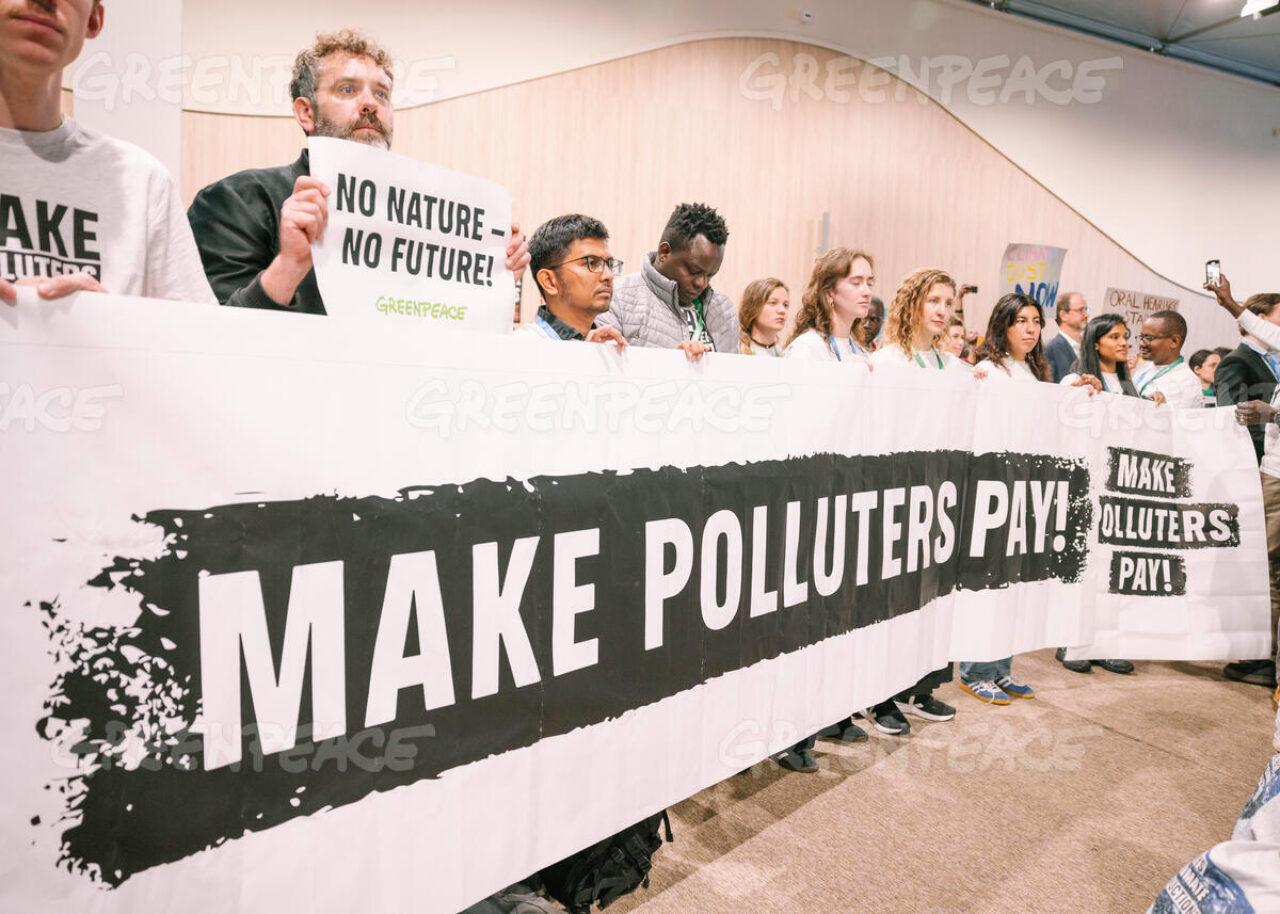
    Greenpeace activists display a billboard during a protest outside Shell headquarters on July 27, 2023 in London.
    Greenpeace activists display a billboard during a protest outside Shell headquarters on July 27, 2023 in London. (Photo: Handout/Chris J. Ratcliffe for Greenpeace via Getty Images)

    Earlier this month, Barbados Prime Minister Mia Mottley, French President Emmanuel Macron and Kenyan President William Ruto stated their support for a Climate Damages Tax.

    The briefing also highlights the financial costs of some of this year’s worst weather events that have been attributed to climate change, totalling over $64bn. These include Hurricane Beryl, Hurricane Helene, the heatwave in India in May, Typhoon Carina/Gaemi, the floods in Brazil in May, and the floods in Kenya and Tanzania in April. The costs of damage from the disasters surveyed range from US$2.9bn (Typhoon Carina) to US$ 25bn (heatwaves in India), and present just a fraction of the total cost of loss and damage globally over the last year. 

    A Climate Damages Tax imposed only on wealthy OECD countries could play an essential role in helping the poorest and most vulnerable to rebuild after climate-related disasters. Increasing annually by US$5 per tonne of CO2-equivalent based on the volumes of oil and gas extracted, the tax could raise an estimated US$900 billion by 2030 to support governments and communities around the world as they face growing climate impacts.

    “While oil and gas giants keep raking in grotesque levels of profit from exploiting resources, the damages resulting from the industry’s operations are disproportionately borne by people who did not cause the crisis,” said David Hillman, Director of Stamp Out Poverty. “A climate damages tax – along with other levies on fossil fuels and high-emitting sectors – will make polluters pay for the cost of climate impacts, as well as supporting workers and affected communities in the transition to clean energy, jobs, and transport.”

    “Who should pay? This is fundamentally an issue of climate justice and it is time to shift the financial burden for the climate crisis from its victims to the polluters behind it,” said Abdoulaye Diallo, Co-Head of Greenpeace International’s Stop Drilling Start Paying campaign. “Our analysis lays bare the scale of the challenge posed by climate loss and damage and the urgent need for innovative solutions to raise the funds to meet it. We reject Big Oil’s assault on people and democracy and call on governments worldwide to adopt the Climate Damages Tax and other mechanisms to extract revenue from the oil and gas industry.” 

    The Loss and Damage Fund was announced at COP27 in Egypt to help developing countries pay for impacts of natural disasters caused by climate change. Recently renamed the Fund for Responding to Loss and Damage (FRLD), it currently has US$702 million in pledged funds. According to Greenpeace International and Stamp Out Poverty’s calculations, a Climate Damages Tax levied on seven major international oil and gas companies would add in the first year alone US$15.02 billion, corresponding to over 21 times what is currently pledged to the fund. 

    “Paying the price: The economic impacts of seven extreme weather events in 2024 make the case for why climate polluters should pay”.

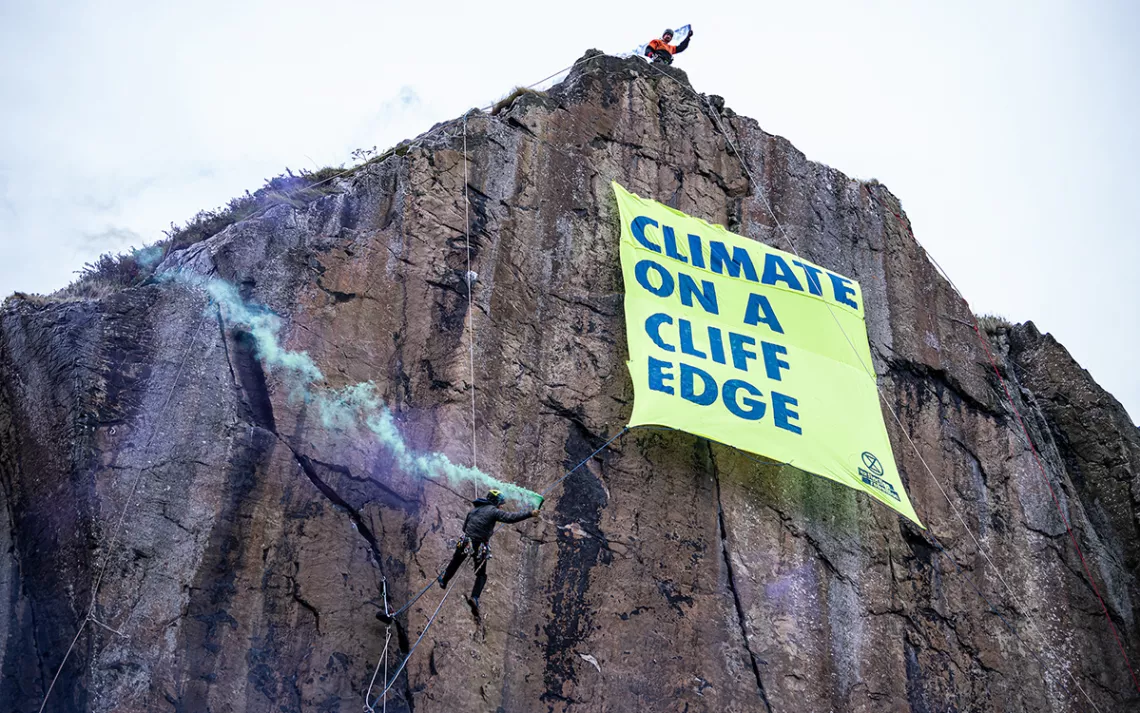
    Experienced climbers scale a rock face near the historic Dumbarton castle in Glasgow, releasing a banner that reads “Climate on a Cliff Edge.” One activist, dressed as a globe, symbolically looms near the edge, while another plays the bagpipes on the shores below. | Photo courtesy of Extinction Rebellion and Mark Richards
    Experienced climbers scale a rock face near the historic Dumbarton castle in Glasgow, releasing a banner that reads “Climate on a Cliff Edge.” One activist, dressed as a globe, symbolically looms near the edge, while another plays the bagpipes on the shores below. | Photo courtesy of Extinction Rebellion and Mark Richards

  • Inside Big Oil’s Business as Usual: Failure on Climate and Profits from War

    Spread the love

    Original article by Stella Levantesi republished from DeSmog.

    A new report shows oil majors fall short of meeting Paris Agreement targets while fueling global military conflicts.

    Oil majors are not on track to hit Paris Agreement climate targets that limit global temperature rise to 1.5°C, a new report reveals.

    Eight fossil fuel giants – Chevron, ExxonMobil, Shell, TotalEnergies, BP, Eni, Equinor, and ConocoPhillips – are on course to use 30 percent of the world’s remaining carbon budget for that 1.5°C goal, according to the Big Oil Reality Check report by nonprofit Oil Change International (OCI).

    Combined, the oil and gas companies’ extraction plans are consistent with a temperature rise of over 2.4°C, the report found.That level of warming, according to the Intergovernmental Panel on Climate Change, will reduce food security, risk irreversible loss of ecosystems, and increase heat waves, rainfall, and extreme weather events.

    “We analyzed the climate promises and plans of the largest eight international oil and gas companies that are owned in North America and Europe. What would it take for an oil and gas producer to align their production with limiting warming to 1.5?” David Tong, global industry campaign manager at OCI and co-author of the report, told DeSmog. 

    “If an oil and gas company were serious about transitioning its business model, the first step would be ending all new production and then setting a Paris-aligned phaseout plan,” he added.

    ‘No New Fossil’ Standard

    A recent paper by academics at University College London and the International Institute for Sustainable Development, published in Science in May, calls for stopping fossil fuel expansion and building a “No New Fossil” global norm. According to the authors, this would make it “easier to phase down fossil fuels” and achieve the Paris Agreement climate goals.

    No new fossil fuel projects would be needed in a 1.5°C world, they wrote, because the “existing fossil fuel capital stock” is sufficient to meet energy demand. The authors also note that preventing new fossil fuel projects is, in general, more feasible than closing existing projects from an economic, political, and legal viewpoint.

    In the face of continuing global pressure to stop fossil fuel expansion, Chevron, ConocoPhillips, Equinor, Eni, ExxonMobil, and TotalEnergies have goals to increase oil and gas production within the next three years or beyond, the OCI report finds. While Shell does not quantify a target, the company plans to keep oil production steady while growing gas production in the near future, OCI said.

    “None of those companies came anywhere close to alignment [with climate goals],” said Tong. “Six of the eight companies we analyzed have explicit plans to increase their oil and gas production in this critical decade when we need to be cutting our reliance on fossil fuels, cutting oil, gas, and oil production.”

    Plateauing oil and expanding gas production, like some of these companies plan to do, is “grossly insufficient” compared with the action that’s needed, Tong added. Even commitments to make businesses more efficient aren’t going to cut it alone, he said.

    “It’s like a cigarette company claiming that it will solve lung cancer by producing cigarettes more efficiently,” he noted. “That’s not just not a credible claim. It’s a promise to become a more efficient climate breaker.”

    Big Oil and War

    According to the OCI report, all the oil majors fail to meet basic criteria for just transition plans for workers and communities where they operate. 

    “A number of these companies also face significant ongoing, unresolved allegations of human rights … and Indigenous people’s rights violations,” Tong told me.

    A March 2024 investigation, commissioned by OCI and conducted by DataDesk, revealed that ExxonMobil, Chevron, TotalEnergies, BP, Shell, and Eni are “complicit in facilitating the supply of crude oil to Israel.” These findings are particularly noteworthy in the context of “Israel’s mounting evidence of war crimes” against Palestinians in Gaza, the OCI states in its new report. 

    Diesel and gasoline for tanks and other military vehicles are supplied by Israel’s refineries, which rely on regular imports of crude oil by these companies and, since October 2023, supplies mainly from Azerbaijan, Kazakhstan/Russia, Gabon, and Brazil, the research has found. 

    The fossil fuel industry is “fueling war and military conflicts” in many regions of the world, said Svitlana Romanko, a prominent Ukrainian activist and founder and director of Razom We Stand, a Ukrainian organization campaigning to ban all imports of fossil fuels from Russia. 

    According to Romanko, the OCI Big Oil Reality Check report “reinforces the importance of moving away from fossil fuels and investing into distributed renewable energy.”

    A new analysis by a group of climate experts estimates that the first two years of Russia’s war on Ukraine resulted in greenhouse gas emissions equivalent to around 175 million tonnes of carbon dioxide. The estimated global cost of this warming in extreme weather impacts: $32 billion. 

    After Russia launched its full-scale invasion of Ukraine in February 2022, Russia earned over 681 billion euros in revenue from fossil fuel exports. European Union countries purchased fossil fuels from Russia for more than 195 billion euros.

    Big Oil, as well as Russia, is profiting from the war, Romanko said. After the invasion, BP, Chevron, Equinor, ExxonMobil, Shell, and TotalEnergies raked in $219 billion, more than double their profits compared to the previous year.

    “Most [governments] subsidize fossil fuels, and these subsidies are accounting for trillions of U.S. dollars annually,” Romanko said. “This is a big part of fossil fuel profits, and the more fossil fuels are subsidized, [the] less investments are made available for renewable energies.”

    She pointed out that the partnership between TotalEnergies and Russia’s largest private gas producer, Novatek, was also “instrumental” in helping Russia get access to technologies and engineering services to launch Novatek’s Yamal LNG and Arctic LNG 2 projects.

    Romanko notes that fossil fuel infrastructure can also constitute a liability for military attacks and quickly become a target.

    “Centralized infrastructure endangers energy supply and overall safety of the supply,” she said. In Ukraine, a massive effort to install solar power plants in schools and hospitals helped decentralize this key resource, Romanko explained. “Decentralized energy supply is essential to building true energy independence,” she added. “And this is the future.”

    Pressure for Accountability

    Some of the eight oil majors in OCI’s report have faced more international and national scrutiny than others. Such pressure can facilitate accountability, but that’s less likely when the fossil fuel company is closely intertwined with the institutional, political, and economic life of its country. 

    A BP gas station sign. Credit: Mike Mozart (CC BY 2.0)

    “We need to look at what has succeeded in putting so much pressure on companies like Shell and BP,” OCI’s Tong said. 

    One factor: when communities in a company’s home country work closely in partnership with communities in fossil fuel-producing countries. Tong said that positive results also happen when campaigners use a range of strategies to expose producers, from nonviolent direct action to op-eds, research, and court action.

    “This is particularly challenging with Eni, TotalEnergies, and Equinor in different ways because of the close interactions that each of the companies have with their home states,” he added.

    Public, political, and legal pressure for accountability must also be coupled with industry regulation, according to Tong.

    “We concluded that there is no evidence that the oil and gas sector will voluntarily transition to renewable energy, or voluntarily act to align their production with what’s needed for the Paris Agreement,” Tong said. Instead, governments must no longer license new production sites. 

    The strong right-wing result in the latest EU Parliament elections could also affect Big Oil’s energy transition. 

    “The more the links between the state and big polluters are overt, the more people get out in the streets and protest,” Tong said.

    What is safe to say is that Big Oil’s business as usual will increase climate change effects.

    “Floods, hurricanes, extreme weather events, and the millions of human lives affected and lost – this damage to nature, to human lives and to life on earth will only mount,” Romanko said. “What will be lost in a few more years will also mount if fossil fuel companies are allowed to continue with business as usual.”

    Original article by Stella Levantesi republished from DeSmog.

  • ‘Climate Arsonists’: 8 Major Oil Companies Fail to Align With Paris Agreement

    Spread the love

    Original article by OLIVIA ROSANE republished from Common Dreams under Creative Commons (CC BY-NC-ND 3.0).

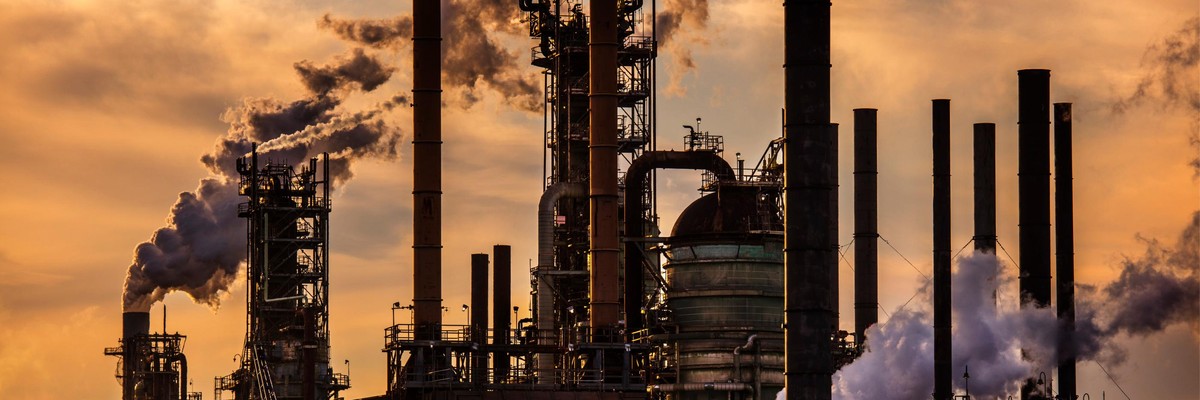
    An ExxonMobil oil refinery is pictured in Baton Rouge, Louisiana. (Photo: Barry Lewis/InPictures via Getty Images)

    “We cannot trust fossil fuel corporations to do anything but line the pockets of their CEOs and investors at the cost of our climate and communities,” one campaigner said.

    The eight largest U.S. and Europe-based oil and gas producing companies are failing to align their plans with the Paris agreement goal of limiting global heating to 1.5°C above preindustrial levels and avoiding ever more catastrophic climate impacts.

    Oil Change International’s Big Oil Reality Check report, released Tuesday, concludes that the plans of BP, Chevron, ConocoPhillips, Eni, Equinor, ExxonMobil, Shell, and TotalEnergies would actually put the world on track for more than 2.4°C of warming and burn through nearly one-third of the global carbon budget for hitting the 1.5°C target.

    “It’s clearer than ever that oil and gas companies—the climate arsonists fueling climate chaos—cannot be trusted to put out the fire,” David Tong, report author and global industry campaign manager at Oil Change International, said in a statement. “There is no evidence that big oil and gas companies are acting seriously to be part of the energy transition.”

    “The Big Oil Reality Check report reveals that oil and gas corporations are more interested in looking like they are acting on climate change than actually acting on climate change.”

    For its fourth annual Big Oil Reality Check, Oil Change International judged the oil companies’ climate plans and pledges against a set of minimum standards for alignment with the Paris agreement. The standards were divided into three main categories: ambition, integrity, and people-centered transitions.

    Under ambition, the companies were assessed on whether they had plans to stop oil and gas exploration, stop approving new extraction projects, decrease production every year through 2030, and stop extraction on a certain date while outlining a long-term plan to end production.

    Under integrity, the companies were assessed on whether their emissions-reduction plans included their entire supply chain, whether they relied on carbon capture or offsets, whether their methane-reduction plans were really in line with climate goals, and whether they lobbied or advertised against climate action.

    For people-centered transitions, they were assessed on whether they had just transition plans for employees and members of frontline communities and whether they respected human rights overall and the rights of Indigenous peoples, including to free, prior, or informed consent to any fossil fuel activities.

    The companies were then rated from “fully aligned” to “grossly insufficient” for how well their plans complied with the Paris goals within the assessment’s framework, but all eight companies scored “insufficient” or “grossly insufficient” for a majority of the criteria.

    Only one company—Eni—scored above “insufficient” in any category, earning a ranking of “partially aligned” for having greenhouse gas-reduction plans that included its supply chains. The three U.S.-based companies—Chevron, ConocoPhillips, and ExxonMobil—scored “grossly insufficient” for all 10 criteria.

    “American fossil fuel corporations are the worst of the worst,” Oil Change International’s U.S. program manager Allie Rosenbluth said. “Chevron, ExxonMobil, and ConocoPhillips perpetuate harm in frontline communities not only across the U.S. but worldwide.”

    Oil Change found that six out of the eight companies have official plans to increase oil and gas production. The only two that did not were BP and Shell; however, these companies employ a misleading strategy. They compensate for new oil and gas projects by selling off polluting assets. While the emissions from the sold operations no longer count toward company emissions, they still count toward the planet’s total. This practice is out of line with the GHG Protocol on corporate emissions accounting and may violate the United Nations Guiding Principles on Business and Human Rights.

    Four of the companies assessed in the report—BP, Shell, Exxon, and Chevron—were also the subject of a recent U.S. House investigation and Senate hearing detailing how the fossil fuel industry playbook has shifted from outright denial of climate science to greenwashing its activities by presenting itself as part of the solution to the climate crisis while its day-to-day operations continue to raise global temperatures.

    “The efforts of climate and social movements have forced oil and gas companies to acknowledge that fossil fuels are dirty and dangerous, leading to a variety of climate pledges and ‘plans,’” said Oil Change campaigner Myriam Douo. “The Big Oil Reality Check report reveals that oil and gas corporations are more interested in looking like they are acting on climate change than actually acting on climate change.”

    “They spend billions on smoke and mirrors to try to fool us into believing they have solutions for a livable planet when, in reality, they are perpetuating harm to the climate and local communities while trying to suck every last ounce of profit out of their dirty fossil fuel business,” Douo concluded.

    All told, Rystand energy data suggests that the combined production of the eight companies will be 17% by 2030 than they were last year.

    “Such an increase in production on a global scale would put the world on a path towards global heating well beyond 2°C, locking in destruction of vulnerable communities and ecosystems,” the report authors wrote.

    The report finds that all of the companies intend to rely on unproven carbon capture technology or offsets schemes to meet their claimed emission-reduction goals and have continued to spend money on lobbying against climate action and greenwashing their own activities since the agreement in Paris.

    Further, no company has plans consistent with ensuring a just transition or protecting human rights. In one recent and urgent example, ExxonMobil, Chevron, TotalEnergies, BP, Shell, and Eni all continue to provide Israel with crude oil despite “the Israeli military’s ongoing assault on Palestinian civilians, ecosystems, and infrastructure in Gaza and mounting evidence of war crimes,” a March Oil Change investigation found.

    The report comes nearly half a year after world leaders agreed to contribute to “transitioning away from fossil fuels” at the COP28 U.N. climate change conference in Dubai. In light of its conclusions, Oil Change called on governments to take action to further a just transition:

    1. Stop permitting or approving new fossil fuel projects or infrastructure;
    2. Set a Paris-aligned date for phasing out fossil fuel production;
    3. End subsidies and financing for fossil fuels and false solutions like carbon capture;
    4. Use tax policy to incentivize against investing in fossil fuels;
    5. Craft a just transition, including by making polluters pay for cleanup and reparations; and
    6. Passing laws to protect human rights and Indigenous rights and giving communities a legal mechanism to seek redress from corporate polluters.

    Oil Change also argued that governments in the Global North should hold companies headquartered within their borders accountable for harm abroad and put money into funds to enable the Global South to transition to renewable energy, adapt to climate change, and pay for inevitable loss and damage.

    “This year’s Big Oil Reality Check makes it clearer than ever—we cannot trust fossil fuel corporations to do anything but line the pockets of their CEOs and investors at the cost of our climate and communities,” Rosenbluth said. “People around the world are rising up to end the era of fossil fuels and build a just energy system that puts climate and communities first.”

    Original article by OLIVIA ROSANE republished from Common Dreams under Creative Commons (CC BY-NC-ND 3.0).

  • Tory Lord’s Firm Awarded New North Sea Oil and Gas Licences

    Spread the love

    Original article by Sam Bright republished from DeSmog.

    Former Conservative Treasurer Lord Michael Spencer. Credit: LBC / YouTube

    Michael Spencer, who has donated millions to the Conservative Party, is the largest shareholder in North Sea exploration firm Deltic Energy.

    A company whose largest shareholder is a former Conservative treasurer and major party donor has been awarded two new North Sea exploration licences, DeSmog can reveal.

    It was announced on Wednesday (31 January) that Deltic Energy had been awarded the new licences in the latest North Sea oil and gas licensing round. 

    Conservative peer Michael Spencer currently holds an 18.8 percent (£4.5 million) stake in the firm.

    Spencer has donated over £6 million to the Conservative Party since 2005 and was appointed to the Lords by Boris Johnon in September 2020. The billionaire financier is a former party treasurer and raised an estimated £70 million for the Tories between 2006 and 2010. He currently serves as a director of the Conservative Party Foundation – the party’s multi-million pound endowment fund, created under his watch in 2009 to manage “legacy funds to support the long-term finance” of the party.

    The Guardian and the Good Law Project also revealed today that EnQuest Heather, a subsidiary of EnQuest,` had been awarded a new oil and gas licence. EnQuest Chief Executive Officer Amjad Bseisu has donated nearly £500,000 to the Conservative Party in the last decade and has lobbied to maximise oil and gas exploration in the North Sea.

    DeSmog revealed in May 2023 that EnQuest had been awarded licences to explore carbon dioxide storage under the North Sea. 

    Jolyon Maugham, executive director of the Good Law Project told DeSmog that: “The Electoral Commission records these contributions as donations to the Conservative Party. But, given the extraordinary correlation between donations to the Tories and valuable awards from the government, I wonder whether it would be more accurate to brand them as investments?”

    Both personally and through his family office IPGL, Spencer has donated more than £100,000 to the Conservative Party and its candidates since Rishi Sunak became prime minister in October 2022. 

    Sunak has been advocating forcefully for North Sea oil and gas exploration in recent months, saying that the UK plans to “max out” the UK’s reserves. In addition to its two new licences, Deltic currently has interests in five licences covering nine North Sea areas, known as blocks. New licences were also awarded this week to fossil fuel giants Shell and Equinor.

    “Rishi Sunak’s obsession with doling out new North Sea licences now starts to make some sense,” Tessa Khan, executive director of Uplift, told DeSmog. “It’s clear there is no public benefit from the policy… But new fields could make a tidy little profit for a handful of oil and gas executives and their shareholders, including Conservative Party donors.”

    Through the Offshore Petroleum Licensing Bill, passed by MPs last week, the government is attempting to bind future administrations to annual North Sea oil and gas licensing rounds.

    This is despite the International Energy Agency stating that new fossil fuel exploration is “incompatible” with the Paris Agreement target of limiting global heating to 1.5C. 

    This week, the Climate Change Committee – the independent body that advises the government on its net zero policies – warned that mixed messages, including new fossil fuel projects, have damaged the UK’s international climate standing.

    Spencer told DeSmog that: “I believe it is totally in the best interest of the UK to replace imported oil and gas by energy extracted from our own North Sea.”

    North Sea gas carries higher emissions than imports from Norway, while there is no guarantee that oil and gas extracted under the new licences will be used to supply the UK, given that it is mined by private companies that sell it on the open international market. 

    Khan added that: “new drilling won’t make any difference to our bills, which ministers have admitted; it won’t boost energy security in that the UK has burned most of its gas; and it won’t provide a secure future for the workforce, which has halved in the past decade despite hundreds of licences being issued.

    “The prime minister now needs to come clean with the public on any discussions he’s had with Spencer, or any of his party’s other oil and gas donors,” Khan said. “Sunak cannot continue to privilege the short term interests of a few, rich oil execs over the needs of millions of ordinary people who are struggling to afford to heat their homes.”

    North Sea licences are awarded by the North Sea Transition Authority, a non-departmental public body owned and funded by the Department for Energy Security and Net Zero. There is no evidence that Deltic or Spencer used political contacts to secure the licences.

    According to the NSTA, licensees have to “meet certain financial criteria” and meet the adequate “technical capability”, but there is no published guidance on avoiding conflicts of interest.

    The NTSA, Deltic and EnQuest declined to comment on the record. The Department of Energy Security and Net Zero has been approached for comment.  

    Spencer and Deltic

    Spencer has a number of oil and gas interests. His House of Lords register of interests shows that he has a stake in Pantheon Resources, a UK company exploring for oil in Alaska, and Cluff Energy Africa, described as an “early stage oil prospecting company seeking licences in Africa (Angola and Sierra Leone)”.

    Until December last year, Spencer also held shares in Petrofac, an oilfield services firm heavily involved in the North Sea, including the controversial Cambo project.

    Spencer has publicly advocated for the fossil fuel industry. He told LBC’s Nick Ferrari last September that the UK “sadly has opposed further investment in North Sea oil and gas”. Spencer used the interview to praise then Prime Minister Liz Truss for opposing windfall taxes on the sector, calling them “not Tory policy” and “not pro-business”. He has also expressed support for the controversial policy of fracking for shale gas.

    Spencer is the chair of the Centre for Policy Studies, an influential Conservative think tank whose director was the co-author of the 2019 Tory manifesto. A number of fellow board members have financial interests in oil and gas firms. 

    The Conservatives received £3.5 million from polluters, fossil fuel interests, and climate deniers in 2022, and took over £400,000 from individuals and companies in the fossil fuel industry in 2020 and 2021 as the government weighed up decisions on North Sea oil and gas licences.

    Original article by Sam Bright republished from DeSmog. ENDS

    Rishi Sunak offers huge fossil fuel subsidies to develop fossil fuel extraction in UK.
    Rishi Sunak offers huge fossil fuel subsidies to develop fossil fuel extraction in UK.

    ‘Dishing out licences to climate criminals’

    New UK oil and gas exploration licences approved in the North Sea