Category: Extinction Rebellion

  • Climate activists face ‘crippling’ legal fees for injunctions banning protest

    Spread the love
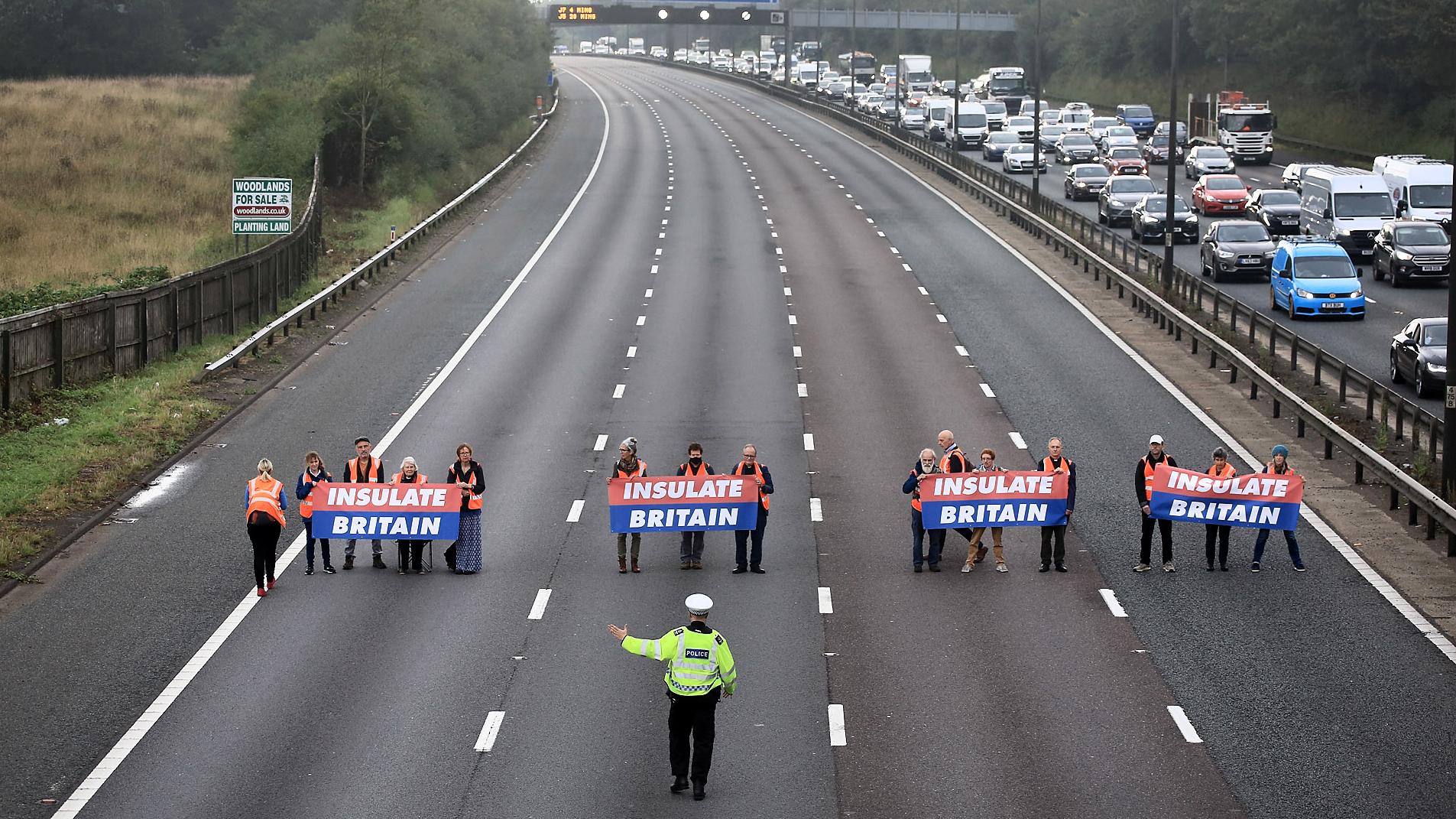
    Image of an Insulate Britain roadblock September 2021
    Image of an Insulate Britain roadblock September 2021

    Original article by Anita Mureithi repubished from Open Democracy under a Creative Commons Attribution-NonCommercial 4.0 International licence. 

    Protesters facing criminal convictions are being punished twice as National Highways and TfL seek costly injunctions

    Climate activists have told openDemocracy they are being hit with “crippling” bills totalling thousands of pounds because of legal action brought by government and public bodies to prevent protests.

    Injunctions – orders issued through civil courts, usually to ban something – are increasingly being used to crack down on climate demonstrations, activists say, in what they believe is an attempt to silence dissent.

    Both National Highways and Transport for London (TfL) have named supporters of environmental campaign groups Insulate Britain and Just Stop Oil on injunctions intended to stop protests on certain roads in recent years. One person named on a TfL injunction told openDemocracy they have never even protested in London.

    Breaching an injunction can lead to a contempt of court conviction, which is punishable by up to two years’ imprisonment, an unlimited fine and the seizure of assets.

    One Just Stop Oil protester said they had been warned by their lawyers that those who go to trial to fight an alleged breach and lose could be made to pay up to £150,000 to £200,000 in legal fees, while accepting a breach could incur costs of between £5,000 and £20,000.

    The protester told openDemocracy that the costs could leave defendants vulnerable to “the kinds of debts which could cripple you and potentially make you homeless”.

    Raj Chada, a partner at law firm Hodge Jones & Allen who represents a number of Insulate Britain supporters, said the way injunctions are now being used is “astonishing” and something he’s never seen before in 15 years of working with protesters.

    “The injunctions that are currently being used have always been there but it has never been the case that National Highways Agency or TfL would seek injunctions to completely prevent protests in certain areas,” he said.

    Yesterday, it was reported that Rishi Sunak is considering weakening the government’s net-zero commitments, including by delaying a ban on the sale of new petrol and diesel cars, watering down the phasing out of gas boilers, and scrapping plans for new energy-efficiency targets for private rented homes.

    Such actions are likely to lead to increased environmental protests. Climate activists say the use of injunctions is one way the government has been cracking down on such protests in recent years, alongside new police powers to shut down demonstrations deemed too disruptive, and existing public nuisance laws that can see people imprisoned for up to ten years for taking part in civil resistance.

    Chada agrees, saying: “This government in particular doesn’t like being challenged by groups such as Just Stop Oil or Extinction Rebellion.”

    Hefty fees

    National Highways is a government-owned company responsible for operating, maintaining and improving motorways and major A-roads in England.

    According to a court document seen by openDemocracy, National Highways initially sought costs of £727,573 for legal fees incurred in securing injunctions blocking protests on and around the M25. Split between more than 130 climate activists it named on its injunctions, this would have worked out at more than £5,000 per person.

    Those named in an interim injunction must go to court to negotiate its full terms, or to try to have their names removed or the injunction overturned. During this process, which can take years, the terms of the interim injunction – which can be harsher than the final parameters – are binding.

    In the National Highways case, the court granted a final injunction against 24 people who were found in contempt of court for breaching the interim injunction. It also issued an anticipatory injunction against a further 109 people, meaning they were injuncted in anticipation of potential wrongdoing.

    The court ruled that the 109 people who weren’t found in contempt of court should pay £1,500 in interim payments towards National Highways’ legal fees, while the remaining 24 will pay £3,000. The full extent of the costs will be determined at a later hearing.

    Labour councillor Giovanna Lewis, an Insulate Britain supporter who has been fighting the National Highways injunction on behalf of all defendants, says the financial consequences are far-reaching. Some of the 133 people injuncted have had to set up payment plans to pay legal fees. Missed payments could result in a visit from bailiffs.

    Annie, a 66-year-old retired grandmother from Dorchester, is among those paying off the £1,500 ordered by the court. She believes the government is “trying to squash” protesters.

    After being left feeling “shocked” and “horrified” to hear of people dying of cold in their own homes, Annie took part in three road-blocking Insulate Britain protests in the south of England in September 2021. She was arrested and charged with wilful obstruction of the highway, a criminal offence. Thinking that was it, the injunction issued days later came as a shock.

    “We were suddenly getting these people in black knocking on the door and trying to deliver massive letters to us,” she said. “This is both National Highways Ltd and TfL. I’ve kept everything, it’s all in a box and there’s between 10 kilograms and 12 kilograms of mail.”

    Annie described feeling hounded by lawyers trying to deliver injunction documents. “It came to a point where if I knew that I was making arrangements with friends, I’d ask them not to knock on the front door and come around the back. I just stopped answering,” she said.

    A spokesperson for National Highways said people were added to the injunction due to evidence that they “had previously been engaged in protests on or near our roads shortly before or after the injunction order was made, and therefore posed a risk of breaching the injunction in future”. They added that such evidence typically came from the police after arrests.

    A spokesperson for TfL also said the names of protesters it included on an injunction that it sought due to “continuing threats of disruptive protests from Just Stop Oil and Insulate Britain” were disclosed by the Metropolitan Police.

    ‘Anxious and vulnerable’

    Organisations applying for an interim injunction don’t have to prove any of the claims they make, according to Green and Black Cross, a grassroots project that helps protesters with legal matters. Companies can name specific people, wider groups, or ‘persons unknown’ who have protested against the organisation or are believed to be likely to do so.

    Insulate Britain and Just Stop Oil supporters told openDemocracy that those who are named are being forced to front expensive legal fees to fight the injunction. The hourly rate for a solicitor in London with more than eight years’ experience is £512, according to government guideline figures.

    If they lose the case and are injuncted against, the activists can also be made to pay the legal fees of the winning side. The court has discretion over how much they should pay.

    They try to impoverish people so that they’re more concerned about earning to pay things off than campaigning on the climate crisis

    Mya, who is also the subject of multiple injunctions, was arrested in November 2022 after attempting to climb a gantry over the M25 with Just Stop Oil. She told openDemocracy that costs for people who admit to breaching a National Highways injunction range from £5,000 to £20,000.

    These figures were described as “broadly correct” by National Highways, though they said the amount would “vary from person to person, taking into consideration individual circumstances, the severity of the breach and the number of breaches”.

    Mya said: “I think the injunctions are there to try and deter people. And then they’re there to also keep people caught up in all these legal proceedings and to try to impoverish people so that they’re more concerned about trying to earn money to pay things off, rather than trying to campaign on the climate crisis.”

    As well as the hefty financial costs, Chada told openDemocracy that the human impact of the injunctions has left people feeling “concerned, anxious, vulnerable and fearful of what the cost of their actions will now be”.

    “It really is just quite astonishing – the chilling effect of what all of this could be,” he said.

    A National Highways spokesperson said: “Our primary concern is always safety – protesting on the strategic road network is extremely dangerous to the protesters and motorists.

    “It’s right that dangerous and reckless protesters who disrupt our strategic road network should face the necessary consequences; anyone intending to protest on these roads should know that they run the risk of imprisonment and/or an unlimited fine. People rely on the strategic road network for so many things and they have a right to expect it to operate as it should.”

    TfL said it is “doing all it can to ensure that London’s road network operates safely and efficiently and that vital emergency service vehicles are able to move freely through the city”.

    Original article by Anita Mureithi repubished from Open Democracy under a Creative Commons Attribution-NonCommercial 4.0 International licence. 

    Whatever you’re interested in, there’s a free openDemocracy newsletter for you. HAVE A LOOK

  • Climate protests everywhere yesterday and today

    Spread the love

    https://youtu.be/df9YUP1uCBE

    Greta Thunberg was arrested in Sweden on Friday after allegedly disobeying police orders during a climate protest. Quintin Bignell reports on what happened and the plans for this week.
  • Climate activists block A12 in The Hague for eighth day in a row; removed by police

    Spread the love

    https://nltimes.nl/2023/09/16/climate-activists-block-a12-hague-eighth-day-row-removed-police

    The estimated several hundred climate activists who blocked the A12 highway in The Hague on Saturday have been removed from the road by the police.

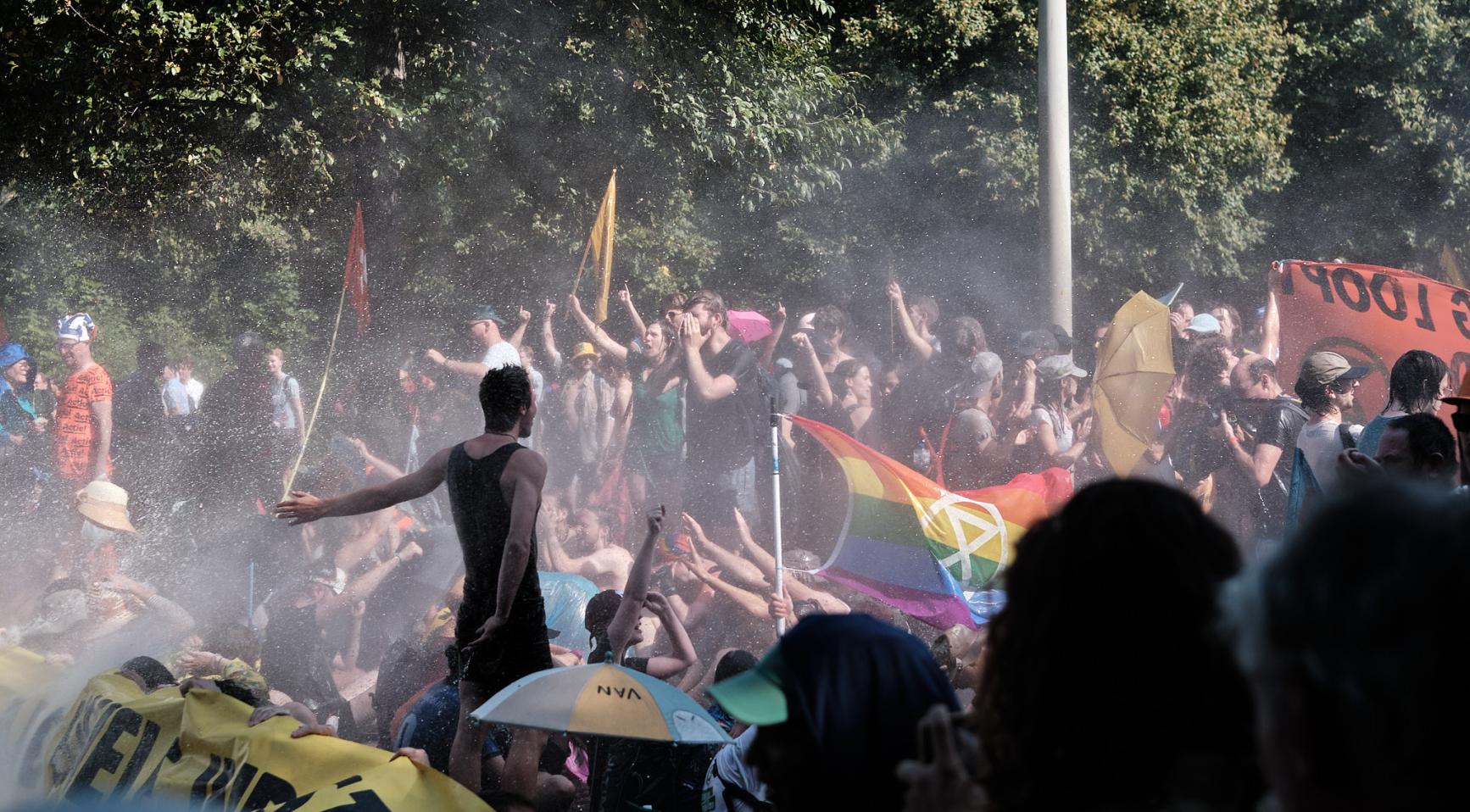
    Several hundred climate activists are blocking the A12 highway in The Hague on Saturday for the eighth day in a row. They are protesting against government measures that support the fossil fuel industry. The Police used water cannons after some time.

    dizzy: Extinction Rebellion NL have blocked the A12 at the Hague on previous occasions. The current programme of ongoing protests is to demand that the Dutch government stops it’s huge fossil fuel subsidies. They have blocked the A12 daily since last Saturday with the police using water cannon to clear them and reporting minors to the Dutch equivalent of Social Services for protesting. The following video is at least a day old and so does not cover today’s protest.

    https://youtu.be/X9O_WbEbTsg

    Even more subsidies for fossil fuels than previously assumed, up to €46 billion annually

    Image of loads of money
    Image of loads of money

    Even more subsidies and tax breaks are flowing into the fossil sector than previously assumed. According to a calculation by the Ministry of Economy and Climate, these amount to 39.7 to 46.4 billion euros annually. This is stated in the documents that will be released on Budget Day, September 19.

    Insiders confirm corresponding reports from NOS. This is only a sum of all the benefits of the use of fossil energy and raw materials. It does not include, however, the cost to consumers. The report also states that a large part of the benefits (about 17 billion) is specified in international treaties or European Union directives.

    A recent research report by SOMO, Oil Change International, and Milieudefensie already came to a total of 37.5 billion euros. Outgoing Minister Rob Jetten (Climate and Energy) said at the time that this amount sounded familiar. In general, Jetten wants to eliminate fossil fuel rebates.

    According to NOS, this affects large steel companies, coal-fired power plants, greenhouse nurseries, inland shipping and oil refineries. Airlines, for example, do not have to pay kerosene tax in the Netherlands, which earns them more than 2 billion euros per year.

    In recent years, fossil benefits have also disappeared. According to Jetten, phasing out fossil fuel perks can’t be done in one swoop. There has to be a phase-out plan for that, he says. “In this way we say goodbye to the old economy and create space for new jobs and prosperity,” he posted on X. For a long time, it was unclear how many subsidies and tax breaks went to the fossil fuel sector.

    …

  • Climate protestors block Hague highway for third day; 3,000 arrests so far

    Spread the love

    https://nltimes.nl/2023/09/11/climate-protestors-block-hague-highway-third-day-3000-arrests-far

    Police used water canons to disperse Extinction Rebellion protesters blocking the A12 highway in The Hague, 9 September 2023 - Credit: Extinction Rebellion / Provided - License: All Rights Reserved
    Police used water canons to disperse Extinction Rebellion protesters blocking the A12 highway in The Hague, 9 September 2023 – Credit: Extinction Rebellion / Provided – License: All Rights Reserved

    By 2:00 p.m., there were no more protesters blocking the highway.

    A few dozen Extinction Rebellion (XR) activists walked onto the A12 in The Hague around noon on Monday, blocking the highway in both directions for the third consecutive day. The climate action group intends to block the Utrechtsebaan, as the stretch of highway is known, every day until the Dutch government stops subsidizing fossil fuels. The police have arrested around 3,000 protesters since Saturday, and more arrests are expected to follow today.

    The police ordered the protesters to get off the highway and hold their demonstration elsewhere, but like on the weekend, they gave no heed, according to AD. The Hague mayor Jan van Zanen, therefore, gave the police the go-ahead to clear the protesters off the highway.

    At 12:30 p.m., the police started using water canons and arresting activists. Police officers physically removed activists from the highway and loaded them into buses to go to a police station in batches. By 1:00 p.m., most activists had been removed, and one lane of the highway reopened to traffic.

    At 01:57 p.m., there were no more protesters blocking the highway, AD reported. At 02.23 p.m., it was announced that the highway was being cleaned and would soon be reopened to traffic in both directions.

    …

    “Every day all over the world, and especially in the Global South, people are dying because of climate disasters that our government is paying for,” XR spokesperson Tessel Hofstede said after Saturday’s protest. “This has to stop now. That is why we will keep coming back every day at noon until all fossil fuel subsidies are eliminated.”

    A recent study by OMO, Oil Change International, and Milieudefensie showed that the Dutch government misses out on 37.5 billion euros in income yearly due to schemes that favor using fossil fuels. And that while there is overwhelming scientific evidence that greenhouse gases from fossil fuels are the leading cause of global warming.

    https://nltimes.nl/2023/09/11/climate-protestors-block-hague-highway-third-day-3000-arrests-far

  • Extinction Rebellion NL start blockades of A12 motorway at The Hague

    Spread the love

    https://extinctionrebellion-nl.translate.goog/en/events/stop-fossiele-subsidies-a12-protest-permanent/?_x_tr_sl=auto&_x_tr_tl=en&_x_tr_hl=en-US&_x_tr_pto=wapp

    Permanent A12 blockade Stop Fossil Subsidies

    Saturday, September 9 at 12:00 noon is the moment of the Big One: we will demonstrate for the eighth time on the A12. And also for the last time. Because no matter what the Hague municipal council allows the police to do, we will stay or come back day in and day out. Until the government meets our demand: an immediate end to all fossil subsidies. Together we can do this. Get involved and join us!

    The most recent IPCC report is clear: continuing on the current path will lead to between 2.2 and 3.5 degrees of warming. Even now, the situation in the Global South is extreme: hundreds of thousands of people die every year as a result of the climate and ecological crisis. In 2022, 43,000 people died in Somalia alone due to drought. Yet our government stimulates the fossil industry with up to 30 billion euros in fossil subsidies every year . Bizarre policy with devastating consequences!

    Participate? Which can! Good preparation is important. Take an Action Training so that you know how to take peaceful civil disobedience action and join the Telegram group A12StopSub

    …

    https://extinctionrebellion-nl.translate.goog/en/rond-2000-aanhoudingen-bij-eerste-dag-a12-blokkade-morgen-1200-uur-nieuwe-a12-blokkade/?_x_tr_sl=auto&_x_tr_tl=en&_x_tr_hl=en-US&_x_tr_pto=wapp

    Around 2,000 arrests during first day of A12 blockade, new A12 blockade tomorrow at 12:00 noon

    09/09/2023

    Extinction Rebellion will keep coming back, every day at 12:00 noon, until fossil subsidies are abolished

    Today, on Saturday September 9, about 25,000 people demonstrated on and next to the A12 , in the blockade and the support demo . From 1:30 p.m., the police deployed water cannons and peaceful demonstrators were also frequently beaten with batons. Around 2,000 people were arrested for demonstrating peacefully on the A12 between the Ministry of Economic Affairs and Climate Policy and the temporary House of Representatives building. A large number of these demonstrators will be back on the A12 tomorrow at 12:00 noon to demand an immediate end to all fossil subsidies. If they are removed again by the police, they will return the next day and every day after that, always at 12:00 noon. 

    Tessel Hofstede, spokesperson for Extinction Rebellion and recently sentenced to 30 hours of community service for ‘incitement’: “On the first day of the permanent A12 blockade, many thousands of people showed that all fossil subsidies must now end. Every day around the world, and especially in the Global South, people die from climate disasters that our government helps pay for. This must stop now. That is why we will keep coming back, every day at 12:00 until all fossil subsidies are abolished.” 

    37.5 billion euros annually: the amount is correct

    On Tuesday, September 5, Rob Jetten admitted to the Financieel Dagblad that ‘the amount is correct’.[1] He was referring to the annual 37.5 billion euros in fossil subsidies from research by SOMO, Oil Change International and Milieudefensie.[2] He further indicated that the government is still busy ‘mapping’ the size. A striking fact since the Balkenende cabinet already determined in 2009 that fossil subsidies had to be phased out[3], a process that should have been completed in 2025. 

    Mozart on the A12

    XR Musicians was present with 180 musicians and a choir. They opened the demonstration with the Dies Irae from Mozart’s Requiem. Dies Irae means ‘Day of anger’. Cellist Sanne Bijker: “Anger is appropriate today, because the government is still investing in fossil subsidies at the expense of the Global South and future generations. Anger is also an emotion that sets you in motion, anger makes you get up and take action. We hope to get more people moving with this music.”

    Professors in gowns [Scientists’ white coats?]

    Scientist Rebellion demonstrated with dozens of scientists, including a number of professors, many of whom were wearing gowns. “Climate change requires radical system change towards a society that does everything it can to keep this planet livable and healthy for people, animals and nature,” said Patrick Huntjens, professor of governance of Sustainability Transitions, Maastricht University. “As long as there are 37.5 billion euros in fossil subsidies, the government is part of the problem and the main obstacle on the way to a sustainable and just society.” 

    “This is the fourth time I have participated in the A12 blockade with Scientist Rebellion,” said Julia Schaumburg, professor of Econometrics, VU Amsterdam. “I am here as a scientist, but also, more importantly, as a citizen terrified of a future of continued global warming and environmental degradation.” 

    Broad support for professional groups

    All kinds of professional groups also demonstrated on the A12, including XR Civil Servants, XR Teachers, XR Healthcare Professionals, XR Therapists and the green farmers of 

    Spokesperson Margarita Vossen of XR Zorgprofessionals: “This is bad news, further health damage must be prevented urgently. An emergency in the hospital is also not postponed, our planet is in need and we must take action now.”