Greenpeace climbers scale two 75m-high chimney stacks at the UK’s second largest gas-fired power station, Staythorpe Power Station. Photo: Greenpeace
EIGHT Greenpeace activists remained in police custody today after scaling two 75m-high chimney stacks at England’s largest gas-fired power station.
The group climbed maintenance ladders at Staythorpe power station, owned by energy giant RWE, before unfurling a banner reading: “The Great Gas Rip-Off: Now on!”.
Monday’s protest aimed to draw attention to how the cost of the most expensive form of power, usually gas, still determines the price of electricity, which keeps bills high.
This is despite gas generating just 30 per cent of Britain’s electricity, Greenpeace says.
Britain spent an extra £90 billion on gas between 2021 and 2024, following price spikes triggered by Russia’s invasion of Ukraine, according to analysis by the Energy & Climate Intelligence Unit.
Greenpeace warned that companies can earn huge profits when demand surges, citing an evening in January when two power station owners were paid at least £12 million to supply three hours of electricity following a spell of freezing weather.
Activists from the U.K. action group Everyone Hates Elon and Greenpeace Italy unfolded a banner reading, “If you can rent Venice for your wedding, you can pay more tax,” on Piazza San Marco in the Italian city on June 23, 2025. (Photo: Michele Lapini/Greenpeace)
“This isn’t just about one person—it’s about changing the rules so no billionaire can dodge responsibility, anywhere,” said one Greenpeace campaigner.
Billionaire Amazon founder Jeff Bezos—the third- or fourth-richest person on the planet, depending on the list—is hosting various wedding events in Venice, Italy, this week, festivities that have drawn protests, including a massive banner on Monday.
Activists with Greenpeace Italy and the U.K. action group Everyone Hates Elon—targeting Elon Musk, U.S. President Donald Trump’s close far-right ally and the wealthiest person on Earth—unfolded a banner that read, “If you can rent Venice for your wedding, you can pay more tax,” in Piazza San Marco.
“While Venice is sinking under the weight of the climate crisis, billionaires are partying like there is no tomorrow on their megayachts,” Greenpeace campaigner Clara Thompson said in a statement. “This isn’t just about one person—it’s about changing the rules so no billionaire can dodge responsibility, anywhere.”
“The real issue is a broken system that lets billionaires skip out on their fair share of taxes while everyone else is left to foot the bill,” she argued. “That’s why we need fair, inclusive tax rules, and they must be written at the U.N.”
Jeff Bezos pays his staff poverty wages and dodges tax. No wonder he can afford to shut down half of Venice for his wedding this week. Tax billionaires NOW.Location: Piazza San Marco, Venice@greenpeace.org #JeffBezos #TaxTheSuperRich
Reporting on Monday’s display of the banner—which features Bezos’ face and is about 65 feet long and wide—Reuters detailed:
Local police arrived to talk to activists and check their identification documents, before they rolled up their banner.
“The problem is not the wedding, the problem is the system. We think that one big billionaire can’t rent a city for his pleasure,” Simona Abbate, one of the protesters, told Reuters.
A spokesperson from Everyone Hates Elon similarly said in a Monday statement that “as governments talk about hard choices and struggle to fund public services, Jeff Bezos can afford to shut down half a city for days on end just to get married.”
“Just weeks ago, he spent millions on an 11-minute space trip,” the spokesperson added, referring to the Blue Origin flight for multiple public figures, including Bezos’ fiancée, Lauren Sánchez. “If there was ever a sign billionaires like Bezos should pay wealth taxes, it’s this.”
Bezos and Sánchez’s event planners, Lanza and Baucina, toldCNN: “Rumors of ‘taking over’ the city are entirely false and diametrically opposed to our goals and to reality… From the outset, instructions from our client and our own guiding principles were abundantly clear: the minimizing of any disruption to the city.”
The details surrounding Bezos’ marriage to the former news anchor have been closely guarded, but CNN reported that around 30 of Venice’s 280 water taxis are thought to be reserved, the city’s nine yacht ports are booked, and one source said that special permission has been granted for private helicopters.
While Venice’s mayor and regional governor Luca Zaia have defended the billionaire’s luxury wedding events, citing economic benefits for local businesses, “the ‘No Space for Bezos’ movement—a play on words also referring to the bride’s recent space flight—has united a dozen Venetian organizations including housing advocates, anti-cruise ship campaigners, and university groups,” according toThe Associated Press.
The Bloomberg and Forbes lists tracking global billionaires put Bezos’ net worth between $223.4 billion and $231 billion as of Monday. At times in recent years, he has been believed to be the richest person in the world.
Water companies are panicking they will be left unable to dispose of millions of tonnes of sewage sludge due to tougher pollution rules, and rising concern over the contaminants sludge contains.
Read the full investigation with supporting documents from Unearthed, here.
Sewage sludge is the human faeces and other solids left behind when wastewater is cleaned. Around 90% of the UK’s sludge is treated and spread on farmland as a source of nutrients to fertilise crops. However, concern is rising in the UK that this could be introducing damaging levels of contamination to agricultural land.
An analysis for trade association Water UK last year found that in a “worst-case” scenario the industry could be left with “3.4 million wet tonnes” of sludge with nowhere to go, documents obtained by Unearthed under freedom of information laws show.
The key documents not already in the public domain (available via the Unearthedwebsite) include:
National Plan B: water industry analysis of sludge disposal crisis
The National Landbank Assessment Report 2024: water industry capacity modelling
EA CEO internal briefing: prepared by the Environment Agency
Earlier this year, environmental regulators in the United States warned that toxic PFAS ‘forever chemicals’ in sewage sludge spread on American pastures were posing a cancer risk to people who regularly ate meat or dairy from those farms. This came after investigations by Unearthed and others found that sludge destined for British farmland also contained a range of harmful contaminants, including microplastics and forever chemicals.
The water companies fear increased scrutiny of sludge-spreading in the UK could trigger a ‘backlash’ akin to the public outrage they have faced over sewage released into rivers and seas, Unearthed has learned.
Reshima Sharma, political campaigner for Greenpeace UK, said:
“This investigation is yet more proof that we can’t trust the privatised water companies to deal with waste responsibly. So long as they can get away with it, they will just pass any problems on to our countryside and pocket the money they should be investing in solutions.
“In addition to the national scandal of river pollution, their negligence has led to a cocktail of toxic contaminants being spread on the soil that grows our food. The government must stop toxic sludge from being spread on farmland immediately and water companies must be made to pay for disposing of it safely, without passing the buck to bill payers.”
The online game is targeted at pupils as young as seven
Equinor, the company looking to develop the Rosebank oil field in the North Sea, has funded a computer game aimed at UK school children, promoting the idea that fossil fuels are part of a green energy mix.
In an unusually frank admission of lobbying children, a web page promoting the game stated that it “aligns with our work to build future talent pipelines and secure permission to operate at a time of sensitivity around fossil fuels, particularly in light of . . . the Rosebank development”. The story was first revealed by the Norwegian news publication E24.
Rosebank – the UK’s largest untapped oilfield – was greenlit by the Conservative government in 2023, prompting condemnation from climate campaigners. That decision was ruled unlawful by the courts in January this year because it had not taken into account the carbon emissions created by burning any oil and gas produced. Equinor, Norway’s state energy company, continues preparation work on the site under its joint venture with Shell. [*1]
The game lets players choose between renewable energy or fossil fuels to power their city.
Marketing agency We Are Futures, which describes itself as “the go-to partner for building advocacy for brands amongst young people”, developed Equinor’s schools-based, curriculum-linked education programme, Wonderverse. It also received support from the Association for Science Education (ASE), a UK membership organisation for science teachers and technicians.
The game was promoted on ASE’s School Science website, which also stated: “With over two-thirds of teens believing the oil and gas industry causes more problems than it solves, Wonderverse helps lay misconceptions to rest by exploring some of the challenges involved in a just energy transition.”
The ASE web page, which has been taken down since the story first broke, said the programme, aimed at 7–14 year olds, is “designed to spark wonder for science and the future of energy”. It includes a game, in which players attempt to build a city that survives until the year 2050, and in-school education materials to “showcase how modern cities use energy resources and the ways the energy transition can be managed”.
While players are encouraged to invest in research into renewable energy, TBIJ successfully ran a city powered by oil and some renewables until 2050. Meanwhile, scientists say there must be huge declines in the use of coal, oil and gas to reach net zero emissions by 2050 and avoid further catastrophic climate change.
Screenshot from Game Over screen of Energy Town
Charlotte Howell, who leads the climate campaign group Parents for Future, was shocked that Equinor was behind an energy-themed game aimed at UK schoolchildren. She told E24: “We want to know how this can be allowed. I’m horrified that Equinor, as a partly state-owned company, is working against UK ambitions on climate. They are lobbying directly against our children.”
Tessa Khan, executive director at climate campaign group Uplift, said it was “morally indefensible” to pretend that the UK needed Rosebank for energy security when in reality it would accelerate the climate crisis.
Khan told TBIJ: “It’s one thing for Equinor to mislead the public about the benefits of new oil fields like Rosebank, but it is quite another to target children with blatant fossil fuel propaganda disguised as ‘education’. This so-called ‘computer game’ is not about learning – it’s about teaching the next generation to see oil and gas as inevitable, when the climate science could not be clearer that we need to leave new fossil fuels in the ground.”
Equinor told TBIJ it was not aware of the promotional material associated with the game until notified by media, and denied that rolling out the school game is part of a lobbying campaign to promote developing Rosebank.
A spokesperson said: “The overall intention and aim for Wonderverse and Energy Town is to provide schools and teachers with a suite of high-quality resources to help students learn more about where energy comes from, whilst building … the employability skills needed to successfully enter employment. The learning resources have been awarded a green tick by the Association for Science Education, assuring the programme’s quality for use in schools.” They also said the game was developed using data from the International Energy Agency.
ASE’s School Science website provides free online science resources for teachers and students. The site was sponsored by partners including ExxonMobil, which ASE describes as “the world’s leading nongovernmental energy company aiming to meet world energy demand in an economically, environmentally and socially responsible manner”. ExxonMobil is the world’s third most polluting company, according to Carbon Majors, a database of historical fossil fuel production data.
A spokesperson for ASE said the promotional text was provided via briefing materials from We Are Futures. They said the School Science website was no longer actively maintained and will be decommissioned, and that ExxonMobil is no longer a partner of ASE.
We Are Futures, which also works for the UK government and BP, did not respond to a request for comment.
After the court ruling in January, Equinor is set to reapply to the UK government for approval to develop Rosebank. This time it must include information about the emissions that will be produced by burning the oil extracted from Rosebank. According to Uplift, those emissions could be more than the combined annual CO2 emissions of all 28 lowest-income countries in the world, including Uganda, Ethiopia, and Mozambique. Equinor is reportedly “confident” that the project will go ahead and expects it to start up in 2026 or 2027.
Khan said: “If Equinor is serious about supporting the next generation, it should start by walking away from Rosebank and using its power and influence to focus solely on renewable energy. That’s the only way to really protect our children’s future.”
Reporter: Josephine Moulds Environment editor: Rob Soutar Deputy editor: Chrissie Giles Editor: Franz Wild Fact checker: Frankie Goodway Production editor: Sasha Baker
TBIJ has a number of funders, a full list of which can be found here. None of our funders have any influence over editorial decisions or output.
*1 by dizzy. Equinor is attempting to develop the Rosebank oil field in partnership with Ithaca Energy, not Shell.
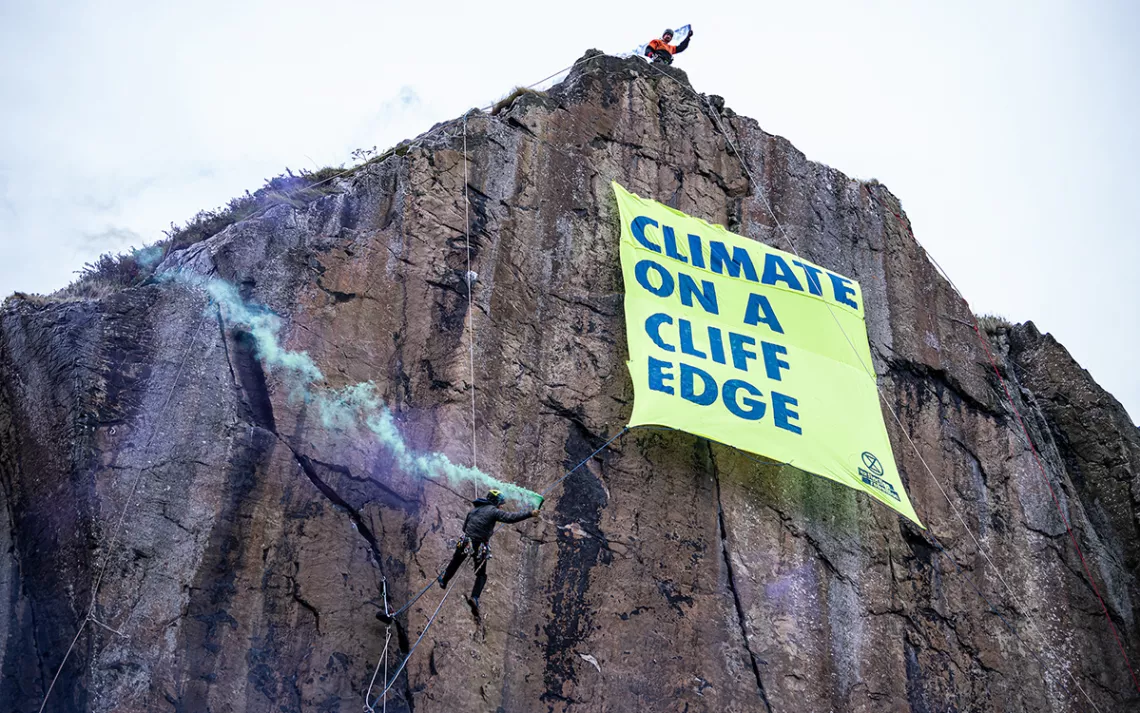
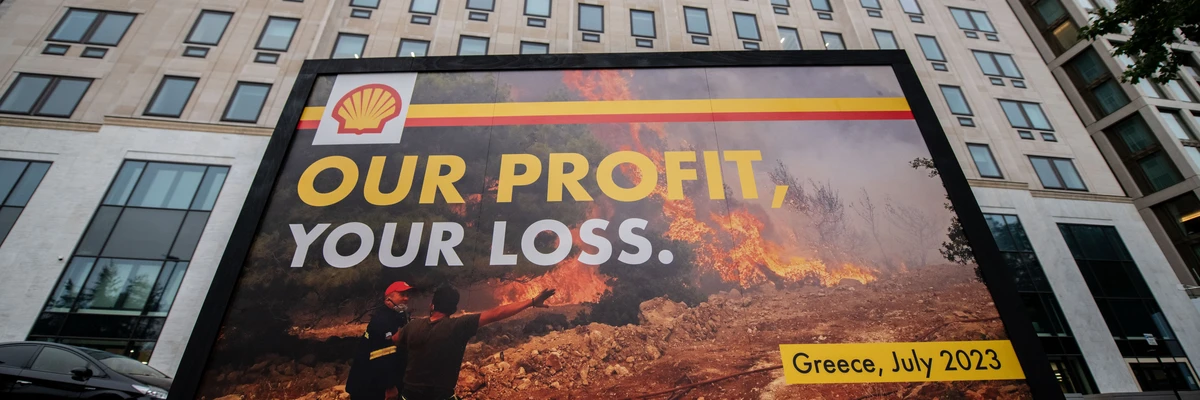
Campaigners take part in a Stop Rosebank emergency protest outside the U.K. Government building in Edinburgh, after the controversial Equinor Rosebank North Sea oil field was given the go-ahead Wednesday, September 27, 2023. (Photo: Jane Barlow/PA Images via Getty Images)Experienced climbers scale a rock face near the historic Dumbarton castle in Glasgow, releasing a banner that reads “Climate on a Cliff Edge.” One activist, dressed as a globe, symbolically looms near the edge, while another plays the bagpipes on the shores below. | Photo courtesy of Extinction Rebellion and Mark RichardsGreenpeace activists display a billboard during a protest outside Shell headquarters on July 27, 2023 in London. (Photo: Handout/Chris J. Ratcliffe for Greenpeace via Getty Images)

 Greenpeace climbers scale two 75m-high chimney stacks at the UK’s second largest gas-fired power station, Staythorpe Power Station. Photo: Greenpeace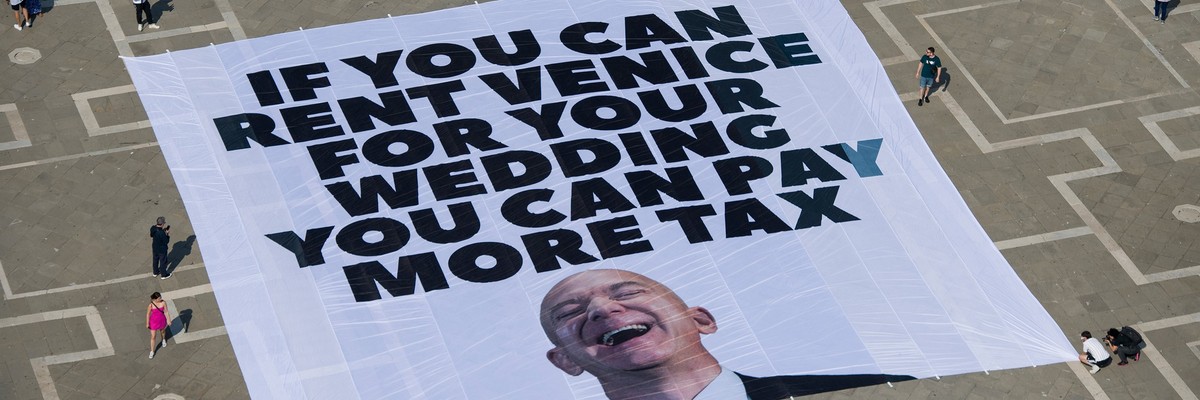

 The game lets players choose between renewable energy or fossil fuels to power their city.
 Screenshot from Game Over screen of Energy Town