Record fall in membership despite earlier claims of increases from right-wing figures
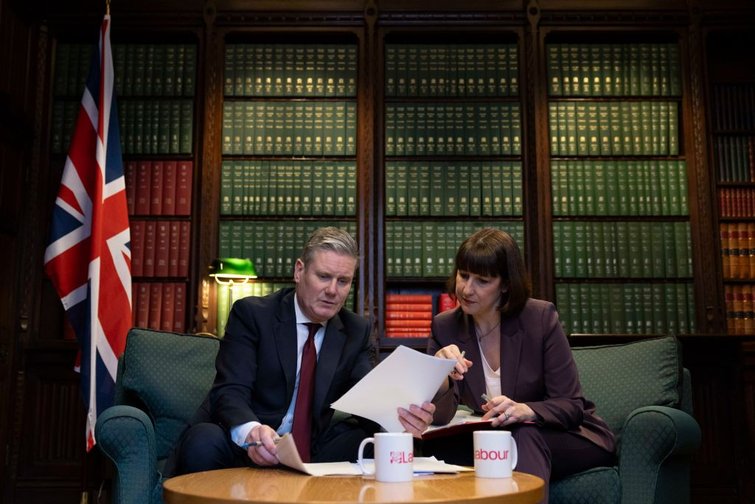
Labour has admitted it is only kept afloat by the money of the mega-rich, after yet another massive fall in party membership numbers – to a level lower than its peak under Ed Miliband and far below the almost 600,000 when Jeremy Corbyn was leader.
According to its latest official figures, the party suffered a net loss of 37,000 members, 9% of its total, by the end of 2023 compared to a year earlier – the biggest year-on-year loss since 2003 when Labour haemorrhaged members during Tony Blair’s illegal war in Iraq. Even the claimed latest membership of 370,000 is suspect according to party insiders, as Labour under Keir Starmer has long padded its figures by continuing to count lapsed members – and its records were long in chaos after outsourcing led to a massive hack and the freezing of its membership administration systems.
Leading right-wing Labour figures have repeatedly briefed that members were pouring in and numbers were rising, attributing this to Starmer. In fact, given Starmer’s deep personal unpopularity, it makes far more sense to attribute the collapse in membership to him, his support for Israel’s genocide, his cowardly assault on left-wing MPs and members and his dog-whistle red-Tory ‘policies’.
And the party has inadvertently admitted that it is only propped up by donations from the super-rich. Party general secretary David Evans has said that the party losing less than the expected £2.5m during the general election campaign was because of “an increase in high-value donations”. Under Corbyn, large numbers of ordinary people chipped in what they could afford – so many that Labour’s debts, grown huge under previous leaders, were wiped out.
Now, even kept afloat by billionaires – and clearly beholden to them, given Labour’s atrocious announcements penalising the poor since Starmer was ushered into Downing Street by the fascist Reform ‘party’ – Labour is still losing money, just less than it would have without the huge donors wanting payback for their investment.
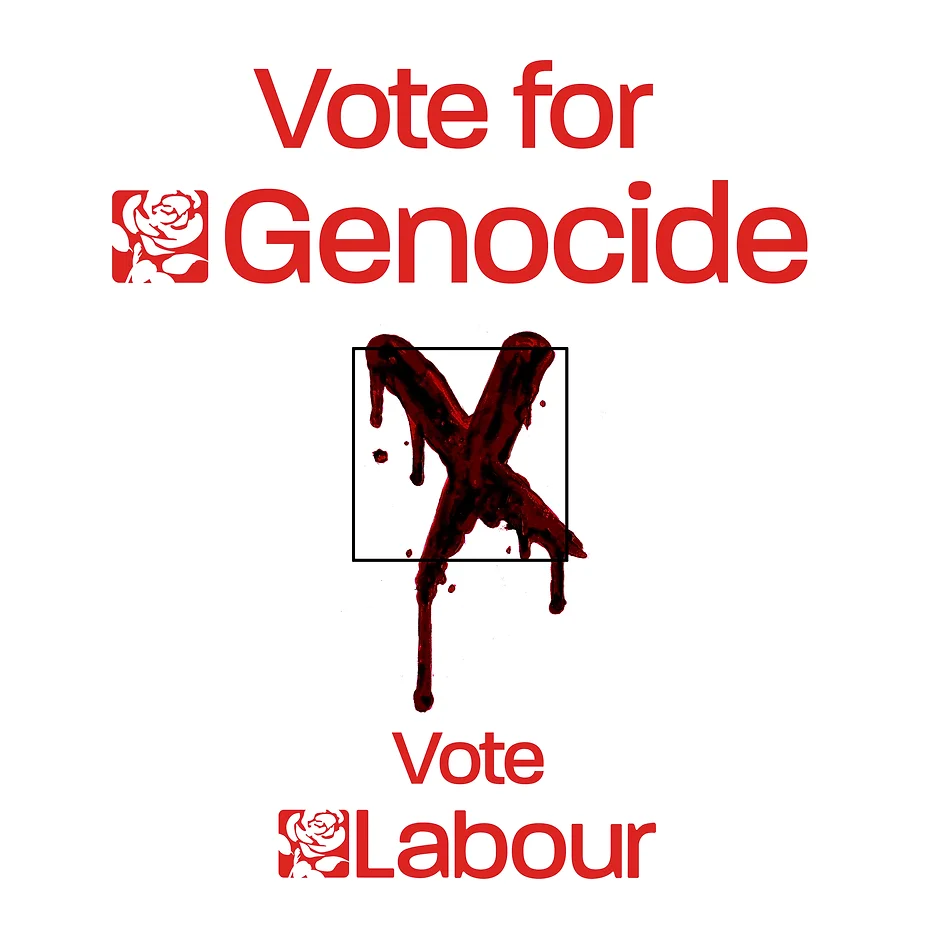
Vote For Genocide Vote Labour.Zionist Keir Starmer is quoted “I support Zionism without qualification.” He’s asked whether that means that he supports Zionism under all circumstances, whatever Zionists do.
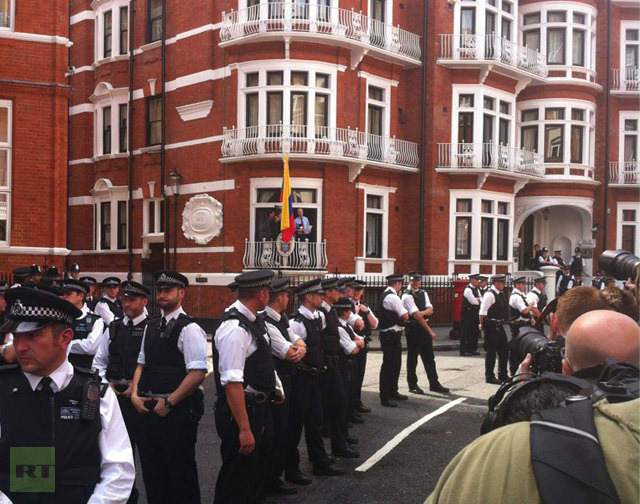
Today, in a surprise development likely weeks in the planning, WikiLeaks founder Julian Assange was able to leave the United Kingdom for the first time in more than a decade after reaching a plea deal with the US government.
In the past several months, momentum has been building towards this moment. There was increasing bipartisan support in both the Australian parliament and the US Congress for the Australian citizen’s release. Australian Prime Minister Anthony Albanese has made repeated statements on his behalf, and in April, US President Joe Biden said he was “considering” a request from Australia to drop its prosecution of Assange.
This all contributed to the sense the matter might be resolved before Assange’s final UK hearing date, previously scheduled for July 9 and 10. The timing of the deal is also a welcome prelude to Albanese’s visit to Washington next week.
Such a resolution, however, was not inevitable. And it is not over yet.
A relentless, years-long pursuit
The United States’ pursuit of Assange has seemingly been relentless since WikiLeaks posted hundreds of thousands of classified military documents in 2010. It wasn’t until 2019 under the then President Donald Trump, however, that he was finally indicted on 17 counts of violating the 1917 Espionage Act.
The charges against Assange were not just considered unprecedented, they raised significant First Amendment concerns.
The apparent desire to punish Assange for the embarrassment caused by the leaks – and to deter others from taking similar action – was apparently so strong the CIA allegedly discussed plans to kidnap and even assassinate Assange during the Trump administration, according to US media reports.
In the UK courts, the US Department of Justice had argued Assange should be subject to US law and extradited to face trial for his actions. However, as a non-citizen, there were questions over whether he could rely on the legal protections afforded by those same laws – particularly the constitutional right to free speech.
The successful extradition of Assange could have set a precedent by which the US could pursue journalists anywhere in the world for publishing information it did not like, while potentially denying them their fundamental First Amendment rights.
In a crucial election year in the US that President Joe Biden is framing as an existential fight for the soul of US democracy, the continued pursuit of Assange was as inconsistent as it was ultimately untenable. Viewed from the outside, it appeared the case was causing the Biden administration international embarrassment.
Biden has been careful to maintain an appropriate distance between the presidency and the Department of Justice. He came into office promising to restore faith in the rule of law following the Trump years, and has meticulously avoided any appearance of interference in the department’s work as it has investigated and indicted his predecessor.
Assange’s case, however, is wholly different to the charges on which Trump has been indicted. It is certainly possible to interpret Biden’s comment that he was “considering” dropping the charges as a gentle public rebuke of the Department of Justice’s pursuit of the case, given its global implications for a free press.
Broader implications for the alliance
The continued pursuit of Assange was also becoming problematic in the context of Australia’s alliance with the US. That relationship is always described as one based on shared democratic values, in contrast to what Biden has repeatedly framed as the coercive and repressive instincts of “authoritarian” powers.
The decision by the US to pursue a citizen of one of its closest allies for the publication of information, while simultaneously condemning authoritarian states for doing much the same, was both hypocritical and damaging to American standing in the world.
In the context of growing concern in Australia about the terms of the AUKUS submarine deal and the Australian government’s willingness to go “all-in” with the US militarily, the continued pursuit of Assange gave the impression that Australia’s most important security ally did not take its concerns seriously. Australia appeared simply to be snapping at America’s heels.
It also added to the sense that the “capital-A Alliance” between the two countries was increasingly dominated by security concerns, often at the expense of democratic accountability.
Because of the international campaign to free Assange and the support it received in both Australian and American democratic institutions, there appears to be have been a reconsideration of this focus on security interests over democratic values.
It should be noted, though, that the US didn’t drop its prosecution in the end; Assange has agreed to plead guilty to a felony charge of violating the Espionage Act, which in itself may set a concerning precedent for press freedom.
And the fact this saga happened at all – and that it has taken more than a decade to get close to resolution – should prompt deep reflection on the values that underpin both Australia’s relationship with its most important security ally and the United States’ role in the world.
Labour leader’s reluctance to differ from Tories on policy or Gaza sets stage for progressive independent candidates
Keir Starmer has moved Labour to the right – leaving left-wing voters without a political home | Belinda Jiao/Getty Images
Almost all of Britain’s pollsters agree: the Labour Party is heading for a massive victory in this year’s general election, while Rishi Sunak’s Tories are set for a historic defeat. But there is another, far less talked about shift underway, which could see a wave of independent left-wing MPs elected.
Most polling firms expect Labour to win a majority of more than a hundred seats. A ‘poll of polls’ by political forecasting website Electoral Calculus suggests the party is on course for a 200+ majority.
These polls could all be wrong, but little seems to shake them. There is some evidence, though, of another trend that is yet to be reflected in the polls: Keir Starmer’s unwillingness to set out any clear policy differences from the Conservatives may be backfiring.
Severalpolls in recent months have indicated that around 70% of people in the UK want an immediate ceasefire, and there are weekly demonstrations in towns and cities across the country in support of Palestinians. Organisers of a march in London last week estimated that up to 400,000 people had gathered to demand an end to the violence.
This leaves a huge gap in political representation, at least from the biggest two parties, for swathes of people nationwide.
It was in this opening that former Labour MP George Galloway – who was kicked out of the party in the 2000s after objecting to the UK entering the Iraq war – was elected as an independent MP for Rochdale last month, following a campaign that centred the need for a ceasefire in Gaza.
Another gap in political representation has been created by Starmer’s remodelling of the Labour Party, which has been sanitised to ensure it poses little or no threat to the political establishment. The majority of his policies so far appear to be a continuation of the status quo, suggesting little will change if the party wins the forthcoming election.
In contrast, so bold and progressive were the policies of his predecessor, Jeremy Corbyn, that the higher echelons of the Labour Party and the wider political and media establishment were determined to get rid of him from the offset.
A leadership challenge was mounted against him in the summer of 2016, little over a year after he was elected the party’s leader. Corbyn won comfortably – a fact I found unsurprising, having seen first-hand how he could pull a crowd of more than a thousand people to a hurriedly arranged event half a mile from a city centre.
Internal party opposition to Corbyn surged following his re-election, again backed by the mainstream media. When then Tory prime minister Theresa May called an election in 2017, many anticipated she would win a landslide victory that would consign ‘Corbynism’ to the outer margins.
Instead, Corbyn and his Labour manifesto struck a chord with many voters. Labour gains resulted in a hung parliament, to the horror of the political establishment, which worked to eliminate this threat from the left over the following two years.
After Labour lost the 2019 general election, Corbyn resigned and Starmer moved the party rightwards – prompting tens of thousands of its members to desert it as a result. Their votes are now up for grabs, and left-wing independents are hoping to win them.
Take a meeting in London just last weekend, scarcely reported on except by socialist paper The Morning Star. Two hundred of Labour’s former parliamentary candidates, councillors and supporters gathered to develop an alternative to its current stance on Gaza and other issues.
In a video message played at the meeting, Driscoll said: “In the next election, both parties will have the same manifesto and the same rich donors pulling the strings.”
A similar event is planned in Blackburn next month – just one part of a much wider movement that will likely see independent left-wing candidates standing against Labour candidates in many seats in the general election.
This is already being seen in England’s upcoming local council elections, where clusters of non-party, progressive candidates are working together in many parts of the country. In Blackburn, for example, every ward will have an independent left-wing candidate standing, as will all six wards in Dewsbury, West Yorkshire. Early indications suggest similar trends in Merseyside and parts of London.
The accepted political wisdom in the UK is that once a general election is called, voters tend to revert to the usual pattern of voting. But if independent candidates were to pick up substantial numbers of votes in the local elections, even taking some council seats, it could indicate a political shift that means this wisdom will not apply this year.
This may seem unlikely but there is undeniably a political vacuum waiting to be filled – and a sense that something is afoot in British politics that is simply not being recognised.
The Skwawkbox reports on Alastair Campbell lying about a speech he gave. Campbell claims that he didn’t deride young voters over Gaza but unfortunately for Tony Bliar’s liar-in-chief it was filmed.
“I know Tony didn’t lie, I know I didn’t lie,” he said. “But when you have made as part of your case, the fact that you have stated in your honest conviction, that this is about tackling Saddam Hussein’s Weapons of Mass Destruction, and the inspectors go in and they don’t find them, that’s a pretty obvious trust moment.”
Campbell is trying the “I honestly believed” defence when the truth is that he wrote a whole dodgy dossier full of lies. This cnut’s proper place is rotting in a prison.
BEN CHACKO reports from a Crouch Hill event where locals and community leaders gathered to celebrate the dedicated service of their member of Parliament
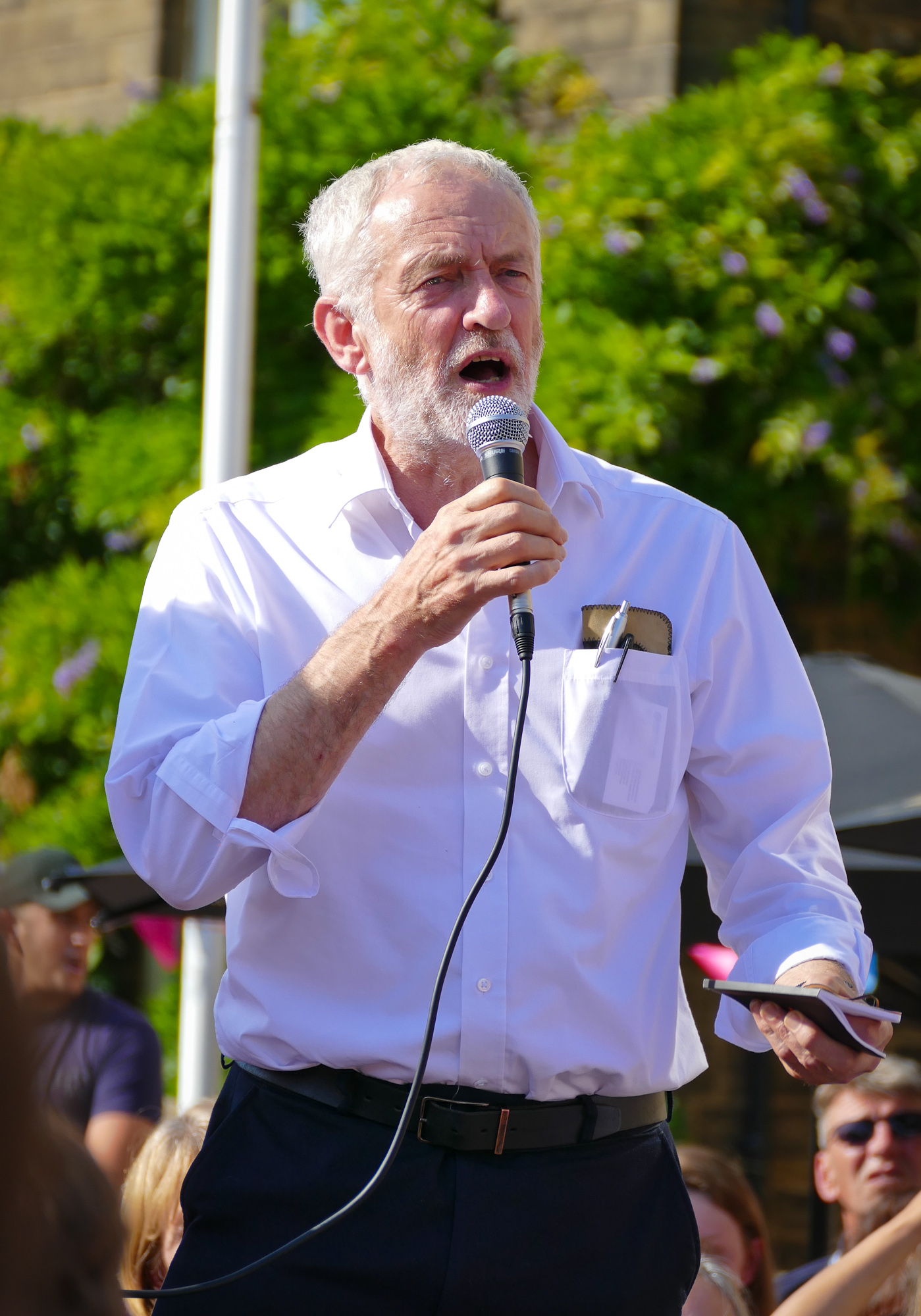
Jeremy Corbyn MP, former leader of the Labour Party
COMMUNITY and faith leaders, peace and social justice activists and local Labour Party members paid tribute to Jeremy Corbyn on Sunday in an event marking his 40 years as Islington North MP.
An afternoon of film, talks, dancing and refreshments saw hundreds pack the Brickworks Community Centre in London’s Crouch Hill neighbourhood — sending a strong message to the Labour Party that the constituency continues to support the MP that the national executive committee has banned from standing on a Labour ticket.
The range of speakers showcased Corbyn’s unparalleled campaigning record. Shirley Franklin of the Defend Whittington Hospital Coalition recounted their work together to protect threatened services at the hospital, Kate Hudson of the Campaign for Nuclear Disarmament spoke of his dogged attendance at anti-nuclear demos come rain or shine and fellow MPs John McDonnell and Claudia Webbe saluted the courage he had shown in the face of appalling abuse to champion vital but unpopular causes at Westminster over the years.
Founder of the Muslim-Jewish Forum rabbi Herschel Gluck wryly pointed out that Jeremy resembled his namesake the prophet Jeremiah. “Jeremiah was a person who came with a message many people didn’t want to hear — and he was challenged but he continued to deliver his message,” he said.
After 40 years of being an MP, JEREMY CORBYN talks to Ben Chacko about the role of democracy, the long history of attacks on the left and the importance of taking a stand
…
It is war that comes to mind when I ask for his worst memories from 40 years in the Commons. Voting against the Gulf war in 1991 was “a very lonely place to be.” But the much bigger revolt against the 2003 invasion of Iraq didn’t cheer him. “Iraq was, in many ways, the worst because I don’t believe anyone that had objectively looked at any of the information at the time honestly believed that Iraq had weapons of mass destruction.
“You wouldn’t have to read very far into those documents to see that it was nonsense. Huge pressure was put on Labour MPs to vote for this — and that they did so was one of the low points.”
Despite the defeat of Corbynism, we now know more clearly than we have in decades how popular left-wing policies are if put to the public — and that’s all thanks to Corbyn’s bravery, writes CHELLEY RYAN
…
We were crying out for change, for Labour to become a real opposition, for hope — and Corbyn couldn’t resist that pressure despite his natural inclination to be part of the collective rather than lead it.
And that’s why we grew to respect, trust and even love him as a leader in a way that nobody, least of all Corbyn, could have ever envisaged.
Over time we were accused of being a cult with our “Oh Jeremy Corbyn” chant, scarves and badges. Frankly, we didn’t care. Not because we were a cult unless as some Corbyn supporters started to jokingly refer to themselves, they were members of “the cult of giving a f***.”
But because we knew this was never about Corbyn the man. It was all about what that man stood for and the hope he represented.
Having said that, we knew we owed that hope to the courage of that man and we loved him for it. And the more he was scorned and smeared and slandered, the more angry and outraged we became.
After all, we are a movement that only exists because of our intolerance of all things unfair and unjust, and the treatment Corbyn received from the Establishment, including — and especially — from the Labour rightwingers, was both of these things in spades.
…
Thanks to Corbyn and the movement that grew around him, we have seen how popular left-wing policy positions can be. We now know they almost won a general election despite the most hostile press and Parliamentary Labour Party in political history.