RMT demands Labour deliver on its promise to start the ‘biggest wave of insourcing in a generation’
RAIL union RMT held a mass meeting in Manchester today as part of its national campaign to end outsourcing on Britain’s railways.
The meeting heard from RMT general secretary Eddie Dempsey, regional organiser Steve Shaw, Salford Labour MP Rebecca Long Bailey and North West TUC secretary Jay McKenna.
In a recent report, the union warned that despite government plans to bring rail franchises in-house and create the new publicly owned body Great British Railways, a “hidden layer” of contractors continues to profit from the exploitation of thousands of workers.
The report warned that such companies make their profits by keeping workers on low-paid, inferior or casual contracts, leaving them struggling to get by.
RMT argues that all rail jobs, from cleaning to catering, engineering to station services, should be brought back in-house to reverse decades of outsourcing that have driven down pay, eroded conditions and undermined safety.
The union is also pressing the Labour government to honour its pledge to deliver the biggest wave of insourcing in a generation.
Mr Dempsey said: “Outsourcing on our railways is a racket.
“Private firms are cashing in while cleaners, security staff and track workers, among others, are left struggling, often on low pay, insecure contracts and unsafe conditions.
“We have overworked cleaners, for example, working while sick, as companies like Churchill hand millions to shareholders.
“It’s totally indefensible and a waste of taxpayers’ money.”
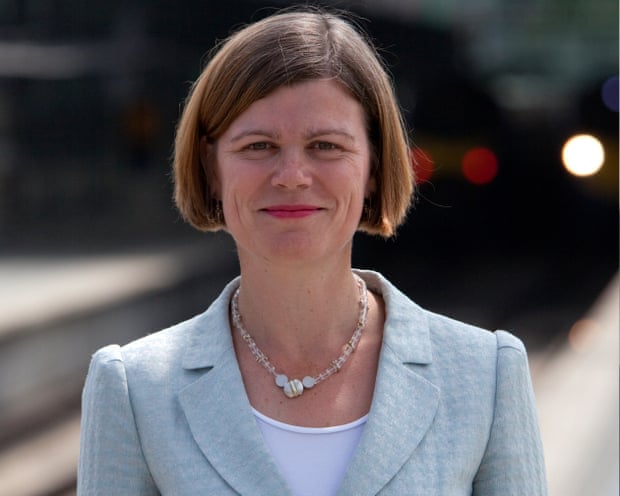
Nicola Shaw received remuneration from Kelda Holdings as well as Yorkshire Water. Photograph: Graham Turner/The Guardian
Company says extra payments relating to work for Kelda Holdings were covered by shareholders not billpayers
The boss of Yorkshire Water, one of Britain’s biggest water suppliers, has received £1.3m in previously undisclosed extra pay since 2023 via an offshore parent company, the Guardian can reveal.
Nicola Shaw received £660,000 from Yorkshire Water’s Jersey-registered parent company, Kelda Holdings, in the 2023-24 and the 2024-25 financial years. The size of the fees was not disclosed in the annual report of the regulated subsidiary, Yorkshire Water Services.
The utility company at first refused to detail the pay Kelda Holdings had awarded Shaw, saying the parent company was a “private entity registered in Jersey and subject to separate disclosure frameworks”. Only after the Guardian raised questions about the ability of MPs and bill payers to scrutinise the pay awarded did the company reveal the amount of the two payments.
…
Gary Carter, the national officer for GMB, a union representing water workers, said: “This is another case of water companies not listening to the outrage and concerns of the public over the payment of unjustifiable salaries.
“The fact that this salary is hidden and not transparent just further undermines the reputation of water companies. This sort of behaviour has got to end.”
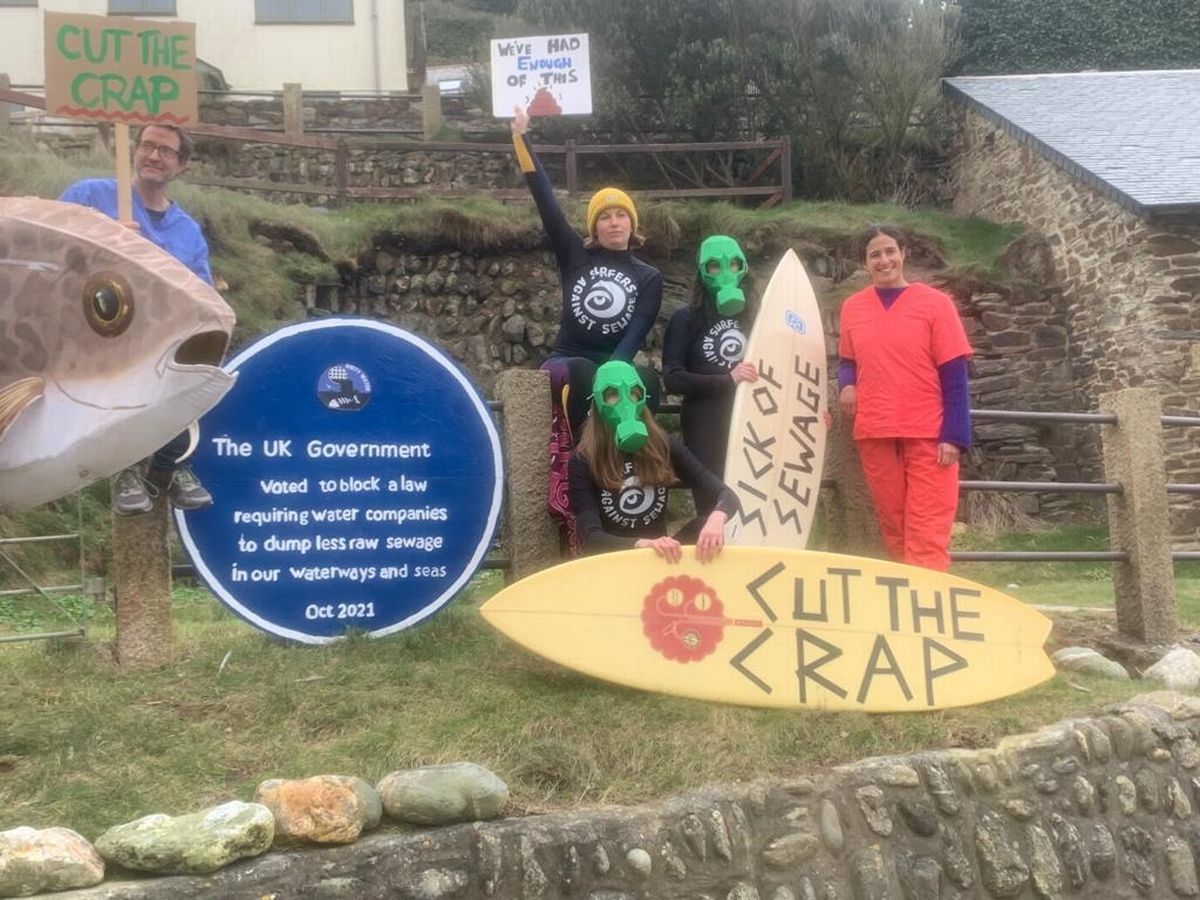
April 2023 Surfers Against Sewage and Extinction Rebellion protests in St Agnes, Perranporth, Truro and Charlestown which unveiled spoof Blue Plaques to the MPs and Conservative Government who allowed raw sewage to be dumped in the sea (Image: Surfers Against Sewage)
Thames Water delivering a temporary water supply from a tanker, August 2022
ENVIRONMENTAL charity River Action filed a legal challenge today against the government’s lack of preparation for temporary nationalisation of floundering water companies.
The group argues that Environment Secretary Steve Reed has acted unlawfully by failing to develop or publish policy on when he would put failing firms into special administration.
Campaigners pointed to Thames Water as a clear candidate for special administration, citing repeated breaches of its statutory and licence obligations.
Thames was revealed earlier this month to be the worst polluter of all the water firms in Britain, accounting for 44 per cent of incidents classified as “serious.”
…
River Action head of legal Emma Dearnaley said: “The government has the power but won’t use it, or even explain when it might trigger this process.
“Apparently, the government has no policy at all. That’s a fundamental failure of transparency and accountability — and it’s unlawful.”
She added: “We need water companies that serve customers and protect our rivers, not prioritise financial returns to investors.
Only a truly democratic party can provide the space for the policies that are needed to transform society. Up and down the country, there is huge appetite for an economic reset. One that brings water, energy, rail and mail into public ownership. One that invests in welfare, not warfare. One that ends this government’s complicity in genocide and brings about justice for the Palestinian people. One that makes the wealthiest in society pay a bit more in tax to ensure that everyone can live in dignity.
This is the political vision that can inspire hope, not fear. The great dividers want you to think that migrants and minorities are responsible for the problems in our society. They’re not. Those problems are caused by a rigged economic system that protects the interests of billionaires and corporations. By scapegoating migrants and minorities for its own domestic failures, Labour has paved the path for Reform UK. This Labour government is here to appease Reform. We are here to defeat Reform. We are at a critical juncture, and we need an alternative, now.
…
Think of what we could achieve together.
The future we deserve is no pipe dream. Look around you, and you will find proof that a better world is possible. We are not fighting for crumbs. We are fighting for real change – and we are never, ever going away.
dizzy: I need to spend time on other projects for the next few years. We need left bloggers and social media activists. It’s a hard slog to get established but go for the long term. Teams of 10 or more would be ideal because you could share the work, maybe concentrate on your own area of interest. Suggest that you change passwords regularly and drop and replace people who don’t pull their weight. In a few years, ready for the next election, you should be kicking and taking on number 10’s influence and influencers reported in this article.
England’s privatised water industry may one day be considered a textbook case study of failed corporate responsibility, regulation and governance. The Cunliffe review, the recent report into England’s privatised water industry, concluded that the financial regulator, OfWat, needs to be disbanded and a new water regulator will be introduced.
For that to work effectively, better pollution monitoring and more clearly defined pollution incident criteria are essential. While politicians and water companies have claimed to be reducing pollution incidences, they might not strictly be tackling sources of pollution, so communications must be carefully scrutinised for disinformation.
The UK’s environment minister Steve Reed MP has described the water industry as “broken”. The public have rising water bills. Water companies owe over £60 billion in debts and have left the country with uncertain water security in the face of climate change.
The Environment Agency (EA) in England recently announced that serious pollution incidents in 2024 rose by 60% to 75 from 47 in the previous year. The EA classifies pollution incidents using a four-point scale called the common incident classification scheme. Trained EA officers consider the evidence reported via their incident hotline to assess its credibility and severity.
Get your news from actual experts, straight to your inbox.Sign up to our daily newsletter to receive all The Conversation UK’s latest coverage of news and research, from politics and business to the arts and sciences.
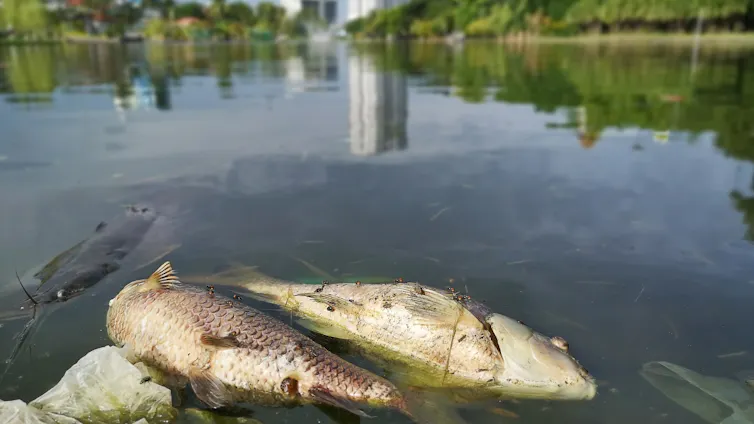
Category 1 is for major incidents, 2 for significant, 3 for minor incidents and 4 for no impact. Category 1 and 2 typically involve visible signs of dead fish floating. For salmon, if more than 10 adult or 100 young fish are dead, this is category 1. With fewer than ten adult and 100 young fish dead, it’s category 2.
No dead fish, no serious problem? The EA can also record damage on protected habitats as “pollution incidents” but these are harder to substantiate without investigative research that takes time and money.
Last year, more than 450,000 sewage discharges were recorded by event duration monitors. These are devices fitted to the end of overflow pipes that indicate when and for how long they have been discharging.
These discharges represent 3.6 million hours of untreated sewage going into our rivers and coasts. These contain chemical contaminants including pharmaceuticals, detergents and human pathogens. Only 75 incidents were recorded as serious or significant in 2024. Another 2,726 were classed as minor.
So lots of sewage discharges are not being classified as pollution incidents, despite containing pollutants. The EA advises its investigating officers to “record substantiated incidents that result in no environmental impact, or where the impact cannot be confirmed, as a category 4”.
The EA has been criticised for turning up late to 74% of category 1 and 2 pollution incidents and for being pressured to ignore low-level pollution – all claims that they have denied. However, they admit they are constrained by finances. Any new regulator must be adequately resourced and independent.
Pollution isn’t always classified as an official pollution incident. YueStock/Shutterstock
In their recent report into pollution incidences, the EA states that they respond to all category 1 and 2 (serious and significant) water industry incidents and will be increasing their attendance at category 3 (minor) incidents. They highlight that more inspections will identify more issues. This shows some acceptance that the more incidents they attend, the more would be substantiated or recorded appropriately.
Most sewage discharges would not have been reported to, or recorded by, the EA as pollution incidents because they were permitted discharges from combined stormwater overflows. Water companies are allowed to discharge untreated wastewater under exceptional rainfall or snowfall conditions to prevent sewage backing up through the pipes.
Extra water flow in rivers from rainfall is meant to dilute chemical contaminants in wastewater. However, some discharges can last days or weeks. The EA is currently investigating whether water companies have been breaching their permits and discharging untreated wastewater when there is low or even no rainfall.
What counts as pollution?
The UN classifies pollution as “presence of substances and energy (for example, light and heat) in environmental media (air, water, land) whose nature, location, or quantity produces undesirable environmental effects”. This definition differs markedly from the EA’s working definition of pollution incidents.
Many sewage discharges containing low concentrations of pollutants won’t kill fish but might still be harmful to fish larvae or small insects, for example.
However, the broad picture from EA data is that invertebrate communities at least are in a better state than they were three decades ago before wastewater treatment plants were upgraded following the EU’s Urban Wastewater Directive.
Some pollutants bioaccumulate through the food chain, so they become concentrated in top predators such as orcas. Some chemicals mimic reproductive hormones even in low concentrations and can feminise fish, for example. High levels of nutrients from agriculture and sewage in rivers can cause fungal diseases in seagrass meadows.
Other families of chemicals build up in wildlife and people, such as persistent “forever chemicals”, much of which comes from wastewater discharges. Continued discharges of antibiotics into waterways might not be classified as pollution incidents but still pose a substantial risk to human and ecosystem health through bacteria developing antibiotic resistance.
The government has just committed to cut sewage pollution by 50% by December 2029 based on 2024 data. But it’s not yet clear whether these involve cutting the frequency of discharges, the duration or both.
This data could also be manipulated so that a large number of small discharges can be consolidated into one official discharge event. Currently, the volume of discharges from stormwater overflows isn’t known. Without this vital data we can’t ascertain the risk posed by their contaminants.

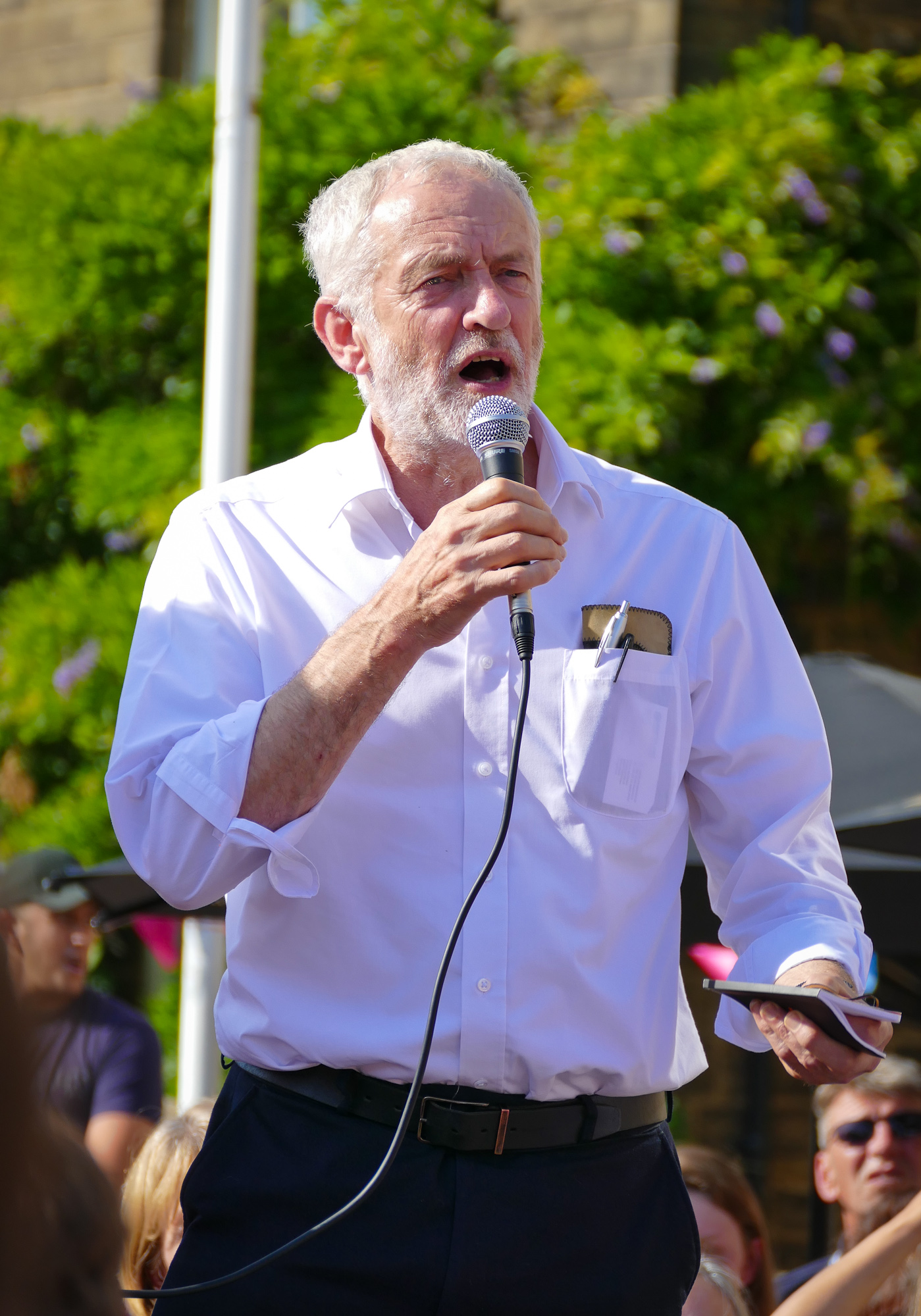
 RMT members in Manchester, August 14, 2025