Greenpeace activists board a Shell platform headed toward the North Sea on February 6, 2023. (Photo: Lou Benoist/AFP via Getty Images)
“Shell thought suing us for millions over a peaceful protest would intimidate us, but this case became a PR millstone tied around its neck,” said the co-executive director of Greenpeace U.K.
The United Kingdom-based oil giant Shell agreed Tuesday to settle a major lawsuit the company brought against Greenpeace after activists from the group boarded and occupied a company oil platform last year to protest fossil fuel expansion.
Greenpeace said in a statement that as part of the settlement, it agreed to donate £300,000—roughly $382,000—to the Royal National Lifeboat Institution, a charity that helps save lives at sea, but will pay nothing to Shell and accept no liability. The donation represents a fraction of the over $11 million in damages and legal costs defendants faced, the group said.
The Greenpeace defendants have also “agreed to avoid protesting for a period at four Shell sites in the northern North Sea.”
“Shell thought suing us for millions over a peaceful protest would intimidate us, but this case became a PR millstone tied around its neck,” said Areeba Hamid, co-executive director of Greenpeace U.K. “The public backlash against its bullying tactics made it back down and settle out of court.”
“This settlement shows that people power works. Thousands of ordinary people across the country backed our fight against Shell and their support means we stay independent and can keep holding Big Oil to account,” Hamid added. “This legal battle might be over, but Big Oil’s dirty tricks aren’t going away. With Greenpeace facing further legal battles around the world, we won’t stop campaigning until the fossil fuel industry stops drilling and starts paying for the damage it is causing to people and planet.”
“These aggressive legal tactics, the huge sums of money, and attempts to block the right to protest pose a massive threat.”
Shell brought the case, which Greenpeace characterized as a “textbook” strategic lawsuit against public participation (SLAPP), in February 2023 and sought $1 million in damages from activists who boarded a Shell-contracted ship carrying equipment to drill for oil in the North Sea.
“When the protest ended, the only damage Shell could find was a padlock which, they alleged, our activists broke. That’s it,” Greenpeace U.K. said Tuesday. “Yet they came after us with a million-dollar lawsuit, which they justified for their spending on safety.”
The group, which warned that the case had dire implications for the right to protest, credited a “sustained, year-long campaign against the suit” for forcing the oil behemoth to back down. The campaign, according to Greenpeace, “turned the legal move into a PR embarrassment for Shell.”
“The case was dubbed the ‘Cousin Greg’ lawsuit by Forbes after a scene in the Emmy-awarded drama Succession, in which the hapless character threatens to sue Greenpeace to universal dismay,” the environmental group noted Tuesday.
Greenpeace is currently facing several other SLAPP suits, including one brought by Energy Transfer, majority-owner of the Dakota Access pipeline. The group said Tuesday that the Energy Transfer suit “threatens the very existence of Greenpeace in the U.S.”
“These aggressive legal tactics, the huge sums of money, and attempts to block the right to protest pose a massive threat. It could stop Greenpeace being able to make a real difference on the things that matter most,” the organization said Tuesday. “It’s part of a growing trend by powerful corporations and governments to crush peaceful protest—using draconian laws or intimidation lawsuits like this.”
“It seeks to silence the people most impacted by the climate crisis. This threatens the global fight for climate justice,” the group added. “We won’t give up. This is Shell versus all of us.”
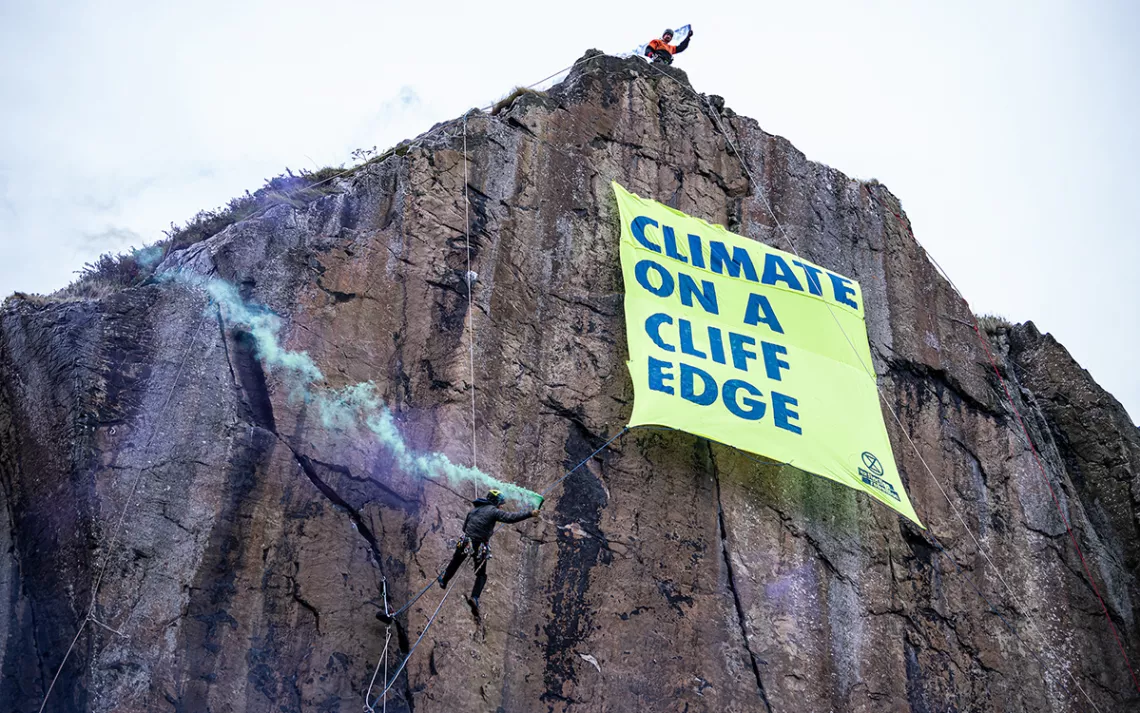
Experienced climbers scale a rock face near the historic Dumbarton castle in Glasgow, releasing a banner that reads “Climate on a Cliff Edge.” One activist, dressed as a globe, symbolically looms near the edge, while another plays the bagpipes on the shores below. | Photo courtesy of Extinction Rebellion and Mark Richards
A small tax on just seven of the world’s biggest oil and gas companies could grow the UN Fund for Responding to Loss and Damage by more than 2000% and help address the costs of extreme weather events, according to new analysis published today by Greenpeace International and Stamp Out Poverty. The organisations are calling for a long term global tax on fossil fuel extraction, with year-on-year increases, combined with taxes on excess profits and other levies.
A ‘Climate Damages Tax’ would put a cost on every tonne of carbon emitted by the coal, oil and gas extracted – starting at $5 per tonne and rising each year thereafter. If it was imposed on ExxonMobil, Shell, Chevron, TotalEnergies, BP, Equinor and ENI it could raise $15 billion in the first year alone to help the world’s most climate-vulnerable countries pay for the escalating cost of damage caused by climate change. Currently, just $702 million has been pledged to the loss and damage fund, while the combined profits of those fossil fuel companies exceeds $148 billion.
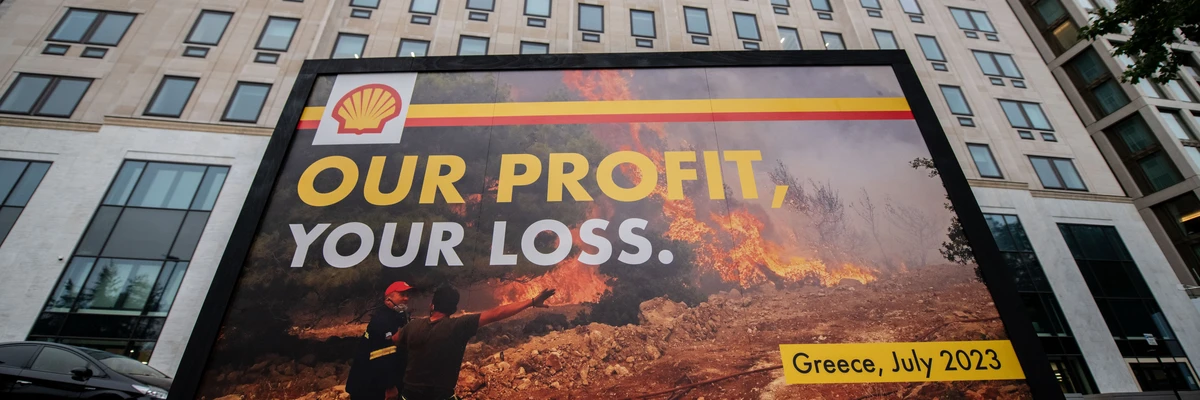
Greenpeace activists display a billboard during a protest outside Shell headquarters on July 27, 2023 in London. (Photo: Handout/Chris J. Ratcliffe for Greenpeace via Getty Images)
Earlier this month, Barbados Prime Minister Mia Mottley, French President Emmanuel Macron and Kenyan President William Ruto stated their support for a Climate Damages Tax.
The briefing also highlights the financial costs of some of this year’s worst weather events that have been attributed to climate change, totalling over $64bn. These include Hurricane Beryl, Hurricane Helene, the heatwave in India in May, Typhoon Carina/Gaemi, the floods in Brazil in May, and the floods in Kenya and Tanzania in April. The costs of damage from the disasters surveyed range from US$2.9bn (Typhoon Carina) to US$ 25bn (heatwaves in India), and present just a fraction of the total cost of loss and damage globally over the last year.
A Climate Damages Tax imposed only on wealthy OECD countries could play an essential role in helping the poorest and most vulnerable to rebuild after climate-related disasters. Increasing annually by US$5 per tonne of CO2-equivalent based on the volumes of oil and gas extracted, the tax could raise an estimated US$900 billion by 2030 to support governments and communities around the world as they face growing climate impacts.
“While oil and gas giants keep raking in grotesque levels of profit from exploiting resources, the damages resulting from the industry’s operations are disproportionately borne by people who did not cause the crisis,” said David Hillman, Director of Stamp Out Poverty. “A climate damages tax – along with other levies on fossil fuels and high-emitting sectors – will make polluters pay for the cost of climate impacts, as well as supporting workers and affected communities in the transition to clean energy, jobs, and transport.”
“Who should pay? This is fundamentally an issue of climate justice and it is time to shift the financial burden for the climate crisis from its victims to the polluters behind it,” said Abdoulaye Diallo, Co-Head of Greenpeace International’s Stop Drilling Start Paying campaign. “Our analysis lays bare the scale of the challenge posed by climate loss and damage and the urgent need for innovative solutions to raise the funds to meet it. We reject Big Oil’s assault on people and democracy and call on governments worldwide to adopt the Climate Damages Tax and other mechanisms to extract revenue from the oil and gas industry.”
The Loss and Damage Fund was announced at COP27 in Egypt to help developing countries pay for impacts of natural disasters caused by climate change. Recently renamed the Fund for Responding to Loss and Damage (FRLD), it currently has US$702 million in pledged funds. According to Greenpeace International and Stamp Out Poverty’s calculations, a Climate Damages Tax levied on seven major international oil and gas companies would add in the first year alone US$15.02 billion, corresponding to over 21 times what is currently pledged to the fund.
Experienced climbers scale a rock face near the historic Dumbarton castle in Glasgow, releasing a banner that reads “Climate on a Cliff Edge.” One activist, dressed as a globe, symbolically looms near the edge, while another plays the bagpipes on the shores below. | Photo courtesy of Extinction Rebellion and Mark Richards
A protester holds a sign with a Shell logo during a demonstration on March 11, 2023 in The Hague, Netherlands. (Photo: Michel Porro/Getty Images)
“This setback will only help us grow stronger,” said the Dutch climate group that originally brought the case. “Large polluters are powerful. But united, we as people have the power to change them.”
Climate campaigners didn’t sugarcoat their reactions to a Dutch court decision on Tuesday that overturned a landmark 2021 ruling ordering the oil behemoth Shell to cut its planet-warming emissions nearly in half by the end of this decade.
“We are shocked by today’s judgment,” said Donald Pols, director of Milieudefensie, the Netherlands-based environmental group that originally filed suit against Shell in 2018.
“It is a setback for us, for the climate movement, and for millions of people around the world who worry about their future,” Pols said of Tuesday’s ruling by the Hague Court of Appeal. “But if there’s one thing to know about us, it’s that we don’t give up. This setback will only help us grow stronger. Large polluters are powerful. But united, we as people have the power to change them.”
The original 2021 ruling, as CNBC noted, marked “the first time in history that a company was found to have been legally obliged to align its policies with the Paris Agreement” and “sparked a wave of lawsuits against other fossil fuel companies.”
Despite acknowledging that Shell has “an obligation toward citizens to reduce CO2 emissions,” the appeals court on Tuesday scrapped a legal mandate compelling the company to slash its emissions by 45% by 2030 compared with 2019 levels, saying it was “unable to establish that the social standard of care entails an obligation for Shell to reduce its CO2 emissions by 45%, or some other percentage.”
“It is primarily up to the government to ensure the protection of human rights,” the court added.
Laurie van der Burg of Oil Change Internationalsaid in response that “while we mourn today’s setback, the ruling establishes a responsibility for Big Oil and Gas to act that future litigation can build on.”
“The court ruled protection against climate change is a human right, and corporations have a responsibility to reduce their emissions,” she added. “As far as we know, this is the first case where a court has acknowledged that new investments in oil and gas are incompatible with international climate goals.”
“Today’s ruling underscores the importance of world leaders now negotiating at the U.N. Climate Summit in Baku taking responsibility.”
Shell, which is responsible for just over 2% of global CO2 emissions, said in a statement that it was “pleased” with the court’s ruling and claimed to be “making good progress in our strategy to deliver more value with less emissions.”
But research by the human rights organization Global Witness has found that Shell has consistently overstated the scale of its investments in green energy—including by characterizing fossil fuels as “renewable.”
“Even as Shell claims to be reducing its oil production, it is planning to grow its gas business by more than 20% over the next few years, leading to significant additional emissions,” Global Witness wrote in a complaint to the U.S. Securities and Exchange Commission last year.
Andy Palmen, the director of Greenpeace Netherlands, said Tuesday that while campaigners working toward a just phaseout of fossil fuel emissions are “disappointed that Shell is being allowed to continue polluting,” they “will not give up the fight.”
“This only motivates us more to take action against major polluters,” said Palmen. “It really gives hope that the court finds that Shell must respect human rights and has a duty to reduce its CO2 emissions.”
“Today’s ruling underscores the importance of world leaders now negotiating at the U.N. Climate Summit in Baku taking responsibility,” Palmen added, referring to the COP29 gathering that kicked off on Monday in Azerbaijan’s capital city. “The summit in Dubai last year marked the end of coal, oil, and gas, now governments must come up with concrete plans to move away from fossil fuels.”
The Dutch appeals court’s ruling came in the wake of new research showing that oil and gas production surged to an all-time high in 2023—the hottest year on record.
“The oil and gas industry is not transitioning,” the environmental group Urgewald and dozens of other NGOs found. “In fact, 95% of the upstream companies on [the Global Oil and Gas Exit List] are still exploring or developing new oil and gas resources. This includes the oil and gas producers TotalEnergies, Shell, BP, Eni, Equinor, OXY, OMV, and Ecopetrol, which all claim to be targeting net zero emissions by 2050.”
Nils Bartsch, head of oil and gas research at Urgewald, said Tuesday that the 2023 oil and gas production record is “deeply concerning.”
“If we do not end fossil fuel expansion and move towards a managed decline of oil and gas production,” said Bartsch, “the 1.5°C goal will be out of reach.”
Greenpeace activists display a billboard during a protest outside Shell headquarters on July 27, 2023 in London. (Photo: Handout/Chris J. Ratcliffe for Greenpeace via Getty Images)
“The failure by our political class to deal with this completely solvable issue is staggering and shameful,” wrote one journalist.
As Hurricane Milton’s 145 mile-per-hour winds began closing in on Southwest Florida on Wednesday and people crowded into makeshift shelters across the state, climate advocates and other observers said the life-threatening storm and massive disruption to millions of people’s lives should make Americans “furious” at those who have helped make extreme weather more frequent and dangerous.
As Nathan J. Robinson wrote in Current Affairs, climate scientists and meteorologists have unequivocally told oil companies and policymakers that fossil fuel extraction is causing planetary heating, which has led to higher temperatures in oceans and bodies of water including the Gulf of Mexico, where the rapidly strengthening hurricane formed.
But despite the knowledge that fossil fuel giants like ExxonMobil and Shell had decades ago that drilling for oil and gas would cause “violent weather” and “potentially catastrophic events,” the industry’s profits have only grown as the U.S. has continued to subsidize their pollution-causing activities.
“The failure by our political class to deal with this completely solvable issue is staggering and shameful,” wrote Robinson. “Many of them have children and grandchildren. Presumably they would like their descendants to inherit a world worth living in. And they could make that happen. Unfortunately, it would require challenging the power and profits of some of America’s most influential corporations.”
In the Substack newsletter Heated, Arielle Samuelson explained on Wednesday how fossil fuel extraction and planetary heating “mutated” Hurricane Milton, which stunned weather experts this week as its wind speeds grew at a record-breaking pace, from 60 miles per hour to 180 miles per hour in just 36 hours.
It was the second time in recent weeks that a hurricane in the region has intensified quickly; areas that are expected to take a direct hit from Milton are still overwhelmed by the destruction left by Hurricane Helene.
Hot temperatures in the planets’ oceans and gulfs fuels hurricanes, and as Samuelson noted, scientists say the “extremely hot” Gulf of Mexico “was made far more likely by heat-trapping pollutants from the fossil fuel, agriculture, chemical, and cement industries.”
She continued:
In the past two weeks, ocean temperatures in the Gulf of Mexico were about 30-31° Celsius (86-88°F)—about 1 to 2° Celsius above average. The climate crisis made these extraordinarily high ocean temperatures at least 400 to 800 times more likely over the past two weeks, according to a rapid attribution study from Climate Central.
[…]
The science is also extremely clear that heat-trapping pollution causes sea-level rise and heavier rainfall, both of which make hurricanes more dangerous. Rainfall rates for tropical cyclones are expected to rise with the planet’s temperature, causing deadly flash floods like those found in Asheville, North Carolina. Sea level rise also means that coastal communities, and communities further inland, are more likely to be flooded during a storm.
That’s an objectively scary reality. But we know the primary source of greenhouse gas pollution, scientists note, so we also know how to slow the problem.
The lingering destruction of Helene and the impending landfall of Milton come, noted Fossil Fuel Media director Jamie Henn, weeks after three Democrats in Congress introduced legislation to require fossil fuel companies and oil refiners that do business in the U.S. to pay into a $1 trillion Polluters Pay Climate Fund, with their contributions based on a percentage of their global emissions.
The fund would be used to finance climate adaptation and other efforts to confront the impacts of the climate crisis.
There is a bill in Congress *right now* that would fund FEMA and resiliency efforts by making Big Oil pay for climate damages.
The Polluters Pay Climate Fund Act would provide at least $15 billion to FEMA to "address climate related disasters." https://t.co/cza3eiGZCn
In a press briefing on Wednesday, President Joe Biden noted how the damage done by Helene and the rapidly evolving news about Milton has left overwhelmed Americans vulnerable to misinformation, with some urging them to direct their anger at the White House or the Federal Emergency Management Agency (FEMA).
Republican presidential nominee Donald Trump has made baseless claims that FEMA funds were spent on funding for immigrant shelters, while U.S. Rep. Marjorie Taylor Greene (R-Ga.) wrote on social media that an unnamed “they” can control the weather and suggested the federal government is deliberately keeping emergency aid from people in states controlled by Republicans.
As fossil fuel firms and political leaders march “us toward the tipping points,” wrote Robinson, “many people won’t understand what is happening to them.”
“In a chaotic information environment filled with endless falsehoods, they’ll conclude that the president is manipulating the weather, or FEMA is trying to kill people,” he wrote. “The real story, however, is straightforward: We have a political class that is vastly more committed to sending weapons to war criminals than funding emergency management, and which will not acknowledge the basic facts of the problem (and the known solutions) because some large economic actors benefit in the short run from the destruction of the planet.”
“Truly, it’s revolting,” he added. “What an absolute disgrace our failure to deal with climate change is.”
Candice Fortin, U.S. campaigns manager for 350.org, said that fossil fuel executives and the politicians that support them have “blood on their hands” and called on Biden to unequivocally stand on the side of hurricane victims by declaring a climate emergency.
“This is a climate emergency,” said Fortin. “Every time we repeat that, countless more lives have been lost or upended by the fossil fuel industry. How many more times will it take? We call on President Biden to use his executive power to declare a climate emergency so we can finally protect frontline communities.”
At Newsweek, organizer and attorney Aaron Regunberg wrote that oil companies’ contributions to the climate emergency have been compounded by their vast efforts to spread misinformation and hide their knowledge that fossil fuel extraction was heating the planet.
Exxon CEO Darren Woods, he wrote, pushed for a surge in the company’s extractive activities while “overseeing a substantial portion of the company’s climate deception efforts,” and received $198.9 million for his “climate crimes” from 2015-23, as well as owning Exxon shares worth $371.1 million.
“Regular people are paying the ultimate price for this sociopathic greed,” wrote Regunberg. “The families made homeless, the wives and husbands and parents and children who lost loved ones to Helene—these victims deserve justice no less than victims of street-level crimes, and the companies and corporate executives responsible for their pain and suffering deserve criminal punishment at least as much as, if not far more than, the average street-level offender.”
“Climate victims have paid so much for Big Oil’s reckless conduct,” he added. “It’s time to make the polluters pay.”
Experienced climbers scale a rock face near the historic Dumbarton castle in Glasgow, releasing a banner that reads “Climate on a Cliff Edge.” One activist, dressed as a globe, symbolically looms near the edge, while another plays the bagpipes on the shores below. | Photo courtesy of Extinction Rebellion and Mark Richards
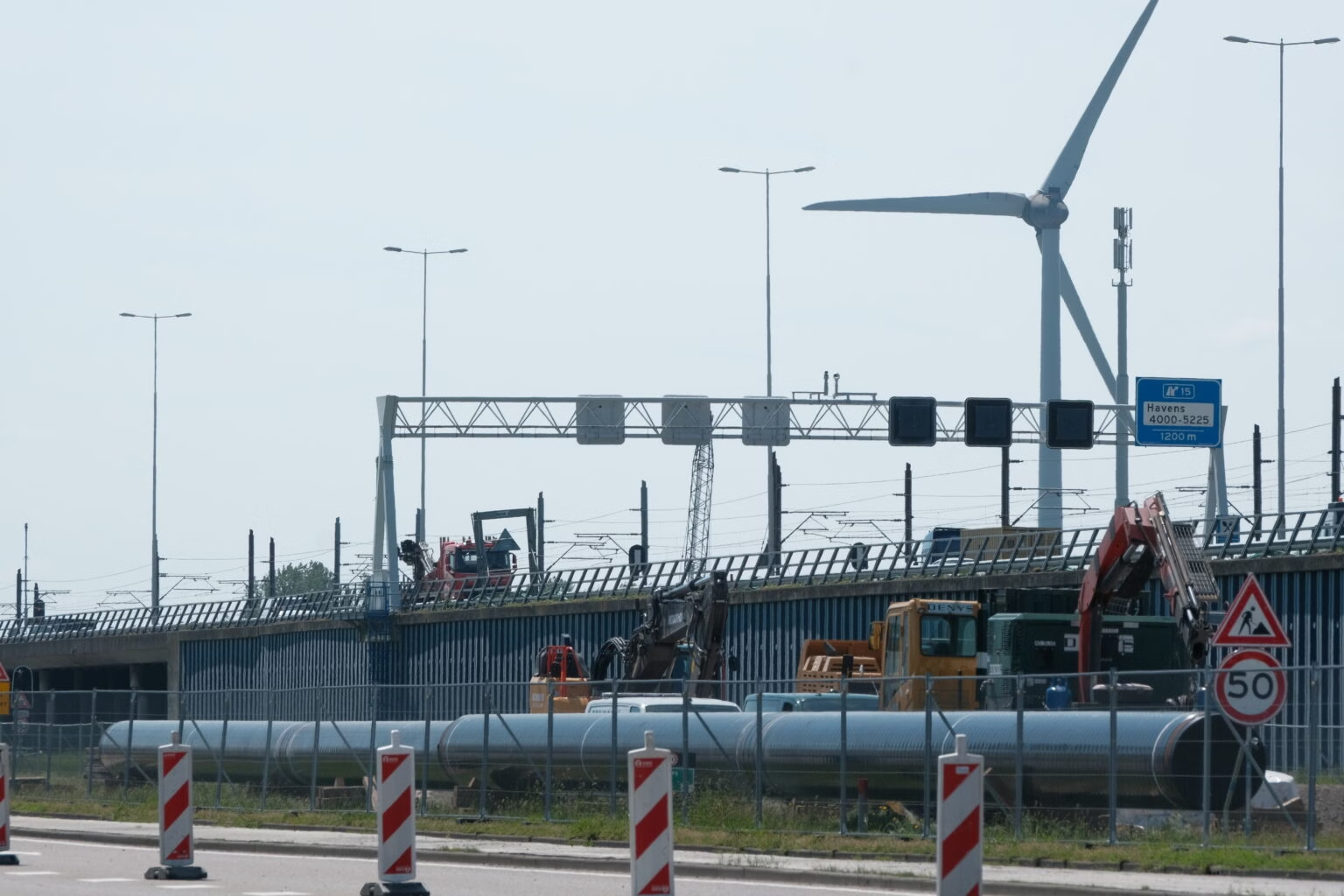
One Saturday in April, Dutch engineers manoeuvred a giant drill into position in the reclaimed, industrial extension of the Port of Rotterdam, and began boring a hole under the seawall. Nearby, sections of metal pipe waited to be lowered into the breach.
The operation was a step forward for Europe’s most advanced scheme to capture carbon dioxide (CO2) from industry, then bury the planet-heating gas under the North Sea.
After years of delay, a joint venture known as Porthos, an acronym for Port of Rotterdam CO2 Transport Hub and Offshore Storage, is due to begin operating in 2026. It’s a 1.3-billion-euro joint venture between state-owned gas companies Energie Beheer Nederland (EBN) and Gasunie, and the Port of Rotterdam Authority. The CEOs of these organisations are due to join Sophie Hermans, the Netherlands’ minister of climate policy and green growth, and senior European Union officials, for a ceremony on Monday to toast the start of construction work at the site.
At full capacity, Porthos is expected to handle 2.5 million tonnes of CO2 captured annually from facilities operated by its four dedicated customers: Shell, ExxonMobil, and the hydrogen producers Air Liquide and Air Products. That total is equivalent to roughly 10 percent of the port’s emissions, and 1.5 percent of the Netherlands’ current CO2 output. Once captured, the gas will be pumped under the North Sea throughout a 15-year period, or until the storage space reaches a maximum estimated capacity of 37.5 million tonnes.
The cost to the Dutch taxpayer: up to 4 billion euros in subsidies.
Credit: Leon de Korte/Follow the Money.
Porthos relies on a technology known as carbon capture and storage, or CCS, which uses a chemical process to capture some of the CO2 that spews from a customer’s industrial chimneys. This trapped gas is then condensed and pumped through pipelines to underground storage sites, such as certain kinds of geological formations, or disused oil and gas wells.
Nevertheless, the backers of Porthos, and its much larger sister project Aramis — also being developed by EBN and Gasunie, along with Shell and French oil giant TotalEnergies — see them as the first nodes in a planned network of pan-European CCS infrastructure. The aim is to eventually funnel CO2 captured in the industrial heartlands of Germany, as well as throughout the Netherlands, to hundreds of storage sites under the seabed.
To its critics, however, Porthos is emblematic of the way oil and gas companies are securing subsidies for CCS schemes that present an appearance of climate action — but are never likely to attain the massive scale needed to make a dent in global emissions.
As Europe’s flagship project, Porthos is emerging as a litmus test for a critical question in the fight against climate change: Will carbon capture actually help reduce the emissions fuelling the crisis? Or will government backing for these technologies instead serve to preserve the fossil fuel business models that caused it?
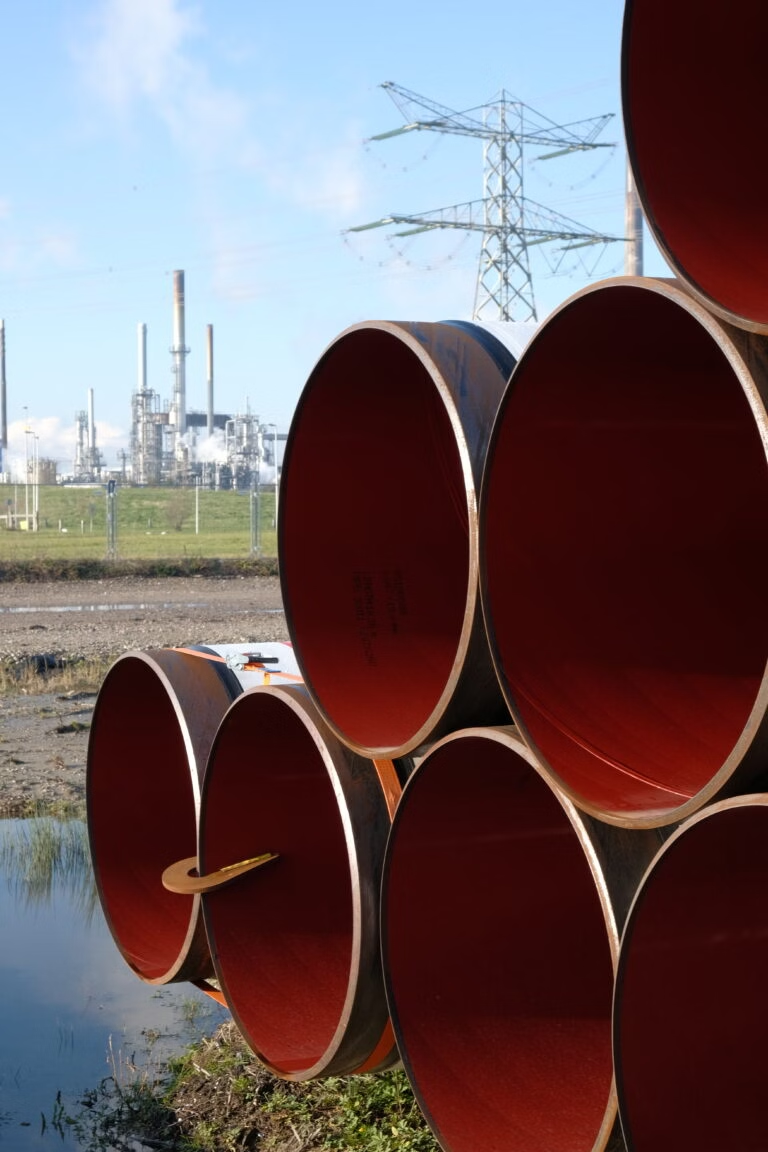
Sections of pipe for the Porthos CO2 pipeline, intended to take captured carbon emissions and inject them under the North Sea, await burial at the Port of Rotterdam. Credit: Michael Buchsbaum.
Ambitious Plans
With intensifying heatwaves, floods and fires underscoring the threat the climate crisis poses to Europe, the EU has agreed to slash its carbon emissions to net zero by 2050, with an interim target of a 90-percent reduction relative to 1990 levels by 2040. Given the scale of that challenge, and in line with lobbying by the fossil fuel industry, policy-makers have assumed a major role for carbon capture projects in cleaning up industry.
“Reducing emissions is not enough,” reads a European Commission website on CCS. “To achieve our climate ambitions, we will also need to capture, utilise and store carbon.”
Climate campaigners argue, however, that the technology has secured official backing in large part because it helps governments persuade voters they are taking climate action, while stopping short of the kind of rapid, fundamental transformation of economies needed to end the use of fossil fuels.
In May, the EU adopted the Net Zero Industry Act, obligating oil and gas producers to develop 50 million tonnes of annual CO2 storage capacity across the continent by 2030 — roughly equivalent to today’s global total. More ambitiously, the act targets approximately 280 million tonnes of annual CO2 storage capacity by 2040, increasing to a staggering 450 million tonnes by 2050.
Environmental groups such as E3G, the Institute for Energy Economics and Financial Analysis and European Environmental Bureau doubt such targets are feasible, given the thousands of kilometres of pipelines that would have to be built, and the dozens of projects that would have to be designed. A lack of technical and geological know-how combined with potential local opposition could also slow fossil fuel companies’ plans.
“The industry needs to commit to genuinely helping the world meet its energy needs and climate goals —which means letting go of the illusion that implausibly large amounts of carbon capture are the solution,” said Fatih Birol, executive director of the Paris-based International Energy Agency (IEA), in the introduction to a report on clean energy transitions for oil companies published in November.
Despite the oil industry often citing scenarios from the Intergovernmental Panel on Climate Change that include significant deployments of CCS, the U.N.-backed body also considers the technology the least efficient, and one of the most expensive, climate tools. In their Sixth Assessment report, the IPCC’s scientists wrote that “even if implemented at its full potential, CCS will account for only 2,4% of the world’s carbon mitigation by 2030 due to its low effectiveness and high cost.”
And Europe is nowhere near close to meeting its carbon capture targets. Today, only 2.7 million tonnes of CO2 is being captured annually across the continent, including in Norway and Iceland, according to the IEA. Porthos’ backers are therefore hailing the project as a crucial step towards fulfilling the continent’s decarbonisation plans — starting with its largest port.
“If we want to reach our climate target, we will need CCS,” Willemien Terpstra, CEO of Gasunie, told DeSmog.
Still, even backers of the technology acknowledge that deployment is lagging. To meet the EU’s target of capturing 280 million tonnes of CO2 annually by 2040 would require 651 projects, said Chris Davies, director of industry group CCS Europe. Each would have to capture more than 400,000 tonnes per year, he told DeSmog.
To date, 50 years after the first CCS projects were started in a Texas oilfield, only about 40 projects are operating globally, with the combined potential to capture just over 50 million tonnes of CO2 per year. However, almost 80 per cent of the CO2 being captured is injected underground to pump more oil — which when refined and burned, adds more CO2 into the atmosphere.
While there is no estimate as to how long it would take to construct hundreds of projects, it is clear that time is running out, Davies said.
Capturing this amount by 2040 requires that construction on all these projects begin no later than early 2038: “So we have less than 5,000 days,” said Davies.
Since Porthos’ backers took a final investment decision last year, no other CCS project “has been given the green light to put a shovel in the ground”, he added.
Cleaning up the Quayside
With docks and quays stretching from its old town centre to the ocean over 40 kilometres away, the Port of Rotterdam covers an area almost twice the size of Manhattan, and handles nearly 440 million tonnes of freight each year, roughly the equivalent of more than 1,200 Empire State Buildings stacked on top of each other.
Not only is Rotterdam a massive cargo port, it’s also one of the largest hubs for energy in Europe, including oil. Counting oil, coal, and liquefied natural gas, the port boasts that some 13 per cent of all the energy used throughout Europe passes through it.
Most of the oil is destined for one of the port’s four refineries, including the giant Shell Pernis facility, as well as sites run by BP and Exxon. (Reducing emissions from the refineries is one of Porthos’ key aims).
All this activity generates tremendous amounts of carbon pollution: The port emitted 20.3 million tonnes of CO2 in 2023.
The port intends to slash its emissions by 55 per cent by 2030, then achieve climate neutrality by 2050.
The port argues that it can reduce its emissions to its target of 9.3 million tonnes by 2030 by:
Storing up to 5.8 million tonnes of emissions annually by the end of the decade through its Porthos and Aramis projects
Reducing emissions by another 5.7 million tonnes by shutting down, as legally required, itsremaining coal-fired power plants by 2030, building on savings made by previous coal plant closures
Greening its operations with electrification, and “green” hydrogen made with wind and solar
“Porthos and Aramis by far contribute the most to the Netherlands’ CO2 reduction targets…the Dutch goals cannot be met without those projects,” Hans Coenen, Executive Board member of energy company Gasunie, told Follow the Money, the Dutch investigative journalism platform that co-published this story with DeSmog.
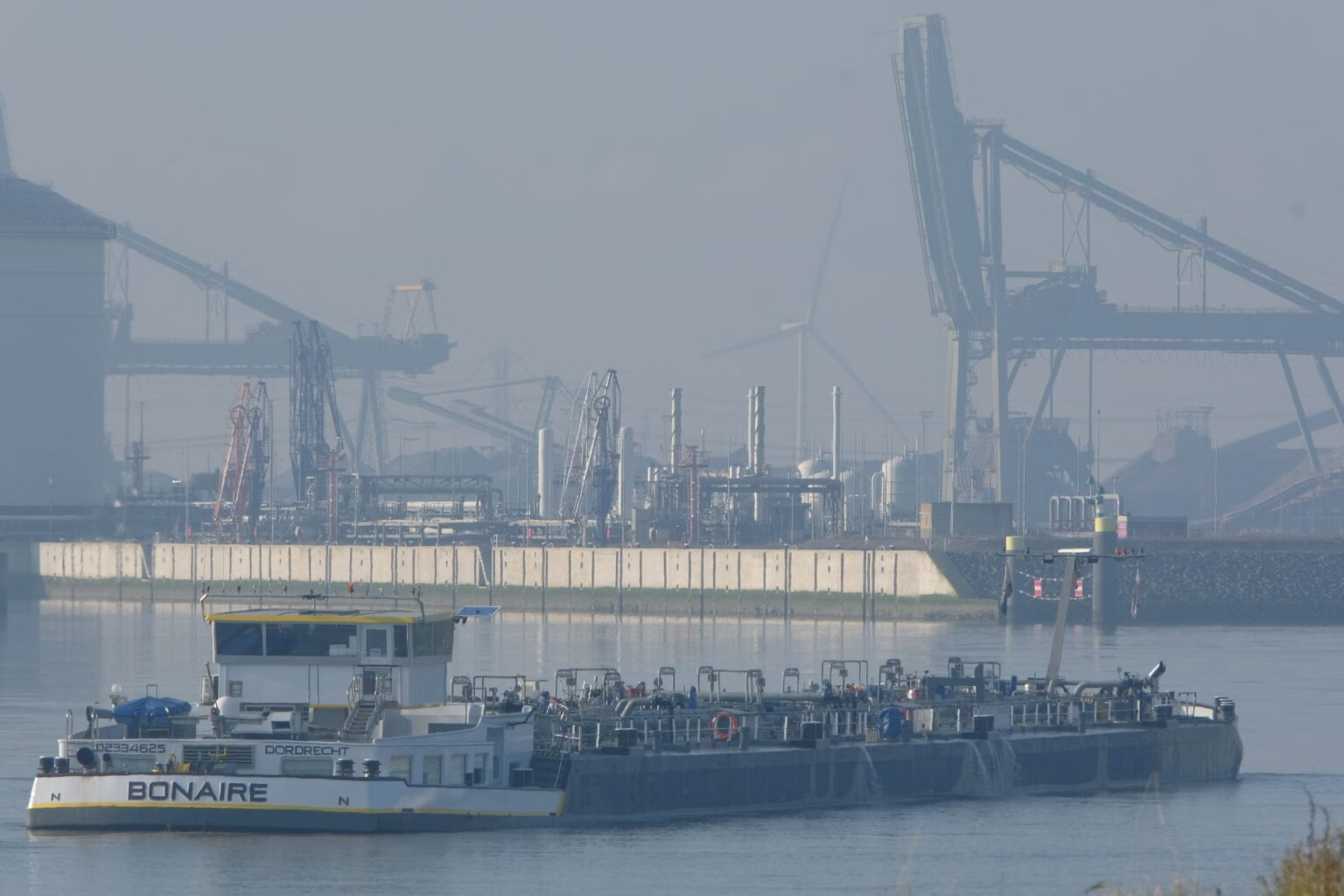
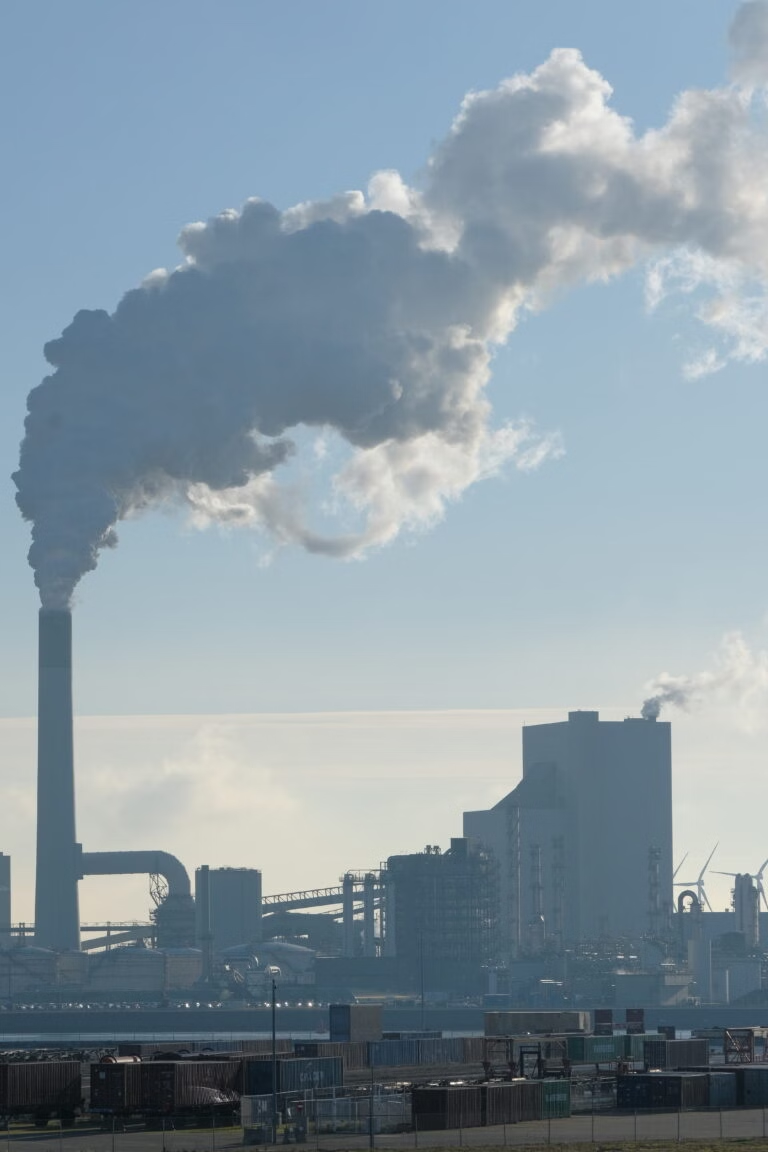
The Port of Rotterdam’s only real CO2 reductions so far stem from the shuttering of several coal-fired power plants . Credit: Michael Buchsbaum.
Taxpayers Foot the Bill
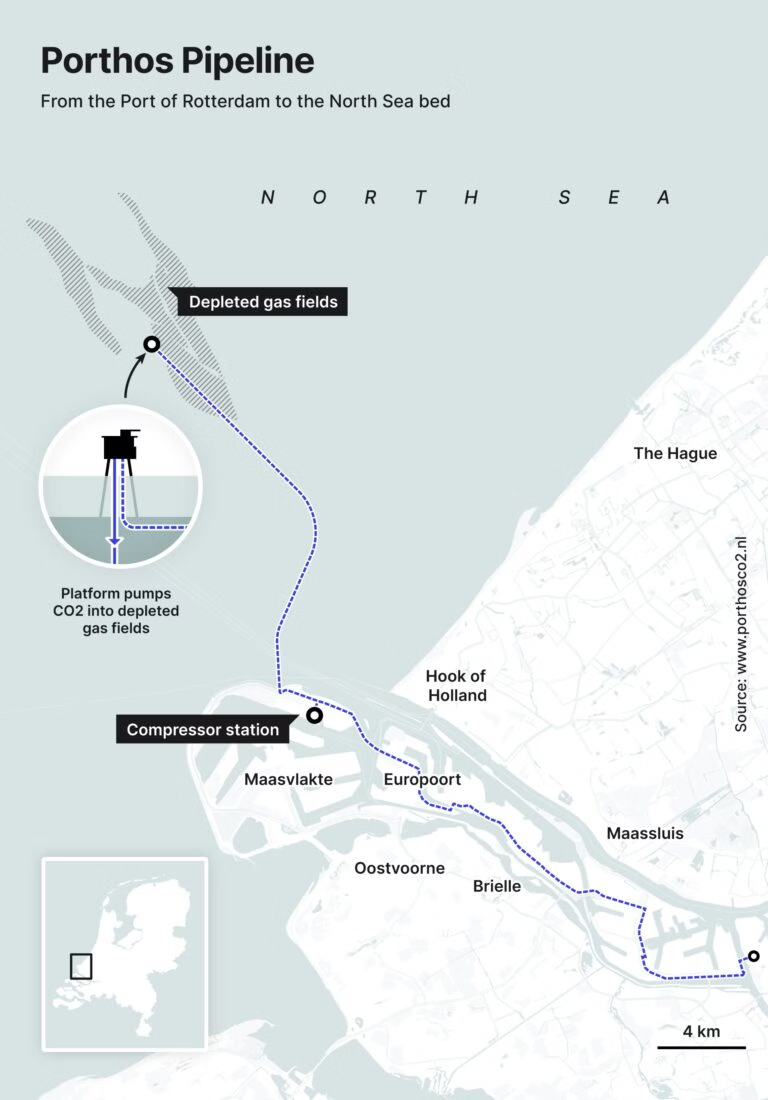
Crucially, Porthos will not be capturing any CO2 itself, instead handling and storing CO2 captured by Shell, Exxon, Air Liquide and Air Products. Porthos itself consists of a new 30-kilometre pipeline system leading to a compression station. From there, CO2 will be pumped to a repurposed gas drilling platform 20 kilometres offshore, and injected into a depleting gas field for final storage.
To ensure emissions are captured, in 2021, the Dutch government allocated Shell, Exxon, Air Liquide and Air Products a combined 2.1 billion euros via its SDE++ scheme to subsidise company decarbonisation projects.
As it stands, under a long-running scheme known as the European Emissions Trading System (ETS), these companies are already required to buy credits for each tonne of CO2 they emit.
Although the credits currently trade at just under 69 euros per tonne, the price could almost triple by 2035, according to BloombergNEF.
By disposing of some of their emissions via Porthos, its customers save money by having to purchase fewer credits.
But, if buying ETS “emission certificates” is cheaper for them than storing the gas via Porthos, then the Dutch government will make up the cost difference using up to 2.1 billion euros allocated under the SDE++ scheme.
This means that whatever happens, the companies face limited risk, and potentially large savings, if they capture emitted CO2 instead.
The port says this arrangement enables the companies “to cut back their carbon emissions without weakening their respective competitive positions.”
Alternatively, without state support, “Porthos would not have gotten off the ground and this project would not have been able to contribute to achieving the climate objectives,” Ellen Ehmen, Exxon’s community relations manager in the Netherlands, told DeSmog.
Combining various other EU and Dutch government subsidies associated with the project, with the 1.3 billion euro cost to state-owned companies to build it, and up to 2.1 billion in carbon capture subsidies, the overall cost to the state could approach or even exceed 4 billion euros.
In other words, Dutch and European taxpayers are picking up the bill for cleaning up these highly profitable companies’ carbon pollution.
In March, the Netherlands Court of Audit warned in a report that the way the project has been structured means that the state has assumed a disproportionate level of risk relative to industry.
Coenen, of Gasunie, says that he wasn’t surprised by these findings: “We decided deliberately to accept a low return on investment on Porthos, because we find it important to kickstart the project.”
Experimental Projects
Many climate advocacy groups, academics and policy experts have long warned of the dangers of relying on carbon capture projects, arguing that they provide fossil fuel companies with a justification for pumping ever more oil and gas.
Seeking to allay those fears, the European Commission advised in February that carbon capture should only be used in sectors where industry argues that emissions are particularly difficult or costly to cut, for example steel, cement, aluminium, chemicals and waste-to-energy.
But Porthos’ customers are using carbon capture for very different purposes: they’re either developing never-before attempted “low-carbon” projects that may be deployed at some point in future, or capturing a portion of the emissions now being generated by producing hydrogen used in the port’s oil refineries.
Shell, the first company to agree to partner with Porthos, is slated to become the project’s largest single customer, having committed to deliver 1.2 million tonnes of CO2 annually — captured mainly from its sprawling Pernis refinery complex, Rotterdam’s biggest. Shell also pledged to capture 820,000 tonnes a year from its to-be constructed biofuels facility, which is designed to produce so-called sustainable aviation fuel, as well as renewable diesel made from waste oil.
This so-called HEFA (hydroprocessed esters and fatty acids) plant is “essentially where the Porthos project starts,” said Nico van Dooren, director new business, hydrogen infrastructure, transport and storage with the Port of Rotterdam, during a media tour of the Porthos project in May.
Carbon capture “is the low hanging fruit,” Shell spokesperson Marc Potma said during the tour. “We have always said we believe in CCS for the future, but it’s never going to be the only answer. One must also invest in renewable sources, which is why we invested in the biofuels factory.”
Fellow oil and gas major Exxon’s CCS plans at Porthos are also highly experimental. Exxon says it plans to capture CO2 from a pilot project to test a new technology known as carbonate fuel cells — which the company says could help capture CO2 from industry more efficiently than existing methods, while also generating electricity, heat and hydrogen. This technology has never been proved at scale.
Also the recipient of EU funds, Exxon’s pilot plant is expected to be constructed in 2025, and start operations in 2026. Unlike Shell, Exxon has not announced any plans to use Porthos to capture emissions from its own oil refinery at the port.
Porthos’ two other customers are both large-scale hydrogen manufacturers who are producing the gas for use in oil refining — today one of hydrogen’s main uses.
As part of its participation in Porthos, U.S.-based Air Products announced in November it would build a carbon capture project at its existing hydrogen production facility in Rotterdam. Billed as the largest such facility in Europe, the project aims to help the company more than halve its CO2 emissions within the Port, while supplying most of the resulting hydrogen (known as “blue” hydrogen since some of the CO2 generated during the production process will be captured) for use in the nearby Exxon refinery.
Just weeks later, in December 2023, French rival Air Liquide announced it would also retrofit the company’s existing hydrogen facility in Rotterdam with carbon capture, using a proprietary technology that has only been tested at a smaller facility in Port-Jérôme-sur-Seine, France.
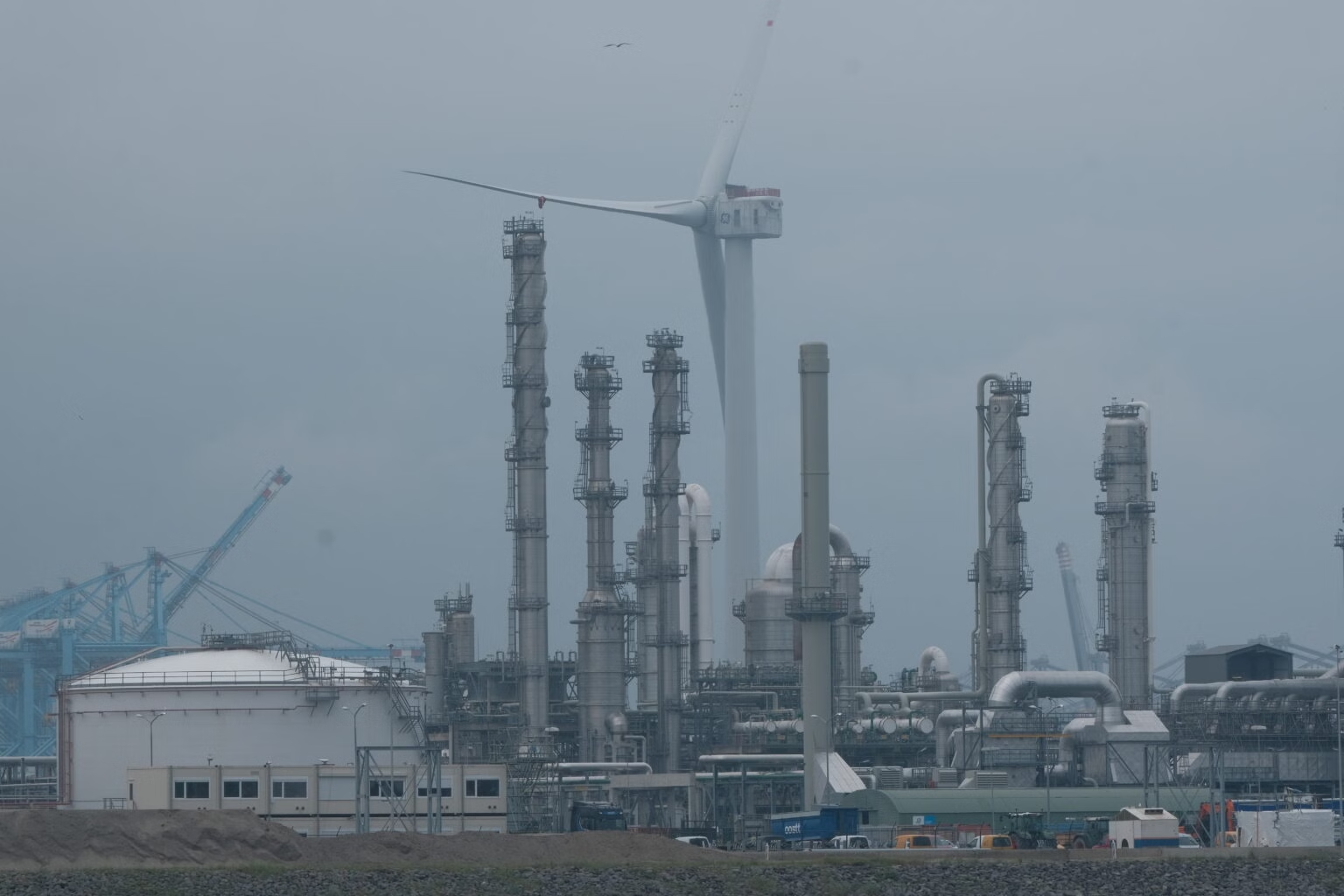
Giant new wind turbines tower over Rotterdam’s oil refineries, holding out the promise of an emissions-free future as they replace coal-fired power. Credit: Michael Buchsbaum.
Aramis Following Porthos
As workers dig trenches and bury Porthos’ pipelines around Rotterdam’s port, Shell and TotalEnergies — together with Gasunie and EBN — are working on the larger Aramis project. They want to funnel and bury CO2 emissions captured in Germany, Europe’s biggest emitter, and send them via a yet-to-be-built pipeline project known as the Delta Rhine Corridor.
By 2028, two years after Porthos is due to come online, the first phase of Aramis is scheduled to transport up to 7.5 million tonnes of CO2 for storage — also thanks in part to EU subsidies.
To connect Rotterdam to Belgium, Gasunie is also working on a so-called Delta Schelde Corridor. “It’s going to be one interconnected system in order to help our industry,” Gasunie’s Coenen told Follow the Money.
Signalling EU support, in mid-June, the European Climate, Infrastructure and Environment Executive Agency, or CINEA, awarded Aramis 124 million euros in subsidies under the CEF Energy fund. CINEA also granted 33 million euros in funds to another planned Rotterdam CCS hub, known as CO2next.
The bigger question, however, is whether these projects will be completed on time.
At the end of June, the then Dutch Minister of economic affairs and climate policy, Rob Jetten, told parliament that the Delta Rhine Corridor pipelines wouldn’t be completed before 2032 — dealing a blow to the pace of CCS development.
In early July, Shell “temporarily” paused construction of its crucial biofuels plant that is supposed to produce 820,000 tonnes a year. Shell now says production will only begin “towards the end of the decade,” said Shell spokesperson Wendel Broere.
Sections of the Porthos CO2 pipeline are now being buried around Rotterdam’s industrial port. Credit: Michael Buchsbaum.
A Temporary Solution?
Regardless of when they come online, Porthos and the other planned Dutch CCS projects are generally presented as temporary solutions giving industry time to wean itself off fossil fuels — but how long that transformation will take remains unclear.
With billions of euros being invested, “you just have to count on a few decades,” Gasunie’s Coenen said.
Even as Porthos, Aramis and similar projects inch forward, further questions loom: Who will pay the enormous cost of rolling out the network of carbon capture facilities and pipelines needed to ferry CO2 from Europe’s industry to disposal sites in the North Sea via Rotterdam? And can such a project be completed in anything like the timeline demanded by the EU’s carbon capture targets?
Another unknown is how investing in these and other CCS projects will lead to a reduction in overall emissions — particularly since so many planned CCS projects involve building new fossil fuel infrastructure, such as gas-fired power stations or blue hydrogen facilities, rather than retrofitting existing industries. It is also unclear how subsidising industries to adopt CCS will compel fossil fuel companies to accelerate the shift to renewables.
Berte Simons, business unit director of CO2 transport and storage systems at EBN, the Dutch state-owned gas company, said that companies not only have to start capturing emissions, but stop producing them.
“There needs to be an end date to using CCS from fossil sources,” she said. “The sooner [fossil fuel companies] are able to green their portfolio, the quicker they can start with that, the better.”
For many climate advocates, the danger is that carbon capture will simply prolong business as usual — while soaking up billions of euros in subsidies.
Relying on CCS “isn’t a sensible climate mitigation strategy or even a proper carbon management strategy,” Lili Fuhr, deputy director of the Washington D.C.-based Center for International Environmental Law’s Climate and Energy Program, told DeSmog. “It’s really an escape hatch for an industry with its back against the wall faced with an energy transition that is gaining support and is becoming a reality because renewable energies are so cheap.”
This story was corrected on August 29, 2024 to clarify that the cost to taxpayers could be “up to” 4 billion euros (rather than “at least”), and show the various forms of subsidy included in that figure.