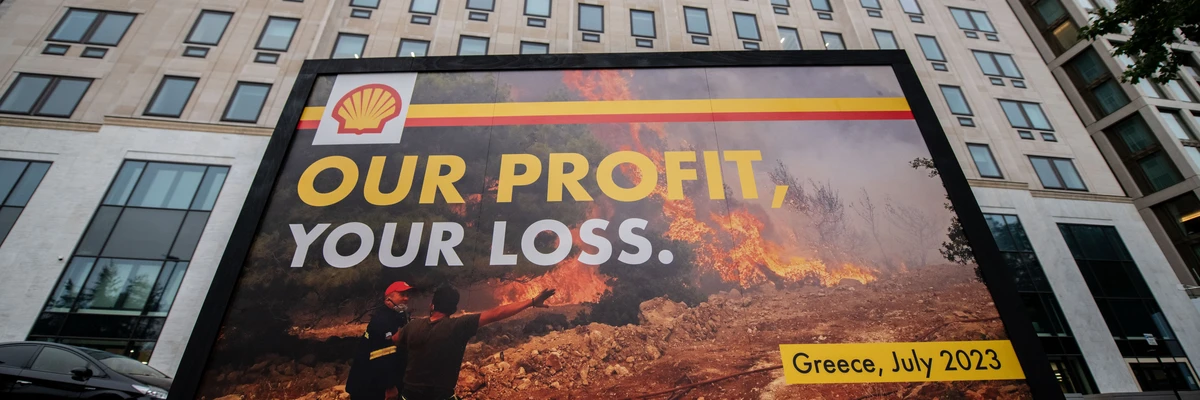
Greenpeace activists display a billboard during a protest outside Shell headquarters on July 27, 2023 in London. (Photo: Handout/Chris J. Ratcliffe for Greenpeace via Getty Images)
BP is expected to announce it will slash its renewable energy investments and instead focus on increasing oil and gas production.
The energy giant will outline its strategy later following pressure from some investors unhappy its profits and share price have been much lower than its rivals.
Shell and Norwegian company Equinor have already scaled back their plans to invest in green energy. Meanwhile US President Donald Trump’s “drill baby drill” comments have encouraged investment in fossil fuels and a move away from low carbon projects.
Some shareholders and environmental groups have voiced concerns over any potential ramping up on production of fossil fuels.
Five years ago, BP set some of the most ambitious targets among large oil companies to cut production of oil and gas by 40% by 2030, while significantly ramping up investment in renewables.
It is now expected to abandon it altogether while confirming it is cutting investments in renewable energy by more than half in what chief executive Murray Auchincloss called a “fundamental reset”.
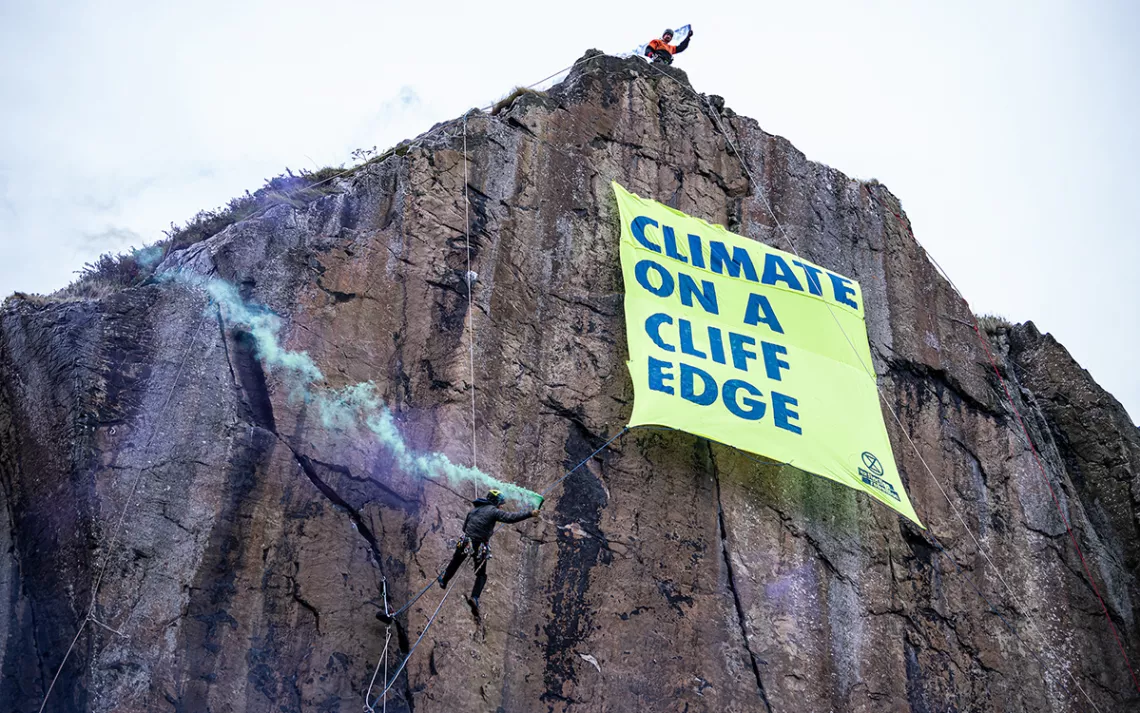
Experienced climbers scale a rock face near the historic Dumbarton castle in Glasgow, releasing a banner that reads “Climate on a Cliff Edge.” One activist, dressed as a globe, symbolically looms near the edge, while another plays the bagpipes on the shores below. | Photo courtesy of Extinction Rebellion and Mark RichardsNeo-Fascist Climate Science Denier Donald Trump says Burn, Baby, Burn.
dizzy: Fossil fuels are no longer reliable high-return investments.
Labour’s new ambassador to the U.S. founded Global Counsel, a firm with major fossil fuel clients.
Labour’s top diplomat to Donald Trump’s United States leads a public affairs firm that has attempted to influence the new UK government on behalf of the oil and gas giant Shell, and the coal mining company Anglo American.
Peter Mandelson – who was a Cabinet minister under former Labour prime ministers Tony Blair and Gordon Brown – has been accepted as the UK’s ambassador to the U.S. by Trump’s new administration.
In addition to his new diplomatic role, which he will formally begin in February, Mandelson is president and chair of Global Counsel, a London-based political consultancy and lobbying organisation. He will retain shares in the company even after taking up his new position in Washington DC, the Financial Times has reported.
According to official records, after July’s general election Global Counsel lobbied the new Labour government on behalf of Shell, one of the world’s most polluting companies.
Shell is still committed to exploring for new sources of oil and gas and does not have any plans to reduce the overall amount it produces by 2030, in contravention of climate science. In 2021, the District Court of the Hague found that the total CO2 emissions of the Shell group exceeded the emissions of many states, including the Netherlands.
Lobbyists must declare if they have attempted to arrange meetings or influence ministers or senior civil servants on behalf of their clients. However, the contents of these discussions are not publicly available.
Global Counsel seemingly has close ties to the Labour Party. Prior to the 4 July election, the company supplied a staff member to Tulip Siddiq, who served as financial secretary to the Treasury until 14 January, a donation in kind worth £35,835, according to the register of MPs’ financial interests.
Global Counsel is one of seven consultancies with a history of donating to Labour that have lobbied on behalf of fossil fuel clients since July’s election.
The client list at Mandelson’s lobbying firm also includes Anglo American, a British mining multinational which is a major producer of coal, and U.S. multinational bank JP Morgan, which has financed $430 billion in fossil fuel projects since the 2015 Paris Agreement, including $40 billion in 2023, according to the NGO Banktrack.
Another client, UK bank Standard Chartered, has financed $71 billion in fossil fuel projects in the same period, including $7 billion in 2023.
Other Global Counsel clients include food and beverage giant Nestle, which has emissions three times the size of its home country Switzerland, and the controversial tech firm Palantir, founded by Trump ally Peter Thiel.
Mandelson, who called Trump “reckless and dangerous to the world” in 2019, this week told Fox News his previous remarks were “ill-judged and wrong”, and that he has a “fresh respect” for the new U.S. president.
Global Counsel, and the Cabinet Office were approached for comment.
Transatlantic Ties
Mandelson’s appointment comes at a crucial time for climate policy, with a transatlantic network of political actors working increasingly closely to derail global action to achieve net zero emissions.
Since his inauguration last week, President Trump has removed the U.S. from the flagship 2015 Paris climate accord, banned offshore wind farms, and declared a “national energy emergency” in order to open new oil and gas projects.
His plans could add an extra four billion tonnes of carbon dioxide equivalent to U.S. emissions by 2030, according to the climate publication Carbon Brief.
Trump received more than $32 million from the oil and gas sector for his 2024 campaign. The fossil fuel industry spent $445 million on political donations, lobbying and advertising between January 2023 and November 2024 to influence Trump and Congress, according to the green advocacy group Climate Power.
As DeSmog revealed last month, Mandelson’s counterpart, Trump’s ambassador to the UK Warren Stephens, runs a firm with investments in several oil and gas companies, including one wholly owned by his family business.
The UK government is committed to removing fossil fuels from the UK’s power system by 2030, but this week approved a third runway at Heathrow Airport – the second most polluting airport in the world, according to a 2021 study – and pledged to remove environmental regulations on new building projects.
According to the UN’s Intergovernmental Panel on Climate Change (IPCC), the world’s foremost climate science body, the next few years are crucial if we want to limit the worst effects of global warming, including drought, flooding, and heat waves.
To keep within the 1.5C warming limit set by the Paris Agreement, the IPCC says that emissions need to be reduced by at least 43 percent by 2030 compared to 2019 levels, and at least 60 percent by 2035.
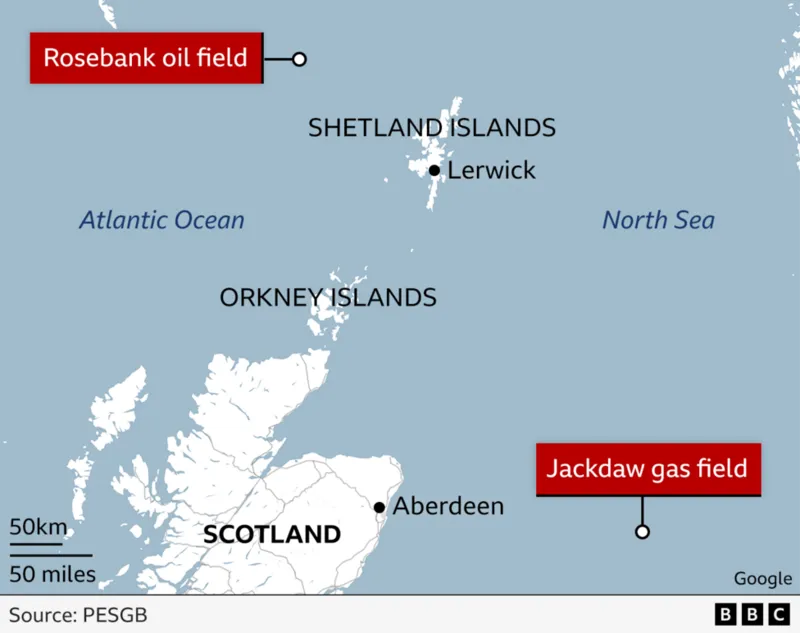
A court has ruled that consent for two new Scottish oil and gas fields was granted unlawfully and their owners must seek fresh approval from the UK government before drilling can begin.
The written judgement on the Rosebank and Jackdaw fields came after a case brought by environmental campaigners, Uplift and Greenpeace, at the Court of Session in Edinburgh.
In his judgement, Lord Ericht said a more detailed assessment of the fields’ environmental impact was required, taking into account the effect on the climate of burning any fossil fuels extracted.
He said work on both fields could continue while the new information was gathered but no oil and gas could be extracted unless fresh approval was granted.
Permission for the Rosebank oil development, 80 miles west of Shetland in the North Atlantic, was granted in autumn 2023.
In a 57-page judgement, Lord Ericht wrote that there was a public interest in having the decision “remade on a lawful basis” because of the effects of climate change – which he said outweighed the interests of the developers.
Greenpeace activists board a Shell platform headed toward the North Sea on February 6, 2023. (Photo: Lou Benoist/AFP via Getty Images)
“Shell thought suing us for millions over a peaceful protest would intimidate us, but this case became a PR millstone tied around its neck,” said the co-executive director of Greenpeace U.K.
The United Kingdom-based oil giant Shell agreed Tuesday to settle a major lawsuit the company brought against Greenpeace after activists from the group boarded and occupied a company oil platform last year to protest fossil fuel expansion.
Greenpeace said in a statement that as part of the settlement, it agreed to donate £300,000—roughly $382,000—to the Royal National Lifeboat Institution, a charity that helps save lives at sea, but will pay nothing to Shell and accept no liability. The donation represents a fraction of the over $11 million in damages and legal costs defendants faced, the group said.
The Greenpeace defendants have also “agreed to avoid protesting for a period at four Shell sites in the northern North Sea.”
“Shell thought suing us for millions over a peaceful protest would intimidate us, but this case became a PR millstone tied around its neck,” said Areeba Hamid, co-executive director of Greenpeace U.K. “The public backlash against its bullying tactics made it back down and settle out of court.”
“This settlement shows that people power works. Thousands of ordinary people across the country backed our fight against Shell and their support means we stay independent and can keep holding Big Oil to account,” Hamid added. “This legal battle might be over, but Big Oil’s dirty tricks aren’t going away. With Greenpeace facing further legal battles around the world, we won’t stop campaigning until the fossil fuel industry stops drilling and starts paying for the damage it is causing to people and planet.”
“These aggressive legal tactics, the huge sums of money, and attempts to block the right to protest pose a massive threat.”
Shell brought the case, which Greenpeace characterized as a “textbook” strategic lawsuit against public participation (SLAPP), in February 2023 and sought $1 million in damages from activists who boarded a Shell-contracted ship carrying equipment to drill for oil in the North Sea.
“When the protest ended, the only damage Shell could find was a padlock which, they alleged, our activists broke. That’s it,” Greenpeace U.K. said Tuesday. “Yet they came after us with a million-dollar lawsuit, which they justified for their spending on safety.”
The group, which warned that the case had dire implications for the right to protest, credited a “sustained, year-long campaign against the suit” for forcing the oil behemoth to back down. The campaign, according to Greenpeace, “turned the legal move into a PR embarrassment for Shell.”
“The case was dubbed the ‘Cousin Greg’ lawsuit by Forbes after a scene in the Emmy-awarded drama Succession, in which the hapless character threatens to sue Greenpeace to universal dismay,” the environmental group noted Tuesday.
Greenpeace is currently facing several other SLAPP suits, including one brought by Energy Transfer, majority-owner of the Dakota Access pipeline. The group said Tuesday that the Energy Transfer suit “threatens the very existence of Greenpeace in the U.S.”
“These aggressive legal tactics, the huge sums of money, and attempts to block the right to protest pose a massive threat. It could stop Greenpeace being able to make a real difference on the things that matter most,” the organization said Tuesday. “It’s part of a growing trend by powerful corporations and governments to crush peaceful protest—using draconian laws or intimidation lawsuits like this.”
“It seeks to silence the people most impacted by the climate crisis. This threatens the global fight for climate justice,” the group added. “We won’t give up. This is Shell versus all of us.”
Experienced climbers scale a rock face near the historic Dumbarton castle in Glasgow, releasing a banner that reads “Climate on a Cliff Edge.” One activist, dressed as a globe, symbolically looms near the edge, while another plays the bagpipes on the shores below. | Photo courtesy of Extinction Rebellion and Mark Richards
A small tax on just seven of the world’s biggest oil and gas companies could grow the UN Fund for Responding to Loss and Damage by more than 2000% and help address the costs of extreme weather events, according to new analysis published today by Greenpeace International and Stamp Out Poverty. The organisations are calling for a long term global tax on fossil fuel extraction, with year-on-year increases, combined with taxes on excess profits and other levies.
A ‘Climate Damages Tax’ would put a cost on every tonne of carbon emitted by the coal, oil and gas extracted – starting at $5 per tonne and rising each year thereafter. If it was imposed on ExxonMobil, Shell, Chevron, TotalEnergies, BP, Equinor and ENI it could raise $15 billion in the first year alone to help the world’s most climate-vulnerable countries pay for the escalating cost of damage caused by climate change. Currently, just $702 million has been pledged to the loss and damage fund, while the combined profits of those fossil fuel companies exceeds $148 billion.
Greenpeace activists display a billboard during a protest outside Shell headquarters on July 27, 2023 in London. (Photo: Handout/Chris J. Ratcliffe for Greenpeace via Getty Images)
Earlier this month, Barbados Prime Minister Mia Mottley, French President Emmanuel Macron and Kenyan President William Ruto stated their support for a Climate Damages Tax.
The briefing also highlights the financial costs of some of this year’s worst weather events that have been attributed to climate change, totalling over $64bn. These include Hurricane Beryl, Hurricane Helene, the heatwave in India in May, Typhoon Carina/Gaemi, the floods in Brazil in May, and the floods in Kenya and Tanzania in April. The costs of damage from the disasters surveyed range from US$2.9bn (Typhoon Carina) to US$ 25bn (heatwaves in India), and present just a fraction of the total cost of loss and damage globally over the last year.
A Climate Damages Tax imposed only on wealthy OECD countries could play an essential role in helping the poorest and most vulnerable to rebuild after climate-related disasters. Increasing annually by US$5 per tonne of CO2-equivalent based on the volumes of oil and gas extracted, the tax could raise an estimated US$900 billion by 2030 to support governments and communities around the world as they face growing climate impacts.
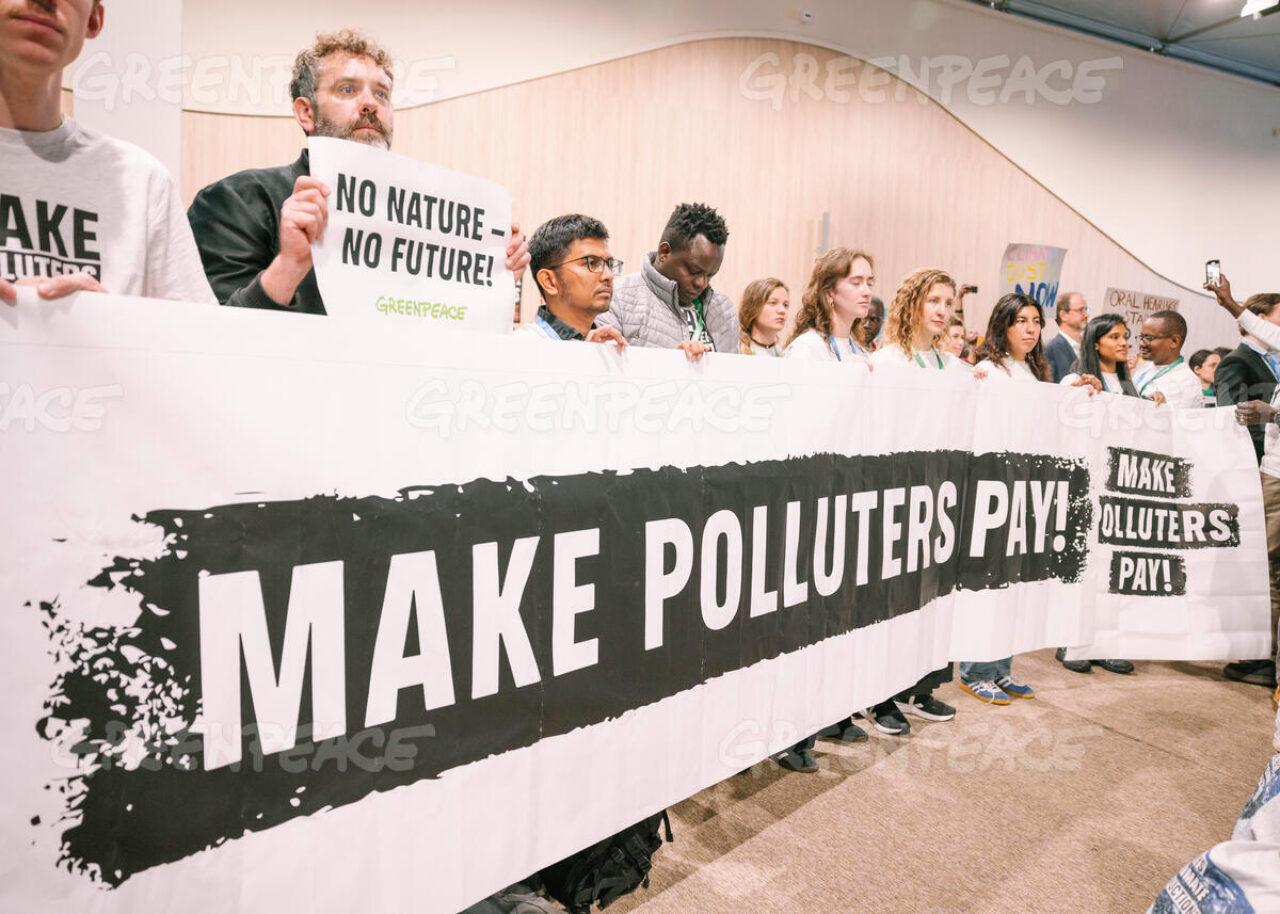
“While oil and gas giants keep raking in grotesque levels of profit from exploiting resources, the damages resulting from the industry’s operations are disproportionately borne by people who did not cause the crisis,” said David Hillman, Director of Stamp Out Poverty. “A climate damages tax – along with other levies on fossil fuels and high-emitting sectors – will make polluters pay for the cost of climate impacts, as well as supporting workers and affected communities in the transition to clean energy, jobs, and transport.”
“Who should pay? This is fundamentally an issue of climate justice and it is time to shift the financial burden for the climate crisis from its victims to the polluters behind it,” said Abdoulaye Diallo, Co-Head of Greenpeace International’s Stop Drilling Start Paying campaign. “Our analysis lays bare the scale of the challenge posed by climate loss and damage and the urgent need for innovative solutions to raise the funds to meet it. We reject Big Oil’s assault on people and democracy and call on governments worldwide to adopt the Climate Damages Tax and other mechanisms to extract revenue from the oil and gas industry.”
The Loss and Damage Fund was announced at COP27 in Egypt to help developing countries pay for impacts of natural disasters caused by climate change. Recently renamed the Fund for Responding to Loss and Damage (FRLD), it currently has US$702 million in pledged funds. According to Greenpeace International and Stamp Out Poverty’s calculations, a Climate Damages Tax levied on seven major international oil and gas companies would add in the first year alone US$15.02 billion, corresponding to over 21 times what is currently pledged to the fund.
Experienced climbers scale a rock face near the historic Dumbarton castle in Glasgow, releasing a banner that reads “Climate on a Cliff Edge.” One activist, dressed as a globe, symbolically looms near the edge, while another plays the bagpipes on the shores below. | Photo courtesy of Extinction Rebellion and Mark Richards