Gallup Ends Presidential Approval Polling After 88 Years—Likely Because a President Disapproved

Spread the love

Original article by David W. Moore republished from FAIR under a Creative Commons Attribution-NonCommercial-NoDerivs 3.0 Unported License.

The Gallup Poll announced this month it would no longer measure presidential approval or other national leadership ratings. It was a surprise to pollsters and journalists who report on public opinion, because George Gallup was the pollster who initiated presidential approval ratings in the 1930s. Over the past nine decades, the organization has developed the most extensive database available, allowing journalists to compare approval ratings among all presidents since Franklin D. Roosevelt at various stages of their tenure.

In fact, that very ability may have been the catalyst for Gallup dropping the ratings. Last November, Gallup (11/28/25) reported President Donald Trump’s approval rating as the lowest in his second term (36%), just barely above his lowest rating ever in January 2021, after he fomented the insurrection in an effort to avoid leaving office. His average approval rating in his first term was the lowest of any president since such polling began.

The November report also noted that Trump’s net approval ratings had dropped significantly on several items since the previous February/March: immigration (-9 points), situation in the Middle East (-7), economy (-6), federal budget (-12) and the situation in Ukraine (-10).

The December report (12/22/25) was not any better. Trump’s approval rating remained at 36%, while ratings on seven other personal characteristics were at a new low or near a new low:

Gallup Ratings of President Trump, December 2025

Also problematic for Gallup was that its approval ratings consistently showed numbers below the average of other polls. Across ten approval ratings Gallup published in 2025, the net rating averaged 8.7 points lower than the average that Nate Silver (formerly of 538 and now of Silver Bulletincompiled from other polls.

These are especially bad numbers. Trump doesn’t like bad numbers. He still has a lawsuit against an Iowa pollster whose pre-election numbers he didn’t like. And Gallup has extensive contracts with the federal government. It’s a no-brainer to infer that Gallup’s polling results may have caused the Gallup organization to re-evaluate the utility of continuing to report numbers that Trump hates.

No one knows if the White House let its dissatisfaction be known, or if the leaders at Gallup evaluated the zeitgeist on their own and took steps to mitigate possible financial problems with the US government. When asked by the Hill (2/11/26) “if Gallup had received any feedback from the White House or anyone in the current administration before making the decision,” the organization’s spokesperson apparently did not deny such an intervention, but said, “this is a strategic shift solely based on Gallup’s research goals and priorities.” Sounds like a yes to me.

The decision feels like the exclamation point marking the end of the Gallup Poll as envisioned by its founder.

The rise of Gallup

Literary Digest predicts a landslide victory for Alf Landon in the 1936 election

The Literary Digest (10/31/1936) predicted that Alf Landon would get 370 electoral votes and defeat Franklin Roosevelt in the 1936 election. He won eight, and did not.

On October 20, 1935, the Washington Post published  a new column, “America Speaks!” by Dr. George Gallup, who had recently founded the American Institute for Public Opinion. (See Chapter 2, “America Speaks,” in David W. Moore, The Superpollsters, 1995.) It would report on the first “scientific” measurement of the voters’ minds. And, Gallup guaranteed, he would predict the outcome of the 1936 election between Alf Landon and President Franklin Roosevelt closer than the famed, and highly respected, Literary Digest poll.

While the latter poll based its results on responses from 10 to 20 million ballots it had sent to voters across the country, those voters had been targeted because their names were on a “tel-auto” list—a marketing list of people who owned cars and telephones. Gallup surmised that those voters would be disproportionately of the upper socioeconomic strata, potentially biasing the results in favor of Republicans. The “scientific” sampling he used was intended to identify voters all across the socioeconomic spectrum, to obtain a truly representative sample of the whole population. Based on his knowledge of statistics, he recognized that such a sample need not be as gargantuan as the Literary Digest sample.

As it turned out, Gallup’s prediction was indeed closer than that of the Literary Digest poll. As were the results of two other “scientific” pollsters—Elmo “Bud” Roper and Archibald Crossley. The Literary Digest poll predicted a landslide victory for Alf Landon, while the three upstarts all correctly predicted a landslide victory for Roosevelt. The “scientific” method of sampling had shown that relatively small samples of voters, chosen carefully to include all varieties of voters, could accurately represent the larger population.

All three pollsters had their own organizations, but Gallup was the most aggressive advocate for this new way of polling. More so than the others, he engaged in frequent polling on policy matters, and thus became the leader of the new public opinion polling industry. Newspapers subscribed to his columns, and for four decades, his polling results were the most significant influences in defining what the public was thinking on major issues.

Of course, he continued his election polling as well, because he believed that accurate election predictions were essential to developing public confidence that polls could represent public opinion more generally. And he developed ratings of political leaders, initiated in 1938 with his presidential approval rating question: “Do you approve or disapprove today of Franklin Roosevelt’s job as president?”

Election polling, public policy polling and leadership ratings were the three signature aspects of the Gallup Poll.

New owner, new strategy

In the mid-1970s, the three major broadcast networks began to develop their own polls, each partnering with a major newspaper—ABC with the Washington PostCBS with the New York Times and NBC with the Wall Street JournalIn the ensuing decade, other national polls emerged as well, such as the Los Angeles Times polland occasional polls by Time and Newsweek.

By the late 1980s, the Gallup Poll had all but disappeared from national news stories. Few major newspapers continued to subscribe to Gallup’s polling service, because most newspapers got their poll results for free, recycled from the newspapers and television networks that conducted their own polls. George Gallup had died in 1984, and his two sons—Alec and George, Jr.—did not have the charisma or business acumen of their father. They waited until their mother had passed, in 1987, and then put the Gallup Poll up for sale.

The company that eventually bought Gallup was founded by Donald O. Clifton, a psychology professor at the University of Nebraska in Lincoln, who designed questions that would help match people with specific types of jobs. Based on his research, he eventually founded Selection Research Inc. (SRI) to help companies hire employees. (See  pp. 19-21, David W. Moore, The Opinion Makers, 2008.)

Among Clifton’s four children there was one son, Jim, who became president and CEO of the new Gallup Organization. One of his most brilliant moves came shortly after he assumed his new position. He was able to persuade Ted Turner, owner of CNN, to have the network join in a one-year polling partnership with Gallup for the 1992 election. The agreement included USA Today, which had been an occasional CNN partner.

It was an ideal arrangement for all three organizations. Gallup was finally back in the news, because its poll results were immediately published by both partners. And the two media organizations benefited from the credibility of the Gallup Poll. The arrangement worked well during the campaign, and subsequently was renewed in a multi-year contract.

(It was at this point, March 1993, that I joined Gallup as a vice president and managing editor of the Gallup Poll. My immediate supervisor was Frank Newport, editor-in-chief of the Gallup Poll. I remained with Gallup until April 2006.)

With Gallup back in the news, the company’s marketing business took off. When SRI acquired Gallup, it was like one guppy eating another—the annual revenues from SRI were only slightly larger than the annual revenues from Gallup (in the $12–15 million range). A decade later, SRI-Gallup’s revenues were estimated to exceed $200 million.

The strategy was clear: The “Gallup Poll” part of the company—the part that conducted opinion polls, as opposed to the marketing business of the new Gallup Organization—was the advertising that helped bring in clients. If the “Poll” were to lose credibility, that could hurt the business. And, slowly, the “Poll” did begin to lose credibility.

‘Gallup vs. the World’

538: Gallup Gave Up. Here’s Why That Sucks.

Harry Enten (53810/17/15) noted that when Gallup stopped doing electoral polling in 2015, it took away the best tool for judging the accuracy of its opinion polling.

Despite the extensive public policy polling and widespread dissemination of Gallup’s results, its election polling was often controversial. In 2012, Nate Silver  wrote an analysis, “Gallup vs. the World” (New York Times10/18/12), describing numerous times when CNN/USA Today/Gallup’s results significantly diverged from the average of other polls, and even from final election results. From the beginning of the partnership, the election polling was erratic, he noted, with results showing “implausibly large swings in the race.” As he wrote, “In 1996, Gallup had Bill Clinton’s margin over Bob Dole increasing to 25 points from nine points over the course of four days.”

Then in 2000, it found “a 26-point swing toward Mr. Gore over the course of a month and a half. No other polling firm showed a swing remotely that large.” Silver pointed out that Gallup’s polling swung again, back toward Bush, putting him 13 points ahead on October 27―”just 10 days before an election that ended in a virtual tie.”

The problems continued. In 2015, 538‘s Harry Enten (10/7/15) wrote that Gallup had suffered

two consecutive elections in which its results were way off. Gallup’s final generic congressional ballot in 2010 had Republicans winning by 15 percentage points; they won by 7 points.

He also noted that in 2012, Gallup’s final poll showed Romney winning by one point. Obama won by four.

The partnership had begun to break apart in 2006, when Gallup dropped CNNUSA Today and Gallup continued working together, but in 20082010 and 2012, the final elections polls on Real Clear Politics list results under Gallup’s name alone, despite earlier polls in those years when the results were listed as USA Today/Gallup. The official breakup came in early 2013, when Politico (1/18/13) announced that “USA Today and Gallup, the polling organization, have announced a mutual decision to end their 20-year partnership.”

Gallup’s decline

Politico: Gallup Gives Up the Horse Race

“We believe to put our time and money and brainpower into understanding the issues and priorities is where we can most have an impact,” Gallup editor-in-chief Frank Newport told Politico (10/7/15) in 2015.

That wasn’t the only bad news. In 2012, the Gallup Organization was sued by the federal government for bilking it out of millions of dollars, and for violating the Procurement Integrity Act by agreeing to hire a federal employee only if he could first increase the size of a government contract for Gallup.

In July 2013, the suit resulted in Gallup having to pay a $10.5 million fine for its transgressions, and—according to the Omaha World Herald (8/17/13)—removed Clifton from “authority over the company’s government division” as part of an agreement that allowed the company to “continue to compete for federal contracts.” It’s ironic that after such success in reviving the Gallup brand, Clifton was the one to tarnish it so profoundly.

After a bad election year in polling and the overbilling and procurement scandal, Gallup ultimately decided to give up election polling altogether. As Politico (10/7/15) wrote:

After a bruising 2012 cycle, in which its polls were farther off than most of its competitors, Gallup told Politico it isn’t planning any polls for the presidential primary horse race this cycle. And, even following an internal probe into what went wrong last time around, Gallup won’t commit to tracking the general election next year.

And it didn’t.

With no media partner, Gallup’s public policy polling also declined. It’s rare these days when Gallup conducts a poll that gets cited about some current national issue.

But Gallup did continue with regular polls on presidential approval and favorability ratings of political leaders. Until now. With the recent announcement, it no longer does regular election polling, public policy polling or leadership ratings—the three signature characteristics of George Gallup’s original vision of “American Speaks.” America continues to speak, but with respect to voter preferences, citizens’ views on controversial public policy issues, and how they view their leaders—Gallup is no longer listening.

The Gallup Poll still functions, of course. Its extensive data base is still available to journalists. It continues to conduct polls of Americans related to its Social Series, started in 2000.  The surveys track attitudes in a variety of areas over time, but they do not focus on current controversial public policy issues.

No questions, for example, about Epstein, tariffs, immigration enforcement and ICE, war with Iran, the capture of Venezuela’s president, vaccine mandates, housing policy, the war in Gaza, ways to address “affordability,” the use of presidential pardons, healthcare subsidies, Ukraine, crypto currency, and other policies that ask respondents to take a position in favor or opposed. Gallup apparently doesn’t want to offend, so virtually all of its questions are general in nature. It has become a shadow of its former self.

‘A big deal’?

NYT: Gallup Will No Longer Track Presidential Approval Ratings

“Gallup’s…88 years of data give historical context to what amounts to a monthly snapshot of Americans’ views,” wrote the New York Times (2/11/26). “Political and news media analysts have come to rely on the poll to understand shifting trends in the country over time.”

Does it matter?

Some media observers think so. The Washington Post (2/11/26) called it “a big deal,” with the paper’s polling director saying Gallup is “leaving Americans with a dimmer view into our politics.” Ruth Igielnik of the New York Times (2/11/26) bemoaned the loss of Gallup’s “high-quality surveys” and “record of accuracy.” Both cite Gallup’s long history and its use of telephone, rather than online, surveys.

But telephone surveys’ primacy is no longer undisputed (Data for Progress, 3/11/21; Pew, 4/19/23). Indeed, while the Gallup Poll is still a high-quality polling organization, it is not the leader in the industry. Nate Silver rates  polls by comparing their predictions with actual election results; Gallup gets a B+, better than average, but Silver finds at least 25 pollsters to be more accurate.

Despite their disappointment with the Gallup announcement, both Clement and Igielnik note that the New York Times tracked 51 polls measuring Trump’s approval rating in January—so many, Clement concludes, “that poll watchers may not have noticed the absence of Gallup’s monthly figures.”

When Gallup announced it would no longer conduct pre-election polls in 2015, Harry Enten (538, 10/7/15) gave a similar reaction:

There are still plenty of good polls, and Gallup’s decision, by itself, doesn’t change the overall polling landscape that much…. ABC News, CBS News, CNN, Fox News and NBC News have all published live-interview primary polls in the past couple of months. (They all have a better track record than Gallup, according to our ratings.)

The Gallup Organization is a highly successful business, with an estimated annual revenue of $500 million, employing over 2,000 employees. The Gallup Poll was always, as Silver notes, a “loss-leader,” essentially the organization’s advertising for its business. After SRI bought the Gallup name and its reputation, the Poll—focusing on George Gallup’s vision of election polls, public policy polls, and leadership ratings—was instrumental in stimulating business. Over the years, the controversies surrounding the Poll’s performance and results seemed to have hurt the business more than help it. Abandoning Gallup’s vision of “American Speaks” was a logical business decision.

The truth is, with all the other polls that exist today, hardly anyone seems to notice. Except, perhaps, the president of the United States. The “big deal” about Gallup’s announcement, then, has much less to do with the loss of one poll than with the pressure a US president is apparently exerting on the polling industry.


Featured image: Gallup’s presidential approval polling going back to 1945.

Original article by David W. Moore republished from FAIR under a Creative Commons Attribution-NonCommercial-NoDerivs 3.0 Unported License.

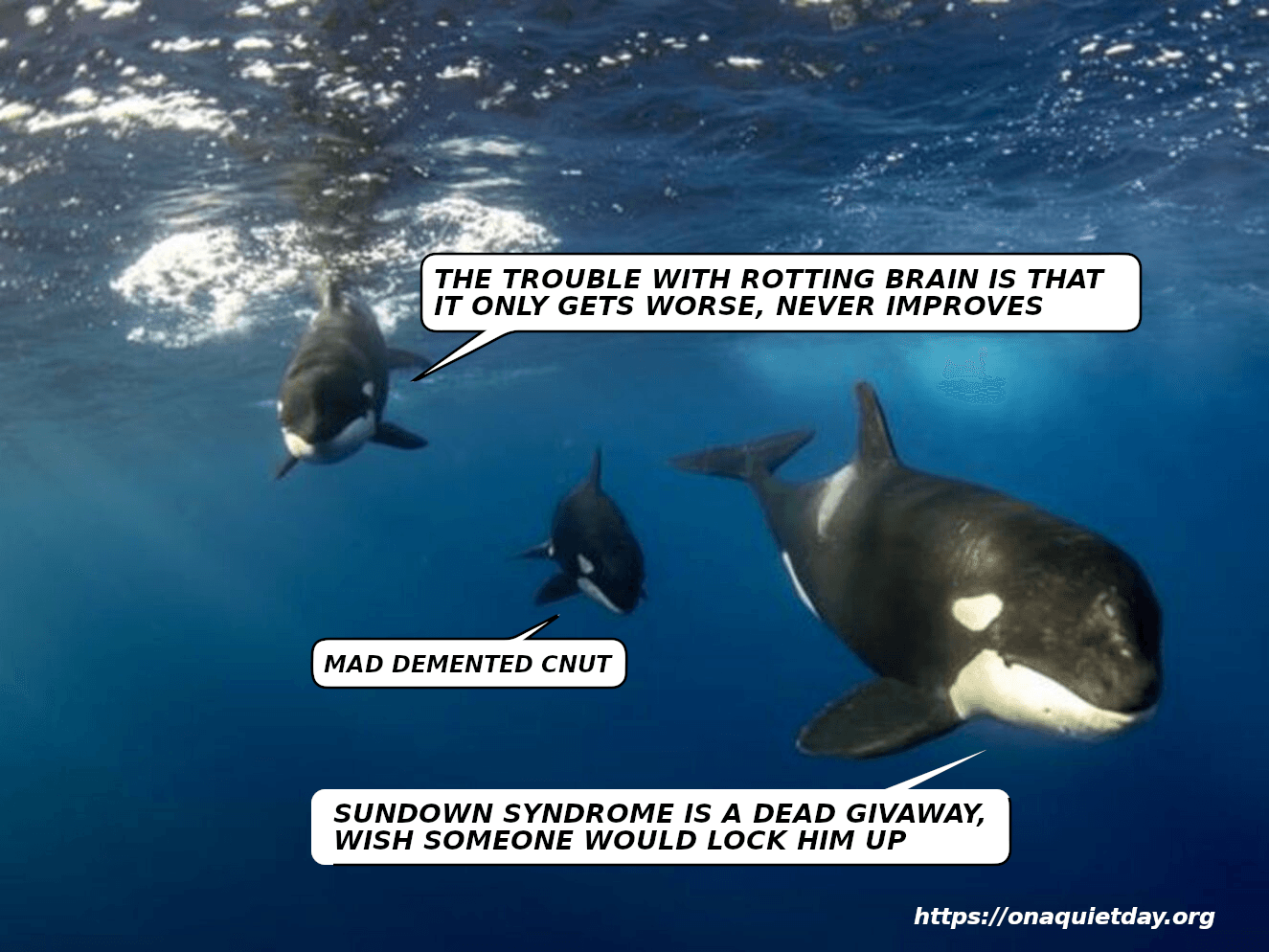
Orcas discuss how Trump was re-elected and him being an obviously insane, xenophobic Fascist.
Climate science denier Donald Trump says that more liquid gold is being secured according to his policy of global privateering
Donald Trump warns against following the https://onaquietday.org blog, says that it's easy atm, she only needs to report war crimes supporting Israel's genocidal expansion.
Donald Trump warns against following the https://onaquietday.org blog, says that it’s easy atm, she only needs to report war crimes supporting Israel’s genocidal expansion.

Continue ReadingGallup Ends Presidential Approval Polling After 88 Years—Likely Because a President Disapproved

Time to Grow Out of ‘Playing’ War

Spread the love

Original article by Robert C. Koehler republished from Common Dreams under Creative Commons (CC BY-NC-ND 3.0). 

A video shared by the White House combines footage from Wii golf with video of US strikes on Iran. (Photo: The White House/X/Screengrab)

By saying the quiet part out loud, Trump is revealing that war is based on the least of who we are, the least mature aspect of human nature.

Boys will be boys. Just ask the president.

At a gathering of Republicans a few days ago, Donald Trump talked nonchalantly about the recent sinking of an apparently unarmed Iranian frigate by the US Navy—in the Indian Ocean, more than 2,000 miles from the Persian Gulf. A total of 104 crew members were killed and 32 more were injured.

RECOMMENDED…

US-IRAN-ISRAEL-WAR-DEMONSTRATION

‘People Are Loving What’s Happening,’ Trump Claims While Massacring Iranian Children as US Oil Prices and Unemployment Spike

46th Cobra Gold multinational military exercises in Thailand

Warnings of Iran Invasion Grow as US to Send Up to 5,000 Marines, Sailors to Middle East

The president proceeded to make this more than merely another brutal, pointless act of war. He turned it into a glaring—shocking—revelation of truth… about the American-Israeli war on Iran and, quite possibly about all wars: about war itself. He was upset at first, he told the crowd, that the Navy sank the frigate rather than capturing it. But when he expressed this to the military officials, one of them responded, “It’s more fun to sink them.”

And the crowd laughed. Uh… are we “playing” war or waging it, with that trillion-dollar annual military budget America has? No doubt we’re doing both, but normally the “fun” part of war—the dehumanization of the enemy, the abstraction of people’s deaths (including those of children)—is airbrushed from public discussion by politically correct strategic and political blather. But this is Trump, spouting the quiet part out loud—in the process, causing the global infrastructure of nation-states, borders, and militarism to tremble. Could it be that war is based on the least of who we are, the least mature aspect of human nature?

A “global structure of nonviolence” is emerging—pushing, pushing against the deeply embedded infrastructure of war and us-vs.-them consciousness.

In contrast, I quote from a recent essay written by my friend Laura Hassler, founder and director of Musicians Without Borders:

Well, guess what. There are other forces alive in today’s world. Decades of resistance to domination and colonialism, the learnings of movements across the Global South, the freedom that Western hegemony for a few decades inadvertently released on its majority population, and access through social media to some of the reality of the actual horrors perpetrated in our names have together led to a worldwide awakening to fundamental injustices, and a worldwide longing for a livable, connected, survivable future.

She calls this worldwide awakening “Radical Empathy,” a term in widespread use, which means a deeply rooted sense of connection among people, well beyond merely sympathy and shared feelings. We are one planet, one people, and we will survive together or not at all.

“Radical Empathy must be fierce, stubborn, creative, persistent,” she continues. “We must hold on to each other, build community, be willing to take risks and accept consequences. Seek alternatives. Stand in solidarity with all who resist oppression and the violence of power and greed…

“And we artists must nurture artistic bravery, using the power of the arts to tell truth, to build community, to turn our capacity for radical empathy into a force for good.”

In other words, Radical Empathy isn’t simply emotional. You can say it’s spiritual, but it’s also political. It’s a movement: ever changing, ever manifesting in the moment, ever addressing conflict by reaching for connection and understanding. Yes, global nationalism still maintains the power to wage war. And war is everywhere these days. As Jeffrey Sachs noted in a recent interview, “World War III is here…” from Ukraine and Gaza and Iran to Asia to the Western Hemisphere. And the fighting across the world is linked.

But at the same time the world is changing. A “global structure of nonviolence” is emerging—pushing, pushing against the deeply embedded infrastructure of war and us-vs.-them consciousness. Finding understanding with your enemy—connecting with “the other”—can be incredibly difficult, especially in the midst of conflict, but Radical Empathy is making it a reality across the planet.

Laura Hassler’s organization, Musicians Without Borders, exemplifies this movement. The organization was founded in 1999, in Alkamaar, a city in the Netherlands. Laura, who was a choir director and organized music events, had put together a concert for the town’s annual honoring of the dead of World War II.

But as I wrote in a column several years ago:

The bloody war in Kosovo was then raging: Thousands had died; nearly a million refugees were streaming across Europe. Its horror dominated the daily news, and Laura couldn’t ignore it. She couldn’t simply focus on the war dead of half a century ago, not when the hell of war was alive in the present moment, pulling at her soul.

She decided, “We’ll perform music from the people suffering from war now—folk songs from Eastern Europe,” she told me. Her impulse was to reach out, to connect, somehow, with those suffering right now, on the other side of Europe. And something happened the night of the concert. When it ended, there was a moment of profound silence… and then, as the audience stood, applause so thunderous that the rafters shook. It went on for 20 minutes.

One of the musicians, a political refugee from Turkey, said to her afterwards: “This concert was special. We should put it on a train, send it to Kosovo and stop the war!”

And they went to Kosovo. Gradually, Musicians Without Borders became global, working with local people in war-torn regions all over the world—people on both sides of the divide—to create music that transcends the war of the moment. The organization currently has long-term projects in the Balkans, West Asia, Eastern Africa, and Europe.

This is Radical Empathy, or at least one example of it—our complex force of hope even as the world’s leaders continue bleeding away the planet’s resources in order to play war. Radical Empathy transcends war. It’s who we are—when we find ourselves.

Original article by Robert C. Koehler republished from Common Dreams under Creative Commons (CC BY-NC-ND 3.0). 

Climate science denier Donald Trump says that more liquid gold is being secured according to his policy of global privateering
Donald Trump explains why he established his Bored of Peace
Orcas discuss how Trump was re-elected and him being an obviously insane, xenophobic Fascist.
Continue ReadingTime to Grow Out of ‘Playing’ War

Trump’s Environmental Massacre

Spread the love

Original article by Derrick Z. Jackson republished from Common Dreams under Creative Commons (CC BY-NC-ND 3.0). 

The pictured oil refinery, owned by Exxon Mobil, is the second largest in the country on 28th February 2020 in Baton Rouge, Louisiana, United States.  (Photo by Barry Lewis/InPictures via Getty Images)

The EPA’s decision to erase the value of lives lost or saved by regulations is a horror beyond the pale. It opens the door for government-sanctioned death with a baked-in cover-up.

Last March, I interviewed staffers at the Environmental Protection Agency’s Region 5 headquarters in Chicago who were horrified by the Trump administration’s staff and funding cuts, which notably included eliminating environmental justice and diversity, equity, and inclusion programs.

The threat of those cuts was so severe that Brian Kelly, an on-site emergency coordinator based in Michigan, predicted: “People will die. There will be additional deaths if we roll back these protections.”

RECOMMENDED…

US-IRAN-ISRAEL-WAR-DEMONSTRATION

‘People Are Loving What’s Happening,’ Trump Claims While Massacring Iranian Children as US Oil Prices and Unemployment Spike

children and parents protest for EPA clean air protections

‘Direct Attack on the Health of Americans’: Trump EPA Greenlights More Mercury Pollution

How many additional deaths? The Trump EPA will not say. As part of President Donald Trump’s crusade to destroy federal science and roll back environmental safeguards, his EPA announced recently that it will no longer consider the monetary value of saving lives by regulating fine particulate matter, commonly called soot, smaller than 2.5 micrometers in diameter (PM 2.5) and ozone smog from vehicles, fossil-fuel-burning power plants, and other polluting industries.

In other words, the agency intends to conduct cost-benefit analyses by only considering the cost.

We Need Stronger Pollution Regs

The data documenting soot’s deadly damage even with environmental rules in place is voluminous, much coming from the federal government itself, suggesting that we need stronger regulations, not weaker ones.

A 1997 EPA report found the first 20 years of the 1970 Clean Air Act were so effective that 205,000 premature deaths were avoided from all air pollution sources in 1990. The same report concluded that the 1990 amendments to the law would save more than 230,000 lives a year by 2020 and prevent 2.4 million asthma attacks.

By disbanding DEI and environmental justice programs, the Trump administration is ensuring that communities of color are collateral damage in sucking the Earth dry of oil and gas and mining for the last lump of coal.

Even so, air pollution remains mortally high in a nation that is now the world’s biggest producer of oil and gas and stubbornly prioritizes individually owned vehicles over public transportation. A 2021 study funded by the EPA and published in the journal Science Advances found that PM 2.5 alone still accounts for 85,000 to 200,000 excess deaths a year.

The conclusions of nongovernmental studies echo the EPA’s own findings. A 2022 University of Wisconsin study, for example, estimated that if the United States eliminated all fine particulate, sulfur dioxide, and nitrogen oxide emissions from electricity generation, vehicles, factories, and buildings, 53,200 premature deaths a year could be prevented, providing $600 billion in health benefits from avoided illness and mortality.

Drill Baby Drill’s Collateral Damage

The Trump EPA’s recent announcement is just another of a string of nonsensical—and dangerous—moves by the agency. They include abandoning the Paris Climate Accord and killing the agency’s 2009 “endangerment finding” determining that carbon pollution threatens human health, which the Environmental Defense Fund (EDF) estimates will cut short the lives of as many as 58,000 people over the next 30 years due to additional pollution.

Taken together, the Trump administration’s assault on public health has the potential of triggering an environmental massacre, particularly among the most vulnerable Americans.

Because of our nation’s history of housing discrimination, communities of color, regardless of income, face more than twice the risk of exposure to PM 2.5 than white communities. According to the 2021 Sciences Advances study, this “phenomenon is systemic, holding for nearly all major sectors, as well as across states and urban and rural areas, income levels, and exposure levels…. Targeting locally important sources for mitigation could be one way to counter this persistence.”

By disbanding DEI and environmental justice programs, the Trump administration is ensuring that communities of color are collateral damage in sucking the Earth dry of oil and gas and mining for the last lump of coal. An August 2025 Science Advances study found that the life cycle of oil and gas extraction, storage, transporting, refining, and combustion results in 91,000 annual premature deaths due to exposure to PM 2.5, nitrogen dioxide, and ozone. It found that, with rare exception, “Asian, Black, Hispanic, and Native American groups experience the worst exposures and burdens for all life-cycle stages and pollutants.” A 2023 New England Journal of Medicine study, meanwhile, concluded that reducing PM 2.5 pollution alone would disproportionately benefit Blacks at all income levels as well as low-income whites.

EPA Now Stands for Every Polluter’s Ally

Without a single fact to back up its claim, the Trump EPA—led by the fossil fuel industry-friendly Lee Zeldin—stated it did away with calculating lives saved because prior estimates were done with “false precision and confidence.” In fact, the agency is now simply repeating the talking points of the oil and gas industry and the US Chamber of Commerce, which has a long history of lobbying Congress to resist climate legislation and filing endless amicus briefs on behalf of polluters to counter environmental lawsuits.

In 2018, during the first the Trump administration, the chamber asserted—also with no evidence—that previous to the Trump EPA, the agency “historically misinformed and misled the public by using inconsistent and opaque analytical and communication methods regarding costs and benefits.”

That same year, the Trump EPA offered a revealing nugget of information that was hardly opaque. It admitted that its effort to kill the Obama administration’s Clean Power Plan, which would have reined in power plant carbon pollution, would result in in as many as 1,400 premature deaths a year by 2030, and thousands more annual cases of respiratory diseases. At the time, Trump was also trying to roll back Obama-era clean air vehicle standards that were projected to save nearly 40,000 lives a year by 2030.

In its last year in office, the Biden administration proposed tightening PM 2.5 standards, estimating that it could prevent as many as 4,500 premature deaths in 2032 and lead to $46 billion in health benefits in 2032.

There is not a single word about protecting lives or lowering healthcare costs in the EPA’s February 12 press release announcing its repeal of the endangerment finding nor in its February 20 press release hailing the repeal of tighter mercury and air toxics standards enacted by the Biden administration. Instead, Zeldin claimed—without proof—that the air pollution rules would have “destroyed reliable American energy” and revoking the endangerment finding would save Americans more than $1.3 trillion, including an average cost savings of more than $2,400 on a new vehicle.

While Zeldin is trying to use the greater availability of cheaper, gas-guzzling cars as a lure to seduce the public to look the other way on environmental regulations, the pollution they emit will smoke the nation. EDF estimates that higher-polluting vehicles could, by 2055:

  • Cost US drivers as much as $1.4 trillion in increased fuel costs;
  • Emit carbon pollution that will intensify climate change-related extreme weather events, costing $1.5 trillion to $4.2 trillion; and
  • Increase respiratory and heart disease, as well as the number of premature deaths, costing $170 billion to $500 billion.

None of that mattered to the first Trump administration, which admitted its regulatory rollbacks could kill people. When the second Trump administration barreled into office with its cutbacks and deep-sixing of environmental justice and DEI programs, staffers in the EPA Chicago Region 5 office feared the worst. They included Kayla Butler, a Superfund community involvement coordinator. The stories her team collects in the field of people living with toxic horrors are precisely the stories she said the Trump administration is “trying to erase.”

The EPA’s decision to erase the value of lives lost or saved by regulations is a horror beyond the pale. It opens the door for government-sanctioned death with a baked-in cover-up. With the death toll from air pollution still so high, the Trump EPA is burying the data with the bodies, so we will never know the cause.

This article first appeared at the Money Trail blog and is reposted here at Common Dreams with permission.

Original article by Derrick Z. Jackson republished from Common Dreams under Creative Commons (CC BY-NC-ND 3.0). 
Donald Trump urges you to be a Climate Science denier like him. He says that he makes millions and millions for destroying the planet, Burn, Baby, Burn and Flood, Baby, Flood.
Orcas discuss how Trump was re-elected and him being an obviously insane, xenophobic Fascist.
Elon Musk urges you to be a Fascist like him, says that you can ignore facts and reality then.
Continue ReadingTrump’s Environmental Massacre

Warnings of Iran Invasion Grow as US to Send Up to 5,000 Marines, Sailors to Middle East

Spread the love

Original article by Stephen Prager republished from Common Dreams under Creative Commons (CC BY-NC-ND 3.0). 
US marines stand on a beach in Sattahip, Thailand after taking part in the 46th Cobra Gold multinational military exercises co-hosted by the Royal Thai Armed Force and the US Indo-Pacific command on February 26, 2026. (Photo by Adryel Talamantes/Anadolu via Getty Images)

“Bringing this war to an end,” said one former US intelligence analyst, “requires recognizing it can still get much, much worse.”

In what has been described as a potential “major escalation” of the Trump administration’s war with Iran, Defense Secretary Pete Hegseth has reportedly approved a request from US Central Command to move more warships and thousands of Marines to the Middle East following Iran’s attacks on vessels in the Strait of Hormuz.

Citing three US officials, The Wall Street Journal reported on Friday that the US was sending “an element of an amphibious ready group and attached Marine expeditionary unit, typically consisting of several warships and 5,000 Marines and sailors.”

RECOMMENDED…

image shoes US military planes headed to the midde east

‘The Tankers Just Keep Coming’: US Military Movements Spike Fears of Imminent Attack on Iran

Sen. Richard Blumenthal speaks to reporters

After Secret Briefing, Dem Senators Warn Trump ‘On a Path’ to Ground Invasion of Iran

According to the Journal, the Japan-based USS Tripoli and its attached Marines are already headed to the Middle East.

While the Journal did not explicitly report that the operation was tied to the volatile situation in the Strait of Hormuz, it noted that “the move comes as Iran’s attacks on the strait have paralyzed traffic through the strategic waterway, disrupting the global economy, driving up gas prices and posing a major military and political challenge for President [Donald] Trump.”

In his first address on Thursday, delivered by a news anchor on Iranian state TV, the country’s new supreme leader, Mojtaba Khamenei, said that “the lever of blocking the Strait of Hormuz must definitely be used” to heighten economic pressure on the US.

Iran’s Islamic Revolutionary Guard Corps (IRGC) has declared that “not a liter of oil” shall pass through the strait, and vowed to attack any ship linked to the US and Israel that may attempt to make the journey.

Iran has reportedly attacked at least six commercial ships in the area since Wednesday, including one marked with a Thai flag that still has three crew members missing. US intelligence sources have also accused Iran of laying mines in the Strait, which Iran has neither confirmed nor denied.

The blockage of the strait, through which about one-fifth of global oil shipments pass each year, has sent the global market into chaos. Prices of Brent crude have surged from under $70 less than a month ago to more than $100 per barrel on the global market, and US gas prices have leaped to $3.63 per gallon on average, up from $2.94 a month ago.

Prices have continued to climb even after the International Energy Agency (IEA) announced its largest-ever coordinated release of oil from nations’ strategic reserves on Wednesday to combat what it called “the largest supply disruption in the history of the global oil market.”

Shashank Joshi, the defense editor at The Economist and a visiting fellow at the Department of War Studies at King’s College London, said that a deployment of such a large Marine force seems to be “a key indicator of a potential ground operation” in Iran.

Trump said earlier this week that he was “nowhere near” sending troops into Iran even as it ramped up threats to block the strait. But privately, he has reportedly been mulling plans to put “boots on the ground” within Iranian territory to accomplish a number of objectives, though officials have characterized them as limited special-operations missions.

Administration officials have reportedly suggested a commando raid on Iran’s nuclear sites to confiscate or sabotage its supply of uranium, according to Axios. They’ve also considered a plan to occupy Kharg Island, which sits 15 miles off Iran’s coast and handles about 90% of its oil exports, serving as an economic “lifeline” for the battered nation.

But Trump has also said that if Iran blocks the strait, “the US Navy and its partners will escort tankers through the strait, if needed.” Chairman of the Joint Chiefs, Gen. Dan Caine, has said the Pentagon is looking at “a range of options” to do this.

In an analysis published Tuesday by Zeteo, Harrison Mann, a former US Army major and executive officer of the Defense Intelligence Agency’s Middle East/Africa Regional Center, suggested that the US may pursue an ambitious plan to “clear Iran’s coastline around the strait” to get tankers moving again.

Mann, who worked under the Biden administration but resigned in protest of its support for the genocide in Gaza, said this plan would require “an indefinite occupation–otherwise missile trucks could just get in position after US forces leave.” Doing this, he added, would require “a full-fledged invasion, possibly beyond even the 10,000 or so rapid-response forces at Trump’s disposal.”

“All of these ground operations risk high casualties while failing to accomplish their missions,” Mann said. “That’s a feature, not a bug. Even if one of these operations met its objectives, troops in peril behind enemy lines demand resupply, evacuation, and revenge, which puts more troops in peril behind enemy lines, and so on.”

The movement of more troops comes as the US public expresses strong disapproval of Trump’s war with Iran. In a Quinnipiac poll published this week, 53% of registered voters said they opposed US military action against Iran, while just 40% approved.

About 74% said they feared that the war would cause oil and gas prices to rise, and 71% feared that the war would last “months” or longer.

Trump’s former chief strategist, Steve Bannon, who remains one of his top allies in media, said on his War Room podcast that deploying such a large military force “sends a signal to Iran, but it also sends a signal to the American people: This is a major escalation.”

Mann said that putting troops on the ground in Iran will only “ensure that Trump can’t back out easily, which is exactly what [Israeli Prime Minister Benjamin] Netanyahu, [US Sen.] Lindsey Graham (R-SC), and their ilk need to fracture Iran.

“Bringing this war to an end,” Mann said, “requires recognizing it can still get much, much worse, refusing to fall for the promise of ‘small special ops raids,’ and calling these courses of action what they are: a prelude to forever war.”

Original article by Stephen Prager republished from Common Dreams under Creative Commons (CC BY-NC-ND 3.0). 
Climate science denier Donald Trump says that more liquid gold is being secured according to his policy of global privateering
Donald Trump explains why he established his Bored of Peace
Orcas discuss rotting brain. Front Orca says "Wish someone would lock him up".
Orcas discuss rotting brain. Front Orca says “Wish someone would lock him up”.

Continue ReadingWarnings of Iran Invasion Grow as US to Send Up to 5,000 Marines, Sailors to Middle East

Trump Gives Eugenic Vibes Ranting Against ‘Genetics’ of ‘Sick’ Muslim Immigrants

Spread the love

Original article by Brett Wilkins republished from Common Dreams under Creative Commons (CC BY-NC-ND 3.0). 

US President Donald Trump is seen at the White House in Washington, DC on March 12, 2026. (Photo by Heather Diehl/Getty Images)

“He’s a white supremacist,” said one critic. “He doesn’t hide it.”

US President Donald Trump was accused Friday of espousing white supremacist ideology after he blamed the “genetics” of Muslim immigrants who commit crimes like Thursday’s assault on a Michigan synagogue, while calling for their exclusion from the United States.

“Well, it’s been going on for a long time. It’s a disgrace. They’re sick, they’re really demented people,” Trump said during a call-in interview with Fox News Radio host Brian Kilmeade. “They come into the country, they sneak in.”

RECOMMENDED…

US-IRAN-ISRAEL-WAR-DEMONSTRATION

‘People Are Loving What’s Happening,’ Trump Claims While Massacring Iranian Children as US Oil Prices and Unemployment Spike

'This Should Be Illegal': Senate GOP Uses AI Deepfake to Attack Talarico

‘This Should Be Illegal’: Senate GOP Uses AI Deepfake to Attack Talarico

Trump was responding to a question about recent attacks by people who happen to be Muslims, including Mohamed Bailor Jalloh, who was stabbed to death by a cadet at Old Dominion University in Norfolk, Virginia after fatally shooting instructor Lt. Col. Brandon Shah, and Ayman Mohamad Ghazali, who was shot dead by security guards at the Temple Israel synagogue in West Bloomfield Township, Michigan after crashing his vehicle into the building.

Neither Jalloh nor Ghazali “snuck” into the country. Both were naturalized US citizens. Jalloh, originally from Sierra Leone, was a former National Guardsman. Ghazali had recently lost two of his brothers and other relatives to an Israeli airstrike in his native Lebanon.

“They’re sick people, and a lot of them were let in here. They shouldn’t have been let in,” Trump told Kilmeade. “Others are just bad. They go bad. Something wrong—there’s something wrong there. The genetics are not exactly, they’re not exactly your genetics.”

Trump has made many racist statements and has occasionally invoked what critics say is the language of eugenics, a debunked pseudoscience embraced by many white supremacists. He has also boasted about his own “much better blood.

While running for reelection, Trump echoed Nazi dictator Adolf Hitler’s screed against “poisoning” by an “influx of foreign blood,” declaring during a December 2023 campaign rally in New Hampshire that undocumented immigrants are “poisoning the blood” of the country.

“Trump is an old-school eugenicist nativist. He actually is fine with immigrants as long as they have the right ‘genes,’” said David J. Bier, director of immigration studies at the libertarian Cato Institute, in response to Friday’s interview. “This argument was the basis of the creation of the restrictive US immigration system 100 years ago.”

Trump has previously said that he wants more immigrants from countries like Norway and not from what he called “shithole” nations in the Global South. His second administration has effectively ended refugee admissions—with the notable exception of white South Africans, the only people in the world allowed into the United States as refugees since last October, according to US Department of State data.

Progressive journalist Alex Cole said on X: “Imagine being the grandson of immigrants—who dyes his hair, paints his face orange, and wears lifts—lecturing the country about ‘genetics.’ The irony writes itself.”

Trump’s political rise began with his promotion of the racist “birther” conspiracy theory falsely positing that then-President Barack Obama was not born in the United States. He launched his 2016 presidential campaign by calling Mexican immigrants “rapists.”

Once in office, Trump enacted a series of restrictions and outright bans on immigration from nations with Muslim majorities.

“He’s a white supremacist,” journalist Mehdi Hasan wrote Friday on X. “He doesn’t hide it.”

Original article by Brett Wilkins republished from Common Dreams under Creative Commons (CC BY-NC-ND 3.0). 

Elon Musk urges you to be a Fascist like him, says that you can ignore facts and reality then.
Donald Fuhrump says that Amerikkka doesn't bother with crimes or charges anymore, not being 100% Amerikkkan and opposing his real estate intentions is enough.
Donald Fuhrump says that Amerikkka doesn’t bother with crimes or charges anymore, not being 100% Amerikkkan and opposing his real estate intentions is enough.
Orcas discuss how Trump was re-elected and him being an obviously insane, xenophobic Fascist.

Continue ReadingTrump Gives Eugenic Vibes Ranting Against ‘Genetics’ of ‘Sick’ Muslim Immigrants