I got the impression that the people supposedly in charge were far too relaxed and too fast to excuse anything and everything, that the people in charge of Sellafield were not taking it all seriously.
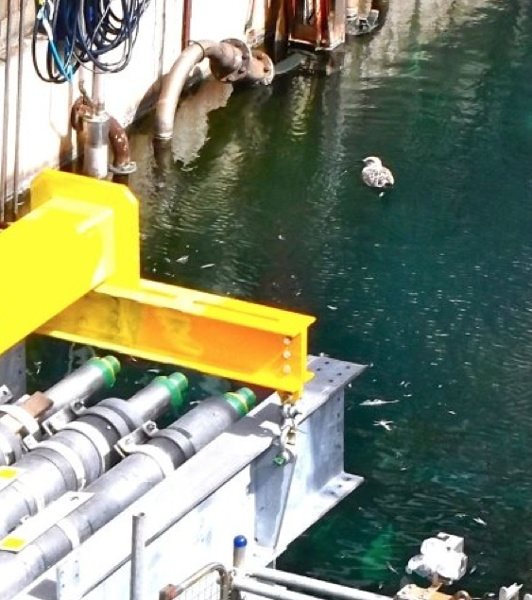
Isn’t that the impression you got? Oh radioactive half life of Plutonium Pu-239 of 24,100 years. We’ll just put it in this pond here, forget and ignore it and let seagulls
I got the impression that they had no idea about anything – that they were totally inept. they were treating it like it was nothing. Oh yes, no need to worry that we have got this serious radioactive waste which we have ignored for the past 60 years. There’s no need to worry about that we put it in water in these concrete ponds that are falling to bits.
ed: Sellafield is a nuclear waste shithole
ed:
Sellafield needs urgent inspections. Please get in there urgently. International, EU inspectors?
ed: I intend to do an article on the Radioactive Pollution of Irish Sea which is largely due to Sellafield.
16/9/16: it has been announced that Theresa May’s Conservative government are going for Sellafield C in partnership with EDF and China.
I intend to further investigate and publish on Sellafield’s irrsponsible and fantastically negligent actions of pollution of the Irish Sea and their ridiculous shite pools.
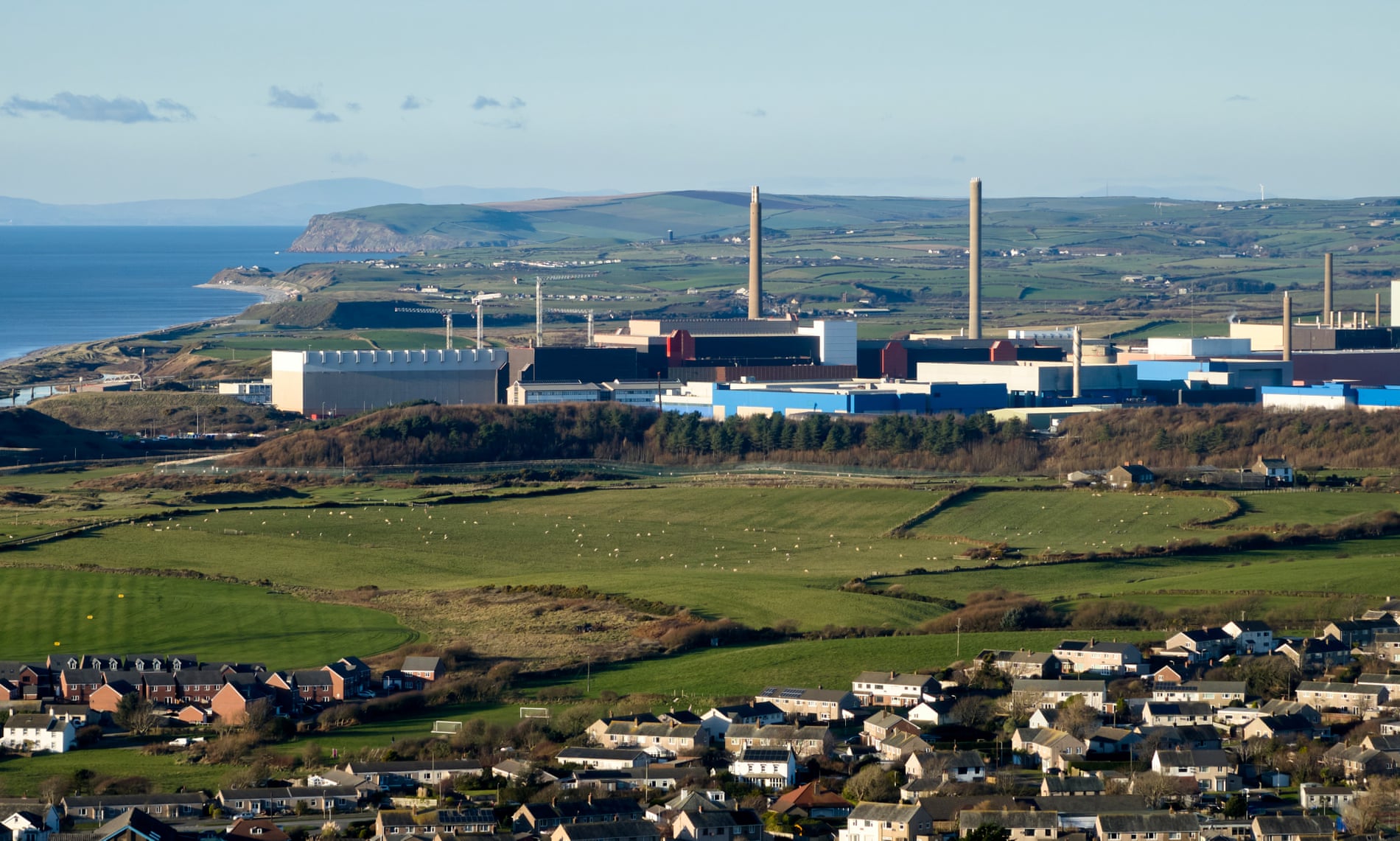
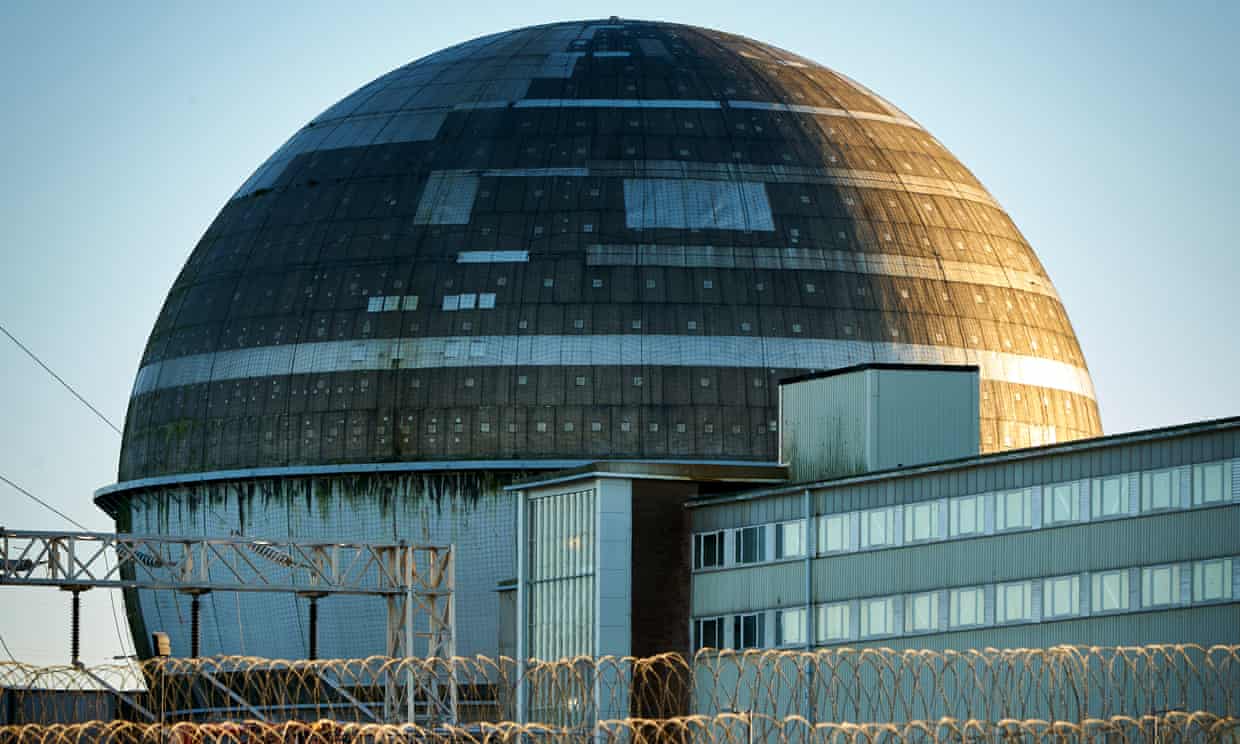
Sellafield is Europe’s most toxic nuclear site. Photograph: David Levene/The Guardian
Britain’s public spending watchdog has launched an investigation into risks and costs at Sellafield, the UK’s biggest nuclear waste dump.
The National Audit Office (NAO), which scrutinises the use of public funds, has announced it will examine whether the Cumbria site is managing and prioritising the risks and hazards of the site effectively as well as deploying resources appropriately and continuing to improve its project management.
The findings of its investigation are expected to be published this autumn.
Sellafield is Europe’s most toxic nuclear site and also one of the UK’s most expensive infrastructure projects, with the NAO estimating it could cost £84bn to maintain the site into the next century.
Predictions of the ultimate bill for the site, which holds about 85% of the UK’s nuclear waste, vary. It cost £2.5bn to run the site last year, and the government estimates it could ultimately take £263bn to manage the country’s ageing nuclear sites, of which Sellafield accounts for the largest portion.
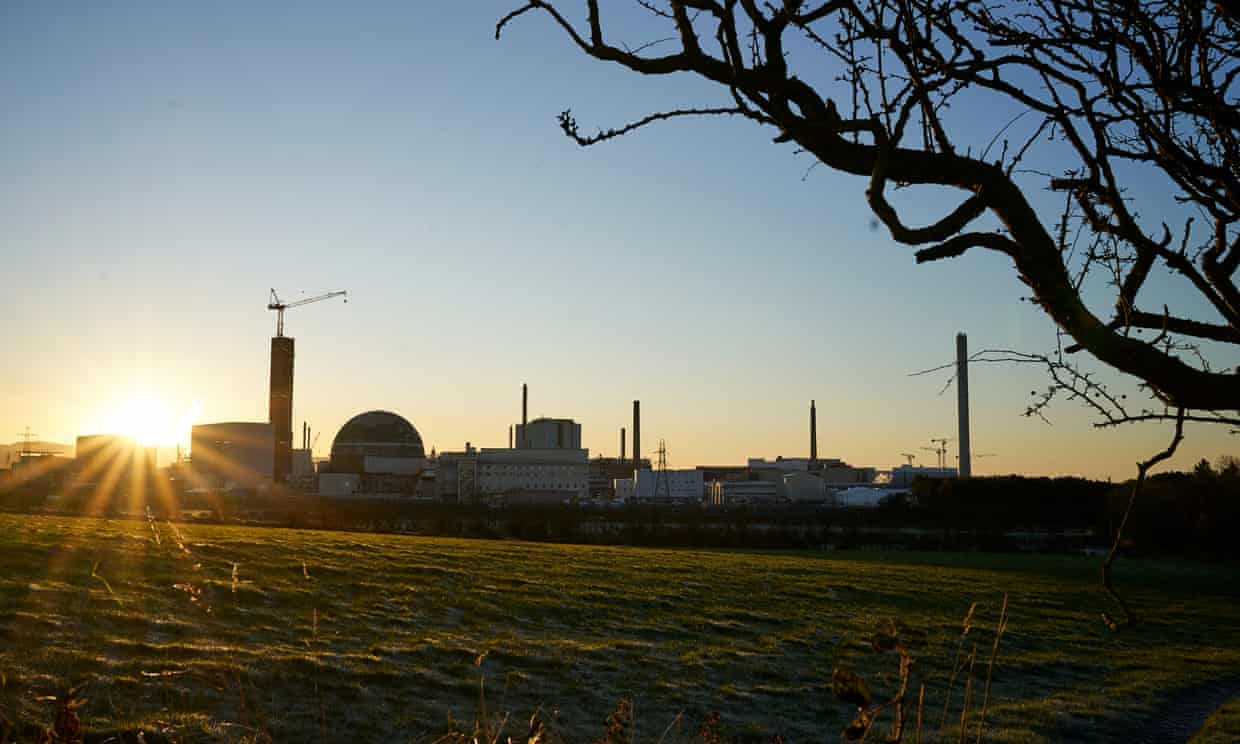
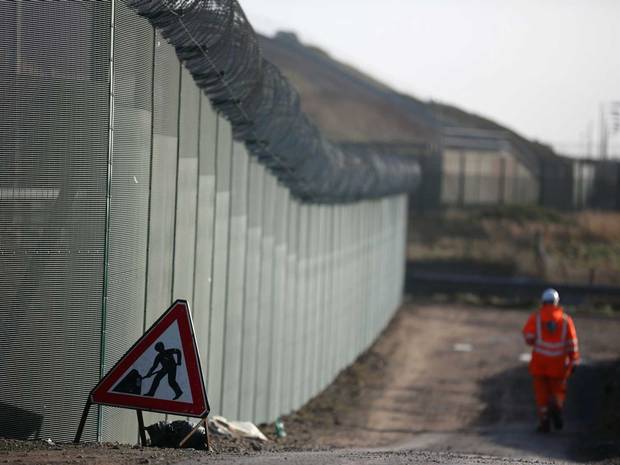
Sellafield’s lawyers have said that cybersecurity requirements were not ‘sufficiently adhered to for a period’. Photograph: David Levene/The Guardian
UK nuclear site pleads guilty to IT security breaches from 2019 to 2023
The UK’s most hazardous nuclear site, Sellafield, has pleaded guilty to criminal charges related to cybersecurity failings brought by the industry regulator.
Lawyers acting for Sellafield told Westminster magistrates’ court on Thursday that cybersecurity requirements were “not sufficiently adhered to for a period” at the vast nuclear waste dump in Cumbria.
The charges relate to information technology security offences spanning a four-year period from 2019 to 2023. It emerged in March that the Office for Nuclear Regulation (ONR) intended to prosecute Sellafield for technology security offences.
Late last year the Guardian’s Nuclear Leaks investigation revealed a catalogue of IT failings at the site dating back several years.
Sellafield pleaded guilty to a charge that it had failed to “ensure that there was adequate protection of sensitive nuclear information on its information technology network”, the Financial Times reported.
The UK’s most hazardous nuclear site, Sellafield, has been hacked into by cyber groups … the Guardian can reveal.
The astonishing disclosure and its potential effects have been consistently covered up by senior staff at the vast nuclear waste and decommissioning site, the investigation has found.
The Guardian has discovered that the authorities do not know exactly when the IT systems were first compromised. But sources said breaches were first detected as far back as 2015, when experts realised sleeper malware – software that can lurk and be used to spy or attack systems – had been embedded in Sellafield’s computer networks.
…
The full extent of any data loss and any ongoing risks to systems was made harder to quantify by Sellafield’s failure to alert nuclear regulators for several years, sources said.
The revelations have emerged in Nuclear Leaks, a year-long Guardian investigation into cyber hacking, radioactive contamination and toxic workplace culture at Sellafield.
The site has the largest store of plutonium on the planet and is a sprawling rubbish dump for nuclear waste from weapons programmes and decades of atomic power generation.
…
In one highly embarrassing incident last July, login details and passwords for secure IT systems were inadvertently broadcast on national TV by the BBC One nature series Countryfile, after crews were invited into the secure site for a piece on rural communities and the nuclear industry.
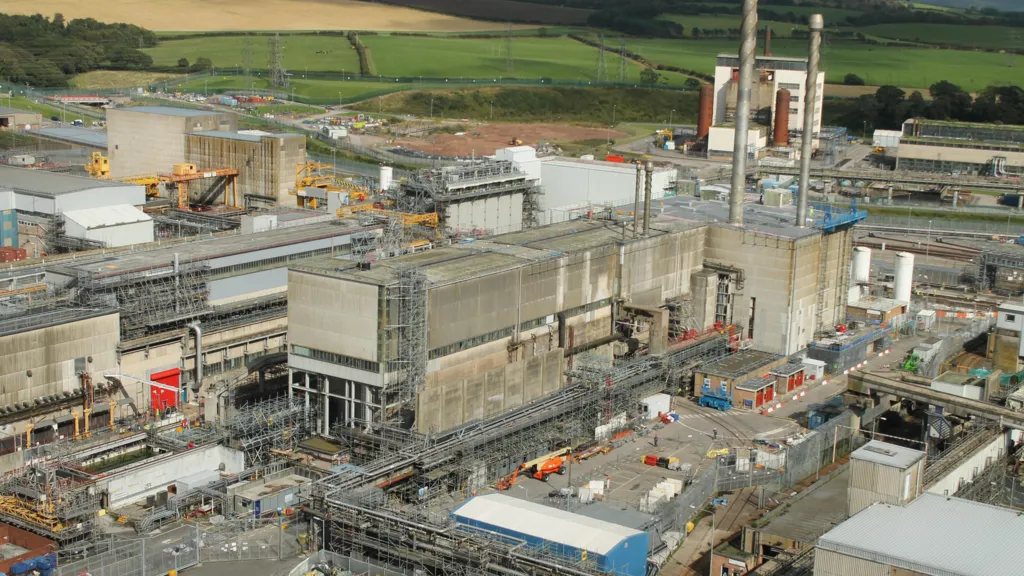
Sellafield has ‘retrieved much less waste than it had planned’ since 2020, the NAO said. Photograph: David Levene/The Guardian
National Audit Office questions value for money as predicted bill for decommissioning increases by £21bn
The cost of cleaning up Sellafield is expected to spiral to £136bn and Europe’s biggest nuclear waste dump cannot show how it offers taxpayers value for money, the public spending watchdog has said.
Projects to fix buildings containing hazardous and radioactive material at the state-owned site on the Cumbrian coast are running years late and over budget. Sellafield’s spending is so vast – with costs of more than £2.7bn a year – that it is causing tension with the Treasury, the report from the National Audit Office (NAO) suggests.
Officials from finance ministry told the NAO it was “not always clear” how Sellafield made decisions, the report reveals. Criticisms of its costs and processes come as the chancellor, Rachel Reeves, prepares to plug a hole of about £40bn in her maiden budget.
Europe’s most hazardous industrial site has previously been described by a former UK secretary of state as a “bottomless pit of hell, money and despair”. The Guardian’s Nuclear Leaks investigation in late 2023 revealed a string of cybersecurity problems at the site, as well as issues with its safety and workplace culture.
The NAO found that Sellafield was making slower-than-hoped progress on making the site safe and that three of its most hazardous storage sites pose an “intolerable risk”.
The site is a sprawling collection of buildings, many never designed to hold nuclear waste long-term, now in various states of disrepair. It stores and treats decades of nuclear waste from atomic power generation and weapons programmes, has taken waste from countries including Italy and Sweden, and is the world’s largest store of plutonium.
Security breaches and delays are rife as nuclear contractor ‘puts shareholders before taxpayer’
The £70bn project to rid Sellafield, Europe’s most hazardous nuclear site, of its waste legacy is more than a decade behind schedule and is managed in shareholder, not taxpayer, interests, a damning confidential report reveals.
The Commons Public Accounts Committee chair, Margaret Hodge, said yesterday that the failings at the Cumbrian plant proved how “outrageous” the decision had been to trust a private company to decontaminate the facility.
The Independent on Sunday can reveal that nine of the 11 biggest projects to make Sellafield safe, including building a storage facility for radioactive sludge, are £2bn over budget. Seven will complete late, with a combined delay of eleven and a half years. The expansion of a huge waste processor, Evaporator D, is now expected in February 2016, a year and nine months later than planned.
I consider this posting to comply with copyright laws since
a. Only a small portion of the original article has been quoted satisfying the fair use criteria, and / or
b. This posting satisfies the requirements of a derivative work.
Please be assured that this blog is a non-commercial blog (weblog) which does not feature advertising and has not ever produced any income.
The NDA said the “leak in the Magnox Swarf Storage Silo is contained and does not pose a risk to the public”
The UK’s largest nuclear site could continue leaking radioactive water until the 2050s, MPs have warned, while its clean-up operations struggle to progress quickly enough.
The Public Accounts Committee (PAC) criticised the speed of decommissioning work at Sellafield in Cumbria, citing “cost overruns and continuing safety concerns” in a report published on Wednesday.
Although the committee noted there were “signs of improvement”, PAC chairman Sir Geoffrey Clifton-Brown said Sellafield continued to present “intolerable risks”.
The Nuclear Decommissioning Authority (NDA) acknowledged the leak at its Magnox Swarf Storage Silo (MSSS) was its “single biggest environmental issue”.
The MSSS, which the NDA described as “the most hazardous building in the UK”, has been leaking radioactive water into the ground since 2018, releasing enough to fill an Olympic swimming pool every three years.
It is likely to continue leaking until the oldest section of the building has been emptied in the 2050s, about a decade later than previously expected.
Sir Geoffrey said: “As with the fight against climate change, the sheer scale of the hundred-year timeframe of the decommissioning project makes it hard to grasp the immediacy of safety hazards and cost overruns that delays can have.
“Every day at Sellafield is a race against time to complete works before buildings reach the end of their life.
“Our report contains too many signs that this is a race that Sellafield risks losing.”
Sellafield – originally called Windscale but the name was changed as a PR stunt after the 1957 Windscale fire – was built initially as a plant producing plutonium to build the UK’s first nuclear bombs. Political pressures dictated that the plutonium was produced quickly … so that the UK would have nuclear bombs sooner. Everything was secondary to producing the plutonium quickly. There’s also the issue that there was very little experience or expertise in running nuclear reactors – it had only been done in the States at that time. UK and USSR were desperate to catch up.
The Sellafield site is a huge sprawling mess of past endeavours. It is now a nuclear shitehole having accumulated foreign as well as UK’s nuclear waste extremely poorly stored and mismanaged. Sellafield is a filthy nuclear waste site that dumps thousands of litres of radioactive waste into the Irish Sea daily.
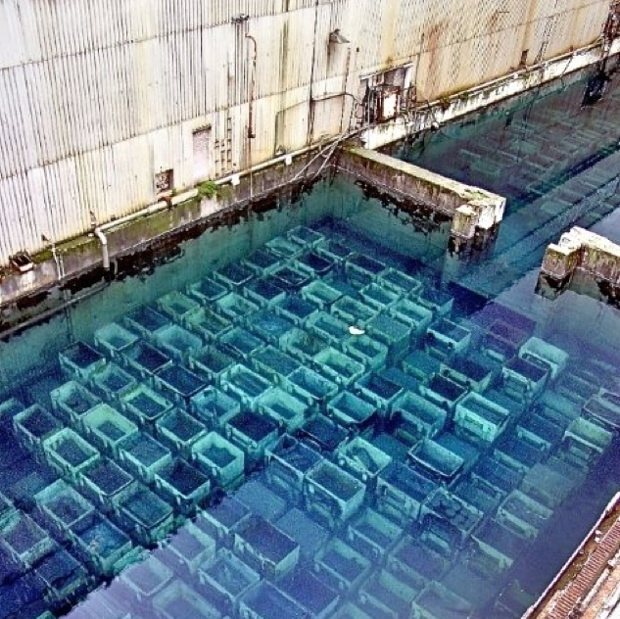
Central to Sellafield’s crap storage of nuclear waste are vast open-air storage ponds 5 or 6 metres deep. There is nothing high-tech about these ponds – they are simply rotting concrete ponds dating from the 50s containing water and highly radioactive waste open to the elements. There are accounts of flocks of seagulls, sparrows and other birds spreading this radioactivity since there is no way of preventing them.
Since Sellafield’s workers sign the Official Secrets Act, we rely on whistle-blowers for inside information. A whistle-blower leaked photos of the shocking ponds to the Ecologist magazine in 2014. [These photos are actually taken from the Guardian].
Shitty open-air pond at Sellafield nuclear waste dump containing spent nuclear fuel rods. Notice the seabird on the surface getting a dose of radiation to spread far and wide.
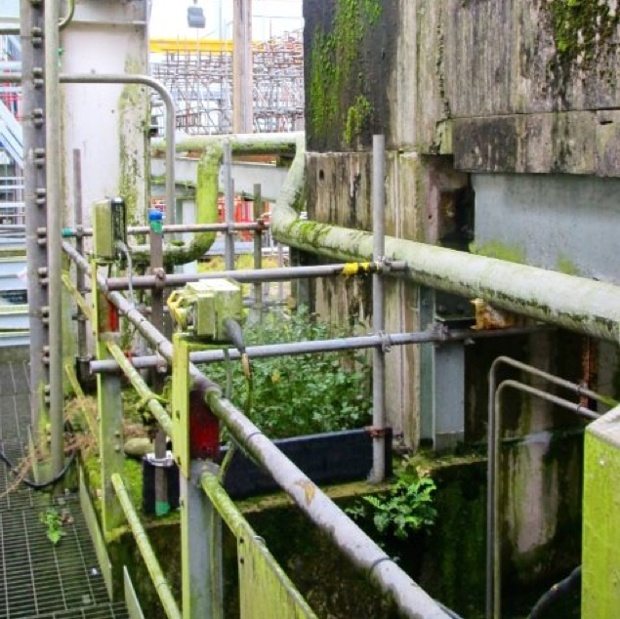
Weeds growing around derelict machinery at Sellafield nuclear waste dump.
Another seabird in one of Sellafield nuclear dump’s open-air ponds.
The images … from an anonymous source, show the state of spent nuclear fuel storage ponds that were commissioned in 1952, and used until the mid-1970’s as short term storage for spent fuel until it could be re-processed, producing plutonium for military use. However they were completely abandoned in the mid-1970s and have been left derelict for almost 40 years.
NOTE: The full set of original leaked photos is now placed in the public domain, available here.
The photographs show cracked concrete tanks holding water contaminated with high levels of radiation, seagulls bathing on the water, broken equipment, a dangerous mess of discarded items on elevated walkways, and weeds growing around the tanks.
The fuel storage ponds, the largest measuring 20m wide, 150m long and 6m deep, are now completely packed with spent fuel in disastrously poor condition.
If the ponds drain, the spent fuel may spontaneously ignite
The ponds are now undergoing decommissioning in order to restore them to safe condition. But the process is fraught with danger – and nuclear expert John Large warns that massive and uncontrolled radioactive releases to the environment could occur.
“This pond is build above ground”, he said. “It’s like an concrete dock full of water. But the concrete is in dreadful condition, degraded and fractured, and if the ponds drain, the Magnox fuel will ignite and that would lead to a massive release of radioactive material.
“Looking at the photos I am very disturbed at the degraded and run down condition of the structures and support services. In my opinion there is a significant risk that the system could fail.”
“If you got a breach of the wall by accident or by terrorist attack, the Magnox fuel would burn. I would say there’s many hundreds of tonnes in there. It could give rise to a very big radioactive release. It’s not for me to make comparisons with Chernobyl or Fukushima, but it could certainly cause serious contamination over a wide area and for a very long time.”
URGENT clean-up of two of the world’s most dangerous radioactive waste stores will be delayed by at least five years, despite growing safety fears.
The waste is stored at the UK’s Sellafield nuclear reprocessing site, which holds radioactive waste dating back to the dawn of the nuclear age. An accident at the derelict site could release radioactive materials into the air over the UK and beyond.
Last week, the UK government sacked the private consortium running the £80-billion-programme to clean up Sellafield, and gave the job back to its own agency, the Nuclear Decommissioning Authority (NDA). The clean-up operation, scheduled to end by 2120, costs the government £1.9 billion a year.
The private consortium, Nuclear Management Partners, was meant to “bring in world-class expertise” and allow the government to “get to grips with the legacy after decades of inaction”, according to a 2008 statement by Mike O’Brien, energy minister at the time. But six years on, the privatisation experiment has been abandoned.
The surprise renationalisation comes after delays at two of the four waste stores prioritised for clean-up. The four ponds and silos contain hundreds of tonnes of highly radioactive material from more than 60 years of operations. The decaying structures are cracking, leaking waste into the soil, and are at risk of explosions from gases created by corrosion.
I intend to bring a series about filthy nuclear soon.
It seems that the real issue is and always has been nuclear waste.
I am very disappointed by so-called pro-nuclear environmentalists e.g. Monbiot. I sincerely hope that they reconsider their positions/perspectives. I find it very strange that such people are so concerned by farmyard shit pollution of streams while being indifferent to plutonium shit pollution of the Irish Sea.
I’ve been researching this lately. It is clear the Windscale / Sellafield is a total nuclear shithhole. They have vast open-air radioactive ponds there. Pigeons and seagulls have landed in these serious radioactive ponds to spread radioactivity far and wide.
The Windscale Fire in 1957 was hugely covered up. Radioactivity spread to South-East England and to Europe while Windscale workers were told to work as normal and not tell anyone. UK children have plutonium in their teeth, more according to how close to Sellafield they are. UK authorities have succeeded in conspiring that their childhood leukaemias are not caused by Windscale/Sellafield.
This article was originally posted 6/12/24 but was deleted probably by mistake.
Mark Zuckerberg, CEO of Meta, testifies before a U.S. Senate Judiciary Committee hearing on January 31, 2024, in Washington, D.C. (Photo: Celal Gunes/Anadolu via Getty Images)
“In the blind sprint to win on AI, Meta and the other tech giants have lost their way,” said a leader at Environment America.
Environmental advocates this week responded with concern to Meta looking for nuclear power developers to help the tech giant add 1-4 gigawatts of generation capacity in the United States starting in the early 2030s.
Meta—the parent company of Instagram, Facebook, WhatsApp, and more—released a request for proposals to identify developers, citing its artificial intelligence (AI) innovation and sustainability objectives. It is “seeking developers with strong community engagement, development, …permitting, and execution expertise that have development opportunities for new nuclear energy resources—either small modular reactors (SMR) or larger nuclear reactors.”
The company isn’t alone. As TechCrunch reported: “Microsoft is hoping to restart a reactor at Three Mile Island by 2028. Google is betting that SMR technology can help it deliver on its AI and sustainability goals, signing a deal with startup Kairos Power for 500 megawatts of electricity. Amazon has thrown its weight behind SMR startup X-Energy, investing in the company and inking two development agreements for around 300 megawatts of generating capacity.”
In response to Meta’s announcement, Johanna Neumann, Environment America Research & Policy Center’s senior director of the Campaign for 100% Renewable Energy, said: “The long history of overhyped nuclear promises reveals that nuclear energy is expensive and slow to build all while still being inherently dangerous. America already has 90,000 metric tons of nuclear waste that we don’t have a storage solution for.”
“Do we really want to create more radioactive waste to power the often dubious and questionable uses of AI?” Neumann asked. “In the blind sprint to win on AI, Meta and the other tech giants have lost their way. Big Tech should recommit to solutions that not only work but pose less risk to our environment and health.”
“Data centers should be as energy and water efficient as possible and powered solely with new renewable energy,” she added. “Without those guardrails, the tech industry’s insatiable thirst for energy risks derailing America’s efforts to get off polluting forms of power, including nuclear.”
In a May study, the Electric Power Research Institute found that “data centers could consume up to 9% of U.S. electricity generation by 2030—more than double the amount currently used.” The group noted that “AI queries require approximately 10 times the electricity of traditional internet searches and the generation of original music, photos, and videos requires much more.”
Meta is aiming to get the process started quickly: The intake form is due by January 3 and initial proposals are due February 7. It comes after a rare bee species thwarted Meta’s plans to build a data center powered by an existing nuclear plant.
Following the nuclear announcement, Meta and renewable energy firm Invenergy on Thursday announced a deal for 760 megawatts of solar power capacity. Operations for that four-state project are expected to begin no later than 2027.