Trump Asked for $1 Billion to Do Big Oil’s Dirty Work. Meet the Billionaire Making It Happen

Spread the love

Original article by JESSICA CORBETT republished from Common Dreams under Creative Commons (CC BY-NC-ND 3.0). 
A climate campaign holds a symbolic wanted poster for Harold “Frackenstein” Hamm, CEO of Continental Resources and one of several individuals characterized by a campaign as a top climate criminal, in New York City on July 22, 2024. (Photo: John Senter/UCG/Universal Images Group via Getty Images)

“Oil barons are bankrolling the Trump campaign because Donald Trump promises to impose their policy ‘wish list’ that will make them even richer,” said the Harris campaign.

“Not familiar with Harold Hamm? You should be.”

That’s according to Washington Post climate policy editor Stuart Leavenworth, who shared the newspaper’s Tuesday reporting on the fossil fuel executive’s relationship with former President Donald Trump, the Republican nominee for the November election.

“This oil tycoon is bringing in millions for Trump,” the editor noted, “and is relaying to Trump what the fossil fuel industry wants.”

The Post‘s Josh Dawsey and Maxine Joselow revealed in May that during an event in Florida, Trump vowed to gut the Biden administration’s climate regulations if elected in November as long as the oil and gas industry put $1 billion toward his campaign—a revelation that sparked alarm and even congressional investigations.

In Tuesday reporting described by other journalists as ” great” and “important,” the pair exposed how “Hamm, the billionaire founder of Continental Resources, called other oil executives and encouraged them to attend fundraisers and open their wallets” after the April dinner at Mar-a-Lago, Trump’s Florida residence.

Hamm reportedly described the November contest as “the most important election in our lifetime” and “railed against President Joe Biden’s energy policies.” Following a disastrous debate performance against Trump, the Democratic incumbent passed the torch to Vice President Kamala Harris, who has since secured her party’s nomination.

Donna Brazille, a political strategist and former Democratic National Committee chair, used the new reporting to compare the candidates. As she put it, “This oil tycoon brings in millions for Trump, and may set his agenda.”

Hamm’s top priorities, according to the Post, are “opening up more federal lands to drilling, easing the Endangered Species Act, and curbing numerous regulations at the Environmental Protection Agency.”

Brazille pointed out that “meanwhile, as attorney general in California, Harris prosecuted oil companies for leaks from pipelines and storage tanks, and even sued the Obama administration.”

Harris has quickly garnered support from various organizations concerned about the fossil fuel-driven climate emergency, including some that had declined to endorse Biden. Her running mate is Minnesota Gov. Tim Walz—a choice widely welcomed by green groups, despite his record on the Line 3 oil pipeline—while Trump picked Big Oil-backed Sen. JD Vance (R-Ohio).

Both Trump and Vance have made clear that if they win, they plan to “drill, baby, drill,” a promise that wealthy figures in the fossil fuel industry seem to be buying. The Post reported that thanks in part to introductions by Hamm, “Trump has now ‘called almost everyone in the sector,”” and “the money has been flowing in,” with the industry contributing over $20.3 million.

Harris campaign spokesperson Joseph Costello said in a statement that “oil barons are bankrolling the Trump campaign because Donald Trump promises to impose their policy ‘wish list’ that will make them even richer at the expense of the middle class and a healthy future for our children.”

“Trump’s extreme Project 2025 agenda will give handouts to billionaires, crush jobs, and send costs skyrocketing,” Costello added. “America is more energy independent than ever under the Biden-Harris administration, and Vice President Harris is helping create hundreds of thousands of good paying energy and manufacturing jobs—a boom for working families that Trump would dismantle.”

Hamm—who initially backed two Trump primary challengers: Florida Gov. Ron DeSantis and former South Carolina Gov. Nikki Haley—did not respond to the Post‘s requests for comment while the campaign said that Trump “is proud to be supported by people who share his vision of American energy dominance to protect our national security and bring down the cost of living for all Americans.”

More Perfect Unionnoted in response to the Tuesday reporting that Hamm is among dozens of billionaires backing Trump—who is also expected to push tax cuts for rich individuals and corporations if he returns to the White House.

As Sludgedetailed last month, ultrawealthy contributors to the Trump campaign and related groups include casino mogul Miriam Adelson, bankers Andy Beal and Warren Stephens, GOP donors Scott Bessent and Stephen Schwarzman, real estate investor Richard Kurtz, Jimmy John’s founder James J. Liautaud, and crypto industry twins Cameron and Tyler Winklevoss.

They are joined by associates of billionaire Elon Musk—who created a pro-Trump super political action committee—and others in the tech industry, including Palmer Luckey, Tom Siebel, and Kenny Trout, as well as “New York City retail and oil refinery owner John Catsimatidis, an old friend of Trump’s who has been a public defender of the former president’s character and public record.”

Original article by JESSICA CORBETT republished from Common Dreams under Creative Commons (CC BY-NC-ND 3.0). 

Continue ReadingTrump Asked for $1 Billion to Do Big Oil’s Dirty Work. Meet the Billionaire Making It Happen

Fossil Fuel Industry Propaganda Blamed as Record Heat Scorches Planet

Spread the love

Original article by JESSICA CORBETT republished from Common Dreams under Creative Commons (CC BY-NC-ND 3.0). 

Civilians flee a forest fire that broke out close to residential areas at Cesmealti in Urla district of Izmir, Turkey on July 31, 2024. (Photo: Mahmut Serdar Alakus/Anadolu via Getty Images)

“We need to tackle the root cause and get serious about reducing record levels of greenhouse gas emissions,” said the head of the World Meteorological Organization.

As scientists around the world on Thursday released new data about recent record-smashing heat, one United Nations adviser placed blame for the lack of ambitious climate action on the fossil fuel industry’s decadeslong disinformation efforts.

“There is this prevailing narrative—and a lot of it is being pushed by the fossil fuel industry and their enablers—that climate action is too difficult, it’s too expensive,” Selwin Hart, a special adviser to the U.N. Secretary-General António Guterres and assistant secretary-general of the Climate Action Team, told The Guardian‘s Fiona Harvey.

“It is absolutely critical that leaders, and all of us, push back and explain to people the value of climate action, but also the consequences of climate inaction,” said Hart, former executive director of the Caribbean at the Inter-American Development Bank and Barbados’ ambassador to the United States and the Organization of American States.

Investigations by academicsjournalists, and lawmakers as well as ongoing legal battles have exposed how Big Oil not only has heated and polluted the planet but also knew about the devastating impacts of fossil fuels decades ago and opted to spread lies so shareholders could make massive profits—which they continue to rake in today.

“Climate appears to be dropping down the list of priorities of leaders,” Hart said, pointing to polling that shows people around the world want a rapid transition to clean energy. “But we really need leaders now to deliver maximum ambition. And we need maximum cooperation. Unfortunately, we are not seeing that at the moment.”

According to The Guardian:

[Hart] warned that the consequences of inaction were being felt in rich countries as well as poor. In the U.S., many thousands of people are finding it increasingly impossible to insure their homes, as extreme weather worsens. “This is directly due to the climate crisis, and directly due to the use of fossil fuels,” he said. “Ordinary people are having to pay the price of a climate crisis while the fossil fuel industry continues to reap excess profits and still receives massive government subsidies.”

Yet the world has never been better equipped to tackle climate breakdown, Hart added. “Renewables are the cheapest they’ve ever been, the pace of the energy transition is accelerating,” he said.

Hart’s comments came as the European Union’s Copernicus Climate Change Service (C3S) announced that last month “was the second-warmest July globally in our data record, with an average ERA5 surface air temperature of 16.91ºC,” or 62.44ºF.

From June 2023 to June 2024, each month was the hottest on record, according to C3S. Samantha Burgess, the agency’s deputy director, noted that now, “the streak of record-breaking months has come to an end, but only by a whisker.”

“Globally, July 2024 was almost as warm as July 2023, the hottest month on record,” Burgess stressed. “July 2024 saw the two hottest days on record. The overall context hasn’t changed, our climate continues to warm. The devastating effects of climate change started well before 2023 and will continue until global greenhouse gas emissions reach net-zero.”

The U.N.’s World Meteorological Organization (WMO) said Thursday that the new C3S data “underlines the urgency of the Call to Action on Extreme Heat” issued by Guterres last month, shortly after July 22 became the hottest day ever recorded.

“Widespread, intense, and extended heatwaves have hit every continent in the past year,” said WMO Secretary-General Celeste Saulo in a statement. “At least 10 countries have recorded daily temperatures of more than 50ºC in more than one location. This is becoming too hot to handle.”

Saulo highlighted that “Death Valley in California registered a record average monthly temperature of 42.5ºC (108.5ºF)—possibly a new record observed for anywhere in the world. Even the remote frozen ice sheets of Antarctica have been feeling the heat.”

“The WMO community is committed to responding to the U.N. secretary-general’s Call to Action with better heat-health early warnings and action plans,” she pledged. “Recent estimates produced by WMO and the World Health Organization indicate that the global scale-up of heat-health warning systems for 57 countries alone has the potential to save an estimated 98,000 lives per year. This is one of the priorities of the Early Warnings for All initiative.”

“Climate adaptation alone is not enough,” she added. “We need to tackle the root cause and get serious about reducing record levels of greenhouse gas emissions.”

C3S wasn’t alone in releasing new data on Thursday; the U.S. National Oceanic and Atmospheric Administration (NOAA) also shared some key points for the country’s climate in July, with the full report set to be released on Tuesday.

NOAA’s top takeaways were:

  • The average temperature of the contiguous U.S. in July was 75.7ºF, 2.1ºF above average, ranking 11th warmest in the 130-year record.
  • The Park Fire is the fourth-largest wildfire in California history as of August 6; beginning on July 24, it burned approximately 401,000 acres and destroyed over 560 structures.
  • On July 15, a derecho that spawned 32 tornadoes broke the Chicago-area record for most tornadoes in a day.
  • On July 1, Beryl became the earliest Category 5 hurricane and the second Category 5 on record during the month of July in the Atlantic Ocean.
  • Alaska had its wettest July on record.
  • Four new billion-dollar weather and climate disasters were confirmed in July. The year-to-date total currently stands at 19 disasters.

Other major events in July included California’s Thompson Fire, which forced over 13,000 people to evacuate, and Washington, D.C. enduring 101ºF on July 17, tying a record for the longest streak of temperatures above 100ºF. NOAA also found that “for the January-July period, the average contiguous U.S. temperature was 54.5ºF, 3.2ºF above average, ranking second-warmest on record.”

Original article by JESSICA CORBETT republished from Common Dreams under Creative Commons (CC BY-NC-ND 3.0). 

Continue ReadingFossil Fuel Industry Propaganda Blamed as Record Heat Scorches Planet

For decades, governments have subsidised fossil fuels. But why?

Spread the love
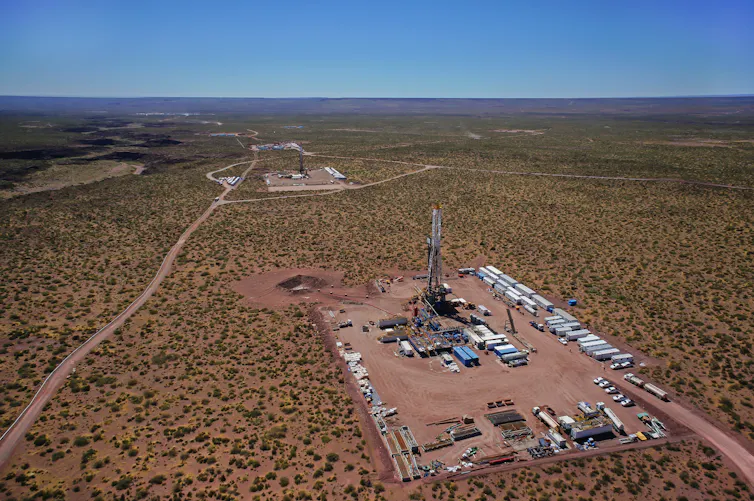
Sobrevolando Patagonia/Shutterstock

Bernard Njindan Iyke, La Trobe University

Even now, decades after we first began trying to avert the worst of global warming, more than 80% of the world’s total energy comes from fossil fuels.

You might think this would make fossil fuel production extremely profitable. But it’s not always the case. Much of the most accessible oil has already been extracted and burned. Many countries want to shore up domestic sources of fossil fuels to boost energy security. Energy price fluctuations and competition from new energy sources such as solar, wind and fossil gas have made it harder for some fossil fuel companies to make money, especially in coal.

This is where fossil fuel subsidies come in. Australia gave A$14.5 billion in subsidies to major fossil fuel producers and consumers in 2023–24 alone.

You might have wondered – why would some of the largest companies on Earth need subsidies? Here’s why.

LNG tanker
Australia’s surging liquefied natural gas industry has been boosted by government funding. KDS Photographics/Shutterstock

Private companies, public money

Globally, private companies dominate fossil fuel production, though fossil fuel-rich nations often have state-owned companies, such as Saudi Arabia’s Aramco and Russia’s Rosneft.

Why would governments give fossil fuel companies money? Many reasons. But the most important is that wealthy countries have historically needed huge volumes of fossil fuels for manufacturing, transport and power. Many countries have some sources of fossil fuels inside their borders, but only a few are self-sufficient. This has enabled fossil fuel giants such as Saudi Arabia to become wealthy beyond belief.

Many governments have used subsidies to boost their energy security and encourage local producers to seek out new sources of coal, gas and oil. These subsidies can make all the difference in making fossil fuel companies competitive internationally. For instance, Canada spent billions on subsidies to boost its oil sands and fracking projects.

Subsidies were essential in the United States’ fracking revolution. Novel approaches to extracting fossil gas and oil – boosted by major tax incentives – turned the US from a major importer of oil and gas into a net exporter by 2019.

You can see why the US did this. At a stroke, it went from being dependent on energy provided by foreign nations to being independent.

Once subsidies are in place, they become very hard to remove. Indonesia’s lavish fuel subsidies now account for 2% of the nation’s GDP. When the national government tried to walk these back, there were riots.

And there’s another reason, too. Fossil fuels are still playing an important role in boosting the economy in most nations. Subsidising them has long been seen as a way to maintain economic growth and stability.

Globally, these subsidies are estimated at a staggering $10.5 trillion each year.

This figure has grown sharply in recent years, after Russia’s invasion of Ukraine. As European nations tried to wean themselves off Russia’s gas, energy prices surged worldwide. In response, some countries introduced new subsidies to support businesses and consumers.

The top-line figure of $10.5 trillion includes two types of subsidy – explicit (meaning real dollars change hands) and implicit (for example, governments building roads and railways to encourage crude oil transport).

Explicit subsidies

Explicit fossil fuel subsidies are direct financial incentives from governments to fossil fuel producers and consumers. These incentives come in different forms, such as tax breaks, direct payments, grants and price controls. All of them aim to reduce the financial burden associated with fossil fuel production and use.

In Australia, explicit subsidies include fuel tax credits and exploration tax reductions. Fossil fuel companies can get subsidies to offset the losses they make during the years it takes to find and begin extracting new fossil fuels.

In the US, oil and gas companies benefit from the oil depletion allowance, which permits them to deduct a percentage of their gross income from oil and gas sales as an expense. They can also claim tax deductions for intangible drilling costs, such as the wages of workers and material needed to find new sources of oil and gas.

China, too, uses direct subsidies, discounted land-use fees, and preferential loans as explicit subsidies to boost coal production and consumption. The national government also supports fossil fuel consumption through direct payments to consumers.

coal miners China
China has used subsidies to encourage exploitation of its large coal resources. zhaoliang70/Shutterstock

Implicit subsidies

Implicit subsidies are often described as “imaginary”. That doesn’t mean they don’t exist, just that they’re not a direct transfer to directly paid to fossil fuel producers.

For instance, the cost of burning fossil fuels is borne by the global community and the natural world, in the form of climate change, damage to human health and other harms. Most fossil fuel companies don’t have to pay a cent for the pollution their products cause – so in effect, they are being granted an indirect subsidy.

Implicit incentives also include government investment in facilities such as transport networks, pipelines, oil refineries and port infrastructure, which will accelerate fossil fuel production and delivery. Think of the Middle Arm development in Darwin, funded by both the federal and territory government.

Why are these subsidies still being paid?

As the world grapples with a worsening climate crisis, fossil fuel subsidies are under great scrutiny.

It’s politically difficult to withdraw subsidies once given. This is why governments around the world have instead begun to give subsidies and tax incentives to green energy developers, including the enormous $500 billion Inflation Reduction Act in the US, the European Union’s Green Deal, and China’s massive subsidies of green technologies such as electric vehicles and solar panels.

The goal here is to make renewable energy and electrified transport steadily more affordable and competitive – just as fossil fuel subsidies did for oil, gas and coal.

Bernard Njindan Iyke, Lecturer in Finance, La Trobe University

This article is republished from The Conversation under a Creative Commons license. Read the original article.

Continue ReadingFor decades, governments have subsidised fossil fuels. But why?

Harris Campaign Says ‘Oil Barons Are Salivating’ Over Second Trump Term

Spread the love

Original article by JULIA CONLEY republished from Common Dreams under Creative Commons (CC BY-NC-ND 3.0). 

U.S. Vice President Kamala Harris, the presumptive Democratic presidential candidate, speaks at West Allis Central High School during her first campaign rally in Milwaukee, Wisconsin, on July 23, 2024. (Photo: Kamil Krzaczynski/AFP via Getty Images)

“Trump’s promises to Big Oil would sacrifice good-paying jobs that are driving an American energy and manufacturing boom,” said the campaign.

U.S. Vice President Kamala Harris on Wednesday seized on Republican presidential nominee Donald Trump’s close ties to oil executives, taking aim at the promises Trump has directly made to billionaires who have contributed nearly $26 million to his campaign.

Responding to a report from The Wall Street Journal about the record-breaking donations Trump has received from oil magnates for his 2024 campaign as he’s pledged to help them “make an absolute fortune” by continuing to drill for planet-heating fossil fuels, Harris’ newly launched presidential campaign put it bluntly.

“Oil barons are salivating because climate denier Donald Trump promised to do their bidding while asking them to bankroll his run for the presidency,” said Joseph Costello, a spokesperson for the campaign.

The spokesperson noted that Trump has offered oil billionaires the chance to all but control his energy policy should he win a second term, telling them directly at a dinner in May that he would dismantle the oil and gas regulations introduced by Harris and President Joe Biden if the industry raised $1 billion for his campaign.

The Democratic vice president launched her campaign this week after Biden, who had faced pressure to step aside due to his age and health, endorsed her.

“These Big Oil donations solicited by Trump are being investigated as a ‘blatant quid pro quo’ by Senate investigators,” noted Harris in an email to supporters.

In addition, said Costello, “Trump’s promises to Big Oil would sacrifice good-paying jobs that are driving an American energy and manufacturing boom, and instead give billion-dollar handouts to corporations at the expense of working families and a healthy future for our children.”

“These Big Oil donations solicited by Trump are being investigated as a ‘blatant quid pro quo’ by Senate investigators.”

As the U.S. Energy and Employment Report found in 2022, under the Biden administration, renewable energy jobs have grown faster than the overall U.S. economy, paying higher than average wages, and have made up for rising unemployment in the fossil fuel industry.

“Under the Biden-Harris administration, America is more energy independent than ever,” said Costello. “Vice President Harris cast the tie-breaking vote on the Inflation Reduction Act, creating hundreds of thousands of good paying energy jobs and making the biggest climate investment in world history. But Trump promises to dismantle all this progress and sell out America’s future for his own personal gain.”

The vice president condemned the “ready-made executive order” oil lobbyists have already begun drafting for Trump in order to secure “tax handouts, increase costs on Americans, and pollute our environment,” a day after four national climate groups announced their endorsement of Harris.

The League of Conservation Voters Action Fund, the Natural Resources Defense Council (NRDC) Action Fund, the Sierra Club, and Clean Energy for America Action expressed confidence that if she wins the presidency in November, Harris will “raise climate ambition to make sure we confront the climate crisis in a way that makes the country more inclusive, more economically competitive, and more energy secure.”

The Wall Street Journal‘s reporting confirms that “the oil barons have their candidate” in Trump, said Matt Compton, chief of staff for Climate Power. “Thank God those of us who care about a clean energy future have Kamala Harris.”

Original article by JULIA CONLEY republished from Common Dreams under Creative Commons (CC BY-NC-ND 3.0). 

Continue ReadingHarris Campaign Says ‘Oil Barons Are Salivating’ Over Second Trump Term

What Project 2025 would mean for the fight against climate change

Spread the love
Canadian wildfire 2023

https://thehill.com/policy/energy-environment/4769252-project-2025-climate-change-energy-environment

Project 2025, a controversial conservative roadmap that aims to guide the next Republican administration, calls for the elimination of multiple energy- and environment-related offices and rules — moves that would restrict the government’s ability to combat climate change and pollution.

Policies promoted under the plan would place political personnel in positions to oversee science at major federal agencies and reduce such agencies’ limitations on polluting industries.

The project additionally proposes chopping up several agencies. It called for the National Oceanic and Atmospheric Administration (NOAA), the nation’s oceans, weather, climate and fisheries science agency, to be “dismantled.”

Project 2025 has sparked concerns among environmental advocates. Climate activist Jamie Henn said what alarms him about the project is not necessarily that it’s more extreme than Trump’s proposals, but that it’s more specific. 

“Trump would frack the National Mall if he thought it would make a couple of bucks for donors and Big Oil,” said Henn, director of Fossil Free Media, a nonprofit that supports ending fossil fuel use.

But he said “Trump tends to speak in slogans,” while “this is a plan that really gets into the details.”

“We’re not only going agency by agency, we’re going into every single agency program,” Henn said. “They’re coming in with sledgehammers and scalpels to try and dismantle any barriers to the fossil fuel industries.”

https://thehill.com/policy/energy-environment/4769252-project-2025-climate-change-energy-environment

Continue ReadingWhat Project 2025 would mean for the fight against climate change