The Chancellor and her expenses before she became an MP

Spread the love

https://www.bbc.com/news/articles/ckg75jr5284o

Rachel Reeves has had a difficult start to her ministerial career.

As well as Labour’s new chancellor taking on the challenges of the UK economy, she has faced tricky questions about her past.

They began with scrutiny of her online CV late last year.

On the professional networking site LinkedIn, the Chancellor of the Exchequer claimed to have worked as an economist at Halifax Bank of Scotland (HBOS) immediately before becoming an MP.

One of those who challenged it was a retired former colleague, Kev Gillett.

In a public post on LinkedIn, which he asked followers to share, he wrote: “Back in 2009 Rt Hon Rachel Reeves worked 3 levels below me. Just facts. She was a Complaints Support Manager at LBG/HBOS. Not an Economist. #factcheck.”

In fact it emerged that she had worked in a managerial role within the bank’s complaint handling department and her LinkedIn profile was updated to remove the claim.

Thin grey line

Rachel Reeves’s online CV exaggerated how long she spent working at the Bank of England

Thin grey line

Gillett also made another claim about Reeves’s time at the bank from 2006 to 2009, writing that she: “Nearly got sacked due to an expenses scandal where the 3 senior managers were all signing off each others expenses.”

Reeves’s team vigorously denied the allegations.

https://www.bbc.com/news/articles/ckg75jr5284o

dizzy: I’ve quoted the start of a fairly long article from the BBC by Billy Kenber, Politics investigations correspondent and Phil Kemp, Politics producer. It is the report into their investigation of UK Chancellor Rachel Reeves’ errors in her reported career history and an expenses fraud investigation at her former employer Halifax Bank of Scotland.

Continue ReadingThe Chancellor and her expenses before she became an MP

Unions accuse multimillionaire Chancellor of ‘waging war on working people’

Spread the love
Striking members of the National Education Union (NEU) on Piccadilly march to a rally in Trafalgar Square, central London, in a long-running dispute over pay. Picture date: Wednesday March 15, 2023.

https://morningstaronline.co.uk/article/b/unions-accuse-multimillionaire-chancellor-of-waging-war-on-working-people

THE Tories are “waging war on working people,” unions warned today as Chancellor Jeremy Hunt’s Budget coincided with a massive day of strikes by hundreds of thousands of workers nationwide.

Unions slammed the ex-Tory leadership candidate’s “fiscal event” for failing to tackle pay disputes across the country, with teachers, university lecturers, civil servants, junior doctors, London Tube drivers and BBC journalists all downing tools today.

As Mr Hunt delivered his speech, thousands of workers rallied outside.

They gathered as the Office for Budget Responsibility, which the former health secretary praised for predicting Britain would now avoid a technical recession this year, warned that people still face the biggest fall in living standards on record.

https://morningstaronline.co.uk/article/b/unions-accuse-multimillionaire-chancellor-of-waging-war-on-working-people

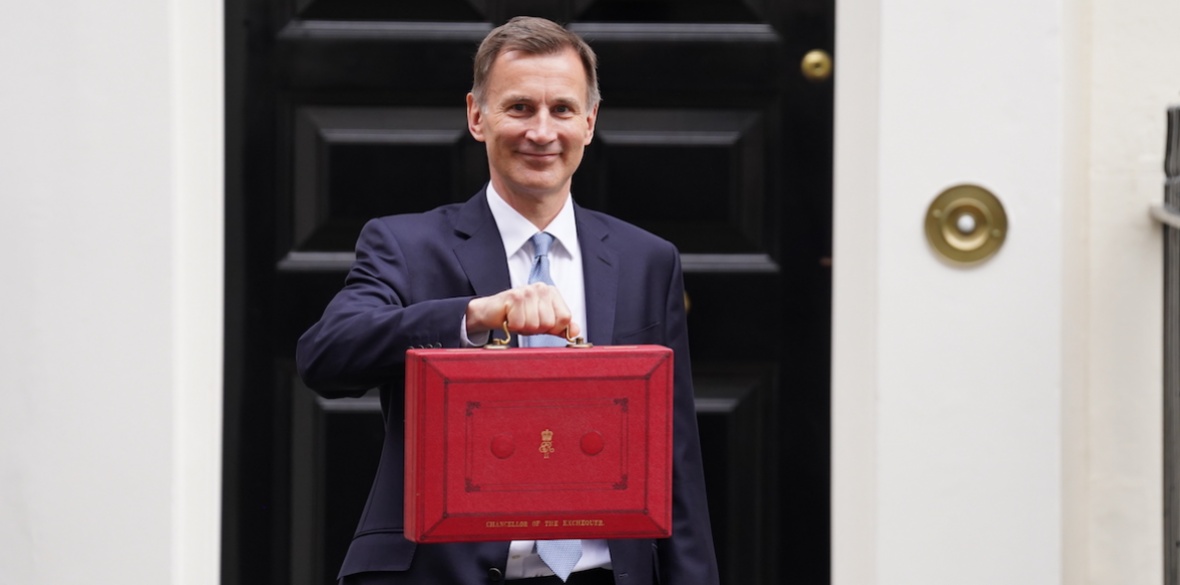
Chancellor of the Exchequer Jeremy Hunt leaves 11 Downing Street, London, with his ministerial box, before delivering his Budget at the Houses of Parliament. Picture date: Wednesday March 15, 2023.

Hunt’s Budget ignored pay and public services – it’s high time the Westminster bubble was burst

BRITAIN’S biggest strike surge in decades was the elephant in the room, almost ignored in the Chancellor’s Budget speech.

The huge strike march winding through Whitehall wasn’t referenced by either front bench. Yet the demands for proper pay rises and investment in public services it championed speak more directly to people’s concerns than any of Jeremy Hunt’s headline announcements.

Hunt referred vaguely to inflation as the cause of industrial disputes — before dishonestly citing it as the reason the government is denying workers the pay rises they need and deserve.

His dishonesty didn’t end there. The government is doing everything it can to resolve the disputes, the Chancellor claimed.

Hunt’s Budget ignored pay and public services – it’s high time the Westminster bubble was burst

Continue ReadingUnions accuse multimillionaire Chancellor of ‘waging war on working people’

Liz Truss pursues bonkers economic theory

Spread the love
Liz Truss has replaced Boris Johnson as prime minister of UK. The first obvious step intended to show the direction the new government intends was a budget presented by new Chancellor Kwasi Kwarteng on Friday. Kwarteng fired the Treasury's permanent secretary in the preperation of this budget.  

There is a cost of living crisis in UK driven by runaway inflation and massive increases in energy bills. Despite this, Truss and Kwarteng's budget benefitted the already stinking rich. The top rate of income tax of 45% for the highest earners was abolished so that the highest rate is now 40%. Clearly that's going to benefit the rich and the very rich most. 

Despite denials, this is trickle-down economics with the idea being that the economy will be stimulated by the highest earners and that benefits will trickle-down to all. There is a simple, logical argument against trickle-down economics. It is that the rich already have money that they can spend to stimulate the economy and they're not doing it, if they're already not spending their wealth, why should they now start? 

There is also an alternative, logical argument that to stimulate the economy it's best to instead help the poor. The argument is that the poor are desperate and that any money they receive to alleviate their wreched situations will be spent and therefore stimulate the economy. 

It appears that Liz Truss and her Chancellor Kwasi Kwarteng are pursuing outdated, discredited and abandoned economic theories which are the exact opposite to what is needed. Markets responded poorly to the budget. 

Continue ReadingLiz Truss pursues bonkers economic theory