Tag: class war

  • ATOS DWP appeal :: How it works

    Spread the love

    This article describes how the Atos Work Capabilities Assessment (WCA) and associated appeal system works and how the system is unfair and biased. A further article will look at how to appeal against a decision and use the appeal that I am doing soon as an example. A final article describes the appeal hearing.

    Firstly, you have to realise that there is nothing fair, balanced or just about Atos assessments and appeals. They are about attacking the most vulnerable and least able to defend themselves people in society – the sick and disabled. They are not about ensuring that only ‘real’ disabled people who deserve it get benefit – they are all about denying benefit to those that deserve those benefits and are very seriously ill.

    Larry, was found fit for work after an Atos assessment. After a long career in work, he had developed a serious lung condition, his weight had dropped from 10 to seven stone and he had trouble walking and breathing. In order to qualify for employment and support allowance (ESA), the new sickness benefit worth £95 a week, he needed 15 points in the test; he was given zero. He was dismayed to note a number of significant inaccuracies in the Atos report, and decided to appeal, but died from lung problems, before the appeal was heard. One of the last things he said to his wife before doctors put him on a ventilator was: “It’s a good job I’m fit for work.”

    Last year the Guardian reported on the case of Ruth Anim, who was told after an Atos assessment that she was capable of finding work in the near future, despite the fact she needed constant one-to-one care, had no concept of danger and attended life skills classes to learn practical things like how to make a sandwich or a cup of tea. She was also described in the Atos report as a “male client”. Atos apologised for “any discrepancy in our report and any distress this may have caused”.

    source

    How it works

    Disability benefits claimants are regularly reviewed and are therefore repeatedly subjected to Atos assessments and subsequent appeals – even in cases where their medical condition is very unlikely to improve. Vast sums of money are wasted on this unnecessary harassment of vulnerable and disabled people. Clearly, people with serious conditions which are not going to improve do not need to be repeatedly assessed every year or so.

    The procedure starts with a questionnaire about medical conditions and activities of ‘daily living’. The claimant has a month to return the completed questionnaire.

    The questionnaire is mostly ignored and an appointment is made for an assessment by Atos within a further month or so.

    Atos conducts the Work Capabilities Assessment. It is mostly a question and answer affair with the Health Care Professional (HCP) inputting answers into a computer. There are a few physical examinations of the stand up, lift your arm above your head, touch your toes type. The HCP is often foreign and hard to understand. Foreign doctors and nurses who are not qualified to practice in UK are acceptable as HCPs.

    The Work Capabilities Assessment consists of categories of activities for which points are awarded. For example there is not being able to stand or sit still for so long because of pain or discomfort. Less than 30 minutes is 9 points, less than 60 minutes is 6 points. Another example is walking within a reasonable time with the assistance of aids or a manual wheelchair. Less than 50 metres is 15 points, less than a hundred metres is 9 points, less than 200 metres is 6 points. 15 points are needed to be awarded – or continue to receive – a disbility benefit.

    How can the Atos HCP decide that you’re able to walk over 200 metres without stopping due to pain or discomfort within a reasonable time? They ask you ridiculous, ‘opaque’ questions and draw ridiculous conclusions. How did you get to the test centre? You drove? Then you can walk over 200 metres without stopping due to pain or discomfort within a reasonable time. What’s your favourite television programme? Eastenders, eh? Watching Eastenders means that you can sit for 30 minutes and can even concentrate! or focus your attention! for 30 minutes. How many people just have the television on in the background?

    The Decision Maker is advised of Atos’s conclusions and usually stops or refuses benefit.

    The claimant has within a month to appeal. Asking for a statement of reasons for the decision extends the time to appeal to a month from receiving the statement of reasons. [28/07/13 1.40pm Looks like this has changed & you have to appeal within a month of the decision. Check for yourself.]

    The claimant must appeal within a month. The claimant can ask for a paper appeal or an appeal in person.

    The appeal is delayed for many months. A month or two before the appeal date the appeal ‘bundle’ of papers will be sent to the appellant. This is the Decision Maker’s legal argument and all relevant papers on which the decision was based.

    The appeal is heard. Appeals are nowadays heard by a tribunal which is part of the Court Service. The tribunal is supposed to be independent and impartial and follow the rules of natural justice (procedural fairness). The Decision Maker’s position is argued by a practising solicitor or lawyer. [30/07/13 10.10pm This appears to have changed now. Often there is no Presenting Officer present. The Presenting Officer nowadays seems to be a different Decision Maker to the one that made the decision.] The claimant has the opportunity to argue against the Decision Maker’s case.

    I haven’t been to an appeal for over a decade and the system has changed since. The Appeal Tribunal may tell you their decision on the day or make you wait. I have been to one appeal with such good legal argument that it was unchallenged. You need to argue law and on the basis of previous decisions.

    If you win at appeal you look forward to doing it all again soon.

    How it’s unfair

    I’ve got a few ideas about how it’s unfair and biased against the claimant. No doubt I am also missing many.

    It’s unfair because it’s intended to be unfair. The Decision Maker and the Atos Health Care Professional are not about being fair. Their whole purpose is to refuse benefits. They might pretend to be fair but they’re not.

    Everybody involved except the claimant is trained, professional and experienced. There is nobody to assist or represent the claimant while he or she may be very ill and unable to prepare his or her own case.

    The case is decided on the basis of law while this is not even made clear to the claimant. While claimants are advised to seek assistance from Citizens Advice Bureaus, Law Centres or Welfare Rights Advisors there is actually no help available. A claimant will be very lucky to even have the near useless help of a law student.

    The Decision Maker can prefer Atos’s Health Care Professional’s opinion over that of the claimant’s GP. How on earth can that be fair?

    [28/07/13 3am

    The strange conclusions drawn from ‘opaque’ questions seem very unfair.

    [28/07/13 12.30pm

    There is a problem with the ‘opaque’ questions since they are taken to mean something other than what they actually mean i.e. they are interpreted in a certain way like a topic-specific discourse, a subset of language, a mini-language if you like (I’ll probably return to improve this when I have the correct term or phrase). Tribunal participants other than the claimant will be familiar with these alternate meaning while e.g. “can sow and knit” may be taken by the claimant only to mean that he or she can sow and knit.]

    In the appeal I’m looking at both the Decision Maker and Atos’s HCP have avoided assessment of one descriptor completely. This is because my client didn’t complete the questionnaire very well. It is quite clear that this descriptor applies but it’s raised as an answer to a different question. It’s also blatantly clear in the request for appeal.]

    If you have an appeal

    Essential resources are the Welfare Benefit Handbook, the Decision Makers Guide and previous decisions. Use the web.

    May be revised


    I can do that. Gizza. Gizza.
  • I don’t want to do this any more

    Spread the love

    First revision 13 july 2013

    I don’t want to do this any more. I would much prefer to be sailing. I’d like to buy a small boat but then I’d need to be working and earning. I’d like a regular boyfriend. I’d like to drink less and make fewer rather embarrassing remarks.

    I don’t want to do this any more. I want to be working and earning so that I can buy a small boat and go sailing. The trouble is that I can’t be working and earning because these bastards get in the way all the time.

    I could be working and earning or just working on earning to start with if it wasn’t for these bastards. I’ve got some skill and knowledge with puters – it’s just problem-solving, analysis, understanding systems. I think that I’ve demonstrated that I’m able and bright enough to do that. I am. I have the ability to be a sys admin, network admin, programmer, etc. These bastards will never let me do that.

    I know a good crowd who run a social enterprise. Basically it means that they make very little money but at least they are doing some good and improving themselves. I could hang round with them and do some work if it wasn’t for those bastards. Those bastards that interfere all the time spying and prying and breaking networks and things. I’ve tried, I can’t work at the social enterprise that I know.

    Looks like I can’t have a boat because of the bastards. [24/07/13 edit: Then earn money doing some different work.]

    I don’t want to do this any more. It started years ago around 98 or 99. I was one of the early bloggers. Reality cracking, rejecting the bullshit that they feed us every day, they take us for fools. That’s asking for it.

    Ian Blair is quite a pathetic figure really. He’s achieved very little apart from covering up for murder and a big pension. Corrupt and promoted far above his intellect and abilities for political reasons. New Labour to the last he even blamed Boris when he cut the deal with Jacquie. He’s just a useless bastard really, a parasitic tic with the sadim touch.

    It is worth looking at Ian Blair’s tenure as boss of the Metropolitan police. You’ll see that he did a lot of politicking and very little policing. There’s a lot of very thinly disguised bullshit going on, a definite agenda other than policing being followed. He was Tony Blair’s butler. I’ve lately been having this image of the two Blairs being cheeks of the same arse sharing a mouth. Ugh.

    I don’t really want to do this any more because – contrary to some speculation in the past – I have achieved what I set out to achieve. I have cracked reality. I have reached an understanding of what it’s all about. It’s about a lot of things and about the interactions of a lot of things. I’m not likely to be able to explain even if you were accepting and attentive which is unlikely but perhaps I should try explaining some main points.

    The concept of parallax. [Thanks Parallax:)

    Things look different according to where you’re looking from.

    So, being a suspected terrorist of the self-exploding type I can reason that there are no real terrorists. Since I know for a fact that I am not a terrorist but instead labelled as a terrorist I can reasonably conclude that there are many more similar to me. I am in fact aware that there are many others similar to me. For example, in UK whole political groups of non-terrorists have been labelled terrorists.

    What’s going on here then? Are there terrorists or not?

    There are certainly terrorists.

    There is the odd one or two obviously insane terrorists like the failed shoe bomber. This is interesting because labelling people as terrorists as the authorities do is likely to lead to self-fulfilling prophesies in some cases. It is also likely that that is the intention since there is a definite dearth of terrorist terrorists.

    Then there are people who hack people to death on crowded streets in daylight. They’re not terrorists. They’re racially-motivated murderers. Incidentally, it’s interesting to see how the press and media were manipulated in such cases.

    Then there are the real terrorists. The SAS got caught with bombs in Basra. Terrorists. We know that they’re terrorists because they had bombs, were disguised, didn’t have a reasonable explanation and were broken out of jail by the UK army.

    Then there is the modus operandi of the terrorists. They arrange a security drill to make sure they’re all in place to control the act and the press and media. Then they blame Islam and Muslims, even sometimes making false claims on websites. Sometimes they even sneakily change laws just to make sure they will never be held to account for their terrorism. The timing is also often very convenient or accords to some higher (Non-Muslim) reason.

    Then there are terrorist acts which are known as military operations like killing hundreds of thousands on innocent Iraqis or war crimes using banned chemical weapons like white phosphorous. Oh FM don’t mention that, that was the Israelis. Somehow these incidents are not recognised as terrorism.

    I’ve got it. Terrorists are the people that the Fascist scum criminals in power are opposed to. So political activists and opponents to scum politicians are terrorists except of course that they’re not: they’re political activists and opponents of scum politicians. You get people like Julian Assange and Edward Snowden labelled as terrorists except of course that they’re not. They’re not even traitors – they’re serving their people and opposing scum politicians / real terrorists.

    So why does Islam and Muslims get blamed so much?

    Islam and Muslims are a hindrance to Capitalism. Capitalism needs to make more profit and expand into Muslim countries. How can Capitalism do that if these people look after each other and indulge in charitable giving and the like? Capitalism needs to burn that oil.

    Is that about it?

    That’s about it except about scum politicians. Tony Blair and his bunch of shits weren’t socialists. Nick Clegg and his bunch of shits are not liberals. They’re all Neo-Liberal Neo-Conservatives who have hijacked their respective parties. The UK ‘Liberal Democrats’ are doing some awfully illiberal things because Clegg and his crew are huge Tory bastards pretending to be liberals.

    I feel a bit better now. I suppose that I have to do it. Nobody else will.


    13/07/13 7.50am typos corrected

    19/07/13 11am added links


  • UK politics news review

    Spread the love


    Since the last UK politics news review the Labour party conference has ended and the Conservative scum conference has started. Towards the end of the Labour party conference there was the unveiling of familiar NHS imagery and the start of a criticism of the Conservative-Liberal-Democrat Con-Dem policy of austerity.

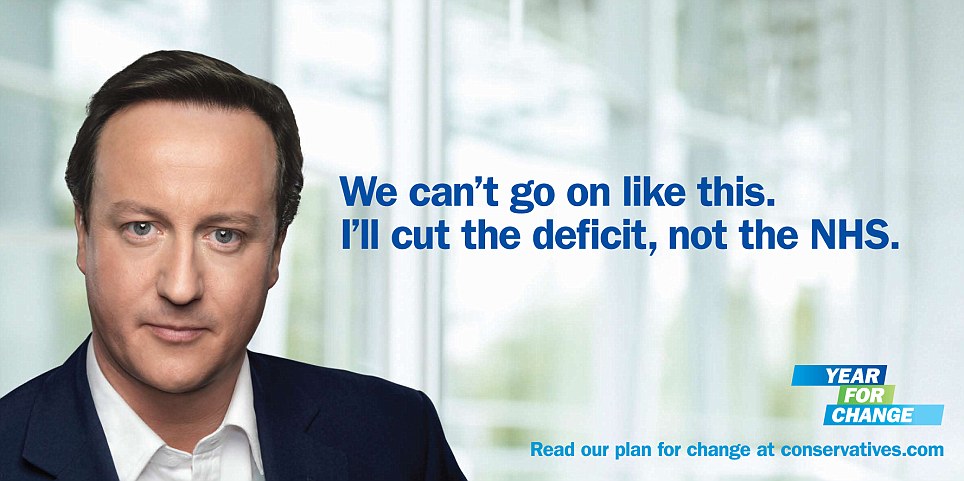
    The Conservative scum party came to power illegitimately, having campaigned on many promises of protecting the NHS – “no top-down privatisation”, “I’ll cut the defecit, not the NHS”, etc – and then joining with their Liberal-Democrat-Conservatives to form the coalition government. While there was no clear winner from the 2010 general election, the ConDems have proceeded to pursue policies contrary to their election pledges for which they cannot possibly have any electoral mandate.

    The Conservatives are known as the nasty party and follow Blair’s policies and philosophy. It has been noted by several commentators that their conference is a showpiece affair. Slasher Bully-boy Osborne’s speech was certainly of the reciprocal applause every sentence affair. Bully-boy and British prime minister David Cameron is expected to make his “I’m a pretty straight kinda guy” speech today – I feel that it could never be as deceitful as Blair’s on a very fundamental level.


  • UK political news review

    Spread the love
    • UK Liberal-Democrat Conservative Deputy Prime Minister Nick Clegg suggests taxing the super-rich. The suggestion has unsurprisingly raised opposition from the Conservatives who are not afraid to call themselves Conservatives. This suggestion and Clegg’s opposition to a third runway at Heathrow should be considered in the context of Clegg’s recent and belated realization that he and the Liberal-Democrat Conservative party are hugely unpopular. A strange (and fawning) article that – suggesting that Clegg is after Bliar’s middle-class following. He’s even doing the right thing and employing driving analogies (although I have it on bad authority that he – similarly – can’t drive).
    • UK Liberal-Democrat Conservative Deputy Prime Minister Nick Clegg and UK Conservative Prime Minister David Cameron  oppose a third runway at Heathrow consistent with their election manifesto pledges. Some Tory is pushing for a third runway and suggesting that Cameron should demonstrate if he is “a man or a mouse”. (eh?) Those of us that pay attention to UK politics no doubt suspect the influence of lobbying and money trousering.
    • It is claimed that Larry, the number 10 mouser has caught a mouse. The mouse was not UK Prime Minister David Cameron. Watch out for rats in number 10 Larry.
  • NHS news review : ConDem scum withdraw claim that they are privatising the NHS

    Spread the love

    Conservative election poster 2010

    The UK’s Conservative and Liberal-Democrat(Conservative) coalition government – the ConDems’ – brutal attack on the National Health Service continues.

    Update: Lansley does not withdraw the 49% cap on private patients. What’s going on? Did they do a Uee? 


    • So far the New Statesman and the Financial Times have noticed that Lansley is to announce today the abolition of the cap on private work that hospitals can do. Hospitals can now exclusively treat private, paying patients.

    Lansley opens the door to full-scale NHS privatisation


    Update 2: Just to clarify, this piece was based on a Financial Times story, which the Department of Health has told us is incorrect. The FT has silently changed the headline, standfirst and content of its story. However, we have decided to leave this piece online, with the relevant correction.

    Update: The Department of Health has been in touch to say that the cap is not being removed, rather that the planned 49% limit will be introduced from 1 October 2012.

    The 49% cap on private work done by NHS trusts will be abolished.

    When the government unveils a policy change on a Friday it’s a sure sign that it doesn’t want you to notice. Today, Andrew Lansley will announce that the 49% cap on private work done by NHS hospitals, which his bill introduced, will be abolished (so far, only the FT has noticed). In other words, the Health Secretary has just opened the door to the full-scale privatisation of the NHS, with hospitals able to raise 100% of their income from private healthcare.

    Sue Slipman, the chief executive of the NHS Foundation Trust Network, describes the removal of the cap as “a really creative way of bringing more money into the health service”. What she doesn’t say is that foundation trusts, in pursuit of profit, will likely prioritise the treatment and care of private patients over NHS ones. Since the most profitable procedures are usually the simplest, those requiring more complex treatment will be pushed to the back of the queue. As Howard Catton, head policy at the Royal College of Nursing, has previously warned: “NHS patients may feel a subtle pressure to reach for the credit card.” Since all of the remaining 113 NHS trusts are required to become self-governing foundation trusts by April 2014, the removal of the cap will apply to all NHS services – hospitals, ambulances, mental health, community services and clinics.

    http://www.google.com/search?q=nhs+%22not+privatisation%22+lansley

    http://www.google.com/search?q=nhs+%22not+privatisation%22+cameron

    http://www.google.com/search?q=nhs+%22not+privatisation%22+clegg


    How the Orange Bookers took over the Lib Dems


    What Britain now has is a blue-orange coalition, with the little-known Orange Book forming the core of current Lib Dem political thinking. To understand how this disreputable arrangement has come about, we need to examine the philosophy laid out in The Orange Book: Reclaiming Liberalism, edited by David Laws (now the Chief Secretary to the Treasury) and Paul Marshall. Particularly interesting are the contributions of the Lib Dems’ present leadership.

    Published in 2004, the Orange Book marked the start of the slow decline of progressive values in the Lib Dems and the gradual abandonment of social market values. It also provided the ideological standpoint around which the party’s right wing was able to coalesce and begin their march to power in the Lib Dems. What is remarkable is the failure of former SDP and Labour elements to sound warning bells about the direction the party was taking. Former Labour ministers such as Shirley Williams and Tom McNally should be ashamed of their inaction.

    Clegg and his Lib Dem supporters have much in common with David Cameron and his allies in their philosophical approach and with their social liberal solutions to society’s perceived ills. The Orange Book is predicated on an abiding belief in the free market’s ability to address issues such as public healthcare, pensions, environment, globalisation, social and agricultural policy, local government and prisons.

    The Lib Dem leadership seems to sit very easily in the Tory-led coalition. This is an arranged marriage between partners of a similar background and belief. Even the Tory-Whig coalition of early 1780s, although its members were from the same class, at least had fundamental political differences. Now we see a Government made up of a single elite that has previously manifested itself as two separate political parties and which is divided more by subtle shades of opinion than any profound ideological difference.

    Nick Clegg’s demand for the NHS to be broken up (2005)