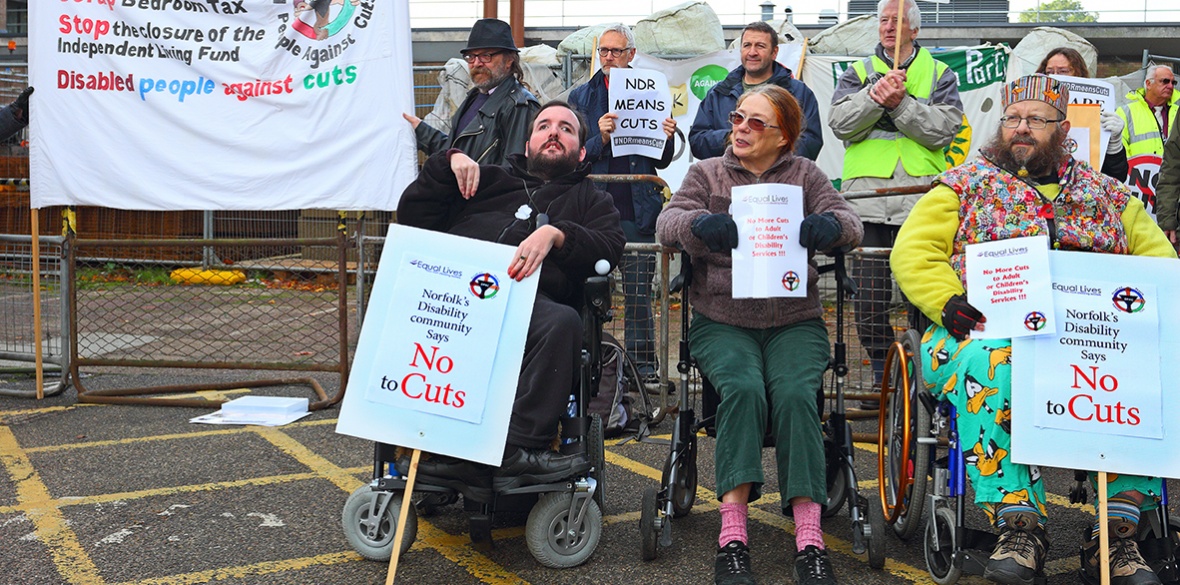
TORY 2015/LABOUR 2025 SPOT THE DIFFERENCE: (Above) Workers and disabled people protesting outside Norfolk County Hall against Norfolk County Council cuts to services on October 2015Photo: Roger Blackwell/flickr/CC
DR DYLAN MURPHY asks why Labour is continuing the Tory war on the disabled, when viable alternatives have been spelt out in detail
IN LATE February of 2025 the UN Committee on Economic, Social and Cultural Rights issued a damning report into the failures of Labour to address income inequality and the deepening levels of poverty in the UK.
The UN committee criticised Labour for failing to address “income inequality or reducing poverty,” which hamper “the progressive realisation of economic, social and cultural rights.’’
Ironically enough, the UN called on Labour to increase spending on housing, health, education and social security in order to reverse the huge damage caused by blue Tory austerity from 2010 to 2024. Since this call the red Tories in power have announced their intention to make massive cuts to public spending across all government departments except defence and maybe health.
On the issue of social security, over which Labour is determined to make killer cuts, the UN expressed serious concern about the impact of blue Tory austerity which had “resulted in severe economic hardship, increased reliance on food banks, homelessness, negative impacts on mental health and the stigmatisation of benefit claimants.”
Of course, food bank usage under Labour continues to grow as does the stigmatisation of benefit claimants which Starmer and company have engaged in with relish over the last few months.
Starmer, Reeves and Kendall seem to take a sadistic glee in attacking the disabled through the platforms of the Tory media using ultra right-wing rags such as The Telegraph and Sun to stigmatise the sick and disabled.
The biggest irony in this recent UN report is its call for Labour to actually increase the value of disability benefits such as PIP so that the UK can meet “the recommendations made by the special rapporteur on extreme poverty and human rights.”
Keir Starmer says pensioners can freeze to death and poor children can starve and be condemned to failure and misery all their lives.Keir Starmer explains the moral case for cutting disability benefits. He says work will set you free.
In the immediate wake of the Syrian government’s abrupt collapse, much remains uncertain about the country’s future – including whether it can survive as a unitary state or will splinter into smaller states as did Yugoslavia in the early 1990s, a move that ultimately led to a bloody NATO intervention. Moreover, who or what may take power in Damascus remains an open question. For the time being at least, members of ultra-extremist Hayat Tahrir al-Sham (HTS) appear highly likely to take key positions in whatever administrative structure sprouts from Bashar Assad’s ouster after a decade-and-a-half of grinding Western-sponsored regime change efforts.
As Reuters reported on December 12, HTS is already “stamping its authority on Syria’s state with the same lightning speed that it seized the country, deploying police, installing an interim government and meeting foreign envoys.” Meanwhile, its bureaucrats – “who until last week were running an Islamist administration in a remote corner of Syria’s northwest” – have moved en masse “into government headquarters in Damascus.” Mohammed Bashir, head of HTS’ “regional government” in extremist-occupied Idlib, has been appointed the country’s “caretaker prime minister.”
However, despite the chaos and precariousness of post-Assad Syria, one thing seems assured – the country will be broken open to Western economic exploitation, at long last.
Multiple reports show that HTS has informed local and international business leaders that when in office, it will “adopt a free-market model and integrate the country into the global economy, in a major shift from decades of corrupt state control.”
As Alexander McKay of the Marx Engels Lenin Institute tells MintPress News, state-controlled parts of Syria’s economy may have been under Assad, but corrupt it wasn’t. He believes a striking feature of the ongoing attacks on Syrian infrastructure from forces within and without the country is that economic and industrial sites are a recurrent target. Moreover, the would-be HTS-dominated government has done nothing to counter these broadsides when “securing key economic assets will be vital to societal reconstruction, and therefore a matter of priority”:
We can see clearly what kind of country these ‘moderate rebels’ plan to build. Forces like HTS are allied with U.S. imperialism, and their economic approach will reflect this. Prior to the proxy war, the government pursued an economic approach that mixed public ownership and market elements. State intervention enabled a degree of political independence [that] other nations in the region lack. Assad’s administration understood without an industrial base, being sovereign is impossible. The new ‘free market’ approach will see all of that utterly decimated.”
‘Reconstruction Project’
Syria’s economic independence and strength under Assad’s rule and the benefits reaped by average citizens, as a result, were never acknowledged in the mainstream before or during the decade-long proxy war. Yet, countless reports from major international institutions underline this reality – which has now been brutally vanquished, never to return. For example, an April 2015 World Health Organization document noted how Damascus “had one of the best-developed healthcare systems in the Arab world.”
Per a 2018 U.N. investigation, “universal, free healthcare” was extended to all Syrian citizens, who “enjoyed some of the highest levels of care in the region.” Education was likewise free, and before the conflict, “an estimated 97% of primary school-aged Syrian children were attending class, and Syria’s literacy rates were thought to be at over 90% for both men and women [emphasis added].” By 2016, millions were out of school.
A U.N. Human Rights Council report two years later noted pre-war Syria “was the only country in the Middle East region to be self-sufficient in food production,” its “thriving agricultural sector” contributing “about 21%” to GDP 2006 – 2011. Civilians’ daily caloric intake “was on par with many Western countries,” with prices kept affordable via state subsidy. Meanwhile, the country’s economy was “one of the best performing in the region, with a growth rate averaging 4.6%” annually.
At the time that report was written, Damascus had been reduced to heavy reliance on imports by Western sanctions in many sectors and, even then, was barely able to buy or sell much in the way of anything, as the measures amounted to an effective embargo. Simultaneously, the U.S. military occupation of a resource-rich third of Syria cut off the government’s access to its own oil reserves and wheat. The situation would only worsen with the Caesar Syria Civilian Protection Act’s passing in June 2020.
Under its auspices, a vast volume of goods and services in every conceivable field were and today remain banned from being sold to or traded with any Syrian citizen or entity. The legislation’s terms explicitly state preventing attempts to rebuild Syria was its chief objective. One passage openly outlines “a strategy to deter foreign persons from entering into contracts related to reconstruction.”
Immediately after coming into effect, the Syrian pound’s value collapsed further, sending living costs skyrocketing. In a blink, almost the entire country’s population was left barely able to afford even the bare essentials. Even mainstream sources typically approving of belligerence towards Damascus cautioned of an inevitably impending humanitarian crisis. However, Washington was neither concerned nor deterred by such warnings. James Jeffrey, State Department chief of Syria policy, actively cheered these developments.
Simultaneously, as Jeffrey subsequently admitted to PBS, the U.S. was engaged in frequent, secret communication with HTS and actively assisting the group – albeit “indirectly” due to the faction’s designation as a terrorist entity by the State Department. This followed direct approaches to Washington by its leaders, including Abu Mohammed Jolani, former leader of Al Qaeda affiliate al-Nusra. “We want to be your friend. We’re not terrorists. We’re just fighting Assad,” HTS reportedly said.
Given this contact, it may be no coincidence that in July 2022, Jolani issued a series of communications about HTS’ plans for future Syria, containing multiple passages in which finance and industry loomed large. Directly foreshadowing the group’s recent pledge to “adopt a free-market model,” the extremist mass murderer discussed his desire to “open up local markets to the global economy.” Many passages read as if they were authored by representatives of the International Monetary Fund.
Coincidentally, Syria, since 1984, has refused IMF loans, a key tool by which the U.S. Empire maintains the global capitalist system and dominates the Global South, ensuring ‘poor’ countries remain under its heel. The World Trade Organization, of which Damascus isn’t a member either, plays a similar role. Accession to both would go some way to cementing the “free-market model” advocated by HTS. After over a decade of deliberate, systematic economic ruin, geopolitical risk analyst Firas Modad tells MintPress News:
They have no choice. They need Turkish and Qatari backing, so [they] will need to liberalize. They have no capital whatsoever. The country is in ruins and they desperately need investment. Plus, they hope liberalizing may attract some Saudi, Emirati or Egyptian interest. It’s impossible for Syria to rebuild using its own resources. The civil war might resume. They are acting out of necessity.”
‘Shock Therapy’
In Syria’s protracted political and economic dismantling, there are eerie echoes of the U.S. Empire’s destruction of Yugoslavia throughout the 1990s. During that decade, the multiethnic socialist federation’s breakup produced bitter wars of independence in Bosnia, Croatia and Slovenia – encouraged, financed, armed, and prolonged every step by Western powers. Belgrade’s perceived centrality to these brutal conflicts and purported complicity in and sponsorship of horrendous war crimes led the U.N. Security Council to impose sanctions against what remained of the country in May 1992.
The measures were the harshest ever levied in U.N. history. At one point, producing inflation of 5.578 quintillion percent, drug abuse, alcoholism, preventable deaths and suicides skyrocketed, while shortages of goods – including water – were perpetual. Yugoslavia’s once thriving independent industry was crippled, its ability to manufacture even everyday medicines virtually non-existent. By February 1993, the CIA assessed that the average citizen had “become accustomed to periodical shortages, long lines in stores, cold homes in the winter and restrictions on electricity.”
Surveying the wreckage years later, Foreign Affairs noted that sanctions against Yugoslavia demonstrated how “in a matter of months or years whole economies can be devastated,” and such measures can serve as uniquely lethal “weapons of mass destruction” against civilian populations of target countries. Yet, despite such desolation and misery, throughout this period, Belgrade remained resistant to privatization and foreign ownership of its industry or to the pillaging of its vast resources. The overwhelming majority of Yugoslavia’s economy was state- or worker-owned.
Yugoslavia was not a member of the IMF, World Bank, or WTO, which went some way to insulate the country from economic predation. In 1998, though, authorities began waging a heavy-handed counterinsurgency against the Kosovo Liberation Army, a CIA and MI6-funded and armed al-Qaeda-linked extremist militia. This provided the U.S. Empire with a pretext to, at last, finish the job of neutralizing what remained of the country’s socialist system. As a Clinton administration official later admitted:
It was Yugoslavia’s resistance to the broader trends of political and economic reform [in Eastern Europe] – not the plight of Kosovar Albanians – that best explains NATO’s war.”
From March – June 1999, the military alliance bombed Yugoslavia for 78 straight days. Yet, Belgrade’s army was barely in the firing line at any stage. In all, officially, just 14 Yugoslav tanks were destroyed by NATO, but 372 separate industrial facilities got smashed to smithereens, leaving hundreds of thousands jobless. Markedly, the alliance took guidance from U.S. corporations on which sites to target, and not a single foreign- or privately-owned factory was hit.
NATO’s bombing laid the foundations for Yugoslav leader Slobodan Milosevic’s removal via a C.I.A.- and National Endowment for Democracy-sponsored color revolution in October of the following year. In his place, a doggedly pro-Western government advised by a collective of U.S.-sponsored economists took power. Their explicit mission was to “make an economic environment favorable for private and other investments” in Belgrade. Ravaging “shock therapy” measures were deployed the moment they assumed office, to the further detriment of an already immiserated and impoverished population.
In the decades since successive Western-backed governments across the former Yugoslavia have enforced an endless array of neoliberal “reforms” to ensure an “investor-friendly” environment locally for wealthy Western oligarchs and corporations. In lockstep, low wages and a lack of employment opportunities stubbornly endure or worsen while living costs rise, producing mass depopulation, among other destructive effects. All along, U.S. officials intimately implicated in the country’s breakup have brazenly sought to enrich themselves from the privatization of former state industries.
‘Internal Repression’
Does such a fate await Damascus? For Pawel Wargan, founder of the Green New Deal for Europe, the answer is a resounding “yes.” He believes the country’s story is familiar “to those who study the mechanisms of imperialist expansion.” Once its defenses are fully neutralized, he foresees the country’s industries being “bought-up at bargain sale prices as part of market ‘reforms,’ which transfer yet another chunk of humanity’s wealth to Western corporations”:
We’ve witnessed the well-rehearsed choreography of imperialist regime change: a ‘tyrant’ is overthrown; backers of national sovereignty are systematically and viciously repressed; with tremendous, but hidden, violence, the country’s assets are chopped and diced and sold to the lowest bidder; labor protections are discarded; human lives are cut short. The most predatory forms of capitalism take root in every crevice and pore that emerges in the collapse of the state. This is the agenda of structural adjustment policies enforced by the World Bank and IMF.”
Alexander McKay echoes Wargan’s analysis. Now “free,” Syria will be forcedly made “dependent upon imports from the West” evermore. This not only fattens the Empire’s bottom line but “also severely restricts the freedom of any Syrian government to act with any degree of independence.” He notes similar efforts have been undertaken throughout the post-1989 era of U.S. unipolarity. It was well underway in Russia during the 1990s “until the slow turn around in policy started in the early 2000s under Putin”:
The aim is to reduce Syria to the same status as Lebanon, with an economy controlled by imperial forces, an army used primarily for internal repression, and an economy no longer able to produce anything but merely serve as a market for commodities produced elsewhere, and site of resource extraction. The U.S. and its allies do not want independent development of any nation’s economy. We must hope the Syrian people can resist this latest act of neo-colonialism.”
Kit Klarenberg is an investigative journalist and MintPress News contributor exploring the role of intelligence services in shaping politics and perceptions. His work has previously appeared in The Cradle, Declassified UK, and Grayzone. Follow him on Twitter @KitKlarenberg.
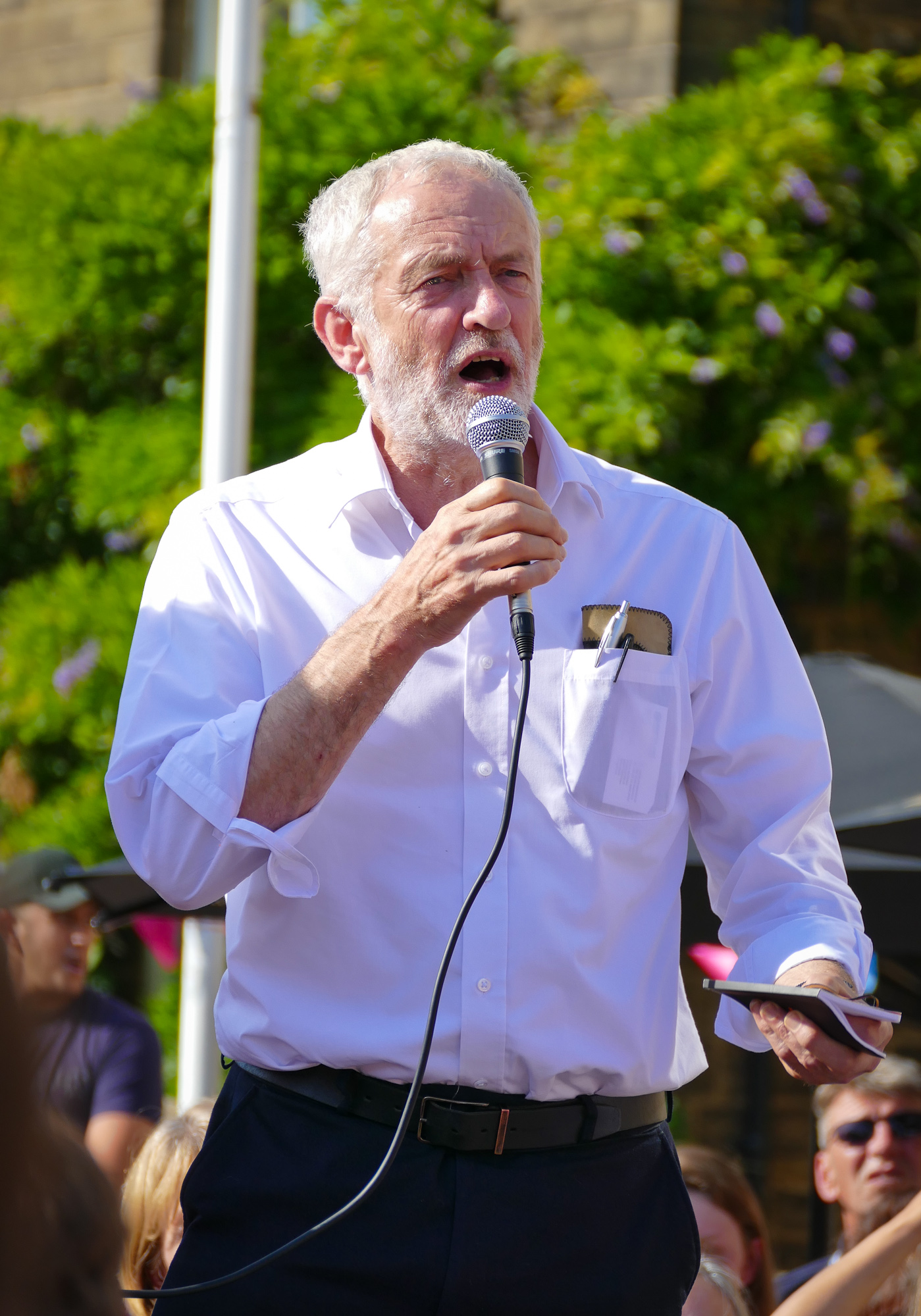
This manifesto is our manifesto – it belongs to every single person who has written to me over the last 41 years, met me at a community event or simply stopped me in the street. Meeting people, talking to people and working together to bring about a fairer society – that is what being an MP is all about.
The issues facing people in Islington are part of a much wider set of crises. There are more people living in desperate poverty than I have ever known. More rough sleepers struggling to survive. More refugees fleeing the horrors of war and climate catastrophe. We will not solve these crises unless we build a new kind of politics. Our people-powered campaign will demand a redistribution of wealth, ownership and power. For rent controls. For an end to the two-child benefits cap. For a Green New Deal. For safe routes for asylum seekers. For a fully funded, fully public NHS.
This future is no pipedream – our community is proof that a kinder world is possible. I visit community centres which are welcoming, creative places, where people can meet each other, learn, eat together, receive support when they need it, and give it when they are able to. I meet carers doing all they can to support relatives or friends, often in the most difficult circumstances. I meet members of mutual aid groups who are building a new economy, one act of solidarity at a time. If we applied these basic principles across the board, we would create a society that cares for each other and cares for all.
When I vote in Parliament, I do not vote alone. I vote with my community – and this campaign is bringing together people of all ages, faiths and backgrounds in pursuit of a better world. We are offering people something very precious: hope.
Join us at www.votecorbyn.com to prove that when we come together to fight for a better society for everyone, we can win.
CONTENTS
ACTION ON THE COST OF LIVING End the energy and water rip-off Fair pay for Islington workers Abolish the two-child benefit cap Universal basic income Wealth tax
HOUSING IS A HUMAN RIGHT Security for renters Build social housing Housing insulation Leasehold reform Cladding justice
DEFEND OUR NHS End privatisation Support our doctors and nurses Mental health A National Care Service Reproductive health
A GREENER ISLINGTON A Green New Deal Protect our parks Save our buses Walking and cycling Animal welfare
EDUCATION FOR ALL Save our schools Education is not a commodity Lifelong learning Update our curriculum
A SAFER ISLINGTON A public health approach Tackling hate crime and extremism A fairer criminal justice system
HUMAN RIGHTS ARE UNIVERSAL Peace Reparations Refugees are welcome here Migrant justice
OUR DEMOCRACY The right to protest The right to strike Decentralisation Local public ownership Media and sport
With the encouragement of the state, universities from coast to coast are taking draconian steps to silence debate about US-backed violence in the Middle East.
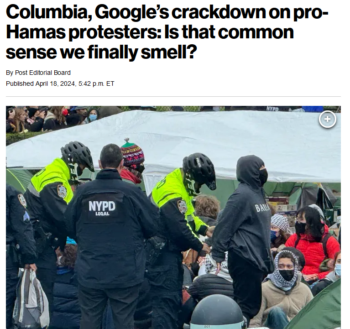
The Columbia University community looked on in shock as cops in riot gear arrested at least 100 pro-Palestine protesters who had set up an encampment in the center of campus (New York Post, 4/18/24). The university’s president, Nemat Shafik, had just the day before testified before a Republican-dominated congressional committee ostensibly concerned with campus “antisemitism”—a label that has come to be misapplied to any criticism of Israel, though the critics so smeared are often themselves Jewish.
The New York Post (4/18/24) was also pleased that Google had fired 28 employees for protesting genocide.
A sense of delight has filled the city’s opinion pages. The New York Post editorial board (4/18/24) hailed both the clampdown on protests and Congress’s push to ensure that such drastic action against free speech was taken: “We’re glad to see Shafik stand up…. Congress deserves some credit for putting educrats’ feet to the fire on this issue.” The paper added, “Academia has been handling anti-Israel demonstrations with kid gloves.” In other words, universities have been allowing too many people to think and speak critically about an important issue of the day.
In “At Columbia, the Grown-Ups in the Room Take a Stand,” New York Times columnist Pamela Paul (4/18/24) hailed the eviction, saying of the encampment that for the “passer-by, the fury and self-righteous sentiment on display was chilling,” and that for supporters of Israel, “it must be unimaginably painful.” In other words, conservative pundits have decided that campus safe spaces where speech is banned to protect the feelings of listeners are good, depending on the issue. Would Paul (no relation!) favor bans on pro-Taiwan or pro-Armenia demonstrations because they could offend Chinese and Turkish students?
And for Michael Oren, a prominent Israeli politico, Columbia students hadn’t suffered enough. He said of Columbia in a Wall Street Journal op-ed (4/19/24):
Missing was an admission of the university’s failure to enforce the measures it had enacted to protect its Jewish community. [Shafik] didn’t address how, under the banner of free speech, Columbia became inhospitable to Jews. She didn’t acknowledge how incendiary demonstrations such as the encampment were the product of the university’s inaction.
Shafik had assured her congressional interrogators that Columbia had already suspended 15 students for speaking out for Palestinian human rights, suspended two student groups—Jewish Voice for Peace and Students for Justice in Palestine (Jewish Telegraphic Agency, 11/10/23)—and had even terminated an instructor (New York Times, 4/17/24).
The hearing was bizarre, to say the least; a Georgia Republican asked the president if she wanted her campus to be “cursed by God” (New York Times, 4/18/24). (“Definitely not,” was her response.)
The former World Bank economist had clearly been shaken after seeing how congressional McCarthyism ousted two other female Ivy League presidents (FAIR.org, 12/12/23; Al Jazeera, 1/2/24).
‘Protected from having to hear’
Twenty-three Jewish faculty members at Columbia published a joint op-ed (Columbia Spectator, 4/10/24) reminding President Shafik that “labeling pro-Palestinian expression as anti-Jewish hate speech requires a dangerous and false conflation of Zionism with Jewishness, of political ideology with identity.”
“What happened at those hearings yesterday should be of grave concern to everybody, regardless of their feelings on Palestine, regardless of their politics,” Barnard College women’s studies professor Rebecca Jordan-Young told Democracy Now! (4/18/24). “What happened yesterday was a demonstration of the growing and intensifying attack on liberal education writ large.”
Her colleague, historian Nara Milanich, said in the same interview:
This is not about antisemitism so much as attacking areas of inquiry and teaching, whether it’s about voting rights or vaccine safety or climate change — right?—arenas of inquiry that are uncomfortable or inconvenient or controversial for certain groups. And so, this is essentially what we’re seeing, antisemitism being weaponized in a broad attack on the university.
Jewish faculty at Columbia spoke out against the callous misuse of antisemitism to silence students, but those in power aren’t listening (Columbia Spectator, 4/10/24).
Shafik justified authorizing the mass arrests, which many said hadn’t been seen on campus since the anti-Vietnam War protests of 1968. “The individuals who established the encampment violated a long list of rules and policies,” she said (BBC, 4/18/24). “Through direct conversations and in writing, the university provided multiple notices of these violations.”
One policy suggested by the university’s “antisemitism task force,” according to a university trustee who also testified (New York Times, 4/18/24): “If you are going to chant, it should only be in a certain place, so that people who don’t want to hear it are protected from having to hear it.”
Cross-country rollback
USC valedictorian Asna Tabassum says the school did not tell her what the security threats were, but said that the precautions that would be necessary to allow her to speak were “not what the university wants to ‘present as an image’” (Reuters, 4/18/24).
Meanwhile, the University of Southern California canceled the planned graduation speech by valedictorian Asna Tabassum—a Muslim woman who had spoken out for Palestine (Reuters, 4/18/24). The university cited unnamed “security risks”; The Hill (4/16/24) noted that “she had links to pro-Palestinian sites on her social media.” Andrew T. Guzman, the provost and senior vice president for academic affairs, said in a statement that cancelation was “consistent with the fundamental legal obligation—including the expectations of federal regulators—that universities act to protect students and keep our campus community safe” (USC Annenberg Media, 4/15/24).
This is happening as academic freedom is being rolled back across the country. Republicans in Indiana recently passed a law to allow a politically appointed board to deny or even revoke university professors’ tenure if the board feels their classes lack “intellectual diversity”—at the same time that it threatens them if they seem “likely” to “subject students to political or ideological views and opinions” deemed unrelated to their courses (Inside Higher Ed, 2/21/24).
Benjamin Balthaser, associate professor of English at Indiana University South Bend, told FAIR in regard to the congressional hearing:
There is no other definition of bigotry or racism that equates criticism of a state, even withering, hostile criticism, with an entire ethnic or religious group, especially a state engaging in ongoing, documented war crimes and crimes against humanity. Added to this absurdity is the fact that many of the accused are not only Jewish, but have strong ties to their Jewish communities. To make such an equation assumes a collective or group homogeneity which is itself a form of essentialism, even racism itself: People are not reducible to the crimes of their state, let alone a state thousands of miles away to which most Jews are not citizens.
Of course, witch hunts against leftists in US society are often motivated by antisemitism. Balthaser again:
The far right has long deployed antisemitism as a weapon of censorship and repression, associating Jewishness with Communism and subversion during the First and Second Red Scares. Not only did earlier forms of McCarthyism overwhelmingly target Jews (Jews were two-thirds of the “defendants” called before HUAC in 1952, despite being less than 2% of the US population), it did so while cynically pretending to protect Jews from Communism. Something very similar is occurring now: Mobilizing a racist trope of Jewish adherence to Israel, far-right politicians are using accusations of antisemitism to both silence criticism of Israel and, in doing so, promote their antisemitic ideas of Jewishness in the world.
Silencing for ‘free speech’
The darker blue states have passed restrictions aimed at Critical Race Theory; in the lighter blue states, proposed restrictions have not been adopted (CRT Forward).
These universities are not simply clamping down on free speech because the administrators dislike this particular speech, or out of fear that pro-Palestine demonstrations or vocal faculty members could scare donors from writing big checks. This is a result of state actors—congressional Republicans, in particular—who are using their committee power and sycophants in the media to demand more firings, more suspensions, more censorship.
I have written for years (FAIR.org, 10/23/20, 11/17/21, 3/25/22), as have many others, that Republican complaints about “cancel culture” on campus suppressing free speech are exaggerated. One of the biggest hypocrisies is that so-called free-speech conservatives claim that campus activists are silencing conservatives, but have little to say about blatant censorship and political firings when it comes to Palestine.
This isn’t a mere moral inconsistency. This is the anti-woke agenda at work: When criticism of the right is deemed to be the major threat to free speech, it’s a short step to enlisting the state to “protect” free speech by silencing the critics—in this case, dissenters against US support for Israeli militarism.
But this isn’t just about Palestine; crackdowns against pro-Palestine protests are part of a broader war against discourse and thought. The right has already paved the way for assaults on educational freedom with bans aimed at Critical Race Theory adopted in 29 states.
If the state can now stifle and punish speech against the murder of civilians in Gaza, what’s next? With another congressional committee investigating so-called infiltration by China’s Communist Party, will Chinese political scholars be targeted next (Reuters, 2/28/24)? With state laws against environmental protests proliferating (Sierra, 9/17/23), will there be a new McCarthyism against climate scientists? (Author Will Potter raised the alarm about a “green scare” more than a decade ago—People’s World, 9/26/11; CounterSpin, 2/1/13.)
Universities and the press are supposed to be places where we can freely discuss the issues of the day, even if that means having to hear opinions that might be hard for some to digest. Without those arenas for free thought, our First Amendment rights mean very little. If anyone who claims to be a free speech absolutist isn’t citing a government-led war against free speech and assembly on campuses as their No. 1 concern in the United States right now, they’re a fraud.
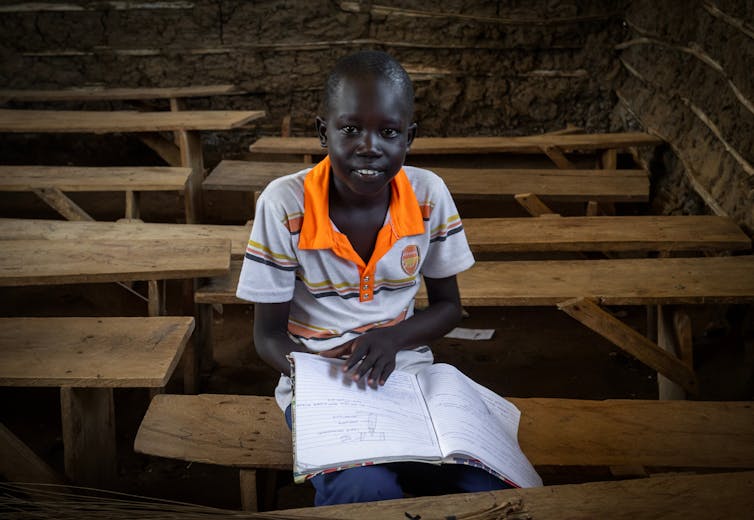
The education of students in countries like Sudan is already being negatively affected by the extremes of climate change. Richard Juilliart/Shutterstock
Schools across South Sudan have been ordered to close as a heat wave of 45°C sweeps across the country. In recent years, severe flooding has already caused major disruptions to schooling in South Sudan where, on average, children complete less than five years of formal education across their lives.
As researchers interested in both climate change and learning, we’ve been surprised that most public debate in this area concerns how best to teach children about climate change as part of the curriculum. Recently, we examined a less discussed, but arguably much more consequential, question: How is climate change impacting children’s education worldwide?
In a recent paper published in Nature Climate Change, we reviewed studies linking climate change-related events or “climate stressors” to education outcomes. One of the clearest connections was between heat exposure and reduced academic performance.
A study in the US found that adolescents’ maths scores decreased significantly on days above 26°C. In China, hotter day-of-test temperatures were associated with a drop in exam performance equal to losing a quarter of a year – or several months – of schooling.
But it’s not just test days that matter. Studies show that raised temperatures also affect learning over longer time periods. For example, pupils’ test scores suffered when there were more hot days across the school year and even when the hotter weather occurred three to four years before exam day.
Our review also highlights how climate-related regional disasters like wildfires, storms, droughts and floods are keeping many children out of school entirely. Floods can prevent children from travelling to school and cause damage to school buildings and materials, which disrupts learning and lowers test scores.
In developing countries, storms and droughts commonly cause children to leave school permanently to join the workforce and support their families. Children in higher-income countries are not immune. They miss school days due to hurricanes and wildfires and these absences have measurable effects on education outcomes.
The impacts of climate disasters can also affect children before they are born with consequences that reverberate across their lives. For example, children whose mothers were pregnant during Hurricane Sandy were more likely to be diagnosed with attention-deficit hyperactivity disorder (ADHD), a condition that can make schooling more challenging.
In India, researchers found that raised temperatures lead to lower test scores due to crop failure and malnutrition, highlighting the importance of indirect links between climate stressors and subsequent school participation and learning.
Educational injustice
Our analysis suggests that climate change will exacerbate existing inequalities in global education access and attainment, with already disadvantaged groups facing the largest learning setbacks. In the US, heat had worse effects on exam scores for racial and ethnic minorities and children living in lower-income school districts.
Following a super typhoon in the Philippines, children whose families had fewer financial resources and smaller social networks were more likely to drop out of school than their better-resourced neighbours. In contexts where girls’ education is less prioritised than boys’, their school attendance and exam scores have suffered more following climate change stressors such as droughts and storms.
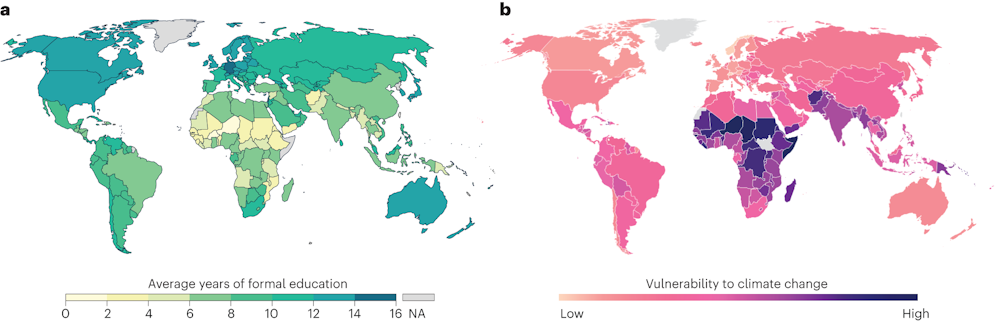
Globally, regions where people are more vulnerable to the effects of climate change – in terms of risk of harmful stressors occurring and resources available to adapt – are also regions where children already receive fewer years of schooling.
These maps show the average years of formal education (left) and vulnerability to climate change by country (right). CC BY
The impacts of climate change on education are already widely visible. While the scale of the problem is daunting, there are many ways to take action. Most critically, global heating urgently needs to be limited by reducing emissions of greenhouse gases.
At the same time, children’s education must be protected from climate change stressors that are already occurring. Possible measures include installing cooling technologies, effective disaster response planning, building stressor-resilient schools and addressing systemic global inequalities related to socioeconomic, gender and racial discrimination.
Preventing harm to children’s education is a worthy goal in itself. But improving education can also contribute to greater awareness and climate literacy, while mitigating climate change and making children more resilient in the face of climate stressors.
Education can help fight climate change. But we must also fight climate change to prevent harm to education. Without action, the future of young people around the world hangs in the balance.