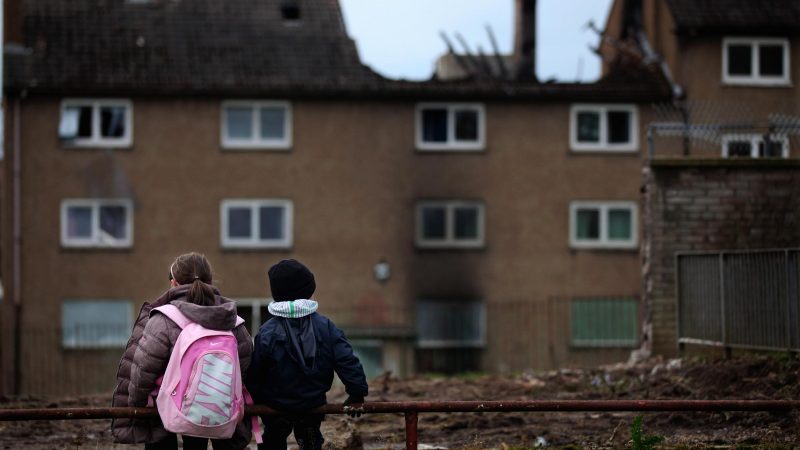
Instead of addressing child poverty, homelessness, poor working conditions or any of the real issues impacting this country, Labour has chosen to deflect the blame and pour billions into arms, says Jeremy Corbyn. Britain is tired of having no political choice – and we’re here to fix that
…
Over the past year, the government has continued a programme of austerity and privatisation. It has refused to lift the two-child benefit cap, the single biggest driver of child poverty. It has tried to take away the winter fuel allowance. It has increased the bus fare cap. And it has tried to take away £5bn from disabled people, curating a two-tiered benefit system that deprives thousands of people of a dignified life.
There is one area where the government has been very generous, though: arms spending. Government military spending is now at £31.7bn, which is a 6 per cent increase in real terms from last year. Imagine how much better ordinary people’s lives would be if we spent that money on schools, hospitals and green energy instead.
…
People have had enough of a political regime that serves the interests of billionaires and corporations. They have had enough of a government that inflicts suffering at home and enables genocide abroad. They have had enough of broken promises from political parties that fail to deliver real change.
Keir Starmer says that the Labour Party under his leadership all feel a small part of Scunthorpe.Keir Starmer explains the moral case for cutting disability benefits. He says work will set you free.Palestine Action joke that appeared in the UK satirical magazine ‘Private Eye’.
A homeless man in a tent in the centre of Liverpool, April 1, 2025
INFLICTING welfare cuts will push more people into homelessness, charities warned today.
Disability groups also accused the government, which aims to cut £5 billion a year from welfare spending by 2030, of “playing with fire by risking the lives of disabled people to meet arbitrary fiscal goals.”
Central to Labour’s welfare cuts is the tightening of eligibility criteria for personal independence payments (PIP) — a key disability benefit for working-age adults both in and out of work.
Those under 22 with long-term illnesses or disabilities will also no longer be able to claim the health top-up to universal credit under the plans.
Westminster’s own analysis shows the cuts risk pushing 250,000 people into poverty, including 50,000 children.
A letter co-ordinated by St Mungo’s, co-signed by 13 other homelessness organisations, is urging Work and Pensions Secretary Liz Kendall to rethink the changes.
Cuts designed to get people back into work will actually “push people further away from the labour market, increase homelessness and put excessive pressure on statutory services,” the charities warn.
A record 145,800 children are now homeless in England, the government’s latest quarterly homelessness stats have shown, highlighting once more the sheer scale of the housing crisis in the country.
The number of children living in temporary accommodation is now at the highest ever level recorded and up 15% on last year.
Almost 320,000 households were assessed as homeless or at risk of homelessness – also a record high, while the number of households threatened with homelessness and owed a prevention duty because of a section 21 notice is the highest on record, at 25,910 over the last year. It was only last week that the government failed to set a date for banning section 21 no-fault eviction notices, which continue to have devastating impacts for low-income and vulnerable households up and down the country.
Reacting to the record figures, Matt Downie, chief executive at Crisis, said: “Today’s statistics need to be a wake-up call. We are failing to stop people being forced into homelessness and we are failing to help them back out. These are the appalling consequences of our failure to get a grip on this crisis.
Met chief Mark Rowley has apologised for the incident outside a London hospital in November
Met Police commissioner Mark Rowley has apologised for unlawfully ordering people sleeping rough to move from outside a hospital during an operation that also saw their tents destroyed.
The eviction in central London, first covered by openDemocracy, sparked outrage when videos showed tents being thrown into the back of a bin lorry by officers working for Camden Council.
It happened in November, days after disgraced former home secretary Suella Braverman declared homelessness was a “lifestyle choice” and was reported to be planning a crackdown on tents in urban areas.
Anthony Sinclair was arrested after refusing to leave the area and while in custody had all of his belongings and his tent binned. Backed by human rights campaign group Liberty and outreach workers at Streets Kitchen, Sinclair threatened legal action against the Met chief on the grounds that dispersal orders should not prevent people from accessing the place where they live. Liberty also said the actions of police breached his human rights and put him and others at risk of harm.
Now, in a letter, Rowley’s lawyers have stated: “The commissioner accepts that the decisions were unlawful in the circumstances, in particular as regards the direction for your client to leave a place where he had been living for some time.”
The ‘section 35’ dispersal order was issued by the Met after concerns from University College Hospital (UCH) about anti-social behaviour from people living in the tents outside. The landmark case could now stop such orders being used against people experiencing homelessness who have been in the same area for an extended period of time.
Sinclair said: “The treatment that I and others received at the hands of police officers was inhumane.
“I was arrested for refusing to leave the place where I had been living for eight months, and while I was held for six hours in custody, my tent and other belongings were taken away and destroyed.
“I am glad to see this admission from the police that this was wrong, and I hope that no-one in the future receives the treatment that I did.”
The Met Police will also discuss compensation with Sinclair.
Elodie Berland, Streets Kitchen co-ordinator, said: “We were shocked, though not surprised, to witness the Metropolitan Police and Camden Council’s cruel actions attacking those at perhaps the lowest points of their lives experiencing homelessness.
“This was not an isolated incident where powers were used unlawfully to disperse people and destroy their possessions. This is sadly something we witness regularly.
“The Met’s acknowledgment that they indeed acted unlawfully and their apology are certainly a step in the right direction and highlights the need to always be observant and resist such cruel acts whenever they occur anywhere. Being homeless is not a crime – the fact that it exists should be.”
Camden’s Labour council initially said it had had “no role in enforcing this eviction” but, after looking into the matter further, vowed to carry out an “urgent investigation”. Its acting leader Pat Callaghan said at the time she was “deeply concerned” by the videos.
Liberty lawyer Lana Adamou said: “We all have the right to be treated with dignity and respect, whatever our circumstances. But increasingly, people living on the streets are being subject to unfair and degrading treatment by police, putting them at risk of harm.
“This government is criminalising poverty and homelessness, and police are misusing powers they have been given such as dispersal orders as a short-term fix to remove people from an area, instead of providing support or dealing with the root causes of these issues.
“We’re glad to see the police admit that their officers should not have treated our client or the other people affected in this way and that our client’s rights were breached, and we welcome the commissioner’s apology. This sends a clear message that dispersal orders should not be used against people living on the streets in this way.”
In their letter, Rowley’s lawyers said: “The MPS will be taking actions to ensure that in future, proper consideration is given to whether the Part 3 dispersals powers are appropriate for homeless persons.”
Chief superintendent Andy Carter, who is responsible for policing in Camden, said: “We don’t underestimate the impact of this incident on the man and will be meeting him to apologise in person, and listen to any views he might have.
“My officers will be taking part in further legal training around use of their dispersal powers so that we can ensure this does not happen again and that we use this tactic responsibly.”
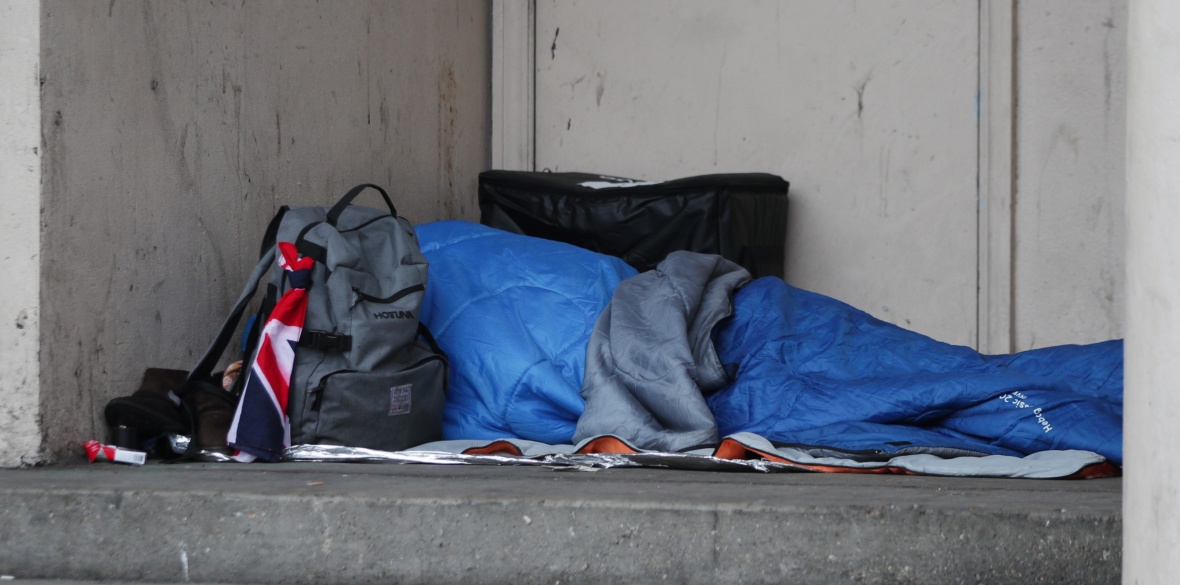
Person sleeping rough in a doorway, February 7, 2017
SHOCKING levels of violence and abuse are being faced by homeless people, a new survey finds.
Rough sleepers are frequently attacked, urinated on, verbally abused and have bricks and beer cans thrown at them, according to homelessness charity Crisis.
The charity spoke to 156 people in late summer who had rough sleeping experience within the last two years.
It found that 90 per cent of them had experienced some form of violence or abuse and 51 per cent had been physically attacked.
Three-quarters cruelly had items stolen, while 72 per cent had suffered verbal abuse or harassment.
More than half (53 per cent) had something thrown at them, examples given included bricks and beer cans.
More than a quarter had been racially abused, harassed or attacked (27 per cent), while almost a fifth (18 per cent) had been urinated on.
Nine of those who responded said they had been sexually assaulted.
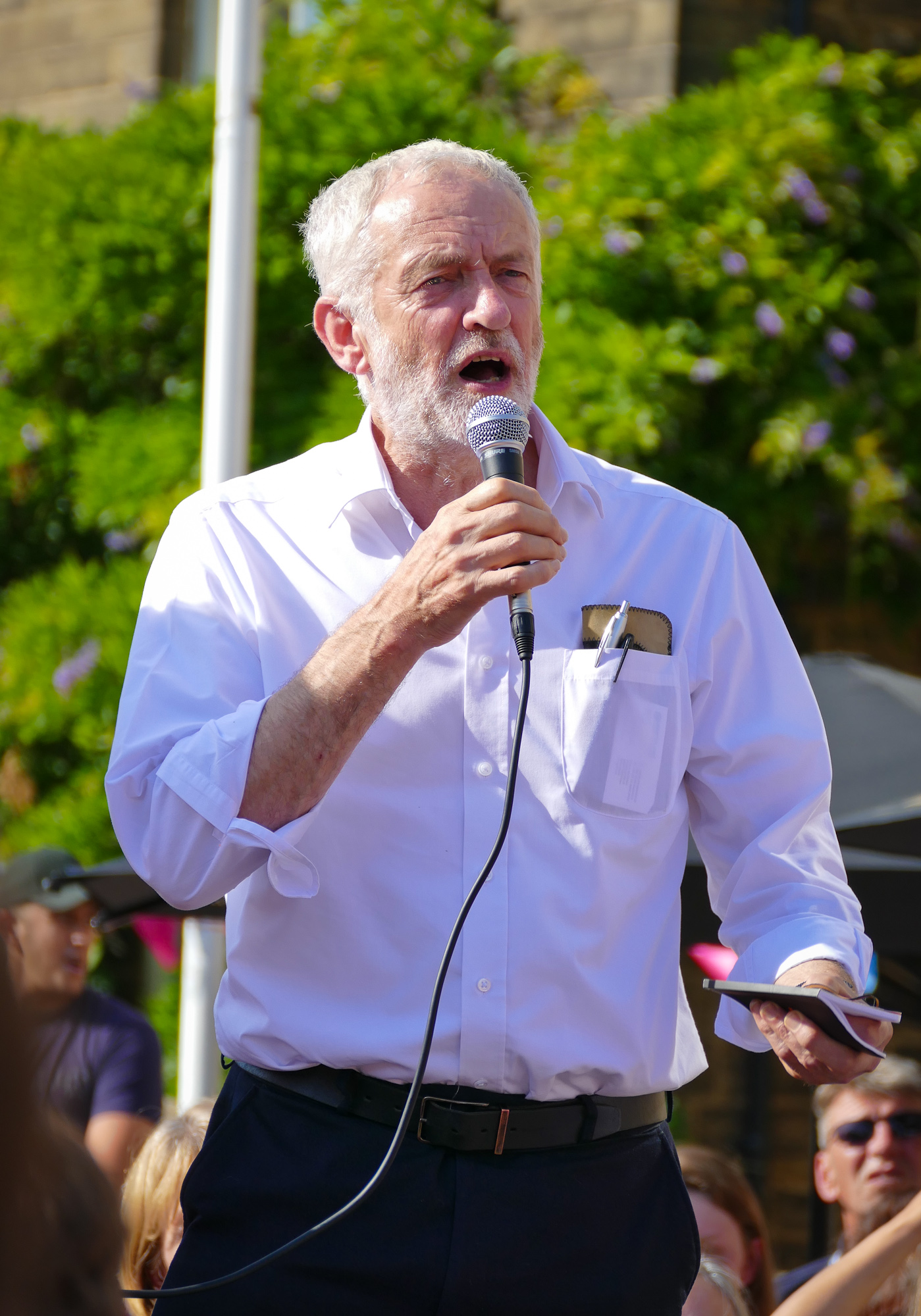


 A homeless man in a tent in the centre of Liverpool, April 1, 2025