Revealed: The areas where more than half of disabled people could lose their benefits

Spread the love

https://www.bigissue.com/news/social-justice/benefit-cuts-pip-dwp-labour-disabled-people/
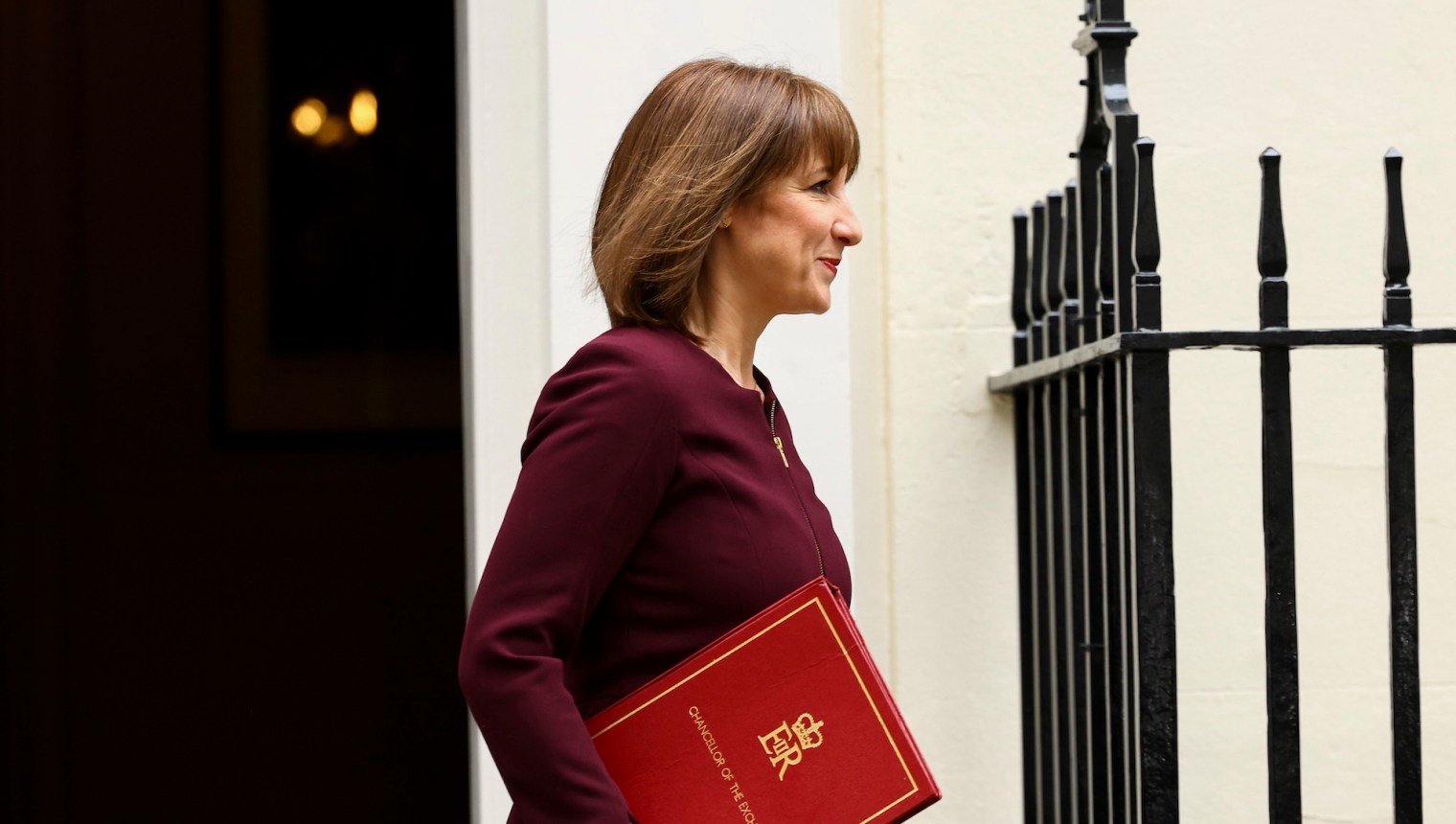
Chancellor Rachel Reeves. Image: Flickr/ Alecsandra Dragoi/ Treasury

Labour’s disability benefit cuts will impact an estimated 800,000 people, of whom half will lose their PIP entirely

More than half of disabled people with daily living needs in parts of England and Wales could lose their benefits under the government’s welfare cuts, the Big Issue can reveal.

Analysis of data from the Department for Work and Pensions (DWP), which was published in response to a written parliamentary question from Liberal Democrat work and pensions spokesman Steve Darling, shows that at least half of all current claimants of the personal independence payment (PIP) daily living allowance in ten constituencies could lose this benefit under the government’s plans, which MPs are set to vote on next month.

These include highly deprived Labour seats such as Tipton and Wednesbury and Wolverhampton South East – the constituency of senior cabinet minister Pat McFadden. Meanwhile the least affected constituencies tend to be those with much lower deprivation levels such as Guildford – although even here, more than a third of PIP daily living claimants are at risk from the cuts. 

The most exposed constituency is Boston and Skegness, where 52% of claimants are at risk. The seat is represented in parliament by Reform UK’s deputy leader Richard Tice. Polling for the Big Issue recently found that 68% of Reform voters believe Labour is failing on poverty.  

The DWP’s dataset is detailed, showing what proportion of current PIP daily living claimants with each type of disability scored under four points in all daily living assessment categories, putting them at risk from Labour’s plans:

  • There are 97 seats where at least 80% of PIP daily living claimants with arthritis are at risk, peaking at 87% in Derbyshire Dales
  • Almost three-quarters of claimants with cardiovascular disease in North Cotswolds could lose out under the cuts
  • More than 70% of claimants with multiple sclerosis and neuropathic diseases in Lewisham East and Sheffield Heeley are exposed to the rule change

The Joseph Rowntree Foundation has published an interactive breakdown of the figures by constituency, though not including figures for the overall PIP caseload in each seat.

See the original article at https://www.bigissue.com/news/social-justice/benefit-cuts-pip-dwp-labour-disabled-people/

Keir Starmer says that the Labour Party under his leadership all feel a small part of Scunthorpe.

Continue ReadingRevealed: The areas where more than half of disabled people could lose their benefits

Nearly one million people only £10 a week away from poverty, study finds

Spread the love
Image of cash and pre-payment meter key

https://www.bigissue.com/news/poverty-uk-joseph-rowntree-foundation-general-election/

There have been six prime ministers since this country last made sustained progress on reducing poverty

Nearly one million people in the UK are only £10 a week away from poverty, a study has found, in what has been called a “stain on the moral conscience of our nation”. 

Analysis from poverty charity Joseph Rowntree Foundation (JRF) has revealed that alongside the estimated 14.2 million people in poverty in the UK, further millions are “teetering on the edge” and unable to afford essentials. 

The JRF’s research found that just under a million people, including 200,000 children, are now within £10 a week from the poverty line. 

An additional 3.2 million people in the UK – equivalent to the population of Wales – are only £40 a week from deep poverty. 

The charity added that seven million households across the country had gone without essentials, like showers, toiletries or adequate clothing, in the last six months – or had gone hungry, or cut or skipped meals in the last 30 days. 

For those already in poverty, large numbers are close to “deep” or “very deep” poverty lines, meaning they are living on incomes of less than 50% or 40% of the UK average.

Around six million people were reported as living in very deep poverty in 2022/23, which is 1.5 million more than two decades ago.

Politicians are missing a ‘level of urgency’ on poverty

The JRF’s CEO Paul Kissack called on the government to act on rising poverty levels, as well as those “teetering on the edge” of poverty, telling whoever wins the general election on 4 July to “make reversing this dismal trend a priority”. 

“There have been six prime ministers since this country last made sustained progress on reducing poverty,” he explained, referencing when poverty last fell consistently in the UK, between 1999/2000 and 2004/2005 under Tony Blair. 

“During that time we’ve seen a sustained rise in the number of people in deep poverty, with hardship and destitution growing even faster.”

He added: “Our political leaders must be specific and ambitious about how they will tackle poverty. But so far there hasn’t been anything like the level of urgency from either Rishi Sunak or Keir Starmer that we need to see. Pointing to future growth as a panacea just won’t cut it.  

“Tonight’s (4 June) debate is a chance for both leaders to set out their plans and demonstrate they are serious about addressing hardship. Failure to act is a political and moral choice ≠ and one they should expect to be judged on.” 

https://www.bigissue.com/news/poverty-uk-joseph-rowntree-foundation-general-election/

Continue ReadingNearly one million people only £10 a week away from poverty, study finds

Anti-poverty charity urges politicians to set out plan to tackle ongoing hardship for low-income households

Spread the love

https://leftfootforward.org/2024/06/anti-poverty-charity-urges-politicians-to-set-out-plan-to-tackle-ongoing-hardship-for-low-income-households/

‘We need our politicians to set out how they will bring an end to this relentless reality of hardship in the general election campaign.’

The Joseph Rowntree Foundation (JRF) has called on all politicians to urgently address the reality of years-long hardship for families on low incomes.

The call was made following research conducted by the anti-poverty charity which found that the bottom 20 percent of low-income households are facing the same levels of hardship as they were last year, despite inflation falling.

The findings of the Savanta survey of 4,092 adults in the UK in low-income households were scaled by the JRF to population level.

From May 2022 to May 2024, the number of households going without essentials, such as showers, heating, and adequate clothing, ranged from 6.9 million to 7.3 million. Around 5 million households continue to go hungry, skip meals and cut back on food.

On May 24, during his general election campaign launch in Scotland, Keir Starmer said the party will not be able to afford to scrap the two-child benefit cap if Labour wins the next general election.

The policy was introduced by the Tories in 2017, and prevents parents from claiming child tax credit or universal credit for third or subsequent children. It is said to be one of the biggest drivers of rising child poverty – up from 3.6 million children below the poverty line in 2010/11 to 4.2 million in 2021/22.

Starmer said that while he was committed to ending child poverty he would not make promises he couldn’t afford. The announcement caused disquiet among senior Labour politicians. Andy Burnham, the Greater Manchester mayor, said he should promise that “when there is the headroom to do something, this clearly should be at the front of the queue.”

https://leftfootforward.org/2024/06/anti-poverty-charity-urges-politicians-to-set-out-plan-to-tackle-ongoing-hardship-for-low-income-households/

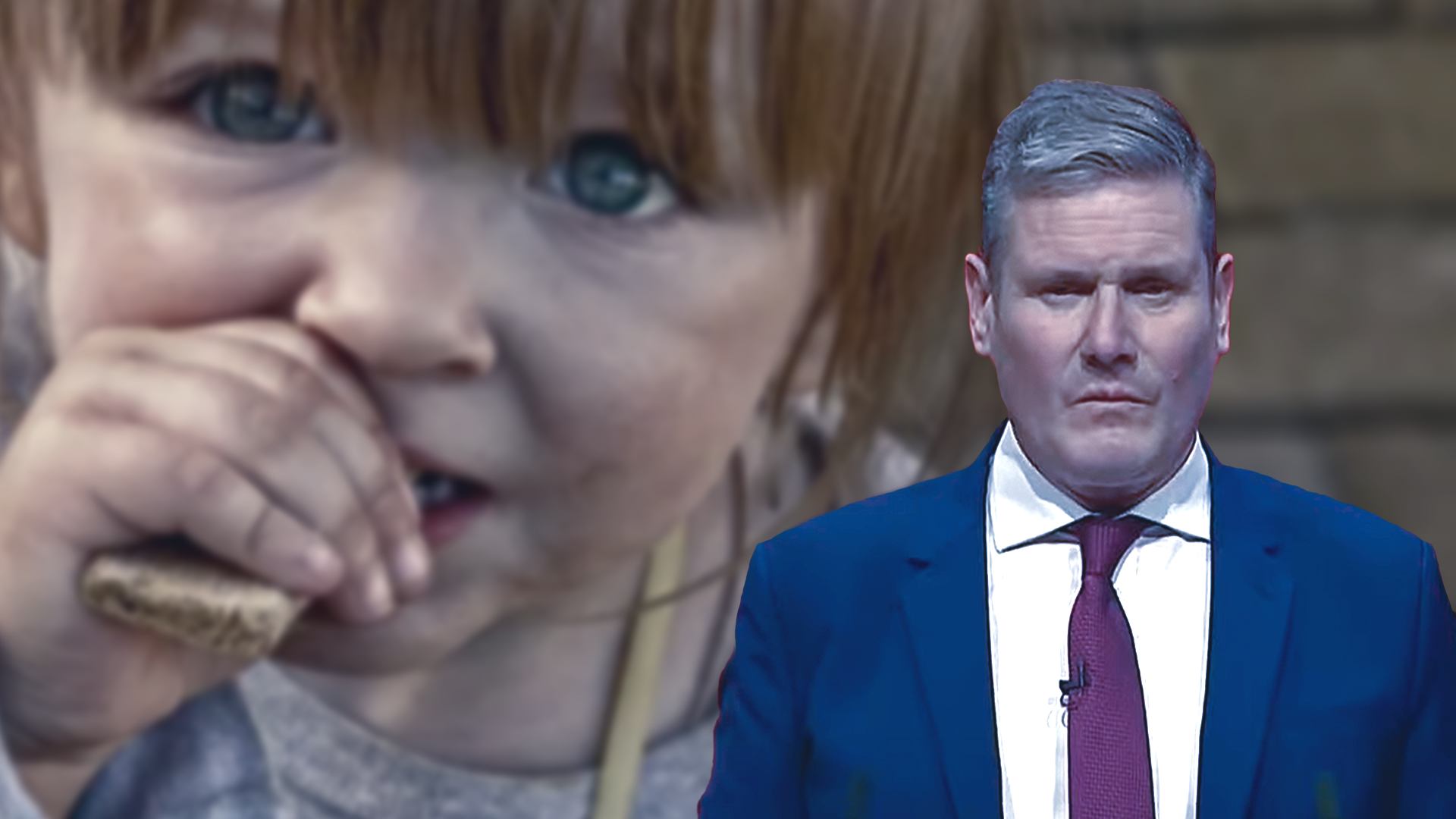
Image of Keir Starmer and a poor child.
Zionist Keir ‘Kid Starver’ Starmer. Image thanks to The Skwawkbox.
Continue ReadingAnti-poverty charity urges politicians to set out plan to tackle ongoing hardship for low-income households

Damning report warns UK on course for second ‘lost decade’ ahead of Budget

Spread the love

https://leftfootforward.org/2024/03/damning-report-warns-uk-on-course-for-second-lost-decade-ahead-of-budget/

Tories devastating record set to continue unless Budget delivers ‘desperately needed measures’ to recover living standards

In a bleak assessment of the Tories track record, the 2020s are on course to be the ‘second lost decade’ in living standards, a leading charity has warned the Chancellor ahead of his Spring Budget announcement. 

Leading anti-poverty charity, Joseph Rowntree Foundation (JRF) published the damning report on Monday, warning that, without political intervention, this Wednesday’s budget risks condemning Britain to another decade of declining living standards. 

Based on current government spending plans, working families could be £1,900 a year worse off by 2029 than in 2021. While essentials are predicted to remain less affordable relative to post tax earnings until 2029.

The cutting analysis of the UK’s economic trajectory is a warning to Jeremy Hunt that if he fails to deliver immediate measures to support living standards in the coming budget, then this will be the result. 

Decisive intervention from policy makers is what the charity has urged, as it warned that many families will be poorer by the end of the 2020s than at the start. While the Chancellor must prioritise providing long-term economic security for households requiring “the right political will” to turn the situation around. 

Currently, post-tax earnings are £2,400 a year lower for the average working family than they were in 2021, while essential goods and services for the average family are £270 a year more expensive than at the beginning of 2021, the JRF research found.

https://leftfootforward.org/2024/03/damning-report-warns-uk-on-course-for-second-lost-decade-ahead-of-budget/

Continue ReadingDamning report warns UK on course for second ‘lost decade’ ahead of Budget

Around a million children in the UK are living in destitution – with harmful consequences for their development

Spread the love

spixel/Shutterstock

Emma Louise Gorman, University of Westminster

Millions of people in the UK are unable to meet their most basic physical needs: to stay warm, dry, clean and fed. This is known as destitution.

Recent analysis from charity the Joseph Rowntree Foundation (JRF) estimates that around 3.8 million people in the UK experienced destitution at some point during 2022. This is a 61% increase since 2019 – and a 148% increase since 2017.

Living in destitution means severe material hardship. The JRF’s 2022 survey of crisis service users in the UK found that 61% reported going without food in the month before the survey. They often put other needs, such as accommodation or feeding their children, over feeding themselves.

About half of the people surveyed were not able to afford adequate clothing and basic necessities, such as toiletries. Many talked of living in insecure and low quality housing.

One particularly alarming aspect of these most recent statistics is the steep increase in the number of children living in destitution. In 2022, around 1 million children lived in households who experienced destitution. This is an increase of 88% since the charity’s corresponding 2019 study, and a 186% increase since the 2017 study.

Impact on children

Destitution causes immediate suffering. But for these children, this experience of hardship at a young age will have consequences that last throughout their lives. There is little doubt that both money and environment (housing quality, parental mental health and nutrition, for example) contribute to inequalities in child development. Both of these factors are affected by living in destitution.

When children reach the age of three, stark differences are already evident between those who live in poverty and those who do not. Children from more well-off families have better developed skills in both cognitive tasks, such as understanding basic concepts like colours, letters, numbers and shapes, as well as socio-emotional skills, such as self-control and resilience.

Other factors that are important in shaping children’s skills include housing quality and parental mental health.

Inequalities so early in life can compound and widen over time. These differences between the disadvantaged and the better off can be seen in educational achievement, health and criminal activity.

These types of inequalities were also exacerbated by the pandemic. While pupils everywhere missed out on education, these learning losses were not equally distributed: young people from lower socio-economic background fell further behind.

Despite large increases in funding for the early-year sectors, socio-economic inequalities in child development have not generally narrowed, particularly in recent years.

And now, the sharp increase in the share of children living in destitution does not paint a optimistic picture for the future.

Making a difference

However, many of these issues can be changed by government policy. For example, we know that being hungry at school makes it difficult to concentrate and learn. Measures that address hunger, then, can make a difference. Analysis of a trial of breakfast clubs in English schools, which offered free breakfast to disadvantaged children aged six and seven, found that the free breakfast lead to the equivalent of two months’ extra progress in reading, writing and maths across the course of one year.

Research has shown that many early interventions – such as high quality childcare and education programmes for at-risk children – can have long-lasting positive effects. From an economic perspective, acting early to lift children out of poverty and improve their home and learning environments can be a cost-effective way of helping in the long run, both for individuals as well as wider society.

Another option would be reform of the benefits system to make sure families have enough money to live. In the 2022 Joseph Rowntree Foundation survey of people who used crisis centres, 72% did receive social security benefits – but were still destitute.

This rise in children living in household experiencing destitution must be given serious attention. Successive governments claim to hold upward social mobility as a important goal – that is, the ability of people to move up the economic and social ladder, regardless of their own upbringing and social background. Reducing destitution would not only benefit children right now, but would help them throughout life.The Conversation

Emma Louise Gorman, Principal Research Fellow, Centre for Employment Research, University of Westminster

This article is republished from The Conversation under a Creative Commons license. Read the original article.

Continue ReadingAround a million children in the UK are living in destitution – with harmful consequences for their development