The left wins the presidential election in Ireland by a landslide

Spread the love

Original article by Vijay Prashad republished from peoples dispatch under a Creative Commons Attribution-ShareAlike 4.0 (CC BY-SA) license.
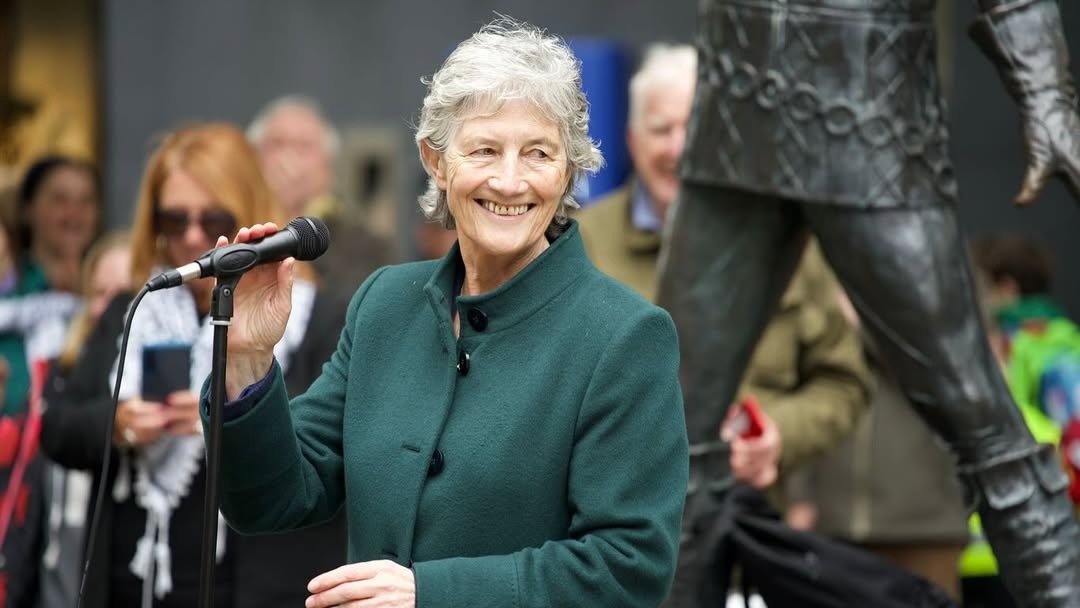
Recently elected Irish President Catherine Connolly. Photo: X

Both Catherine Connolly and Michael D are unabashedly left-wing, absorbed by the struggle for people to live with dignity in Ireland itself and gripped by severe global challenges, particularly those posed by US imperialism.

Catherine Connolly (born 1957) only became involved in active politics in 1999. Michael D. Higgins, the outgoing president of Ireland (2011-2025), encouraged Connolly to join the Labour Party and stand for election. Both Connolly and Higgins (known in Ireland as Michael D) come from Galway, a city on the west coast of Ireland. Connolly was born there, the ninth of fourteen children — seven girls and seven boys — in a working-class family. Her mother died when Catherine was only nine, and her father, a home builder, relied on his older children to care for the younger ones. In this household, Catherine Connolly developed a keen sense of service and discipline, which included involvement in local Catholic charities such as the Legion of Mary and the Order of Malta. This was, as she describes it, Connolly’s road to “her socialism”.

As a lawyer in Galway with a young family (two boys), Connolly ran for and won a seat on the Galway City Council in 1999, later becoming mayor of Galway from 2004 to 2005. Michael D had been mayor from 1990 to 1991. Just as she followed him to City Hall, Connolly has now followed Michael D to the presidency of Ireland.

Ireland is a country divided by British colonialism: most of the population lives in the Republic of Ireland (population 5.2 million), while a part of the island’s population lives in the northern counties still controlled by the United Kingdom (population 1.5 million). There are between 50 million and 80 million people around the world, mostly in the Americas, who claim Irish descent (the most famous person, now featured on an Irish stamp, was Che Guevara). Half the population in the six northern counties have Irish citizenship (while there are nearly three million diaspora Irish with citizenship), making them eligible to vote for the president.

While the president strictly speaking represents the Republic — and even then, in a largely ceremonial role — the post has been shaped by its previous nine holders as a pulpit from which to speak for all of Ireland. Micheal D, a poet as well as a politician, has transformed the post, shaping it into a moral lectern from which to advocate for Ireland’s role in the world based on larger values. This is a post that Catherine Connolly will undoubtedly enjoy.

Both Catherine Connolly and Michael D are unabashedly left-wing, absorbed by the struggle for people to live with dignity in Ireland itself and gripped by severe global challenges, particularly those posed by US imperialism. Connolly said she first entered politics twenty-six years ago because of the housing crisis, the “defining social crisis of our time”. This remains the most important problem for young people in Ireland, many of whom find it impossible to rent decent accommodation near their places of work.

In the 1990s, Ireland’s economy boomed through the liberalization of finance, earning the country the nickname “Celtic Tiger” (a phrase first used by a Morgan Stanley analyst). A low corporate tax rate and membership in the European Union allowed the country to attract tech money and real estate investment. This drove up housing prices, which have not collapsed despite the bust of the Celtic Tiger after the 2008 credit crisis (Ireland suffered a similar fate as Iceland, but with less prison time for its own banking elite). It is estimated that the country suffers a housing shortage of a quarter of a million units, that a new teacher in Dublin would have to use their entire salary to pay rent for a modest apartment, and that while wages rose at 27% between 2012 and 2022, property prices increased by 75%. Connolly spent most of her campaign focused on the direct problems faced by the Irish people, although the presidency can only lift issues into the public debate and advise the elected government.

When I visited Michael D in the presidential residence in 2014, he was gripped by the waste of human resources on war and war-making to the exclusion of solving problems of human life. He was interested in why so much of social wealth was being spent on warfare, when it was clear that war-making (such as with the US War on Terror) merely created more problems than it solved. We discussed the issue of Irish neutrality and how Ireland had slipped from that core principle by allowing the US permission to land warplanes and CIA planes at Shannon airport, the closest airport to Galway. Connolly will follow Michael D into the presidential office with this same concern. She has made vital statements not only against US war-making, but against the Israeli genocide of the Palestinians. In June, Connolly called Israel a “terrorist state”. It is likely that these sorts of statements will continue to be made from Dublin.

Since Éamon de Valera won the prime ministership in 1932 as the leader of Fianna Fáil (the Republican Party), the country has been led back and forth by Fianna Fáil and Fine Gael (the Irish Party). Both are now parties of the right (with close links to the political elite in the United States) and have, since 2020, been in a grand alliance for the prime ministership. Connolly ran against Fine Gael’s Heather Humphreys, who put up a very poor show.

Though running as “independent”, Connolly was backed by the broad left: 100% Redress, the Communist Party of Ireland, the Green Party, the Labour Party, People Before Profit, Sinn Féin, the Social Democratic Party, and the Workers Party, as well as a raft of organizations and movements. The backing of Sinn Féin, the second largest party in parliament, was crucial; the party brings to bear the weight of the republican tradition, which is focused on the unification of Ireland, and the weight of the party’s working-class roots in the cities where the housing question is paramount.

While Connolly has said that she will represent the entire country, she will be largely the voice of the working-class and the oppressed — not the Irish landlords and bankers. Nor will she be kind to US imperialism and its allies.

Vijay Prashad is an Indian historian, editor, and journalist. He is a writing fellow and chief correspondent at Globetrotter. He is an editor of LeftWord Books and the director of Tricontinental: Institute for Social Research. He has written more than 20 books, including The Darker Nations and The Poorer Nations. His latest books are On Cuba: Reflections on 70 Years of Revolution and Struggle (with Noam Chomsky), Struggle Makes Us Human: Learning from Movements for Socialism, and (also with Noam Chomsky) The Withdrawal: Iraq, Libya, Afghanistan, and the Fragility of US Power. Chelwa and Prashad will publish How the International Monetary Fund is Suffocating Africa later this year with Inkani Books.

This article was written by Globetrotter.

Though running as “independent”, Connolly was backed by the broad left: 100% Redress, the Communist Party of Ireland, the Green Party, the Labour Party, People Before Profit, Sinn Féin, the Social Democratic Party, and the Workers Party, as well as a raft of organizations and movements.

Continue ReadingThe left wins the presidential election in Ireland by a landslide

About TRANSFORM

Spread the love

https://transformpolitics.uk/about/

This is an era of crisis: climate change, the cost of living, the erosion of democracy and the spread of war.

We urgently need an answer. But in Britain, while the Tory party fuels these crises, the Labour Party is failing to provide an alternative.

The right wing has regained control of Labour. Jeremy Corbyn, and his politics that inspired millions across our society, have been cast out.

Labour now opposes a ceasefire in Gaza, doesn’t support strikes, rejects nationalisation, refuses to defend refugees, and won’t scrap student fees – or even the two-child benefit cap.

Keir Starmer has overseen the driving out of 200,000 Labour members. ‘The many’ who supported Labour politics from 2015 to 2019 are denied a political voice.

We need a political organisation that offers a real solution: one that challenges the system at the root of every crisis we face.

Over recent months, organisations and individuals from the labour and trade union movement have come together to discuss a way forward. These include existing left parties, Breakthrough, Left Unity and the Liverpool Community Independents, together with others who were in the Labour Party and more from across the left.

Now we’ve taken the next step: founding a new party of the left.

https://transformpolitics.uk/about/

16/12/23 Link to X/twitter not working for some strange reason. Here’s the video

Continue ReadingAbout TRANSFORM

How much do people around the world care about climate change? We surveyed 80,000 people in 40 countries to find out

Spread the love

This article is republished from The Conversation under a Creative Commons license. Read the original article.


ra2 studio / shutterstock

Simge Andı, University of Oxford and James Painter, University of Oxford

New survey results from 40 countries shows that climate change matters to most people. In the vast majority of countries, fewer than 3% said climate change was not serious at all.

We carried out this research as part of the University of Oxford’s Reuters Institute annual Digital News Reports. More than 80,000 people were surveyed online in January and February of this year.

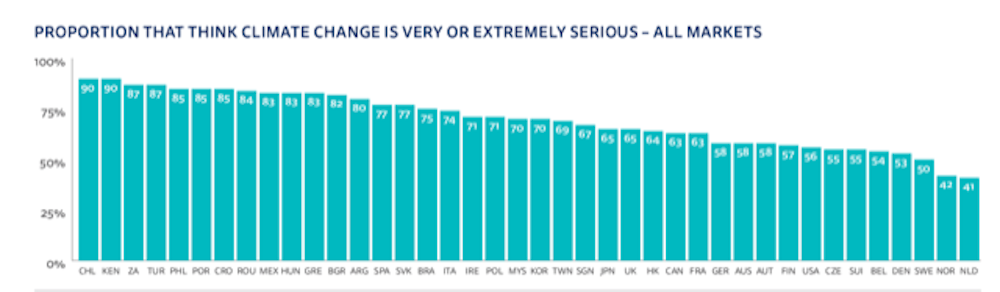
Almost seven in ten think climate change is “a very, or extremely serious, problem”, but the results show notable country differences. Lack of concern is far higher in the US (12%) as well as in Sweden (9%), Greta Thunberg’s home country. Despite disastrous bush fires at the time of our fieldwork, 8% of respondents in Australia report that climate change is not serious at all. These groups with low levels of concern tend to be right wing and older.

Four of the five countries showing the highest levels of concern (85-90%) were from the global south, namely Chile, Kenya, South Africa and the Philippines. However, in countries with lower levels of internet penetration, our online survey samples over-represent people who are more affluent and educated.


Almost everyone in Chile and Kenya thinks climate change is serious. But that’s not the case in Scandinavia and the Low Countries.
Reuters Institute Digital News Report, Author provided

Perhaps surprisingly, the five countries with the lowest levels of concern are all in Western Europe. In Belgium, Denmark, Sweden, Norway and the Netherlands, only around half (or less) think that climate change is a serious problem.

It is the first time that results from survey questions on climate change have been included in the Reuters Institute’s reports, so it is difficult to draw out historical trends. However, results in 2015 from the Pew Center based on surveys in 40 countries (with different questions and countries to those in our survey) found that 54% of those surveyed thought that climate change was “a very serious” problem.

So it looks like concern for climate change may be rising globally. There is certainly strong evidence that it is increasing in some countries. In the US, in November 2019 two in three Americans (66%) said they were at least “somewhat worried” about global warming, an increase of 10 percentage points over the past five years.

In the UK, data from the CAST centre at Cardiff University showed that in 2019 levels of “worry” about climate change were at their highest recorded point. Extreme weather events, media reporting and wider publicity were mentioned by respondents as reasons for their increase in concern.

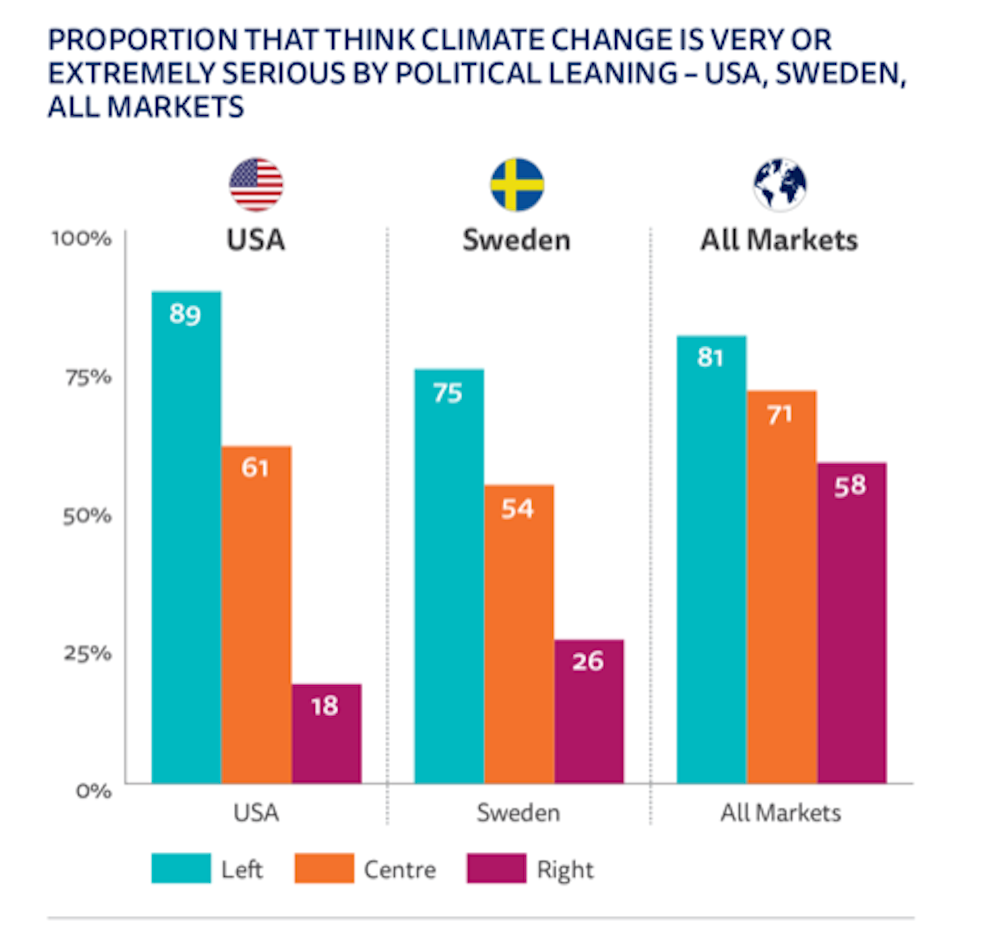
In our survey, across countries and markets, individuals who identify as left-wing tend to report higher levels of concern. This finding is even more visible in more polarised societies such as the US where 89% of those who self-identify on the left note that climate change is serious, compared to only 18% of those who self-identify on the right.


Right-wingers tend to take climate change less seriously – especially in the US and Sweden.
Reuters Institute Digital News Report, Author provided

We also find a similar divide in Sweden. As Sweden is widely considered one of the world’s most progressive nations, these results surprised us and we asked Martin Hultman, a researcher in climate denialism at Chalmers University in Gothenburg, what to make of them.

“These figures do not surprise me”, he told us in an email. “Since 2010, the leadership of the far-right political party Sweden Democrats has been against all types of policies to tackle climate change, including the Paris Agreement.”

“And we know that the spread of climate change denial ideas and rhetoric is widespread in Sweden – not least when digitally-born far-right media sites spread conspiracy theories about Greta Thunberg.”

TV news still dominates

Across all countries, people say they pay most attention to climate news on television (35%). Online news sites of major news organisations are the second most popular news source (15%), followed by specialised outlets covering climate issues (13%), then alternative sources such as social media and blogs (9%).

Figures from the UK, US and Australia are broadly in line with these preferences. Printed newspapers and radio are way down, with only around 5% saying each was the source they paid most attention to. In Chile, where the concern is high, specialised outlets covering climate issues (24%) as well as alternative sources such as social media (17%) are nearly as popular as television (26%).

The differences in climate news consumption are also visible among different age groups. Younger generations, more specifically the so-called Generation Z (aged 18-24), are more likely to report paying attention to alternative sources on climate change (17%) as well as TV (23%) and online news sites from major news organisations (16%). Older people, however, rely more heavily on TV (42%) and use less of the online news sites (12%) or alternative sources such as social media (5%).

Respondents from both sides of the political spectrum criticise the media for either being too doom-laden, or not bold enough, in their coverage of climate change. That said, our survey shows that almost half of our respondents (47%) think that news media generally do a good job of informing them about climate change, and 19% think that they do a bad job.

However, those who have low levels of concern are much more inclined to say that the news media are doing a bad job (46%). This might indicate a lack of trust in climate change coverage or a more general loss of confidence in the news media.The Conversation

Simge Andı, Postdoctoral Research Fellow, Reuters Institute for the Study of Journalism, University of Oxford and James Painter, Research Associate, Reuters Institute, University of Oxford

This article is republished from The Conversation under a Creative Commons license. Read the original article.

Continue ReadingHow much do people around the world care about climate change? We surveyed 80,000 people in 40 countries to find out