Fossil Fuel Lobbyists and Major Polluters to Sponsor Labour Conference Events

Spread the love

Original article by Sam Bright republished from DeSmog

Labour leader, Keir Starmer, addresses delegates at the 2022 Labour Party conference in Liverpool. Credit: Karl Black/Alamy

Campaigners have accused the party of allowing “climate wreckers” to access its flagship annual conference.

This year’s Labour Party conference will feature events sponsored by an oil and gas trade group, the owner of the UK’s largest emitting power plant, and a gas distribution company, DeSmog can reveal. 

The conference, which is being held from 22 to 25 September in Liverpool, is one of the largest political gatherings in Europe and will feature set piece speeches from Labour’s newly-elected Cabinet ministers. 

Although the full conference agenda is yet to be released, the New Statesman magazine has published a list of firms that will be sponsoring its panel events. These include the controversial energy company Drax, the fossil fuel lobby group Offshore Energies UK, and the gas company Cadent. 

Labour, which has been in power for less than three months, has already unveiled an ambitious raft of policies to tackle climate change, including plans to decarbonise electricity by 2030, facilitated by a state-owned company GB Energy.

Robert Noyes, Fossil Free Parliament campaigner, told DeSmog that the New Statesman was “selling its readers short” by accepting sponsorship from polluting companies and their lobbyists. 

He added that “Labour must not allow its energy programme to be further captured by corporate interests. It pollutes our politics and dilutes their agenda… Climate wrecking sponsors have got to go.”

Labour’s annual conference hosts dozens of fringe events organised by external groups, which tend to feature a panel of speakers – including a representative from the corporate sponsor. All the events hosted within the official conference zone are reviewed and approved by the party.

“No other partnered event will get you as close to the biggest names and most important conversations in Labour politics,” the New Statesman says about its 2024 agenda.

The party faced protests at its conference in 2022, when the New Statesman hosted a debate on Britain’s net zero climate goals sponsored by Drax. The firm’s plant in Selby, Yorkshire, which burns wood pellets to generate electricity, is the single biggest source of carbon dioxide emissions in the country according to the climate think tank Ember. Drax disputes this claim. 

Drax has received state subsidies worth more than £7 billion since 2012, and the government is currently considering whether to extend this financial assistance to 2027 so the firm can build facilities to capture and store carbon emissions. 

The Labour Party accepted a £12,000 donation from Drax in September 2022, while the company has frequently sponsored events at both Conservative and Labour conferences.

The New Statesman is one of a number of major media companies to have come under fire for boosting the profiles of polluting companies through commercial partnerships. An investigation by DeSmog and Drilled previously revealed that many of the world’s most trusted English-language news outlets regularly promote the fossil fuel industry’s narratives on climate-related topics.

In May, former Green Party MP Caroline Lucas pulled out of the New Statesman’s energy and climate change conference over its sponsorship by the oil company Equinor. Days later, Labour MP Alex Sobel, who chairs the All-Party Parliamentary Group on Net Zero, also withdrew from a Politico energy and climate summit due to its Equinor sponsorship. 

Drax, Cadent, OEUK, the New Statesman, and the Labour Party were approached for comment.

Drax

A number of investigations have shown that Drax harvests wood from some of the world’s most precious forests. 

In August, the firm agreed to pay £25 million following an investigation from the energy watchdog Ofgem found that Drax had failed to supply enough evidence about the type of wood that it imports. 

Drax says that its electricity is “carbon neutral” given that trees can be planted to reabsorb emissions – a claim that has been disputed by climate experts. More than 500 scientists signed a letter in 2021 stating that it would take decades for the carbon emitted by burning wood to be balanced with the planting of new trees.

The New Statesman published a sponsored article from Drax in May, written by the executive in charge of the firm’s bioenergy with carbon capture and storage (BECCS) project, claiming that it will “make a sizable contribution to the UK’s climate change targets”.

Almost all of the net zero emissions pathways modelled by the UN-backed Intergovernmental Panel on Climate Change (IPCC) and the International Energy Agency envision huge deployments of CCS technology by the middle of the century.

However, as DeSmog has shown, most large-scale CCS projects underperform or fail to meet their capture targets. As the November 2023 Production Gap Report, produced by climate experts, pointed out: “the track record for CCS has been very poor to date, with around 80 percent of pilot projects over the last 30 years ending in failure.”

Sally Clark from the campaign group Biofuelwatch said it’s “deeply concerning” that Drax is set to sponsor a fringe event at the Labour conference. 

“Events like these give Drax the opportunity to influence decision-makers and greenwash its planet-wrecking tree burning at a time when the government is considering whether to grant huge new subsidies to continue funding Drax’s harm to forests, wildlife, communities and the climate,” she added.

“If we are to prevent the worst impacts of climate breakdown, we need to kick big polluters like Drax out of our politics and instead invest in real climate solutions, such as wind and solar power, and protect the world’s best carbon-storing technology – trees.”

OEUK

Offshore Energies UK (OEUK) is set to join Drax as a sponsor of the New Statesman’s 2024 Labour conference agenda. OEUK is the “leading representative body” for the country’s oil and gas industry, while its members include some of the world’s largest fossil fuel companies, such as Shell, ExxonMobil, and Equinor. 

The group lobbies the government, both in public and private, to enact policies that benefit oil and gas companies. 

DeSmog previously revealed that OEUK and its members met with ministers over 200 times in the year after the 2022 Russian invasion of Ukraine as part of a lobbying blitz to undermine the proposed windfall tax on energy company profits. The tax was launched in 2022 but contained loopholes including tax relief on investments in UK fossil fuel extraction.

OEUK has vocally opposed Labour’s policy of extending the windfall tax from 75 percent to 78 percent until 2029, claiming that it could cost 42,000 jobs – a figure that has been disputed by experts. 

The group’s CEO David Whitehouse even went so far as to accuse Labour of being unable to “do the maths” over its windfall tax plans. Labour has also said that it won’t be granting any new North Sea oil and gas licences – a policy that has likewise been criticised by OEUK. 

This isn’t the first time that the New Statesman has accepted sponsorship from OEUK. The lobby group sponsored a Labour conference event in 2023 hosted by the magazine and attended by Sarah Jones, Labour’s then shadow minister for decarbonisation and industry (who now holds this role in government). 

“Cash-strapped media are increasingly easy prey for climate wreckers eager to launder their reputations,” said Robert Noyes. “When outlets like the New Statesman take funding from such lobby groups like OEUK, they sell their readers to the interests of that lobby.”

Cadent

The UK’s biggest gas distribution network, Cadent, which provides fuel to 11 million homes and businesses, is also listed as a sponsor for the upcoming conference.

Gas boilers are used to heat around 85 percent of UK homes, which together produce 14 percent of the UK’s greenhouse gas emissions. 

Cadent sponsored a New Statesman event at last year’s Labour conference, attended by the firm’s chief strategy and regulation officer, Tony Ballance. 

In response to a question from DeSmog, Ballance advocated for the role of hydrogen in home heating, and claimed there was “limited” scientific evidence opposed to the deployment of the fuel.

The gas industry has championed hydrogen as a replacement for gas in heating, arguing that it can easily replace existing methane gas and can use existing pipelines to transport and store the fuel.

However, heat pumps are up to five times more efficient than gas boilers according to the International Energy Agency, and can be run on electricity generated via renewable energy sources. A peer-reviewed assessment of over 50 independent studies in 2024 concluded that hydrogen use in domestic heating is inefficientcostly and resource-intensive compared to other low-carbon options such as heat pumps.

It is possible to produce ‘green’ hydrogen using solar and wind, which is widely seen as an important way to decarbonise industrial processes where it is hard to avoid greenhouse gas emissions. However, the overwhelming majority of hydrogen – around 95 percent worldwide – is currently produced using fossil fuels.

Even so, the gas industry has cast doubt on heat pumps, while talking up the merits of hydrogen. 

An investigation by DeSmog in July 2023 found that the Energy and Utilities Alliance (EUA), which represents the vast majority of the UK’s gas boiler manufacturers and distributors – including Cadent – had paid for an extensive negative PR campaign to “spark outrage” against heat pumps in the British press.

Cadent was one of two gas networks to win a government contract to trial hydrogen for home heating ahead of the government’s decision on the policy, expected in 2026. But plans for the village of Whitby in Cheshire were scrapped in July after a sustained local campaign, which raised concerns over the safety of hydrogen in homes.

Original article by Sam Bright republished from DeSmog
Continue ReadingFossil Fuel Lobbyists and Major Polluters to Sponsor Labour Conference Events

Week of Protests Over Equinor’s Media Sponsorship Greenwashing

Spread the love

Original article by Adam BarnettPhoebe Cooke and Ellen Ormesher republished from DeSmog

Eldar Saetre, CEO of Equinor. Credit: Jeff Gilbert / Alamy

Campaigners likened the fossil fuel company’s patronage of climate events to letting an “arsonist sponsor a fire safety conference”.

Major media companies have sparked a wave of criticism after allowing a Norwegian oil and gas company behind the UK’s largest new North Sea project to sponsor events on climate change.

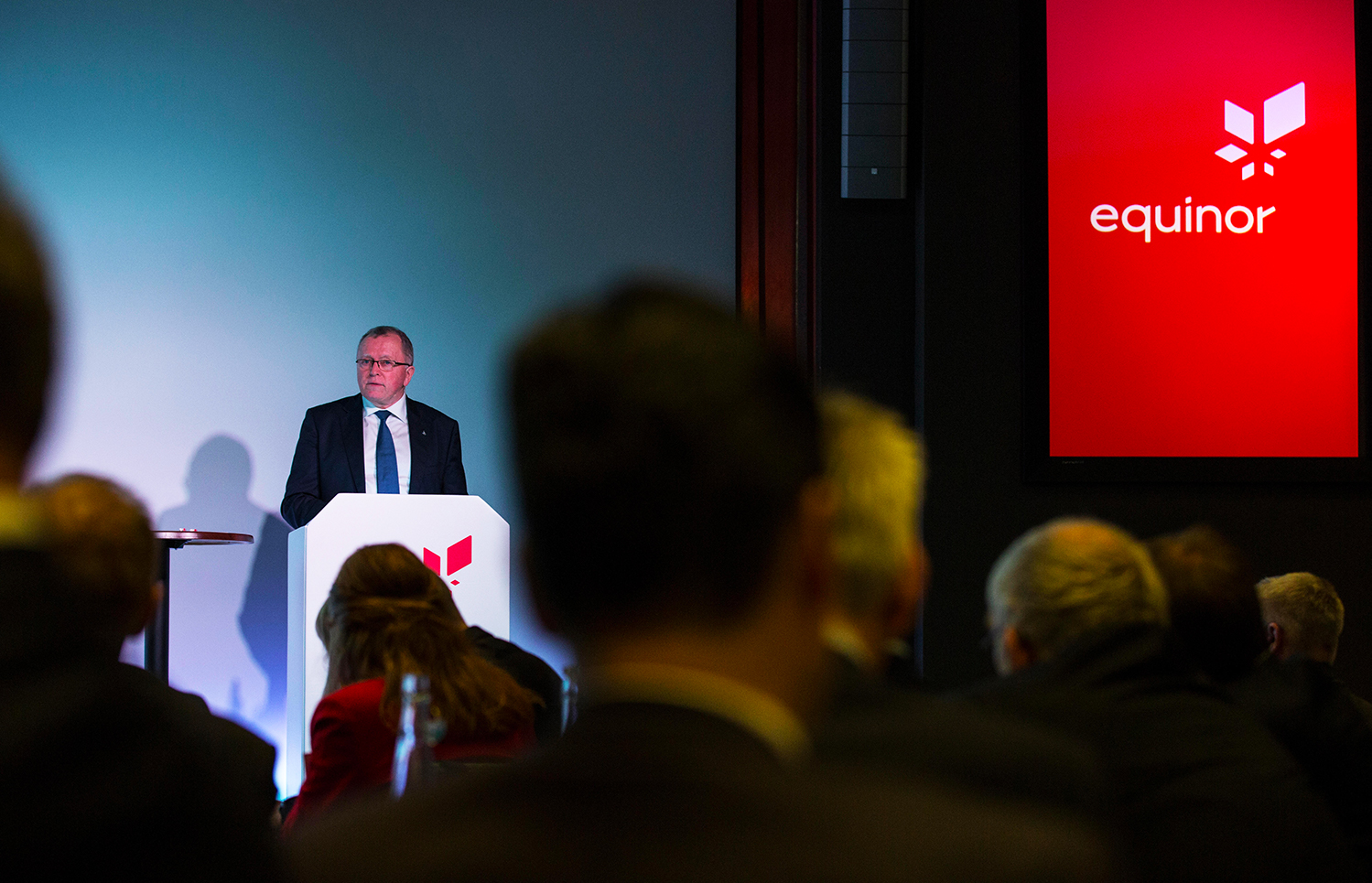
Equinor was an official sponsor of two conferences on climate and energy this week, one run by the New Statesman magazine, and one run by Politico. Both saw MPs pull out over the sponsorship, while the first was interrupted by a climate activist. 

The Norwegian state-owned company has a majority stake in the Rosebank North Sea oil field, which has been dubbed a “carbon bomb” by environmental law charity ClientEarth. 

Equinor claims it supplies 27 percent of the UK’s energy from oil and gas, and is currently investing $6 billion (£4.8 billion) a year in fossil fuel exploration and drilling.

“Allowing fossil fuel companies like Equinor to sponsor and speak at climate conferences is as absurd as allowing an arsonist to sponsor and participate in fire safety conferences,” said Carys Boughton of the Fossil Free Parliament campaign. “At this critical time for climate and energy policy-making, we can’t afford this absurdity.”

Equinor’s sponsorship of these events is the latest example of fossil fuel companies using media partnerships to greenwash their polluting activities. 

An investigation by DeSmog and Drilled in December detailed how oil and gas companies are using media deals – including partnerships with Politico, the Economist, the Financial TimesReuters, and the Washington Post – to present a climate-friendly image. 

DeSmog also revealed this week, based on documents released by a powerful U.S. congressional committee, that fossil fuel companies believe these media partnerships help to protect their “social licence to operate”.

Michelle Amazeen, a mass communications researcher at Boston University, said that oil and gas sponsorship is “a strategic move by fossil fuel companies to compromise the integrity of events intended to foster dialogue and action around climate issues”. 

She added that, “While the sponsorship gives the impression of caring about the environment, it’s a veneer that’s like an oil slick obscuring the actual conduct of the fossil fuel industry.”

This week, a cross-party group of 50 MPs, including three Conservatives, wrote to Prime Minister Rishi Sunak urging him to end the licensing of new oil and gas fields, appoint a climate envoy, and back the Beyond Oil and Gas Alliance, an international coalition working to facilitate a global phase-out of oil and gas production.

Alice Baxter, Equinor’s UK spokesperson, said: “At Equinor we believe in openness and the importance of engaging in the complex conversations around the energy transition. We respect everyone’s right to protest and encourage robust debate.”

New Statesman Event 

Equinor was one of the sponsors of the New Statesman’s Energy and Climate Change Conference on 14 May at the Leonardo Royal Hotel in south London.

Green Party MP Caroline Lucas pulled out of the event last week due to Equinor’s sponsorship.

At the event, attended by DeSmog, the second panel discussion featured Equinor’s UK country manager Alex Grant. The session was entitled “How can the UK lead the world in the green transition?”

When it was Grant’s turn to speak, a Fossil Free London activist in the audience stood up and gave a speech criticising Equinor and its sponsorship of the event.

The activist said climate scientists “are warning us that we are headed towards a catastrophic 2.5C of global warming. Yet staggeringly, Equinor, that’s sponsoring this event, is opening the largest undeveloped oil field in the North Sea.” 

Labour MP Meg Hillier, who chairs the Public Accounts Committee and was on the panel, interjected: “Why don’t you let us talk about it, because I’m actually here to be pretty critical of the government, I’d quite like to get my points across.” 

The protester continued her speech, and was removed by security. Her comments received a round of applause from the audience. 

Grant replied by saying that Equinor takes a “pragmatic approach” to the energy transition, as opposed to one that “costs more than it needs to”. He also defended the Rosebank project, saying it would reduce carbon emissions over the long term.

Rosebank could produce around 300 million barrels of oil over its lifetime, emitting 200 million tonnes of carbon dioxide. 

Questions at the New Statesman event were submitted online, rather than asked in person by the audience. 

During the event’s final session with Chris Stark, the former chief executive of the Climate Change Committee, which advises the government on its climate policies, DeSmog submitted a question about Equinor and Rosebank’s impact on the climate. The question was not posed to the panel. 

The latest issue of the New Statesman magazine, which features an interview with climate scientist and author Michael Mann, includes advertorials from biomass company Drax, which is the UK’s largest single source of CO2 emissions, and Calor Gas, one of the UK’s largest suppliers of liquefied petroleum gas.

The New Statesman hosted a number of events at the 2023 Labour Party conference sponsored by fossil fuel companies and lobbying groups, including Cadent, National Gas, and Offshore Energies UK

The New Statesman did not respond to DeSmog’s request for comment. 

Politico Event

On 16 May, Politico held its own Energy and Climate Summit, also sponsored by Equinor. 

Labour MP Alex Sobel, who chairs the All-Party Parliamentary Group on Net Zero, last week pulled out of the event due to Equinor’s sponsorship. 

At the event, attended by DeSmog, a panel on Carbon Capture and Storage (CCS) featured David Cairns, a former British ambassador to Sweden and now Equinor’s vice president of political and public affairs. 

When questioned by the Politico chair, Cairns confirmed that the company had no plans to set targets for phasing out oil and gas.

He also said it was “debatable” whether the oil and gas industry was making large profits. Equinor reported £28 billion in profits in 2023. Cairns added that it was “really misplaced” to think that the oil and gas industry is an “easy business in which it’s easy to make money”.

A Politico spokesperson said: “This multi-sponsored Energy and Climate UK Summit is an extension of Politico’s ongoing and robust coverage of climate policy in the United Kingdom. 

“There is a clear division between Politico’s newsroom and our commercial operations. With critical milestones and a general election on the horizon, we continue to cover climate each day through our dedicated reporting.”

Politico’s influential London Playbook newsletter has this week been sponsored by the oil and gas giant BP. 

Michelle Amazeen said that fossil fuel sponsorship of media companies “has delegitimised their journalistic content, opened their journalists up for attack, and has even led to the resignation of journalists who are trying to write about climate issues”.

Equinor’s AGM 

Equinor also faced further public criticism this week, when on Tuesday the company was confronted by a climate activist at its annual general meeting (AGM).

Lauren MacDonald of the environmental group Uplift delivered a four minute speech about the company’s impact on the planet, and promised that campaigners would not stop opposing Rosebank or the company’s other fossil fuel projects.

At the meeting, shareholders rejected a resolution calling on the company to align its strategy and spending with climate goals.

“We invest in the energy the world needs now. That is oil and gas,” Equinor’s chief executive Anders Opedal said.

Tessa Khan, executive director at Uplift, told DeSmog: “Try as it might, Equinor can no longer ignore the scale of opposition to its climate-wrecking business model – it’s not just campaigners who are calling out its harmful mission, it’s also politicians pulling out of Equinor-sponsored events and shareholders demanding it ditch its plans of endless oil and gas expansion.

“Even if Equinor wants to stay silent, these demands for accountability will only get louder. Governments in the UK and Norway – who can’t afford to ignore this chorus of voices – must reject Equinor’s delay tactics and insist that their activities don’t further endanger our climate. As a first step, this means rejecting new oil and gas fields, and pulling the plug on disastrous projects like Rosebank.”

All-Energy and Dcarbonise

Equinor was not the only fossil fuel company to sponsor climate events this week. 

On Wednesday, climate protesters disrupted the All-Energy and Dcarbonise event in Glasgow, which describes itself as “The meeting place for the renewable and low carbon energy community”, yet featured paid exhibitions from oil and gas majors BP and Shell. 

Protesters from Stop Polluting Politics, and Fuel Poverty Action interrupted a speech by Scotland’s Net Zero and Energy Secretary Màiri McAllan, and a pre-recorded video of UK Energy and Net Zero Secretary Claire Coutinho. Both appeared alongside Louise Kingham, a senior vice president at BP. 

“As the lethal reality of climate breakdown becomes unmissable, the PR strategies of big fossil fuel companies like Equinor and Shell reveal their growing isolation, and an increasingly desperate attempt to buy friends,” said Andrew Simms, a director of the New Weather Institute and a co-founder of the Badvertising campaign.  

“They are the unwelcome guests at the party with everyone waiting for them to leave, but who keep buying rounds for anyone willing to drink with them in order to stay.”

Original article by Adam BarnettPhoebe Cooke and Ellen Ormesher republished from DeSmog

Rishi Sunak on stopping Rosebank says that any chancellor can stop his huge 91% subsidy to build Rosebank, that Keir Starmer is as bad as him for sucking up to Murdoch and other plutocrats and that we (the plebs) need to get organised to elect MPs that will stop Rosebank.
Image of InBedWithBigOil by Not Here To Be Liked + Hex Prints from Just Stop Oil's You May Find Yourself... art auction. Featuring Rishi Sunak, Fossil Fuels and Rupert Murdoch.
Image of InBedWithBigOil by Not Here To Be Liked + Hex Prints from Just Stop Oil’s You May Find Yourself… art auction. Featuring Rishi Sunak, Fossil Fuels and Rupert Murdoch.
Continue ReadingWeek of Protests Over Equinor’s Media Sponsorship Greenwashing