The NDA said the “leak in the Magnox Swarf Storage Silo is contained and does not pose a risk to the public”
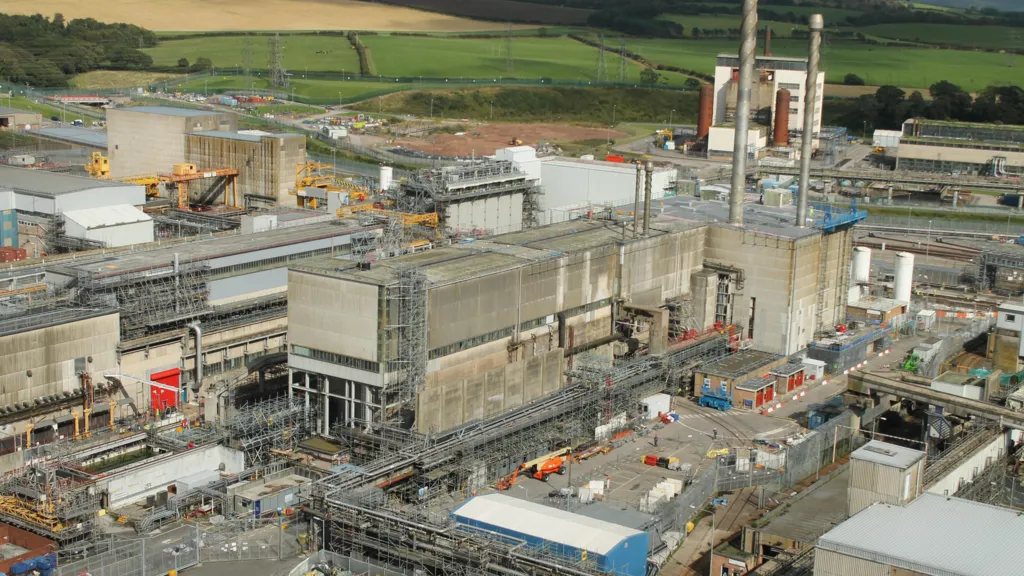
The UK’s largest nuclear site could continue leaking radioactive water until the 2050s, MPs have warned, while its clean-up operations struggle to progress quickly enough.
The Public Accounts Committee (PAC) criticised the speed of decommissioning work at Sellafield in Cumbria, citing “cost overruns and continuing safety concerns” in a report published on Wednesday.
Although the committee noted there were “signs of improvement”, PAC chairman Sir Geoffrey Clifton-Brown said Sellafield continued to present “intolerable risks”.
The Nuclear Decommissioning Authority (NDA) acknowledged the leak at its Magnox Swarf Storage Silo (MSSS) was its “single biggest environmental issue”.
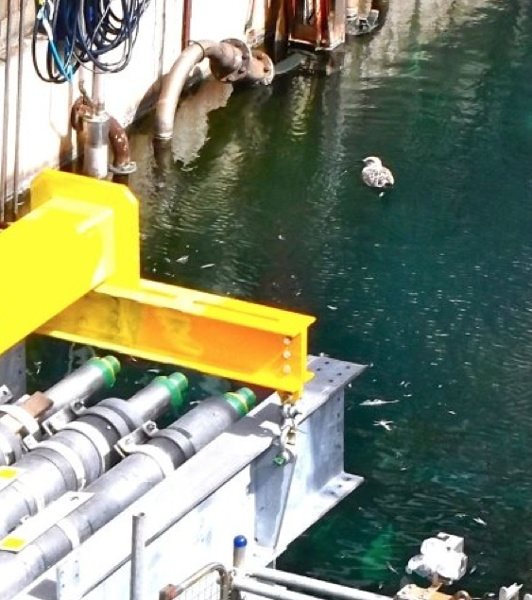
The MSSS, which the NDA described as “the most hazardous building in the UK”, has been leaking radioactive water into the ground since 2018, releasing enough to fill an Olympic swimming pool every three years.
It is likely to continue leaking until the oldest section of the building has been emptied in the 2050s, about a decade later than previously expected.
Sir Geoffrey said: “As with the fight against climate change, the sheer scale of the hundred-year timeframe of the decommissioning project makes it hard to grasp the immediacy of safety hazards and cost overruns that delays can have.
“Every day at Sellafield is a race against time to complete works before buildings reach the end of their life.
“Our report contains too many signs that this is a race that Sellafield risks losing.”
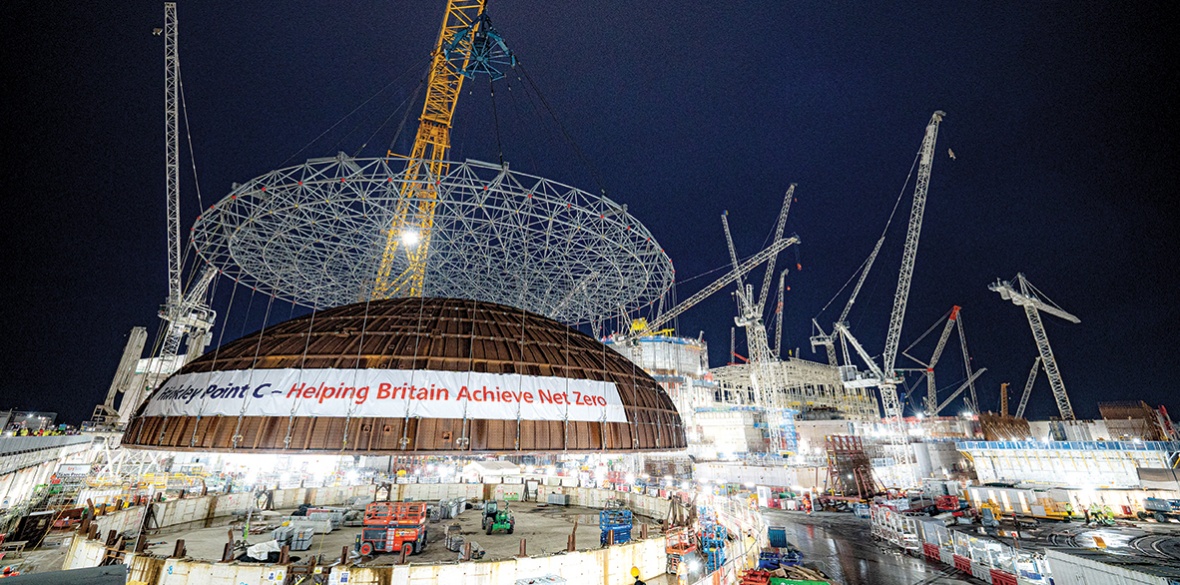
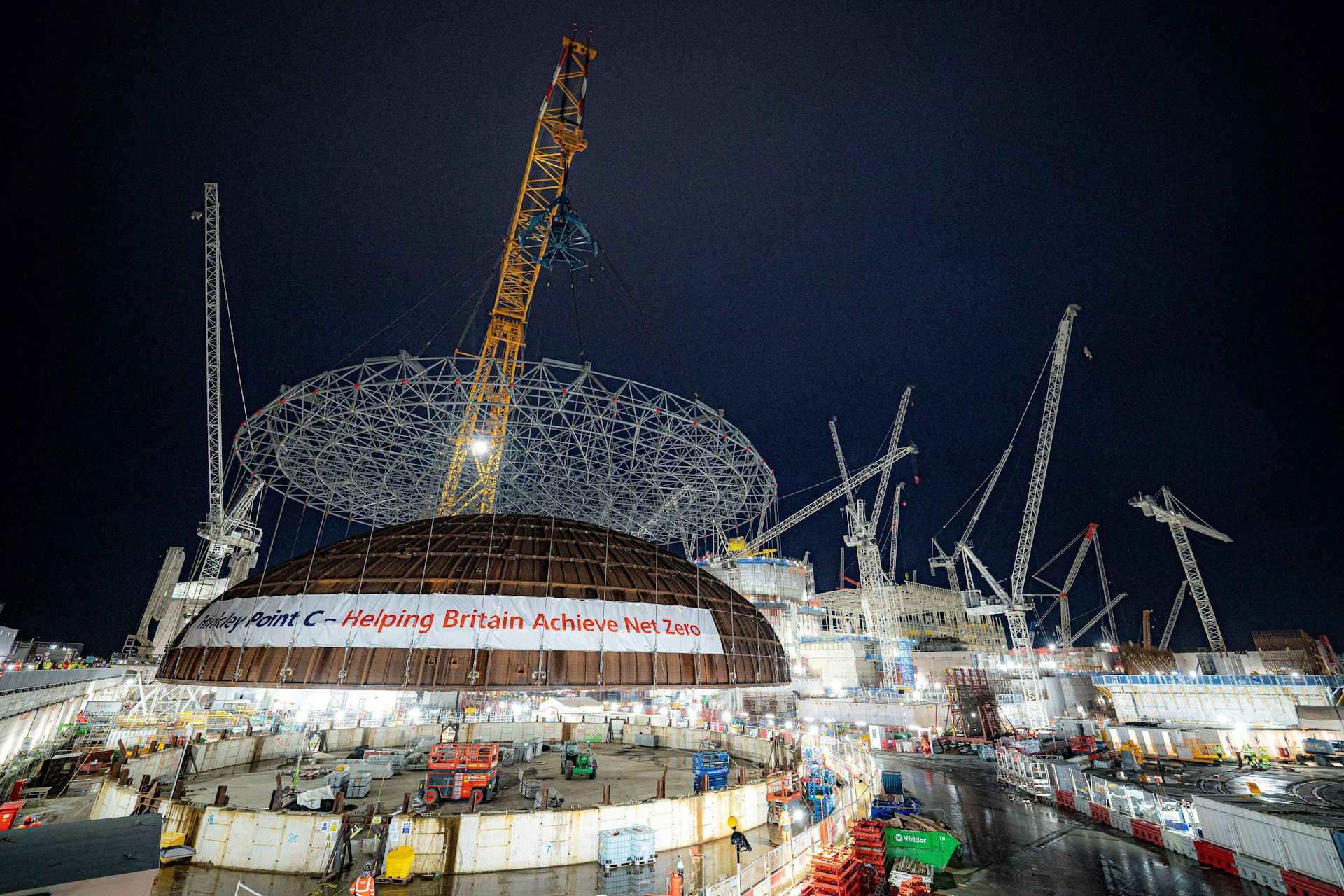
SELF-DECEPTION: A 245-tonne steel dome is lifted onto Hinkley Point C’s first reactor building, at Bridgwater, Somerset on December 15 2023 – note the slogan on the banner
The government’s nuclear power expansion plan is a hollow betrayal of working people that panders to wealthy corporations and will rip off consumers, writes LINDA PENTZ GUNTER
…
The restriction on building new reactors on existing nuclear sites is to be lifted so they could be built anywhere and everywhere and people who “hadn’t thought there’s going to be anything nuclear near me” will simply “get used to the idea of it,” Starmer said.
…
The whole thing is of course a massive con that would, if such a plan ever materialised, dramatically raise electricity rates, further fleece taxpayers, impede real progress on climate by diverting money away from already available renewable energy solutions, and put countless communities in danger.
And of course, what will become of the radioactive waste these “small” reactors would still produce? A recent Stanford study found that small modular reactors will actually generate more radioactive waste than conventional nuclear power plants.
Unions should not be fooled. Promising jobs that will likely never materialise and would be better created immediately in industries such as renewable energy that are here now and have a long-term future, isn’t a boon to working people, it’s yet another betrayal.
Further, nuclear power, as the industry has itself demonstrated over and over, is the slowest and most expensive energy choice among the so-called low-carbon options.
No nuclear reactor, small or otherwise, will ever be built in time, affordably or in enough quantities to address the climate crisis that is already upon us.
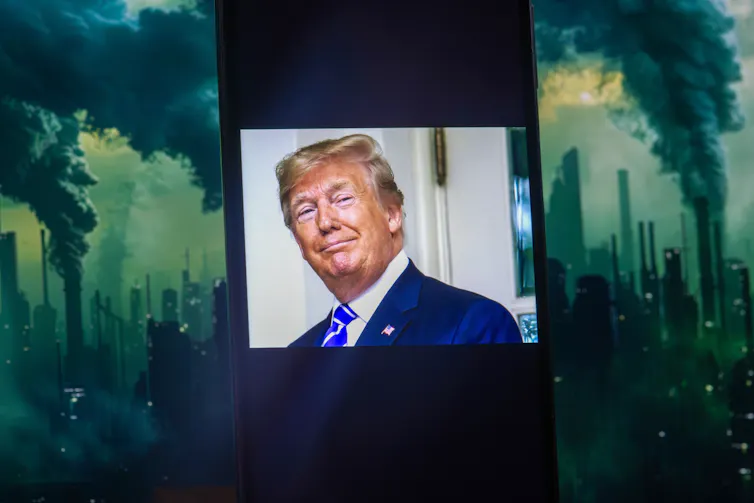
Climate scientists are probably among those most aggrieved by Donald Trump’s return as US president.
Trump has scoffed at the increasingly dire warnings of these scientists and declared his enthusiasm for digging up and burning the coal, oil and gas that is overheating Earth. His empowerment of the far right dims prospects for collective solutions to collective problems, but what is he likely to change about US climate policy?
Trump has not published a climate agenda. To discern his impact on domestic and international policy, we have to sift through statements, appointments to political positions and the record of his first term.
Here, our academics glean grim portents for the years ahead – and some continuities with supposedly pro-climate presidents of the past.
1. It’s still ‘drill, baby, drill’
Trump’s three-word campaign slogan, “drill, baby, drill”, is intended to sum up his plans for the US oil and gas industry. It’s also an apt summary of existing US energy policy.
Since 2008, when Democrat Barack Obama was elected, oil production has soared from a 50-year low of 6.8 billion barrels a day to 19.4 billion in 2023.
“The United States is already producing more crude oil than any country ever,” says Gautam Jain, an energy and finance expert at Columbia University.
“Oil and gas companies are buying back stocks and paying dividends to shareholders at a record pace, which they wouldn’t do if they saw better investment opportunities.”
2. We won’t always have Paris (or even Rio)
Trump withdrew the US from the 2015 Paris agreement on the first day of his second term (it took him six months to do it last time).
Jain frets that he may go further and exit international negotiations entirely, by rescinding his country’s membership of the UN Framework Convention on Climate Change, which was adopted in Rio de Janeiro in 1992.
Rejoining would be “nearly impossible”, Jain says, as a future president would need the consent of two-thirds of the Senate.
The US risks dropping the mantle of climate leadership on China, he adds. A recent analysis by Oxford economists Matthew Carl Ives and Natalie Sum Yue Chung suggests that that ship may have sailed years ago.
“China already processes most of the clean energy supply materials and has an advanced manufacturing base that is more capable of scaling up production to meet the rising demand,” they say.
3. The bucks stop here?
A US retreat from international climate diplomacy would afflict people who are particularly vulnerable to the mounting crisis in Earth’s atmosphere. Jain highlights how Trump’s predecessor Joe Biden donated several billions of dollars more towards renewable energy and adaptation in the developing world, compared with Trump in his first term.
However, a 2023 study that estimated each country’s “fair share” of this climate finance pot according to income, population size and historical emissions, issued this withering assessment while Biden was president:
“Based on these metrics, we found that the US is overwhelmingly responsible for the climate finance shortfall,” says environmental economist Sarah Colenbrander (University of Oxford).
“The world’s largest economy should be providing US$43.5 billion of climate finance a year. In 2021, it gave just US$9.3 billion – a meagre 21% of its fair share.”
4. Biden’s green tax credits may endure…
Trump could keep some Biden-era investments in clean energy (tax breaks for investors in renewables, for example) as the benefits are accruing in Republican states, Jain says.
He may still cut tax credits for people buying electric vehicles, though. This would slow the transition from combustion-engine transport by making it harder for people to afford an EV. (Biden’s 100% tariff on Chinese-made EVs hasn’t help either).
5. … but his methane tax probably won’t
Jain predicts that the greatest damage inflicted by Trump will be to the regulation of fossil fuels and emissions. In his crosshairs is a federal charge for the release of methane from oil and gas wells and pipelines.
Biden identified cutting methane emissions as a potential brake on the accelerating pace of global heating. That’s because methane is a greenhouse gas that lingers in our atmosphere for decades instead of centuries like CO₂ and is far more potent in trapping heat during that time.
Reducing methane emissions could reduce climate change quickly – a climate action lifeline we will be sorry to see thrown away.
6. The nuclear option
Trump seems to have a soft spot for one low-carbon energy source: nuclear power. Perhaps because civil nuclear maintains the skills and supply chains needed for its military applications?
7. Up is down, left is right
Democrats may regret making “trust the science” their dividing line against Trump.
Eric Nast, an environmental governance expert at the University of Guelph, tracked how the first Trump administration altered language on US government websites.
He expects Trump to disguise his regulation bonfire as “strengthening transparency” (blocking air pollution standards that rely on private health data) and championing “citizen science” (dismissing academics from advisory boards for private citizens rich in time and money, who might benefit from scrapping rules and limiting scrutiny).
8. Fighting fire with money
Tesla’s Elon Musk, Amazon’s Jeff Bezos and Meta’s Mark Zuckerberg attended Trump’s second inauguration. Their presence – plus a pointed farewell speech by Biden – has provoked murmurs of “oligarchy”: rule by people whose immense wealth and influence has utterly captured ostensibly democratic societies.
“As public firefighters struggle to cope, affluent residents and businesses have turned to private firefighting services to protect their properties,” says Doug Specht, a University of Westminster geographer.
9. Arctic relations
What explains Trump’s sudden interest in the Arctic? Oil, gas and critical minerals newly liberated by thawing ice in a region warming four times faster than the global average says engineer Tricia Stadnyk at the University of Calgary.
“The second Trump administration is aware of both the new opportunities and risks as global temperatures shatter new records and thresholds, and an ice-free Arctic becomes a possibility,” she says.
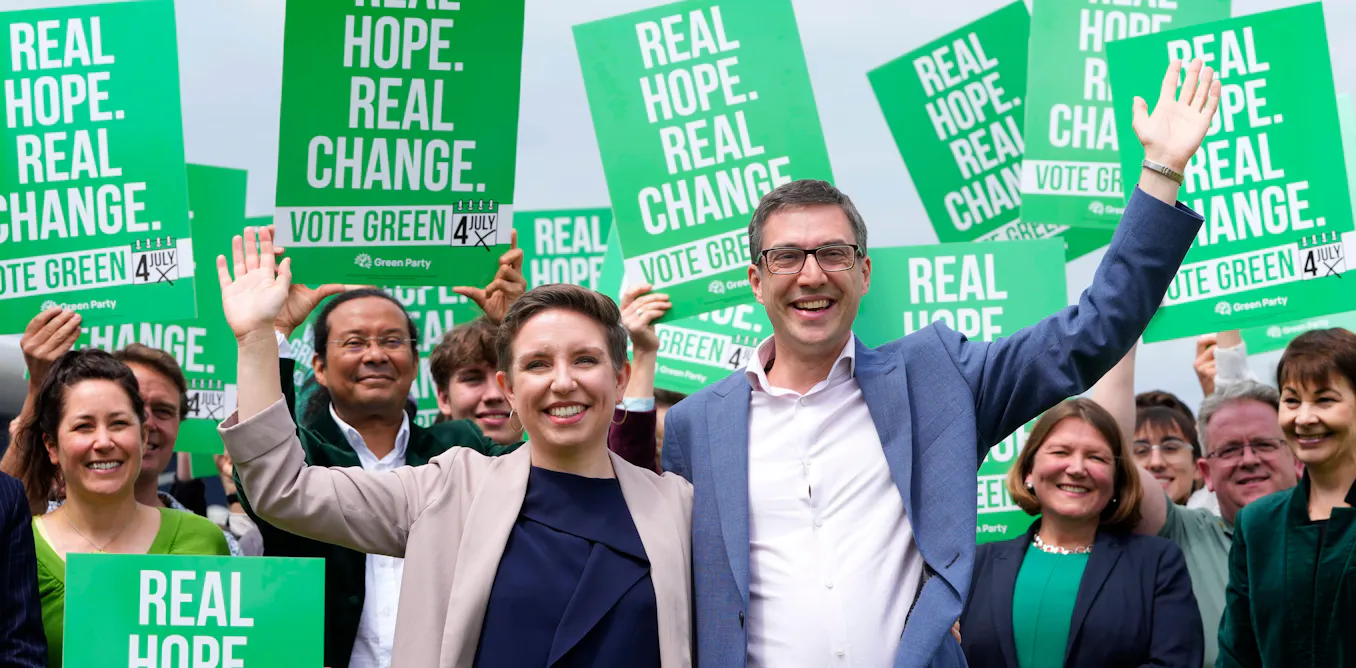
The Green party’s target is to take four seats at the upcoming UK election. Recognising it has no chance of forming a government, its manifesto is written from the perspective of a future pressure group within Westminster.
In doing so, the party highlights some key ideas and steps that could help the UK achieve meaningful climate action. This provides a refreshing attempt to outline an alternative way forward, at a time when climate leadership is severely lacking from other parties.
The Greens’ manifesto has climate action woven through it and the wording often emphasises the link between climate and socioeconomic issues, as the impacts of a changing climate could push more people into poverty and disrupt global food supply chains. It states: “The solutions to the climate crisis are the same as those needed to end the cost of living and inequity crises, making the future not just more liveable but fairer for us all too.”
The Greens argue that a rebalancing of the economy is required to achieve such a just transition. While the party stops short of calling for degrowth (producing fewer unnecessary goods and services in favour of more socially beneficial economic activity), the focus on a carbon tax and push for investment in public services and renewables could deliver a similar impact.
The party also wants to change how success is measured in the economy, calling for “new indicators that take account of the wellbeing of people and planet, and track our progress towards building a greener and fairer future”. This is the first time an established party has explicitly reframed what the measures of a successful nation should be.
The manifesto embraces an agreed basic standard of living and a set of planetary boundaries that our activities shouldn’t push us beyond, based on the theory of “doughnut economics”. By comparison, the existing model focuses almost solely on economic growth as the key measure of success.
Steps to decarbonise
One of the key issues the Greens want to address is the fact the UK’s housing stock is some of the worst in Europe. A vast programme of insulation and decarbonisation measures is needed across all tenures, and the Greens earmark £50 billion over the length of the parliament for retrofitting buildings. One issue here is that they don’t specify how the current supply chain could be scaled up to achieve this.
The manifesto does recognise that to reduce the UK’s carbon impact, buildings can’t just be demolished and rebuilt. Circularity is needed with zero extraction of new materials in the construction of new homes and buildings.
The Greens propose to tackle this with planning applications to include whole-life carbon and energy calculations. Plus, all materials from demolished buildings will need to be considered for reuse, and increased rates for the disposal of builders’ waste would ensure that this is financially viable.
Significant investment is also needed to upgrade the UK’s energy networks to enable decarbonisation, with another proposed £50 billion assigned to electricity generation, transmission and storage. The manifesto also highlights the potential for greater community involvement in – and direct benefit from – new solar and wind farms, which research suggests can speed up the provision of decentralised energy generation.
Where the Greens diverge most widely from the current energy decarbonisation orthodoxy is on nuclear. Their proposal to cancel funding for research on new technology, namely small modular reactors, appears reactionary at a time where its potential is still being explored.
The Green Party would not fund research into small modular nuclear reactors. stocker1970/Shutterstock
In transport, the Greens recognise that simply rolling out the sale of electric vehicles is not enough. They want to expand public transport and active travel (walking and cycling) through a £13 billion investment to deliver public transport as a service rather than for profit.
But this would depend on giving local authorities in England the powers that London has to act as bus operators. Combined Authorities in Greater Manchester, South and West Yorkshire are currently transitioning to a franchised system, but a full “London-style” network is some way off.
The Greens are also the only party to take the bold action of proposing a frequent flyer levy, although they do not detail how it will work. Typically, proposed plans for such levies increase on a sliding scale as the number of flights increases, therefore targeting the 15% of people who make 70% of the trips.
There are also proposals to remove the aviation fuels exemption from fuel duty and introduce a domestic flight ban on journeys that can be done by rail in less than three hours, making this manifesto is an exemplar of action targeted at reducing high consumption in the form of frequent flights.
How would they deliver it?
With all this investment, there’s inevitably a question about how the Greens would pay for their plans. Figures in the manifesto suggest significant government borrowing is needed for such radical changes.
On environmental measures alone, an average annual capital and revenue spend of £40 billion would be required, including £7 billion to be invested in climate adaptation. The entire manifesto requires a budget deficit of £65 billion a year for the next five years, gambled against the as yet unknown costs of inaction.
There are some other ideas on funding. A carbon tax would make polluters pay while providing money to invest in the green transition. And taxing multi-millionaires and billionaires could help fund public services, including renationalised utilities such as water companies.
There is also a question of how practical the plans are. Nothing within the Green party manifesto relies on tech that has yet to be invented or impossible interventions. This is not the stuff of techno-optimism. But there are no cities, regions or devolved nations in the UK that have yet adopted the root and branch transformation this manifesto would require.
However, surveys show most people in the UK want decisions on the overwhelming evidence for climate change and the nature crisis, in order to create a more resilient society. The Green manifesto, then, is an imperfect but sorely needed attempt at climate leadership that reflects the urgency of significant rather than iterative change. That should be welcomed in an election where you could otherwise be forgiven for thinking that a response to the climate emergency was an optional extra.
So again: why does this ailing technology enjoy such intense and persistent generosity?
The UK government has for a long time failed even to try to justify support for nuclear power in the kinds of detailed substantive energy terms that were once routine. The last properly rigorous energy white paper was in 2003.
Even before wind and solar costs plummeted, this recognised nuclear as “unattractive”. The delayed 2020 white paper didn’t detail any comparative nuclear and renewable costs, let alone justify why this more expensive option receives such disproportionate funding.
A document published with the latest announcement, Civil Nuclear: Roadmap to 2050, is also more about affirming official support than substantively justifying it. More significant – in this supposedly “civil” strategy – are multiple statements about addressing “civil and military nuclear ambitions” together to “identify opportunities to align the two across government”.
These pressures are acknowledged by other states with nuclear weapons, but were until now treated like a secret in the UK: civil nuclear energy maintains the skills and supply chains needed for military nuclear programmes.
The military has consistently called for civil nuclear
Official UK energy policy documents fail substantively to justify nuclear power, but on the military side the picture is clear.
For instance, in 2006 then prime minister Tony Blair performed a U-turn to ignore his own white paper and pledge nuclear power would be “back with a vengeance”. Widely criticised for resting on a “secret” process, this followed a major three volume study by the military-linked RAND Corporation for the Ministry of Defence (MoD) effectively warning that the UK “industrial base” for design, manufacture and maintenance of nuclear submarines would become unaffordable if the country phased out civil nuclear power.
A 2007 report by an executive from submarine-makers BAE Systems called for these military costs to be “masked” behind civil programmes. A secret MoD report in 2014 (later released by freedom of information) showed starkly how declining nuclear power erodes military nuclear skills.
In 2017, submarine reactor manufacturer Rolls Royce even issued a dedicated report, marshalling the case for expensive “small modular reactors” to “relieve the Ministry of Defence of the burden of developing and retaining skills and capability”.
The government itself has remained coy about acknowledging this pressure to “mask” military costs behind civilian programmes. Yet the logic is clear in repeated emphasis on the supposedly self-evident imperative to “keep the nuclear option open” – as if this were an end in itself, no matter what the cost. Energy ministers are occasionally more candid, with one calling civil-military distinctions “artifical” and quietly saying: “I want to include the MoD more in everything we do”.
In 2017, we submitted evidence to a parliamentary public accounts committee investigation of the deal to build Hinkley Point C power plant. On the basis of our evidence, the committee asked the then MoD head (who – notably – previously oversaw civil nuclear contract negotiations) about the military nuclear links. His response:
We are completing the build of the nuclear submarines which carry conventional weaponry. We have at some point to renew the warheads, so there is very definitely an opportunity here for the nation to grasp in terms of building up its nuclear skills. I do not think that that is going to happen by accident; it is going to require concerted government action to make it happen.
This is even more evident in actions than words. For instance hundreds of millions of pounds have been prioritised for a nuclear innovation programme and a nuclear sector deal which is “committed to increasing the opportunities for transferability between civil and defense industries”.
An open secret
Despite all this, military pressures for nuclear power are not widely recognised in the UK. On the few occasions when it receives media attention, the link has been officially denied.
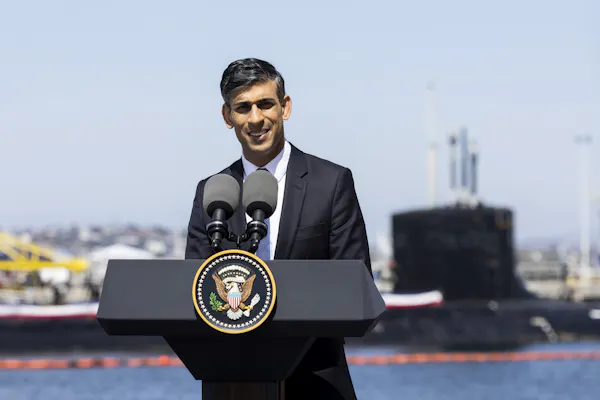
UK prime minister Rishi Sunak announces a US-UK-Australia nuclear submarine deal in March 2023. Etienne Laurent / EPA
Other nuclear-armed states are also striving to maintain expensive military infrastructures (especially around submarine reactors) just when the civilian industry is obsolescing. This is true in the US, France, Russia and China.
Other countries tend to be more open about it, with the interdependence acknowledged at presidential level in the US for instance. French president Emmanuel Macron summarises: “without civil nuclear power, no military nuclear power, without military nuclear, no civil nuclear”.
This is largely why nuclear-armed France is pressing the European Union to support nuclear power. This is why non-nuclear-armed Germany has phased out the nuclear technologies it once lead the world in. This is why other nuclear-armed states are so disproportionately fixated by nuclear power.
Neglect of this picture makes it all the more disturbing. Outside defence budgets, off the public books and away from due scrutiny, expensive support is being lavished on a joint civil-military nuclear industrial base largely to help fund military needs. These concealed subsidies make nuclear submarines look affordable, but electricity and climate action more costly.
The conclusions are not self-evident. Some might argue military rationales justify excessive nuclear costs. But history teaches that policies are more likely to go awry if reasons are concealed. In the UK – where nuclear realities have been strongly officially denied – the issues are not just about energy, or climate, but democracy.
The Conversation asked the UK Department for Energy Security and Net Zero to comment but did not receive a reply before the publication deadline.