Palantir is supporting violent US hegemony. It has no place in UK public services | Ina Fassbender / AFP via Getty Images
Palantir is not a normal software company. It was founded with an explicit mission which remains at the heart of its operations today: to maintain US global domination.
We know exactly what that means. Endless wars. Drone strikes. A vast machinery of surveillance and occupation stretching from Afghanistan and Iraq to the ongoing genocide in Gaza. A world in which Washington’s military reach grows ever longer, and the UK prime minister increasingly behaves less like an ally and more like a compliant poodle, nodding along to whatever the White House demands.
On an investor call last February, Palantir’s CEO, Alex Karp, said he was “super proud” of what his company does. Perhaps he was referring to Palantir’s role in enabling ICE to target migrant communities and tear families apart. Or perhaps he meant reports that its technology has allegedly helped the Israeli military generate “kill lists” – a practice condemned by human-rights organisations for contributing to the mass civilian casualties we are witnessing in Gaza.
Whatever Karp had in mind, Keir Starmer did not appear troubled. Later that month, he flew to Palantir’s Washington headquarters to kiss the ring of a corporation deeply embedded in the US military and intelligence infrastructure. He did so alongside his then US ambassador, Peter Mandelson – close friend of the late notorious paedophile Jeffrey Epstein – whose lobbying firm, Global Counsel, has long represented Palantir.
Since then, this government has only tightened its embrace. Building on ties established under the Conservatives, Labour is embedding a company accused by campaigners of facilitating human-rights violations deeper and deeper into our public life. Palantir already operates inside the NHS and across Whitehall – particularly within the Ministry of Defence – pulling Britain further into the slipstream of US military priorities and the worst excesses of the American security state.
No company so entangled in foreign military operations and border policing should be anywhere near our public services. Full stop.
Experts and civil liberties campaigners have repeatedly warned about Palantir’s expanding access to sensitive British data, including NHS medical records – data that the US private healthcare industry is eager to exploit. The risks to privacy, accountability and democracy are profound.
Yet, as with the Tories before them, nothing is off the table for this Labour government when it comes to carving up public services for multinational corporations and their lobbyists. Their deference to Washington is now so complete that they barely bother to conceal their enthusiasm for cosying up to Donald Trump’s network of tech-bro oligarchs. We saw this clearly last summer, when Starmer rolled out the red carpet for Palantir and signed off a £1.5bn “strategic partnership” – at the very moment public services across Britain were collapsing under austerity. It begs the question: who, exactly, is Starmer unwilling to roll out the blood-stained red carpet for?
Across the country, libraries are closing. Swimming pools are shutting. Councils are going bankrupt. But somehow, there is always money available for a CIA-funded contractor at the heart of the US war machine.
And it does not stop at Westminster. Palantir’s tentacles are already extending into our communities. In my constituency of Coventry, the Labour-run council awarded the company a £500,000 contract to develop an AI tool for children’s services. Yes – a firm implicated in military targeting abroad and the kidnapping of children as young as five in the US, was hired to shape how we safeguard children here at home.
We fought back. Led by Your Party councillor, Grace Lewis, and backed by our unions and community campaigners, we forced that contract into review. And let me be absolutely clear: we will not stop until it is cancelled entirely.
But this fight is bigger than one contract or one city. We need a politics that draws a clear line: Palantir – and every corporation that profits from occupation, surveillance, genocide and war – has no place in our society and should never again receive a penny of public money.
This country needs a party willing to resist a government that bows to Washington, sells off our public services and hands power to war-profiteering tech giants. That party is Your Party.
And our fight is only just beginning.
Zarah Sultana is the Your Party MP for Coventry South
Genocide denier and Current UK Prime Minister Keir Starmer is quoted that he supports Zionism without qualification. He also confirms that UK air force support has been essential in Israel’s mass-murdering genocide. Includes URLs https://www.declassifieduk.org/keir-starmers-100-spy-flights-over-gaza-in-support-of-israel/ and https://youtu.be/O74hZCKKdpAKeir Starmer objects to criticism of the IDF. He asks how could anyone object to them starving people to death, forced marches like the Nazis did, bombing Gaza’s hospitals and universities, mass-murdering journalists, healthworkers and starving people queuing for food, killing and raping prisoners and murdering children. He calls for people to stop obstructing his genocide for Israel.Orcas discuss Genocide-supporting and complicit Zionists. Donald Trump, Keith Starmer, David Lammy, Rachel Reeves, Angela Rayner and Wes Streeting are acknowledged as evil genocide-complicit and supporting cnuts.
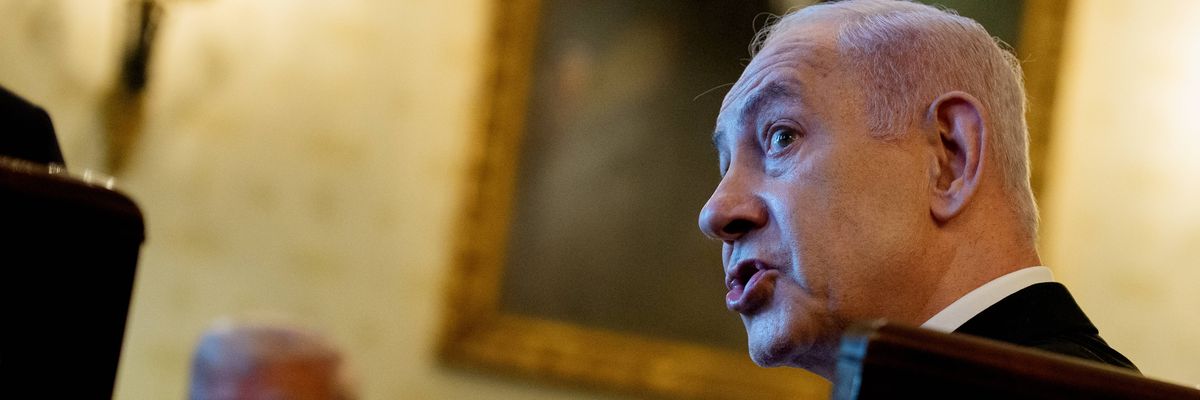
Israeli Prime Minister Benjamin Netanyahu, accompanied by US President Donald Trump speaks during a dinner in the Blue Room of the White House on July 7, 2025 in Washington, DC. (Photo by Andrew Harnik/Getty Images)
Amid a growing rift between Israel and the White House, one foreign policy analyst says the meeting “will signal whether Washington is prepared to continue underwriting open-ended escalation.”
As Israeli Prime Minister Benjamin Netanyahu heads to Mar-a-Lago to meet with US President Donald Trump on Monday, amid a growing rift with the president and his advisers, reports say he’ll seek to push the US back toward war with Iran.
Last week, NBC Newsreported that at the meeting, “Netanyahu is expected to make the case to Trump that Iran’s expansion of its ballistic missile program poses a threat that could necessitate swift action” and that “the Israeli leader is expected to present Trump with options for the US to join or assist in any new military operations.”
“Netanyahu plans to press Donald Trump for US backing for another round of war with Iran, now framed around Iran’s ballistic missile program,” said Sina Toossi, a senior fellow at the Center for International Policy. “Netanyahu’s pivot to missiles should therefore be read not as the discovery of a new threat, but as an effort to manufacture a replacement casus belli after the nuclear argument collapsed.”
He noted criticisms levied against Netanyahu by Yair Golan, chair of the Democrats, a center-left party in Israel, earlier this week: “How is it possible that last June, at the end of the war with Iran, Benjamin Netanyahu solemnly declared that ‘Israel had eliminated Iran’s nuclear threat and severely damaged its missile array’; and that this was a ‘historic victory’—and today, less than six months later, he is running to the president of the United States to beg for permission to attack Iran again?” Golan said.
Iran is just one of several areas the two will likely discuss on Monday. According to Israeli officials who spoke to the WashingtonPost, Netanyahu also reportedly wants Trump to “take a tougher stance on Gaza and require that Hamas disarm before Israeli troops further withdraw as part of the second phase of Trump’s 20-point peace plan.”
The chief of Israel’s armed forces suggested earlier this week that its occupation of more than half of Gaza would be permanent, but walked those comments back after reported behind-the-scenes outrage in the White House. Meanwhile, Trump—invested in his image as a peacemaker—has reportedly balked at Israel’s routine violations of the ceasefire agreement he helped to broker in October.
Near-daily strikes have resulted in the death of at least 418 Palestinians, according to the Gaza Media Office. Meanwhile, Israel’s continued blockade of humanitarian aid has left hundreds of thousands of people—displaced from homes destroyed by Israeli bombing—to languish in the cold without tents. Desperately needed fuel, food, and medicine have entered the strip at far lower numbers than the ceasefire agreement required.
As Axiosreported on Friday, Trump’s advisers increasingly fear that Netanyahu is intentionally slow-walking and undermining the peace process in hopes of resuming the war.
Netanyahu also seeks Trump’s continued backing of Israel’s territorial expansion in Syria. Earlier this month, the Israel Defense Forces (IDF) pushed through a UN-monitored demilitarized zone between Israeli and Syrian-held positions in the Golan Heights, which Israel illegally occupies.
This push into southern Syria went against the wishes of the Trump administration, which feared it could destabilize the Western-backed government that rules in Damascus following the ouster of former President Bashar al-Assad.
Israel has also routinely struck Lebanon in violation of the US-brokered ceasefire it signed with Hezbollah in late 2024, with bombings becoming a near-daily occurrence in December. Last month, the UN reported that at least 127 civilians, including children, had been killed in Israeli strikes since the ceasefire began.
“Netanyahu’s visit unfolds against a backdrop of unresolved fronts, with widening disputes with Washington over the second phase of the Gaza ceasefire, including postwar governance, reconstruction, and Turkish involvement,” Toossi said. “At the same time, Israel is seeking greater latitude to escalate again against Hezbollah in Lebanon, an end to US accommodation of Syria’s new leadership, and firm assurances on expanded military aid.”
“Taken together, Netanyahu’s visit is less about resolving any single crisis than about postponing strategic reckoning,” he continued. “The outcome will signal whether Washington is prepared to continue underwriting open-ended escalation, or whether this meeting marks the beginning of clearer limits on Israel’s regional strategy.”
The move came more than six decades after Israel occupied the concerned territories, and over two years after it started its all-out aggression across West Asia.
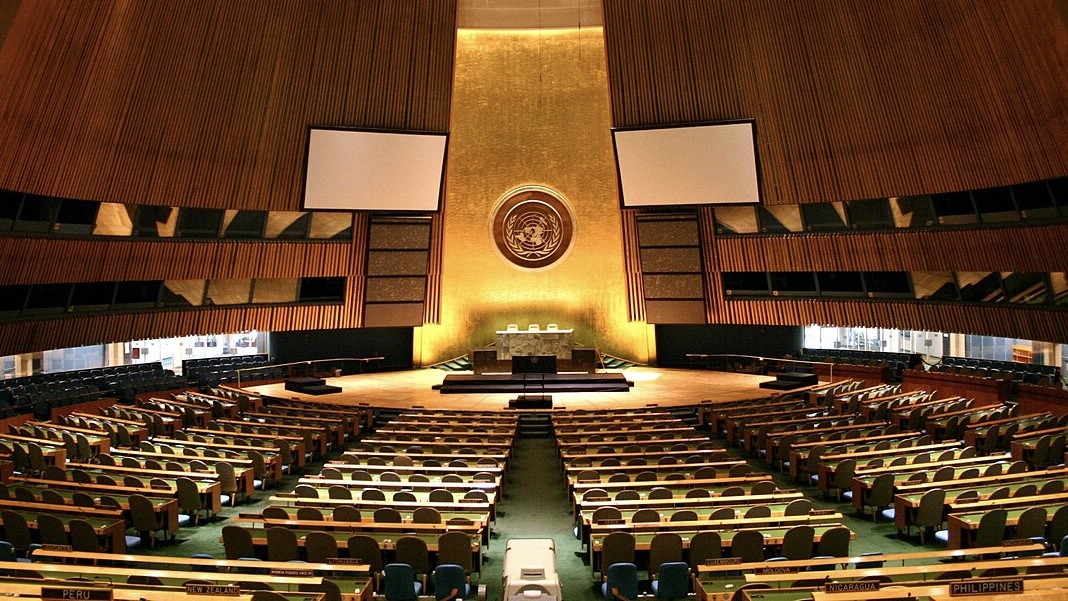
The United Nations General Assembly (UNGA) adopted two resolutions on Tuesday, December 2, demanding Israel withdraw from Palestinian and Syrian territories that it occupied in 1967. These territories include the West Bank (including East Jerusalem), the besieged Gaza Strip, and Syria’s Golan Heights.
It is worth noting that the first resolution, which called for ending the Israeli occupation of the Palestinian territories passed with 151 votes in favor, 11 against, and 11 abstentions. Meanwhile, the second resolution on ending the occupation of the Syrian Golan Heights passed with 123 votes in favor, 7 against and 41 abstentions.
Annalena Baerbock: self-determination is “not a privilege to be earned, but a right to be upheld”
“For 78 years the Palestinian people have been denied their inalienable rights – in particular, their right to self-determination. Now, it is high time that we take decisive action to end this decades-long stalemate,” the President of the UNGA, Annalena Baerbock, stated at the 80th session, during which the resolutions were adopted.
Referring to Israel’s all-out multi-front war across West Asia, Baerbock pointed out that what happened during the last couple of years underscores the importance of the two-state solution to achieve “lasting peace”. A solution, which according to the UN senior official, should have been reached decades ago.
Baerbock emphasised that “self-determination, and the right to live in one’s own state in peace, security, and dignity, free from war, occupation and violence, is not a privilege to be earned, but a right to be upheld.”
UN considers Israel’s annexation of Syria’s Golan Heights as “null and void”
Regarding the Syrian Golan Heights, the resolution adopted by the UNGA considered the decision which Israel made on December 14, 1981 “to impose its laws, jurisdiction and administration on the occupied Syrian Golan” as “null and void”, calling for its withdrawal.
The resolution demanded Israel “withdraw from all the occupied Syrian Golan to the line of 4 June 1967 in implementation of the relevant Security Council resolutions.”
The UNGA further resolved that Israel’s continued occupation and de facto annexation of the Syrian Golan constitute “a stumbling block in the way of achieving a just, comprehensive and lasting peace in the region.”
The United Nations Security Council had already unanimously adopted resolution 497 on December 17, 1981, deciding that the Israeli Golan Heights Law, based on which Israel effectively annexed the Golan Heights, was “null and void and without international legal effect”. The resolution had also called on Israel to rescind its action.
UN resolutions are nominal when Israel is the aggressor
While the UNGA’s resolutions were welcomed by many states including the Palestinian Authority and Syria’s interim government, critics deemed the efforts as nominal, performative, and with a low likelihood of being implemented as long as the United States continues to support Israel unconditionally.
The multiple US vetoes of UN Security Council resolutions calling for a ceasefire during Israel’s genocidal aggression on Gaza, proves this particular argument.
Furthermore, many Palestinians still view the two-state solution as unfeasible and insufficient to address the inalienable Palestinian rights and demands, above all the right of return, and another way to recognize and cover the occupation.
This is reminiscent of late Palestinian writer and revolutionary leader Ghassan Kanafani when he said:
“They steal your bread, then give you a crumb of it. Then they demand you thank them for their generosity. O their audacity!”
For over a century, the Tata Group has been celebrated as the conscience of Indian capitalism — a family of companies that fused profit with philanthropy, progress with ethics. To millions of Indians, “Tata” evokes trust: a brand woven into the very narrative of modern India. Yet behind this carefully cultivated image of virtue lies a darker reality – one that now links Tata directly to the Israeli war machine devastating Gaza.
A new report released by the U.S.-based South Asian collective Salam, titled “Architects of Occupation: The Tata Group, Indian Capital, and the India–Israel Alliance,” alleges that Tata is “at the heart” of the India–Israel military partnership and is “fundamentally embedded in the architecture of occupation, surveillance, and dispossession.” TRT World’s coverage of the report further details how the conglomerate’s various subsidiaries feed directly into Israel’s military-industrial complex.
The findings: A web of complicity
The report identifies several subsidiaries of the Tata Group as active participants in Israel’s defence and security ecosystem.
Tata Advanced Systems Limited (TASL), one of India’s largest private defence manufacturers, has long-standing partnerships with Israel Aerospace Industries (IAI). Together, they manufacture key components for the Barak-8 surface-to-air missile system, which forms the backbone of Israel’s naval defence and is used in strikes on Gaza. TASL also produces aerostructures for F-16 fighter jets and fuselages for Apache attack helicopters, both extensively deployed by the Israeli Air Force.
Jaguar Land Rover (JLR), another Tata subsidiary, is alleged to provide the chassis for MDT David light armoured vehicles used by Israeli forces in West Bank patrols and urban crowd-suppression.
Tata Consultancy Services (TCS), the IT giant, is reportedly involved in building digital infrastructure for Israel’s governmental and financial sectors, including participation in Project Nimbus — the controversial cloud-computing contract co-run by Google and Amazon that facilitates Israeli state surveillance.
The Salam report argues that these are not isolated commercial arrangements but part of a systemic integration of Indian capital within Israel’s “occupation economy.”
Tata’s public sponsorship of global events, such as the New York City Marathon, is described as “sports-washing” — a means of masking its participation in war profiteering behind gestures of global modernity and social responsibility. Despite repeated inquiries, Tata Group has not issued a public response to the allegations.
From state to corporation: The India–Israel nexus
Tata’s complicity does not exist in a vacuum. It is the corporate mirror of a larger state transformation in India’s foreign and defence policy.
Since the 1990s, and more assertively under Narendra Modi, India has shifted from quiet engagement with Israel to a full-blown strategic partnership. India is now the largest buyer of Israeli arms, accounting for roughly 40–45 per cent of Israel’s defence exports.
Joint ventures proliferate:
The Barak-8 missile project, co-developed by DRDO and IAI, is assembled in part at Tata facilities.
India’s purchase of Heron drones, Phalcon AWACS systems, and Spike anti-tank missiles are products of the same industrial network that sustains Israel’s occupation of Palestine.
Several of these systems are used by India in Kashmir, linking one occupation to another — and revealing a disturbing symmetry between the surveillance of Palestinians and Kashmiris.
In this geopolitical alignment, Hindutva nationalism and Zionism converge on the ideological front. Both justify domination through a rhetoric of “security” and “counter-terrorism.” Both normalise militarism as a form of patriotism. And both have turned their societies into laboratories of digital surveillance and ethno-religious control.
Thus, the Tata Group’s partnerships are not merely commercial. They are the economic expression of a shared political project — where corporate capital, state power, and ideology intertwine.
Tata is hardly alone. Global corporations have long buttressed the Israeli state’s apparatus of control. Hewlett-Packard, Caterpillar, and now Google and Amazon have all been accused of enabling occupation and surveillance. What makes Tata’s case particularly striking is its moral posture.
A company that invokes Gandhi and philanthropy in its advertising now profits from an economy of death. Its own code of conduct commits it to the UN Guiding Principles on Business and Human Rights, which prohibit participation in human-rights violations. Yet there is no visible accountability mechanism — no disclosure of its defence revenues, no public audit of ethical compliance, and no internal oversight on the human impact of its contracts.
The Salam report calls this “ethical evasion through corporate nationalism”: the idea that Indian companies can deflect scrutiny by invoking patriotism and “Make in India” rhetoric. This is a convenient cover for profiteering from war.
Silence and complicity in India
Mainstream Indian media have barely reported on the Tata revelations. Nor has the Indian government shown any interest in investigating them. On the contrary, officials continue to trumpet the India–Israel “strategic embrace” as a model of technological progress.
Civil society, too, has grown hesitant. Decades ago, India was a vocal defender of the Palestinian cause. Today, solidarity has been replaced by silence, fear, and a dangerous normalization of genocide. Universities that once hosted discussions on occupation now avoid the subject. Protesters risk arrest under draconian laws.
The corporate capture of conscience mirrors a broader moral collapse in public life.
What accountability looks like
International law is clear: any company knowingly supplying equipment or services that enable war crimes may be complicit in those crimes. The Rome Statute of the International Criminal Court and the UN Guiding Principles both outline corporate responsibilities in situations of armed conflict.
Tata’s alleged manufacturing of components for weapons used in Gaza should therefore be subject to independent investigation. Investors, trade unions, and consumers have the right — and duty — to demand transparency.
There are precedents: in the 1980s, global campaigns pressured companies to divest from apartheid South Africa. A similar moral movement must emerge against those profiteering from Israeli apartheid. The boycott, divestment, and sanctions (BDS) campaign is one such call, and Indian civil society should not remain absent from it.
When conscience is outsourced
Tata’s silence in the face of genocide is not just a corporate failure; it reflects the hollowness of India’s moral claim to be the land of Gandhi. What remains of that heritage when its flagship corporation contributes to the machinery of ethnic cleansing?
As Gaza’s children starve and entire families are buried under rubble, the Tata empire continues to sell technology to the state that kills them — while its advertisements preach compassion and “building a better tomorrow.”
No nation can claim moral leadership while its corporations build profit from the blood of the oppressed. The time for polite silence is over. India must confront what it has become — and reclaim the humanity it once pledged to the world.
The views expressed in this article belong to the author and do not necessarily reflect the editorial policy of Middle East Monitor.
This work by Middle East Monitor is licensed under a Creative Commons Attribution-NonCommercial-ShareAlike 4.0 International License.
Genocide denier and Current UK Prime Minister Keir Starmer is quoted that he supports Zionism without qualification. He also confirms that UK air force support has been essential in Israel’s mass-murdering genocide. Includes URLs https://www.declassifieduk.org/keir-starmers-100-spy-flights-over-gaza-in-support-of-israel/ and https://youtu.be/O74hZCKKdpAKeir Starmer objects to criticism of the IDF. He asks how could anyone object to them starving people to death, forced marches like the Nazis did, bombing Gaza’s hospitals and universities, mass-murdering journalists, healthworkers and starving people queuing for food, killing and raping prisoners and murdering children. He calls for people to stop obstructing his genocide for Israel.Orcas discuss Genocide-supporting and complicit Zionists. Donald Trump, Keith Starmer, David Lammy, Rachel Reeves, Angela Rayner and Wes Streeting are acknowledged as evil genocide-complicit and supporting cnuts.
Activists with the group Geef Tegengas (Push Back) lock themselves to a pole near the entrance to Microsoft’s data center near Middenmeer, Netherlands on August 10, 2025 (Photo: Geef Tegengas/Instagram)
“Microsoft stores thousands of terabytes of surveillance data from the Israeli intelligence service Unit 8200—data that is used to oppress, imprison, and murder innocent Palestinians.”
Protesters staged a demonstration Sunday at a Microsoft data center in the Netherlands following last week’s revelation that the facility is being used by the Israel Defense Forces to plan genocidal airstrikes in Gaza and to store massive amounts of intelligence on Palestinians in the illegally occupied territories.
Members of the direct action group Geef Tegengas (Push Back) led the demonstration at Microsoft’s data center near the northwestern city of Middenmeer. Some activists scaled the roof of a building and lit flares, while others locked themselves to poles and blocked an entrance to the facility.
On its Instagram page, Geef Tegengas said it was targeting “genocide in our backyard.”
“Microsoft stores thousands of terabytes of surveillance data from the Israeli intelligence service Unit 8200—data that is used to oppress, imprison, and murder innocent Palestinians,” the group said. “Thanks to its Azure cloud service, Microsoft plays a direct role in the genocide of the people of Gaza.”
Geef Tegengas demanded that Microsoft “remove all Israeli intelligence data” and urged employees at the facility to “lay down your work.”
The group also called on people to boycott Microsoft and support the global Boycott, Divestment, and Sanctions movement against Israel.
“We will continue to take action until this genocidal collaboration stops,” Geef Tegengas vowed.
These folks of ‘Geef Tegengas’ need a world stage. They are there in Middenmeer for an important reason: highlighting Microsoft’s complicity on Dutch soil in war crimes.
Sunday’s demonstration followed the publication last week of a joint investigation by The Guardian, +972 Magazine, and Local Call revealing that Unit 8200, the largest unit in the Israel Defense Forces (IDF), is storing 11,500 terabytes of data containing roughly 200 million hours of Palestinians’ phone call recordings on the Azure servers in the Netherlands.
According to the investigation—which involved interviews with 11 Microsoft and Israeli intelligence sources and a cache of leaked company documents—former Unit 8200 head Yossi Sariel traveled to Microsoft headquarters in Redmond, Washington in the United States in 2021 to meet CEO Satya Nadella.
Sniffing a lucrative opportunity, Nadella agreed to grant the cyberwarfare unit access to a special area of the Azure cloud platform. The project’s goal was storing “a million calls per hour.”
An intelligence source said that some of the Microsoft employees involved in the undertaking were Unit 8200 veterans, making collaboration “much easier.”
One leaked Microsoft document showed that company leaders embraced the IDF partnership as “an incredibly powerful brand moment.”
Microsoft responded to the investigation by claiming that Nadella was unaware of exactly what kind of data Unit 8200 was storing on the company’s servers.
Three Unit 8200 sources told The Guardian that Azure has facilitated IDF airstrikes on Gaza, where 674 days of U.S.-backed IDF bombing, invasion, and siege have left at least 229,000 Palestinians dead, maimed, or missing amid a worsening famine and the specter of ethnic cleansing and full Israeli occupation.
Israel’s conduct in the war is the subject of an ongoing genocide case at the International Court of Justice in The Hague, Netherlands. The International Criminal Court, also located in the Dutch city, last year issued arrest warrants for Israeli Prime Minister Benjamin Netanyahu and former Defense Minister Yoav Gallant for alleged crimes against humanity and war crimes in Gaza.
Microsoft said Monday that it has launched an investigation into how Unit 8200 is using Azure. This, after the company said in May that an internal review “found no evidence to date that Microsoft’s Azure and [artificial intelligence] technologies have been used to target or harm people in the conflict in Gaza.”
A Microsoft spokesperson said Monday that the company “takes these allegations seriously, as shown by our previous independent investigation.”
“As we receive new information, we’re committed to making sure we have a chance to validate any new data and take any needed action,” the spokesperson added.
The Guardianreported Monday that the news outlets’ investigation prompted debate last week in the Staten-Generaal, the Dutch Parliament, where Christine Teunissen of the left-wing Party for the Animals pressed the government on what it is doing to prevent data stored in the Netherlands from “being used to commit genocide” in Gaza.
Dutch Foreign Minister Caspar Veldkamp replied that he would “request further investigation.”
“If there are serious indications of criminal offenses in that information, legal proceedings can of course be initiated, and that is then up to the public prosecution service,” he said.
The Guardian/+972 Magazine/Local Call investigation follows last month’s revelation by the latter two outlets that the IDF has undertaken a “dramatic increase in the purchase of services from Google Cloud, Amazon’s AWS, and Microsoft Azure.”
Big Tech’s profiteering from Israel’s annihilation of Gaza and occupation, settler colonization, and apartheid in the West Bank has sparked numerous protests, including by employees of complicit companies. At least dozens of workers at companies including Google, Meta, and Microsoft have been fired for Palestine advocacy. Others have resigned in protest.
Hossam Nasr, a former Microsoft software engineer, was fired after organizing an October 2024 “No Azure for Apartheid” vigil for Palestinians killed by Israeli forces in Gaza.
Nasr told The Guardian after his termination that he was fired “simply because we were daring to humanize Palestinians, and simply because we were daring to say that Microsoft should not be complicit with an army that is plausibly accused of genocide.”