Broken promises, rising taxes: Inside Reform UK’s first year in power

Spread the love

Original article by Sian Norris republished form OpenDemocracy

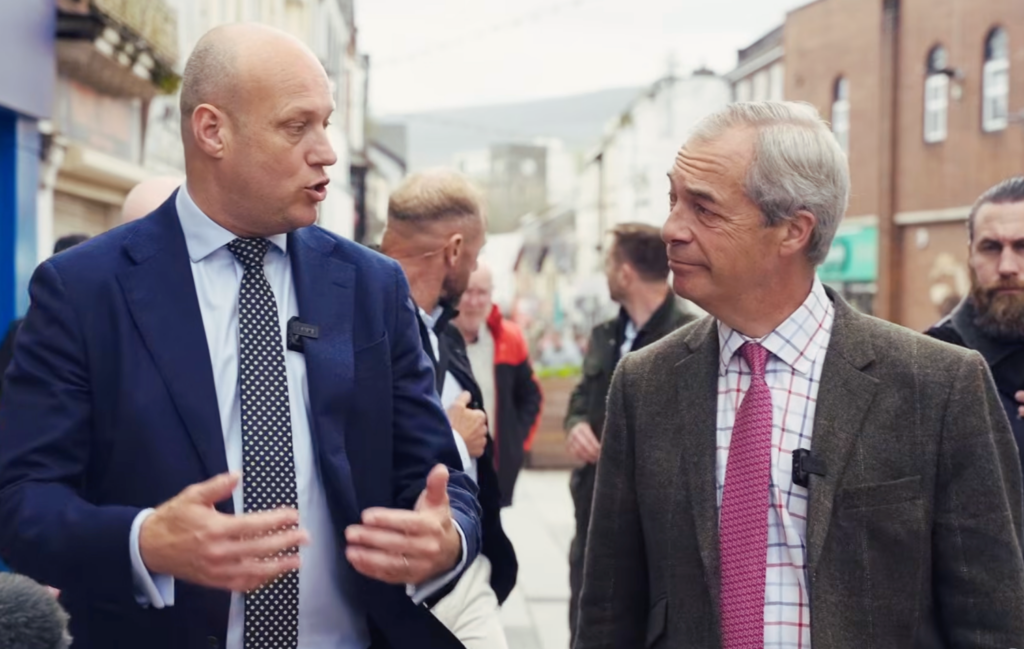
Credit: James Battershill

Reform has run councils for a year. As local elections near, we ask: how has the party performed in power?

Broken promises, broken roads, and broken council leadership teams – that’s the outcome of Reform UK’s first year in power, an investigation by openDemocracy reveals.

Twelve months ago, Nigel Farage’s latest party took control of 10 English councils, meaning they now hold a total of 985 seats across Britain. Now, as Reform seeks to increase its foothold at elections in other English local authorities and pick up seats in the Scottish and Welsh Parliaments next week, we have examined its track record in office, finding that it failed to deliver on its pledges across the board.

Reform is still a young party, founded in 2022. To win so many seats after just three years – and on a promise to do things ‘differently’ – demands scrutiny, particularly when early polls suggest they could win government at the next general election.

While Reform was never going to be able to meaningfully deliver on many of its 2025 campaign points, which focused on policy areas not devolved to local government – such as illegal immigration, net-zero “madness” and law and order – we have been able to shed some light on its local priorities by reviewing election leaflets that it distributed in different areas of the country. 

These materials reveal that Reform intended to slash council tax, fix potholes, and cut council waste by emulating Elon Musk’s ‘DOGE’ drive in Donald Trump’s White House. Yet even in these areas, our analysis shows it frequently fell short on its promises.

Instead, Reform raised taxes in every council where it holds or shares power. Potholes continue to cause accidents and damage, and councillors’ struggles over where to make promised savings have put much-loved local services at risk of closure.

For some Reform councillors, the broken promises were too much. The party has lost more than 70 of its elected local politicians in the space of a year, according to research by Liberal Democrat peer Mark Pack, although some were forced to resign or sacked.

One former Reform councillor, David Taylor, resigned from the party during a live BBC interview in February over the 9% council tax rise in Worcestershire, where Reform is the largest party but lacks overall control. 

Taylor, who now represents the ward of Redditch East as an independent councillor, told openDemocracy of his discomfort at being expected to pass both the tax increase and bonuses of up to 10% for the council’s senior staff, who reportedly have six-figure salaries.

“I run a small recruitment company, and the party wanted me to sit on the council’s employment panel,” he said. “The discussion was on bonus payments. This was to pay a retention bonus to all staff, but realistically in that panel you are only dealing with senior staff. I was not going to vote for that, not when there is so much debt, redundancies and people being put on shorter hours – and then put up council tax.”

The policy shift felt at odds with the reasons why Taylor ran for office in the first place. 

“I live in my community, all my family live in my constituency, all my friends live in my constituency. I talk directly with people who are impacted every day and who know the things we want to change,” he explained. “As a councillor, I could focus on helping people who matter most to me. We campaigned on lowering taxes and saving money, and none of it happened.” 

‘If anything, it’s worse’

As last year’s local elections neared, Farage seized on one particular issue that he said was “getting worse all over the country”. He rode into a Reform rally on a JCB Pothole Pro and posted videos of himself playing ‘pothole golf’ and planting flowers in holes in the road.

Since then, though, Reform has struggled to keep its promise to drivers, according to Freedom of Information data obtained by openDemocracy.

We asked the ten Reform-led councils how many complaints they received about potholes in the years before and after the party took power. Only five councils responded; complaints had increased in four. 

Staffordshire, where Farage filmed himself planting flowers in potholes, was among four councils to fail to respond to our FOI request within the 20-day legal time limit, while a fifth rejected our request.

In West Northamptonshire, residents made an average of 1,193 complaints about potholes each month after Reform took power – a sharp increase since the council was controlled by the Conservatives, when it received an average of 860 pothole-related complaints each month, according to data obtained by openDemocracy. 

The data also shows that many of the complaints made since Reform took office concerned potholes that the council claimed to have already fixed, and that council staff marked 381 as “unable to fix”..

In March of this year, one aggrieved local complained: “Pot hole has been reported, a bodge job infill was done, this was not done to any standard, when your workmen arrived today they were very rude to my husband when he asked if he could help. THIS POT HOLE IS STILL THERE.”

“I had an email though today, marking this pothole as fixed at 15:12,” wrote another resident. “I can confirm that I drove past this pothole at 15:49 and it definitely has not been repaired, and if anything has got significantly worse!”

This sentiment was echoed by Sally Keeble, the leader of the Labour group at West Northamptonshire council. “They are not repairing potholes,” she told openDemocracy. “If anything, it has got worse.”

Doncaster City Council received an average of 165 pothole complaints a month before Reform took power, rising to 147 complaints a month after. It did, however, also fix more potholes under Reform. Other councils recorded smaller numbers of complaints. 

While complaints persist, one company benefiting from the pothole crisis is JCB, which donated £200,000 to Reform in 2025 and whose owner, Conservative donor Lord Bamford, paid £8,400 for Farage and an aide to visit the firm’s factory via helicopter in October 2024.

The Reform-run council in Lincolnshire has invited the heavy machinery outfit back to re-trial its Pothole Pro despite it previously being rejected by the council after a nine-week trial in 2021, when engineers concluded “better tools” were available. The same model is now also being trialled by the Reform councils in Derbyshire and Staffordshire.

Culture wars 

Reform also promised to cut council waste by slashing spending on projects linked to “diversity, inclusion and equality” and “net-zero”. Once in power, however, the party found little to cut. 

Four of the 10 councils had no equality officers even before Reform took control, according to their Freedom of Information responses to openDemocracy. The three that did have a small number of equality staff still employed them one year later (three councils did not respond to our request). DEI training programmes were also still being run at the same levels.

“Everyone thought we’d come in and there were going to be these huge costs we could cut away, but there just aren’t,” one anonymous Reform cabinet member at Kent County Council told the Financial Times in October last year. Months later, a cabinet member at the council, Matthew Fraser Moat, told the same paper that Reform had “not actually made any cuts”. He later resigned from cabinet over the comment, which he said had been “twisted to fit what I believe to be an anti-KCC narrative”.

Durham council chose to attack “DEI” by withdrawing the £2,500 funding set aside for the annual local Pride march, a celebration of LGBTQ+ rights, which is due to take place on 30 May this year. It justified its decision in an email to organisers, and seen by openDemocracy, by saying that “the focus of the modern Pride movement has shifted in a way that many find divisive”. 

The council said it was taking “a principled stand that the council should not be in the position of subsidising events that have become primarily associated with the promotion of a specific and contested political ideology.” 

This week, it was reported in local media that Reform’s leader of the council, Andrew Husband, had been accused of homophobia after using an offensive slur on a social media post that openDemocracy has reviewed but is choosing not to repeat for legal reasons. We put this allegation to Husband, who called it “desperate deflection from the Labour Party which doesn’t deserve a response”.

Despite the cut, Pride is going ahead, with organiser Mel Metcalf saying: “We are fighting hate with love. We have a lot of support. A lot of unions are coming together to support us.” Still, Reform’s attitude to LGBTQ+ rights has had an effect, he said. 

“Some of our volunteers no longer feel confident wearing their rainbow T-shirts or lanyards in public for fear of being challenged. That’s the difference. There is a hesitation now in Durham, about not being as out or open as previous,” he said. “It is sad that people are feeling that way.”

But, Metcalf insists, “what will get us through is love, not hate.”

Reform councils have become embroiled in culture wars on issues surrounding flags, misogyny and racism. 

“The equalities stuff is appalling,” said Sally Keeble in West Northants. “Reform’s Peter York was in trouble for saying women should never have left the kitchen. Female councillors have resigned and when I challenged the leader of the council Mark Arnull about what he was doing to get more women into the cabinet, he accused me of promoting toxic identity politics. I thought it was an appalling response when you have to provide services to all communities.” 

Further north, in Derbyshire, councillor Stephen Reed apologised at the end of last year after using a council meeting to declare that if having a “view that says our citizens should come first rather than people jumping on boats and getting into the country illegally is racist, then guess what? I’m a racist and I’m proud of it!” 

The climate crisis is another front in Reform’s culture war.

Derbyshire council scrapped its climate change committee, with Labour group leader Anne Clarke telling openDemocracy: “They don’t believe in climate change. The committee ran for four years and was looking at the reductions on carbon in the council portfolio. Work was progressing’.” She added that the savings Reform made by scrapping the committee “are small”, describing the decision to do so as “disappointing”. 

Reform councillor Carol Wood, Derbyshire County Council’s cabinet member for net zero and environment, said: “Making sure this council is as efficient as it can be and that every pound of council tax-payers’ money is accounted for and spent wisely is our top priority.” Focus on environmental issues, she said, has moved under the “existing ‘Place’ scrutiny committee to streamline operations.”

Kent council has similarly abandoned its Net Zero 2030 Plan in favour of an Energy Efficiency Plan, branding the original as “unattainable” and a source of “financial and operational risk.” 

In Lincolnshire, rejecting what Conservative MP-turned-Reform mayor Andrea Jenkyns called “the net-zero bandwagon” has opened the doors to US fracking interests. According to reports in The Guardian, Jenkyns has courted Egdon Resources and its parent company, US fracker Heyco Energy, in the hope of bringing fracking to the region. The controversial energy method was effectively banned in England in 2019 due to earthquake concerns. 

Losing out

Despite promises to put Britain’s people first, our investigation learnt that Reform is failing local residents, including by threatening to close much-needed local services such as Glossop tip. 

“The local tip is something that everyone uses; it impacts on everyone,” Derbyshire’s Anne Clarke told openDemocracy. “It has really sparked local concerns and the savings made will be small. It’s in a Reform councillor’s patch and even he is campaigning to keep it open!”

Clarke is concerned that a longer drive to a local tip will lead to more fly-tipping, which affects quality of life and tourism. “We are reliant on our visitor economy, so even a small increase in fly tipping could affect our local businesses.”

Also facing permanent closure is the Grange care home, a centre that is close to the heart of Labour district councillor for North East Derbyshire and parish councillor for Eckington, Kathy Clegg. Her grandmother, also a councillor, helped to open the home. 

“It’s a special place,” she said. “Everyone would consider this as the place to go to for care. It’s local, we all know each other. It’s hugely sad to see it closed. Residents had to move out and were effectively homeless. There’s an issue of relocation stress syndrome. People die due to the stress when moved out of care homes.” Some of the residents have lived there for more than two decades. 

The Grange is one of eight care homes facing closure following a decision by the previous Conservative administration. Local businessman Matt Davison has since offered to buy the Grange, to rescue it for the community and residents, but said he was rebuffed by the Reform council, which planned to sell all eight homes to one buyer. When that sale fell through, Davison again made an offer, telling local media that he was ignored and Reform wants to “close the home.”

This is in contrast to a second care home, with the council currently in negotiations with a private buyer. 

Derbyshire council’s cabinet member for adult care, Joss Barnes, told openDemocracy that “all offers to buy [the care homes] were carefully considered – whether singly, in groups, or as a whole package. Unfortunately, despite intensive negotiations with a provider to take over the running of the homes, the sale fell through and we are now in the process of ensuring residents find new, suitable homes to live in.” 

“I think people feel let down, people feel terrified,” said Kathy Clegg. “Some of the Grange carers went to visit a former resident in his new care home. He was inconsolable. I am choking up thinking about it, because he was saying ‘I want to go home, I want to go home.’ Our local Reform councillor is silent. He’s done nothing at all.”

“Derbyshire County Council led by Reform has failed in every promise they made before the election,” she added.

Vulnerable people are also losing out in West Northants, where the Reform council has scrapped free parking for disabled blue badge holders in Northampton. 

A year of broken promises, attacks on equalities, and unfair spending decisions is a warning for the UK as a whole, said Sally Keeble. “What we are seeing is the reality of how Reform behaves, and what they would do if they got into power.”

openDemocracy approached Kent, Durham, West Northants councils and JCB for comment, as well as Peter York and Mark Arnull. We did not receive a response before publication.

Original article by Sian Norris republished form OpenDemocracy

Elon Musk urges you to be a Fascist like him, says that you can ignore facts and reality then.
Nigel Farage explains the politics of Reform UK: Racism, Fake anti-establishmentism, Deregulation, Corporatism, Climate Change Denial, Mysogyny and Transphobia.
Nigel Farage reminds you that he's the man that brought you Brexit and asks what could possibly go wrong.
Nigel Farage reminds you that he’s the man that brought you Brexit and asks what could possibly go wrong.
Continue ReadingBroken promises, rising taxes: Inside Reform UK’s first year in power

Nigel Farage Has Personally Accepted £675,000 from Foreign Sources

Spread the love

Article by Sam Bright republished from DeSmog

President Donald Trump and Reform UK leader Nigel Farage at CPAC in 2018. Credit: Shealah Craighead / White House (Public domain)

Reform UK leader Nigel Farage has accepted more than half a million pounds from foreign companies, governments, and donors while serving as an MP, DeSmog can reveal.

Since July 2024, when he was elected as the Member of Parliament for Clacton, Farage has received almost £2 million in income and gifts, with £675,000 coming from foreign sources. Of Farage’s 28 benefactors, 20 are based abroad (71 percent).

This comes amid growing scrutiny of the foreign influences on British democracy following attempts by the Labour government to clamp down on overseas donations to UK political parties.

Farage’s largest foreign income stream has been Cameo – the U.S. platform where celebrities record videos for money – earning £222,000 on the site since being elected to Parliament. Farage has now deleted his profile on the platform after a Guardian investigation found he had sold Cameo videos repeating extremist slogans and endorsing a neo-Nazi event.

This income has been received on top of Farage’s £94,000 a year public salary.

Labour’s chair Anna Turley said: “Nigel Farage rarely turns up to do his actual job. Yet he finds time to jet off around the world on his donor’s private plane and trouser half a million quid while families struggle. Reform are not on your side. They’re just in it for themselves.”

version of this article was published by The Mirror.

The Reform leader has also been paid for a range of foreign speaking events, including £40,000 to address Nomad Capitalist Live in Kuala Lumpur, Malaysia, in September 2024. Nomad Capitalist, which is based in Hong Kong, advises the super rich on how to cut their tax bills.

Farage has also received gifts from foreign governments. As revealed by DeSmog, the Abu Dhabi government provided tickets and hospitality worth £10,000 for Farage to attend the local Formula One Grand Prix in December.

“At a time when trust in politics is at rock bottom, the public deserves absolute confidence that their MPs are working solely in service of their constituents and their country, not dancing to the tune of foreign interests,” said Kamila Kingstone, senior campaign lead at Spotlight on Corruption.

“Cases like this make it painfully clear that transparency alone is not enough and that the current system leaves far too much room for foreign influence. The government urgently needs to impose tougher limits on MPs’ second jobs and on the gifts and payments they are allowed to accept, so that public service cannot be overshadowed by private gain.”

Despite claiming to represent working-class voters, Farage – the UK’s highest-paid MP – has also received private jet trips worth £85,000 from major Reform donor Christopher Harborne. A billionaire cryptocurrency investor, Harborne is based in Thailand, where he has lived for over 20 years.

Farage is a major backer of cryptocurrencies, and has £215,000 invested in a UK Bitcoin treasury, Stack BTC – owned by Paul Withers, who runs the gold exchange Direct Bullion, which has paid Farage more than £500,000 since he became an MP. Farage’s Stack BTC shares have reportedly doubled in value since he bought them, largely due to the fanfare around his investment.

Harborne is Reform’s biggest donor, having given £12 million to the party last year and more than £22 million since 2019. However, his contributions to the party are now in jeopardy after Labour introduced new rules that cap donations from overseas residents to £100,000 a year.

Earlier this month, crypto entrepreneur and right-wing philanthropist Ben Delo said he had given £4 million to Reform and would be moving back to the UK in order to circumvent the government’s new donation rules.

“Farage is bought and paid for by vested interests,” Green Party deputy leader Rachel Millward said. “Clearly, his disdain for foreign people does not extend to those who want to give him money to advance his hateful agenda. He loves open borders when it comes to cash!”

Reform UK is the UK’s leading anti-climate party, with several of its senior figures – including Farage – denying basic climate science. The Reform leader has claimed it’s “absolutely nuts” for CO2 to be considered a pollutant, while his deputy Richard Tice has called it “plant food”.

Of the £1.3 million earned by Farage from UK sources, a number are closely connected to overseas interests. GB News, Farage’s largest single source of income, is co-owned by the Legatum Group – a Dubai-based investment vehicle – and hedge fund manager Paul Marshall, whose firm is 40 percent owned by U.S. private equity giant KKR.

Reform and Farage were approached for comment.

Foreign Influences on Farage

Reform has close connections to a number of foreign regimes and influential overseas interests.

Farage is one of U.S. President Donald Trump’s most vocal European allies, having repeatedly campaigned for his election – including in 2016, when Farage was the first foreign politician to be given an audience with Trump following his presidential victory.

Farage is also well connected in Trump’s MAGA movement.

“He’s seen as the elder statesman. He almost has senator status. If England were the 51st state, Nigel Farage would be one of the senators,” one of his longstanding friends, Raheem Kassam, told the New Statesman in December.

As documented by DeSmog, Farage has been helping the Heartland Institute – an influential pro-Trump climate science denial group – to extend its influence in the UK and Europe.

The Heartland Institute was one of the groups behind Project 2025 – the authoritarian blueprint for Trump’s second term, convened by the Heritage Foundation.

According to The Spectator, key people from Project 2025 “have been shuttling between London and Washington” to give their advice to Farage.

And the Reform leader has earned thousands from MAGA events since he became an MP.

In the past year, Farage has been paid more than £11,000 to speak at Hillsdale College – a conservative university in Michigan – and nearly £28,000 to speak at the ‘Club for Growth’, a lobby group that has endorsed and campaigned for Trump.

Farage has also racked up donor-funded flights worth at least £150,000 to speak at pro-Trump events since he was elected to Parliament, and has received £47,000 from Trump-donating U.S. tech giants X Corp, Google, and Meta.

But Trump’s America is not the only foreign regime with financial ties to Farage and his party.

In addition to the F1 hospitality given to Farage by the Abu Dhabi government in December, other senior figures in Reform are in business with the United Arab Emirates (UAE).

Reform UK leader Nigel Farage at the Formula 1 Grand Prix in Abu Dhabi, December 2025.

Credit: Nigel Farage / X

In October 2024, the party’s treasurer Nick Candy entered into a “strategic joint venture partnership” with Modon Holding – a real estate company owned by the Abu Dhabi government – via his firm Candy Capital. He has also partnered with the state-owned Dubai World Trade Centre to develop “super-prime” properties on the site. 

Meanwhile, Reform’s Nadhim Zahawi – a former Tory minister who defected to Farage’s party in January – is a senior figure at Omniyat, a luxury property developer in Dubai. Farage convened a group of prospective patrons in Dubai earlier this year in an attempt to convince them to donate to the party.

As a result, campaigners are urging the government to close the political finance loopholes that allow foreign regimes and big money interests to shape UK policy.

“An MP’s only real job should be representing their constituents,” said Tom Brake, director of the campaign group Unlock Democracy. “Yet sadly, for some MPs, supplementing their own income appears to have greater appeal.

“This is bad enough, but what is even more concerning is when MPs receive income from foreign sources, particularly foreign governments or organisations closely aligned with them. These financial relationships always risk giving undue influence and leverage to foreign entities, which UK legislators should avoid at all costs.”

In March, the Rycroft Review was released, a government report from former Foreign Office permanent secretary Philip Rycroft, which summarised the threats to British democracy from overseas actors.

“This country faces a persistent problem of foreign interests seeking to exert influence on, and to interfere in, our politics,” Rycroft said. “Too much of this is malign and seeks to sow distrust and exacerbate divisions in UK society, with the ultimate aim of undermining confidence in our democracy… If government does not act swiftly to gear up to counter these threats, there is a real risk they will run away from us.”

Article by Sam Bright republished from DeSmog

Nigel Farage urges you to ignore facts and reality and be a climate science denier like him and his Deputy Richard Tice. He says that Reform UK has received £Millions and £Millions from the fossil fuel industry to promote climate denial and destroy the planet.
Climate science denier Nigel Farage explains that it's simple to blame asylum-seekers or Muslims for everything.
Climate science denier Nigel Farage explains that it’s simple to blame asylum-seekers or Muslims for everything.
Nigel Farage reminds you that he's the man that brought you Brexit and asks what could possibly go wrong.
Nigel Farage reminds you that he’s the man that brought you Brexit and asks what could possibly go wrong.

Who Funds Nigel Farage? Mapping His Millions

Continue ReadingNigel Farage Has Personally Accepted £675,000 from Foreign Sources

Why isn’t the Greens’ growing success reflected in media coverage?

Spread the love
wellphoto/Shutterstock

Maxwell Modell, Cardiff University; Matt Walsh, Cardiff University, and Stephen Cushion, Cardiff University

The victory of the Greens in the Gorton and Denton parliamentary byelection is a landmark for the party. But our new research reveals the Greens have received limited airtime over the last year despite almost doubling their support in the polls and in party membership.

While Reform UK has seen a spike in media coverage since it took a commanding lead in the polls, our research shows the Greens have not received more airtime in recognition of their growing popularity.

Broadcasters have to abide by due impartiality rules, but they have the editorial freedom to balance the airtime of political parties. They consider factors such as a party’s vote share at the last UK general election or a party’s electoral performance at the most recent devolved, regional and local election. Other factors to consider include the latest trends in opinion polls tracking voting intention, and whether what a party is saying the news organisation considers significant or, as the BBC says, whether they are “making the political weather” by setting the agenda.

After winning the byelection, this raises the question: should the Greens now be given more airtime?

Limited coverage of Greens

Our Impartiality project team has been tracking coverage of UK opposition parties on BBC News at Ten and ITV News at Ten, the UK’s most-watched nightly TV news bulletins.

In 2025, we found the Greens were the sixth most covered opposition party, being referenced in just 32 items, behind the Conservatives (375), Reform UK (213), the Liberal Democrats (116), the Scottish National Party or SNP (46) and ahead of Plaid Cymru (10).

Number of items led by an opposition party on BBC News at Ten and ITV News at Ten. Cardiff University, CC BY-NC-ND

We also tracked how often a party was the leading focus of a broadcaster’s report. The Greens led four items – three on BBC and one on ITV. These stories related to the Greens’ May local election campaign, Zack Polanski winning the party leadership in September and the party conference in October. But neither BBC News at Ten and ITV News at Ten covered the announcement or build-up to the leadership contest.

In contrast, Reform UK led 69 items, Conservatives led 45 items, the Liberal Democrats led 14 items and the SNP led 13 items.

The Greens also appeared on only four episodes of BBC Question Time during 2025. That was about a third as often as the Liberal Democrats and Reform UK. Despite the leadership change, the subsequent surge in membership and the sustained rise in poll ratings (from 11% in August 2025 to 17% in December 2025), broadcast coverage of Greens did not increase at the end of 2025.

This shows a potential inequality in the treatment of the rising left and right parties. The BBC cited improvements in opinion polling as one of the factors behind the increased coverage of Reform UK, but the Green party’s popularity has not received anywhere near the same recognition.

In May 2025, news coverage of Reform UK increased substantially following its victories in local and mayoral elections, which broadcasters considered a sign that the party was now a major player in UK electoral politics. Our research even showed in September 2025 Reform UK was referenced on TV news more than the Conservatives, the party that is supposed to be the UK’s parliamentary official opposition.

Greens and Reform UK TV news coverage compared to opinion polls. Cardiff University, CC BY-NC-ND

The question now is whether broadcasters will take the Green party’s victory in Gorton and Denton as a similar sign of its electoral significance and increase media coverage of the party.

While broadcasters have not broken any of the UK’s rules on due impartiality, our new research raises questions about how they have been interpreting impartiality in a new multi-party system.

Traditionally they have relied on allocating airtime according to parties with the largest number of MPs and total vote at the last general election. They have also factored in performances at the latest local, regional or devolved elections. But they now appear to making more subjective judgements about allocating airtime according to the opinion polls or the newsworthiness of parties.

Given the Greens’ growing popularity, their distinctive set of policies, charismatic leader and byelection victory, they might now look set to receive more media attention and scrutiny over the coming months.

Maxwell Modell, Research associate, Cardiff University; Matt Walsh, Head of the School of Journalism, Media and Culture, Cardiff University, and Stephen Cushion, Professor, Cardiff School of Journalism, Media and Culture, Cardiff University

This article is republished from The Conversation under a Creative Commons license. Read the original article.

Nigel Farage urges you to ignore facts and reality and be a climate science denier like him and his Deputy Richard Tice. He says that Reform UK has received £Millions and £Millions from the fossil fuel industry to promote climate denial and destroy the planet.
Nigel Farage explains the politics of Reform UK: Racism, Fake anti-establishmentism, Deregulation, Corporatism, Climate Change Denial, Mysogyny and Transphobia.
Nigel Farage reminds you that he's the man that brought you Brexit and asks what could possibly go wrong.
Nigel Farage reminds you that he’s the man that brought you Brexit and asks what could possibly go wrong.
Continue ReadingWhy isn’t the Greens’ growing success reflected in media coverage?

Reform’s local councils are bringing climate denial into the mainstream

Spread the love

Original article by Josephine Moulds Grace Murray republished from TBIJ under a Creative Commons Attribution-NonCommercial-NoDerivs 3.0 Unported License.

Top polling party’s moves to ‘undeclare’ the climate emergency and scrap net zero targets could be a sign of things to come

Reform UK’s disregard of the climate crisis is already taking effect across the country. Since gaining control of 10 councils last May, the party has scrapped vital environmental goals. It has courted support from fossil fuel investors with a promise to “drill, baby, drill”. And its councillors have hijacked public debates with outright climate denialism.

Seven of the councils now controlled by Reform have abandoned important green measures. This includes ditching ambitious net zero targets and withdrawing the declaration of a climate emergency – which could threaten green investment and undermine action taken locally to deal with the crisis.

With Reform leading the polls and more local elections to come this year, what we’ve seen so far could be the tip of the iceberg.

For Lord Adair Turner, co-chair of the Energy Transitions Commission, the return of climate denial to public debate is “undoubtedly bad news” and presents a major setback for tackling the crisis. “We’ve got to work out how to convince people that there is a real, massive climate problem and that we do have the solutions now, which are available at relatively low cost,” he said.

We’ve been looking at how Reform has treated climate issues at a local level to gauge what might happen if it wins more councils this year – and if it comes to power in 2029.

The ‘global warming hoax’

One of Reform UK’s key campaigning pledges is the scrapping of net zero in order to cut energy bills. West Northamptonshire’s council leader Mark Arnull said: “Every resident who voted Reform UK voted for that and they must be heard.”

Of the 10 new Reform-controlled councils, seven promptly abandoned their climate promises. Of the remaining three, Lincolnshire did not have any significant climate pledges to scrap but Reform leaders there say they have “declared war” on green energy projects; Derbyshire confirmed its commitment to cutting emissions but ditched the objective to “work to address the causes, and adapt to the impacts, of climate change”; and Doncaster – which has a Reform majority but a Labour mayor and cabinet – has maintained its climate pledges.

The Reform councils’ position contrasts sharply with those controlled by other parties. Climate Emergency UK – a campaign organisation for council climate action – says it is not aware of any other local authorities that have scrapped their climate pledges. Across the UK, more than 300 councils have declared a “climate emergency” and many of those are backed up with ambitious net zero targets.

Polling suggests almost three quarters of people in the UK believe climate change is caused by human activity; a study of more than 88,000 climate-related studies found that 99.9% of peer-reviewed scientific papers agree.

Yet in public debates, some Reform councillors have put forward the opposite view. In Nottinghamshire, councillor Bert Bingham said: “I’ve been involved in sustainability projects for 25 years and I’ve never seen such nonsense as the anthropogenic global warming hoax.”

In Kent, Councillor Chris Hespe said: “It is often stated that anthropogenic climate change is ‘settled science’ and that the whole scientific community believes it. However, this is far from the case.”

Outright climate denial has permeated local debate. After Rachael Hatchett, a Green councillor in Derbyshire, spoke up in a debate about solar farms last year, she was heckled by another councillor shouting: “There is no climate change!”

Reform’s claim that scrapping net zero will cut energy bills is also misleading, according to energy experts. Dhara Vyas, chief executive of industry body Energy UK, told Carbon Brief it is “crystal clear what has driven electricity bills up in the UK … it’s the wholesale costs, driven by the price of gas”.

Liberal Democrat councillor Alex Ricketts said Reform’s climate denial would have real-world impacts for Kent’s constituents. Parts of the county are recognised to be at risk of flooding and local authorities have received funding from the Environment Agency to shore up sea walls and maintain other defences.

Ricketts said this money was allocated based on the science and policymaking that Reform criticises: “There are very real effects on the people of Kent by trying to debunk these things.”

Recommended Articles

In Durham, Reform proposed retracting the climate emergency and instead declaring a “care emergency” with a focus on special educational needs. Independent councillor Chris Lines said: “Politically, the rhetoric from Reform was that if you voted against it, you were labelled as someone who didn’t care about young people. Conflating the two issues was frankly appalling.”

Lines is concerned about the impact of these declarations on the economy, pointing to research showing that the low-carbon industry was worth £1.7bn to County Durham in 2021/22. “If I was a business in that growing sector looking to invest in an area, would I really want to come here, given the direction this council is going?”

Not all the debates on net zero have involved outright climate denial. In West Northamptonshire, councillors questioned how feasible climate policies were and raised concerns about their cost – an approach that academics have labelled “climate delay”, which can hinder action on climate change.

Alan Graves, the Reform UK leader in Derbyshire, said: “We do not deny that the climate is changing… The council continues to support practical, affordable measures that cut waste, improve efficiency, and reduce costs for residents.”

Responding to whether climate denial had spread in local councils, he said he could only speak for Derbyshire but that they weren’t focusing on “culture-war labels”.

Graves added: “We do not remove policies for ideological reasons. Where we have amended plans, it is because they were vague, unfunded, sometimes unfounded or undeliverable. Our responsibility is to be honest with the public about what can realistically be achieved within local government budgets.” Reform UK and the other councils mentioned did not respond to requests for comment.

A familiar playbook

Reform UK has proudly borrowed slogans from Donald Trump’s campaigns in the US. At a recent council meeting in Durham, Reform councillor Kyle Genner painted a vivid picture of the county’s “dilapidated and deprived estates … the joblessness … the lack of dignity and hope”. He urged his fellow councillors to support the reindustrialisation of the county – including the extraction of coal, oil and gas – to “make Durham great again”.

“I’m clearly not Donald Trump,” he said. “But I do like the idea of ‘drill, baby, drill’. I do like the idea of ‘jobs, baby, jobs’.”

Reform are in the climate denial camp and the Conservatives have moved into – not climate denial, but saying they want to get away from net zero

Lord Turner

The Reform leader of the council, Andrew Husband, said this local debate held a national significance. “It’s telling the North Sea oil and gas producers, ‘Don’t give up just yet’. We’re preparing County Durham for a Reform government in 2029 so we can hit the ground running. Simple as that.”

Back in Kent, former Reform councillor Fothergill said it was “ridiculous” the county was not exploiting its abundance of gas, coal and mineral resources.

In further echoes of the Trump administration, Reform councils across the country are erasing the words climate and environment from cabinet roles, committee names and planning documents.

Where Trump set up the Department of Government Efficiency spearheaded by Elon Musk, Kent county council introduced its own Department of Local Government Efficiency, or DOLGE.

Andrew Husband speaks during the Reform UK County Durham Conference last FebruaryIan Forsyth / Getty Images

Kent’s first head of DOLGE, Matthew Fraser Moat, highlighted what he said were “several, maybe tens of millions of pounds” wasted on the county’s declaration of a climate emergency. In September last year, he said this spending should be stopped, “given that there is no discernible benefit to the world’s climate from all of [Kent county council’s] efforts over the last seven years”.

Weeks later, Kent’s council leader said Reform had saved the county £32m over four years by “undeclaring the climate emergency”, and a further £7.5m by scrapping the county council’s transition to electric vehicles.

Fraser Moat, however, told the Financial Times this month that the Reform council “had not actually made any cuts”. ​​The DOLGE team reportedly expected to find vast amounts of waste but didn’t. Fraser Moat has since stepped down from the council’s cabinet, saying his comments were the result of a “lapse of judgement” and that his words had been twisted.

Blocking the bulldozers

Across the country, Reform-controlled councils have opposed solar projects. In Durham, the party has abandoned a plan to install solar panels on council buildings, which aimed to save the council money on energy bills.

In Lincolnshire, Reform councillor Sean Matthews told the BBC about a new solar farm development: “I’m going to do whatever I can to stop it, and that does include laying in front of those bulldozers.”

While it may not always stray into the outright climate denial Hatchett faced in Derbyshire, Ricketts said Reform’s opposition to solar is largely political. “They know that resonates with one part of their base that don’t want solar farms built on fields, but also with the other part that are anti-climate change measures.”

Time and again, the environmental issues raised in local councils came back to party politics. Independent councillor Ian McCord welcomed West Northamptonshire’s move to scrap net zero targets. “Those that are crying into their tofu and quinoa forget that they lost the May election,” he said.

This has shifted the debate on net zero across the political spectrum. Lord Turner said: “Reform, obviously, are in the climate denial camp but the Conservatives have moved into, not climate denial, but saying they want to get away from net zero.

“It’s a bit ironic that, in the face of catastrophic weather events around the world, we are losing [the cross-party] consensus. I’m under no illusion that we’re facing a more tricky situation than we were five or 10 years ago.”

This story was updated on Wednesday 25 February 2026 to reflect the fact that Nottinghamshire county council has not rescinded its climate emergency declaration.

Reporters: Josephine Moulds and Grace Murray
Environment editor: Rob Soutar
Deputy editor: Chrissie Giles
Editor: Franz Wild

Fact checker: Ero Partsakoulaki
Production editor: Alex Hess

TBIJ has a number of funders, a full list of which can be found here. None of our funders have any influence over editorial decisions or output.

Original article by Josephine Moulds Grace Murray republished from TBIJ under a Creative Commons Attribution-NonCommercial-NoDerivs 3.0 Unported License.

Nigel Farage urges you to ignore facts and reality and be a climate science denier like him and his Deputy Richard Tice. He says that Reform UK has received £Millions and £Millions from the fossil fuel industry to promote climate denial and destroy the planet.
Nigel Farage explains the politics of Reform UK: Racism, Fake anti-establishmentism, Deregulation, Corporatism, Climate Change Denial, Mysogyny and Transphobia.
Neo-Fascist Climate Science Denier Donald Trump says Burn, Baby, Burn.
Continue ReadingReform’s local councils are bringing climate denial into the mainstream

Reform ‘declares war’ on workers

Spread the love

https://morningstaronline.co.uk/article/reform-declares-war-workers

 Reform UK leader Nigel Farage speaks during a press conference at UPS Steels in Kingswinford, Dudley, February 24, 2026

Far-right party pledges to repeal employment rights and new protections for renters

WAR on the workers was declared by Reform UK today.

The far-right party’s deputy leader Richard Tice pledged the repeal of employment rights and new protections for renters in a fresh commitment to hard-line Thatcherite deregulation.

Mr Tice, who leads for the party on business issues, called for “a great repeal Bill that ditches daft regulations: scrap net zero, scrap ZEV (zero emission vehicle) mandates, scrap new employment rights rules, scrap new property rental rules.”

These laws, he said “kill jobs, hinder growth, investment and prosperity. This will all help lower inflation and bring down bills for consumers.”

TUC general secretary Paul Nowak warned that Reform “wants to strip power from ordinary people and hand it to bad bosses, rogue landlords and climate-denying corporations.

“Axing workers’ rights, renter protections and net zero won’t cut bills. It will slash standards, kill jobs and scare off investment.

“This is Reform rigging the system for their corporate backers.”

Article continues at https://morningstaronline.co.uk/article/reform-declares-war-workers

Nigel Farage explains the politics of Reform UK: Racism, Fake anti-establishmentism, Deregulation, Corporatism, Climate Change Denial, Mysogyny and Transphobia.
Nigel Farage urges you to ignore facts and reality and be a climate science denier like him and his Deputy Richard Tice. He says that Reform UK has received £Millions and £Millions from the fossil fuel industry to promote climate denial and destroy the planet.
Nigel Farage reminds you that he's the man that brought you Brexit and asks what could possibly go wrong.
Nigel Farage reminds you that he’s the man that brought you Brexit and asks what could possibly go wrong.
Continue ReadingReform ‘declares war’ on workers