“If in their desperation to achieve growth, the government is willing to set up the conditions for another disastrous financial crash, then we need to question whether growth should be the be-all and end-all of economic policy.
“For Greens the focus will always be on improving health and wellbeing, creating greater equality and building a greener economy. And designing economic policy as a means to those ends.”
Labour’s disability benefit cuts will impact an estimated 800,000 people, of whom half will lose their PIP entirely
More than half of disabled people with daily living needs in parts of England and Wales could lose their benefits under the government’s welfare cuts, the Big Issue can reveal.
Analysis of data from the Department for Work and Pensions (DWP), which was published in response to a written parliamentary question from Liberal Democrat work and pensions spokesman Steve Darling, shows that at least half of all current claimants of the personal independence payment (PIP) daily living allowance in ten constituencies could lose this benefit under the government’s plans, which MPs are set to vote on next month.
These include highly deprived Labour seats such as Tipton and Wednesbury and Wolverhampton South East – the constituency of senior cabinet minister Pat McFadden. Meanwhile the least affected constituencies tend to be those with much lower deprivation levels such as Guildford – although even here, more than a third of PIP daily living claimants are at risk from the cuts.
The most exposed constituency is Boston and Skegness, where 52% of claimants are at risk. The seat is represented in parliament by Reform UK’s deputy leader Richard Tice. Polling for the Big Issue recently found that 68% of Reform voters believe Labour is failing on poverty.
…
The DWP’s dataset is detailed, showing what proportion of current PIP daily living claimants with each type of disability scored under four points in all daily living assessment categories, putting them at risk from Labour’s plans:
There are 97 seats where at least 80% of PIP daily living claimants with arthritis are at risk, peaking at 87% in Derbyshire Dales
Almost three-quarters of claimants with cardiovascular disease in North Cotswolds could lose out under the cuts
More than 70% of claimants with multiple sclerosis and neuropathic diseases in Lewisham East and Sheffield Heeley are exposed to the rule change
The Joseph Rowntree Foundation has published an interactive breakdown of the figures by constituency, though not including figures for the overall PIP caseload in each seat.
A protester holds a placard outside of the Pennsylvania Capitol during a #50501 protest on Wednesday, February 5, 2025. (Photo by Paul Weaver/SOPA Images/LightRocket via Getty Images)
If anyone celebrating this attack against transgender people were to spend time with the parents, children, and doctors affected, their feelings might change.
President Donald Trump’s executive order prohibiting any hospital that receives federal funds from practicing gender-affirming care callously disregards the needs of children who are both gender and neurodiverse, putting them and their families at risk. If anyone celebrating this order were to spend time with the parents, children, and doctors affected, their feelings might change. They should meet Pearl who before receiving treatment was failing out of high school, contemplating suicide, and rarely left the house, and is now attending community college, teaching herself another language, and has developed deep friendships. Or the mathematically-gifted Ellen who after two deep depressive episodes in the last three years, finds safety, companionship, and stability in her gender support group. Or Jacob, a role model to all that meet him, who is attending college out of state and just performed in a concert on campus.
For three years my husband and I have been part of a support group with the parents of these children, who range in age from 14 to 25. Many are now scrambling for information to determine how far the order extends; where one can continue to receive care; what care, if any, the doctors they’ve trusted, relied on, and put faith in for years can still provide. Parents are counting prescription refills, checking if pharmacies will still honor them, searching for providers not impacted by the order, and compiling a list of states they could afford to travel to if other options don’t materialize. Some fear the order will destroy their children’s delicate mental health. Others fear it is a death sentence.
Our “community” includes some of the most thoughtful and loving caregivers I have ever known. Our children, who all have autism spectrum disorder (ASD), see and experience the world through a different yet remarkable lens. While some focus on their deficits, we see their creativity, honesty, strong sense of justice, loyalty, and enhanced focus as superpowers. But none of us deny that what makes them unique also presents challenges, including struggling with social interactions, poor executive functioning skills, or developmental delays. One challenge they all share is dealing with their gender diversity.
These are parents not boogeymen. These children are lovingly cared for and listened to, not abused.
Those with ASD are three to six times more likely than the general population to be gender diverse1—the umbrella term that includes non-binary and transgender. On top of their social, developmental, or communication issues, the added stress of feeling uncomfortable in their own bodies deeply impacts their well-being. We often talk about their “dark periods” when they’ve experienced debilitating depression, suicidal ideation, and elevated anxiety. Like any good parent, we sought advice from trusted medical professionals who provide the standard of care supported by leading medical organizations, including the American Medical Association and the American Academy of Pediatrics.
Our children see a multidisciplinary team of fully licensed, board-certified, highly trained pediatric specialists at a world-renowned hospital. These neuropsychologists, psychiatrists, gynecologists, and social workers coordinate care plans tailored to each child, considering their unique developmental, mental, and emotional health needs. Every child is evaluated regularly over extended periods of time. The medical care they receive may include mental health treatment, executive functioning courses, and in-person or online groups where they play games like D&D and socialize with like-minded youth. Some children who are past puberty receive hormone therapy after an extensive evaluation process. No child under the age of 18 is provided with gender-affirming surgery.
Parents in our group run the gamut. Some struggled to accept their child’s gender diversity or ASD diagnosis. Some oppose using hormone therapy, despite their child’s repeated demands, because they believe their child couldn’t handle the responsibility. Some have once needed to hospitalize their suicidal children, but have watched them flourish since starting them on hormone therapy. All struggling and questioning. But no care decisions are made without extensive consultation with their doctors, whose paramount concern is that our children are happy, healthy, productive, and thriving.
My child does not receive hormone therapy or other treatments outlined in the order. I do not, cannot, fully understand the magnitude of their pain. All I can do is stand witness to this action’s cruelty. These are parents not boogeymen. These children are lovingly cared for and listened to, not abused. These doctors have dedicated their lives to improving the mental and physical health of some of the most vulnerable among us. They are saving them, not experimenting on them. We are all good, intelligent, informed, and, now, scared people, whose greatest concern is the welfare of our children.
Editor’s Note: To protect privacy all names and identifying details of those mentioned in this piece have been changed.
Donald Trump decrees forbidden terms denying sexual diversityElon Musk urges you to be a Fascist like him, says that you can ignore facts and reality then.
dizzy: I have somehow managed to post this to the non-current version of this site. There are 2 versions atm because I have changed my web host and DNS needs to propogate so that it all points to my new web host.
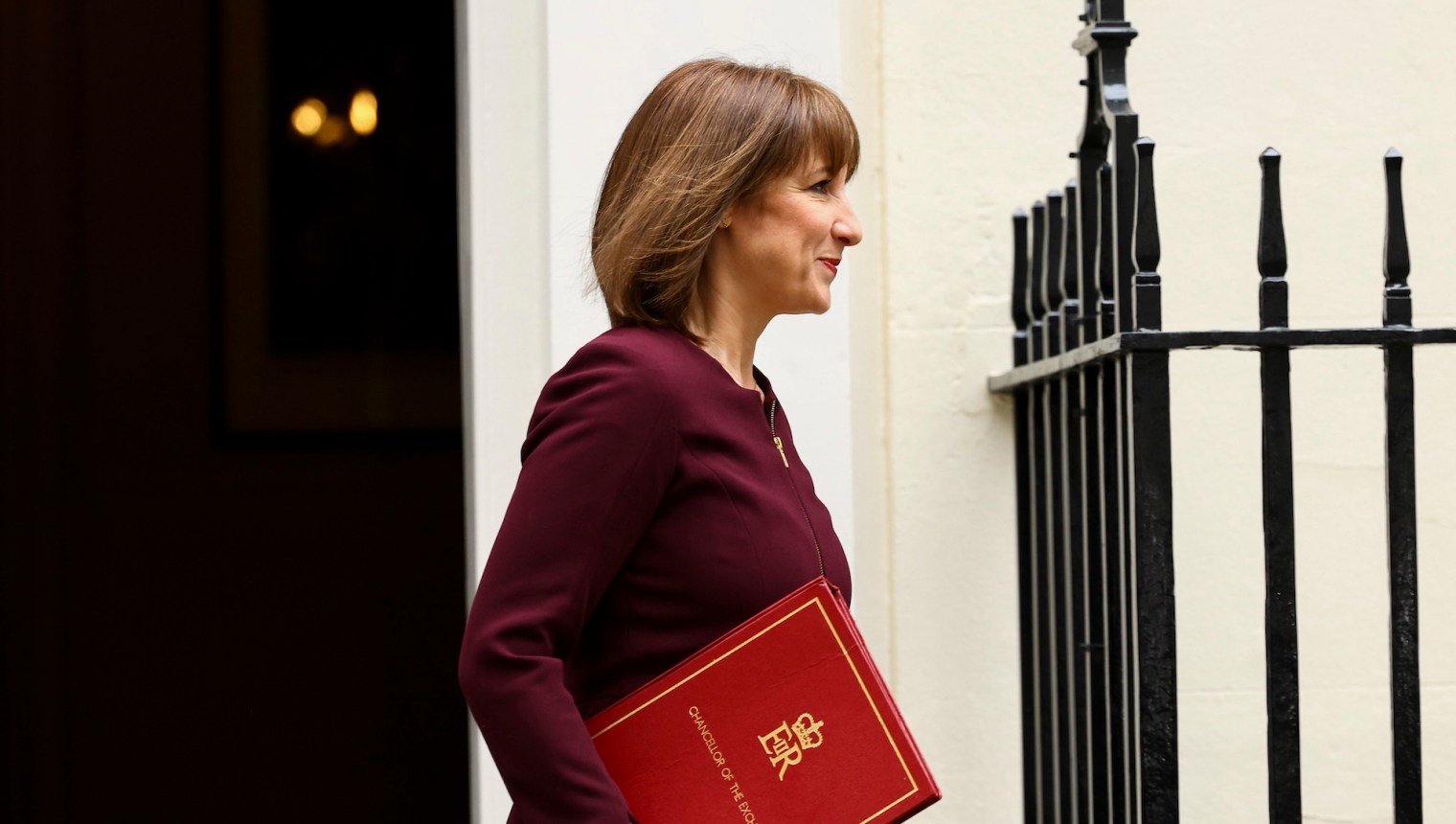
Chancellor of the Exchequer Jeremy Hunt leaves 11 Downing Street, London, with his ministerial box before delivering his Budget in the Houses of Parliament, March 6, 2024.
PUBLIC services are at still greater risk as Chancellor Jeremy Hunt gambled the Tories’ election hopes on a last-ditch tax-cutting Budget.
Mr Hunt announced a 2 per cent cut in National Insurance in a bid to put more money in workers’ pockets before Britain goes to the polls later this year.
But the price will be a major squeeze in public spending in the next parliament, with many department budgets likely to fall in real terms.
The Chancellor also abolished the non-dom tax rule which lets the wealthiest avoid paying taxes on overseas earnings, a key Labour pledge, and brought more families within the scope of child benefit payments.
The Budget therefore leaves Labour more politically denuded than ever — it will either have to find other ways to raise the money it had planned for public services from scrapping the non-dom loophole, or more likely drop residual spending commitments altogether.
Labour leader Sir Keir Starmer told MPs that Labour supported the National Insurance cut too, leaving the parties exchanging rhetorical sound and fury on economic policy but with no significant differences.
Lindsey German on … [Keith Starmer] , the establishment’s friend …
The fate of Thames Water should be the end of the privatisation model pioneered by Thatcher in the 1980s. The major utilities and public companies were sold off at undervalued prices, their shares rapidly snapped up by big corporations and investors, prices for consumers rose rapidly, and profits went to shareholders, not to investment. That’s why today the common refrain about most parts of public life in Britain is that nothing works. And it is epitomised by Thames Water drowning in debt and likely to be taken back into public ownership temporarily.
But any form of nationalisation is going to be resisted to the bitter end, not just by the greedy privatised companies themselves, but by the Tories and the increasingly right-wing Labour Party under Keir Starmer. The cheek of the privatised companies was illustrated when the head of another, Severn Trent, convened a meeting of all the water firms to explicitly discuss ways of resisting nationalisation. And it’s no use going to the supposed regulators for help. As the Observer reported, ‘27 former Ofwat directors, managers and consultants [are] working in the industry they helped to regulate, with about half in senior posts.’ So a number of those regulating the industry have moved over to take lucrative positions in…. the privatised water companies.
While investors take the money and run, working class people are left with dire and expensive services that fail frequently because there is no investment. The water companies are publicly disgraced because of their dumping of sewage in rivers and seas, rather than invest in new treatment plants. But in London (and no doubt elsewhere) there have been several burst water mains, risking lives as they cause disruption sometimes for months, because of lack of investment. In the southeast of England, drinking water supplies have failed ‘because of the hot weather’, in what must be the lamest excuse from a company supposed to provide just that.
The answer from government and industry alike is that future investment will have to be paid for by us, through much higher bills and higher taxes. Already gas and electricity is beyond affordable for millions. But the energy companies will set the benchmark for other industries as profits are protected. No wonder nearly 13 million adults struggle to pay bills.
dizzy: Under Capitalism failing companies would normally go bankrupt so that the companies’ debts would be transferred to it’s creditors. This is not the case with the banks in the banking crisis of 2008, the energy companies failures ofrecent yearsand it looks like failing water companies now. Instead of the companies creditors shouldering the debt as part of the normal process, the poor public is instead burdened with it. This is great for the banks of course because it means that they can borrow without any risk of default, knowing that they will profiteer from the public regardless.