Post-election repression in Tanzania as President Suluhu “wins” with 97.66%

Spread the love

Original article by Nicholas Mwangi republished from peoples dispatch under a Creative Commons Attribution-ShareAlike 4.0 (CC BY-SA) license.
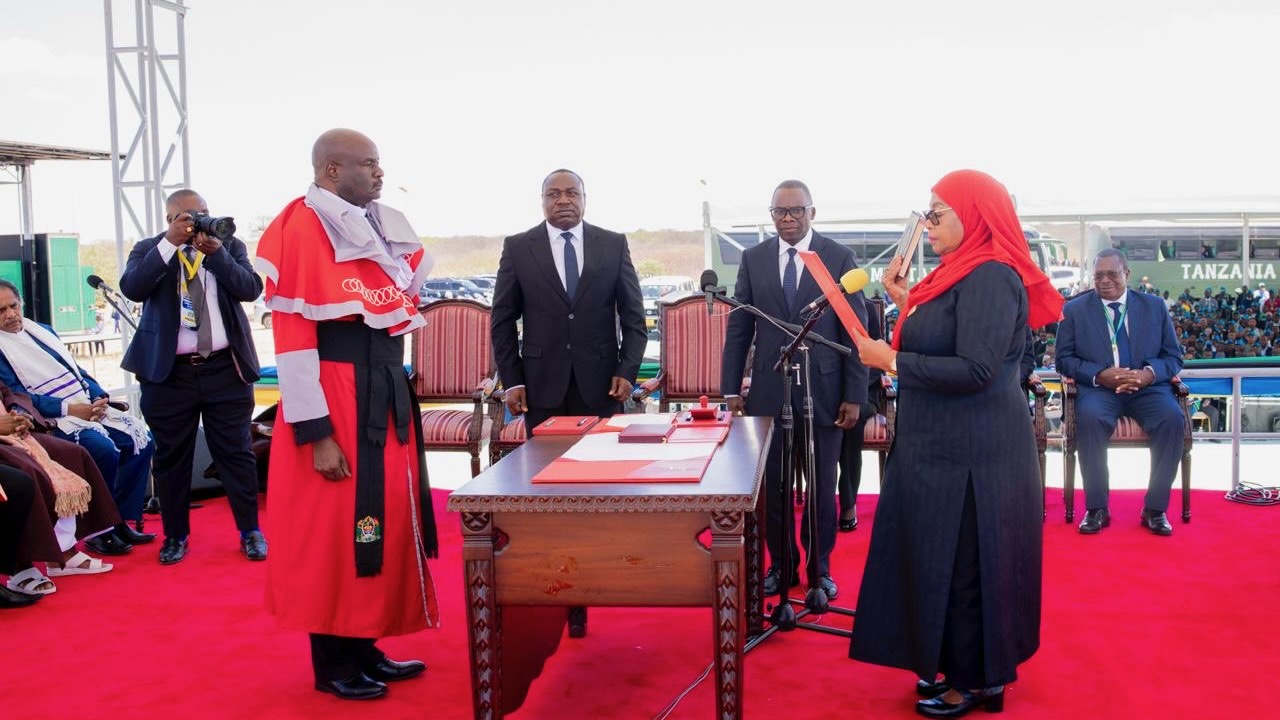
President Samia Suluhu Hassan is sworn in after re-election in Tanzania. Photo: X

Tanzania’s disputed elections, already clouded by credibility concerns, ended with President Samia Suluhu declared the winner. Authorities have intensified arrests and crackdowns, while opposition leaders claim that thousands were killed during post-election protests.

The October 29, 2025, presidential elections in Tanzania plunged the country into its deepest political crisis in decades. President Samia Suluhu Hassan was declared the winner with an overwhelming 97.66% of the vote, a result widely denounced as fraudulent and surrounded by an atmosphere of repression, violence, and systematic silencing of dissent.

In the months leading up to the polls, opposition parties were systematically harassed. Rallies were disrupted, candidates were denied registration, and media outlets critical of the government faced suspension. The banning of CHADEMA leader Tundu Lissu from contesting and the arrest of dozens of party members prefigured an electoral process tightly controlled by the state apparatus.

In dialogue with Peoples Dispatch, Muhemsi says, this time round, the popular dissatisfaction was due to the issue of forced disappearances, abductions, as well as the “unfair” detention of some key opposition party leaders, especially Tundu Antipas Lissu, who is being charged with treason. His trial has been going on for months.

A nation under siege

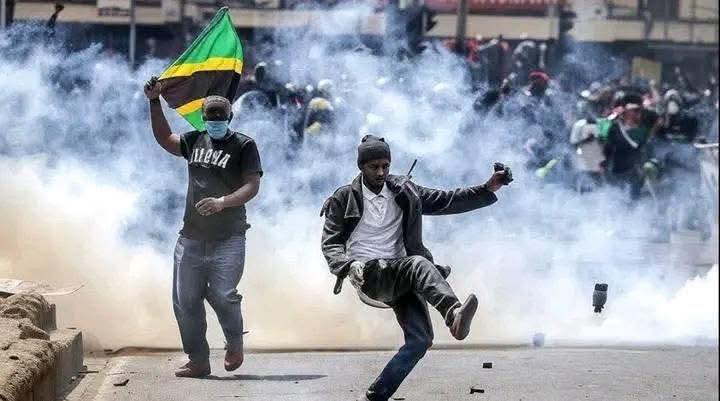
What followed the disputed poll was a wave of protests in Tanzania’s recent history. Demonstrations erupted across major cities, from Dar es Salaam to Arusha and Mwanza, as citizens rejected the results. The government’s response was brutal. Under a nationwide curfew and a total internet shutdown, security forces unleashed a wave of violence against protestors. The opposition claims that thousands were killed or have disappeared, though independent verification remains impossible. Families continue to search for missing relatives, and many speak of a climate of fear and enforced disappearance.

Muhemsi described how Tanzanians have long been told that “no one would dare take to the streets”. The ruling Chama Cha Mapinduzi (CCM; “Party of the Revolution”), he said, has relied on the myth of Tanzania being an “Island of Peace” to suppress dissent. “Religious leaders were co-opted into spreading this ‘peace’ gospel, many of their events were literally organized if not funded by the state.”

Opposition leaders detained

In the aftermath, the government has intensified its repression. Hundreds of youth activists have been charged, and opposition leaders continue to face persecution. CHADEMA’s deputy secretary-general, Amani Golugwa, was arrested on November 8 and charged with treason, joining his party leader Tundu Lissu, who was barred from participating in the election and remains imprisoned. Other activists, youths, and human rights defenders have been detained under vague accusations of incitement and subversion.

The president’s inauguration, held behind closed doors, only deepened public outrage at a process that lacks legitimacy. A ceremony, symbolic of a government increasingly disconnected from its people.

Regional and continental reactions

Initially, regional and international reactions followed the pattern of complicity and silence that has long accompanied authoritarian consolidation in Africa. The African Union (AU) was quick to congratulate President Suluhu on her victory, a move that provoked widespread condemnation across the continent. In a reversal, the AU later, after sustained criticism, acknowledged that the elections “had not met the threshold of free and fair democratic values.”

In a statement, the African Commission on Human and Peoples’ Rights expressed “deep concern” over the situation, citing grave violations of the African Charter on Human and Peoples’ Rights, which Tanzania ratified in 1984. The Commission condemned reports of mass killings, arbitrary arrests, and the use of live ammunition against peaceful demonstrators, urging the government to “de-escalate the prevailing situation” and investigate the alleged atrocities.

The Commission further called on Tanzania to sign and ratify the “African Charter on Democracy, Elections, and Governance”, emphasizing the need for regular, transparent, and impartial elections – an implicit rebuke of the current regime’s conduct.

Similarly, the Southern African Development Community (SADC), through its Electoral Observation Mission, issued a preliminary report on November 3 stating that the poll fell short of democratic standards. The mission detailed harassment of its own observers, including an incident in Tanga, where security officers seized passports, interrogated monitors, and deleted photographs.

The ongoing repression not only erodes Tanzania’s internal democratic fabric but also threatens to destabilize the wider East African region, where social unrest and economic inequality have become combustible forces.

But despite these condemnations, no tangible measures have followed. The crisis in Tanzania exposes the limits of regional institutions, whose dependence on member states makes them reluctant to call out offending regimes. In effect, regional diplomacy has become the velvet glove around the iron fist of repression, completely detached from the aspirations of the majority of African people.

Read More: Protests erupt in Cameroon as the 92-year-old president gets another seven-year term

For Tanzanians, the current moment is one of mourning and resistance. As families continue searching for missing loved ones and opposition leaders and arrested protesters languish in detention. The overwhelming margin of victory – 97.66% – does not symbolize national unity but its absence. Muhmesi concludes that “CCM’s tragedy isn’t just staying in power; it’s that it long abandoned the task of leading Tanzanians away from capitalism. Until we face that truth, there can be no real democracy, no good constitution, because capitalism itself is the constitution of our suffering.”

Original article by Nicholas Mwangi republished from peoples dispatch under a Creative Commons Attribution-ShareAlike 4.0 (CC BY-SA) license.

Orcas discuss Donald Trump and the killer apes' concept of democracy. Front Orca warns that Trump is crashing his country's economy and that everything he does he does for the fantastically wealthy.
Orcas discuss Donald Trump and the killer apes’ concept of democracy. Front Orca warns that Trump is crashing his country’s economy and that everything he does he does for the fantastically wealthy.
Continue ReadingPost-election repression in Tanzania as President Suluhu “wins” with 97.66%

Protests erupt in Tanzania amid disputed elections, internet shutdown, and curfew

Spread the love

Original article by Nicholas Mwangi republished from peoples dispatch under a Creative Commons Attribution-ShareAlike 4.0 (CC BY-SA) license.

The Tanzanian Government has shut down internet services in the country and denied access to foreign reporters during elections The people are out in the streets protesting the “ceremonial” elections. Photo: X

Protests erupted as Tanzania went to the polls on October 29, 2025. With opposition leaders jailed, Internet access cut, the election has been criticized as ceremonial for President Samia Suluhu Hassan to get back to power.

Some of the regions in Tanzania descended into chaos following the country’s general elections on Wednesday, October 29, which many observers described as “ceremonial” rather than a contest. President Samia Suluhu Hassan, who became Tanzania’s first female head of state in 2021, was already the overwhelming favorite to win in an election devoid of meaningful opposition.

According to reports, the vote was marred by a nationwide internet shutdown, curfews, and unrest after protests broke out in parts of Dar es Salaam, reflecting widespread discontent over what citizens and regional observers have called a sham election.

Internet shutdown and curfew

Live network data from the internet observatory NetBlocks confirmed that Tanzania imposed nationwide internet restrictions early Wednesday morning, severely disrupting mobile data services and blocking access to social media platforms. The blackout coincided with the start of voting, signaling a deliberate move to suppress the flow of information.

By evening, the government imposed a nationwide curfew, urging students and civil servants to remain indoors for the following day. The restrictions came as images and reports of protests spread, despite the blackout, with demonstrators denouncing the exclusion of opposition parties and the continued detention of opposition leader Tundu Lissu, who is currently on trial for treason.

Opposition barred, democracy in decline

Both CHADEMA, the main opposition party, and ACT Wazalendo were barred from participating in the elections. Lissu, who had called for electoral reforms, was arrested earlier this year on what human rights groups have called trumped-up charges. His arrest, coupled with the systematic oppression and media censorship, has deepened fears of an authoritarian turn in Tanzania’s politics.

Reports from human rights organizations, including Amnesty International, describe the political climate as one of “repression, intimidation, and fear.” Amnesty’s recent publication titled “Wave of Terror Sweeps Across Tanzania” documents cases of enforced disappearances, torture, and unfair trials, primarily targeting critics of the regime. Opposition leaders and activists have also faced severe restrictions on their freedom of movement that have effectively prevented them from conducting normal political activities.

Targeting of religious leaders and civil society

The crackdown has extended to religious leaders who have spoken against government abuses. In June, the regime deregistered the Ufufuo na Uzima Church, led by Bishop Dr. Josephat Gwajima, citing alleged violations of the Societies Act. The move came just days after the bishop publicly condemned abductions and enforced disappearances.

Other clergy, including Bishop Benson Bagonza of the Evangelical Lutheran Church and Bishop Dickson Kabigumila, have reported threats or fled the country. Several religious figures, journalists, and political activists remain missing, with families demanding justice.

Regional reactions

The Kenya Human Rights Network issued a statement on Thursday, condemning the ongoing violations.

“We stand here as East African citizens, mandated by the fact that Jumuiya ni yetu (the community is ours). The tragic occurrences we are witnessing in Tanzania go against the very principles that underpin the East African Community,” the statement read.

“Borders will not limit our brotherhood and sisterhood. Injustice anywhere is a threat to justice everywhere.”

The group also noted that no credible international observation missions were allowed into Tanzania. Countries, including Belgium, Sweden, Germany, and Ireland withdrew their participation, while the United Nations Development Program (UNDP) is also not engaging in the electoral process. The African Union (AU) and East African Community (EAC) sent only symbolic delegations, drawing criticism for “legitimizing repression”.

Earlier this year, a delegation from Kenya that included Boniface Mwangi of Kenya and Agather Atuhaire of Uganda, were detained and later deported from Tanzania after attempting to go to Tundu Lissu’s trial. Mwangi and Atuhaire were later assaulted and subjected to torture during their detention.

A regional warning

There are concerns across East Africa that the Tanzanian crisis reflects a broader pattern of shrinking democratic space across the region.

The KHRC statement concluded – “Africans are rightfully outraged that the African Union, an institution meant to defend human rights, democracy, and the rule of law, has chosen silence over principle. It increasingly resembles a club of presidents shielding each other rather than protecting the people they claim to serve. The same betrayal is evident in SADC and the EAC. We are coming to the defense of Tanzanians and hereby give notice to Tanzania and all authoritarian regimes in the rest of East Africa and Africa. As despots regroup to oppress citizens, we, as the citizens, are similarly regrouping to reclaim our countries and our inherent freedoms.”

As of Thursday evening, Dar es Salaam remained tense under heavy police presence, with sporadic protests continuing despite the curfew. The official election results are expected to be announced in the coming days.

Original article by Nicholas Mwangi republished from peoples dispatch under a Creative Commons Attribution-ShareAlike 4.0 (CC BY-SA) license.
Continue ReadingProtests erupt in Tanzania amid disputed elections, internet shutdown, and curfew

How A British-owned PR Firm Helped ‘Squash’ Pipeline Protests in Uganda

Spread the love

Original article by TJ Jordan at DeSmog

MetropolitanRepublic staff celebrating at the Silverback Awards, November 2023. (Credit: MetropolitanRepublic Uganda)

MetropolitanRepublic enlisted social media influencers to promote giant oil project as climate campaigners suffered beatings and arrests.

Last November, a beaming group of staff from MetropolitanRepublic collected their gorilla-shaped trophy at the Silverback Awards, Uganda’s top advertising and public relations gala.

The South African PR agency had won its prize for promoting the “sustainable development” of Uganda’s untapped oil reserves by French oil company TotalEnergies.

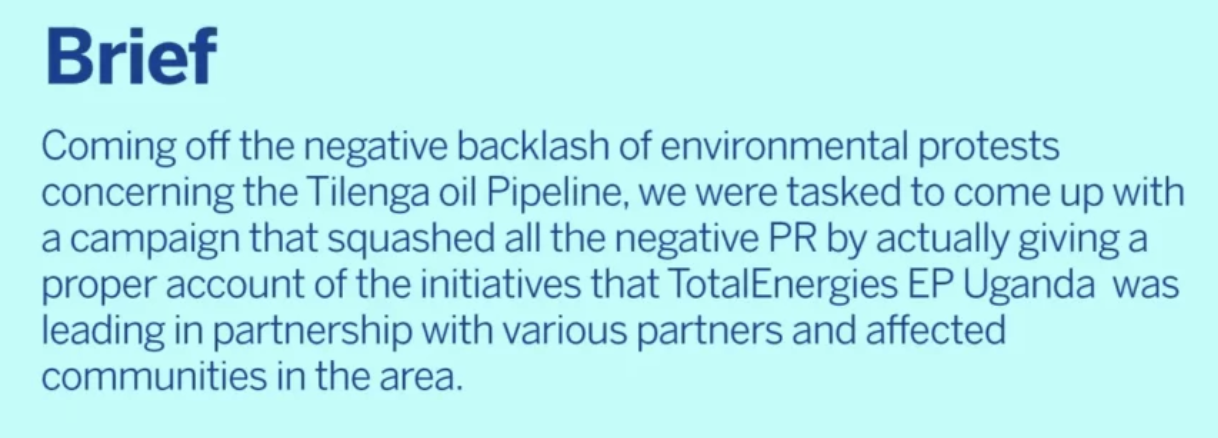
MetropolitanRepublic — which is part-owned by British communications giant WPP — described the brief for the award-winning “Action for Sustainability” campaign in its entry to the Silverback Awards: to devise an approach that “squashed all the negative PR” from protests against TotalEnergies’ plans for a 1,443-kilometre pipeline to export oil from Uganda’s Lake Albert via neighbouring Tanzania.

An accompanying video featured photographs of Ugandan anti-pipeline campaigners to illustrate this “backlash” and described them as “haters”.

“How do you launch a successful project off the back of this?” asks the narrator in the video. “Well, you develop a 360 PR campaign that retells your story the way it should be told.”

A screenshot from the award submission published on the Silverback Awards’ website. The Tilenga pipeline is a feeder pipeline under construction to carry oil from the Tilenga oilfields to the start of EACOP. (Credit: Silverback Awards)

Now, DeSmog can reveal that Ugandan police or military personnel have arrested, beaten, threatened, or harassed at least eight of the 15 campaigners pictured in MetropolitanRepublic’s award submission video.

These incidents — documented via video taken at protests, interviews with the campaigners, and police records — took place both before and after the video was published on the Silverback website in March.

There is no indication that MetropolitanRepublic’s campaign or the award submission led directly to any specific incidents affecting the activists. Nevertheless, DeSmog found that the agency engaged a network of social media influencers to post hundreds of times in support of TotalEnergies’ plans to mitigate the impact of the pipeline — even as protestors were being beaten and harassed.

“These PR firms are sponsoring our oppression,” said Hillary Innocent Taylor Seguya, one of the campaigners pictured in MetropolitanRepublic’s award submission video. “The more you push misinformation to the rest of the world, the more it means that you don’t care about our rights.”

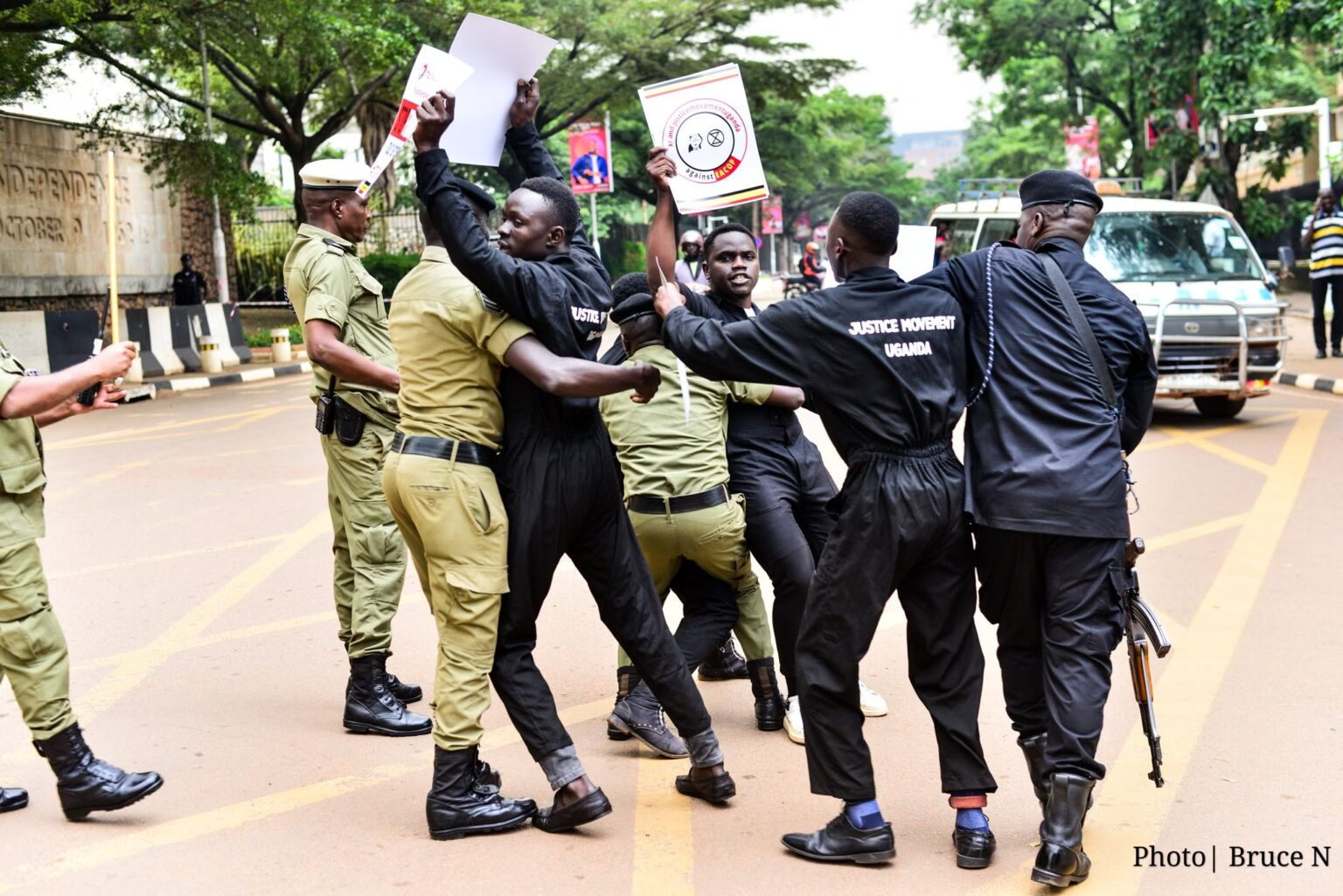
Protestors from student human rights group Justice Movement Uganda opposing the East Africa Crude Oil Pipeline. (Credit: Bruce Nahabwe)

Since the pipeline project was first announced in 2017, advocacy groups have highlighted concerns over the displacement of communities in Uganda and Tanzania, damage to ecosystems and wildlife, and the climate impact of burning Uganda’s oil. The outcry has prompted some banks, insurers, and the PR company Edelman — which has represented oil companies for decades — to shun the project, known as the East Africa Crude Oil Pipeline, or EACOP.

In June this year, UN Secretary-General Antonio Guterres urged communications agencies to stop working for fossil fuel companies, saying PR campaigns run by “Mad Men fuelling the madness” were making the climate crisis harder to address.

MetropolitanRepublic, however, defended its role in promoting the pipeline — a joint venture between TotalEnergies and state oil companies from Uganda, Tanzania, and China.

Original article by TJ Jordan continues at DeSmog

Continue ReadingHow A British-owned PR Firm Helped ‘Squash’ Pipeline Protests in Uganda

Climate Coalition Says ‘Stop Carbon Offsetting Now!’

Spread the love

Original article by JESSICA CORBETT republished from Common Dreams under Creative Commons (CC BY-NC-ND 3.0). 

Environment technicians gather on a sample plot at the Kasigau corridor in Kenya on August 9, 2023. (Photo: Tony Karumba/AFP via Getty Images)

“Carbon offset trading is reckless and irresponsible,” said one campaigner.

A coalition of climate groups had a message for world leaders on Monday, Finance Day at the United Nations Climate Change Conference: “Stop carbon offsetting now!”

The conference, COP28, is hosted in Dubai by the United Arab Emirates—which, as the coalition highlighted in a joint statement, is set to “hold numerous promotional thematic events,” despite two decades of negative impacts from carbon offset schemes.

“Carbon offset trading is reckless and irresponsible,” declared Jutta Kill of the World Rainforest Movement—part of the coalition that includes ETC Group, Focus on the Global South, GRAIN, Indigenous Environmental Network, Just Transition Alliance, and the Oakland Institute.

“Throughout 2023, academic research media , and civil society investigations have exposed how these projects routinely generate phantom offsets and result in land grabbing and human and Indigenous rights violations,” the organizations noted, pointing to “the forced relocation of Ogiek Peoples in Kenya’s Mau Forest” and “extensive sexual abuse at a Kenyan offset project.”

“Over the past months, Kenya, along with Liberia, Tanzania, Zambia, and Zimbabwe, have signed deals with Dubai-based Blue Carbon covering a total of over 24 million hectares of community lands,” the coalition continued. “Carbon offset project developers, standards bodies, auditors, and credit providers have pocketed millions from churning out carbon credits that have failed to reduce emissions and exacerbated the climate crisis.”

One “damning” probe from September found that nearly 80% of the top carbon offset schemes be deemed “likely junk or worthless.” Another study from that month, focused on Reducing Emissions from Deforestation and Forest Degradation (REDD+) projects, similarly concluded that reductions were dramatically exaggerated.

“At COP28, world leaders and climate negotiators need to recognize once and for all that carbon markets are a failed source of climate finance. They are volatile and unstable, marked by fraud, incapable of reducing emissions, and actually harm communities,” Oakland Institute executive director Anuradha Mittal said Monday.

The coalition pointed out that in addition to impacts such as relocations and abuse, “these projects, many of which are repackaged as so-called ‘nature-based solutions’ or ‘natural climate solutions’ or, when done at coastal and marine areas, as ‘blue carbon,’ have also drawn peasant and Indigenous communities into costly and complicated legal battles in their effort to affirm their rights and reclaim community territories and in their fights to resist the projects.”

The Kichwa communities in the Peruvian Amazon, Dayak communities in Indonesia, and Aka Indigenous communities and Bantu farmers in the Republic of Congo’s Bateke Plateau are among those negatively affected by carbon offsetting schemes.

“Over 20 years of history with offsets have resulted in the rights of Indigenous peoples being violated, increased land grabbing, and disproportionate impacts on Indigenous environmental defenders,” stressed Indigenous Environmental Network executive director Tom Goldtooth. “The false solutions will become a crime against humanity and Mother Earth.”

GRAIN’s Devlin Kuyek said that “they prop up a system that has enabled corporate polluters and rich countries to delay action and profit from the crisis. Whether unregulated or with a U.N. seal of approval, carbon offsetting in all its shapes and forms, including REDD or so-called ‘nature-based solutions’ and ‘blue carbon,’ is a fraud that must be immediately scrapped.”

The coalition asserted that rather than carbon offsetting, “what is urgently needed is renewed focus on keeping fossil fuels in the ground and commitments to real climate action based on equity and justice.”

As Friends of the Earth International’s Kirtana Chandrasekaran put it: “What we need are real emissions reductions and real climate finance. Anything less is failure.”

The coalition’s demands contrasted sharply with Sunday comments from Sultan Ahmed Al Jaber, COP28 president and Abu Dhabi National Oil Company CEO, who claimed there is “no science” behind the push to rapidly phase out planet-heating fossil fuels—which one leading expert said “dismisses decades of work” by global scientists.

Going into COP28, a U.N. analysis warned that countries’ currently implemented policies put the world on track for 3°C of warming by 2100, or double the Paris agreement’s 1.5°C target. Already, the planet has warmed about 1.1°C relative to preindustrial levels.

Even though the international community is way off track in terms of meeting its climate goals, Bronwen Tucker, global public finance lead at Oil Change International , pointed out Monday that “on Finance Day at COP28, instead of rich country governments committing to pay their fair share for a fossil fuel phaseout, they tried to shirk their responsibilities.”

The biggest historical contributor to planet-heating pollution, the United States, and foundation partners on Sunday announced the Energy Transition Alliance. Rachel Cleetus, the policy director and a lead economist for the Union of Concerned Scientists’ Climate and Energy Program, said the offset initiative “is still very much a work-in-progress, and the details shared thus far raise a fair degree of skepticism about its ability to meaningfully contribute to addressing the climate crisis.”

“Richer nations and large corporations should have no claim over monetizing the scarce remaining carbon budget and yet this program is premised on that unjust idea,” Cleetus added. “At COP28, the primary focus should be on securing an agreement among nations for a fast, fair fossil fuel phaseout and ramping up public finance.”

Original article by JESSICA CORBETT republished from Common Dreams under Creative Commons (CC BY-NC-ND 3.0). 

Continue ReadingClimate Coalition Says ‘Stop Carbon Offsetting Now!’

Just Stop Oil protest the East African Crude Oil Pipeline (EACOP) at Total Energies HQ, Canary Wharf

Spread the love

At around 8am four Just Stop Oil supporters entered the UK headquarters of Total Energies, the French multinational and majority shareholder in the East African Crude Oil Pipeline (EACOP) at Canary Wharf. They sprayed the interior of the lobby with black paint from fire extinguishers. Meanwhile outside, four further supporters sprayed the exterior of the building with orange paint and then sat down to await arrest. They were joined by a group of about 60 students who gave speeches describing the crimes perpetrated against the people of Uganda by the EACOP project. 

Experts have described the project as a ‘carbon bomb’, which would release over 379 million tonnes of carbon into the atmosphere- 25 times the combined annual emissions of Uganda and Tanzania, the host nations. 

One of those taking action at Canary Wharf this morning, Solveig, 27, a Doctor of Philosophy student at the University of Oxford, said:

“I believe that it is my duty to support the brave protesters of Students against EACOP, who are standing up to Total Energies as it destroys the lives of people for profit. The extractive colonialism executed by Total is not only making 100,000 people homeless, but it will exacerbate climate breakdown globally. I wish we could stop these atrocities through peaceful and quiet protest, but we can’t. This is why I have to stand up to Total and push for the de-funding of EACOP.”

In October, a group of over 50 Ugandan university students were brutalised after marching to deliver a petition on the pipeline to the European Union Embassy in Kampala. Nine students were imprisoned and are currently facing trial on a charge of common nuisance.

The pipeline runs 900 miles from a biodiverse national park in Uganda, to a port in Tanzania. The project could lead to the displacement of over 100,000 people and outrage has been sparked at the multitude of human rights abuses being imposed on those in the path of construction. The EACOP pipeline will cut across several ecosystems, including forests, wetlands and rivers, displacing wildlife and destroying vital habitats that support rich biodiversity. The main backers of the multibillion dollar project are Total Energies and the China National Offshore Oil Corporation (CNOOC).

[from a JSO press release]

Continue ReadingJust Stop Oil protest the East African Crude Oil Pipeline (EACOP) at Total Energies HQ, Canary Wharf