People around the world have contended with unprecedented weather events and their fatal effects caused by the climate catastrophe
After the world’s hottest summer since records began in 1850, the death toll from extreme weather in 2026 is already in the high tens of thousands. That is a conservative estimate and is certain to rise much higher.
As Cop31 continues [now ended] and scientists warn that climate breakdown may be accelerating, the Guardian looks back at a year of droughts, fires and floods as a reminder that, unless the world takes urgent action to cut emissions, this disastrous year will be one of the best of the rest of our lives.
…
May Second-hottest May on record
A man seeks relief from the heat as temperatures rise in New Delhi, India. Photograph: Rajat Gupta/EPA
Hundreds of millions endure deadly heat insouth Asia At least 47 heat-related deaths are reported in southern Asia as temperatures soar above 45C in several Indian and Bangladeshi cities, and hit a peak of 52C in Pakistan’s southern province of Sindh. Scientists warn that the climate crisis is exposing hundreds of millions of people in south Asia to longer, deadlier pre-monsoon heat.
June Second-hottest June on record
People assess the aftermath of landslides and flooding next to houses damaged in Attécoubé, a suburb of Abidjan, Côte d’Ivoire. Photograph: Chris Boli/AFP/Getty Images
Ocean heat enters uncharted territory Sea surface temperature graphs begin to jag upwards and away from all previous highs on 21 June, starting a trend that will worsen over the rest of the year. This alarms scientists because oceans absorb more than 90% of the excess energy in Earth’s system. If the seas start to release that heat then the land and air will get warmer more quickly. This coincides with the emergence of the latest El Niño, which is confirmed on 2 June.
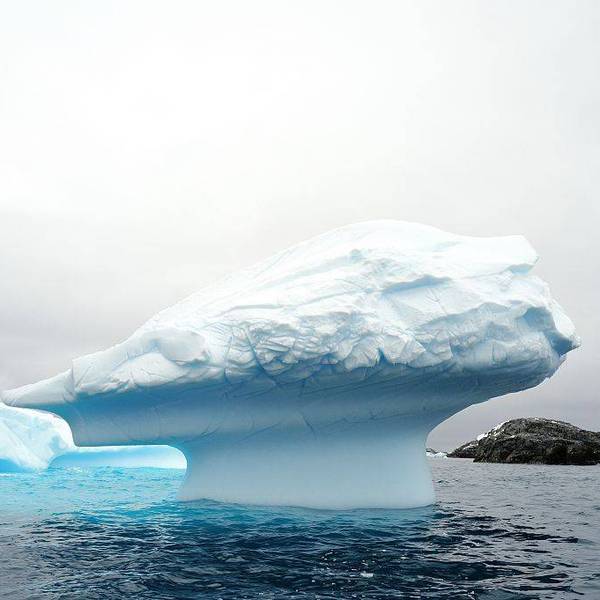
Arctic and Antarctic swelter in unprecedented warmth Instead of the usual winter snow and ice, scientists at the Esperanza base on the Trinity peninsula of Antarctica are astonished to see rain and dirt outside their windows after an eight-day heatwave that peaked with a record temperature of 15C on 6 June. At the other end of the planet, the Arctic experiences its warmest ever June. Beliy Island, Siberia, registers 28.3C on 25 June, the highest temperature ever recorded that far north in the Eurasian Arctic.
West African deluge takes heavy toll Relentless rains claim almost 100 lives in west Africa from May to June. Record downpours of up to 140mm (5.5in) in a single day are made five times more likely and 23% more intense by the human-caused climate crisis. Floods and mudslides kill 59 in Côte d’Ivoire, 35 in Ghana and five in Togo.
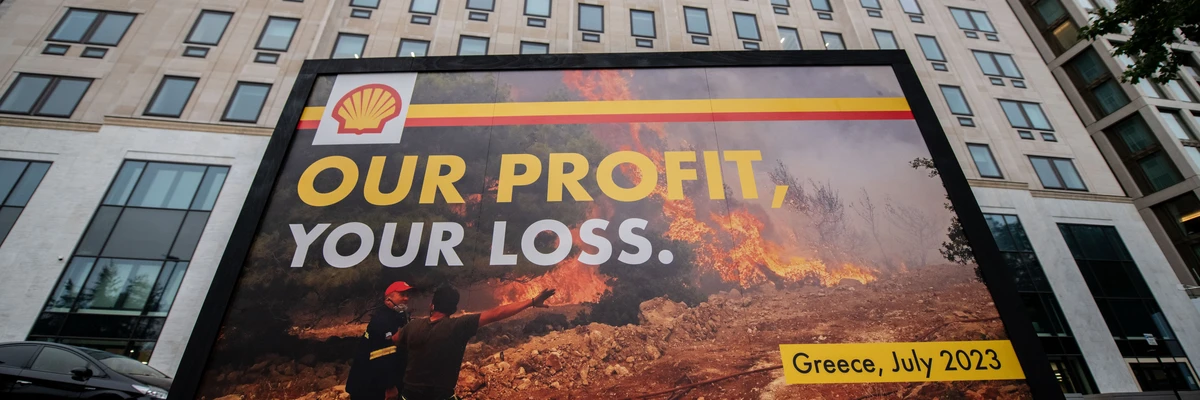
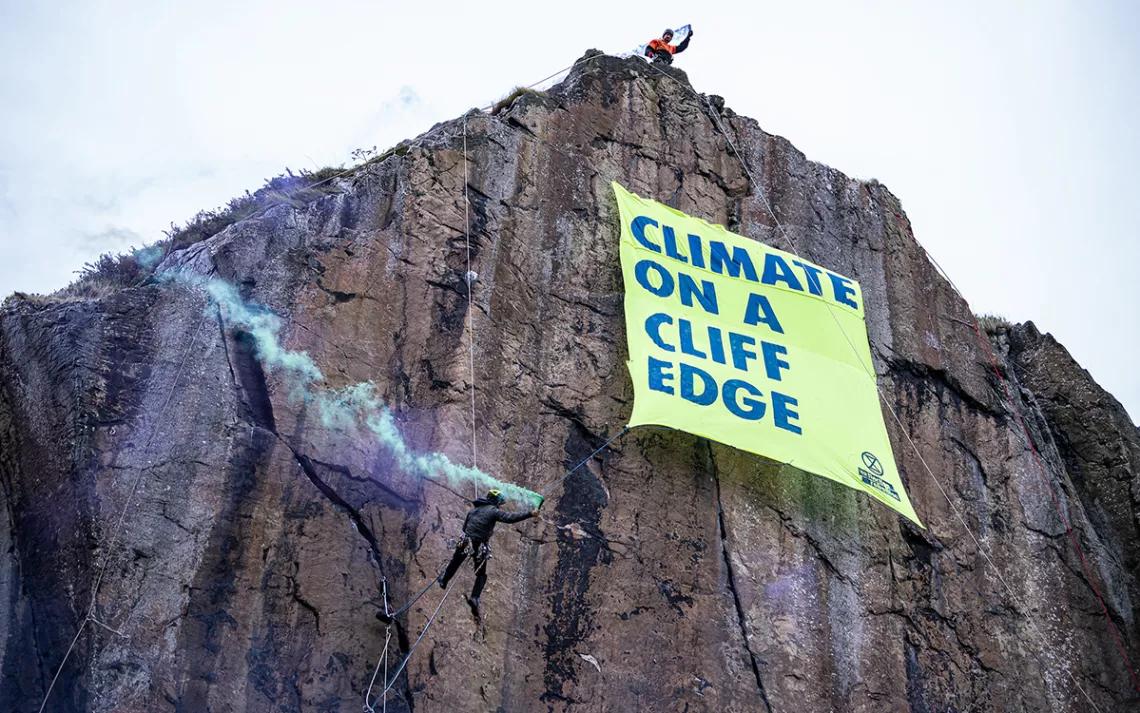
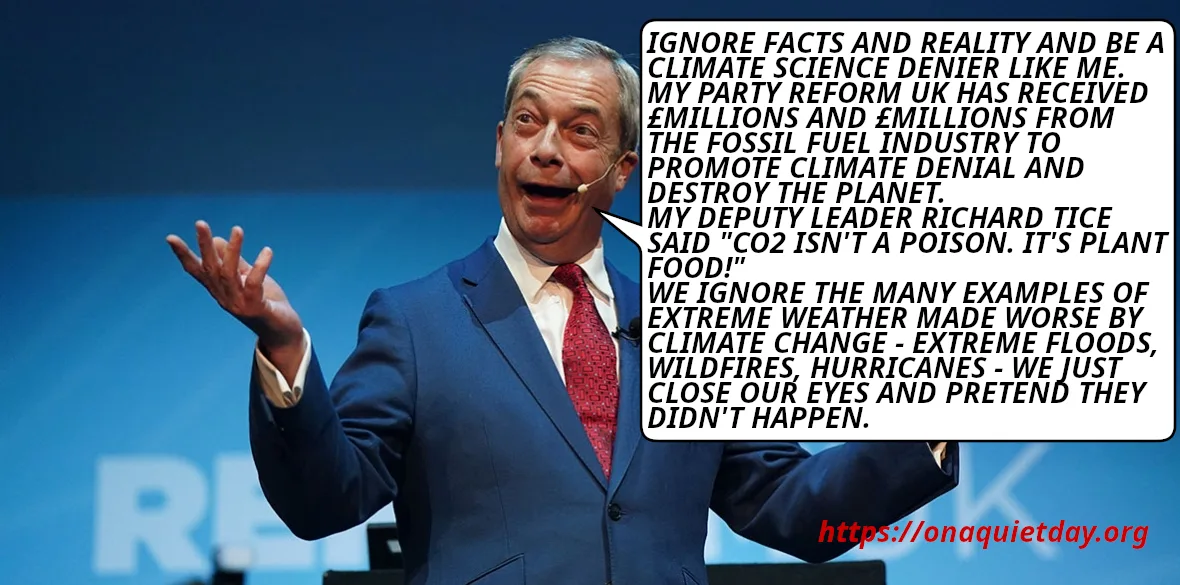
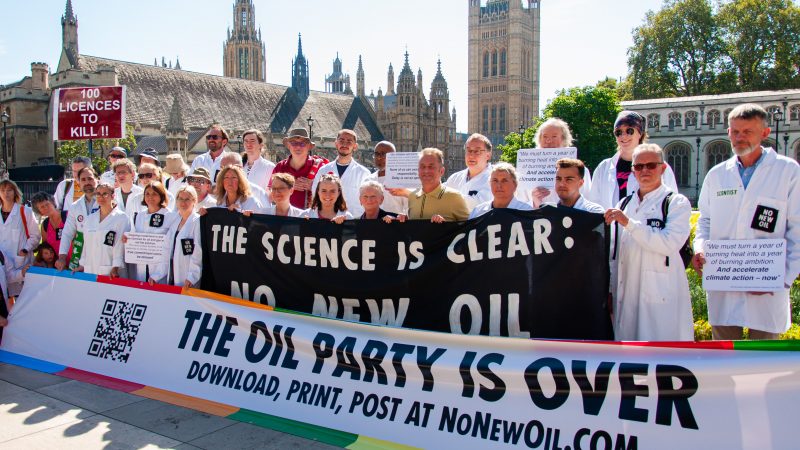
Greenpeace activists display a billboard during a protest outside Shell headquarters on July 27, 2023 in London. (Photo: Handout/Chris J. Ratcliffe for Greenpeace via Getty Images)Experienced climbers scale a rock face near the historic Dumbarton castle in Glasgow, releasing a banner that reads “Climate on a Cliff Edge.” One activist, dressed as a globe, symbolically looms near the edge, while another plays the bagpipes on the shores below. | Photo courtesy of Extinction Rebellion and Mark RichardsNigel Farage urges you to ignore facts and reality and be a climate science denier like him and his Deputy Richard Tice. He says that Reform UK has received £Millions and £Millions from the fossil fuel industry to promote climate denial and destroy the planet.
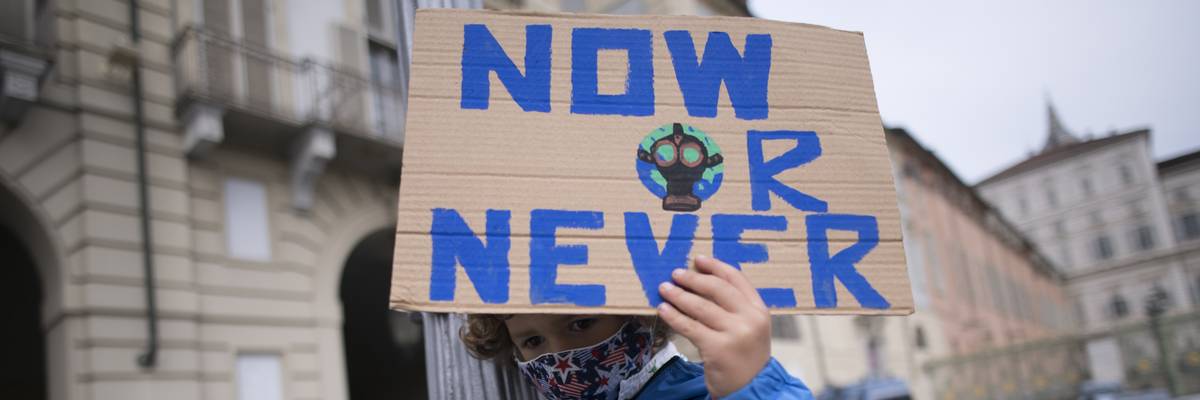
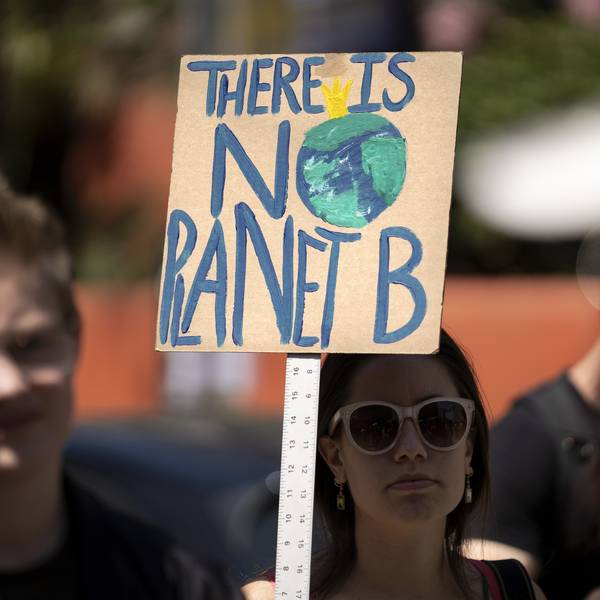
A Fridays for Future youth demonstrator rallies for climate action in Turin, Italy on October 9, 2020. (Photo by Stefano Guidi/Getty Images)
“This is no longer a warning for the future; it is a diagnosis of the present,” the report’s authors warned.
Earth’s life-support systems are “moving deeper into uncharted territory,” with greenhouse gas concentrations, ocean heat, and other vital indicators reaching unprecedented levels as human activity continues to push the planet toward points of no return, an international team of scientists warned Wednesday.
“We are witnessing the rapid destabilization of the Earth’s climate system. This is no longer a warning for the future; it is a diagnosis of the present,” the authors of The 2026 State of the Climate Report wrote. “Earth’s life-support systems are being pushed beyond stable limits, with changes unfolding faster than our ability to respond.”
“Human activities are driving profound shifts in the atmosphere, oceans, and biosphere,” the report—which was published in the peer-reviewed journal BioScience—continues. “Carbon dioxide levels in the atmosphere are higher now than any time in the last 2 million years. Across the globe, extreme heat, floods, droughts, storms, and wildfires are no longer rare events but defining features of a changing planet. For example, July 2026 was the hottest month on record for the contiguous United States (1895–present), while global ocean temperatures also reached a record high for July.”
>Post not found, it may have been deleted.
The report, led by Oregon State University scientists William Ripple and Christopher Wolf, measures 16 key climate indicators, seven of which “are at record extremes and multiple others are also trending in the wrong direction,” co-author Johan Rockström explained.
“Climate-related changes appear to be accelerating and intensifying, raising concerns about reinforcing feedbacks and crossing of tipping points, with potential irreversible impacts,” the report notes. “Climate change is increasingly interacting with global biodiversity loss, freshwater stress, food insecurity, pathogens, and geopolitical instability, amplifying risks across interconnected human and natural systems.”
“Yet, the gap between scientific understanding and societal response continues to widen despite mounting evidence of escalating risks,” the authors said. “The evidence for accelerating climate and ecological disruption is now so compelling that attention must shift toward rapid decarbonization as well as adaptation, resilience, scalable responses, and transformative systemic change.”
“Crucially, the communities least responsible for historical emissions, particularly in the Global South and small island states, are bearing disproportionately severe and early consequences, raising fundamental questions of climate justice that must inform both policy and science,” the publication adds.
This is frightening. Once the planet heats up and the climate breaks down, that's basically it on human timescales. We don't get a do-over.
So call your elected officials, tell them it's an emergency and say they must policy to build clean energy AND phase out fossil fuels.
2/
— Dr. Genevieve Guenther (she/they) 🪬 (@DoctorVive) October 15, 2026
The new report comes on the heels of this year’s Planetary Health Check assessment, which found that seven of nine measures of the Earth’s health are no longer within the “safe operating space”: ocean acidification, freshwater change, land system change, climate change, modification of biogeochemical flows, introduction of novel entities, and change in biosphere integrity.
Planetary Health Check lead author Boris Sakschewski said the findings indicate that “the risk of large-scale, persistent, and potentially irreversible change is increasing, while our margin for error in tackling these problems is shrinking.”
Some 2026 State of the Climate report authors—described by US meteorologist Jeff Berardelli as “a who’s who of the best in the world”—weighed in individually on their findings.
“Global warming appears to be accelerating,” Wolf told Scientific American.
“The climate emergency is already here, but the future is not yet determined,” he stressed. “We still have opportunities to avoid some of the worst outcomes through rapid emissions reductions, climate adaptation, and broader societal changes. The window for action is narrowing, but it has not closed.”
Rockström—who co-authored both reports—wrote on LinkedIn that “the global curve of emissions must start bending within the coming year or two.”
“A fossil fuel-free global economy must be the landing point within the next 25 years,” he said. “A global food system transition towards healthy diets from sustainable production systems must start now. Carbon dioxide removal needs to start scaling, fast.”
“We have the solutions,” Rockström continued. “They can be scaled. And, on essentially all fronts, we (meaning ALL peoples) come out as healthier, safer, more resilient, prosperous, and just, if we proceed with the transformation to a world within Earth’s safe operating space.”
“Failure is not inevitable,” he added. “It is a choice. Our choice.”
Donald Trump urges you to ignore facts and reality and be a Climate Science denier like him. He says that he makes millions and millions for destroying the planet, Burn, Baby, Burn and Flood, Baby, Flood.Greenpeace activists display a billboard during a protest outside Shell headquarters on July 27, 2023 in London. (Photo: Handout/Chris J. Ratcliffe for Greenpeace via Getty Images)Experienced climbers scale a rock face near the historic Dumbarton castle in Glasgow, releasing a banner that reads “Climate on a Cliff Edge.” One activist, dressed as a globe, symbolically looms near the edge, while another plays the bagpipes on the shores below. | Photo courtesy of Extinction Rebellion and Mark Richards
“With ocean temperatures at these levels and El Niño on the horizon, we are likely to see more temperature records fall in the coming months.”
A new report released Wednesday shows that surface temperatures of the world’s oceans hit a record for June, sparking fresh warnings of grave “consequences for weather patterns, global climate and marine ecosystems” across the globe.
The analysis by the European Union’s Copernicus Marine Service, and confirmed by the Copernicus Climate Change Service (C3S), finds that “record global sea surface temperatures” of 21.0° Celsius (69.8° Fahrenheit) in June of 2026 beat the previous record in the same month broken in 2023 and again in 2024.
C3S director Carlo Buontempo warned that the “current conditions” of the oceans “could indicate the beginning of a new phase, leading, once more, to uncharted territory.”
“With ocean temperatures at these levels and El Niño on the horizon, we are likely to see more temperature records fall in the coming months,” Buontempo warned. “That Copernicus Marine data reaches the same conclusion through independent methods speaks to the strength of European science—and to why open, robust data matters now more than ever.”
According to a statement from Copernicus, warmer oceans have wide-ranging impacts on natural systems and human infrastructure, noting that “higher ocean temperatures keep the atmosphere warm for longer, provide extra energy to storms and increase evaporation, thus enhancing the potential for extreme precipitation and flooding. Ocean warming also contributes to sea level rise and ice melt, and stresses marine ecosystems.”
With the onset of a new El Niño cycle—which tends to trigger more pronounced weather events worldwide—the continued increase of ocean temperatures is a serious concern of scientists.
Wednesday’s report on ocean temperatures also arrives as record-breaking heat waves hit both Europe and North America, offering more evidence of the perils of an ever-hotter world that is being pushed to the brink by the burning of fossil fuels and the failure of governments worldwide to finally act against the fossil fuel industry that is driving the crisis.
Surging ocean surface temperatures are “not unexpected,” Michael Meredith, an ocean scientist at the British Antarctic Survey, told CNN in response to the Copernicus report. “But the pace of warming we are now seeing is alarming.”
Donald Trump urges you to be a Climate Science denier like him. He says that he makes millions and millions for destroying the planet, Burn, Baby, Burn and Flood, Baby, Flood.Nigel Farage urges you to ignore facts and reality and be a climate science denier like him and his Deputy Richard Tice. He says that Reform UK has received £Millions and £Millions from the fossil fuel industry to promote climate denial and destroy the planet.Orcas comment on killer apes destroying the planet by continuing to burn fossil fuels.
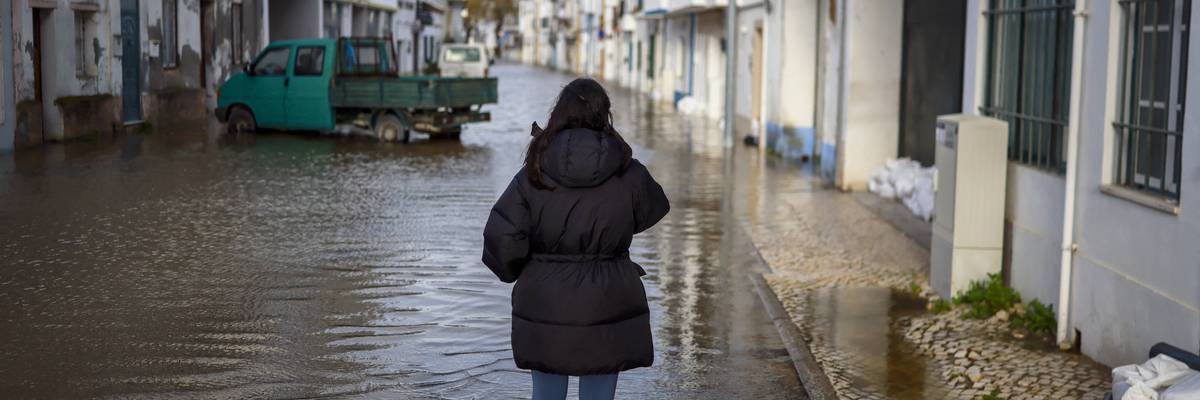
A woman observes floodwaters from the Sado River covering a street in Alcacer do Sal, Portugal, amid Storm Leonardo on February 5, 2026. (Photo by Patricia de Melo Moreira/AFP via Getty Images)
Current models “assume the future will behave like the past, even as we push the climate system into uncharted territory,” said the lead author of a new report that’s based on input from dozens of experts.
In a report published Thursday, UK experts highlighted the “growing gap between real-world climate risk and the economic analysis used to guide policy, supervision, and investment,” while also warning that because the “window for preventing catastrophic warming” is narrowing, ambitious action “cannot await perfected models.”
Various scientific institutions concur that 2025 was among the hottest years on record—and the ongoing failure of governments across the globe, particularly the Trump administration, to enact policies that would significantly cut planet-heating emissions from fossil fuels is pushing the Paris Agreement’s 1.5°C and 2°C goals for this century further out of reach.
The new report from the University of Exeter and the think tank Carbon Tracker Initiative, titled Recalibrating Climate Risk, incorporates the expert opinions of 68 climate scientists from Australia, Austria, Canada, China, France, Germany, the Netherlands, Norway, Spain, Sweden, the United Kingdom, and the United States.
“Our expert elicitation reveals a fundamental disconnect: Climate scientists understand that beyond 2°C, we’re not dealing with manageable economic adjustments,” said Jesse Abrams, lead author and senior impact fellow at Exeter’s Green Futures Solutions, in a statement.
“The climate scientists we surveyed were unambiguous,” he explained. “Current economic models systematically underestimate climate damages because they can’t capture what matters most—the cascading failures, threshold effects, and compounding shocks that define climate risk in a warmer world and could undermine the very foundations of economic growth.”
Abrams said that “for financial institutions and policymakers relying on these models, this isn’t a technical problem—it’s a fundamental misreading of the risks we face, which current models miss entirely because they assume the future will behave like the past, even as we push the climate system into uncharted territory.”
Communities around the world are already contending with devastating droughts, fires, and storms—and, as another report from researchers at Exeter and the UK’s Institute and Faculty of Actuaries (IFOA) pointed out last month, “above 1.5°C, we enter the danger zone where multiple climate tipping points may be triggered, such as the collapse of ice sheets in Greenland and Antarctica, permafrost melt, Amazon dieback, and changes in ocean circulation.”
The IFOA report “warned that when cascading and systemic risks are taken into account, warming of 2°C by 2050 could result in a 25% hit to projected GDP, rising to a halving of projected economic growth between 2070 and 2090,” BusinessGreen editor-in-chief James Murray reported Thursday. “Similarly, a report from consultancy Boston Consulting Group calculated a third of the global economic output could be lost under a scenario where temperatures reach 3°C above preindustrial levels by 2100.”
“The studies stand in stark contrast to some mainstream economic models that have suggested warming of 2°C or more will only reduce projected economic growth by a few percentage points—analyses that have been seized upon by opponents of climate action to argue that decarbonization policies can be dropped or delayed,” Murray noted.
Abrams told the Guardian that some current economic models “are saying we’ll have a 10% GDP loss at between 3°C and 4°C, but the physical climate scientists are saying the economy and society will cease to function as we know it. That’s a big mismatch.”
Laurie Laybourn, a Carbon Tracker board member and executive director of Strategic Climate Risks Initiative, cited another recent report that provides a bleak picture of the current moment and what lies ahead.
“As the UK government’s landmark security assessment of ecosystem collapse showed last week, we are currently living through a paradigm shift in the speed, scale, and severity of risks driven by the climate-nature crisis,” she said. “Yet, beyond this report, there has not been a corresponding paradigm shift in how regulators and government as a whole assess these risks.”
“Instead, they’re routinely underestimated if not missed entirely, meaning many regulations and government action are dangerously out of touch with reality,” she continued. “This threatens disaster when that reality catches up with us. So, it’s critical that policymakers change course, providing clear signals and guidance to markets that these risks should be priced accordingly, rather than downplayed.”
And, as the experts emphasized Thursday, it’s not just policymakers—investors are also still relying on “flawed economic advice,” said Carbon Tracker founder and CEO Mark Campanale. The result is “widespread complacency… with many investors viewing climate scenario analysis as a tick-box disclosure exercise.”
“Until the gap between scientists and economists’ expectations of future climate damages is closed and government bodies act to ensure the integrity of advice upon which investment decisions are made,” he added, “financial institutions will continue to chronically underprice climate risks—meaning that pension funds and taxpayers will remain dangerously exposed.”
Hetal Patel, head of sustainable investment research at Phoenix Group, the UK’s largest and retirement and savings business, said that her firm “supports the report’s call for a more robust and coordinated approach to climate‑risk modeling. Underestimating physical risk doesn’t just distort financial analysis and investment decisions, it underplays the real‑world consequences that will ultimately affect customer outcomes and society as a whole.”
The new report stresses that addressing the “fundamental disconnect between what climate scientists understand about climate impacts and how these impacts are represented in economic models” would require “research investments spanning years,” but rather than simply waiting for better modeling, decision-makers “must proceed on the basis of precautionary risk management, physical climate science, and observed impacts.”
Donald Trump urges you to be a Climate Science denier like him. He says that he makes millions and millions for destroying the planet, Burn, Baby, Burn and Flood, Baby, Flood.Nigel Farage urges you to ignore facts and reality and be a climate science denier like him and his Deputy Richard Tice. He says that Reform UK has received £Millions and £Millions from the fossil fuel industry to promote climate denial and destroy the planet.Elon Musk urges you to be a Fascist like him, says that you can ignore facts and reality then.
A series of climate records on temperature, ocean heat, and Antarctic sea ice have alarmed some scientists who say their speed and timing is unprecedented.
Dangerous heatwaves in Europe could break further records, the UN says.
It is hard to immediately link these events to climate change because weather – and oceans – are so complex.
Studies are under way, but scientists already fear some worst-case scenarios are unfolding.
“I’m not aware of a similar period when all parts of the climate system were in record-breaking or abnormal territory,” Thomas Smith, an environmental geographer at London School of Economics, says.
“The Earth is in uncharted territory” now due to global warming from burning fossil fuels, as well as heat from the first El Niño – a warming natural weather system – since 2018, says Imperial College London climate science lecturer Dr Paulo Ceppi.