This work by Middle East Monitor is licensed under a Creative Commons Attribution-NonCommercial-ShareAlike 4.0 International License.
French Foreign Minister Jean-Noel Barrot gives a speech in Brussels, Belgium, on February 23, 2026. [Dursun Aydemir – Anadolu Agency]
France is calling for the EU to stop importing products from illegal Israeli settlements in the occupied West Bank, Foreign Minister Jean-Noel Barrot said on Monday, Anadolu Agency reports.
“France calls for the end of imports of products from illegal settlements into the European Union,” Barrot said during a joint press conference with Icelandic Foreign Minister Thorgerdur Katrin Gunnarsdottir in Reykjavik.
“France and Europe cannot accept that Europe, through its trade, supports illegal activities that compromise the possibility of peace between Israel and Palestine,” he added.
Barrot made the remarks while outlining France’s position on the Israeli-Palestinian conflict during his visit to Iceland.
He also reiterated France’s support for a two-state solution, noting that Iceland had recognized the State of Palestine 15 years ago and that France had joined that path last year.
Barrot said parliamentary elections scheduled for Nov. 28 in Palestine were “an absolute necessity” for the legitimacy of the Palestinian parliament and to pave the way for presidential elections.
This work by Middle East Monitor is licensed under a Creative Commons Attribution-NonCommercial-ShareAlike 4.0 International License.
Donald Trump calls for help from NATO allies in securing the Strait of Hormuz despite saying on 7 March 2026 that they don’t need people to join wars after they’ve already won. He’s challenged with the claim that he lies as much as the IDF.
Several different factors likely explain this trend, including reductions in planet-cooling aerosols as nations have cleaned up their air pollution, as well as changes in atmospheric circulation patterns, which models struggle to represent.
In June 2026, daily high temperatures averaged across France reached 36.9C, shattering the previous June record set in 2022 by 2.4C.
[For more on the impacts and coverage of Europe’s June heatwave, see Carbon Brief’s explainer.]
The rise in observed temperatures in France has outpaced projections made by climate models, with June maximum temperatures more in line with what was expected for the 2070s.
This is illustrated in the figure below, which shows how France’s average maximum daily high temperature for June recorded in 2026 (black line) compares to climate model projections (blue and orange lines).
Comparison of observed (ERA5, black) and modelled (blue and orange) temperatures across France from 2000 to 2080. Plot shows the maximum daily high temperature recorded in June for each year, after averaging temperatures across France. The model ensembles are bias-corrected CMIP6 model ensembles from the NEX-GDDP (blue) and CIL-GDPCIR (orange) projects. The dashed blue and orange lines are the ensemble averages. Credit: Prof Andrew Dessler.
Counting the death toll of climate change
The downstream impacts of these extreme temperatures are lethal.
Scientists are able to estimate the death toll of high temperatures in many locations, depending on the availability of mortality and climate data.
One option is to examine death certificates to see which deaths have been directly recorded by physicians as related to heat. However, there is strong evidence that this method significantly undercounts heat-related deaths, as most death certificates do not consider environmental factors such as heat when diagnosing the cause of death.
Alternatively, it is possible to calculate the rate of total (“all-cause”) mortality in a given time period relative to previous time periods – for example, by comparing the total number of deaths in June 2026 compared to the average of previous Junes. This “excess deaths” figure can be used as an estimate of the deaths from a heat wave.
Using this approach, Public Health France attributed around 2,000 deaths in France to the extreme heat in the week of 22-28 June.
Finally, scientists can use long-term data on overall mortality and correlate changes in mortality with changes in temperature to understand the statistical relationship between the two.
Research published in Proceedings of the National Academy of Sciences in 2025 that used this third approach found that mortality rates in France increase rapidly in cold or hot conditions as daily maximum temperatures depart further from approximately 20C.
This pattern of a U-shaped response of mortality to temperature – shown in the figure below – is veryconsistent across time periods and regions around the world.
Relationship between daily high temperature and all-cause mortality rates in France, estimated using data over 2004-19. Credit: Dr Christopher Callahan, based on data and methods in Callahan et al. (2025)
To calculate the death toll of the June 2026 heatwave in France, we compared observed temperatures over 12-29 June to their baseline average over 1980-2025.
The difference between these two temperatures helps us understand how many more people died than they would have in the absence of such extreme conditions.
Over 12-29 June, we found that France has experienced around 2,700 heat-related deaths above the average baseline. Day-to-day heat-related mortality rates rose from less than 100 to almost 300 on the hottest days of 24 and 25 June.
This is shown in the graph below, which illustrates the cumulative total heat-related deaths seen in France over the two-and-a-half week period. The inset shows how heat-related deaths fluctuated on a day-to-day basis during this time.
Estimated heat-related mortality over 12-29 June, based on a U-shaped response of mortality to temperature. The main plot shows cumulative total deaths and the inset shows daily deaths. Credit: Dr Christopher Callahan, based on data and methods in Callahan et al. (2025)
Recent analysis by World Weather Attribution has already shown that human-caused climate change increased the frequency and intensity of the June heat wave across Europe.
Meanwhile, previousresearch has shown there is substantial evidence that heat-related mortality in Europe has already been elevated by greenhouse gas emissions.
As a result, we can be confident that at least some of the more than 2,700 deaths already seen in France are directly due to the burning of fossil fuels.
Calculating climate risk
In April, the UN-led body responsible for coordinating the work of climate modelling centres – the Coupled Modelling Intercomparison Project (CMIP) – unveiled a set of seven new emissions scenarios.
These are designed to replace the previous scenarios that have been used by scientists to understand how the climate might change in the future. They will feed into the upcoming seventh assessment report (AR7) of the Intergovernmental Panel on Climate Change (IPCC).
The range of future emissions in the new CMIP scenarios is smaller, with scenarios of very high or very low emissions no longer on the table.
The retirement of the very-high emissions scenario – known as “RCP8.5” – led to certain commentators in the media and in politics, including US president Donald Trump, arguing that the risks of climate change had been “overstated”.
[For more on false and misleading claims around the new emissions scenarios, see Carbon Brief’s factcheck.]
Our analysis of June’s heat-related deaths in France suggests that, even if the most severe emissions pathways are no longer needed, climate impacts are taking a heavy toll on society.
Moreover, the temperatures seen in France show that climate models continue to underpredict the magnitude of heatwaves for a particular level of global warming.
This is because greenhouse gas emissions are only a first step in estimating the impacts of climate change.
The second step is converting emissions to changes in the climate at both the global and local levels – or hazards. This includes heatwaves, flash floods and droughts.
The third step is to determine how changes in the hazards will affect local populations. This can be determined by calculating people’s exposure and vulnerability to hazards.
Substantial uncertainty persists at every stage of this sequence.
For example, scientists do not know exactly how the global climate will react to ever-rising greenhouse gas emissions – nor the extent to which global temperature increases will drive local climate hazards. We also do not know how climate change at a local level impacts human health outcomes.
Adaptation options, such as air conditioning, heat action plans and social support for isolated people, will be crucial as the climate moves away from the typical conditions that people are used to.
Neo-Fascist Climate Science Denier Donald Trump says Burn, Baby, Burn.Nigel Farage urges you to ignore facts and reality and be a climate science denier like him. He says that Reform UK has received millions and millions from the fossil fuel industry to promote climate denial and destroy the planet.Donald Trump urges you to be a Climate Science denier like him. He says that he makes millions and millions for destroying the planet, Burn, Baby, Burn and Flood, Baby, Flood.
As successive heatwaves hit Europe, air-conditioning (AC) has emerged as a new front in the international “culture war” over climate action.
France, Germany and the UK have experienced record-breaking heat and thousands of heat-related deaths this summer, with June temperatures in many regions passing 40C.
This has drawn attention to the relatively low rates of AC use in these countries – and in Europe as a whole – especially when compared to its widespread adoption in the US.
Right-wing politicians, including National Rally in France and the UK Conservatives, have styled themselves as champions of AC, while opposing efforts to tackle climate change.
Missing from most of these interventions is the fact that human-caused climate change has made once-rare heat far more common, in what is the world’s fastest warming continent.
Carbon Brief analysis for this article shows that, until the 2020s, it was rare for many European cities to see days above 30C, making AC an unnecessary expense.
Here, Carbon Brief explains – via eight facts – why AC rates in some parts of Europe are relatively low, as well as clarifies and contextualises some of the misleading claims circulating about the technology.
AC installation rates in northern parts of Europe are very low. The best available estimates suggest that 6% of households in Germany and just 4% in England use AC.
However, these rates are largely explained by the historical climates in these nations.
Unlike the US, much of the housing stock and infrastructure in Europe was built at a time when AC did not exist and was not necessary.
Moreover, nations such as France, Germany and the UK have only started to regularly experience extreme heat in recent decades.
The chart below shows the average number of days per year, in each decade since the 1950s, when maximum temperatures have exceeded 30C in major European cities. Capitals such as London and Paris have seen a significant jump since around 2000.
Average number of days per year with a daily maximum temperature of at least 30C in a selection of major European cities, for each decade since the 1950s. Source: Copernicus ERA5, Carbon Brief analysis by Dr Zeke Hausfather.
“For most of the 20th century, northern Europe simply didn’t need cooling. Homes in Britain and Germany were built to keep heat in, not out, because winters were cold and summers rarely hot.”
However, Rosenow says people’s views on AC in these countries likely stem from their historically colder climates. He adds:
“Attitudes formed around those facts, not the other way round…There is a cultural element, but it is the product of climate, not of some green ideological project.”
In the past, many in Europe relied on traditional methods to keep buildings cool. Richard Black, head of communications at Climate Analytics, made this point in a post on LinkedIn:
“Once, residents of cities such as Paris could cope with summer heatwaves by opening shutters and windows during the night, and closing them again in the morning to trap the cool air inside…We’ve reached a limit to this sort of adaptation.”
Now, with Europe around 2.5C warmer than pre-industrial levels, climate change is routinely driving record-breaking heatwaves, even in the north of the continent.
This is forcing a reappraisal of societies that were “built for a climate that no longer exists”, as the UK’s Climate Change Committee (CCC) put it in a recent report.
Experts broadlyagree that much of Europe will indeed need more AC, particularly in spaces housing the most vulnerable populations, such as care homes, schools and hospitals.
AC is already widely used in hotter parts of Europe
During periods of extreme heat, articles criticising “European hostility” towards the technology frequently note that “only about 20%” of households in Europe have AC.
Often, this is contrasted with the US, where more than 90% of households have AC installed. (In fact, the US is something of a global outlier, matched only by Japan.)
However, the continent-wide figure for Europe obscures the reality. In southern Europe – where temperatures are and have always been higher – AC is relatively common.
The map below, based on official EU data, shows that southern European nations use far more household energy for “space cooling” than those in the north.
Percentage share of household energy consumption used for “space cooling”, including AC, in EU member states and the Balkans. Source: Eurostat.
Government figures show that nearly 60% of Italian households have AC. Household-level data in many countries is patchy, but various analyses have placed that figure at 70-80% in Greece and 41% in Spain – with higher penetration in the hotter, southern part of the country.
The same pattern can be seen within France. International coverage has stressed the country’s “cultural resistance to AC”, citing a nationwide figure from 2020 that suggests “only” 25% of French households have AC.
However, polling data from customers of the Hello Watt energy app suggests that there is a distinct north-south divide in French uptake. At least 60% of households in Mediterranean regions of France are equipped with AC, according to these figures.
This can be seen in the map below, with households across northern regions, including Paris, reporting far lower AC installation rates, often below 5%.
Percentage share of households equipped with AC in departments of mainland France, according to polling data. Source: Hello Watt.
Finally, when making such comparisons to Europe, it is worth noting that high rates of AC use reported for the entire US also obscure significant differences between – and within – US states. This, too, aligns with differences in regional climate.
Hotter states in the US south have near-universal AC access. But in Washington, a north-western state with a climate more comparable to that of western Europe, 66% of people have AC in their homes.
Some European nations have ‘resisted’ AC – but its popularity is growing
International commentators have written extensively about Europe’s “longstanding resistance to cooling technology”, especially when compared to the US.
Often, European attitudes are attributed to “guilt” about AC’s energy demand, “cultural conservatism” or “overbearing governments”. One commentator ascribed divergent attitudes in Europe and the US to “different ideas about physical suffering and sacrifice”.
Meanwhile, right-leaning commentators and climate-sceptic groups have blamed “climate policies, which view AC as an unnecessary luxury”.
In general, these critiques often fail to consider the most obvious explanation, which is that AC adoption is low in northern Europe because the historical climate made AC unnecessary.
Critical articles have instead drawn attention to restrictions on AC use in some European countries, as well as the lack of support for AC in official heatwave guidance.
For France, in particular, polling has indeed highlighted widespreaddisapproval of AC, both on environmental grounds and due to alleged health impacts. Such messages have also been voiced regularly in French media and by left-leaning and green politicians.
However, across Europe there are plenty of signs that such attitudes are shifting, following successive spells of extreme heat.
Amid the June heatwave, there were reports from Germany, France and the UK of “skyrocketing” AC sales. This surge was even acknowledged by the foreign ministry in China, due to the nation’s role in supplying many of these products.
The shift is taking place in politics as well. Marine Tondelier, leader of the French Green party – which has traditionally opposed AC – recently stated that “there are places where we just can’t do without AC anymore”.
Overall, AC has been on the rise across Europe, with France, Spain and the Netherlands all using more than twice as much energy for AC and other “space cooling” technologies in 2024 as they did in 2015.
AC production in Germany has also risen by at least 75% in recent years and a growing share of German homes are being built with it installed.
Notably, there is little evidence that “climate policies” are blocking Europeans from installing AC. Polling in Germany shows that, while people are concerned about environmental impacts, the high costs of installing and running it are perceived as greater barriers.
Finally, there is an important distinction between individual AC units in people’s homes and installing them in public spaces, such as hospitals, care homes and schools.
While neither is widespread in France, support for the latter can increasingly be found across the political spectrum, from Greens to the far-right National Rally (RN).
AC emissions are growing, but its climate impact could be limited
Somepeople have noted that a wider rollout of AC in Europe could drive up emissions.
As noted in the Financial Times by columnist and chief data reporter John Burn-Murdoch, there is a logic to this argument, “at least superficially”. He writes:
“AC uses a lot of energy; if the proposed defence against emissions-driven global warming means emitting more, then we have an obvious problem.”
The emissions impact of AC depends heavily on the generation mix of a country’s power sector.
As such, it was responsible for 1bn tonnes of carbon dioxide (CO2) from electricity use globally. This equates to around 2.7% of total CO2 emissions globally from fossil fuels and industry.
(As well as indirect emissions through power use, AC units can also directly release greenhouse gases – used as AC refrigerants – when they leak or are improperly disposed of. Following the 2016 Kigali Amendment, countries are progressively trying to phase down the use of potent greenhouse gases in AC units.)
“There is a lot of alarmist messaging about how much electricity AC uses. However, on an annual basis, the demand is not that substantial. Currently, AC uses about 1% of electricity in the EU and catching up to adoption rates in the US would double this.”
According to the IEA estimates from 2018, “if left unchecked, energy demand from AC will more than triple by 2050”, reaching 6,200TWh of power.
By mid-century, households would contribute the most to the increase (70%), with at least two-thirds of the world’s households potentially having AC, according to the Paris-based agency.
Decarbonising electricity grids and energy-efficiency improvements can reduce AC emissions and their impact on climate.
For instance, in countries with a low-carbon electricity mix – such as France, where nuclear energy accounts for 67% of its electricity generation – expanding AC would have a more limited climate impact than in other countries.
In countries such as India, there could be a more significant increase in emissions as AC is adopted, due to the role coal plays in the country’s energy mix, especially during the night. Demand is growing fast – following low access historically – and many AC units are inefficient, with high electricity use.
According to a new working paper from the India Energy and Climate Center (IECC) at the University of California, Berkeley, “room AC” – portable plug-in units, as opposed to those permanently installed in buildings – already accounts for nearly one-quarter of India’s peak electricity demand (60-70GW) – and this is before the majority of Indian households have bought their first AC unit.
Dr Nikit Abhyankar, co-faculty director of the IECC, tells Carbon Brief that, as AC use is expanded across the world, it should be paired with solar and battery storage, where the “economics have completely shifted” in the last few years. This will help to cut both energy bills and emissions.
According to the IEA, accelerating energy efficiency improvements could deliver more than one-third of all CO2 emission reductions between now and 2030.
The global energy demand needed to run ACs alone in 2050 could be reduced by 1,300GW – the equivalent of all of China and India’s coal plants – through energy efficiency measures, it estimates.
Aditya Valiathan Pillai, a climate adaptation researcher at King’s College London, tells Carbon Brief that, as the use of AC expands, there is a conversation to be had about where and “what type of technology [is used] and who gets access” to it.
A final point is that many AC units are air-to-air heat pumps, which can efficiently heat homes, as well as keeping them cool. As such, wider AC adoption could boost the adoption of electrified heat, helping to cut emissions from gas boilers.
But AC also has a localised impact. It works by removing heat from indoor air and pushing it outdoors, raising temperatures on the street and exacerbating the “urban heat island” effect.
Left-leaning French politicians are among those citing this as an argument against AC, particularly in cities. Indeed, Emmanuel Grégoire, the Socialist mayor of Paris, appeared to be making this point in an interview with Le Monde, during the June heatwave:
“[AC] can be useful for cooling collective spaces and protecting the most vulnerable populations, but individual AC is a scourge – it makes the problem worse by heating the city even more.”
One study concludes that, in a city such as Phoenix, Arizona, where the technology is widespread, AC use during a heatwave can raise night-time temperatures by 1-1.5C.
Another models a nine-day heatwave in Paris – in a future with “massive” AC use – and finds an increase in external temperature of more than 2C, due to heat emitted by the units.
Given this, some scientists argue that AC can be a form of climate “maladaptation” – referring to actions that backfire and make people more vulnerable to global warming.
“AC may constitute a maladaptation because of its high demands on energy and associated heat emissions, especially in high-density cities.”
Compared to the US, more people in Europe live in dense, urban areas. According to Dr Vincent Viguié, a climate change economist at École des Ponts ParisTech, this could leave Europeans more exposed to heat from AC units. He tells Carbon Brief:
“If you live in a neighbourhood that is not dense, like in a suburban neighbourhood or in the countryside, you don’t care about this…So, once again, there is a key difference between US and European cities.”
Viguié is among the experts arguing that other climate-adaptation measures should be considered alongside AC, to keep entire cities cool – not just individual homes. He says:
“It’s not to say that the heat released by AC by itself is a reason to forbid AC…It’s just that not taking that into account may lead to bad decisions.”
The heatwave in June 2026 is estimated to have killed more than 20,000 people in Europe. In France – which has seen some of the hottest temperatures – the heatwave caused more than 2,700 heat-related deaths, according to analysis published by Carbon Brief.
AC does help to protect people from the effects of extreme heat. A 2021 study found that globally, AC averted an estimated 190,000 heat-related deaths annually during 2019-21.
With its much higher penetration of AC, the US has fewer deaths due to extreme heat than Europe.
Heat kills around 11 people out of every 100,000 in Europe, compared to around two people in the US, according to analysis by data scientist Dr Hannah Ritchie from Our World in Data.
Several publications have pointed out that “Europe’s heatwaves are deadlier than American gun violence”. While this is technically accurate in absolute terms, Ritchie says the comparison is “a bit silly” for a number of reasons, not least because on a per-capita basis, US gun deaths are higher.
Average annual deaths per 100,000 for heat and gun deaths in the US (red) and Europe (blue) to as close to the end of 2024 as possible. Heat deaths are based on excess death methodology, not death certificates. Source: By the Numbers.
However, experts suggest that AC is only one part of a wider effort to protect people from extreme heat.
A 2020 study looking at heat-related mortality in Canada, Japan, Spain and the US, found that excess deaths due to heat decreased between 1972 and 2009.
For example, the proportion of deaths due to extreme heat fell from 1.7% to 0.5% over the period in the US and 3.5% to 2.8% in Spain.
However, an increase in AC only explained 16.7% of the drop in the US and 14.3% in Spain.
The research concludes that “other factors have played an equal or more important role in increasing the resilience of populations”. This is supported by research that shows changes to cities, such as planting more trees, as well as behavioural shifts and public-health measures, can all protect people from dangerous heat.
Additionally, across Europe there is already a range of policies and measures in place to protect the most vulnerable from heatwaves. Many of these were brought in following the unprecedented summer of 2003, when 70,000 died from extreme heat.
These policies were highlighted by French environment minister Agnès Pannier-Runacher, in response to the far-right National Rally (RN) party’s AC proposals:
“The incompetent RN has just found out that nursing homes need air-conditioned rooms. Thank you, but it’s actually been mandatory since 2004.”
Another study found that measures that have already been rolled out in France would cut the projected death toll of a 2003-like heatwave by more than 75%. This is in part due to the expansion of AC in places such as nursing homes, but also other approaches, such as heat action plans.
For example, France has a multi-tiered action plan, which includes local governments ensuring access to cooled spaces and water, keeping a list of vulnerable individuals for targeted interventions, as well as national information campaigns.
‘Net-zero rules’ are not blocking AC installation in the UK
In the UK, Conservative politicians and right-leaning media have tried to pit the adoption of AC against net-zero policy.
Writing in the climate-sceptic Daily Telegraph, columnist Matthew Lynn claimed falsely:
“Strict net-zero rules now mean that aircon is effectively banned in the UK.”
(Further down the article, he concedes: “AC is not strictly speaking banned in new-build homes in the UK. But tough environmental rules mean that it is very hard, and expensive, to install in practice.”)
The same narrative has been used in articles by GB News, the Sun and others. A separate article in the Daily Telegraph’s “money” section goes further, claiming that AC had been “torn from homes under net-zero clampdown”.
A blog post from the Ministry of Housing, Communities and Local Government rebuts these claims, stating:
“There has been media coverage this week suggesting that AC is banned in homes. This is incorrect.”
For the UK, while it is true that fewer than 5% of homes currently have AC, this is largely due to the fact that it was not hot enough in the past to warrant the expense. Historically, the focus has therefore been on keeping buildings warm, rather than cool.
Current regulations do not ban the installation of AC outright. However – as the government’s blog post notes – there is no blanket rule, meaning there are some localised differences.
Certain areas – or certain kinds of properties – may be subject to additional complications for installing AC.
In a 2025 video on Instagram, shadow secretary of state for energy security and net-zero Claire Coutinho referenced the London plan, for example, which is a framework for development in the capital launched in 2021. She said:
“[London mayor] Sadiq Khan says no. The London plan says we shouldn’t have air con because it uses too much energy. But this is mad! This is a poverty mindset that we need to get away from.”
The London Plan does not stop homes from having AC. It simply says that, for new buildings, passive design measures should be prioritised, such as the orientation of the building, the window design and incorporation of measures such as external shading and trees.
A recent response from the mayor added further measures, such as the need to “minimise the necessity for the operation of mechanical measures including AC, which would further add to the heat island effect within urban areas and add operational cost to residents”.
Elsewhere, new-build homes across England must meet the requirements of “part O” of the 2022 building regulation updates. This includes addressing overheating in buildings through energy-efficient design and prioritising passive cooling, with AC as a last resort.
For existing buildings, most AC units fall under “permitted development rights”, meaning no planning application is required to install them.
Additionally, regulations were relaxed in 2025 to make it easier to install an air-to-air heat pump – which can both heat and cool air – without planning permission.
This means that, far from blocking the expansion of AC, net-zero policy has made it easier to install specific cooling systems.
Speaking to Carbon Brief, Andrew Sissons, director of sustainable future at Nesta, says the government must now implement its announced £2,500 subsidy for air-to-air heat pumps “as quickly as possible”, to further ensure that the technology can be rolled out efficiently. He adds:
“[The government] should also continue to expand permitted development rights for air-to-air heat pumps, with a particular focus on flats and homes in denser areas. As long as heat pumps meet the MCS [Microgeneration Certification Scheme] noise test, there are few reasons to limit their use via the planning system.”
Some properties, such as large homes, listed buildings or those in conservation areas, may still require planning permission to install an air-to-air heat pump or other AC. Sissons notes that this can add cost and delay to installation.
While it cannot be said that AC has been blocked or banned due to net-zero, neither has it been prioritised.
This may shift as temperatures continue to rise. UK government advisors at the Climate Change Committee (CCC) suggest that 22% of the UK’s housing stock will likely need active cooling, such as AC, to cope with 2C of global warming.
The CCC’s recent adaptation report also calls for all new homes to be built using low-cost, passive cooling measures, alongside more AC.
Active cooling such as AC is more likely to be needed for retrofitting existing homes, the report adds.
AC has become increasingly politicised in Europe, as demonstrated by France’s RN party announcing its “grand plan for AC” in all public buildings.
As noted by Dutch MEP Gerben-Jan Gerbrandy, this “far-right” embrace of AC is coming from the same people who for years have “delayed emissions reductions”.
In response, left-leaning policymakers in Europe have frequently downplayed the role of AC, prioritising programmes of urban greening and retrofitting older buildings.
Such approaches for dealing with extreme heat have already proved successful. Therefore, many experts argue that these methods, alongside AC, will be essential to prepare for a hotter world.
According to the IPCC’s sixth assessment report, adaptive infrastructure, such as urban forests and green roofs, can reduce energy use because of cooling, with co-benefits for climate, air quality, physical and mental health.
While retrofitting older buildings for heat as well as insulating them from the cold might prove challenging, urban greening and an active shade policy – one that determines how much of every street is exposed to direct sunlight – are simple measures cities can adopt.
Some experts have also warned about the high cost of running AC, expressing concerns that excessive reliance on the technology could increase energy poverty.
In a Carbon Brief guest post published in 2025, researchers at the Basque Centre for Climate Change found that framing AC as the “default solution” can miss the opportunity to design “more inclusive, human-centred responses” to rising temperatures.
William Lewis, a PhD candidate and one of the guest post’s authors, tells Carbon Brief it is not a case of “one or the other”, when considering AC and other options:
“We have this opportunity in European countries to choose a slightly different path [from the US], which isn’t AC in every single home.”
King’s College London’s Pillai says that, by centring the debate on AC, the far-right response to the heatwaves in Europe has “completely neglected the science of how you cool human beings”.
There are many solutions, he adds, that are already widely used across hot developing countries, such as ceiling fans, windows that open and cross-ventilation, as well as strategies to reduce cumulative hours of heat exposure.
Pillai tells Carbon Brief that, while places reaching 42C and higher “definitely need to think about AC very seriously”, places in the “low to mid 30Cs” could rely on these alternatives.
Behavioural change, he adds, is the “least glamorous part” of heat policy, but “pulls most of the weight” of protecting people. These include a wide range of actions and responses – from reducing heat exposure, to wearing lighter clothing and drinking more water and fluids.
There are also workplace protections. Pillai tells Carbon Brief that these could include legislation on mandatory work breaks, cooling and shade requirements at workplaces, as well as health insurance that covers heat stress days that have been lost by heat-exposed workers.
This work by Middle East Monitor is licensed under a Creative Commons Attribution-NonCommercial-ShareAlike 4.0 International License.
Iran’s UN ambassador Kazem Gharibabadi in Vienna, Austria on 10 July 2019 [Aşkın Kıyağan/Anadolu Agency]
Iran’s Deputy Foreign Minister Kazem Gharibabadi on Saturday said the Strait of Hormuz “is not a stage for extra-regional powers to display military force,” warning against “any military activity” in the key waterway, Anadolu reports.
“The Strait of Hormuz is not a stage for extra-regional powers to display military force.
“As a responsible power and the guarantor of security in the strait, Iran warns against any military activity in this sensitive waterway,” Gharibabadi wrote on US social media company X.
His remarks came in a post in which he shared a UK-France joint statement on the Strait of Hormuz, saying the two countries “stand ready to deploy the wider Multinational Military Mission to support freedom of navigation” in the waterway.
In response, Gharibabadi said the strait’s security “rests with the littoral states.”
“Those who create crises will bear responsibility for the consequences of their adventurism. This is a serious warning,” he added.
A memorandum of understanding between Iran and the US, brokered under Pakistani mediation, entered into force on June 18 after being electronically signed by Iranian President Masoud Pezeshkian and US President Donald Trump.
It provides a framework for ending the conflict and addressing outstanding issues between Tehran and Washington through negotiations, including a cessation of hostilities, sanctions relief, the nuclear issue, the reopening of the Strait of Hormuz, and broader regional security arrangements.
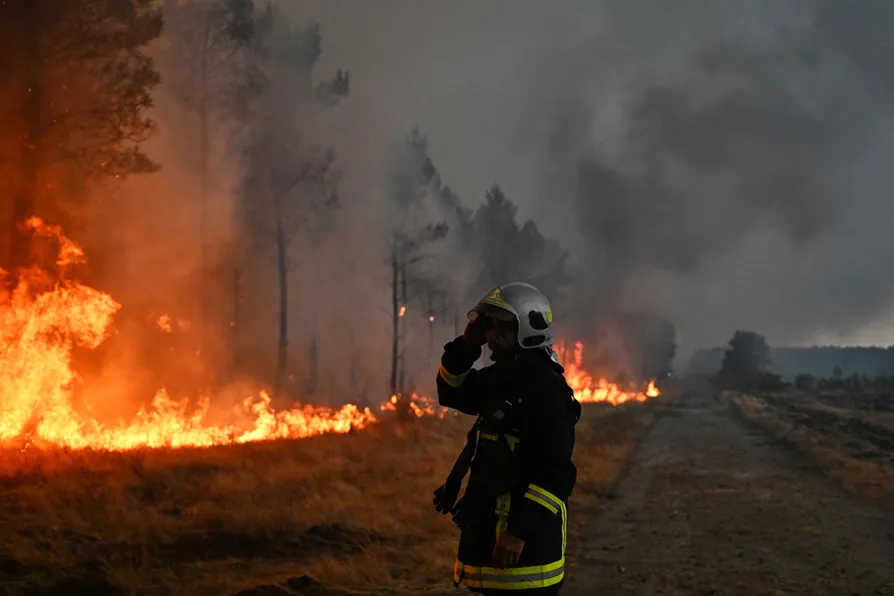
For the second time in two months, western and central Europe has been hit by a record-breaking heatwave.
Temperature records have toppled in multiple countries, with France seeing its “hottest day ever” for two days running and the UK, Spain and Switzerland breaking records for June.
A rapid-response attribution study has concluded that “climate change is unequivocally to blame”, noting that the scorching temperatures would have been “virtually impossible” 50 years ago.
The research also found that the sweltering overnight temperatures seen this week are “100 times” more likely today than they were in 2003 when Europe was hit by a deadly summer heatwave.
The extreme conditions come on the 50th anniversary of a historic 1976 heatwave in the UK, prompting many comparisons of the two events from scientists and the media.
In this article, Carbon Brief looks at how the heatwave developed and the role climate change played.
The “very intense and widespread” heat began to develop in the south of France as early as 13 June, reported Le Monde, before it began to “intensify and move northward” in the following days.
The heatwave was caused by a phenomenon known as an “omega block”, which is a “rare weather pattern” that can trap intense heat over a particular area “for extended periods”, said the Independent.
The Daily Telegraph explained the pattern’s development as a four-step process.
First, it said, the jet stream moves across the Atlantic Ocean, creating a high pressure ridge to the south. The “omega” shape is created by low pressure systems on either side of the meander. This “stalls” the normal flow of weather systems from west to east and “pulls hot air from Africa northward over Europe”, creating a “lid” that traps the heat. This leads to the development of a heat dome, “driving temperatures higher”, it added.
This heat dome “originated in the hot and humid sub-tropics” and has been “centred” over France, said BBC News.
France experienced its “hottest day ever” on two consecutive days, with its “national heat index” – an average of day- and night-time high temperatures from 30 weather stations across the country – reaching 30C on 24 June, according to Le Monde.
On 25 June, Méteo-France announced that 72 of France’s 96 mainland administrative districts had been placed under a red heatwave alert.
The heatwave “spread to other parts of western Europe” as the week progressed, said BBC News.
Spain recorded a daily average of 28.2C on 23 June – a record temperature for that month, the outlet reported.
The UK surpassed its long-standing temperature record for June of 35.6C multipletimeson 24, 25 and 26 June, with a new record set on 24 June at 36.1C in Gosport, Hampshire, which was subsequently exceeded on 25 June with 36.7C at Merryfield, Somerset and on 26 June with 37.3C at Santon Downham in Suffolk.
“Temperatures exceeding 40C” are predicted for the weekend of 27-28 June in Italy, while 16 cities have been placed under heat alerts, according to Corriere della Sera.
Germany also saw temperature records tumble, where the heatwave is the “longest-ever recorded” for June, said Deutsche Welle.
The Financial Times said Germany was bracing for 41C temperatures over the weekend of 27-28 June and reported that Austria’s weather agency has warned Vienna could hit a record 40C.
Meanwhile, Switzerland’s national weather agency declared temperatures had exceeded 38C for the first time in June, breaking a record set in 1947, according to RTS.
(All of these new records are considered provisional until they have been validated and verified by each national met service.)
Scientists from the World Weather Attribution service analysed the wet-bulb globe temperature in 854 cities across 30 European countries and found that 45% have broken, or are expected to break, their June heat-stress record since 18 June.
(Wet-bulb globe temperature is a heat-stress index that combines temperature, humidity, wind speed and direct sunlight.)
These record-breaking cities are shown in pink on the map below.
Cities that have broken (or are forecasted to break) their June heat-stress records over 18-30 June (pink) and those that have not broken records (grey). Source: World Weather Attribution (2026)
While temperatures are expected to “gradually decline” across western Europe from 26 June onwards, “countries in eastern Europe were bracing for a scorching weekend”, according to the New York Times.
A separate New York Times article noted that “local factors” – such as melting sea ice, lower air pollution and less snow cover – mean that “for the past three decades, Europe has been warming faster than any other continent”.
The outlet added that these factors can also impact atmospheric conditions “in ways that could be making searing heatwaves like the one this week more frequent”.
As temperatures climbed on Sunday 21 June, several cities and towns – including Paris – introduced restrictions for the nationwide “fête de la musique” celebration, reported the Guardian. This included bans on performances before 7pm and outdoor drinking, it said.
Le Parisien reported that the government announced that more than 845 schools would not open on Monday 22 June, while another 1,800 were rescheduling classes.
On 23 June, as average temperatures in France reached an all-time high, prime minister Sébastien Lecornu announced that more than 40 people had drowned as they sought relief from the heat, reported Libération.
Analysis from Agence France-Presse covered by the Guardian on 24 June showed that 54 of France’s administrative departments had recorded temperatures of 40C and higher since the heatwave began.
France24 reported that a power cut caused by the heat had left 68,000 households in Brittany, north-west France, without electricity. Meanwhile, Le Monde reported a jump of 15-20% in calls to the French emergency health services.
On 25 June, Ouest-France reported that 25 cardiac arrests had been reported over a 24-hour period in Paris – a significant increase on the typical number of “around 10”.
The Financial Times said temperatures reached 41C in Paris on 25 June, noting that “heat-absorbing zinc rooftops” had caused temperatures in apartment buildings to “soar”.
It added that nighttime temperatures had been most extreme in France, with some areas enduring 30C heat.
The UK Met Office issued a “red warning” for extreme heat on 24 June, 25 June and 26 June – noting that this was the “first time in the history of the current weather warnings system” that it had issued red heat warnings on three consecutive days.
The UK Health Security Agency also issued red alerts – indicating that “severe impacts are expected across health and social care services due to the high temperatures” – for much of the country.
Schools, hospitals, transport networks and water companies were all left “struggling to cope” with the high temperatures, wrote the Guardian. Schools across southern England and Wales closed, while rail services were cut and speeds lowered, it said.
Temperatures on the London Underground’s Central line reached nearly 40C, according to the Independent, which took readings on several lines. It noted that “only around 40%” of the network’s trains are air-conditioned.
Several events at London Climate Action Week were cancelled or moved online, giving a “textbook example of how the world is being forced to adapt to increasingly extreme heat”, wrote Wired.
On 26 June, the i newspaper reported that 1,200 schools in the UK had been closed and six hospitals had declared “critical incidents”.
BBC News said that the London Ambulance Service had responded to a record number of call outs for life-threatening emergencies”, while the Guardian detailed reports from doctors of “radiotherapy machines and MRI scanners failing, critical IT systems stalling and cooling units that serve entire hospitals breaking down”.
The extreme heat has also swept through other European countries.
Euronews reported that 22 and 23 June were the hottest June days on record in mainland Spain since at least 1950. It added that “the current heatwave is bringing temperatures to between 5-10C above normal across much of the country”.
Separately, Euronews reported that across Spain, many municipalities had called off their San Juan celebrations, which usually involve lighting bonfires.
France24 reported that extreme heat between 21 and 24 June had been linked to an estimated 212 excess deaths across Spain, according to the country’s “mortalidad y modelos” monitoring system.
Reuters reported that “an extreme heat warning was in place across the Netherlands, where outdoor sports were cancelled, public transport was scaled down and schools shortened classes or closed as temperatures were expected to soar to 36C”.
It added that, in Switzerland, local authorities opened air-conditioned theatres for free daytime cinema screenings.
Meanwhile, Agence France-Presse reported that Belgium’s national train operator had removed “some” non-air-conditioned trains from service, while France’s SNCF had cancelled 10% of trains in the Paris region to avoid overheating the tracks.
The record-breaking temperatures recorded over Europe this week would have been “virtually impossible” 50 years ago, according to a rapid analysis from the World Weather Attribution service.
The study, published on 26 June, found that “climate change is unequivocally to blame”.
To identify the fingerprint of human-caused climate change on the extreme heat, the study authors used climate models to compare the world as it is today to a cooler “counterfactual” world. This is called an attribution study.
The analysis focuses on a large area of Europe encompassing Belgium, Denmark, France, Luxembourg, the Netherlands and the UK, as well as parts of Italy, Norway, Spain and Sweden.
The authors simulated the three-day maximum June daytime temperatures and three-day minimum June night-time temperatures over the study area in today’s climate, which has already warmed by 1.4C due to human-caused climate change.
They then simulated the same June heatwave in a climate 1.1C and 0.6C cooler than today. These global warming levels approximate the average global temperatures in 1976 and 2003, respectively.
The study authors said they chose these two years because both saw record-breaking summerheatwaves hit Europe which were linked to devastating impacts including thousands of deaths.
If the atmospheric conditions that drove this week’s heatwave had hit Europe in 1976 and 2003, the resulting heatwaves would have been 3.5C and 2C cooler, respectively, the researchers found. Meanwhile, night-time temperatures would have been 2.4C and 1.3C cooler in June 1976 and 2003, respectively.
The study added:
“The sweltering overnight temperatures keeping many people awake this week are about 100 times more likely today than they were just 23 years ago during the infamous 2003 European heatwave. The daytime peaks are about 10 times more likely.”
“Human-driven climate change has provided the springboard for this event, loading the atmosphere with extra heat and making extreme temperatures far more intense than they would have been in the past”.
With an average temperature of 15.7C, the summer of 1976 was the hottest on record at the time. That record stood for more than 25 years, before being surpassed by the summer of 2003 and then also 2006, 2018, 2022 and 2025.
The duration of the 1976 heatwave made the event extraordinary, including 15 consecutive days where temperatures of at least 32.2C were recorded somewhere in the country.
The heatwave arrived towards the end of a record-breaking drought that started the year before. The period from May 1975 to August 1976 holds the record for the lowest 16-month total rainfall in England and Wales.
At the time, the 1976 heatwave tied the record – with 1957 – for the maximum June temperature in the UK. A temperature of 35.6C was recorded at Mayflower Park in Southampton on 28 June.
That record remained until it was beaten on three consecutive days this year, with 36.1C recorded in Gosport, Hampshire on 24 June, then 36.7C at Merryfield, Somerset on 25 June and 37.3C at Santon Downham, Suffolk on 26 June.
June 1976 also held the record for the UK’s highest minimum temperature – that is, how warm conditions remain overnight – of 22.7C in Ventnor Park on the Isle of Wight. That has now been surpassed with a recorded temperature of 23.5C in Bute Park in Cardiff.
To mark the 50th anniversary of the 1976 heatwave, the Met Office and University of Reading analysed what a comparable event would look like in today’s climate.
Shown in the maps below, the findings show that a similar event to 1976 (left-hand map) would already be around 3C hotter today (right–hand map), with peak temperatures of 38C or 39C.
Maps showing UK maximum daily temperatures on 3 July 1976 (left) and for a comparable heatwave in today’s climate (right). Credit: Met Office and University of Reading
As climate change continues, “1976-style events will become increasingly common over the next two decades”, said Prof Ed Hawkins in a University of Reading press release:
“What felt like a freak weather event to grandparents in 1976 will become the new normal for their grandchildren.”
Hawkins also noted on social media that the heat in 1976 was “less humid”, with “much cooler nights”, adding that “peak night time temperatures were around 16C back then”.
The summer of 1976 became a benchmark for later periods of extreme heat and drought, both for contingency planning and in popular culture.
In recent days, for example, commentary in climate-sceptic newspapers has often referred back to 1976 as a time without “heatwave hysterics” and “nanny state warnings”, or when the heat was taken “in our stride”,.
Much of this commentary has been critical of school closures – for example, arguing that it is “defeatist”.
Yet, although hundreds of schools have announced full or partial closures this week, the summer of 1976 also saw schools close early or allow parents to keep their children home.
There was also prominent coverage in other countries that have seen extreme heat, such as on the frontpages of El País in Spain and Die Welt in Germany.
Some outlets were clear about the dangers of extreme heat, as well as the role of climate change in driving it. They led their coverage with public health warnings and details of how the heat was negatively impacting people’s lives.
A Daily Express editorial urged readers to “stay safe” and to shelter indoors with fans, while Ouest-France had a frontpage story about how the heat “threatens our health”. A Guardian frontpage asked if such extremes, “driven by [the] climate crisis”, were “the new normal”.
Noting the “muted response” from the UK government to recent warnings about the need for climate adaptation, a Guardian editorial said it hoped “this week’s heat will focus minds”. It added:
“A strong adaptation plan – to run in parallel with the green transition – cannot wait.”
The Independent also argued via an editorial that climate change must be treated with “the urgency the moment demands”, given the “all-too-obvious need to increase resilience”.
Similarly, an editorial in Le Monde criticised the French government’s “flagrant unpreparedness” for heatwaves. It, too, stressed the need for adaptation and said:
“The fight against global warming must be seen as a new paradigm, within which a broad range of public policies must be considered. Simply reacting to events is no longer enough.”
Yet, even amid warnings of “killer heat” approaching 40C, much of the news coverage in UK media was relatively frivolous, often focusing on the positive aspects of the heat.
The Times publishedstories about “what the fashion A-list are wearing in the heatwave” and “surprising positives to a British heatwave”. On the day after the UK reached its highest-ever June temperature, the Daily Mail featured a story about King Charles using an electric handheld fan on its frontpage.
Often, alongside warnings of “red alerts” and “meltdown”, news outlets illustrated their stories with photos of people relaxing on the beach and children playing in fountains.
Some writers misleadingly compared the heatwave to similar events in 1957 and 1976. In the Evening Standard, one writer said this year’s heat has “got nothing on the summer of 1976”. A Daily Mail article claimed that in 1957 “the sunshine was greeted by national rejoicing”.
In contrast, a comment piece in the Daily Express erroneously stated that the UK was facing “Covid-like shutdown” due to the heat and the Sun took aim at the “nannying, alarmist state”. A Daily Telegraph editorial said the government was “treat[ing] the public like children”. It said:
“It may well be that the country will have to learn to live with higher temperatures in future. Britain cannot close its schools, cancel its trains and shut down its offices every time the sun comes out.”
Media coverage of the heatwave in the UK has been criticised for failing to mention climate change and for using imagery that does not convey the health risks associated with the extreme weather.
On 23 June, a group of climate scientists wrote to senior editors at BBC News, ITV News, Channel 4 News, 5 News, Sky News and LBC owner Global, as well as to media regulators Ofcom and IPSO, to urge them to “use their power to inform public audiences of the scientific links between extreme weather, climate change and net-zero”.
In a letter, reproduced in the Press Gazette, the scientists said they wanted to express their concern about recent coverage of extreme heat. They argued that the UK public was “frequently not well served with clear information about the scientifically indisputable connection between greenhouse gas emissions and extreme heat”.
Prof Mark Hannon from the University of Strathclyde was among a number of academics on Bluesky to note how some parts of the UK media had failed to explain that climate change was causing the extreme heat. He said:
“Amazing how much coverage the heat – and the symptoms of climate change – is getting on outlets like the BBC, but how little coverage is typically given over to the causes of climate change.”
Others pointed to a disconnect between discussions around net-zero policies and the recent weather.
Other researchers – including University College London’s Prof Bill McGuire and Cardiff University’s Prof Ian Hall – criticisednational newspapers’ choice of beach photos to illustrate articles about the UK’s “red weather warning”.
“Your happy and clickable ‘kids in lido’‚ ‘dogs playing in fountain’‚ ‘family eats ice cream’ photos to illustrate news reports about the heatwave are journalistic malpractice.”
Update: This article was updated on 26 June to include further new record-high June temperatures for the UK.
Power-mad orange gasbag Donald Trump says Burn, Baby, Burn.Nigel Farage urges you to ignore facts and reality and be a climate science denier like him and his Deputy Richard Tice. He says that Reform UK has received £Millions and £Millions from the fossil fuel industry to promote climate denial and destroy the planet.Orcas discuss rotting brain, front Orca says Sundown Syndrome is a dead givaway and he wishes someone would Lock Him Up