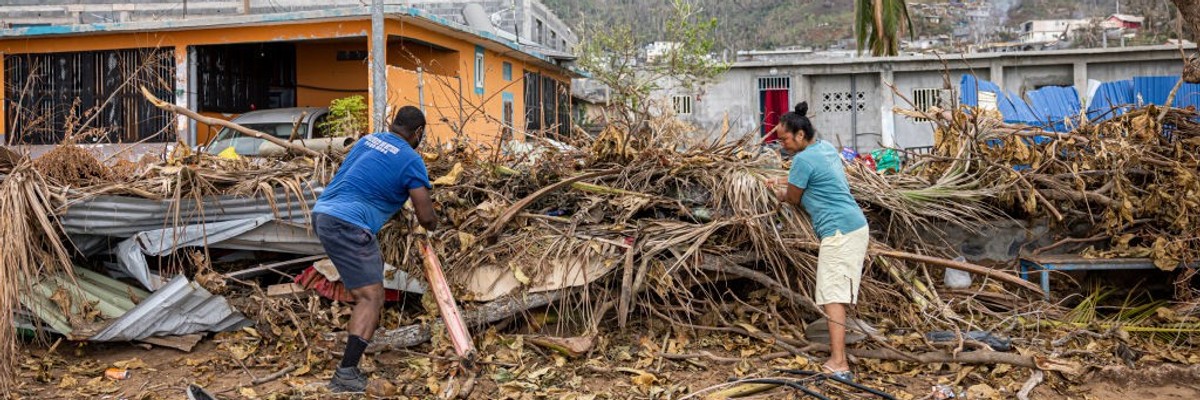
Residents collect garbage and debris to burn in the town of Acoua after Cyclone Chido wreaked havoc on the French island territory of Mayotte on December 25, 2024. (Photo: Patrick Meinhardt/AFP via Getty Images)
“This exceptional year of extreme weather shows how dangerous life has already become… and highlights the urgency of moving away from planet-heating fossil fuels as quickly as possible.”
Just over two dozen climate-fueled extreme weather events killed at least 3,700 people worldwide and displaced millions in 2024, according to a report published Friday as the hottest year on record drew to a close.
The new analysis from World Weather Attribution (WWA) and Climate Central states that extreme weather “reached dangerous new heights in 2024” as “record-breaking temperatures fueled unrelenting heatwaves, drought, wildfire, storms, and floods that killed thousands of people and forced millions from their homes.”
“This exceptional year of extreme weather shows how dangerous life has already become with 1.3°C of human-induced warming, and highlights the urgency of moving away from planet-heating fossil fuels as quickly as possible,” said the two organizations, which examined 26 destructive weather events that occurred in 2024—a fraction of the hundreds that took place globally this year.
Those 26 events—from Hurricane Helene in the United States to the typhoon that hammered the Philippines, China, and Taiwan— caused close to 4,000 deaths, according to WWA and Climate Central.
“It’s likely the total number of people killed in extreme weather events intensified by climate change this year is in the tens, or hundreds of thousands,” the analysis states.
“Extremes will continue to worsen with every fraction of a degree of fossil fuel warming.”
Around the world, the fossil fuel-driven climate emergency added, on average, 41 additional days of dangerous heat this year, Climate Central found.
“The countries that experienced the highest number of dangerous heat days are overwhelmingly small island and developing states, who are highly vulnerable and considered to be on the frontlines of climate change,” the analysis says.
WWA and Climate Central said their findings should spur global action to shift away from fossil fuel, the burning of which is “the primary reason extreme weather is becoming more severe,” they said.
“Extremes will continue to worsen with every fraction of a degree of fossil fuel warming,” WWA and Climate Central added. “A rapid move to renewable energy will help make the world a safer, healthier, wealthier, and more stable place.”
After a disappointing COP29, we should prepare for more extreme weather events like the floods that hit Valencia last month | David Ramos/Getty Images
Summit proves change won’t come until floods and wildfires are killing tens of thousands in rich Global North cities
While COP29 in Baku narrowly avoided collapsing, its results were bitterly disappointing for delegations from across the Global South, who ended up with barely a quarter of the annual $1.3trn of support they were seeking by 2035 to respond to climate breakdown.
Quite apart from other factors, more than 1,500 pro-carbon lobbyists worked hard to limit progress and ensure that burning oil, gas and coal at profit continues for as long as possible whatever the global consequences. After all, the world’s fossil fuel industries rake in around a trillion dollars in profits a year.
Meanwhile, more and more examples are emerging of accelerating climate breakdown. The flooding in Valencia is just one, but scarcely noticed in Europe is the thoroughly weird weather being experienced in the eastern United States.
This autumn there have been over five hundred wildfires in New Jersey alone, a 5,000-acre fire has been burning for a week on the New York-New Jersey border prompting a voluntary evacuation, and New York City’s Fire Department was called out to deal with 271 brush fires in the first two weeks of November alone.
As if timed for that and certainly released with COP29 in mind, Carbon Brief, a website covering the latest developments in climate science, climate policy and energy policy, has mapped every published study on ‘impossible’ weather events – record heatwaves or storms that would not have happened without the overall global climate changes.
The first such study came in 2004, the year after weeks of extreme heat hit Europe and killed 70,000 people across the continent over several months. That early example of an ‘impossible’ weather event kick-started a new field of research known as ‘extreme event attribution’, which looks at how climate change has influenced extreme weather.
There are now 600 studies of 750 such extreme events spanning the past 20 years – a tiny fraction of the total number of these kinds of events. Of these 750, Carbon Brief found that scientists and researchers had concluded that 74% were made more likely or more severe because of climate change.
This has added to the growing sense of urgency right across the climate science community coupled with a highly critical view of the whole COP process. Even before the dismaying summit in the Azerbaijani capital, both last year’s COP in Abu Dhabi and the year before in Egypt were notable for their lack of progress even as the urgency of preventing climate breakdown was becoming more and more obvious.
There are other risks to global security including nuclear weapons, pandemics, cyber warfare, AI misuse and the progressive destruction of biodiversity, but climate breakdown is different from all of these. It is not a future risk, it is a current happening, it is accelerating, and we now have very few years left to get on top of it. If we don’t then a worldwide catastrophe with many hundreds of millions dying and societal collapse will become increasingly likely.
Does it have to be like that?
As things stand, in terms of changing attitudes, developments in renewables, resistance of the fossil carbon industries and, of course, Donald Trump’s looming presidency in the US, a reasonable prognosis for the next decade has three elements.
First, the use of renewable energy resources does continue to increase but not at anything like the rate required, so net carbon emissions will continue to rise, not fall, for most of the next ten years. Second, resistance to decarbonisation will continue from many quarters, no doubt now including the White House. Finally, severe weather events will become both more common and more destructive.
Eventually, and it might take more than a decade, the disasters will be so great, including sudden weather events in rich cities in the Global North killing many tens of thousands of people, that public pressure across the world will force governments to respond. There will be no alternative to engage in truly transformative change.
But what that means is that the task ahead by then will be hugely greater than if the transformation starts much sooner, so timescales become crucial, especially what can speed up the process.
There is, though, one thing to remember at a time of widespread pessimism. If nations had got their act together 25 years ago after the Kyoto Protocols, were signed we would be in a far more favourable position worldwide than we are now. We are acting more than two decades late.
But climate breakdown is not happening as a slow, steady process of change, creeping up almost unawares. If that had been the case then with all the reasons not to act, especially the global fossil carbon lobby, we would have been in an even worse position now. Instead, it is happening at variable rates in two respects, some parts of the world – such as the polar regions – are warming up much faster than others and extreme weather events are happening much more often.
We are therefore getting a foretaste of what will affect everyone a few years before it does, and this gives us just a little more time to act. It means that the next ten years, and perhaps even the five years to 2030, will be the key time for us to come to terms with the transformation in society that is essential for global well-being. That is possible, just.
Even now, decades after we first began trying to avert the worst of global warming, more than 80% of the world’s total energy comes from fossil fuels.
You might think this would make fossil fuel production extremely profitable. But it’s not always the case. Much of the most accessible oil has already been extracted and burned. Many countries want to shore up domestic sources of fossil fuels to boost energy security. Energy price fluctuations and competition from new energy sources such as solar, wind and fossil gas have made it harder for some fossil fuel companies to make money, especially in coal.
You might have wondered – why would some of the largest companies on Earth need subsidies? Here’s why.
Australia’s surging liquefied natural gas industry has been boosted by government funding. KDS Photographics/Shutterstock
Private companies, public money
Globally, private companies dominate fossil fuel production, though fossil fuel-rich nations often have state-owned companies, such as Saudi Arabia’s Aramco and Russia’s Rosneft.
Why would governments give fossil fuel companies money? Many reasons. But the most important is that wealthy countries have historically needed huge volumes of fossil fuels for manufacturing, transport and power. Many countries have some sources of fossil fuels inside their borders, but only a few are self-sufficient. This has enabled fossil fuel giants such as Saudi Arabia to become wealthy beyond belief.
Many governments have used subsidies to boost their energy security and encourage local producers to seek out new sources of coal, gas and oil. These subsidies can make all the difference in making fossil fuel companies competitive internationally. For instance, Canada spent billions on subsidies to boost its oil sands and fracking projects.
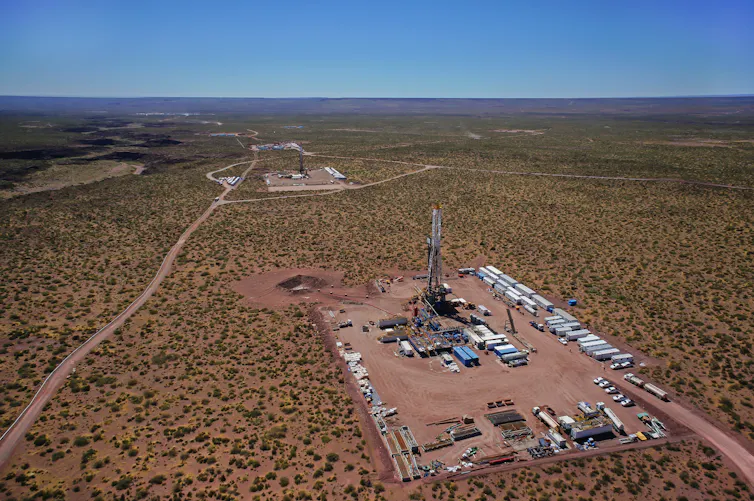
Subsidies were essential in the United States’ fracking revolution. Novel approaches to extracting fossil gas and oil – boosted by major tax incentives – turned the US from a major importer of oil and gas into a net exporter by 2019.
You can see why the US did this. At a stroke, it went from being dependent on energy provided by foreign nations to being independent.
Once subsidies are in place, they become very hard to remove. Indonesia’s lavish fuel subsidies now account for 2% of the nation’s GDP. When the national government tried to walk these back, there were riots.
And there’s another reason, too. Fossil fuels are still playing an important role in boosting the economy in most nations. Subsidising them has long been seen as a way to maintain economic growth and stability.
Globally, these subsidies are estimated at a staggering $10.5 trillion each year.
This figure has grown sharply in recent years, after Russia’s invasion of Ukraine. As European nations tried to wean themselves off Russia’s gas, energy prices surged worldwide. In response, some countries introduced new subsidies to support businesses and consumers.
The top-line figure of $10.5 trillion includes two types of subsidy – explicit (meaning real dollars change hands) and implicit (for example, governments building roads and railways to encourage crude oil transport).
Explicit subsidies
Explicit fossil fuel subsidies are direct financial incentives from governments to fossil fuel producers and consumers. These incentives come in different forms, such as tax breaks, direct payments, grants and price controls. All of them aim to reduce the financial burden associated with fossil fuel production and use.
In Australia, explicit subsidies include fuel tax credits and exploration tax reductions. Fossil fuel companies can get subsidies to offset the losses they make during the years it takes to find and begin extracting new fossil fuels.
In the US, oil and gas companies benefit from the oil depletion allowance, which permits them to deduct a percentage of their gross income from oil and gas sales as an expense. They can also claim tax deductions for intangible drilling costs, such as the wages of workers and material needed to find new sources of oil and gas.
China, too, uses direct subsidies, discounted land-use fees, and preferential loans as explicit subsidies to boost coal production and consumption. The national government also supports fossil fuel consumption through direct payments to consumers.
China has used subsidies to encourage exploitation of its large coal resources. zhaoliang70/Shutterstock
Implicit subsidies
Implicit subsidies are often described as “imaginary”. That doesn’t mean they don’t exist, just that they’re not a direct transfer to directly paid to fossil fuel producers.
For instance, the cost of burning fossil fuels is borne by the global community and the natural world, in the form of climate change, damage to human health and other harms. Most fossil fuel companies don’t have to pay a cent for the pollution their products cause – so in effect, they are being granted an indirect subsidy.
Implicit incentives also include government investment in facilities such as transport networks, pipelines, oil refineries and port infrastructure, which will accelerate fossil fuel production and delivery. Think of the Middle Arm development in Darwin, funded by both the federal and territory government.
Why are these subsidies still being paid?
As the world grapples with a worsening climate crisis, fossil fuel subsidies are under great scrutiny.
It’s politically difficult to withdraw subsidies once given. This is why governments around the world have instead begun to give subsidies and tax incentives to green energy developers, including the enormous $500 billion Inflation Reduction Act in the US, the European Union’s Green Deal, and China’s massive subsidies of green technologies such as electric vehicles and solar panels.
The goal here is to make renewable energy and electrified transport steadily more affordable and competitive – just as fossil fuel subsidies did for oil, gas and coal.
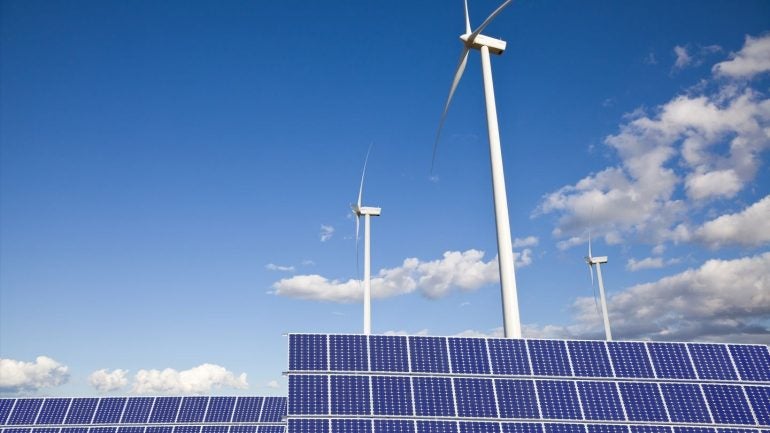
Despite a focus on renewables, growth is not rapid enough. Credit: Ivan Soto Cobos/Shutterstock.com.
The annual growth rate of renewable energy needs to grow to 16.4% to meet global targets, 1.4% above its current level.
The world will fail to meet its goal to triple renewable energy capacity by 2030 if capacity continues to grow at a sluggish rate, according to the International Renewable Energy Agency (IRENA).
According to the IRENA report, 473GW of renewable capacity was added last year, a 14% increase from the year before and the largest annual growth since 2000.
However, to meet the ambitious target, the world will have to add renewable capacity at a rate of 16.4% per year annually between now and 2030, according to IRENA. At the current 14% rate, the world will be 1.5TW short.