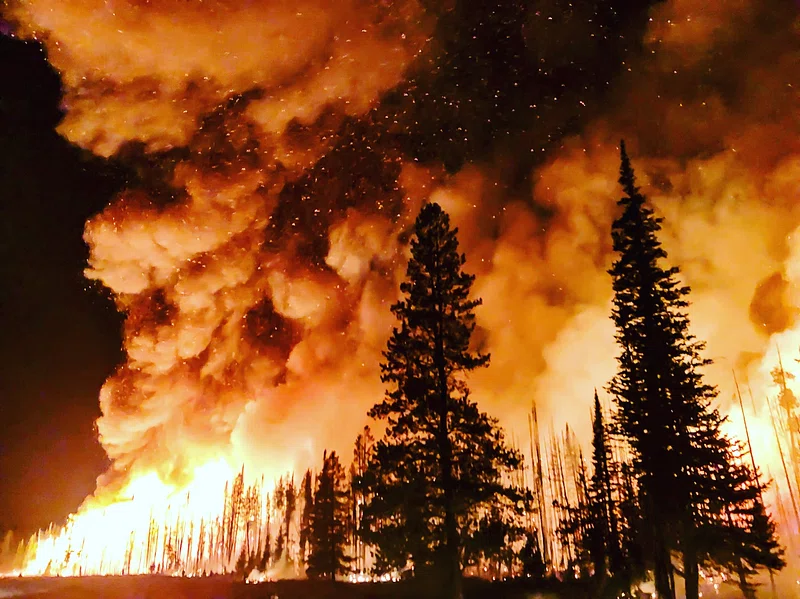
One in six UK species threatened with extinction – here’s what we could lose (plus how to save them)
Spread the love
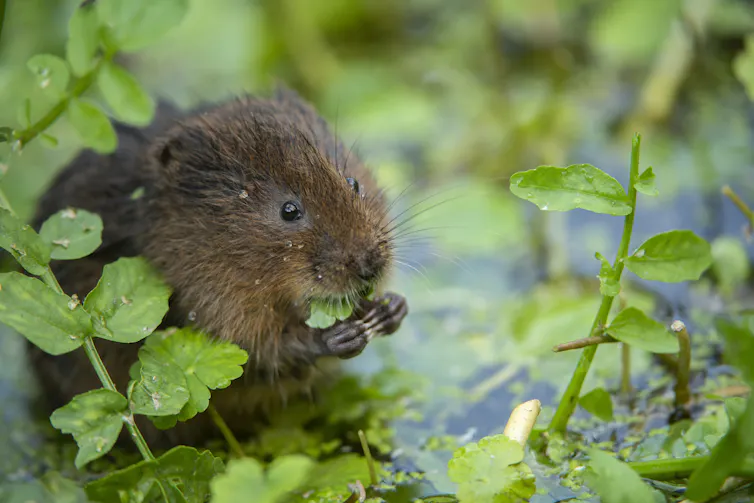
Water voles are endangered mammals in the British Isles.
Ben Andrew/RSPB

Richard Gregory, UCL

The UK is considered one of the most nature-depleted countries in the world. This is not surprising given its history of early industrialisation and agricultural intensification.

These islands have lost species and unique habitats have shrunk to tiny remnants. Nearly every landscape and view has transformed.

What is more surprising is that over the last 50 years or so, from when scientists started to collect information about biodiversity systematically, there has been no let-up in that downward slide.

More than 750 assessed species have declined by 19% on average since monitoring began in 1970. The losses continue despite the heroic efforts of many passionate people and organisations. Today, out of over 10,000 species assessed, 16% (1,500, or one in six) are threatened with extinction.

That is the sobering conclusion of the latest state of nature report, compiled by experts from over 60 of the top research and conservation organisations in the UK, using the latest and most accurate information about biodiversity on land, in freshwater, around the coast and in the ocean.

The evidence that species and habitats are being lost is clear. And yet, as the report shows, there has never been a better understanding of the state of nature and, importantly, what is needed to fix it.

Nature continues to decline

Everyone depends on nature for the things it provides for free: so-called ecosystem services like healthy food, materials, clean air and water. You could add human wellbeing, physical and mental health – and for many, inspiration, solace and joy.

There is cause to protect nature because it aligns with our values, from the moral responsibility we feel to future generations to the intrinsic worth we know nature has. These are all good reasons, but self-preservation is compelling.

The new report presents evidence on how and why nature is changing in the UK and in its four constituent countries. To do this, the authors analysed three measures: species abundance (the number of individuals), species distribution (the proportion of sites occupied) and national extinction risk.

These measures have been assessed for hundreds – and in some cases thousands – of species native to the UK. Our new findings are in line with previous reports (2013, 2016, 2019) in pointing to a pattern of continued biodiversity loss.

An orange and brown patterned butterfly among wildflowers.
The threatened marsh fritillary butterfly.
Patrick Cashman/RSPB

The new report’s key findings include:

  • The distributions of almost 5,000 invertebrate species have on average shrunk by 13% since 1970. Strong declines were seen in insect groups that perform key ecosystem functions, including pollinators (18% decrease) and pest controllers (34% decrease).
  • The distributions of 54% of flowering plant species and 59% of bryophytes (mosses and liverworts) have decreased across Britain since 1970. By comparison, only 15% and 26% of these groups have increased respectively.
  • The abundance of 13 species of seabird has fallen by an average of 24% in the UK since 1986. But these results pre-date an ongoing outbreak of Highly Pathogenic Avian Influenza, which has killed thousands of seabirds, some belonging to populations constituting the bulk of an entire species.
  • Roughly 2% of species (151) once found in the UK have disappeared. These include the great auk, Kentish plover, Norfolk damselfly, burbot and large copper butterfly.

The report shows that climate change – which is predominantly caused by burning fossil fuels – is among the biggest threats to wildlife in all ecosystems. The intensive way in which land is managed for farming (with the loss of hedgerows, farm ponds and scruffy margins and the increasing use of pesticides and fertilisers, as well as changes in crops and cropping patterns) is also a major driver of biodiversity loss, and contributes to climate change.

At sea, unsustainable fishing practices are a major factor. Added to these pressures on wildlife are invasive species, pollution and for some, such as birds of prey, persecution.

Solving all of these problems will involve several actions that can be joined up to support each other. This must be swift and extensive to be effective.

The report establishes what is known about the success or failure of conservation efforts. Fortunately, there are many success stories. Species like natterjack toads, Duke of Burgundy butterflies, bitterns, and large marsh grasshoppers have all benefited from bespoke conservation projects and are bouncing back.
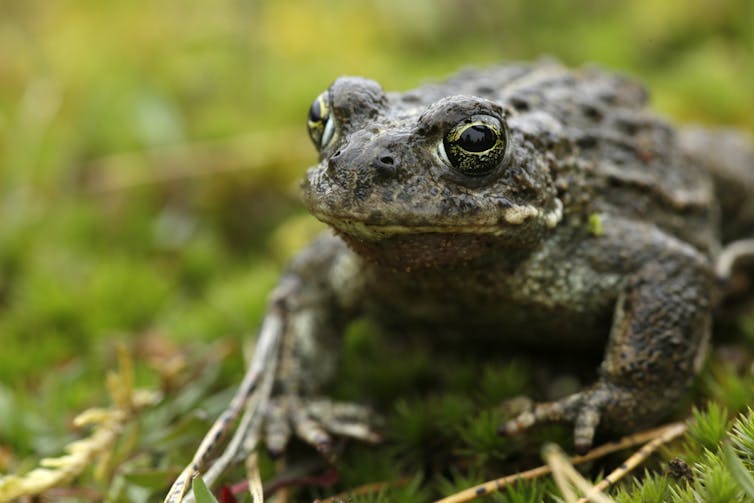
A toad.
Natterjack toads cling on in a handful of shallow coastal pools.
Andy Hay/RSPB

Cairngorms Connect is the UK’s largest habitat restoration project, covering 60,000 hectares in the Scottish national park. It aims to restore native woodland, peatlands and rivers over the next 200 years. This is the scale at which conservationists need to operate in order to reverse nature’s decline.

Recovery by 2050?

It is only through the collective efforts of thousands of people, most of them volunteers, that we can report on the state of nature with such clarity and breadth. Without their enthusiasm, commitment and skill, we’d only have a sketchy understanding of how the environment is changing, and whether conservation efforts are making a difference.

The 2023 state of nature report is timely given the recent adoption of global targets to recover nature. The Convention on Biological Diversity’s new global framework, signed by nearly 200 countries in December 2022, aims to maintain, enhance, restore and expand ecosystems, reduce the number of species threatened with extinction and increase the abundance of native species by 2030, putting nature on a path to recovery by 2050.

A farm field margin covered in wildflowers.
Restoring meadows on farmland could benefit pollinating insects.
Angel217/Shutterstock

To halt and reverse biodiversity loss in the UK, efforts to conserve and restore species and habitats must ramp up. But the underlying drivers of this loss must be addressed too, especially those attached to our food system.

That means making food production more sustainable and nature-friendly on land and at sea, and adjusting our diets to cut demand for products that drive the loss of nature, such as meat.

Nature-based solutions to climate change, such as restoring and protecting carbon-absorbing forests and wetlands in river catchments, or restoring coastal habitats, can also boost biodiversity if well designed (think saving two birds with one tree).

We have never had a better understanding of the state of nature and what is needed to fix it. Now we need action.


Imagine weekly climate newsletter

Don’t have time to read about climate change as much as you’d like?

Get a weekly roundup in your inbox instead. Every Wednesday, The Conversation’s environment editor writes Imagine, a short email that goes a little deeper into just one climate issue. Join the 20,000+ readers who’ve subscribed so far.The Conversation


Richard Gregory, Honorary Professor of Genetics, Evolution & Environment, UCL

This article is republished from The Conversation under a Creative Commons license. Read the original article.
Continue ReadingOne in six UK species threatened with extinction – here’s what we could lose (plus how to save them)

Thousands march against Tories in Manchester

Spread the love

https://morningstaronline.co.uk/article/thousands-march-against-tories-in-manchester

Meanwhile, police officers criticised for searching campaigners’ coach and ‘undermining their right to protest’

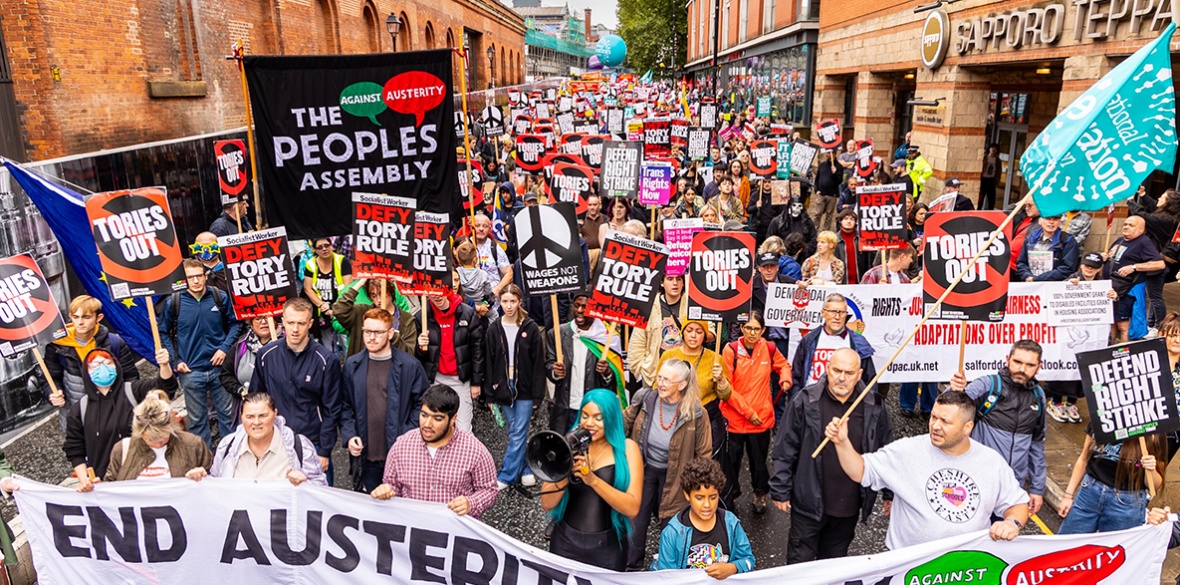
A huge protest against the Tories in Manchester, October 1, 2023 Photo: Neil Terry / Neil Terry Photography

THOUSANDS of people marched through the streets of Manchester today telling delegates to the Tory Party conference there that they are not welcome.

Headed by the banner of the Manchester People’s Assembly, which organised the march with the national People’s Assembly, the protesters represented trade unions and a huge diversity of campaign groups expressing their anger at the destruction wrought across society by the Tories.

Disabled people, peace activists and dozens more groups marched noisily through the city centre.

Protesters from all across the country took coaches to attend the march.

One coach transporting protesters from London was stopped by the police, who signalled the bus to follow them to Knutsford in Cheshire where it was searched by around 30 officers.

The protesters were late as a result. Activists said it undermined their right to protest and was a waste of police time and money.

Lorraine Douglas, from the Communist Party, said: “The sergeant came on and said they’d received intelligence that there were people on the bus set on doing criminal damage and they were going to search the bus for equipment that could cause criminal damage.”

The police went on to read a section of the Public Order Act.

“They refused to say what the intelligence was, and they got us all off the bus and searched the bus, found one flare and it looked like they had some magic markers or pens,” Ms Douglas said.

https://morningstaronline.co.uk/article/thousands-march-against-tories-in-manchester

Are the police targeting Communists?

Continue ReadingThousands march against Tories in Manchester

Government’s own research contradicts Sunak’s 20mph speed limit claim

Spread the love

Original article by Adam Bychawski republished from OpenDemocracy.net under a Creative Commons Attribution-NonCommercial 4.0 International licence.

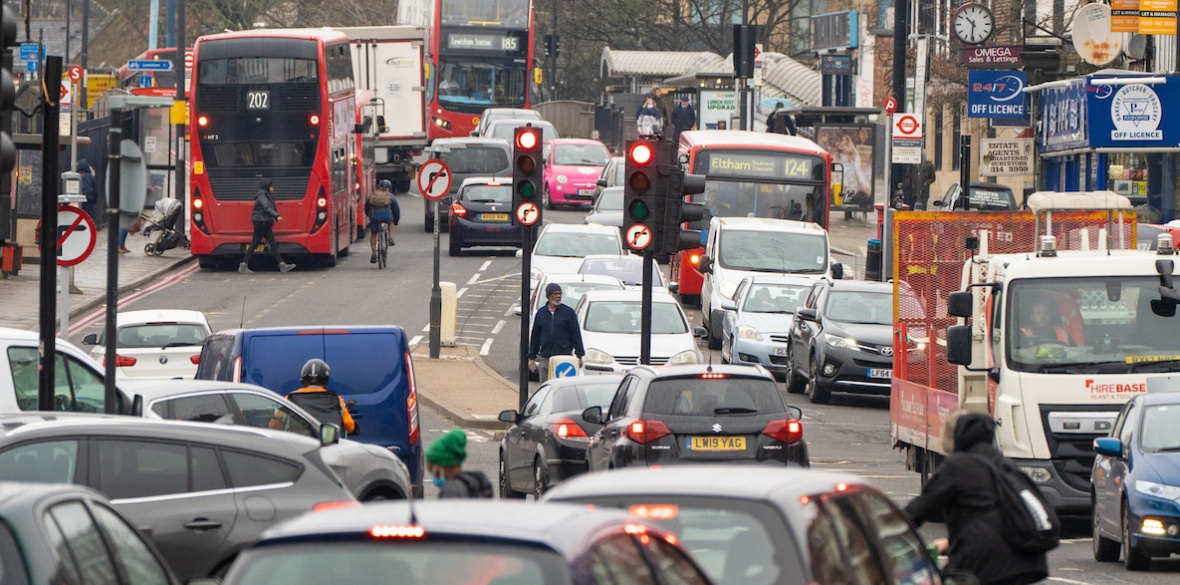
Traffic in South London.
Study found evidence that 20mph zones also improve walking and cycling in areas. Traffic in South London.

Study in 2018 found most drivers backed plans despite PM’s claim they ‘don’t reflect people’s priorities’

The majority of drivers support 20mph speed limits, according to the government’s own research, despite Rishi Sunak claiming they are an “attack on motorists”.

The prime minister is reportedly set to announce a number of new policies aimed at drivers during the Conservative Party conference that begins this weekend, including possible limits on the powers of councils in England to impose 20mph speed limits.

Sunak today criticised Wales’ new default 20mph speed limit, describing it as “absolutely not right” and saying: “It doesn’t reflect people’s priorities.” Commons leader Penny Mordaunt had previously called the scheme “absolutely insane”.

But research commissioned by the Department for Transport in 2018 found that “20mph limits are supported by the majority of residents and drivers”. 

The study, produced by the consultancy firms Atkins and AECOM and professor Mike Maher of University College London, combined “evidence from 12 case study schemes” and “feedback from over 5,400 questionnaires with a range of road users”.

It found that in areas that had introduced 20mph zones: “The majority of residents (78%) and non-resident drivers (67%) felt that 20mph was an appropriate speed for the area.

“There is little call for the limit to be changed back to 30mph (12% support amongst residents and 21% amongst non-resident drivers).”

The study also found evidence that the introduction of 20mph zones encouraged residents to use other forms of transportation or walk more often.

Lowering speed limits to 20mph was at one point Conservative Party policy: the Department for Transport commissioned the study in 2014 to “evaluate the effectiveness of 20mph” limits after publishing guidelines the previous year “encouraging traffic authorities to consider introducing more 20mph limits over time”.

Sunak has sought to present himself as being on the side of motorists following the Conservative Party’s surprise win in a July by-election in Uxbridge. The result came after the Tories campaigned heavily against the expansion of the Ultra Low Emission Zone charge to the most polluting vehicles to outer London.

Following the party’s victory, Sunak ordered a review of low-traffic neighbourhoods (LTNs) and claimed that the Labour Party was “anti-driver”.

The proposals to limit 20mph would come just weeks after the prime minister U-turned on key net zero pledges by pushing back the deadlines for banning the sale of new petrol and diesel cars and the phasing out of gas boilers.

Number 10 has been approached for comment.

Original article by Adam Bychawski republished from OpenDemocracy.net under a Creative Commons Attribution-NonCommercial 4.0 International licence.

Continue ReadingGovernment’s own research contradicts Sunak’s 20mph speed limit claim

Questions for climate denier and UK prime minister Rishi Sunak :: Question 2

Spread the love

Apologies, this is an incomplete draft, I have to rush off and do something important.

Canadian wildfire 2023

The first question is here.

While very responsible people and organisations are saying that no more fossil fuel projects are possible because our planet is burning to a crisp – I’ve paraphrased that a little but it’s certainly near enough.

For example:

This part to be completed, but it really is very easy to find examples …

So, my second question to climate denier Rishi Sunak is since all these responsible people and organisations – often scientists and reports based on scientific knowledge of the scientific community – why is he going against their advice and despite the extreme weather events as a result of the warming climate that we’ve been experiencing in recent years, how can he simply reject this huge body of evidence and subsequently, how can we have any faith in his sanity?

Continue ReadingQuestions for climate denier and UK prime minister Rishi Sunak :: Question 2

Major Polluters In ‘Ludicrous’ Push For Carbon Capture at Party Conferences

Spread the love

Original article by Adam Barnett and Rachel Sherrington republished from DeSmog.

The technology could provide cover for fossil fuel companies to explore more oil and gas drilling, campaigners say.

By Adam Barnett and Rachel Sherrington on Sep 29, 2023 @ 05:14 PDT

Prime Minister Rishi Sunak and Labour leader Keir Starmer. Credit: DeSmog via UK Parliament (CC BY 3.0)

A trade group for contested carbon capture with close ties to major oil and gas companies is sponsoring over a dozen events at the Conservative and Labour conferences over the next fortnight. 

Fossil fuel companies are using the technology as “a fig leaf” to pursue oil and gas drilling, campaigners have warned, as industry lobbyists across the energy sector seek to win over policymakers.

The Carbon Capture and Storage Association (CCSA), a trade body promoting carbon capture utilisation and storage (CCUS), is due to host 15 events across the Conservative and Labour gatherings, which begin on Sunday in Manchester.

The London-based CCSA describes itself as the “lead” European organisation for CCUS, promoting the “rapid” and “commercial” deployment of the technology. The process involves capturing CO2 emissions from industrial production and storing it underground. Some technologies allow the captured CO2 to be re-used by converting it into plastics, concrete or biofuel. 

The group says that its members are “companies across the CCUS industry” including “support services in the energy sector” such as law, banking and consultancy.  

Nearly a fifth of the CCSA’s 100 members are oil and gas companies, including BP, Exxon, Shell and Equinor. Fossil fuels are the largest contributor to climate change, producing 75 percent of global greenhouse gas emissions and nearly 90 percent of all carbon dioxide emissions.

The CCSA board is also dominated by key figures at oil and gas companies, including BP, Equinor, TotalEnergies and Shell. 

Lorne Stockman, research co-director at the campaign group Oil Change International, told DeSmog: “It’s very clear what carbon capture serves and who it’s a solution for, and that’s the fossil fuel industry. 

“This isn’t about the best way of addressing the climate crisis, it’s about keeping the industry in business.”

He said the companies were trying to hedge their bets by winning over both the Conservatives and Labour, in the hope of continued government funding to support the high infrastructure costs.

“They pay both parties as much as they can,” said Stockman. “They’ve got the resources, they’ve got the money, they’ve got the influence, and of course they’re showing up to ensure that the fossil fuel industry continues to get public support even while we try to confront the climate emergency.”

Carbon capture and storage, and the extension of the technology, CCUS, has been touted by major polluters as a way to cut their production emissions to meet climate targets. 

But the role of carbon capture in the energy transition is hotly contested. Climate scientists point to the failure of CCS to remove significant amounts of CO2 emissions while campaigners warn of the high costs compared to renewable energy. The vast majority of companies use the captured CO2 to extract more oil through a process called “enhanced oil recovery”.

A DeSmog analysis published this week found the majority of large-scale global CCS projects have spectacularly failed to deliver what they promised, overran budgets and targets, and resulted in a net increase in emissions.

A CCSA spokesperson told DeSmog: “We are proud to bring a wide variety of our members to party conferences this year to engage with politicians, delegates and the media on the vital role carbon capture and storage technology will play in the net zero transition. 

“This technology will ensure industry can continue to support jobs making critical products such as steel and cement in the UK, rather than importing them from abroad, as well as creating 70,000 new jobs in green industries. 

“Carbon capture technology will be an important part of the solution, alongside reducing energy use and rolling out renewable electricity as we all work together to reach net zero.”

Fossil Fuel Presence

The UK government has committed £20 billion of investment for carbon capture and storage over the next 20 years, and aims to capture and store 20-30 million tonnes of CO2 per year by 2030 and over 50 million by 2035. 

The “CCUS Investor Roadmap”, updated this year, sets out plans to deliver four CCUS “low-carbon” industrial clusters by 2030, and capture and store nine million tonnes of CO2 from industrial CCS by 2035.

Despite well-documented concerns over carbon capture, industry executives will look to increase the government’s commitments further and showcase its “key role in decarbonising industry”, when they join the Conservatives in Manchester next week, and Labour in Liverpool later in the month. 

Experts and MPs – yet to be named – have been invited to the group’s ticketed drinks receptions, while a number of talks are dedicated to promoting the technology as a crucial part of the UK’s “green industrial revolution”.

“Our politics are shot through with oil and gas lobbyists, it’s just at party conferences they come into the light a little bit more,” Tessa Khan, executive director of fossil fuel campaign group Uplift, told DeSmog.

“This is a ludicrous amount of special pleading for a technology, carbon capture and storage, that, on the current trajectory, will play a marginal role in reducing industrial emissions and at worst is a fig leaf for more oil and gas drilling.”

The CCSA reception in Liverpool at the Labour Party conference will feature food, drinks and speeches from industry leaders, with members of the shadow cabinet expected to attend.

Doug Parr, chief scientist and policy director at Greenpeace, told DeSmog that CCS “has been used and continues to be used as a cover for fossil fuel exploitation”. 

“If the CCS crew are out and about at party conferences, one has to have a suspicion, given the number of fossil fuel industries that continue to be involved with them, that that’s what’s being attempted in the UK”, he said. 

Board Members and Political Influence

Individuals from the fossil fuel industries are well represented on the CCSA board, as well as the group’s membership. 

Oil and gas companies TotalEnergies, Wintershall Dea, Uniper, Phillips 66 UK, Neptune Energy and Eni are also members of the CCSA, alongside Drax, the UK’s single largest emitter of CO2. Drax is seeking an estimated £31.7 billion in subsidies for its proposed biomass energy carbon capture and storage (BECCS) plant, which is being trialled in its CCUS “incubation area” in North Yorkshire.

The CCSA board is also dominated by career oil and gas executives who have spent decades working in the industry.

Chair of the CCSA, Jonathan Briggs, is director of a CCS project run by Vitol, a Dutch multinational energy and commodity company which trades oil, gas and coal. Briggs works on the “Humber Zero” project to decarbonise VPI Power’s Combined Cycle Gas Turbine in Immingham, North Lincolnshire.

The board includes Rowaa Ahmar, group head of public affairs, policy and bioenergy with carbon capture and storage (BECCS) at biomass company Drax, the UK’s largest single emitter of CO2. 

Other board members include Graeme Davies, a project director at Harbour Energy; Shirley Oliveira, vice president for hydrogen and CCUS advisory services at BP; Dan Sadler, UK vice president for low carbon solutions at Equinor; Gaël Le Parc, UK CCS director for TotalEnergies; and Steve Schofield, head of climate and carbon policy and advocacy at the corporate relations department of Shell. 

The CCSA also has political connections. CCSA president, Baroness Liddell, was a Labour minister under former prime ministers Tony Blair and Gordon Brown. Joe Butler-Trewin, CCSA’s Public Affairs and Communications Officer in London, worked on Keir Starmer’s 2020 campaign for the Labour leadership. 

The Conservative and Labour parties did not respond when contacted for comment. 

Original article by Adam Barnett and Rachel Sherrington republished from DeSmog.

Continue ReadingMajor Polluters In ‘Ludicrous’ Push For Carbon Capture at Party Conferences