Climate crisis exposed people to extra six weeks of dangerous heat in 2024

Spread the love

https://www.theguardian.com/environment/2024/dec/27/climate-crisis-dangerous-heat-2024

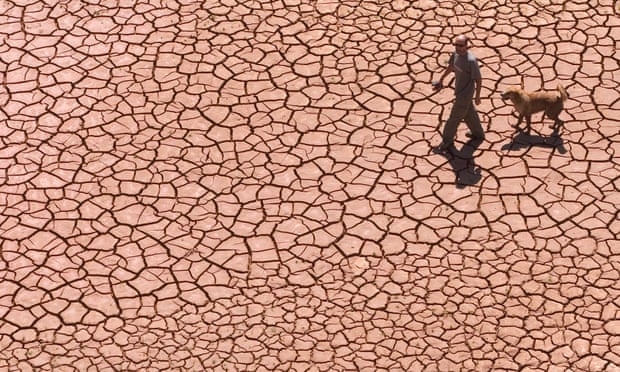
Nearly half of countries endured at least two months of high-risk temperatures, data shows. Photograph: Fernando Bustamante/AP

Analysis shows fossil fuels are supercharging heatwaves, leaving millions prone to deadly temperatures

The climate crisis caused an additional six weeks of dangerously hot days in 2024 for the average person, supercharging the fatal impact of heatwaves around the world.

The effects of human-caused global heating were far worse for some people, an analysis by World Weather Attribution (WWA) and Climate Central has shown. Those in Caribbean and Pacific island states were the hardest hit. Many endured about 150 more days of dangerous heat than they would have done without global heating, almost half the year.

Nearly half the world’s countries endured at least two months of high-risk temperatures. Even in the least affected places, such as the UK, US and Australia, the carbon pollution from fossil fuel burning has led to an extra three weeks of elevated temperatures.

Worsened heatwaves are the deadliest consequence of the climate emergency. An end to coal, oil and gas burning was vital to stopping the effects getting even worse, the scientists said, with 2024 forecast to be the hottest year on record with record-high carbon emissions.

The researchers called for deaths from heatwaves to be reported in real time, with current data being a “very gross underestimate” because of the lack of monitoring. It is possible that uncounted millions of people have died as a result of human-caused global heating in recent decades.

Article continues at https://www.theguardian.com/environment/2024/dec/27/climate-crisis-dangerous-heat-2024

Climate crisis to blame for dozens of ‘impossible’ heatwaves, studies reveal

Continue ReadingClimate crisis exposed people to extra six weeks of dangerous heat in 2024

Jeremy Corbyn: The facts about a planet facing climate disaster are clear. Why won’t this Labour government face them?

Spread the love

https://www.theguardian.com/commentisfree/2024/dec/20/planet-climate-disaster-labour-government

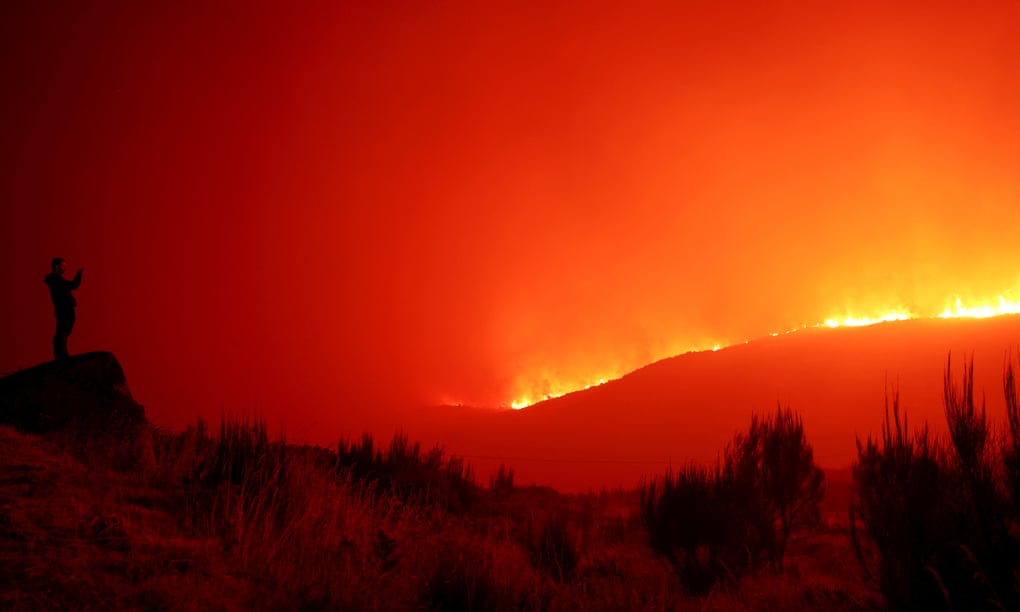
A wildfire near Povoa de Montemuro, Portugal, 18 September 2024. Photograph: Susana Vera/Reuters

Labour seems gripped by a form of denialism. The danger is real and incremental change won’t avert it

If our political leaders acted out of humanity, the plight of others would be enough to motivate them into action. In the absence of empathy, perhaps we need to be more direct: the climate crisis is coming for you, because it is coming for us all.

Without urgent action, “once-in-a-generation” events – the flooding of New York subways, the typhoon-like winds sucking people out of their apartments in China, the forest fires – will become the new routine of daily life. Politicians abandoned the goal to stop climate breakdown many years ago. We have a much more basic demand: to stop climate breakdown entering a new phase of existential disaster.

That means avoiding certain “tipping points” that would put humanity on an irreversible path to catastrophe. The collapse of the Atlantic meridional overturning circulation, for example, would disrupt the rains that billions of people depend on for food in India, South America and west Africa. Permafrost thaw would generate an irreversible release of carbon dioxide. And the loss of the Greenland ice sheet would result in disastrous runaway melting.

Few politicians deny that human-made global heating is real. Instead, our government peddles a different – more insidious – kind of denialism. One that moves away from a disbelief in the climate crisis, and toward a belief that incremental change can fix it.

This government is not just failing to stand up to fossil fuel giants. It is failing to confront the economic system that empowers them. The richest 1% are responsible for more carbon emissions than the poorest 66%, yet our government still refuses to bring in wealth taxes to reduce inequality. Unless the government has the courage to rewrite the rules of our ecocidal economy, its climate targets will soon become yet another broken promise.

A planet cannot be cooled by warm words; we need fundamental change, now. A Green New Deal would invest in publicly owned renewable energy and water. It would create millions of green jobs. It would promote sustainable farming based on the principles of agroecology. And it would kickstart an economy based on human need, not corporate greed.

The whole article is at https://www.theguardian.com/commentisfree/2024/dec/20/planet-climate-disaster-labour-government. I’ve been registered for some time, unsure what’s needed to get access. Perhaps the Guardian can provide easier access?

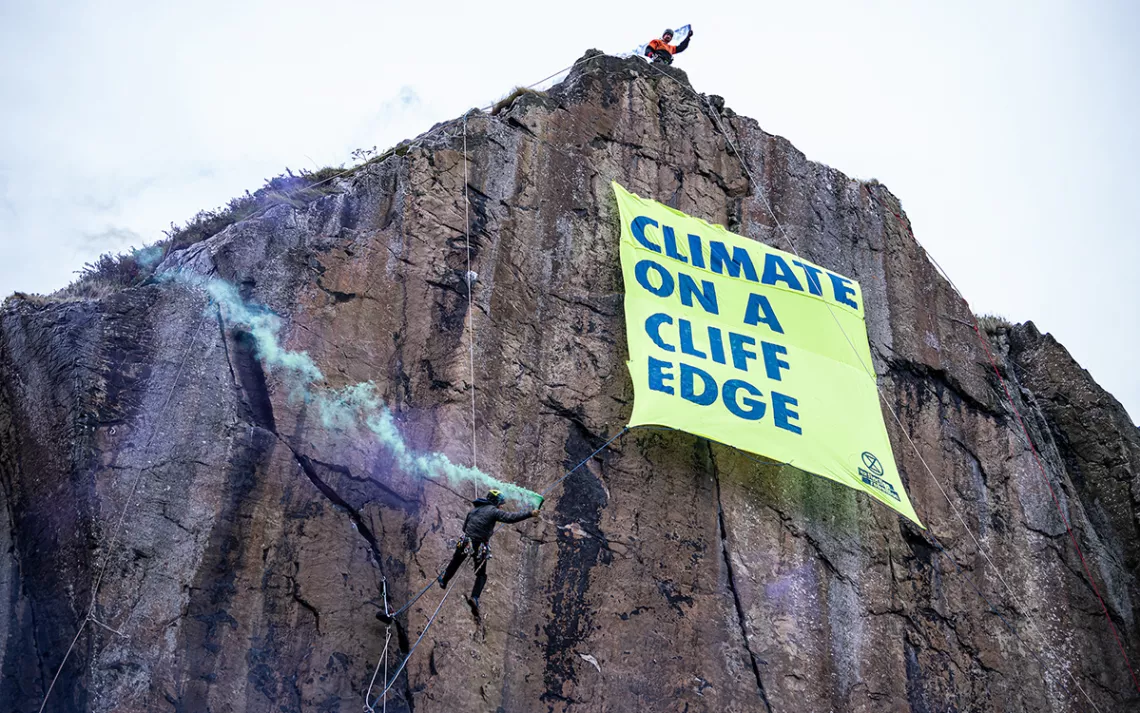
Experienced climbers scale a rock face near the historic Dumbarton castle in Glasgow, releasing a banner that reads “Climate on a Cliff Edge.” One activist, dressed as a globe, symbolically looms near the edge, while another plays the bagpipes on the shores below. | Photo courtesy of Extinction Rebellion and Mark Richards
Continue ReadingJeremy Corbyn: The facts about a planet facing climate disaster are clear. Why won’t this Labour government face them?

Bernie Sanders Says Defeating Oligarchy Now Most Urgent Issue

Spread the love

Original article by Jon Queally republished from Common Dreams under Creative Commons (CC BY-NC-ND 3.0). 
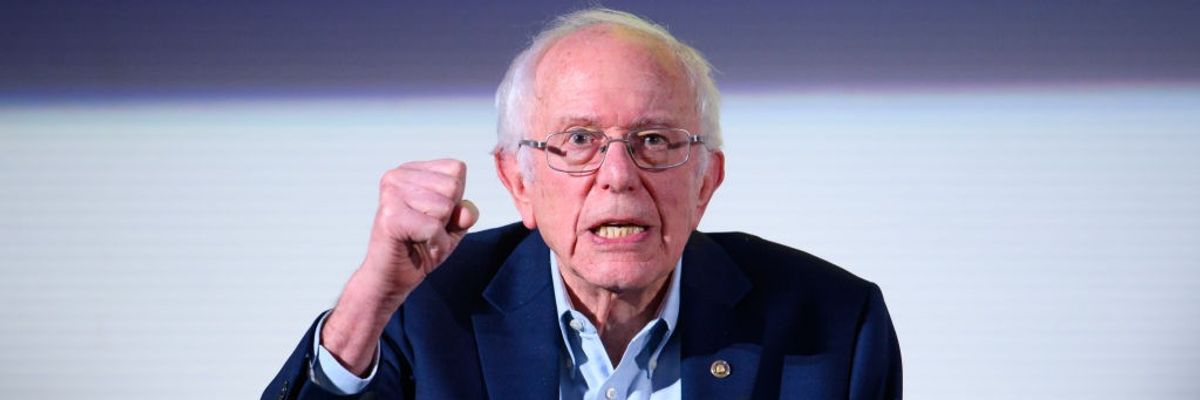
Bernie Sanders attends during “Bernie Sanders: It’s OK To Be Angry About Capitalism” at Royal Geographical Society on February 22, 2024 in London, England. (Photo by Joe Maher/Getty Images For Fane)

“My friends, you don’t have to be a PhD in political science to understand that this is not democracy. This is not one person, one vote. This is not all of us coming together to decide our future. This is oligarchy.”

Sen. Bernie Sanders of Vermont is escalating his fight against the U.S. oligarchy with a new campaign directed at the nation’s wealthiest individuals—including Elon Musk, Jeff Bezos, and Mark Zuckerberg—who he says are key culprits in a global race to the bottom that is stripping people worldwide of political agency while impoverishing billions so that the rich can amass increasingly obscene levels of wealth.

Announcing a new series that will detail how “billionaire oligarchs” in the U.S. “manipulate the global economy, purchase our elections, avoid paying taxes, and increasingly control our government,” Sanders said in a Friday night video address that it makes him laugh when mainstream pundits talk openly about the nefarious oligarchic structures in other places, but refuse to acknowledge the issue in domestic terms.

“Strangely enough, the term ‘oligarchy’ is very rarely used to describe what’s happening in the United States or in fact, what’s happening around the world,” said Sanders. “But guess what? Oligarchy is a global phenomenon, and it is headquartered right here in the United States.”

While rarely discussed in the corporate press or by most elected officials, argues Sanders, the reality is that a “small number of incredibly wealthy billionaires own and control much of the global economy. Period. End of discussion. And increasingly they own and control our government through a corrupt campaign finance system.”

Since the the victory of President-elect Donald Trump in November, Sanders has been increasingly outspoken about his frustrations over the failure of the Democratic Party to adequately confront the contradictions presented by a party that purports to represent the interests of the working class yet remains so beholden to corporate interests and the wealthy that lavish it with campaign contributions.

In a missive to supporters last month, Sanders bemoaned how “just 150 billionaire families spent nearly $2 billion to get their candidates elected” in this year’s elections, which included giving to both major political parties. Such a reality, he said, must be challenged.

As part of his new effort announced Friday, Sanders’ office said the two-time Democratic presidential candidate would be hosting a series of discussions with the leading experts on various topics related to the form and function of U.S. oligarchy and expose the incoming Trump administration’s “ties to the billionaire class,” including their efforts to further erode democracy, gut regulations, enrich themselves, and undermine the common good.

“In my view,” said Sanders, “this issue of oligarchy is the most important issue facing our country and world because it touches on everything else.” He said the climate crisis, healthcare, worker protections, and the fight against poverty are all adversely effected by the power of the wealthy elites who control the economy and the political sphere.

“My friends, you don’t have to be a PhD in political science to understand that this is not democracy,” he said. “This is not one person, one vote. This is not all of us coming together to decide our future. This is oligarchy.”

Original article by Jon Queally republished from Common Dreams under Creative Commons (CC BY-NC-ND 3.0). 

Continue ReadingBernie Sanders Says Defeating Oligarchy Now Most Urgent Issue

Climate crisis deepens with 2024 ‘certain’ to be hottest year on record

Spread the love

https://www.theguardian.com/environment/2024/dec/09/climate-crisis-deepens-with-2024-certain-to-be-hottest-year-on-record

A wildfire in California this year. Fires driven by severe droughts have affected the western US, Canada, the Amazon forest and particularly the Pantanal wetlands. Photograph: David McNew/Getty Images

Average global temperature in November was 1.62C above preindustrial levels, bringing average for the year to 1.60C

This year is now almost certain to be the hottest year on record, data shows. It will also be the first to have an average temperature of more than 1.5C above preindustrial levels, marking a further escalation of the climate crisis.

Data for November from the EU’s Copernicus Climate Change Service (C3S) found the average global surface temperature for the month was 1.62C above the level before the mass burning of fossil fuels drove up global heating. With data for 11 months of 2024 now available, scientists said the average for the year is expected to be 1.60C, exceeding the record set in 2023 of 1.48C.

Fossil fuel emissions must fall by 45% by 2030 to have a chance of limiting heating to 1.5C. The recent Cop29 climate summit failed to reach an agreement on how to push ahead on the transition away from coal, oil and gas. The C3S data showed that November 2024 was the 16th month in a 17-month period for which the average temperature exceeded 1.5C.

The supercharging of extreme weather by the climate crisis is already clear, with heatwaves of previously impossible intensity and frequency now striking around the world, along with fiercer storms and worse floods.

https://www.theguardian.com/environment/2024/dec/09/climate-crisis-deepens-with-2024-certain-to-be-hottest-year-on-record

Continue ReadingClimate crisis deepens with 2024 ‘certain’ to be hottest year on record

Eight times more children will face extreme heatwaves by 2050s, Unicef says

Spread the love
Experienced climbers scale a rock face near the historic Dumbarton castle in Glasgow, releasing a banner that reads “Climate on a Cliff Edge.” One activist, dressed as a globe, symbolically looms near the edge, while another plays the bagpipes on the shores below. | Photo courtesy of Extinction Rebellion and Mark Richards

https://www.theguardian.com/global-development/2024/nov/20/children-extreme-heatwaves-2050s-un

Without action on climate crisis, far greater numbers will also experience floods, wildfires and droughts, according to report

Eight times as many children around the world will be exposed to extreme heatwaves in the 2050s, and three times as many will face river floods compared with the 2000s if current trends continue, according to the UN.

Nearly twice as many children are also expected to face wildfires, with many more living through droughts and tropical cyclones, according to the annual state of the world’s children report.

The report, released on Wednesday, World Children’s Day, forecasts how the climate crisis, demographic shifts (sub-Saharan Africa and south Asia are projected to have the largest child populations in the 2050s) and breakthrough technologies will affect children’s lives in the future.

The report said technologies such as artificial intelligence (AI) will bring benefits and risks to children, who are already interacting with AI embedded in apps, games and learning software. The digital divide remains stark, however. In 2024, almost 95% of people in high-income countries are connected to the internet, compared with about 25% in low-income countries.

“Children are experiencing a myriad of crises, from climate shocks to online dangers, and these are set to intensify in the years to come,” said Catherine Russell, Unicef’s executive director. “The decisions world leaders make today – or fail to make – define the world children will inherit … Decades of progress, particularly for girls, are under threat.”

Much of the emphasis of the report is on the impact of the climate crisis on children, nearly half of whom (approximately 1 billion) live in countries that face a high risk of environmental disasters. Even before they take their first breath, children’s brains, lungs and immune systems are susceptible to pollution, disease and extreme weather. As they grow, their education, nutrition, safety, security and mental health are shaped by the climate and environment.

https://www.theguardian.com/global-development/2024/nov/20/children-extreme-heatwaves-2050s-un

Greenpeace activists display a billboard during a protest outside Shell headquarters on July 27, 2023 in London.
Greenpeace activists display a billboard during a protest outside Shell headquarters on July 27, 2023 in London. (Photo: Handout/Chris J. Ratcliffe for Greenpeace via Getty Images)

Continue ReadingEight times more children will face extreme heatwaves by 2050s, Unicef says