‘Gamechanger’ Study Warns Carbon Capture May Fall Short of Expectations, Citing Storage Location Dangers
Spread the love

https://www.desmog.com/2025/09/23/gamechanger-study-warns-carbon-capture-may-fall-short-of-expectations-citing-storage-location-dangers

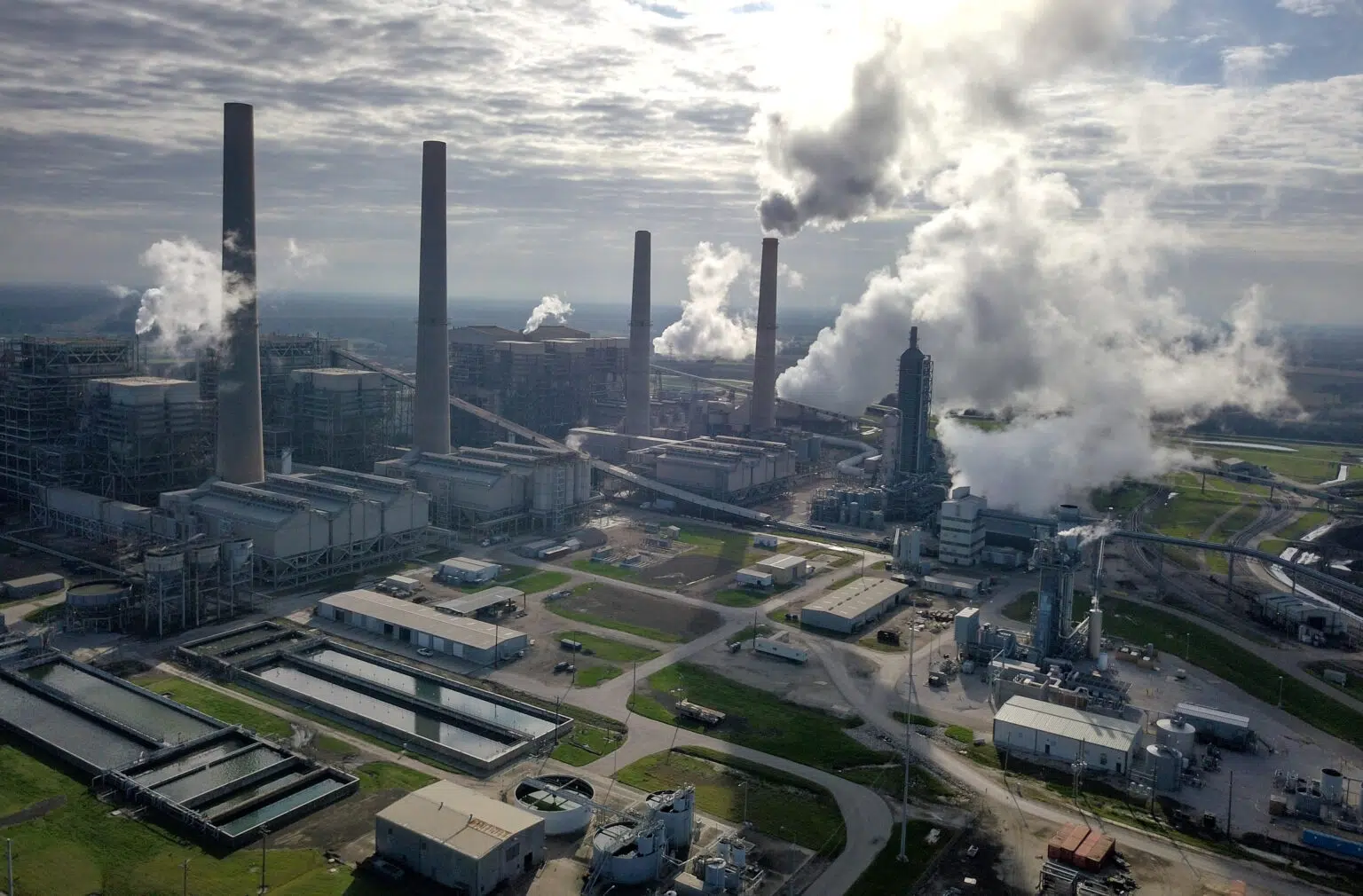
Carbon capture faces significant skepticism from environmentalists who note that the industry’s past is littered with failed projects, missed targets, and an overall net increase in emissions. Credit: Matt Hrkac (CC BY-NC-ND 2.0) NDLA

CCS can “no longer be considered an unlimited” climate solution, researchers caution after concluding most storage options are in risky regions

As the Trump administration seeks to wipe away environmental rules covering the oil, gas, and coal industries, fossil fuel producers and sellers are reassuring buyers that carbon capture and storage (CCS) could slash climate-altering emissions from a growing range of fossil-fuel projects — like blue hydrogen, LNG export terminals, and data centers.

“That’s right: data centers,” fossil fuel giant ExxonMobil wrote in December, adding that the need for more data centers for AI could represent a fifth of the world’s demand for carbon capture by 2050.

Carbon capture already faces significant skepticism from environmentalists who note that the industry’s past is littered with failed carbon capture projects, missed targets, and an overall net increase in emissions.

Now, a study published in the journal Nature calls attention to another issue that could loom in the future if CCS were to really take off — a lack of easy-to-develop locations where captured carbon can be buried underground.

The vast majority of places where you can find the kinds of sedimentary rocks that allow carbon dioxide to be stored underground sit in higher risk zones or in areas like the Arctic that are potentially off-limits for practical or political reasons, the study found.

That has big implications for the energy transition, since once carbon dioxide is put into storage, it’s supposed to stay there for as long as possible. Any storage sites we use today can’t be expected to be available for future generations — not just the children and grandchildren of people alive today but “more than ten generations into the future,” the study notes.

“This study should be a gamechanger for carbon storage,” coauthor Joeri Rogelj, director of research at the Grantham Institute at Imperial College London, said in a statement when the study was announced. “It can no longer be considered an unlimited solution to bring our climate back to a safe level. Instead, geological storage space needs to be thought of as a scarce resource that should be managed responsibly to allow a safe climate future for humanity.”

In fact, there may be only enough practical storage to potentially reverse between 0.4 and 0.7 degrees Celsius of warming — a tiny fraction of the five or six degrees experts previously estimated, the researchers said.

The carbon storage that is available “should be used to halt and reverse global warming,” Rogelj added, “and not be wasted on offsetting on-going and avoidable CO2 pollution from fossil electricity production or outdated combustion engines.”

On Track to Overshoot

International plans to limit climate change tend to assume that we can “overshoot” on climate pollution, pushing the Earth’s climate into dangerous territory past 1.5 or 2 degrees Celsius of warming. That’s because, the argument goes, carbon capture and storage could come to the rescue if we go too far, letting us draw carbon dioxide levels back down.

The new study calls that assumption into question, highlighting uncertainty about how effective carbon removal will be at curbing climate change, in addition to concerns over difficulties in accessing underground carbon storage.

“With current trends suggesting warming up to 3°C this century, using all of the safe geological storage wouldn’t even get us back to 2°C,” said lead author Matthew Gidden, research professor at the Center for Global Sustainability at the University of Maryland.

Industry estimates, like those from the Oil and Gas Climate Initiative (OGCI), suggest the world has plenty of storage potential to keep 14,000 gigatons of carbon dioxide buried below ground and out of the atmosphere.

That would be “more than enough to meet projected needs for CCUS [carbon capture, use and sequestration] over the coming century,” the OGCI wrote in a 2023 report it called a “playbook for regulators, industrial emitters and hub developers.”

The new study, however, takes a closer look at where that storage is located — and in particular whether it’s in regions at higher risk of earthquakes or groundwater contamination like locations deep in the ocean, or in the Arctic and Antarctic circles. The study concludes that nearly 90 percent of that storage capacity is in less-than-desirable locations.

The researchers estimate there’s just 1,460 gigatons worth of “prudent” storage available worldwide — a tenth of the industry estimates.

Some earlier estimates stretch even higher, suggesting there’s around 40,000 gigatons of CO2 storage capacity worldwide.

“These estimates are also important as they remove all the technical constraints from assessment and assume that cost and engineering challenges will pose no issue in the future,” coauthor Siddharth Joshi, a research scholar at the Integrated Assessment and Climate Change Research Group, told DeSmog, adding that “the shock value of technical potentials is enough to sometimes drive an industry forward.”

At the same time, focusing only on larger capacity estimates can create a “false sense of abundance,” Gidden noted, if policy-makers think the world has more room for overshoot than carbon storage can really offer.

The Nature study raises big questions about how the world’s carbon storage should be used long term.

“As [the study authors] point out, if we act to reduce emissions now, we probably have enough storage, but that ceases to be true really, really soon,” Rob Anex, professor at the University of Wisconsin-Madison who researches carbon capture technology, told Canada’s CBC News. “Global emission rates are so high that the window of time in which geologic storage is practical is shutting really, really fast.” 

Trump Backs Carbon Capture Subsidies

Despite the federal government’s retreat from climate action, including Trump’s January executive order withdrawing the U.S. from the Paris Agreement, the Trump administration has moved to protect and expand some federal subsidies for CCS.

Lucrative tax credits for using captured carbon for enhanced oil recovery were expanded this summer as part of Trump’s “One Big Beautiful Bill Act.”

Given this political climate, experts didn’t expect to see a major direct impact from the study for blue hydrogen projects and other proposals aiming to use carbon storage.

“The pragmatist in me says it’s unlikely,” Anika Juhn, energy data analyst for the Institute for Energy Economics and Financial Analysis (IEEFA), told DeSmog. “I don’t see government taking those kinds of steps.”

The Nature study follows a precautionary approach to carbon storage, she noted. “The precautionary principle says if we don’t really know about it, then maybe we shouldn’t be rushing headlong into just applying this technology everywhere as fast as possible,” she said. “I think that’s really where the strength of it is, saying if you are interested in doing it safely, here are some key aspects that you should really focus on.”

“Because their estimate is so prudent, it really doesn’t reflect at all current industry practice,” Juhn noted.

So far, there’s not a lot of carbon storage operating worldwide, with the Nature study pointing out existing projects currently store just 49 megatons per year, with 416 megatons worth “either planned or in construction.” Meanwhile, annual global emissions from fossil fuels topped 37,400 megatons last year, according to the World Meteorological Organization, another record high.

But that small CCS industry has already caused significant safety incidents — including well blowouts and a major 2020 CO2 pipeline leak that hospitalized dozens of people. 

Concerns over the potential for groundwater contamination — one of the factors highlighted in the Nature study — have already begun curbing real-world carbon storage availability at the state and local level.

Take, for example, Illinois, home to the nation’s first dedicated carbon storage project, the Archer-Daniels-Midland (ADM) carbon storage site in Decatur, Illinois.

Carbon injections were halted at ADM’s site a year ago, after the company discovered leaks below ground. “Given the extreme depth and the multiple layers of shale and other confining rock up to the surface, at no time was there an impact to the surface or groundwater sources, nor any threat to public health,” ADM said at the end of August, announcing the restart of operations at its Decatur site.

But the incident appears to have hit a nerve in the state, where nearly a million people rely on the Mahomet Aquifer in Champaign, Illinois, as their sole source of drinking water.

This summer, Illinois passed a law banning carbon storage below that aquifer, making roughly 15 percent of the state’s counties off limits for carbon storage. ADM’s leak had reached within about six miles of the Mahomet Aquifer, Taxpayers for Common Sense notes.

The Nature study notes that most of the carbon storage in operation today doesn’t actually offer any net climate benefit — because it’s used for enhanced oil recovery, which, the researchers wrote, “overall results in net-positive CO2 emissions.” 

“After decades of bold projections, only around 10 million tons of CO₂ are captured and permanently stored each year (excluding enhanced oil recovery), representing less than 0.03% of annual global fossil fuel emissions,” Kevin Anderson, professor of Energy and Climate Change at the University of Manchester, said in a statement responding to the study. “Rather than serving as a credible mitigation technology, CCS has largely functioned as a rhetorical device to delay robust fossil fuel regulation.”

https://www.desmog.com/2025/09/23/gamechanger-study-warns-carbon-capture-may-fall-short-of-expectations-citing-storage-location-dangers

Donald Trump urges you to be a Climate Science denier like him. He says that he makes millions and millions for destroying the planet, Burn, Baby, Burn and Flood, Baby, Flood.
Nigel Farage urges you to ignore facts and reality and be a climate science denier like him. He says that Reform UK has received millions and millions from the fossil fuel industry to promote climate denial and destroy the planet.
Continue Reading‘Gamechanger’ Study Warns Carbon Capture May Fall Short of Expectations, Citing Storage Location Dangers

Atlas Network-Affiliated Think Tank Wants Canada’s Greenwashing Law Repealed

Spread the love

Original article by Taylor Noakes republished from DeSmog.

Co-author Heather Exner-Pirot is MLI’s director of energy, natural resources and environment. Credit: MLI / YouTube

Fossil fuel advocates argue Big Oil is being silenced by the consumer protection law.

The Macdonald-Laurier Institute (MLI) is calling to repeal Bill C-59 — commonly referred to as Canada’s anti-greenwashing law. 

Calling the bill a “failure of process and policy,” an MLI paper advocating for abolishment states that it has had a “dramatic silencing effect” on many nationwide businesses and associations that want to communicate their environmental goals. It also says the amendment’s wording exposes companies to frivolous lawsuits.

Canada’s Parliament adopted the omnibus Bill C-59, officially known as the Fall Economic Statement Implementation Act, 2023, in June 2024. The bill included anti-greenwashing amendments to the Competition Act, which came about as a result of public meetings held in the spring of 2023

The bill says that companies found deliberately misleading the public with false environmental claims could be fined up to $10 million.

Shortly before the law was adopted, DeSmog reported that Pathways Alliance — a consortium representing six Canadian tar sands oil producers — scrubbed its website of all content. Not long after, Canadian oil companies, the Canadian Association of Petroleum Producers (CAPP), and third-party advertisers that run pro-oil propaganda on social media, removed mentions of carbon capture and storage (CCS) from their websites. Imperial Oil also removed statements quoting its CEO that were supportive of carbon capture as a climate change mitigation technology. Shell Canada dropped its 2050 climate goals from its website altogether. 

While Canada’s oil industry argued that the new anti-greenwashing regulations necessitated the removal of advocating for carbon capture efforts as much as their Net-Zero goals, other major Canadian corporations did not have a similar reaction. In addition, major tar sands producers and Pathways Alliance partners, such as Cenovus and Canadian Natural Resources Ltd., blamed the regulations when they delayed environmental, social, and governance (ESG) reporting to investors.

Critics argue CCS is an ineffective climate change mitigation technology because it habitually underperforms at capturing carbon dioxide emissions. It’s also historically been used to extend the lifespans of otherwise derelict oil wells, and – irrespective of emissions captured during production – produces fossil fuels that create new emissions when combusted for energy or electricity. Because of these reasons, critics argue CCS’s only purpose is to provide the appearance of social acceptability while continuing fossil fuel production. 

Carbon capture has been widely promoted by the Pathways Alliance, which is seeking to develop a massive carbon capture project in Alberta that would link 13 tar sands facilities with 400 kilometers of carbon dioxide pipelines to a centralized carbon capture hub. CCS projects have historically underperformed in Canada; a 2020 report by Global Witness found that Shell Canada’s Quest hydrogen facility — which uses carbon capture — was actually emitting more carbon than it captured.

Recent research from the Institute for Energy Economics and Financial Analysis (IEEFA) reveals that the Pathways project is not financially viable, and is likely to be subsidy-dependent with limited revenue potential. The IEEFA also notes that Canada’s carbon capture projects have struggled to keep up with projected capture rates.

On the Offensive

Though Bill C-59 is designed to protect Canadian consumers from fraudulent advertising, just as other industries do, fossil fuel advocates — from conservative Canadian newspapers to Koch Brothers-affiliated Canadian think tanks and conservative Alberta politicians — immediately went on the offensive shortly after the bill became law in June 2024. 

Alberta Premier Danielle Smith described the new requirements as “draconian legislation that will irreparably harm Canadians’ ability to hear the truth about the energy industry and Alberta’s successes in reducing global emissions.” She also stated that the new law was “absurd authoritarian censorship.”

“Freedom for people to express themselves is crucial to a democracy,” said Emilia Belliveau, program manager, Energy Transition, Environmental Defence. “But giving businesses a free pass to spread disinformation and greenwashing isn’t.”

“Bill C-59 builds on the longstanding work of the Competition Bureau to protect fair business practices and ensure the public isn’t being lied to,” Belliveau said in a statement to DeSmog. 

“People have a right to know the truth — whether it’s about a product, a service, or the companies behind them. That’s why it’s imperative that our democracy has rules in place to stop ultra-wealthy CEOs and multi-billion-dollar corporations from spreading misinformation and manipulating the public for their own profits,” she added.

Advocates of C-59 have good reason to demand greater accountability from the oil and gas sector. Not only have fossil fuel companies known about the dangers of fossil fuel pollution’s contribution to climate change for decades, they have actively engaged in disinformation campaigns as well. Legislators created C-59 as a direct response to the ongoing disinformation efforts by Canada’s oil and gas industry, which has included everything from blaming stalled pipeline projects on “foreign funded eco-radicals” to outright denial of climate change and funding astroturfing groups to oppose climate legislation.

The MLI paper contains its own inaccurate and misleading statements, including an assertion that there was no opportunity for discussions. Despite making this statement several times, and including it as a key talking point in the paper’s executive summary, the paper’s authors conceded that a consultation process did take place roughly a year earlier. They said greenwashing was addressed, but still argued that a last-minute amendment is much broader and therefore deserved its own, separate consultation process.

Efforts to contact Charlie Angus, the NDP MP who sponsored the bill, were unsuccessful, as were DeSmog’s efforts at contacting MLI for comment.

Chief among MLI’s concerns are that the wording of the amended competition law puts the onus of proof on the person or company making a representation (such as an oil company claiming carbon capture is a viable climate change mitigation technology). With the C-59 amendment, companies and individuals now have to demonstrate their claims based on an internationally recognized standard. The MLI paper further argues that this exposes companies — such as multi-billion-dollar oil and gas companies — to frivolous lawsuits. MLI also claims that the new regulations open the door to too many potential complainants, such as environmental activists and climate advocacy groups.

“Should companies be allowed to exaggerate, cherry-pick, or straight out lie to us in their advertising? No,” said Melissa Lem, family physician and president of the Canadian Association of Physicians for the Environment (CAPE) in a statement to DeSmog. “But this is exactly what companies have been doing with their environmental claims for too long.” 

“This has had real impacts on our health due to unchecked pollution and escalating climate disasters,” she added.

“At its core, Bill C-59 is about truth in advertising — which ultimately protects us from corporate harm.”

Former Alberta energy minister Sonya Savage
Former Alberta energy minister Sonya Savage has said bill C-59 will result in ‘green hushing.’ Credit: CPAC / YouTube

The MLI paper’s authors are former Alberta energy minister Sonya Savage and Heather Exner-Pirot, the institute’s director of Energy, Natural Resources and Environment. 

DeSmog previously reported on Savage’s public statements about her belief that the anti-greenwashing law was “silencing” Canada’s oil and gas sector. Savage was formerly a senior executive with the Canadian Association of Petroleum Producers (CAPP), as well as Enbridge, a multinational pipeline company. Exner-Pirot is well-known for her fossil fuel advocacy as much as for her campaigns on behalf of the MLI against everything from an emissions cap to electric vehicles

Both Savage and Exner-Pirot have made misleading statements in the past concerning various legislative efforts to control carbon emissions. For example, Exner-Pirot published op-eds criticizing the federal government’s electric vehicle (EV) mandate and characterized it as a quota, among several inaccurate statements about EVs in general. Savage has described C-59 as part of a global effort to silence Canada’s energy sector and that the regulations constituted an indirect ban on fossil fuel advertising, neither of which are true.

The Macdonald-Laurier Institute presents itself as a non-partisan and independent think tank, but is, in fact, part of the Atlas Network. Like Atlas, it has received funding from the Koch Brothers, and generally opposes government regulations — particularly on environmental issues or as they relate to the energy sector. MLI counts among its donors CAPP, Imperial Oil, Canadian Energy Pipeline Association and the Canadian Fuels Association, among others. 

MLI has considerable access to mainstream Canadian media and routinely criticizes the environmental movement, attacking efforts to curb emissions as responding to climate change “alarmism.”

Original article by Taylor Noakes republished from DeSmog.

Continue ReadingAtlas Network-Affiliated Think Tank Wants Canada’s Greenwashing Law Repealed

Spread the love

Climate Adam discusses climate capture and storage. The video is over a year old and Adam refers to COP28 while COP29 was the most recent. Does he mention that there are huge fossil fuel subsidies from governments to the fossil fuel industry for CCS i.e. yet more profit on top of huge profits for destroying the climate and planet?

Continue Reading

George Monbiot: Labour’s carbon-capture scheme will be Starmer’s white elephant: a terrible mistake costing billions

Spread the love

https://www.theguardian.com/commentisfree/2024/oct/11/labour-carbon-capture-climate-breakdown

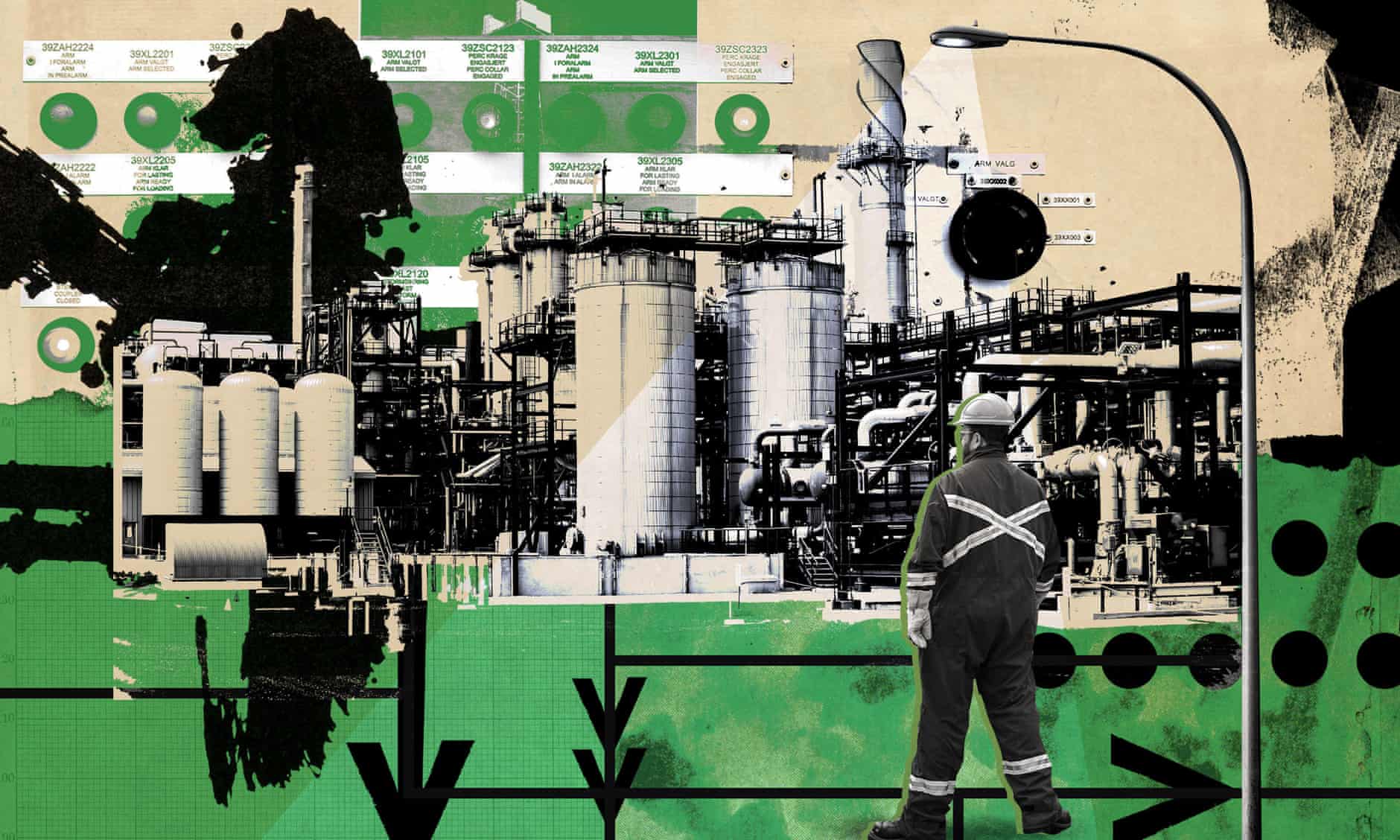
 Illustration: Eleanor Shakespeare/The Guardian

This will be Keir Starmer’s HS2: a hugely expensive scheme that will either be abandoned, scaled back or require massive extra funding to continue, after many billions have been spent. The government’s plan for carbon capture and storage (CCS) – catching carbon dioxide from major industry and pumping it into rocks under the North Sea – is a fossil fuel-driven boondoggle that will accelerate climate breakdown. Its ticket price of £21.7bn is just the beginning of a phenomenal fiscal nightmare.

An analysis by Oxford University’s Smith School shows that a heavy reliance on CCS massively increases the costs of cutting emissions. By contrast to other technologies such as solar, wind and batteries, its costs have not fallen at all in 40 years. When I asked the government what guarantee it could provide that construction costs would be capped at £21.7bn, it gave me a woolly answer about “value for money”, but no such reassurance.

And this is just the start of it. Buried in an obscure ancillary document is a government commitment to pay a “premium” for the hydrogen component of the CCS programme for 15 years. How much will the total cost of this be? Again, no clear answer. Cutting cost-effective measures in favour of an open-ended, staggeringly expensive programme is the very definition of fiscal irresponsibility.

Starmer campaigned on a platform of “change”. But there has been no change from this demented Tory policy, no change in the influence of the fossil fuel industry, no change in the perverse justifications. And, I suspect, there will be no change from £50bn for this profligate CCS scheme.

The chancellor, Rachel Reeves, talks of a fiscal “black hole” of £21.9bn. But this is a real black hole: a long tunnel into the rocks, down which £21.7bn and more will be poured. A more reliable and cost-effective means of sequestering carbon would be to bundle up the money (roughly 1,100 tonnes in £20 notes) and shove it down the pipe.

https://www.theguardian.com/commentisfree/2024/oct/11/labour-carbon-capture-climate-breakdown

Continue ReadingGeorge Monbiot: Labour’s carbon-capture scheme will be Starmer’s white elephant: a terrible mistake costing billions