DR DYLAN MURPHY challenges the idea that social security places an economic burden on the public
THE current Labour government of red Tories has doubled down recently on its propaganda against those people claiming benefits in the UK.
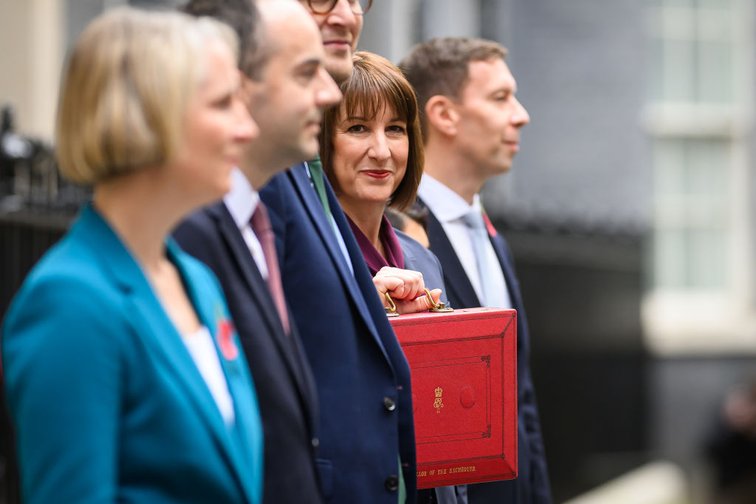
These reactionary comments range from Starmer’s pledge in the Sun to be ruthless in his cuts to benefits, to Reeves making inflated claims in the same paper that spending on benefits has “spiralled out of control.”
In the same interview with the Sun Reeves bragged that Labour is “introducing the biggest welfare fraud and error package in recent history.”
The implication is clear: those claiming benefits, including those workers on low wages claiming elements of universal credit, are an undeserving burden on the British economy.
In the “golden days” of the Victorian era they at least maintained a distinction between the deserving and undeserving poor. Under Starmer’s Labour all people who claim benefits are clearly in the undeserving poor category and should be made to suffer ever greater poverty all to help “turbo charge” economic growth.
The Treasury is at the centre of a move to refocus the government’s agenda on ‘growth at all costs’ | Leon Neal/Getty Images
Exclusive: Government is inviting lobbyists and their clients to play a major role in the deregulatory agenda
“Growth comes from business, not the government.”
That was the message a government minister delivered to hundreds of corporate lobbyists, including those representing banks, arms companies and pharmaceuticals, during a webinar this morning.
Lord Livermore, the financial secretary to the Treasury, made the comments at the online event, which was the first in a series aimed at encouraging lobbyists to play a major role in the government’s ‘growth at all costs’ agenda.
In the call, which openDemocracy attended, Livermore made clear that Number 10 sees this agenda as being driven by corporations, while the government is a secondary actor that “work[s] in partnership with business”.
Also present among the 700 attendees were lobbyists representing tech firms, energy giants and consultancies, and those working for agencies including Hanbury, Headland, Lexington, Brunswick, Cavendish and Grayling.
These people and their clients are a “huge and important part” of the government’s plans, Livermore said, stressing that ministers are “really keen to draw on… the expertise that exists within your organisations and your clients”.
He added that the government’s focus is on getting rid of “stifling regulation that has for too long held business back” and “removing barriers to growth that we, in partnership with business, identify”.
The treasury minister also discussed Great British Energy’s role in “derisking investment” and providing capital for public-private partnerships, to make renewable infrastructure investment more attractive to the market.
While the government has been unapologetic about its outreach to business as a means to drive growth, Labour’s critics say an ever-closer relationship with lobbyists only heightens the impression of a government that does not have an agenda of its own.
Speaking to openDemocracy after the call, Green Party deputy leader Zack Polanski said: “With inequality rife, the government should be listening to the people who keep our country running and those suffering, not hosting desperate mass Zoom calls with arms dealers and oil giants.”
Cutting red tape
Setting out the government’s priorities, Livermore put a particular focus on achieving major reform to the planning system to encourage more commercial and infrastructure projects, and getting rid of regulations that “stand in the way of businesses investing”.
Livermore talked up the recent ousting of the head of the competitions regulator and his replacement with a former Amazon executive as evidence that the government is taking seriously its deregulatory agenda.
He also mentioned the recent push for regulators to submit proposals for growth and said Labour’s National Wealth Fund will “help catalyse private investment into sectors where at the moment, perhaps there’s a too high degree of risk”.
“We can use the National Wealth Fund to help derisk some of those investments,” said the minister. Economists describe this process as the state stepping in to improve the private returns on infrastructure assets.
Livermore continued that the fund could be used to “guide investments, particularly into the kind of clean energy investments of the future that we want to see”.
The government-lobbyist calls are being led by a new partnerships team in No 10 fronted by James Carroll, who has previously worked for the party on external relations and business engagement.
Also on the call was a senior executive at Anacta UK, described by The Times as the “first Starmerite lobbying firm”, and a banking lobbyist who is also involved in the running of Labour in the City, a group which convenes Labour supporters who work in financial services.
Lobbyists were able to submit questions during the call. One criticised “some parts of the business community” which have been “vocally critical about the government’s handling of the economy so far,” describing it as “unhelpful”.
They then asked: “How can firms who don’t want to talk down the UK but would rather promote a more positive narrative about the many opportunities open to British businesses best work with the government to do so?”
This prompted Carroll to quip: “I promise I haven’t planted that question.”
Carroll then rounded out the call by reiterating the importance the government places on developing this relationship with lobbyists.
“Just to emphasise,” he said, “your clients [and] your expertise is critical to delivering these ambitious national missions the prime minister has set out and the chancellor reiterated this week.”
Polanski, the Green’s deputy leader, said the plans to derisk investment “amounts to privatising the rewards and socialising the risks”.
He added: “Regulation exists for a reason, Grenfell stands as a towering reminder of lives lost and the total failure of standards.
“This isn’t growth for the many, just more wealth for the super-rich while the rest of us are told to look up at their private jets and wait for the trickle down.”
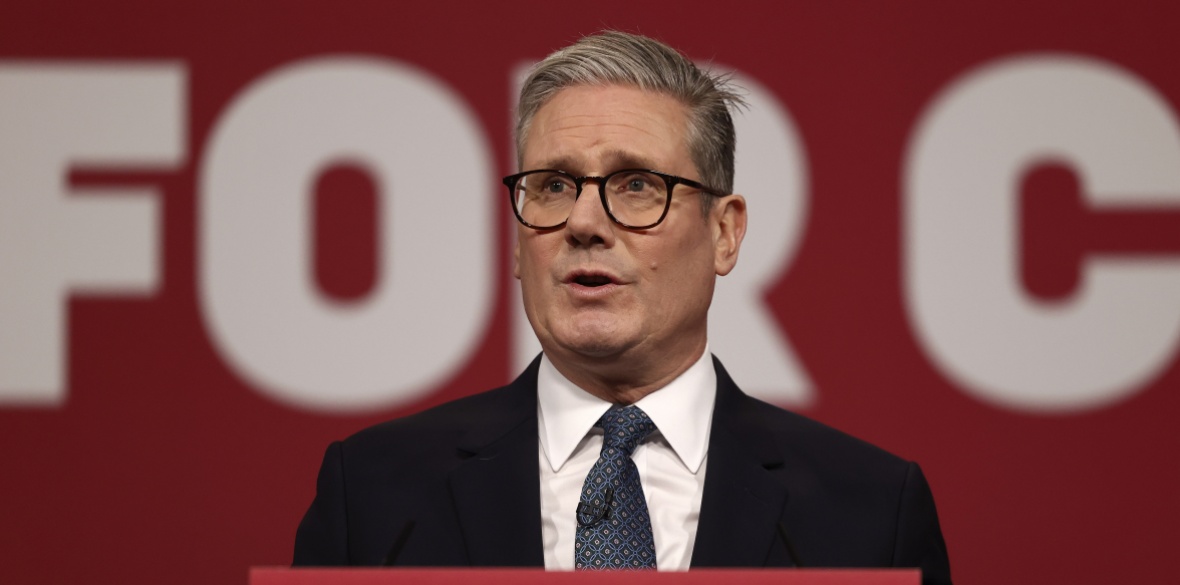
Prime Minister Sir Keir Starmer gives a speech in Buckinghamshire as he set out his Government’s “plan for change” promising a shift away from Whitehall’s “declinist mentality”, December 5, 2024
GOVERNMENTS are never officially “relaunched” because the term is a tacit admission that something has misfired or gone badly wrong.
Nevertheless, relaunches do happen. The last one in British politics was Rishi Sunak’s bizarre and fruitless attempt to present himself as a change agent, challenging the “30-year consensus” at the Tory Party conference in 2023.
But seldom, if ever, has a government had to relaunch itself just five months after its election. The speech by Keir Starmer in a tent in Buckinghamshire is, therefore, a measure of how far his administration has fallen and how fast.
Yet a host of evidence points to Labour’s failure. Starting from an anaemic election result of less than 34 per cent, it is now polling in the mid-twenties.
And the Prime Minister’s personal figures have slumped from a plus 20 positive rating to minus 30 or thereabouts.
It is a political fiasco for the ages and one that only the Tories and Reform UK, both under hard-right leadership, look set to benefit from.
Starmer’s response is encapsulated in the six milestones unveiled today.
These six milestones follow the five missions and the six commitments launched before the general election, which, of course, succeeded the 10 pledges in Starmer’s number-salad of forgettable, or reneged on, policy promises.
This is leadership in the style of a corporate management seminar as if announcing a plan were equivalent to achieving anything. And the increasing velocity with which each initiative follows its unfulfilled predecessor indicates that we are now at the point at which football fans would strike up the familiar chant of “you don’t know what you’re doing.”
A general view of housing in Scarborough, North Yorkshire
MILLIONS of people are spending a fourth Christmas in “Dickensian conditions” due to fuel poverty, a damning report revealed today.
Warm This Winter found that 16 per cent of adults, equal to 8.8 million people, in Britain live in cold, damp homes, exposed to the health risks of living in fuel poverty.
The campaign group has warned that the government’s Warm Homes Plan will come too late for one in 10 people who have frequently experienced dangerous mould levels in their homes this year.
Poorly insulated homes risk damp and mould spreading, which the NHS warns can lead to respiratory issues, infections, allergies and asthma.
Such conditions can also increase the risk of heart disease, strokes and other severe health problems.
Cold homes can cause and worsen respiratory conditions, cardiovascular diseases, poor mental health, dementia and hypothermia as well as cause and slow recovery from injury.
…
End Fuel Poverty Coalition co-ordinator Simon Francis said: “The sheer numbers of people living in cold, damp homes this winter should send alarm bells throughout Westminster.
“These shocking figures have hardly changed since last year and with energy bills heading upwards again in January, the situation is now critical for the government.”
An F-35 arriving back at RAF Akrotiri in Cyprus, June 24, 2019
THE government has been forced to review its decision to export F-35 fighter jet components to Israel, legal groups announced today.
Global Legal Action Network (Glan) and Al-Haq wrote to the government last month, threatening to file an emergency injunction over its failure to revoke licences for all arms to the country as it continues its genocide in Gaza.
Labour eventually moved to suspend just 30 out of 350 arms exports in September, but components for F-35s, which have dropped 2,000lb bombs on Gaza, were exempt.
In the High Court last month, the government admitted that there was a “clear risk” that the components could be used by Israel to violate international humanitarian law.
But it continued to export them anyway after Defence Secretary John Healey warned that it would disrupt the global supply programme they are part of and “undermine US confidence in the UK.”
Glan and Al-Haq said that they have now been notified that the government is reconsidering its decision.
Glan lawyer Dearbhla Minogue said: “The position they took is, in our estimation, legally untenable and we hope they will finally do the only reasonable thing — stop the transfer of any British weapons for use by Israel against Palestinians.”
Genocide denying UK Foreign Secretary David Lammy says that UK is suspending 30 of 350 arms licences to Israel. He also confirms the UK government’s support for Israel’s Gaza genocide and the UK government and military’s active participation in genocide.Genocide denier and Current UK Prime Minister Keir Starmer is quoted that he supports Zionism without qualification. He also confirms that UK air force support has been essential in Israel’s mass-murdering genocide. Includes URLs https://www.declassifieduk.org/keir-starmers-100-spy-flights-over-gaza-in-support-of-israel/ and https://youtu.be/O74hZCKKdpA