How Venezuela poses an “unusual and extraordinary threat” to the US agenda

Spread the love

Original article by Celina della Croce republished from peoples dispatch under a Creative Commons Attribution-ShareAlike 4.0 (CC BY-SA) license.
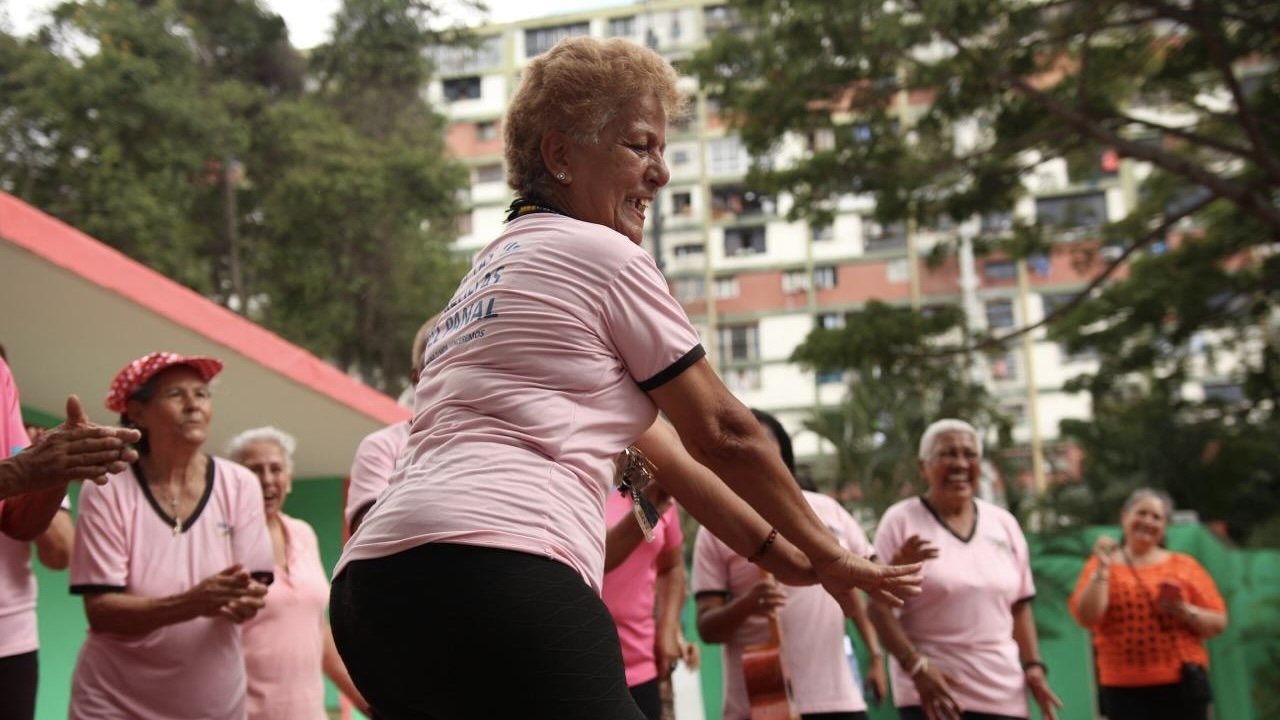
Las abuelas del Panal (The Grandmothers of the Panal, a commune in Caracas) dance as part of their regular exercise class. Photo: Celina della Croce

Unlike social democratic projects in the West, Venezuela’s Bolivarian Revolution has set out to fundamentally transform society and build a socialist project rooted in class struggle and run by its people.

Lee en español aquí

US President Donald Trump has not shied away from admitting his thirst for Venezuelan oil. On December 16, 2025, in the leadup to the January 3 bombing of Caracas and kidnapping of the country’s president and first lady, Nicolás Maduro and Cilia Flores, he claimed ownership over Venezuela resources, stating that “America will not … allow a hostile regime to take our Oil, Land, or any other Assets, all of which must be returned to the United States, IMMEDIATELY”. In his previous administration, he echoed the same obsession with resource-driven regime change, decrying in June 2023 that “When I left [office], Venezuela was ready to collapse. We would have taken it over. We would have gotten all that oil. It would have been right next door.” Yet Venezuela is not only home to the world’s largest known oil reserve, but also the continent’s largest gold reserves and an ample supply of bauxite, diamonds, iron ore, nickel, and coal … And, not least of all, hope.

Trouble at home

Within his own borders, Trump faces heightened civil unrest, with over 100,000 people in Minneapolis alone taking to the streets (roughly a quarter of the city’s population) during a January 23 general strike (an action that has not been seen on this scale for decades) and again during a January 30 nationwide shutdown. Similar uprisings have spread across the country, from Los Angeles to New York, following ICE’s murder of Renée Good and Alex Pretti. This massive outpouring follows a year of discontent and marches decrying Trump’s anti-immigrant, anti-poor policies.

The escalation of ICE’s tactics under the Trump administration has cost US taxpayers, reaching an all-time high of 85 billion USD in allocated funds (compared to annual spending that has hovered around 10 billion USD or less for the past decade). Much of these funds go to benefit private corporations: for instance, 86% of detainees are held in private, for-profit prisons (whose stocks skyrocketed as a result of Trump’s election and subsequent policies), and the cost of deportation flights, also run by private companies, is astronomically higher than commercial flights (the per-person cost of a deportation flight from El Paso to Guatemala, for example, is USD 4,675—five times higher than a commercial first-class ticket for the same route). At the same time, Trump’s administration has slashed social spending, with a 186-billion USD reduction to Supplemental Nutrition Assistance Program (SNAP) benefits alone (a program that, up to that point, helped 1 in 8 people in the US with the basic provision of food).

In the United States, and the West in general, there is a deep-seated narrative that this is just the way things are. Perhaps we can tone back the violence – swap out a Donald Trump for a Joe Biden who is more cautious with his tactics and open to mild concessions but no less interested in protecting capitalist profits at all costs. Even key figures in Trump’s own party, from Senators Josh Hawley (R-MO) and Todd Young (R-IN) to Trump’s former Vice President Mike Pence, have sought to distance themselves from his extreme tactics and distaste for liberal democracy (a general audacity that risks backfiring lest it create sufficient dissent and turmoil to provoke a mass uprising and turn to the left). Yet neither party is willing to allow anything further than a meek liberal democracy beholden to the interest of a small but powerful elite, at most with enough provisions to keep the general population at bay.

Venezuela’s break with the end of history

The US population, like much of the world, has been told, time and time again, that History has ended. We may be able to eke out higher wages, and certainly demand that the heightened assault on liberal democracy through ICE and the openly fascistic declarations by Donald Trump be brought under control, but anything beyond that is painted as impractical at best, and perilous at worst. Just look at the Soviet Union, we are told – it just doesn’t work. Socialism sounds nice, but look at the suffering in Venezuela and Cuba. You don’t want that, do you?

Yet this way of understanding the past, present, and future not only seeks to protect the interests of capital, tricking many working-class people into betraying their own interests, but is wildly inaccurate through both omission and outright lies. And it seeks to cover up another extraordinary resource that Venezuela represents: a living example of hope, of unmovable dignity, of the success of a revolution that has not only brought a population out of extreme poverty but has lifted up its confidence and consciousness. In a country under extreme siege by more than 1,000 US-led unilateral coercive measures, there are nonetheless a fraction of the amount of homeless people in the US (where there are roughly 28 vacant homes to every 1 homeless person).

At the height of the crisis in Venezuela, as Trump ramped up his maximum pressure campaign40,000 Venezuelans died in a single year (2017-2018) due to the lack of medicines and healthcare that had previously been provided freely to the population. Even then, the vast majority of Venezuelans have continued to fight to defend not only their right to self-determination, but also to revolution and transformation. What exactly are the Venezuelan people fighting for that the US government tries so hard to cover up? What is the source of resiliency and loyalty to the Bolivarian Revolution, despite the tremendous human cost of US-led efforts to overthrow it? And, what is the “unusual and extraordinary threat” that Venezuela poses to the US – as then President Barack Obama decreed in a 2015 executive order that paved the way for the economic siege?

The Venezuelan “threat”

When President Hugo Chávez came to power in 1999, a revolutionary process began that would set out to repay the “social debt” owed to the Venezuelan people, beginning by dedicating 75% of national spending to social investment – funds, importantly, generated by the country’s historically predominant oil sector. Through missions that began the year Chávez was elected, the country elevated its population out of poverty and illiteracy, reaching a 100% literacy rate, with more than three million people learning how to read and write (Mission Robinson); training 6,000 professionals in universities and graduating one million high school students (Mission Sucre); granting nearly 5 million homes to families across the country (Mission Vivienda); building health clinics in 320 of Venezuela’s 355 municipalities (Mission Barrio Adentro); and restoring the eyesight of some 300,000 Venezuelans while providing eye surgery to 1 million (Mission Milagro).

President Nicolás Maduro has continued this legacy, despite the duress imposed by the US-led unilateral coercive measures imposed in the years following Chávez’s death, ensuring not only that the country’s resources benefit the well-being of the majority, but also that power is given back to the people through a model of direct democracy. Weeks before he was kidnapped, for instance, Maduro convened the Constitutional Congress of the Working Class, the culmination of 22,110 assemblies in workplaces across the country in which delegates debated and made proposals to the president about the future of the country’s labor sector and productive processes, such as strengthening domestic production of machinery components in order to reduce external technological dependency. Aprobada (“approved”), Maduro told delegate María Alejandra Grimán Rondón as she presented him with the conclusions of the congress in front of a packed auditorium; for another proposal, “the method still needs to be refined”, he replied, outlining next steps for further debate. Furthermore, communes (grassroots organizations at the heart of Venezuela’s direct democracy through which communities exercise self-governance) have engaged in quarterly national consults since 2024, with millions voting on the allocation of government funding for thousands of projects that most need attention in their communities, from updating medical equipment in their local health clinics to investing in water filtration supplies to ensure access to potable water.

Read more: One month after the attack on Venezuela: the resurgence of imperialist “diplomacy”

Both of these processes are part of a model of direct democracy that, in the 27 years of the Bolivarian Revolution, has held 31 elections, carried out constitutional reform, and created structures for everyday people to make direct decisions about the path of the country. In short, while the accomplishments of the revolution are far too numerous to list here, at their core is a people who have reclaimed their dignity, taken control of their future, and made the irreversible decision to stand upright.
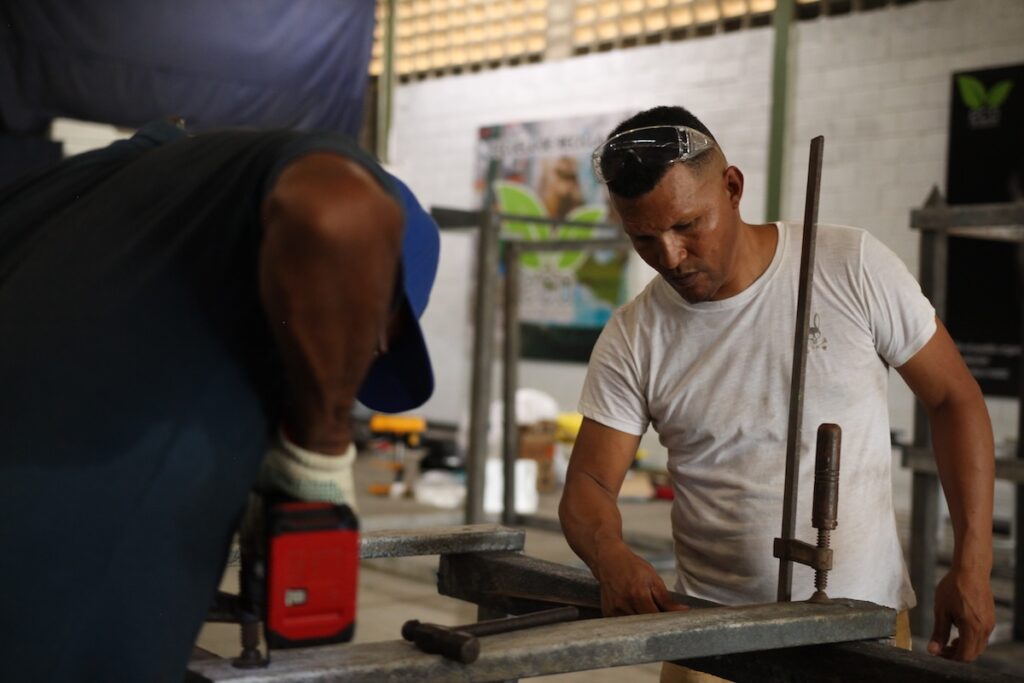
 Fruto Vivas Recycling School, Venezuela
Members of the Fruto Vivas Recycling School (Escuela de Reciclaje Fruto Vivas) in Barcelona, Anzoátegui, assemble a playground with materials they produced from recycled plastic. Members of the school collect the plastic, sort it, melt it, and then mold it into the pieces required to build a given product based on the needs of the community as well as other paid contracts which generate funds to continue the school’s work. Photo: Celina della Croce

Unlike social democratic projects in the West, Venezuela’s Bolivarian Revolution has set out to fundamentally transform society and build a socialist project rooted in class struggle and run by its people. That means that the social advances are also tied to a process of raising consciousness among the population, whereby people become the protagonists of their own struggle in a process that ultimately seeks to give them the power and tools to run the country, replacing the bourgeois state with a communal one. In this system, decisions are made by the population which is organized into communes and various social and political movements across the country. Through these processes, people learn how to run productive processes, from coffee to construction materials, and be effective owners of their own means of production; how to engage in popular decision-making processes across thousands of households; run communications teams; carry out education programs; identify, prioritize, and fix issues in their communities; and other elements that are necessary for a productive society that prioritizes the well-being of its people. All of this is done in line with core principals such as protecting the planet (with some communes collecting recyclable plastics and turning them into playgrounds, benches and chairs for the elderly and schoolchildren, and other needs expressed by the community) and centering the leadership and rights of women and marginalized sectors.

What does the future hold for the nobodies?

This dynamic process is a continuation of the path set out by Chávez, one that called upon the “nobodies” to be the makers of their own destiny. These “nobodies” (today the protagonists of one of the world’s most resilient and equitable democracies) have shown, time and time again, that they will not sacrifice their dignity nor sovereignty at any cost, no matter how severe the threat. This example is no less valuable a resource than the country’s oil, nor any less of a threat to the Trump regime and US agenda at large. The example set by the Bolivarian Revolution and its people creates a fissure in the narrative that the US (and the world) population must make the best of what we have, go to work every day with our heads down and spirits crushed, and forfeit our dreams of a better world. It opens a window for the nobodies of the world (and especially of the US) to see that on the other side of events like the mass uprisings sweeping the country, they, too, could live in a society where the wealth that they themselves generate is reinvested into the common good rather than paying for bombs and lining the pockets of the few.

Read more: Venezuela and Iran: oil and survival

Celina della Croce is a writer, editor, and the publications director of Tricontinental: Institute for Social Research. She has been an organizer and leader in internationalist, anti-imperialist, and working-class struggles in the United States for over a decade.

This article was produced by Globetrotter.

Original article by Celina della Croce republished from peoples dispatch under a Creative Commons Attribution-ShareAlike 4.0 (CC BY-SA) license.

Donald Fuhrump says that Amerikkka doesn't bother with crimes or charges anymore, not being 100% Amerikkkan and opposing his real estate intentions is enough.
Donald Fuhrump says that Amerikkka doesn’t bother with crimes or charges anymore, not being 100% Amerikkkan and opposing his real estate intentions is enough.
Elon Musk urges you to be a Fascist like him, says that you can ignore facts and reality then.
Continue ReadingHow Venezuela poses an “unusual and extraordinary threat” to the US agenda

New wave of solidarity with Venezuela sweeps across Italy

Spread the love

Original article by Ana Vračar republished from peoples dispatch under a Creative Commons Attribution-ShareAlike 4.0 (CC BY-SA) license.
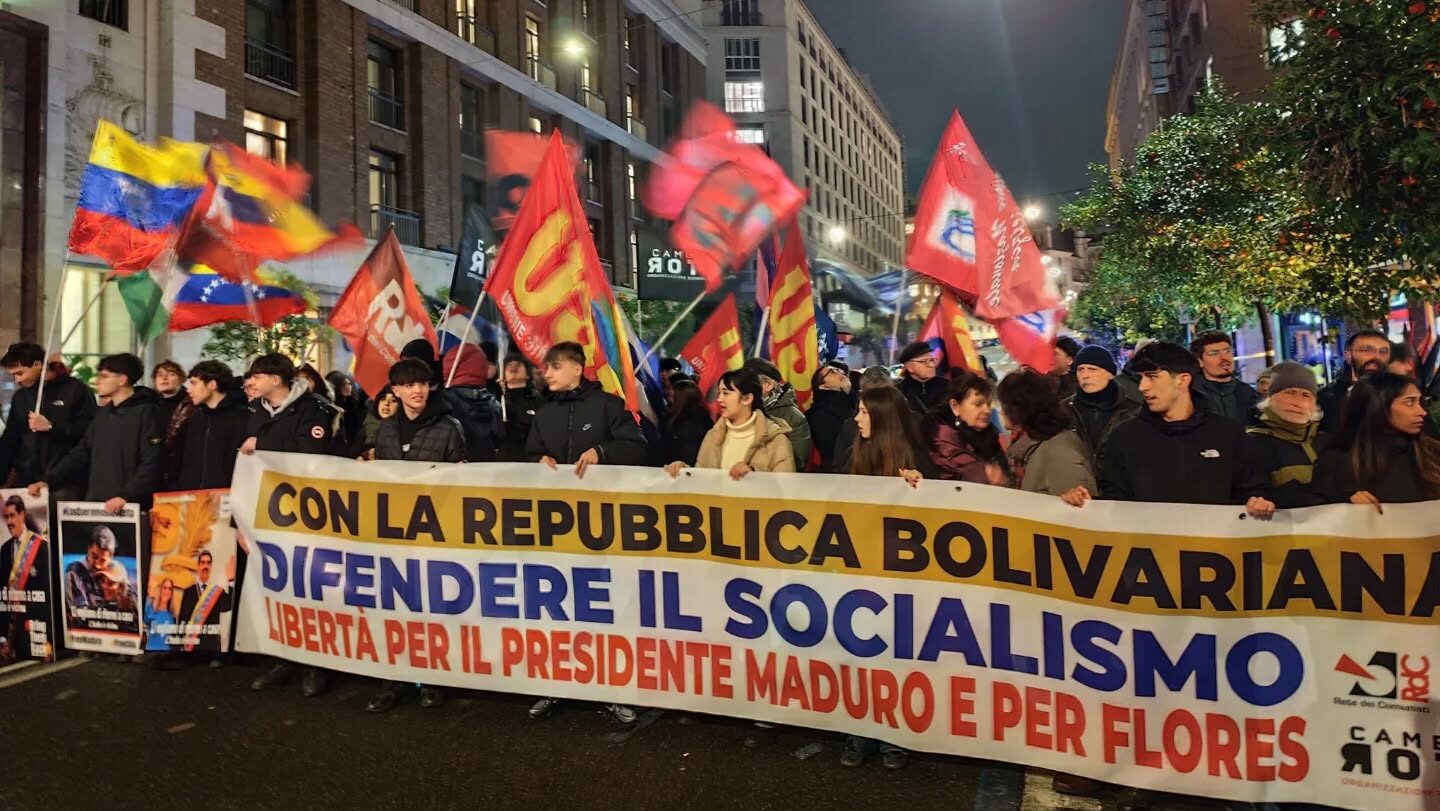
Source: Cambiare Rotta/Facebook

Dozens of cities in Italy organized actions in solidarity with Venezuela, demanding the release of President Nicolás Maduro and Cilia Flores

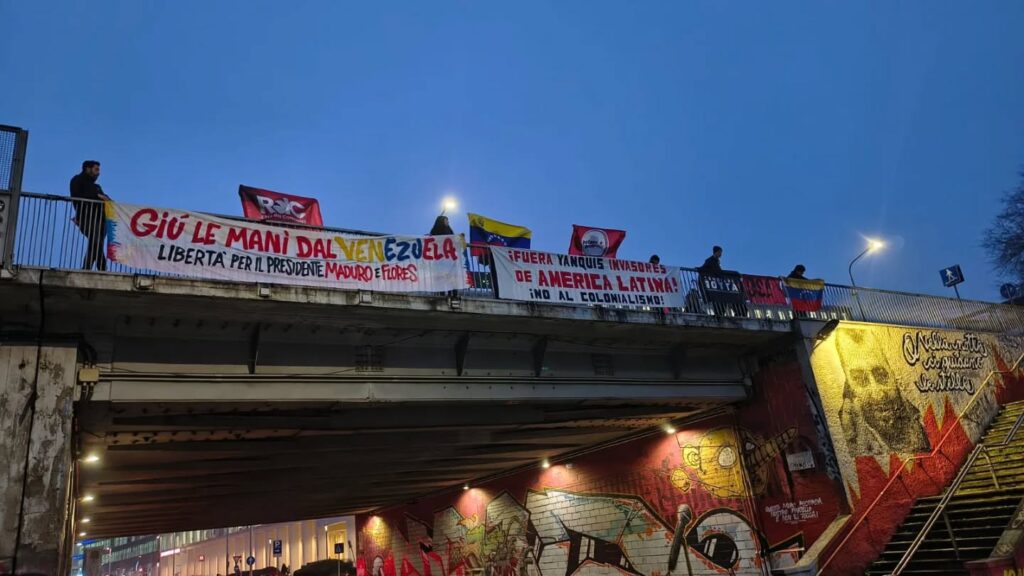
One month after the US attack on Venezuela, dozens of Italian cities once again took to the streets in support of the Bolivarian process, demanding the release of President Nicolás Maduro and Cilia Flores. Organized under the international slogan “Bring them home!”, the decentralized actions represent a stepping stone toward a national assembly in Rome on Sunday, February 8, as well as permanent mobilization against war and rearmament.

Students and youth made up a significant portion of participants in Tuesday’s demonstrations. “In response to the United States’ military action, a clear expression of its desire to reassert control over the continent, we once again stand alongside the Bolivarian Revolution […] against US imperialism and to demand the immediate release of Maduro and Flores,” the organizations Cambiare Rotta and OSA wrote on the day.

Read more: One month after the attack on Venezuela: the resurgence of imperialist “diplomacy”

Left groups also denounced the Trump administration’s threats and attacks against other countries in Latin America, particularly Cuba and Colombia, warning that the strategy is rooted in a model of imperialism that harms people all over the world. Marta Collot, spokesperson for the left party Potere al Popolo, emphasized that the protests were also aimed at opposing a “model based on extractivism that seeks to seize the resources of other countries.”

“The ambitions of the US are not limited to Venezuela, but extend to all the countries of Nuestra América, which are to be turned into mere territories for resource extraction, from oil to rare earths, from vast freshwater reserves to a ‘disposable’ workforce,” Potere al Popolo wrote ahead of the protests. Venezuela, with its socialist transformation, “has always been a thorn in their [the West] side, against which they have directed all weapons of hybrid warfare, from economic and military aggression to cognitive warfare,” the party added.

Source: Cambiare Rotta/Facebook

“We condemn this attack, which was not only an attempt to seize Venezuela’s oil, a nationalized oil, but also an effort to restore US hegemony over Latin America, which the US continues to regard as its backyard,” activists from Potere al Popolo Turin said on the day.

“But Latin America does not bow to US imperialist ambitions,” they added. “It resists, as shown by the massive crowds in Caracas, where the Venezuelan people are not celebrating, as our subservient media would have us believe, but are instead fighting loudly for the release of President Maduro and the primera combatiente.”

Read more: Trump’s ultimatum to Cuba: no fuel until surrender!

“We are here to say it once again: hands off Venezuela,” Collot said. “Today we are facing a paradox in which Trump not only allows himself to kidnap President Maduro, but also threatens half the world, from socialist Cuba to IranColombia, and even Greenland.”

“All of this must end,” she concluded. “We need to reverse course and focus on policies that genuinely support workers and peoples, promote solidarity, and oppose the war-driven agenda that is pushing us toward the brink of World War III.”

Original article by Ana Vračar republished from peoples dispatch under a Creative Commons Attribution-ShareAlike 4.0 (CC BY-SA) license.
Donald Fuhrump says that Amerikkka doesn't bother with crimes or charges anymore, not being 100% Amerikkkan and opposing his real estate intentions is enough.
Donald Fuhrump says that Amerikkka doesn’t bother with crimes or charges anymore, not being 100% Amerikkkan and opposing his real estate intentions is enough.
Elon Musk urges you to be a Fascist like him, says that you can ignore facts and reality then.
Orcas discuss Donald Trump and the killer apes' concept of democracy. Front Orca warns that Trump is crashing his country's economy and that everything he does he does for the fantastically wealthy.
Orcas discuss Donald Trump and the killer apes’ concept of democracy. Front Orca warns that Trump is crashing his country’s economy and that everything he does he does for the fantastically wealthy.
Continue ReadingNew wave of solidarity with Venezuela sweeps across Italy

Delcy Rodríguez swears to uphold sovereignty of the nation as acting president of Venezuela

Spread the love

Original article by Pablo Meriguet republished from peoples dispatch under a Creative Commons Attribution-ShareAlike 4.0 (CC BY-SA) license.

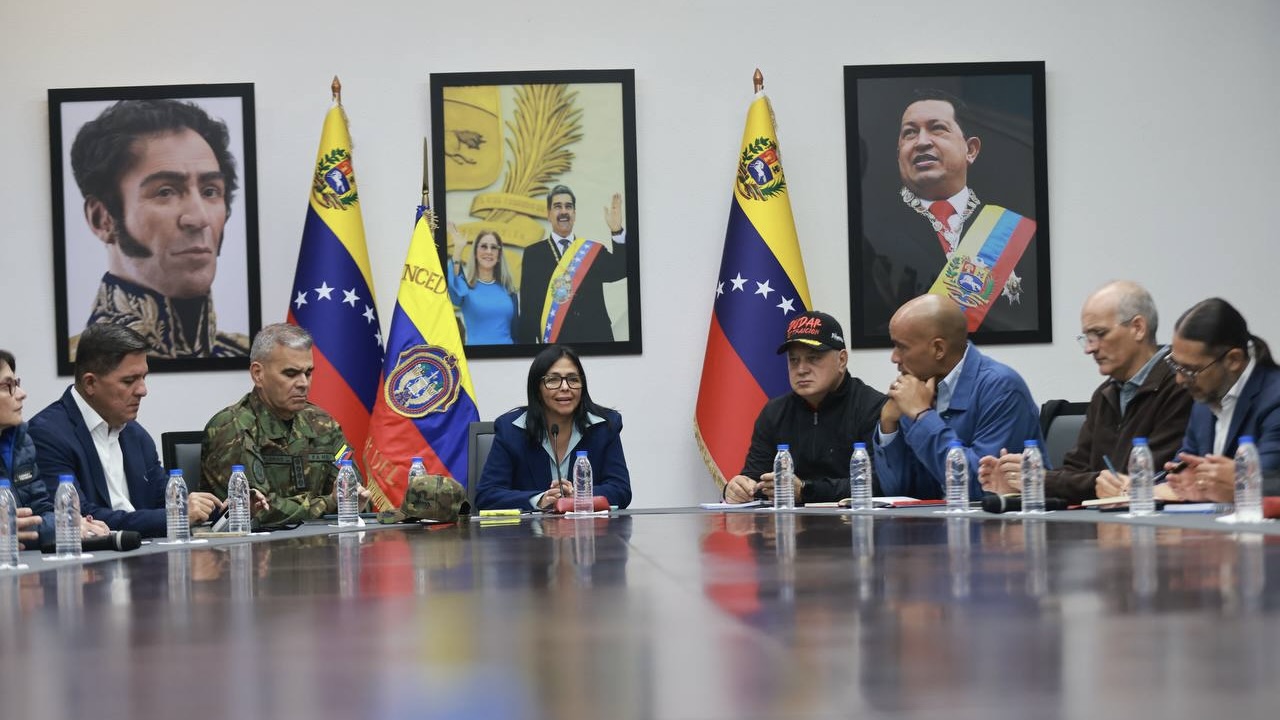
Leadership of the Venezuelan government with acting president Delcy Rodríguez in the center. Photo: Vice Presidencia Venezuela

Rodríguez promised to respect the constitution and uphold national sovereignty following the US attack on Venezuela, which left more than 80 people dead and resulted in the kidnapping of President Nicolás Maduro and his wife.

On January 5, Delcy Rodríguez assumed the presidency of Venezuela. The former vice president swore before parliament that she would uphold the constitution and the sovereignty of the nation after the US attack on January 3, in which the US military took President Nicolás Maduro and his wife Cilia Flores prisoner.

The president of the National Assembly, Jorge Rodríguez, urged the president to protect Venezuela “for her honor, for the people of Venezuela, for the example of the Liberators of America to zealously guard our sacred territory.”

Delcy Rodríguez stated that she accepted the task under very difficult circumstances, but that she would not rest until Venezuela was a free, sovereign, and independent nation. “I come with pain for the suffering that has been caused to the Venezuelan people after an illegitimate military aggression against our homeland. [There are] two heroes whom we have as hostages in the United States of America: President Nicolás Maduro and the first combatant of this country, Cilia Flores,” she told Venezuelan parliamentarians.

Rodríguez also promised to ensure an administration that guarantees peace for Venezuelans: “[We will build] a government that provides social happiness, political stability, and political security. [I ask all sectors of Venezuelan society to] move Venezuela forward in these terrible times of threat to the stability and peace of the nation.”

Although Rodríguez initially stated in a Council of Ministers meeting that Venezuela has only one president, Nicolás Maduro, a Supreme Court ruling ordered the vice president to assume the office of president to avoid a power vacuum.

The weight of the most dangerous presidency on the planet

Rodríguez has insisted in her recent speeches that her administration does not imply a break with the Chavista process. In this regard, she has taken every opportunity to demand Maduro’s release and condemn the US military attack. On January 6, Rodríguez declared seven days of national mourning for the death of the “young martyrs” who “gave their lives defending Venezuela and President Nicolás Maduro.”

However, Rodríguez has now inherited an extremely difficult task while in the crosshairs of the most powerful army in the world. Trump himself demanded “full access” to natural resources, while warning of new attacks: “If [the new government] doesn’t behave, we will launch a second attack.”

Trump also stated that major US oil companies will begin operating in Venezuela and that, in addition to making significant profits, they will have to rebuild the South American country’s oil industry.

It is not yet clear what agreements Rodríguez has reached with a US administration that has demonstrated its military power and whose pressure on Caracas has reached levels of violence never before seen against Venezuela.

In this regard, with the threat of more deadly attacks on one hand, a virtually devastated air defense system on the other, and the top leader of Chavismo under arrest, Rodríguez does not have much room for maneuver or negotiation.

Hence, Trump has assured that Venezuela will deliver between 30 and 50 million barrels of oil (worth USD 2.8 billion) in the coming months, and news about the negotiations was confirmed by Venezuelan state oil company PDVSA on Wednesday, January 8.

However, it appears that the Trump administration also recognizes, for the time being, Chavismo as the primary national actor with whom it can negotiate and achieve its geopolitical and economic objectives. Trump has publicly rejected María Corina Machado as the new leader of Venezuela and the idea that elections should be called immediately.

Read more: The current situation in Venezuela: a government in charge, a people resilient

But it is still too early to draw conclusions in a situation that remains unclear amid the dust of missiles, gunfire, and collapsed buildings following the January 3 attack. What is certain is that communication channels have not been closed, nor have the agreements that, it seems, will continue to be made to avoid a new military scenario.

Original article by Pablo Meriguet republished from peoples dispatch under a Creative Commons Attribution-ShareAlike 4.0 (CC BY-SA) license.
Elon Musk urges you to be a Fascist like him, says that you can ignore facts and reality then.
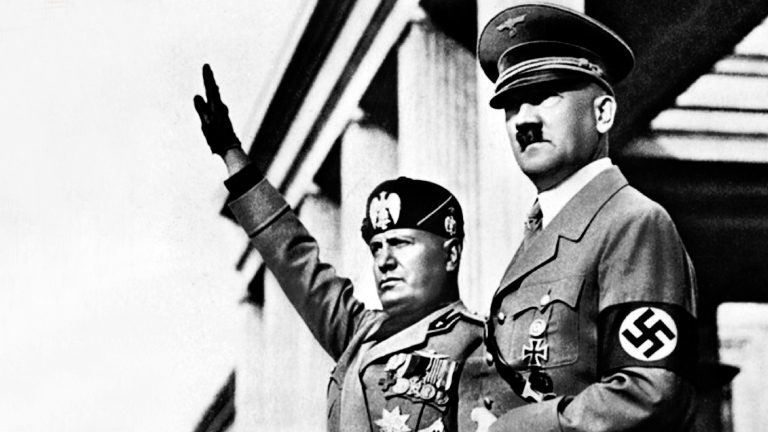
Image of the original Fascists Mussolini and Hitler.
The original Fascists Mussolini and Hitler
Orcas discuss how Trump was re-elected and him being an obviously insane, xenophobic Fascist.
Continue ReadingDelcy Rodríguez swears to uphold sovereignty of the nation as acting president of Venezuela

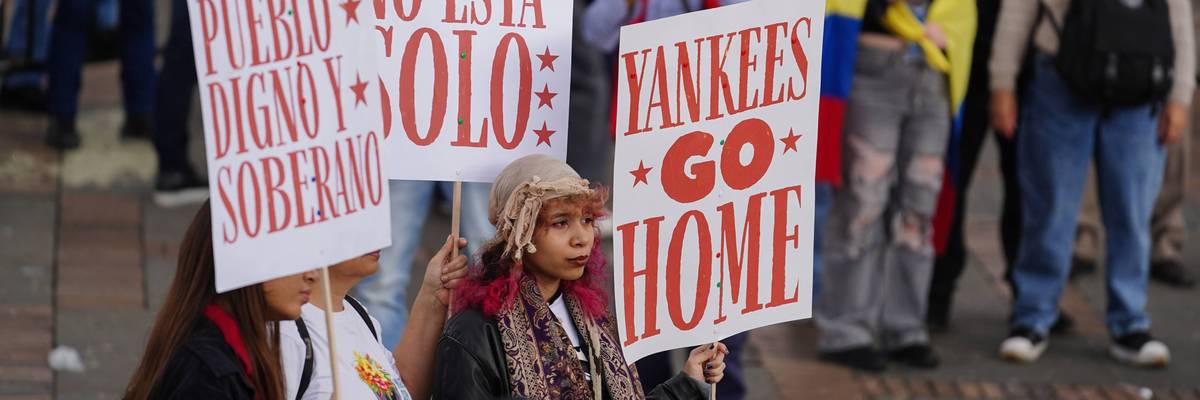
‘Yankees Go Home!’ Colombians Demand at Mass Protests Against Trump Threats

Spread the love

Original article by Julia Conley republished from Common Dreams under Creative Commons (CC BY-NC-ND 3.0).

Demonstrators hold signs during an anti-Trump protest at Plaza de Bolivar on January 7, 2026 in Bogotá, Colombia. (Photo by Andres Rot/Getty Images)

Thousands of people across the country expressed support for their president, Gustavo Petro, who spoke to President Donald Trump ahead of the rallies and struck a diplomatic but defiant tone.

Colombian President Gustavo Petro struck a relatively diplomatic tone Wednesday at a rally in Bogotá, where he spoke about the Trump administration’s threats to launch military strikes against his country—but thousands of people who gathered in the Colombian capital and across the country were happy to say exactly what they thought of US President Donald Trump’s recent attack on neighboring Venezuela and his saber-rattling across Latin America.

“He’s a maniac,” 67-year-old José Silva told the Guardian at a march in the border city of Cúcuta. “The US Congress needs to do something to get him out of the presidency… He’s a thug.”

RECOMMENDED…

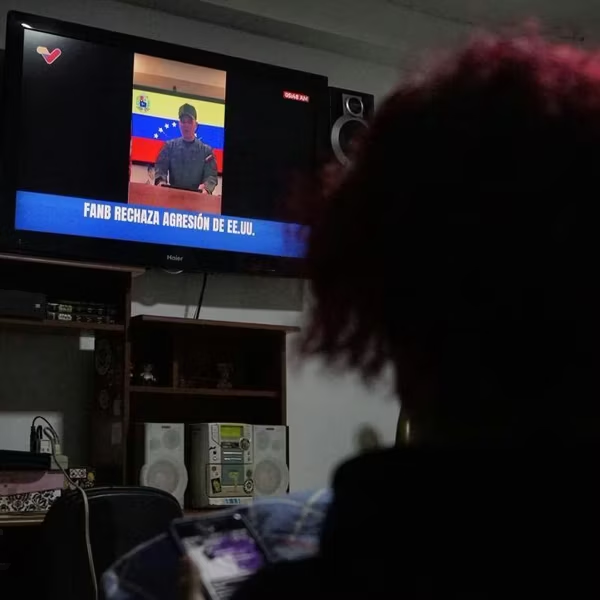
A woman watches a public television broadcast by Venezuelan Defense Minister Vladimir Padrino

‘This Is State Terrorism’: Global Outrage as Trump Launches Illegal Assault on Venezuela

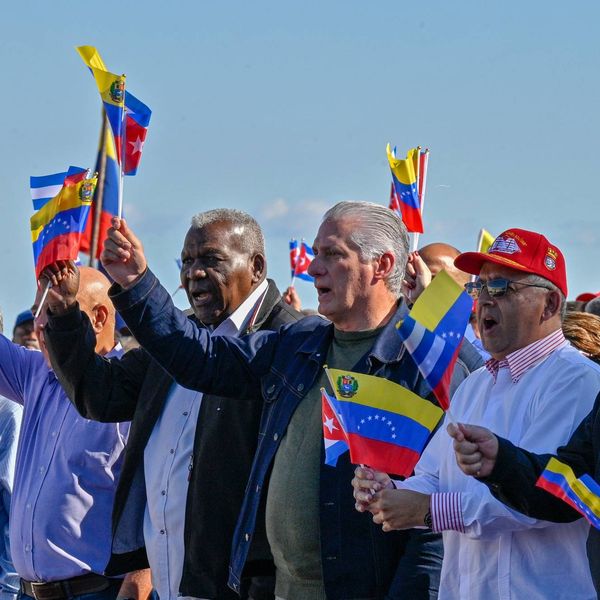
Cuban President Miguel Diaz-Canel flutters a Venezuelan national flag

After Venezuela Assault, Trump and Rubio Warn Cuba, Mexico, and Colombia Could Be Next

“Trump is the devil,” another marcher, Janet Chacón, told the outlet.

And demonstrators held English-language signs proclaiming, “Yankees Go Home!” as well as banners reading, “Fuera los yanquis!” or “Out with the Yanks!”

Colombians were rallying after Petro called for a mass mobilization days after Trump ordered a military attack in Venezuela, including a bombing and the abduction of President Nicolás Maduro and his wife, Cilia Flores. Maduro and Flores have pleaded not guilty to narco-terrorism charges in a court in New York City, while Trump and other White House officials have made clear in recent days that their objective in Venezuela is not to stop drug trafficking—a crime in which the country is not significantly involved—but to take control of its oil reserves.

Colombians marched together with Venezuelans in Cúcuta, with one man telling Reuters, “If they kidnap your president, they kidnap the entire homeland.”

Soon after invading Venezuela, Trump and other officials including Secretary of State Marco Rubio suggested they could soon attack other Latin Amercian countries and try to overthrow their leaders.

Officials in Cuba’s socialist government, said Rubio, are “in a lot of trouble,” while Trump said the US is “going to have to do something” about drug cartels operating in Mexico.

Regarding Colombia, Trump cited no evidence as he accused the left-wing Petro of “making cocaine and selling it to the United States” and said an invasion of the country “sounds good to me.” Petro has not been linked to the drug trade in Colombia.

Petro has vehemently condemned Trump’s escalation in Latin America in recent months and has accused the president of murder in the Caribbean, where the US has bombed dozens of boats and killed more than 100 people since September, accusing them of drug trafficking without releasing any evidence.

After the Venezuela attack and the threats toward other countries in the region, Petro warned that Trump had awakened a “jaguar,” referring to the opposition of the public in Colombia and across Latin American regarding US imperialism.

After calling on Colombians to take to the streets, Petro spoke to Trump on the phone at the US president’s request and accepted an invitation to the White House. Trump said it was “a great honor” to speak with the Colombian leader.

Petro told protesters in Bogotá that the speech he had planned to give had been “quite harsh.”

“For 34 years, peace has been my priority,” he said. “And I know that peace is found through dialogue. That is why I accept President Trump’s proposal to talk.”

“If there is no dialogue, there is war. The history of Colombia has taught us that,” the president added.

But he also made clear to thousands of supporters, many of whom carried placards with pictures of Petro, that “what happened in Venezuela was, in my opinion, illegal.”

“We cannot lower our guard,” he said. “Words need to be followed by deeds.”

In Cúcuta, a teacher named Marta Jiménez denounced a number of European leaders who have refused to clearly condemn Trump’s invasion of Venezuela’s neighbor, even as legal scholars have said it was a clear violation of the United Nations Charter.

“They are leaving him to fly, free as a bird over every single country, to do whatever he likes,” she said, expressing concern that Trump’s next target “might be Nicaragua, BrazilEcuador, Peru—any of them.”

Protests were also held this week in countries including Argentina and Brazil, with demonstrators expressing solidarity with the rest of Latin America in light of Trump’s threats and attacks.

“The message from the people of Latin America is: ‘Donald Trump, get your hands off Latin America,’” Brazilian Congressman Reimont Otoni said at a rally outside the US consulate in Rio de Janeiro. “Latin America isn’t the [United States’] backyard.”

Original article by Julia Conley republished from Common Dreams under Creative Commons (CC BY-NC-ND 3.0).

Elon Musk urges you to be a Fascist like him, says that you can ignore facts and reality then.
Donald Fuhrump says that Amerikkka doesn't bother with crimes or charges anymore, not being 100% Amerikkkan and opposing his real estate intentions is enough.
Donald Fuhrump says that Amerikkka doesn’t bother with crimes or charges anymore, not being 100% Amerikkkan and opposing his real estate intentions is enough.
Orcas discuss how Trump was re-elected and him being an obviously insane, xenophobic Fascist.

Continue Reading‘Yankees Go Home!’ Colombians Demand at Mass Protests Against Trump Threats

China’s Foreign Ministry Demands Maduro’s Immediate Release, Rips ‘So-Called’ Trial

Spread the love

Original article by Jake Johnson republished from Common Dreams under Creative Commons (CC BY-NC-ND 3.0). 

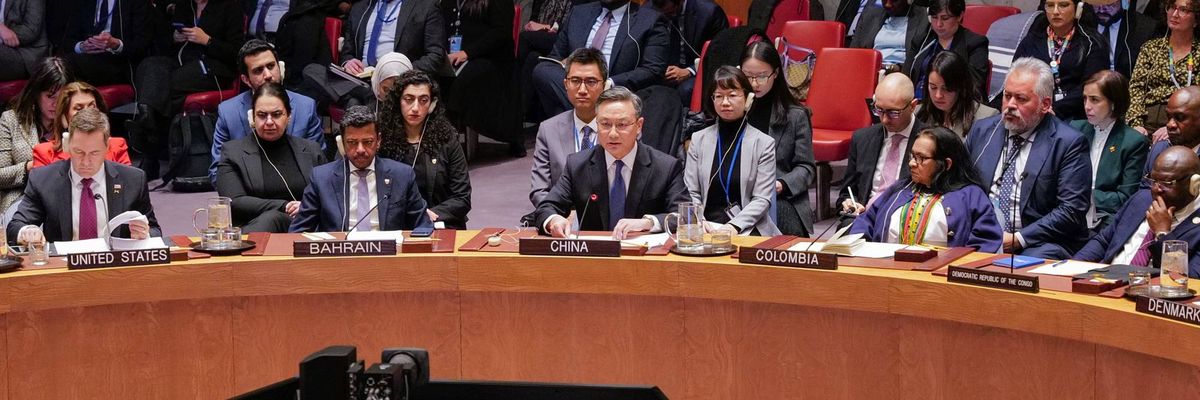
China’s deputy permanent representative to the United Nations, Sun Lei, addresses a UN Security Council meeting on Venezuela on January 5, 2026 in New York City. (Photo by Wang Fan/China News Service/VCG via Getty Images)

Lin Jian, a spokesperson for the Chinese Foreign Ministry, said the US abduction of Nicolás Maduro “seriously violates Venezuela’s national sovereignty and destabilizes international relations.”

A spokesperson for China’s Foreign Ministry on Tuesday demanded the immediate release of Venezuelan President Nicolás Maduro and his wife from US custody and condemned the Trump administration’s trampling of international law.

“The US disregards President Maduro’s status as head of state, blatantly prosecutes him, and puts him on a so-called ‘trial’ in a domestic court,” Lin Jian wrote in a social media post. “This seriously violates Venezuela’s national sovereignty and destabilizes international relations.”

RECOMMENDED…

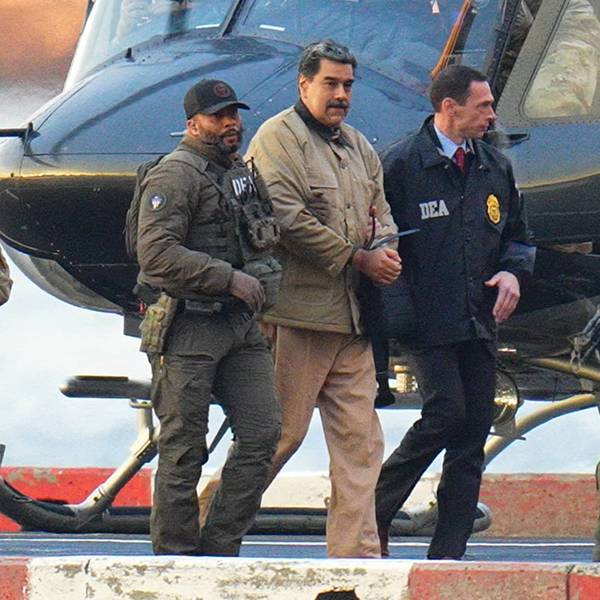
Nicolas Maduro Transported To Court Hearing

‘I Consider Myself a Prisoner of War,’ Says Maduro, Pleading Not Guilty in US Court

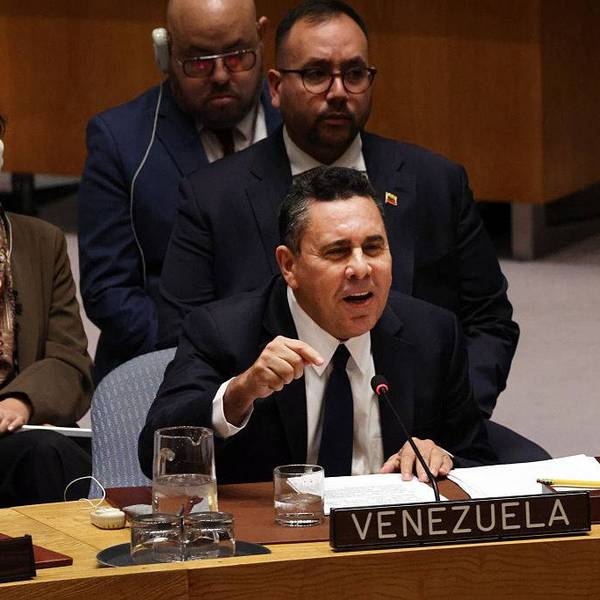
Venezuela Calls on UN Security Council to Back Immediate Release of Maduro, Condemn Unlawful US Attack

Venezuela Calls on UN Security Council to Back Immediate Release of Maduro, Condemn Unlawful US Attack

“No country should put its domestic rules above international law,” Lin added. “China calls on the US to release President Maduro and his wife at once and ensure their personal safety.”

The Chinese official’s remarks came a day after Maduro said Monday during his first appearance before a federal court in New York City that he is “still president” of Venezuela—a sentiment echoed by the country’s interim leader—and considers himself a “prisoner of war.” Maduro pleaded not guilty to narcoterrorism conspiracy and other charges pursued by the Trump Justice Department.

During a press conference on Monday, Lin called the US abduction of Maduro a “clear violation of international law, basic norms in international relations, and the purposes and principles of the UN Charter,” expressing a view widely held by legal experts.

“China calls on the US to ensure the personal safety of President Nicolás Maduro and his wife, release them at once, stop toppling the government of Venezuela, and resolve issues through dialogue and negotiation,” said Lin.

Under international law, sitting heads of state are immune from prosecution in other countries’ courts. The Trump administration argues Maduro’s leadership was illegitimate. But President Donald Trump, in his social media post announcing the weekend attack on Venezuela, described Maduro as president of the South American country.

“If the Justice Department plans to argue that Nicolás Maduro is not protected by head of state immunity,” asked Francisco Rodríguez, a senior fellow at the Center for Economic and Policy Research, “then why did President Trump announce his capture referring to him as ‘President Maduro’—a designation that the US government had stopped using in 2019?”

An unsealed US indictment against Maduro characterizes him as “previously the president of Venezuela.”

Chimène Keitner, a professor at the University of California, Davis School of Law, wrote Tuesday that the Trump administration “appears to feel that its military and economic superiority allow it to act unilaterally in violation of international law, and that cooperation and alliances are overrated.”

“That might seem appealing in the short term, but the world has already seen where unchecked expansionism and claimed spheres of influence lead,” wrote Keitner. “The benefits of following agreed-upon rules have often been recognized only after significant harm caused by their disregard.”

Original article by Jake Johnson republished from Common Dreams under Creative Commons (CC BY-NC-ND 3.0). 

Elon Musk urges you to be a Fascist like him, says that you can ignore facts and reality then.
Donald Fuhrump says that Amerikkka doesn't bother with crimes or charges anymore, not being 100% Amerikkkan and opposing his real estate intentions is enough.
Donald Fuhrump says that Amerikkka doesn’t bother with crimes or charges anymore, not being 100% Amerikkkan and opposing his real estate intentions is enough.
Orcas discuss how Trump was re-elected and him being an obviously insane, xenophobic Fascist.
Continue ReadingChina’s Foreign Ministry Demands Maduro’s Immediate Release, Rips ‘So-Called’ Trial