This work by Middle East Monitor is licensed under a Creative Commons Attribution-NonCommercial-ShareAlike 4.0 International License.
Palestinian children spend hours searching through piles of garbage to find food and basic supplies in Gaza City, Gaza on November 11, 2025. [Saeed M. M. T. Jaras – Anadolu Agency]
The Union of Gaza Strip Municipalities warned Friday of the consequences of 700,000 tons of accumulated waste in random dumping sites, as municipalities are unable to provide even the minimum level of essential services due to severe shortages of fuel and equipment, Anadolu reports.
Alaa Al-Batta, the union’s deputy head, told Anadolu that municipalities are facing an “impossible equation” due to the massive destruction of infrastructure, fuel shortages, and the destruction of machinery and equipment during Israel’s genocide against Palestinians.
He said these combined factors have left municipalities unable to provide even basic services to residents and displaced people, despite a month having passed since the ceasefire agreement between Israel and Hamas, with no tangible improvement.
Waste accumulation
The Palestinian official warned of a looming health and environmental disaster amid massive waste buildup across Gaza.
He said around 700,000 tons of waste are piling up in northern and southern areas of the strip, as Israel prevents access to central dumping sites located in border zones it controls under the ceasefire east of the so-called “yellow line.”
He noted that the waste accumulation has also led to the spread of mosquitoes and rodents and contamination of groundwater.
Al-Batta described Gaza’s fuel shortage, particularly for municipalities, as “the most dangerous and urgent crisis” at the moment.
He said municipalities are resorting to borrowing fuel, and when they cannot, they must reduce daily operations because they cannot run service vehicles and facilities.
He called for urgent Arab and international action to supply municipalities with the fuel required to maintain essential services.
Water crisis
Regarding the water crisis, Al-Batta said it has reached unprecedented levels as Israel has destroyed more than 700 wells across Gaza during two years of genocide, representing 80–85% of all municipal wells.
He said the daily per capita water share had dropped from 90 liters before the genocide to just 10–15 liters today.
He added that groundwater and the environment are contaminated because sewage has leaked into the soil after the Israeli military deliberately targeted sewage networks during the two years of war.
“We are talking about near-total destruction of about 2 million linear meters of sewage networks, and municipalities do not have the equipment necessary to repair or maintain them,” he said.
Al-Batta said municipal employees faced severe conditions during the genocide, leading to the killing of many of them, while others continued working without pay.
He said that over 200 municipality workers were killed while performing their professional and humanitarian duties.
He noted that about 5,000 municipal employees in Gaza have been working for 735 days without salaries, despite the war and constant targeting.
Regarding attacks on municipal buildings, Al-Batta said they were directly targeted during the two-year war. Israeli strikes also hit municipal equipment in Gaza City, Khan Younis, and Jabalia, destroying dozens of essential machines.
He said Israel destroyed 15 bulldozers previously donated by Arab states and Egypt during the previous ceasefire period that began in January 2025 and ended in March.
According to the latest data from Gaza’s Government Media Office, losses in the municipal and services sector over two years of genocide amount to about $6 billion.
Al-Batta stressed that Israel is not allowing the entry of new machinery, severely limiting municipalities’ ability to clear rubble, remove waste, reopen streets, and manage the mounting crises.
The Gaza Media Office estimates that the genocide has left around 70 million tons of rubble, beneath which lie thousands of bodies of Palestinians killed during the war.
The estimates indicate 9,500 Palestinians are missing, either buried under the rubble of destroyed homes or their fate remains unknown.
Israel has killed more than 69,000 people, mostly women and children, and injured over 170,700 others in attacks in Gaza since October 2023.
This work by Middle East Monitor is licensed under a Creative Commons Attribution-NonCommercial-ShareAlike 4.0 International License.
Genocide denier and Current UK Prime Minister Keir Starmer is quoted that he supports Zionism without qualification. He also confirms that UK air force support has been essential in Israel’s mass-murdering genocide. Includes URLs https://www.declassifieduk.org/keir-starmers-100-spy-flights-over-gaza-in-support-of-israel/ and https://youtu.be/O74hZCKKdpAKeir Starmer objects to criticism of the IDF. He asks how could anyone object to them starving people to death, forced marches like the Nazis did, bombing Gaza’s hospitals and universities, mass-murdering journalists, healthworkers and starving people queuing for food, killing and raping prisoners and murdering children. He calls for people to stop obstructing his genocide for Israel.Orcas discuss Genocide-supporting and complicit Zionists. Donald Trump, Keith Starmer, David Lammy, Rachel Reeves, Angela Rayner and Wes Streeting are acknowledged as evil genocide-complicit and supporting cnuts.
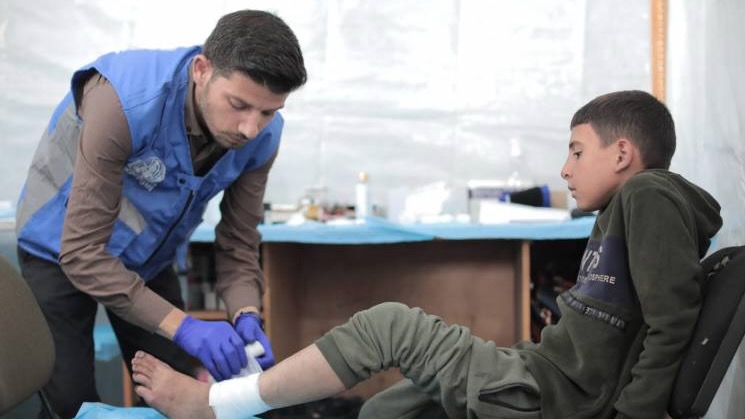
Medication shortages leave burn victims without full care in Gaza. Photo: UNRWA
The health crisis in Gaza worsens as Israeli attacks persist, supplies dwindle, and most lack access to food and water.
Less than half of all health facilities in the Gaza Strip remain partially operational and capable of providing basic primary care and surgery, the Al Mezan Center for Human Rights warned in a press release. Israeli attacks have rendered nearly all hospitals in northern Gaza non-functional, destroying dialysis units, oncology departments, and rehabilitation centers. The threat of total shutdown is now advancing into the southern governorates: the European Hospital has already been forced to close due to the attacks, and the Nasser Medical Center could be next in line.
This major institution has been operating far beyond capacity for weeks and is under imminent threat of closure, according to both international and non-governmental organizations. “Its closure would deprive thousands of access to critical healthcare and effectively amounts to a death sentence for the wounded and sick in the southern district,” Al Mezan reported.
According to the Jewish Voice for Peace (JVP) Health Advisory Council, most patients at Nasser Medical Center are victims of direct sniper shots to the head or chest, illustrating the deliberate targeting of Palestinians by Israeli forces.
Medics forced to repurpose used supplies
The crisis at Nasser, as with other medical facilities, is worsened by widespread shortages of essential supplies. Over 50% of medications for chronic conditions are unavailable, 64% of cancer and hematology drugs are missing, and the shortage of orthopedic equipment has reached nearly 90%, according to health organizations. Both the JVP Health Advisory Council and United Nations agencies have highlighted that the lack of basic items such as gauze, medicines, and surgical equipment is forcing medical staff into extreme triage decisions. “Medical teams have been forced to reuse equipment – sterilizing and repurposing implants from recovered patients – due to the acute shortage of these items,” Al Mezan stated.
Fuel shortages are of particular concern, as they endanger the functioning of critical medical devices such as ventilators in neonatal intensive care units (NICUs). “Newborns in NICUs are often too small to breathe on their own – they need ventilators and oxygen to survive,” staff from Doctors Without Borders (MSF) pointed out. “The charade of only allowing medical and fuel supplies at the very last minute before a looming disaster is nothing but a band-aid on a gushing wound.”
Hunger rates grow further
At the same time, hunger is sweeping through Gaza. Following Israel’s months-long blockade of aid and the weaponization of humanitarian deliveries, most of the population is experiencing rising degrees of malnutrition. This is impacting public health in multiple ways, including reducing the pool of eligible blood donors, even as blood banks face dire shortages.
“We are missing everything: medical consumables like gauze, medications, and food for our patients,” said MSF nursing manager Katja Storck. “This also includes therapeutic food for people with malnutrition, especially children.”
By June 15, nearly 19,000 children under five had received treatment for malnutrition, though this likely underrepresents the full extent of the crisis. As the JVP Health Advisory Council noted, these cases emerged “within a population where wasting was non-existent 20 months ago.” Malnutrition is not only increasing susceptibility to infectious disease, but is also causing serious long-term effects such as stunted growth and mental health problems. Prenatal health is also affected: one in five newborns is now being born preterm or underweight.
While many adults are trying to shield children from hunger by reducing their own intake, most coping strategies are ineffective under the conditions imposed by the occupation. “Most families reported surviving on one meager meal a day – thin broths, lentils or rice with salt, macaroni, cans of beans or peas, and boiled legumes,” UN sources reported. “One third said they go entire days without eating or rely on a single piece of bread and duqqa.”
Beyond hunger caused by Israel’s blockade, Palestinians in Gaza are also facing an escalating water crisis. With much of the water infrastructure destroyed and fuel to power desalination plants missing, access to safe drinking water has plummeted. In Deir al-Balah, 97% of residents reported being unable to obtain adequate water. “This is Gaza’s most critical moment since this war on children began – a woeful bar to sink below,” UNICEF spokesperson James Elder stated on June 20. “A virtual blockade is in place; humanitarian aid is being sidelined; the daily killing of girls and boys in Gaza does not register; and now a deliberate fuel crisis is severing Palestinians’ most essential element for survival: water.
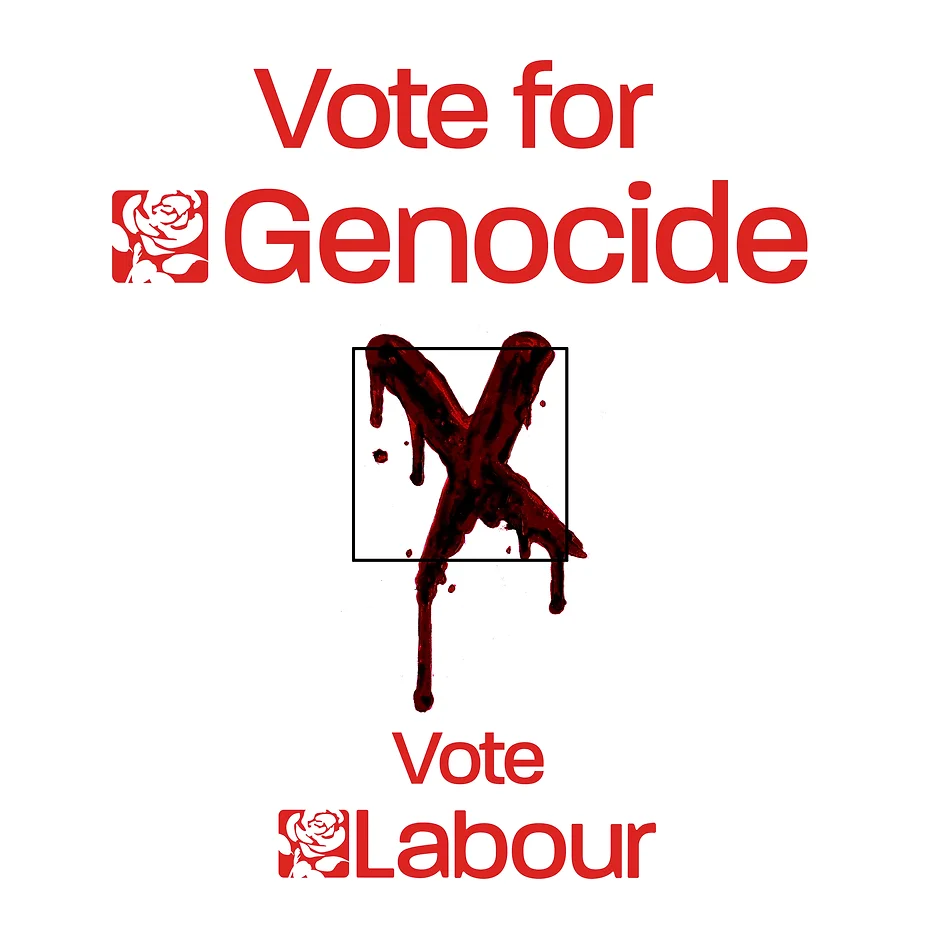
Zionist Keir Starmer is quoted “I support Zionism without qualification.” He’s asked whether that means that he supports Zionism under all circumstances, whatever Zionists do.Keir “I support Zionism without Qualification” Starmer supporting genocide.Vote Labour for Genocide.
This work by Middle East Monitor is licensed under a Creative Commons Attribution-NonCommercial-ShareAlike 4.0 International License.
Palestinians, including children gather around a water tanker to collect clean water amid ongoing Israeli attacks on Gaza and the continued closure of border crossings, which have severely limited access to basic necessities in Khan Yunis, Gaza on March 29, 2025. [Abed Rahim Khatib – Anadolu Agency]
Under the weight of war and a suffocating blockade, more than two million people in the Gaza Strip are facing an unprecedented water crisis that threatens their daily survival. What was already a dire situation before the escalation has now turned catastrophic due to the ongoing bombardment and the widespread destruction of water infrastructure. The UN report from 2022 unveils a grim reality: over 97 per cent of Gaza’s drinking water is unfit for drinking or human consumption as a result of contaminants infiltrating groundwater reserves, whether it was caused by the excessive pumping of polluted water by the Israeli Occupation into Wadi Gaza, leakage from deteriorating sewage networks into the aquifer or the intrusion of the polluted saltwater into the aquifer by 75 per cent to meet the water deficit of the increased demand caused by the increased population. Compared to that, natural rain that does not exceed 30 per cent of natural replenishment. The situation is further exacerbated by the leakage of residues from Israeli munitions into groundwater sources.
Gaza’s water crisis: Numbers dripping with pain
Gaza’s water reality reveals a prolonged and profound deficit. While the Israeli Occupation enjoys a near-universal coverage of clean water (more than 99 per cent), as well as a substantial control over the aquifer, Gaza languishes among the world’s lowest water access rates, with a coverage below 10 per cent, placing it in a state of constant water emergency.
Over the past years, Israel, through its national water company, Mekorot, supplied Gaza with around 18 million cubic meters of water annually through three pipelines, amounting to only 9 per cent of Gaza’s needs. Yet, the water sector in Gaza suffers from a severe deficit exceeding 120 million cubic meters per year (approximately 60 per cent of total demand). With the outbreak of the latest war, these limited supplies have been repeatedly disrupted and, today, they are completely cut off following the destruction of transmission networks. During the war, these pipelines provided up to 70 per cent of Gaza City’s water supply, after most local water sources were destroyed. More than 85 per cent of Gaza’s water and sewage networks have been bombarded, causing destruction and damage to 2,263 kilometres of pipelines and 47 pumping stations, as well as the cessation of all operations of wastewater treatment plants. Currently, only 30 per cent of Gaza’s wells remain operational. The capacity of desalination plants has plummeted to their lowest levels due to continuous bombardment and the shortages of electricity and fuel. Consequently, water supplies available to Gaza’s people have dropped by 95 per cent, with the average daily water consumption per capita reduced to just 3–5 litres, far below the 15-liter minimum emergency threshold set by the United Nations.
Gaza’s displaced: Long queues and arduous journeys for a few drops of water
Since the beginning of the escalation, thousands of Gaza’s residents have endured the tragedy of displacement, which has only deepened their daily suffering. Hundreds of families, forced to flee their homes under heavy bombardment, now face the exhausting challenge of searching for water in distant areas or in overcrowded shelters lacking even the most basic necessities of life. Long queues at water distribution points and wells have become a daily reality, fraught with the constant risks of air strikes, fear and loss of life.
“We wait for long hours just to access unsafe and contaminated water, and sometimes we only manage to get our share after complete exhaustion,” says Fatima, a 35-year-old mother of four, who was displaced with her children to a shelter in western Gaza. “The distance we have to walk every day just to collect water can stretch for several kilometres and, with each passing day, the journey becomes even more difficult.”
Contaminated water: An immediate and long-term health threatThe health situation in Gaza has become catastrophic due to the acute shortage of clean water and the forced reliance on contaminated sources for drinking and hygiene, if available, which has led tothe widespread outbreak of acute diseases such as diarrhoea, kidney infections, urinary tract infections and waterborne diseases, as well as skin infections due to poor hygiene conditions or the use of polluted water for personal care.
These health risks are even more severe for children under the age of five, who are particularly vulnerable to malnutrition, intestinal infections, and severe diarrhoea, which can lead to dehydration or death. Pregnant women also face higher risks of early miscarriage, premature delivery and reduced breast milk production due to dehydration and exposure to contaminated water. The elderly are not spared, either, as they face an increased risk of kidney diseases, kidney failure and challenges in managing chronic conditions in the absence of safe and sufficient water supplies.
Impact of the water crisis on food security and forced displacement
The water crisis in Gaza is not only a health emergency but also a growing threat to food security. The destruction of agricultural irrigation networks has further worsened the already fragile economic situation, increasing poverty and hunger across the Gaza Strip due to a sharp decline in agricultural and livestock production. Agricultural productivity in the limited available farmland has dropped by 60 per cent as a result of using contaminated water, not to mention that farmlands have become either unsuitable for cultivation or located in unsafe areas due to the ongoing conflict. Moreover, the scarcity of clean and safe water has intensified forced displacement, with many residents compelled to leave their homes in search of areas where drinking water is available.
A grave breach of International Law: Denying people their right to life
The targeting and destruction of water sources and infrastructure in Gaza constitute a grave breach of international humanitarian law.
According to the 1977 Additional Protocol I to the Geneva Conventions, it is prohibited to attack resources indispensable to the survival of civilians, such as water supplies. Denying water to civilians amounts to a war crime under the Fourth Geneva Convention and represents a blatant violation of Article 25 of the Universal Declaration of Human Rights.Such acts may also qualify as crimes against humanity under the Rome Statute of the International Criminal Court.
In the face of tragedy: An urgent call for action
In light of this tragic reality, there is an urgent need for immediate and coordinated action. Internationally, the United Nations must activate emergency protection mechanisms, while international organisations, including the Organisation of Islamic Cooperation and the Arab League, should play a key role in intensifying political pressure on the United States to compel Israel to stop the war, halt the supply of weapons to the Occupying forces and ensure the immediate entry of humanitarian aid into Gaza. The Human Rights Council is also expected to issue investigative reports on these violations, and the International Criminal Court should open immediate investigations into the crimes committed.
On the humanitarian level, aid organisations must intensify efforts to find emergency solutions for providing clean water to the population in Gaza by repairing damaged water networks, maintaining wells and desalination plants using locally available resources, operating mobile desalination units powered by solar energy, expanding water distribution through water trucks to shelters and displacement camps and providing households with simple tools for water purification and desalination.
On the relief level, it is essential to pre-position water-related equipment, including well supplies, fixed and mobile desalination units, generators, solar energy systems, spare parts for water networks and fuel in both Egypt and Jordan. These should be ready for immediate delivery as soon as border crossings are opened for humanitarian aid. It would be a grave mistake to wait until Crossings re-open before starting to procure these critical supplies, given the time required for sourcing and delivery.
For the recovery and development of Gaza’s water system, it is equally critical not to wait until the war ends to begin planning and preparation. Delaying the restoration and development of the water sector will only prolong the suffering of a population that has already endured unimaginable hardship for over 17 months. Efforts must begin now by developing a comprehensive recovery plan, securing supply chains, mobilising funding and preparing technical teams to respond without delay, ensuring the most vital resource for life, water, is restored for Gaza’s population.
Between a suffocating siege and relentless bombardment, the people of Gaza struggle for every drop of water, much like a drowning person gasping for their final breath. They call for water but receive none; they cry out for help but are left unheard. Has humanity truly turned its back on them? Is water not a right for every living soul, including those trapped and besieged in Gaza?