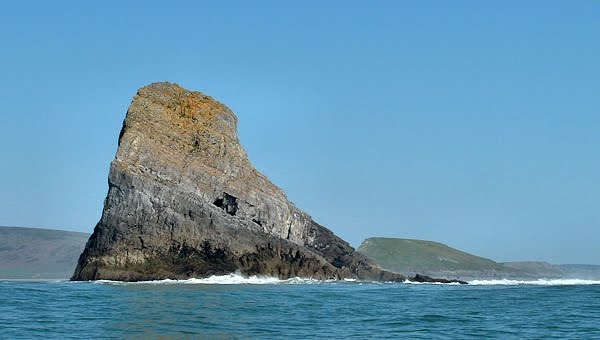
Rwy’n gobeithio hwylio cyn bo hir – nes i ddim hwylio o gwbl flwydddyn dywethaf. Rwy’n trwsio ac adnewyddu darnau ar a cwch ar hyn o bryd – ac yn ffindio hi braidd yn ddrud. Mae na dywediad am cwch yn bod twll yn a mor mae morwr hamdden yn taflu ei arian at.
Rwy’n gobeithio hwylio Ynys Lundi cyn croesi ar draws tuag at Abertawe a cario ymlaen at Ynys Dewi a gobeithio efallai gwylio morfilod neu Orcas. Hoffwn i hwylio ym mhellach i’r Gorllewin ond efallai rhywbryd arall.
Eng: Hoping to go sailing soon. I’m currently doing repairs and renewing parts on the boat. I’m hoping to sail a route Lundy Island to Ramsey Island. I would like to sail further West.
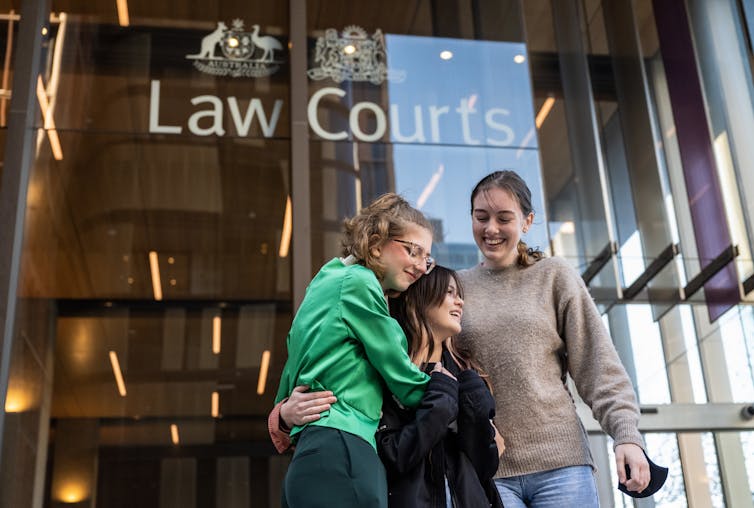
The Federal Court today dismissed a bid by a group of Australian teenagers seeking to prevent federal environment minister Sussan Ley from approving a coalmine extension in New South Wales.
While the teens’ request for an injunction was unsuccessful, a number of important developments emerged during the court proceedings. This included new figures on the financial costs of climate change to young Australians over their lifetimes.
An independent expert witness put the loss at between A$125,000 and A$245,000 per person. The calculation was a conservative one, and did not include health impacts which were assessed separately.
The evidence was accepted by both the federal government’s legal team and the judge. That it was uncontested represents an important shift. No longer are the financial impacts of climate change a vague future loss – they’re now a tangible, quantifiable harm.
The Federal Court dismissed the teens’ request for an injunction against a mine. James Gourley/AAP
Calculating climate costs
The case involved a proposed extension to Whitehaven’s Vickery mine near Gunnedah in northwest NSW. The expansion would increase the total emissions over the life of the mine to 366 million tonnes.
To help in its deliberations, the court called on an independent expert witness, Dr Karl Mallon, to estimate the extent to which climate change would harm the eight young Australians aged 13 to 17, and by extension all children in Australia.
Mallon is chief executive of Climate Risk, a consultancy specialising in climate risk and adaptation software which advises governments and businesses around the world. This is the first time anywhere in the world this technique for quantifying harm in climate litigation has been applied and accepted.
Mallon first assumed a level of ongoing greenhouse gas emissions, with reference to standard scenarios used by the Intergovernmental Panel on Climate Change (IPCC). The scenarios range from futures with ambitious emissions reductions to those with very little.
So Mallon used the IPCC’s high-end emissions scenario known as RCP8.5 – the only one consistent with increasing coal production.
Second, Mallon drew on atmospheric modelling to provide projections for Australia on climate effects such as changes in temperature and rainfall. He then quantified the financial and health costs of those changes across three “epochs”, or time periods, in the futures of young people today.
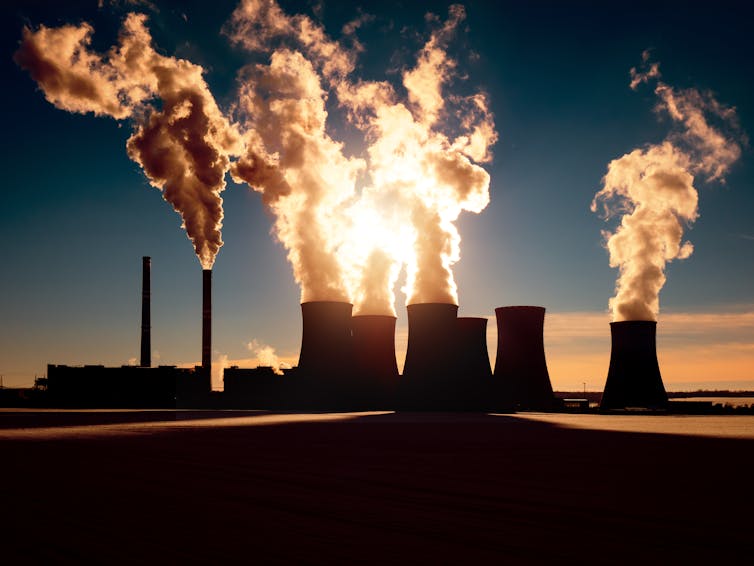
The proposed mine expansion would mean increased coal production, and emissions. Shutterstock
Epoch 1: loss of property wealth
The first epoch spanned the decade to 2030. Mallon limited his analysis to how climate change will affect housing markets, leading to the loss of family property wealth.
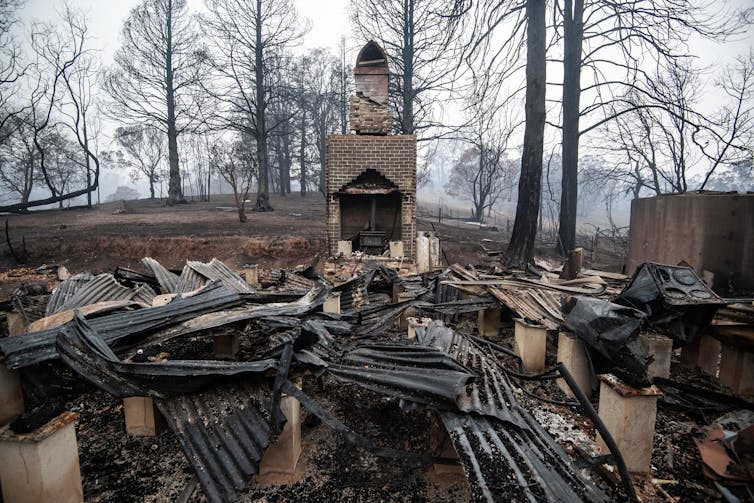
Some homes are particularly vulnerable to extreme weather and climate risks such as bushfires, flooding, coastal inundation, cyclones and subsidence. Mallon’s modelling found about 5% of family homes would be affected damaged by climate change and associated extreme weather events this decade.
Already in some areas insurance premiums are becoming unaffordable and the problem will likely worsen as climate change unfolds. This will reduce the market value of high-risk properties.
Mallon estimated an average loss to the value of family homes by 2030 at about A$40-85,000 per child.
Fire risk will make some homes uninsurable. James Gourley/AAP
Epoch 2: reduced earnings
This epoch spanned the years 2040 to 2060, when the applicants would be aged between 20 and 58 years. This part of Mallon’s analysis focused first on loss to prosperity – how climate change would affect a young person’s ability to work.
On hot days, the body must expend extra energy dissipating heat (usually by sweating). As the International Labour Organisation has noted, exposure to these conditions for extended periods is risky, and to endure them people must drink water and take regular breaks, leading to lower productivity.
Rising temperatures under climate change will increase the number of days where the ability to work outside safely will be hampered. Mallon found around 30% of today’s children will work in climate-vulnerable jobs, such as agriculture and construction.
People in these jobs will be less productive, and the cost to employers will eventually be passed to employees through lower wages. Mallon estimated this means a loss of about A$75,000 over a young person’s working life.
Climate change and associated extreme weather will also disrupt the infrastructure businesses rely on, such as electricity, telecommunications and transport. Again, these productivity losses will eventually be reflected in employee wages.
In Mallon’s opinion, repeated extreme weather damage to business continuity will lead to an estimated average A$25,000 annual loss per person over the working life of a child today.
Climate change will also deliver general “hits” to the economy. Mallon’s analysis here focused only on agricultural and labour productivity, and drew on existing research to estimate losses of about A$60,000 per person over their lifetimes.
The bottom line? Mallon’s partial, conservative calculations found today’s children will forego between A$125,000 and A$245,000 each due to the climate impacts noted above. He puts the most likely cost at around A$170,000 for each child.
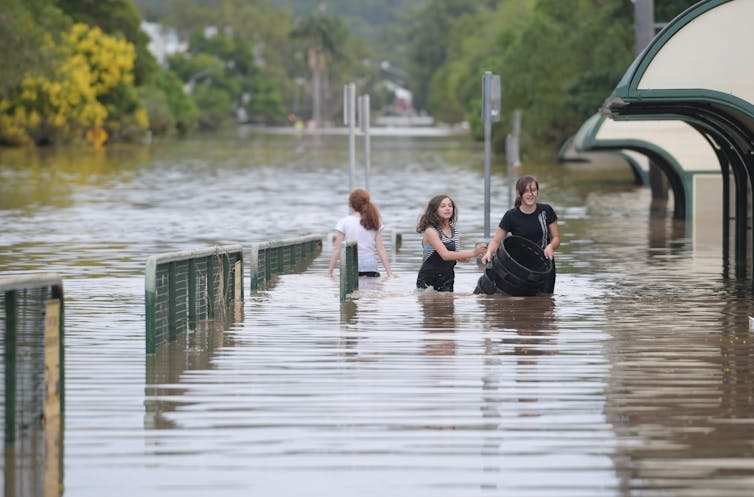
Natural disasters such as flood and fire will lead to economic disruption. Tracy Nearmy/AAP
Epoch 3: risks to health
The third epoch spanned 2070 to 2100, when today’s young people will be in the later stages of their lives. Here, Mallon’s analysis focused on the health impacts of higher temperatures. These will lead to increased heat stress, ambulance call outs, presentations to emergency departments and hospitalisations.
Older people are more vulnerable to the health effects of higher temperatures, and also more likely to die. Mallon found one in five of today’s children will likely be hospitalised due to heat stress in their senior years.
Act hard and fast
In Australia and around the world, people concerned about climate change are increasingly using litigation in a bid to force governments to act.
This means we can expect to quantification of the financial costs of climate change being presented more often in our courts.
Mallon’s calculations do not cover all harm that will be caused by climate change – only that for which detailed accessible modelling exists. The full financial and health costs will inevitably be far greater than the scope of his assessment.
Global emissions must urgently be cut to net-zero to avert the most disastrous climate change impacts. The arguments in favour of radical mitigation action, including the personal financial risks, grow ever-more compelling by the day.
This story is part of a series The Conversation is running on the nexus between disaster, disadvantage and resilience. You can read the rest of the stories here.
“It is illegal for U.S. aid to support human rights violations,” said the Vermont senator. by Jake Johnson, staff writer
Senator Bernie Sanders of Vermont said Sunday that lawmakers must “take a hard look” at the nearly $4 billion in military aid the U.S. sends to Israel on an annual basis as the Netanyahu regime continues its devastating assault on Gaza and attempts to forcefully expel Palestinians from their homes in occupied East Jerusalem.
“The devastation in Gaza is unconscionable. We must urge an immediate ceasefire,” Sanders, the chair of the Senate Budget Committee, tweeted Sunday. “The killing of Palestinians and Israelis must end. We must also take a hard look at nearly $4 billion a year in military aid to Israel. It is illegal for U.S. aid to support human rights violations.”
“Now is the time to send a clear message to the Israeli government: Not one dollar more of U.S. military aid can be used to demolish Palestinian homes, annex Palestinian lands, and torture or kill Palestinian children.” —Rep. Betty McCollum
The senator’s call came after Israeli airstrikes on the Gaza Strip killed 42 Palestinians early Sunday, bringing the death toll since last week closer to 200.
Thanks to a 10-year deal inked during the Obama presidency in 2016, Israel receives roughly $3.8 billion a year in military assistance from the United States. In a budget blueprint released last month, President Joe Biden indicated that he intends to adhere to the terms of the 2016 deal, which sends Israel $3.3 billion in military aid and $500 million for missile defense systems each year.
In the wake of Israeli security forces’ attack on worshipers at the Al-Aqsa mosque compound last week, several members of Congress vocally reiterated their support for adding strict human rights conditions to the billions of dollars in U.S. military aid to pressure the Israeli government to end its brutal repression of Palestinians.
Under legal provisions known as the Leahy laws, the U.S. government is barred from providing military assistance “to any unit” of a country’s security forces that is committing “a gross violation of human rights”—mandates that have been applied only selectively in practice.
“American taxpayer money is being used to commit human rights violations,” Rep. Rashida Tlaib (D-Mich.), the first Palestinian-American woman ever elected to Congress, tweeted last Monday. “Congress must condition the aid we send to Israel, and end it altogether if those conditions are not followed.”
In a joint statement that same day, Reps. Ilhan Omar (D-Minn.), André Carson (D-Ind.), and Tlaib lamented that “we continue to provide the Israeli government with over $3 billion in military aid every year—with no conditions or accountability for wanton human rights abuses and continuing illegal seizures of Palestinian land.”
Last month, before Israel’s latest bombardment of Gaza began, Rep. Betty McCollum (D-Minn.) introduced legislation that would prohibit Israel from using U.S. military aid in the occupied territories for “military detention, abuse, or ill-treatment of Palestinian children in Israeli military detention”; seizing or destroying Palestinian property and homes; or supporting the annexation of Palestinian territory.
The bill currently has just 19 co-sponsors in the House, including Omar, Carson, and Tlaib as well as Rep. Pramila Jayapal (D-Wash.), the chair of the Congressional Progressive Caucus.
“Now is the time to send a clear message to the Israeli government: Not one dollar more of U.S. military aid can be used to demolish Palestinian homes, annex Palestinian lands, and torture or kill Palestinian children,” McCollum toldThe Intercept last week. “Members need to decide if they want to talk peace and perpetuate conflict or if they want to really work toward reducing violence and conflict while actually taking a stand to advance human rights.
Originally published by Common Dreams. Shared under Creative Commons Licence (CC BY-NC-ND 3.0).
WASHINGTON – Israeli forces have displayed a shocking disregard for the lives of Palestinian civilians by carrying out a number of airstrikes targeting residential buildings in some cases killing entire families – including children – and causing wanton destruction to civilian property, in attacks that may amount to war crimes or crimes against humanity, said Amnesty International today.
The organization has documented four deadly attacks by Israel launched on residential homes without prior warning and is calling for the International Criminal Court (ICC) to urgently investigate these attacks. The death toll in Gaza continues to climb with at least 198 Palestinians killed including 58 children and more than 1,220 injured. Ten people in Israel, including two children, have been killed and at least 27 injured by Palestinian attacks.
“There is a horrific pattern emerging of Israel launching air strikes in Gaza targeting residential buildings and family homes – in some cases entire families were buried beneath the rubble when the buildings they lived in collapsed. In the cases documented below, no prior warning was given to the civilian residents to allow them to escape. Under international humanitarian law, all parties must distinguish between military targets and civilian objects and direct their attacks only at military objectives. When carrying out attacks, parties must take all feasible precautions to minimize harm to civilians,” said Saleh Higazi, Deputy Director for the Middle East and North Africa.
“In most countries, most people now have immunity to SARS-CoV-2. Depending on their degree of previously acquired cross-immunity, they will have had no symptoms, mild and uncharacteristic symptoms, or more severe symptoms, possibly including anosmia (loss of sense of smell) or other somewhat characteristic signs of the COVID-19 disease. Regardless of disease severity, they will now have sufficient immunity to be protected from severe disease in the event of renewed exposure. This majority of the population will not benefit at all from being vaccinated.”
And the group was at pains to stress their main message – “these vaccines are dangerous”.
The statement continued: “Population survival of COVID-19 exceeds 99.8 per cent globally. In countries that have been intensely infected over several months, less than 0.2 per cent of the population have died and had their deaths classified as ‘with covid19’
…
“With the mRNA vaccines, the risk of severe adverse events is virtually guaranteed to increase with every successive injection. In the long term, they are therefore even more dangerous than the vector vaccines. Their apparent preference over the latter is concerning in the highest degree; these vaccines are not safe.”
OpenDemocracy is taking legal action over the Cabinet Office’s ‘Orwellian’ Clearing House that vets FOI requests and could breach data protection law
openDemocracy is going to court to force the British government to release full details about its controversial ‘Clearing House’– a secretive unit inside Michael Gove’s Cabinet Office, which is accused of blocking sensitive Freedom of Information (FOI) requests.
In November, openDemocracy revealed that the ‘Orwellian’ unit in the Cabinet Office was vetting FOI requests and sharing personal information about journalists across Whitehall in ways that experts believe could be in breach of the law.
The Cabinet Office has refused to disclose full details about the Clearing House operation under the Freedom of Information Act – despite the FOI watchdog, the Information Commissioner’s Office, ordering it to do so in July 2020.
…
Now openDemocracy is going to an information tribunal in a bid to force transparency on the Clearing House.
On Thursday 29 April, a first-tier tribunal will hear the case. openDemocracy has instructed Leigh Day, a firm of public law specialists, to argue its case and has received support from across the British media.