A family salvages belongings from their home after it collapsed during Hurricane Melissa’s passage through Santiago de Cuba, Cuba on October 29, 2025. (Photo by Yamil Lage/AFP via Getty Images)
“The very richest individuals in the world are funding and profiting from climate destruction, leaving the global majority to bear the fatal consequences of their unchecked power.”
A report released Tuesday showed that the wealthiest people on the planet are disproportionately fueling the climate emergency that is intensifying weather catastrophes like Hurricane Melissa, which slammed Cuba on Wednesday after leaving a trail of devastation in Jamaica.
The Oxfam International report, titled Climate Plunder: How a Powerful Few Are Locking the World Into Disaster, features updated figures showing that the consumption-based carbon emissions of the richest 0.1% of the global population grew by 92 tonnes between 1990 and 2023, while the emissions of the poorest half of humanity grew by just 0.1 tonnes.
“A person from the world’s richest 0.1% emits over 800kg of CO2 every day. Even the strongest person on earth could not lift this much,” the report notes. “In contrast, someone from the poorest 50% of the world emits an average of just 2kg of CO2 per day, which even a small child could lift.”
“A person in the top 0.1% emits more in a day than a person in the poorest 50% emits all year,” the report adds.
The destruction caused by Hurricane Melissa—the most powerful storm on Earth this year and the strongest to ever hit Jamaica—underscored the extent to which vulnerable nations are bearing the brunt of a crisis they did little to cause as wealthy countries and individuals continue to spew planet-warming emissions with abandon.
Jamaica, where the true extent of the damage from Melissa is only just beginning to emerge, is responsible for an estimated 0.02% of global greenhouse gas emissions, according to the latest available data.
“The climate crisis is an inequality crisis,” said Oxfam executive director Amitabh Behar. “The very richest individuals in the world are funding and profiting from climate destruction, leaving the global majority to bear the fatal consequences of their unchecked power.”
“We must break the chokehold of the super-rich over climate policy by taxing their extreme wealth.”
Oxfam’s report was published less than two weeks before the start of COP30 in Belém, Brazil, where world leaders will gather once again to weigh climate solutions after years of failing to reach an agreement to curb fossil fuel production and use.
In its new report, Oxfam implores governments to target the emissions of the ultra-wealthy, including through “climate-specific taxes” such as “frequent flyer levies and taxes on luxury travel.”
“It is a travesty that power and wealth have been allowed to accumulate in the hands of a few, who are only using it to further entrench their influence and lock us all into a path to planetary destruction,” said Behar. “We must break the chokehold of the super-rich over climate policy by taxing their extreme wealth, banning their lobbying, and instead put those most affected by the climate crisis in the front seat of climate decision-making.”
Donald Trump urges you to be a Climate Science denier like him. He says that he makes millions and millions for destroying the planet, Burn, Baby, Burn and Flood, Baby, Flood.Nigel Farage urges you to ignore facts and reality and be a climate science denier like him and his Deputy Richard Tice. He says that Reform UK has received £Millions and £Millions from the fossil fuel industry to promote climate denial and destroy the planet.Elon Musk urges you to be a Fascist like him, says that you can ignore facts and reality then.
Ellie Chowns, Green Party MP for North Herefordshire. CC image Wikipedia.
Responding to a warning from the UN Secretary General that the world has failed to limit global heating to 1.5C and his call on global leaders to urgently change course at the forthcoming COP30 climate summit in Brazil, Green Party MP Ellie Chowns said:
“It is vital we pay heed to the warnings by the UN Secretary General on the risks posed to the world of breaking through the 1.5C limit, set by the Paris Agreement ten years ago.
“As the birthplace of the industrial revolution, and its legacy of high carbon emissions, the UK has a special responsibility to be a global leader in the shift towards a green economy – and leading by example at home.
“It’s welcome that the PM is attending COP 30 and Keir Starmer must use his voice to demand action that closes the global emissions gap. He must also stand firm against the reckless and dangerous attempts to undermine climate action by Reform UK and the Conservatives. True climate leadership also means resisting pressure from the fossil fuel lobby.
“COP30 is taking place against a backdrop of continued financial support from governments for the fossil fuel industry. This includes an estimated £17.5 billion every year here in the UK.
“The government must also refuse permission for the giant Rosebank oilfield, which would create more emissions than the combined annual CO2 emissions of all 28 low-income countries in the world – the very countries that are bearing the brunt of climate breakdown.”
Nigel Farage urges you to ignore facts and reality and be a climate science denier like him and his Deputy Richard Tice. He says that Reform UK has received £Millions and £Millions from the fossil fuel industry to promote climate denial and destroy the planet.UK Conservative Party leader Kemi ‘not a genocide’ Badenoch explains her reality that the Earth is flat, the Moon is made of cheese and that she was born from
Unicorn horn dustOrcas discuss Donald Trump and the killer apes’ concept of democracy. Front Orca warns that Trump is crashing his country’s economy and that everything he does he does for the fantastically wealthy.
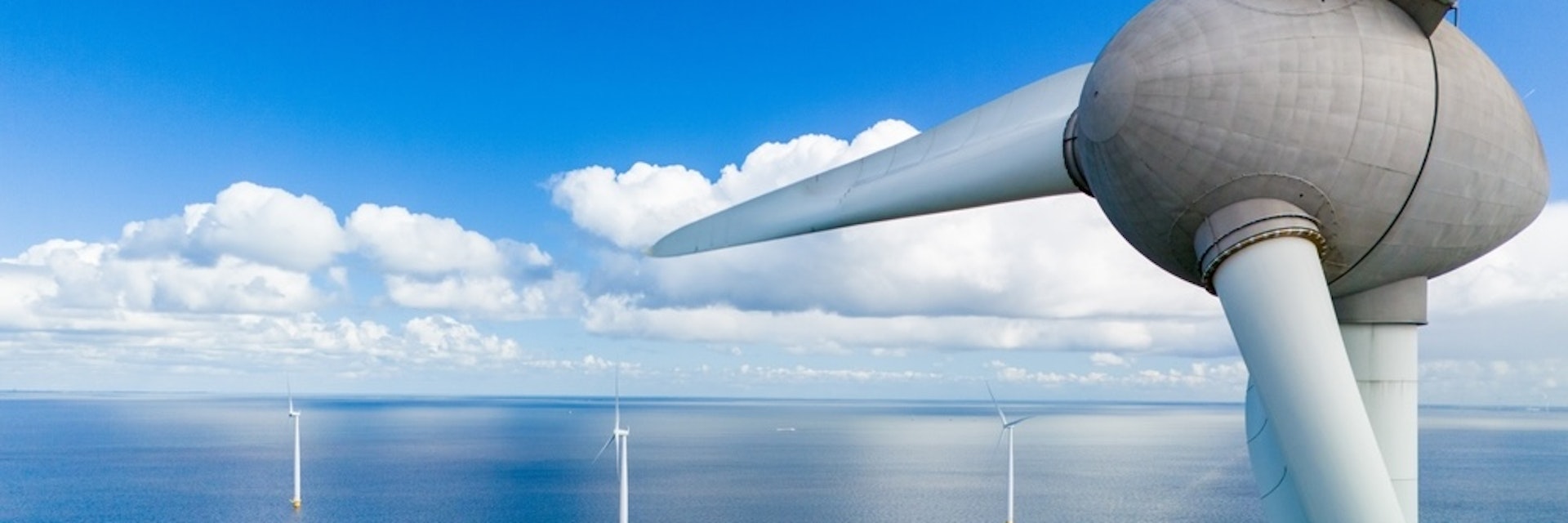
Just 1% of the world’s coastal waters could, in theory, generate enough offshore wind and solar power to provide a third of the world’s electricity by 2050. That’s the promise highlighted in a new study by a team of scientists in Singapore and China, who systematically mapped the global potential of renewables at sea.
But turning that potential into reality is another story. Scaling up offshore renewables fast enough to seriously dent global emissions faces formidable technical, economic and political hurdles.
To reach global climate targets, the world’s electricity systems must be fully decarbonised within a couple of decades if not sooner. Wind and solar power have grown at record-breaking rates, yet further expansion on land is increasingly constrained by a scarcity of good sites and conflicts over land use.
Moving renewables offshore is therefore tempting. The sea is vast, windy and sunny, with few residents around to object. The team behind the new study identified coastal areas with enough wind or sunlight, and water shallower than 200 metres, that are relatively ice-free and within 200 kilometres of population centres.
They estimate that using just 1% of these areas could generate over 6,000 terawatt hours (TWh) of offshore wind power and 14,000TWh of offshore solar power each year. Together that’s roughly one-third of the electricity the world is expected to use in 2050, while avoiding 9 billion tonnes of CO₂ annually.
That sounds impressive as 1% of suitable ocean seems small. Many European countries, such as Denmark, Germany, Belgium and the UK, already allocate between 7% and 16% of their coastal waters for offshore wind farms. Yet what matters for climate mitigation is not only how much low-carbon energy could eventually be produced, but how fast that could happen.
At present, offshore wind generates less than 200TWh per year, less than 1% of global electricity. By 2030, that might rise to around 900TWh. Hitting 6,000TWh by 2050 would require annual installations – each year, for two decades – to be about seven times larger than they were last year.
Offshore solar requires an even steeper climb. The technology is still experimental, producing only negligible amounts of electricity today.
Even if 15TWh a year (an equivalent of some 15GW capacity) can be generated by 2030, to reach the estimated potential of 14,000TWh by 2050 would require sustained annual growth of over 40% for two decades. Such a rate that has never been achieved for any energy technology, not even during the recent record-breaking growth of land solar.
Achieving techno-economic viability
Around 90% of existing offshore wind capacity is located in the shallow, sheltered waters of northwestern Europe and China, where most turbines are directly fixed to the seabed. Yet most of the untapped potential lies in deeper waters, where fixed foundations are impossible.
That means turning to floating turbines, a technology that currently accounts for just 0.3% of global offshore wind capacity. Floating wind power faces serious engineering challenges, from mooring and anchoring, to undersea cabling and maintenance in rougher seas.
It currently costs far more than fixed-bottom systems, and will need substantial subsidies for at least the next decade. Only if early projects prove successful and drive down costs could floating wind become commercially viable.
Floating solar on a reservoir in Indonesia. Algi Febri Sugita / shutterstock
Offshore solar is even further behind. The International Energy Agency rates its technology readiness at only level three to five on an 11-point scale — barely beyond prototype stage. The new study refers to research saying offshore solar could become commercially viable in the Netherlands only around 2040-2050, by which time the world’s power system should already be largely decarbonised.
Overcoming growth barriers
Even when low-carbon technologies become commercially competitive, their growth rarely continues exponentially. Our own research shows manufacturing bottlenecks, logistics and grid integration eventually slow expansion. And these challenges are likely to be even tougher for offshore projects.
Social opposition and the need for permits can also slow progress. Moving wind and solar offshore avoids some land-use conflicts, but it does not eliminate them. Coastal space close to populated areas is already crowded with shipping, fishing, leisure and military activities.
In Europe, approval and construction of offshore wind farms can a decade or more. Permits are not guaranteed: Sweden recently rejected 13 proposed wind farms in the Baltic Sea due to national security concerns.
What is realistic?
Offshore renewables will undoubtedly play an important role in the global energy transition. Offshore wind, in particular, could become a major contributor by mid-century if its growth follows the same trajectory as onshore wind has since the early 2000s.
However, that would require floating turbines to quickly become competitive, and for political commitment to be secured in the Americas, Australia, Russia and other areas with lots of growth potential.
Offshore wind (green) is tracking the growth rate of onshore wind (orange):
Timelines are shifted by 15 years, so that the year 2000 for onshore maps onto year 2015 for offshore. Aleh Cherp (Data: IEA, Wen et al)
Offshore solar, by contrast, would need to achieve viability and then grow at an unprecedented rate to reach the potential outlined in the new study. It may be promising for niche uses, but is unlikely to deliver large-scale climate benefits before 2050.
Its real contribution may come later in the century, when we will still need to expand low-carbon energy for industries, transport and heating once the initial decarbonisation of power generation is complete.
For now, the world’s best bet remains to accelerate onshore wind and solar power as well as proven offshore wind technologies, while preparing offshore solar and floating wind power options for the longer run.
Britain’s flagship home insulation programme has received a damning verdict from the National Audit Office. Under the Energy Company Obligation (ECO) scheme, tens of thousands of households have been left with faulty or even dangerous installations. It’s a result, the auditors say, of weak oversight, poor skills and confused accountability.
This report is troubling not only because of the human cost but because it exposes a deeper failure of governance in how the UK tries to decarbonise home heating. It’s a complex task that demands long-term stewardship, but is instead being left to the market.
The ECO was designed to make energy suppliers help households cut emissions and bills. Suppliers are the companies that buy electricity or gas from generators and sell it to you – the company named on your bills is your supplier. In theory, the ECO means these suppliers meet government-set carbon or energy saving targets by funding insulation and heating upgrades for households, with regulators checking that installations qualify.
The ECO was preceded by two other schemes that operated on the same principle. For years, they worked reasonably well for simple and low cost measures like loft or cavity wall insulation. But in 2013, the ECO was launched and expanded to cover more complex and expensive retrofits like solid wall insulation – an unprecedented shift.
So what went wrong?
The National Audit Office’s latest findings confirm fears that this was an approach set up to fail. Many installations require major remediation, some pose immediate health risks. The problems are familiar: an under-skilled workforce, uncertified installers, weak regulation and oversight.
Individually, these problems could be fixed. The government could improve installer training, tighten audits and crack down on fraud. But together, they reveal a deeper problem: a misplaced belief that market-based tools can deliver foundational change.
Energy efficiency obligations such as ECO work well for standardised, low-risk actions, like swapping bulbs or improving boilers. But, as we warned back in 2012, they are less suited to complex, capital-intensive retrofits of millions of households that require lots of coordination and long-term financing.
The UK’s energy efficiency governance still sits at arm’s length from the realities in people’s homes. Responsibilities are split confusingly between suppliers, Whitehall departments, auditors and local authorities, and it can often seem like no one is really in charge.
That’s why the failings highlighted in the National Audit Office report are not just implementation glitches or down to some “bad apple” installers. They’re failings of a governance model designed for incremental change, not the transformation required for net zero.
German lessons
If the UK really wants to retrofit millions of homes, it should look to what’s worked in other countries. Germany’s long-running KfW loan programme is one example. For more than three decades it has supported high-performance refurbishments through low-interest loans and grants. Successive German governments have recognised that the returns – in jobs, tax revenues, economic stimulus – have consistently outweighed the upfront cost.
By contrast, ECO has been repeatedly restructured, with shifting targets and funding levels that make it hard to plan ahead. Treating home retrofit as a short-term obligation rather than a long-term national project has left the UK far behind its peers.
Retrofitting homes is inherently local (you can’t pick up your house and move it to a different area). Local authorities should therefore play a much stronger role in coordinating delivery, enforcing quality, and linking retrofit to other social goals such as tackling fuel poverty.
Getting councils involved would align retrofit with local priorities rather than distant central government targets. It could also rebuild trust among people who may understandably be wary of such schemes.
The UK’s forthcoming warm homes plan is a chance to reset. The government should take a hard look at the tools at our disposal and think about what is needed to foster the creative and courageous policy needed to decarbonise our homes.
Yahya Eid mourns over the body of his 10-year-old nephew, Shabaan Eid, who was killed by an Israeli army strike on the Bureij camp, during his funeral at al-Awda Hospital in Nuseirat, central Gaza Strip, October 29, 2025
“NOTHING is going to jeopardise” the ceasefire in Gaza, says US President Donald Trump.
Western politicians’ language when addressing the Israel-Palestine “conflict” — a conflict provoked entirely by Israel’s illegal and murderous occupation and colonisation of Palestinian land — regularly upends reality, but here Trump takes the biscuit.
Of course “nothing will jeopardise” a ceasefire if you can claim it is holding while one side kills 104 people, including 46 children, in overnight air raids.
In fact Israel has repeatedly violated the ceasefire since it took effect on October 10, both by direct attacks on Palestinians (Tuesday night’s raids bring the number killed by Israeli action in Gaza since the fighting has officially stopped to 211) and by allowing access only to a fraction of the promised humanitarian assistance.
It has refused to reopen the Rafah crossing (itself a violation) and continues to severely restrict the number of aid lorries, though the people of Gaza face famine as a result of its blockade, and a chronic shortage of medicines and medical equipment — when not only are hundreds of thousands seriously injured, but disease is spreading at what the World Health Organisation calls a “catastrophic” rate because of the destruction of health and sanitation infrastructure.
Israel’s continued restrictions on bringing machinery into Gaza are also partly responsible for the violations it blames on Hamas, since the Palestinian group points out that retrieving the bodies of deceased hostages from beneath the rubble of buildings or tunnels destroyed by Israeli bombs is a slow and complicated process.
It is this issue which prompted Israel’s resumption of bombing in a blitz rivalling the most murderous nights of its two-year invasion. Forensic analysts say human remains handed over by Hamas did not come from one of 13 hostages whose bodies are still to be returned, but from one whose body was retrieved by the Israeli military nearly two years ago.
Whether Israeli Prime Minister Benjamin Netanyahu would have reacted quite so explosively if announcing a national emergency hadn’t conveniently cut short a hearing in his own ongoing corruption trial, we don’t know. But his decision to treat Hamas’s return, whether wittingly or not, of the wrong person’s remains as an outrageous breach of the truce has cost 104 people their lives.
As UN special rapporteur Dr Francesca Albanese puts it, Israel’s approach to a ceasefire is “you cease, I fire.”
Keir Starmer objects to criticism of the IDF. He asks how could anyone object to them starving people to death, forced marches like the Nazis did, bombing Gaza’s hospitals and universities, mass-murdering journalists, healthworkers and starving people queuing for food, killing and raping prisoners and murdering children. He calls for people to stop obstructing his genocide for Israel.Orcas discuss Genocide-supporting and complicit Zionists. Donald Trump, Keith Starmer, David Lammy, Rachel Reeves, Angela Rayner and Wes Streeting are acknowledged as evil genocide-complicit and supporting cnuts.Vote Labour for Genocide.







 Yahya Eid mourns over the body of his 10-year-old nephew, Shabaan Eid, who was killed by an Israeli army strike on the Bureij camp, during his funeral at al-Awda Hospital in Nuseirat, central Gaza Strip, October 29, 2025