“This is the moment to scale up mobilizations for Palestine,” says doctor from “Conscience”

Spread the love

Original article by Ana Vračar republished from peoples dispatch under a Creative Commons Attribution-ShareAlike 4.0 (CC BY-SA) license.
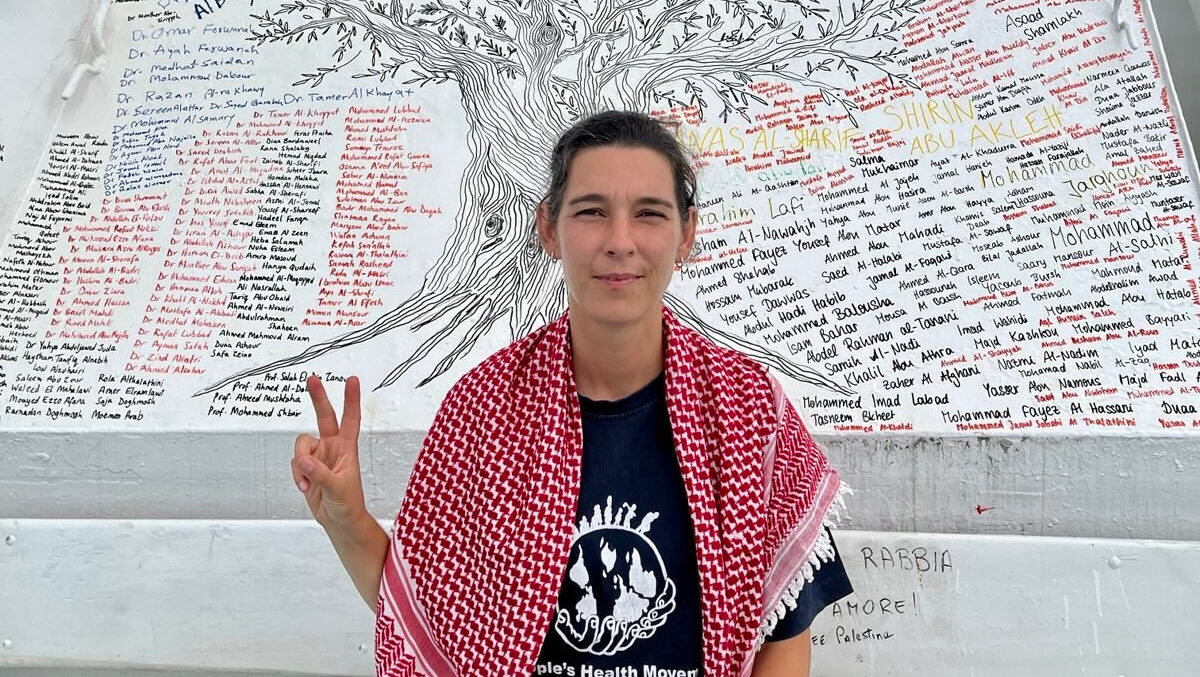
Hanne Bosselaers on the “Conscience”. Source: People’s Health Movement

Physician Hanne Bosselaers, from Medics for the People (MPLP-GVHV) and the People’s Health Movement (PHM), was among dozens of health workers aboard the “Conscience” – one of the vessels that recently sailed to break Israel’s illegal blockade of Gaza and draw attention to the targeting of medical and media workers during the genocide. People’s Health Dispatch spoke with Dr. Bosselaers about her experience following her kidnapping by Israeli occupation forces and about why continued mobilization, especially within the medical community, remains essential to the struggle for Palestinian liberation.

People’s Health Dispatch: Let’s begin with your experience on board the “Conscience”: what it was like to travel as part of that mission, and then to go through the violent interception and kidnapping by the Israeli occupation forces.

Hanne Bosselaers: It was a great honor to join the “Conscience”, a large ship with 92 participants. We were mainly medics and journalists because we wanted to emphasize that these are the two professions most targeted during the genocide in Gaza. We wanted to show solidarity with our colleagues there.

Almost all participants had direct links with people in Gaza through humanitarian work or Palestinian NGOs like Awda Association. Several doctors on board had worked in Gaza during the genocide, and many journalists were in touch with Palestinian citizen journalists and local news agencies. We wanted to reach Gaza to report and to offer medical assistance: that was the core message of the “Conscience”.

Normally, in any conflict, humanitarian workers and journalists have access to document conditions and preserve the right to health. Gaza is really an exception, with Israel’s illegal blockade preventing any such access. So we sailed this large ship together with eight smaller sailing boats from the Thousand Madleens mission. This was a second wave of boats, following the Global Sumud Flotilla, the 47 boats that left from Barcelona, Sicily, and Tunis at the end of August.

Read more: “It’s up to all of us”: British doctor shares why he is on Global Sumud Flotilla

It was a very positive experience on board. We had a strong sense of team spirit. Life on a large ship had to be organized: we took turns at chores, cleaning, cooking, and doing safety drills several times a day. We were led by four experienced women from the Freedom Flotilla Coalition, including Palestinian-American lawyer Huwaida Arraf, Vigdis Bjorvand, an activist from Norway who had previously sailed on the “Handala”, Zohar Regev a Palestinian-German activist, and Madeleine Habib from Australia, who steered the ship. These four women had all participated in earlier flotillas and prepared us very well. They knew what violent interception and imprisonment could look like because they had already experienced it, and they talked us through every step. Thanks to them, we were ready and united for what was ahead.

We kept our spirits high and held onto the hope of reaching Gaza. At one point, we had a call with my colleagues for Al-Awda. They told us: “This is exactly what we expect from you as Westerners, that you use your privilege to draw attention to our situation and to go as far as you can to reach us.” They deeply appreciated what we were doing.

I felt quite guilty not to make it to the shores of Gaza, but of course that was not in our hands. I think we did everything we could. The objectives of the flotillas were really met – the attention they drew, the participation of thousands, the local actions, the strikes in Italy, the massive demonstrations across many countries – all of this created significant pressure on Israel. I believe this helped bring about the ceasefire. Even if that ceasefire remains insufficient, it’s still a victory for the flotillas and the global movement that stood behind them.

PHD: You mentioned that the “Conscience” had a specific focus, its crew made up mostly of journalists and health workers. As a health worker, how did you experience the conditions during your imprisonment in Israel?

HB: In our case, the Israeli Occupation Forces (IOF) boarded our ship very violently. They came with three helicopters and a large navy frigate. More than 30 armed soldiers stormed our ship against 90 unarmed journalists and medics. It was clearly a show of force. We were still 200 kilometers from the Israeli coast, about 15 hours of full steam sailing from the port of Ashdod. So the interception itself was completely illegal and disproportionate.

During the whole voyage to shore, we were held in a small, confined, and very hot space. Some participants were elderly, the oldest was Isaline Choury, an 83-year-old French woman, the niece of Danielle Casanova, who was a well-known member of the French Resistance. She was experienced but had health problems, and she wasn’t allowed access to her medication for the entire 15 hours. She had to beg just to go outside for a few minutes of fresh air, which was sometimes refused. So even before imprisonment, our treatment amounted to captivity.

Once in prison, it became worse. What we experienced is only a fraction of what Palestinians face, but it was still meant to humiliate. Guards insulted us all the time. They used minor physical violence on me and other women – twisting arms, pulling hair – not severe beatings, but completely unnecessary since no one resisted. You could really feel that this is a society built on hate, racism, and violence.

We were taken to Ktzi’ot prison, the largest in Israel, because between our group and the Global Sumud Flotilla, there were around 500 detainees. The prison itself looks like a concentration camp: massive concrete walls, five to ten meters high, reminding you of the wall in the West Bank, topped with barbed wire, and surrounded by an army of guards.

Read more: The accursed fate of Palestinians in Israeli prisons

Access to medical care was extremely limited. You could request to see a medic, but they always made you wait. Some participants who depended on medication didn’t get it until their consular representatives managed to intervene, and sometimes they were only able to visit their citizens after hours of waiting, which is completely illegal. The prison authorities behave as if they are above the law and can do whatever they want.

If this is how they treat Europeans and US citizens, I don’t dare to imagine how Palestinians are treated. The food was scarce and very poor, and we didn’t receive bottled water, only tap water that looked brownish. Some people were isolated. We stayed for 48 hours, but if someone had to stay for months or years, the effects on both mental and physical health would be devastating.

PHD: You mentioned the psychological impact of imprisonment. Could you speak a bit more about what prolonged imprisonment means for Palestinians, what kind of mental health consequences it has, and how health workers like yourself react when hearing about the experiences of Palestinian political prisoners?

HB: They regularly use these tactics to break people mentally. Nothing is regular, nothing is certain. For Palestinians, this begins from the moment of arrest. They are often kidnapped – at work, at home, in the middle of the night – without trial or due process. There’s no chance to say goodbye to family members. Once they’re taken, everything becomes uncertain: the duration of detention, whether they’ll be charged, whether they’ll ever be released. The occupation authorities can prolong imprisonment whenever they want.

What they did with us, I imagine they do with Palestinians all the time: sleep deprivation, psychological manipulation. Every two hours the guards would bang on the door shouting: “You’re going home!” The first time we believed them, so we got up, went to the toilet, waited, but nothing happened. Two hours later, the same again. At this point we knew it was just about making us have less sleep. And when they finally came for real, we didn’t believe them anymore and stayed in bed until they shouted at us to get up. It’s a tactic to exhaust you, to destroy your sense of reality.

I actually had an exchange with the guard who made us enter our cell. She said: “Welcome to your new home. Welcome to hell.” I told her: “No, you are the one staying here. I’m going home soon. You’re the one trapped in this system of violence. I really pity you.” Because that’s what it is – industrial-scale violence.

Imagine the young Palestinians, some as young as fourteen, living under constant threat from these violent, vicious guards. You can see how this leads to psychosis, depression, and other severe mental disorders. There are already many reports documenting this.

To me as a health worker, it’s deeply concerning. We have to keep campaigning for the release of these people – these hostages, because that’s what they are. They’re not prisoners, they haven’t committed any crime, and they should not be in prison at all.

PHD: Before boarding the “Conscience”, you were also preparing to join the Global Sumud Flotilla with Aziz Rhali and James Smith, comrades from the People’s Health Movement. Why is it so important for health workers to take an active role in the struggle for the liberation of Palestine and to express solidarity? How does this connect to your mission as a health worker?

HB: I see a health worker as someone who defends the right to health for everyone, everywhere. And if you look at what has happened to health in Gaza, it’s the worst situation in the world. Every right related to health has been denied: the right to housing, to education, to clean water, food, and of course healthcare itself. These were the first targets of Israel’s attacks.

After October 7, several hospitals were bombed. But even before that, in every Israeli assault on Gaza, hospitals were hit and healthcare workers were targeted. The number of medical workers killed during the genocide is unprecedented: more than 1,500 have been killed, over 300 imprisoned, and many more injured while at work, inside hospitals. Patients have been killed in their hospital beds, and entire hospitals burned to the ground. It’s a genocidal strategy aimed at erasing the entire healthcare system.

Read more: Pharmacist on board the Global Sumud Flotilla: “Health workers’ solidarity with Palestine must be practiced on the ground”

Then there’s the blockade. No medicine, medical equipment, or supplies are allowed in. Even humanitarian workers face extreme restrictions. Only a few foreign health workers can enter, and when they do, they can’t bring medical materials, just a few kilograms of personal luggage and a small amount of money enough to sustain themselves, not to share with anyone else. These inhumane restrictions are illegal under international law. There is no other conflict where the destruction of health infrastructure reaches this scale. Of course, there are other very cruel conflicts – in Sudan, in the Congo – but there, at least some minimal humanitarian access and healthcare structures exist. Gaza is different. The healthcare sector has been a primary target.

And yet, when you look at the response of Palestinian health workers, it’s extraordinary. In Al-Awda, they continue to build and sustain field hospitals, expand capacity, and help their people. They’ve grown from 400 to over a thousand volunteers working in makeshift hospitals and camps. Their courage and resilience are deeply inspiring.

So as a defender of the right to health, standing with Palestine is not only a moral obligation, it’s also an act of professional solidarity. Palestinian health workers show us what it truly means to uphold dignity, even in completely inhuman conditions. They refuse to abandon their patients. They’ve said: “We will stay until the last unit of blood, until the last pill.”

These health workers are unique. They’re my greatest source of inspiration, and I feel honored to dedicate much of my activism to them. They deserve liberation, rights, and the full realization of the right to health for their entire people. For me, standing by them is not difficult, it’s the easiest and most natural thing to do.

PHD: It was really moving to see Dr. Ahmed Muhanna return to Al-Awda the other day, and to hear the speech he gave. It’s been impossible to ignore the incredible work Palestinian health workers have done over the past two years, it’s truly inspiring.

HB: Absolutely. That video made me cry with joy. Honestly, I had feared he wasn’t alive anymore, we hadn’t heard any news for such a long time. I wasn’t expecting to see him again. When I did, he looked physically exhausted, he’d lost so much weight, but the strength of his words, his spirit, was incredible. It was deeply inspiring.

Read more: Dr. Ahmed Muhanna of Gaza’s Al-Awda Hospital released after 665 days of illegal imprisonment

PHD: At the same time, we see the mainstream media and much of the political establishment in Europe talking about Donald Trump’s so-called peace plan. But even in the first hours and days after it was announced, Israel violated the ceasefire. For health workers, for Palestinians, and for those standing in solidarity with them, the struggle clearly continues. As someone who has been involved in this movement for a long time, what do you see as the most important priorities for activists in Europe and around the world in the coming weeks?

HB: You’re right, Israel is already violating the ceasefire agreement. I asked this morning [October 17] whether any of the supplies that entered Gaza had actually reached people, and the answer was no. There has been no scaling up of humanitarian aid, and the crossings are still closed. So Israel is already violating the most important parts of the agreement.

On the other hand, the fact that Gaza still stands and that there are talks about reconstruction is itself a kind of victory. It may seem small, and the situation remains a massive violation of rights, still colonization, but we shouldn’t underestimate it. We can’t expect anything good from Netanyahu, Trump, or Blair, but their plan was to create a “Gaza Riviera,” to completely cleanse the Strip, and they failed. They didn’t manage to empty Gaza of its people, and that’s also because of the global movement, the resistance, and partly the flotillas, which showed that we would not let that happen.

Gaza will stay, and this is the moment to scale up mobilizations and to fight for Palestinians’ right to self-determination over their land and to lead their own reconstruction. There’s a big danger now that all kinds of colonial NGOs will move in and take control of reconstruction efforts. Yes, there will be funding from Arab countries and others, but this process must be led by Palestinians, according to their own priorities.

We want to listen to our partners there, the grassroots Palestinian NGOs and community groups who know best what their people need. They must lead decisions about what is rebuilt and how. So right now, direct solidarity with Palestinians in Gaza and their organizations is absolutely essential. We’ll continue to speak about this, to show what they’re doing, and to raise support and mobilization in Belgium and across the world.

That’s also what we, as participants of the flotillas, agreed on: this ceasefire is not an end. It’s the beginning, a small but real moment of hope. And we need to nurture that hope and keep going.

PHD: You’ve already touched on what lies ahead, but maybe there’s more to add on how we can help ensure reconstruction and health justice?

HB: Yes, there’s an unimaginable amount of work to be done. Even just clearing the rubble and unexploded devices to make space for people to return to their land will be an enormous operation that takes a lot of time. But as I’ve said, this work must be in the hands of Palestinians. They are the ones best equipped to rebuild. They don’t need Western paternalism – and it’s Israel that must pay for what it destroyed.

That’s something we really need to fight for: accountability. You can’t just destroy the homes of two million people without any consequence. Israel must be held responsible and pay reparations for the devastation it caused. It hasn’t happened after previous assaults, but this time it must be part of the conversation within the solidarity movement. And of course there will be a need for international support, but we have to avoid a new wave of NGO colonialism. Organizations that stand in true solidarity with Palestinians should take the lead, not by flying in to “rebuild” or by constructing fancy projects nobody asked for, but by supporting Palestinians’ own initiatives and priorities. We can fund, assist, and advocate, but the leadership has to remain local.

Read more: Palestinian health workers are fighting for humanity

So when we speak of health justice, it means full justice: ending Israel’s impunity and the ongoing violations of all rights. There can be no right to health under apartheid and occupation. We have to break both, or any talk of health in all Palestine will remain meaningless. Because we have to remember that the West Bank is also severely affected by settler colonial violence, home demolitions, and mass arrests. We often focus on Gaza, but we must not forget the daily displacement and repression in the West Bank. It’s all part of the same system.

PHD: Thank you, Hanne. Is there anything you’d like to add before we close?

HB: Just that the flotillas have been incredibly inspiring for people all over Europe. You could really feel how this collective effort awakened and motivated so many who had never been involved before. For Medics for the People (MPLP-GVHV), joining the “Conscience” was a collective decision. We felt it was important for our organization to take part directly, to build international connections and send a clear message of solidarity. And it worked: people in Belgium who had never thought much about Palestine suddenly started to care and to learn.

Interview slightly edited for length.

People’s Health Dispatch is a fortnightly bulletin published by the People’s Health Movement and Peoples Dispatch. For more articles and subscription to People’s Health Dispatch, click here.

Original article by Ana Vračar republished from peoples dispatch under a Creative Commons Attribution-ShareAlike 4.0 (CC BY-SA) license.

Experiencing issues with this image not appearing. I suspect because it's so critical of Zionist Keir Starmer's support of and complicity in Israel's genocides.
Genocide denier and Current UK Prime Minister Keir Starmer is quoted that he supports Zionism without qualification. He also confirms that UK air force support has been essential in Israel’s mass-murdering genocide. Includes URLs https://www.declassifieduk.org/keir-starmers-100-spy-flights-over-gaza-in-support-of-israel/ and https://youtu.be/O74hZCKKdpA
Keir Starmer objects to criticism of the IDF. He asks how could anyone object to them starving people to death, forced marches like the Nazis did, bombing Gaza's hospitals and universities, mass-murdering journalists, healthworkers and starving people queuing for food, killing and raping prisoners and murdering children. He calls for people to stop obstructing his genocide for Israel.
Keir Starmer objects to criticism of the IDF. He asks how could anyone object to them starving people to death, forced marches like the Nazis did, bombing Gaza’s hospitals and universities, mass-murdering journalists, healthworkers and starving people queuing for food, killing and raping prisoners and murdering children. He calls for people to stop obstructing his genocide for Israel.
Orcas discuss Genocide-supporting and complicit Zionists. Donald Trump, Keith Starmer, David Lammy, Rachel Reeves, Angela Rayner and Wes Streeting are acknowledged as evil genocide-complicit and supporting cnuts.
Continue Reading“This is the moment to scale up mobilizations for Palestine,” says doctor from “Conscience”

The decline of Hasbara: how new media caused an irrevocable shift in the Israeli narrative

Spread the love

Original article by Aseel Saleh republished from peoples dispatch under a Creative Commons Attribution-ShareAlike 4.0 (CC BY-SA) license.

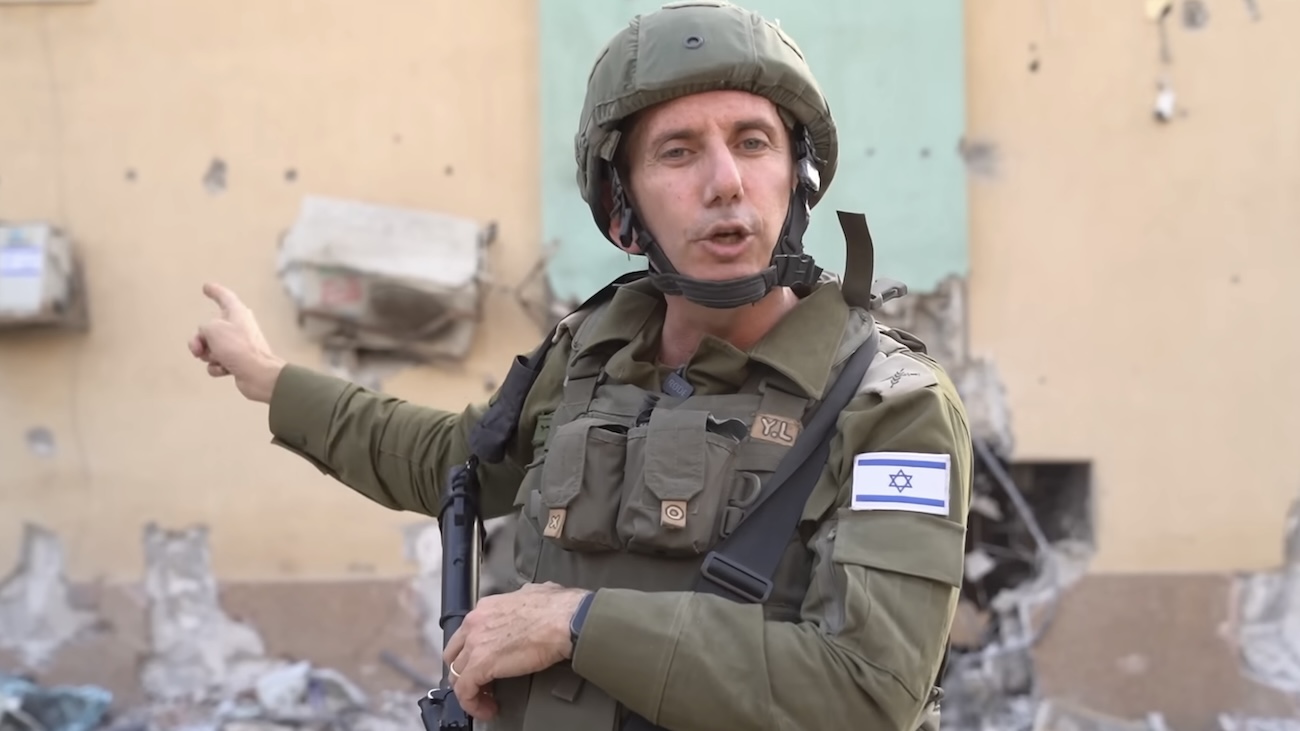
IOF Spokesperson Daniel Hagari in the now infamous video where he attempts to show evidence of a “Hamas tunnel” underneath a hospital, as to justify the airstrikes against hospitals. Photo: Screenshot

For decades, the Zionist movement succeeded in depicting Israel as the victimized side in the Arab-Israeli conflict. However, the rise of alternative media and social media networks has exposed Israel’s crimes more than ever.

Since it emerged in the late 19th century, the Zionist movement has heavily relied on monopolizing the flow of information through its international power relations for promoting its ideology and related narrative, which contributed to making the establishment of its colonial state in Palestine, known as Israel today, a reality.

The term Hasbara, which has no equivalent in English and literally means “explanation”, was first introduced by Zionist journalist and political leader Nahum Sokolow in 1912. Sokolow was known for his endeavors in garnering international support for the Zionist project, particularly within European and Western circles through media influence. 

The concept later became the cornerstone of the strategy of public diplomacy and public relations, which has been employed by Israel and its supporters to explain and promote the Israeli government’s actions, policies, and narrative worldwide.

Hasbara aims to shape public opinion by refuting and whitewashing counter-narratives that would expose Israel’s crimes and violations of human rights, providing misleading justifications. 

The rise of Hasbara following Israel’s invasion of Lebanon in 1982

It was not until 1982 that the Hasbara turned from being an oral tradition of the Zionist movement into a financed, supported, structured strategy, with a government office solely dedicated to achieving its goals.

This office, which is known as the national Hasbara headquarters within the office of the prime minister, has many arms in other Israeli governmental institutions and entities including the Foreign Ministry, the Ministry of Diplomacy and Diaspora Affairs, the Ministry of Tourism, the Jewish Agency for Israel, and the IDF Spokesperson’s Division.

In 1982, Israel found itself for the first time in a position, where it had to deny its responsibility for one of the most horrendous massacres committed by the Israeli Occupation Forces (IOF) since the establishment of the colonial state. 

This does not mean that Israel has not committed other massacres prior to that year. Israel has been responsible for numerous pogroms in occupied Palestine in the pre-estate era, through the creation of the state and beyond, but the difference in what Israel did in Sabra and Shatila, was the fact that the massacre was televised. 

Two years after the Sabra and Shatila massacre, the American Jewish Congress sponsored a conference in Jerusalem to form Hasbara as an official public relations strategy.

Those involved in promoting Hasbara are public relations and advertising executives, media professionals, journalists and leaders of major Jewish groups.

The United States has been the main supporter of Israel since its founding in 1948, therefore, US public opinion has been a main target for Hasbara

Nevertheless, Israel’s real face was unveiled after the Sabra and Shatila massacre, resulting in a shift not only in the narrative but also in the paradigm in terms of the Arab-Israeli conflict. 

It was then, when the image of Israel turned from being the victim and the underdog, surrounded by hostile neighbors from all sides at all gates, to the aggressor that bullies neighboring countries.

As a result, Israel was forced to deny any responsibility for the heinous massacre and the aggression on Lebanon. The overused false pretense of “self-defense” was used as a pretext by Israel at that time, claiming that it was obliged to wage the assault to eliminate what it called as terrorists, referring to members of the Palestine Liberation Organization (PLO). 

That pretext was, however, untenable by American media outlets, which unprecedentedly portrayed Israel as an imperial state that seeks to solve its problems in someone else’s country.

Ronald Reagan was the US President at the time. Although Reagan was known for his strong support for Israel, he upbraided Israel for jeopardizing US interests in the West Asia region and imperilling regional peace. He even allowed the United Nations to condemn Israel for its behavior.

“I was horrified to learn this morning of the killing of Palestinians which has taken place in Beirut. All people of decency must share our outrage and revulsion over the murders, which included women and children. I express my deepest regrets and condolences to the families of the victims and the broader Palestinian community.” Reagan said in a statement, on September 18, 1982.

Silencing the truth, a primary Hasbara tactic

In the decades that followed the appalling massacre in Lebanon, Israel’s crimes and violations in occupied Palestine continued unrelenting. Whenever its crimes were obvious, Israel did not seek to refute them, but rather to silence those exposing them. 

Israel has resorted to banning media outlets, threatening journalists and media workers, arresting them and most horrifically assassinating them. 

In its all-out multi-front war in the West Asia region between 2023 and 2025, Israel killed over 292 journalists, including 247 in the Gaza strip, 10 in Lebanon, 32 in Yemen, and three in Iran. It has also blocked foreign media workers from entering Gaza for two years, in order to prevent them from documenting and exposing the genocide. 

Using the Holocaust and religious narratives to promote the image of Israel

The Holocaust has been the mainstay for the Zionist movement to justify the establishment of a “Jewish homeland in Palestine”, which reinforced “antisemitism” as a victimization tool to procure solidarity and sympathy with Israel along the way, especially with European and Western audiences. 

Israel has always attempted to depict the conflict as a clash between nations affiliated with different religions; Judaism and Islam, which is not the case.

To that end, the Hasbara has mobilized not only the citizens of Israel, but diasporic Jews in public diplomacy, emphasizing the battle against delegitimization.

Israel has long organized “birthright trips” to occupied Palestine for young Jews in diaspora, giving them the opportunity to “discover” their Jewish heritage by connecting it to Israel as the only safe resort for “persecuted” Jewish people. 

It has further made a significant effort to distort the image of Palestinian resistance groups, freedom fighters, and their supporters, describing them as antisemitic terrorists, who adhere to extremist Islamist or radical political ideologies. 

The development of technology and media tools has led to the decline of Hasbara

Even though Israel has spared no effort to whitewash its crimes through its misleading Hasbara, the last several years, particularly the last two years, marked a regression in its ability to influence public opinion over the globe. 

The more technological tools have developed, the greater have Israel’s losses been in media battles. From satellite, to internet, to cellphones, the exposure of the IOF’s crimes and violations of human rights has become stronger day by day. 

One recent example is the success of such technological tools in revealing the identity of IOF commanders and soldiers, who are accused of killing Palestinian six-year-old girl Hind Rajab. 

Read More: HRF urges ICC to issue warrants for 24 Israeli soldiers accused of the murder of Hind Rajab and her rescuers

Thanks to satellite imagery, and the ability to analyze available audio recordings of victims, the circumstances of the crime were demystified remotely without the need for investigators to be on the ground to collect evidence from the crime scene in war-torn Gaza.

Additionally, satellites and the internet helped in transmitting footage of Israeli crimes to a larger-scale world wide, more than the traditional television did.

Social media networks, alternative media outlets and international solidarity popular movements have considerably contributed to spreading the truth about the nature of the conflict in West Asia, specifically in occupied Palestine, as well.

The International Peoples’ Assembly (IPA), its partners and media platforms represent an effective model for such international socialist and labor movements, whose objective is to unite the struggle of the peoples all over the world against imperialism, capitalism and fascism, with an immense focus on the struggle of the Palestinian people. 

Moreover, anti-Zionist Jewish groups, like the Jewish Voice for Peace, have helped in highlighting the invalidity and incredibility of Israel’s religious based mythical narratives.

“Because we’re Jews, it’s being done in our name. We have to stand up and yell. It’s not antisemitism to be against Zionism,” Rabbi Yisroel Dovid Weiss from Neturei Karta, an international ultra-Orthodox Jewish anti-Zionist group said. 

The “Al-Aqsa Flood Operation” was a game changer

The two-year genocidal aggression on the besieged Gaza Strip, which followed the October 7 attacks, has played a key role in making the Israeli narrative fall apart.

Despite the arduous and costly efforts of Israeli media and corporate media to delineate the attacks as unprovoked assault against Israel, alternative media was able to clarify the underlying reasons that triggered the operation. 

The “Al-Aqsa Flood Operation” drew the attention of the entire world to decades of obfuscated struggle of the Palestinian people, during which the international community has remained unmoved by Israel’s appalling crimes. 

Although the attacks were condemned by the United Nations Secretary-General António Guterres, he insisted that “they did not happen in a vacuum”.  

Israel’s perpetuation of a brutal genocide as a response to the attacks laid bare the brutality of the IOF, which mercilessly massacred over 68,280 Palestinians for allegedly rescuing dozens of Israeli captives held in Gaza.

This atrocity has not only been inflicted on Palestinians, but also on Israeli captives, whose rescue became the excuse of Israel to wage the aggression. Many of these captives were killed by the IOF based on the controversial “Hannibal directive” on the day of the attacks, or during the non-stop indiscriminate airstrikes across the besieged enclave.

The “Al-Aqsa Flood Operation” also showcased the morality of Palestinian resistance fighters, who treated Israeli captives with mercy and humanity vis a-vis the cruelty of the Israeli regime against Palestinian prisoners, including children and women.

Despite pouring billions of dollars into Hasbara, it is clear that Israel has completely lost control over the narrative. Millions of people have participated in protest actions, mobilizations, and social media campaigns in support of the Palestinian people and their struggle for liberation, and can see clearly, past the manipulation, what the zionist project truly is.

Original article by Aseel Saleh republished from peoples dispatch under a Creative Commons Attribution-ShareAlike 4.0 (CC BY-SA) license.
Experiencing issues with this image not appearing. I suspect because it's so critical of Zionist Keir Starmer's support of and complicity in Israel's genocides.
Genocide denier and Current UK Prime Minister Keir Starmer is quoted that he supports Zionism without qualification. He also confirms that UK air force support has been essential in Israel’s mass-murdering genocide. Includes URLs https://www.declassifieduk.org/keir-starmers-100-spy-flights-over-gaza-in-support-of-israel/ and https://youtu.be/O74hZCKKdpA
Keir Starmer objects to criticism of the IDF. He asks how could anyone object to them starving people to death, forced marches like the Nazis did, bombing Gaza's hospitals and universities, mass-murdering journalists, healthworkers and starving people queuing for food, killing and raping prisoners and murdering children. He calls for people to stop obstructing his genocide for Israel.
Keir Starmer objects to criticism of the IDF. He asks how could anyone object to them starving people to death, forced marches like the Nazis did, bombing Gaza’s hospitals and universities, mass-murdering journalists, healthworkers and starving people queuing for food, killing and raping prisoners and murdering children. He calls for people to stop obstructing his genocide for Israel.
Orcas discuss Genocide-supporting and complicit Zionists. Donald Trump, Keith Starmer, David Lammy, Rachel Reeves, Angela Rayner and Wes Streeting are acknowledged as evil genocide-complicit and supporting cnuts.
Continue ReadingThe decline of Hasbara: how new media caused an irrevocable shift in the Israeli narrative

Ten lies the US ambassador told the UN about the blockade on Cuba

Spread the love

Original article by republished from peoples dispatch under a Creative Commons Attribution-ShareAlike 4.0 (CC BY-SA) license.
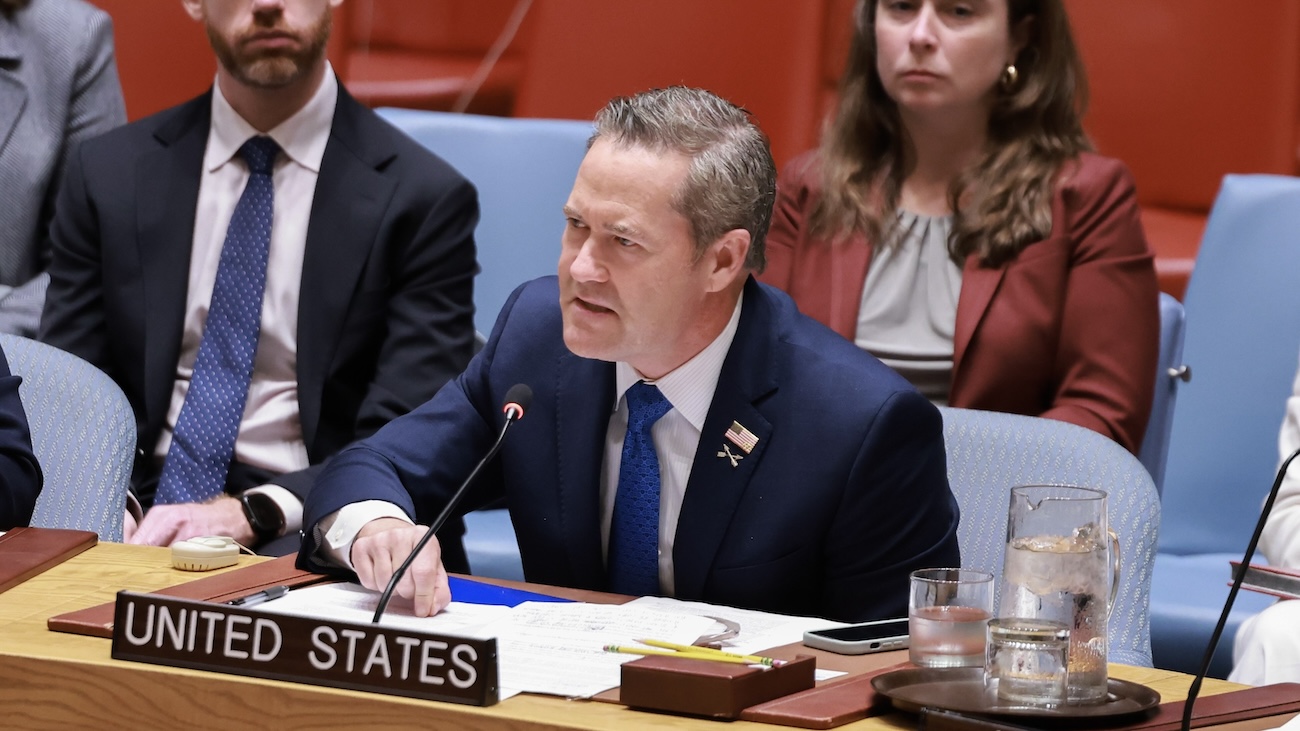
US Ambassador to the United Nations Mike Waltz speaking at a UNSC session. Photo: Mike Waltz / X

Ahead of the UN vote on the US-imposed blockade on Cuba, the US once again spread lies about the nature and intent of its coercive policy on Cuba

The United States Ambassador to the United Nations, Mike Waltz, told multiple lies during his speech in the debate on the resolution demanding an end to the blockade against Cuba.

His speech repeated – almost point by point – the repertoire of already debunked arguments that Washington typically uses to justify its sanctions regime that is condemned year after year by the international community.

Under the guise of “correcting misinformation,” Waltz repeated claims that do not stand up to confrontation with the facts nor with current US legislation itself, and which seek to shift the focus from the material responsibility of the blockade towards political accusations against Cuba.

Waltz received a strong reaction from the Cuban Minister of Foreign Affairs Bruno Rodríguez who interrupted the representative from his seat:

“The Permanent Representative of the United States is not only lying, substantially straying from the topic, but he is also speaking rudely and, contrary to his president, against the dignity of the assembly and the member states. He is doing so in an uncivilized, crude, and rude manner. That is not acceptable in this democratic forum. Mr. Waltz, this is the United Nations General Assembly. It is not a Signal chat, nor is it the House of Representatives.”

The ten lies of the US Ambassador:

1. “The blockade does not exist.”

The US legislation that sustains the blockade – the Helms-Burton Act (including its Title III), the Torricelli Act, the “180-day rule,” sectoral and financial sanctions lists – exists and is in force. The Cuban Resolution against the blockade does not “invent” these rules: it documents them and shows their practical application. Furthermore, official US documents, such as the reissuance of Presidential Memorandum No. 5 (06/30/2025), confirm the continuity of the “maximum pressure” policy against Cuba.

2. “Cuba’s economic difficulties are the exclusive responsibility of the Havana government.”

The stated goal of US policy is to “strangle the economy” to provoke social unrest; this includes targeting fuel, finances, tourism, and medical cooperation. This siege impacts prices, investments, logistics, and liquidity, and explains a large part of the current economic tensions.

3. “The annual UN resolution is propaganda.”

The vote expresses a broad defense of international law and the UN Charter; the unusual deployment of US diplomatic pressures to alter votes underscores the isolation of this policy and the relevance of the multilateral pronouncement.

4. “The shortage of food and medicine is the fault of the Cuban government.”

There is a chain of bottlenecks caused by the US economic siege: in healthcare, the Basic Drug List (651 items) shows a 69% impact, with 364 drugs (56%) lacking due to payment obstacles, suppliers refusing to operate, and technological prohibitions blocking equipment or supplies with ≥10% US components. This prevents the acquisition or severely increases the cost of advanced medicines and critical devices (for example, percutaneous aortic valve prostheses or dialysis equipment), with a direct impact on care and health indicators.

Regarding food, the lack of financing and banking refusals forced the halt of imports of approximately 337,000 tons of corn and ~120,300 tons of soybeans (animal feed), leading to failures in the production of eggs for the Basic Food Basket. Even “authorized” purchases in the US are made under non-standard conditions: specific licenses, cash payment in advance (without credit), transport only on US ships and on one-way trips, which increases freight costs and delays deliveries. The lack of goods is due to lack of financing, limited access to credit, increased prices, high freight costs, and delays in arrivals, direct consequences of the blockade.

5. “The blockade allows for free export.”

There is no commercial “freedom”: the US legal framework establishes a policy of denial for exports/re-exports to Cuba (EAR) and prohibits subsidiaries of US companies in third countries from trading with Cuba; furthermore, the “180-day rule” is in effect, which discourages shipping companies from calling at Cuban ports, and permitted agricultural sales require cash payment in advance, without US financing. All this restricts and makes any operation more expensive, both for exporting and importing.

Added to this is extraterritorial financial persecution: fines and threats to banks and suppliers, refusals to open or maintain accounts, and blocked operations that cut off payment and collection flows. Cuba’s own report includes recent cases (OFAC fine to EFG; refusal to open an account for the EXPO Osaka; closures of embassy accounts) and quantifies widespread impacts on contracts, letters of credit, and transfers.

That is to say, far from “exporting freely,” Cuba trades under veto, licenses, and regulatory fear; in fact, the document lists measures that Washington could authorize – biomedicine, mining, tourism, easing of investment licenses, raising the 10% US component threshold, authorizing banking correspondents, removing Cuba from the SSOT list, and suspending Title III – and which it currently obstructs.

6. “Cuba has full freedom to trade with other countries.”

The US secondary (extraterritorial) measures deter and punish third parties (banks, shipping companies, insurers), increasing the costs and risks of operating with Cuba, which restricts real freedom of trade.

7. “The Cuban government traffics its medical personnel.”

Cuba maintains voluntary and widely recognized international cooperation; the US persecution seeks to cut off these revenues and deprive vulnerable populations of essential services, ignoring UN and PAHO standards.

8. “The Cuban government benefits from mercenarism.”

Cuba applies “zero tolerance” to mercenarism and has criminally prosecuted recruiters; it does not support or condone the participation of its nationals in external conflicts.

9. “Cuba destabilizes the hemisphere.”

What is destabilizing is the US military deployment and diplomatic blackmail in the Caribbean and the region; Cuba and CELAC uphold the principle of a “Zone of Peace”.

10. “Cuba contributes to the Russian ‘war machine’.”

Cuba does not participate in the war in Ukraine nor send troops; it has dismantled recruitment networks and sanctions mercenarism.

Continue ReadingTen lies the US ambassador told the UN about the blockade on Cuba

Protests erupt in Cameroon as the 92-year-old president gets another seven-year term

Spread the love

Original article by Pavan Kulkarni republished from peoples dispatch under a Creative Commons Attribution-ShareAlike 4.0 (CC BY-SA) license.
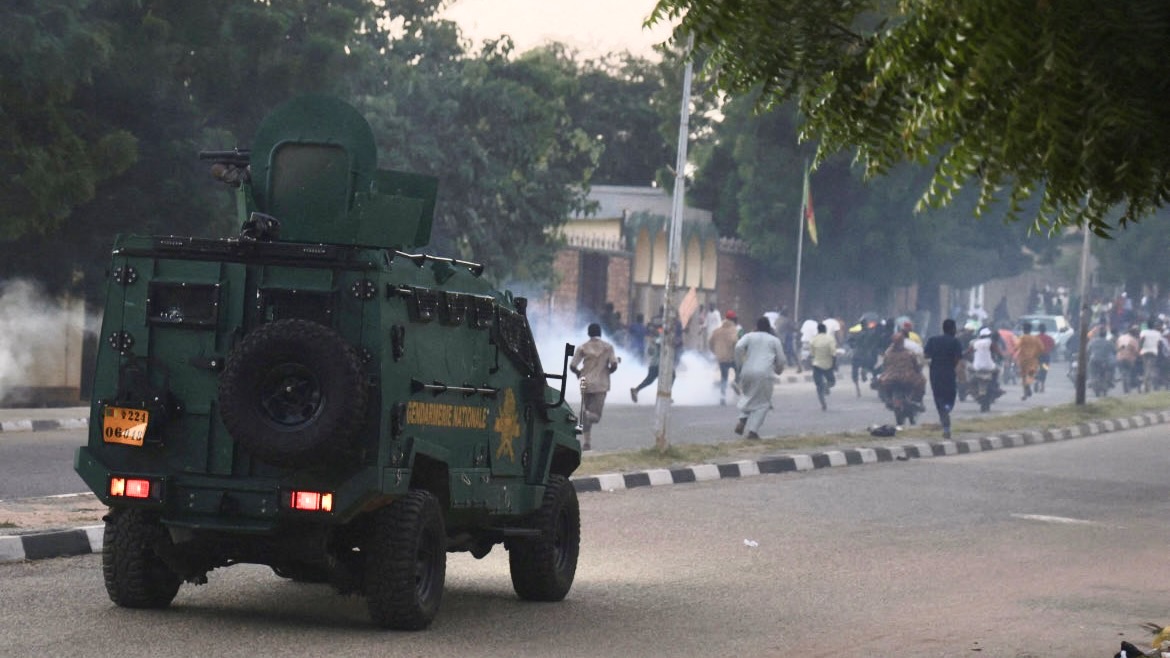
Protests erupt in Cameroon against the re-election of Paul Biya, with many denouncing alleged electoral fraud. Photo: X

Alleging electoral fraud, protesters have taken to the streets insisting on the victory of his opponent, a veteran of the regime who broke ranks, and garnered mass support by flip-flopping over the issues of federalism and the Anglophone crisis.

Protests rock Cameroon as its president since 1982, Paul Biya, the world’s oldest and longest-serving head of state at the age of 92, is set to be sworn-in for another seven-year-long term that will last until he is almost 100 years old. 

On Monday, October 27, the Constitutional Council proclaimed him the winner of the election held on October 12, with 53.66% of the votes, ahead of Issa Tchiroma Bakary’s 35.19%. 

Ahead of this announcement, on Sunday, Tchiroma’s supporters took to the streets in Cameroon’s commercial capital, Douala, in response to his call for protest, alleging that votes were being manipulated, and demanding that his victory be acknowledged. 

As the protests spread to several neighborhoods of the city, the police used force, including live-ammunition, to disperse the crowd, shooting and critically injuring several people. As news of the shooting spread, protests also erupted in several other cities, including Maroua, Meiganga, Kaélé, Bertoua, and the northern city of Garoua.    

Garoua is Tchiroma’s hometown, where his supporters had already taken to the streets on October 21, crying fraud after the National Vote Counting Commission announced on October 20 that Biya had won as per the tally it was submitting to the Constitutional Council.

Opening fire, the police killed two, including a young teacher hit by a stray bullet on her way back from work. They also fired tear gas to disperse opposition protesters in the capital Yaoundé that day. Demonstrations were also reported in Bafoussam, Dschang, Kousséri, and Douala.

The 20 people arrested from these protests will be charged with “incitement to rebellion and insurrection”, and tried by a military tribunal, Interior Minister Paul Atanga Nji said in a statement that day.

“With their backs against the wall, the people will have no choice but to take their destiny into their own hands and seek victory wherever they can find it,” Tchiroma retorted, hinting at further escalation.

Opposition parties, civil society groups, and other organizations filed eight separate petitions to the Constitutional Council, which is the body constitutionally authorized to announce the official results after validating the data compiled by the National Vote Counting Commission. Alleging widespread irregularities, including ballot stuffing and voter intimidation, petitioners sought partial or complete annulment of the election.

Dismissing all the petitions on October 22 on grounds of “insufficient evidence of irregularities” or “lack of jurisdiction”, the Council said it will announce the official results on October 27. Tchiroma himself had not petitioned the Council, deeming it a compromised body constituted of members chosen by Biya.

Instead, he took to social media to declare himself the “legal and legitimate president”, claiming to have won with about 55% of the votes. “If the Constitutional Council proclaims falsified and truncated results, it will be complicit in a breach of trust.”

Biya reportedly sought to de-escalate, offering Tchiroma the post of prime minister last week at a secret meeting blessed by foreign diplomats, according to Jeune Afrique.

A veteran of Biya’s regime

Tchiroma, after all, is a veteran of Biya’s regime. Jailed for a failed coup against Biya in 1984, Tchiroma started out after his release as an opposition member of parliament in 1992, before joining the government later that year as the transport minister till 1996.

He was the communications minister from 2009 to 2019, until he was appointed the employment minister – a position he held until resigning only months ahead of the election to contest against Biya.

He was among the most vocal mouthpieces of Biya’s regime in his role as the Communications Minister, denying the military’s atrocities on civilians from the Anglophone minority in the North-West and South-West (NWSW) regions.

Volte face on federalism and Anglophone crisis

Deprived of their autonomy in 1972 when the federal structure was scrapped with a referendum in favor of a unitary state, the Anglophone region has long complained of marginalization and economic disenfranchisement.

Tensions came to a head in late 2016 when mass protests broke out in NWSW against the government’s imposition of French-speaking lawyers and teachers on the courts and schools in English-speaking regions.

When Biya’s regime unleashed the military, peaceful protests gave way to an armed separatist insurgency. At least 6,000 people were killed in the subsequent violent confrontations, displacing over half a million, and leaving 1.3 million in need of aid.

Dismissing the reports as “phantasmagorical” and “a clumsy attempt at disinformation”, Tchiroma, as the government spokesperson, had accused human rights organizations documenting the atrocities of being in cahoots with the secessionists.

“I 100% agree that the military committed atrocities,” he said in his election campaign. “But as minister of communication, my duty was to defend our armed forces,” he reasoned. “Today, I speak as a free man.”

He has even offered to hold a referendum to return the country to federalism – a long-standing demand in the Anglophone region. “I say it clearly: centralization has failed,” he said. As the communications minister, however, Tchiroma had reportedly banned the national media from using the word.

“In my capacity as minister, I did something which … hurt your mind … I want you to please forgive me because I apologize,” he pleaded in his campaign for the Anglophone vote. Offering amnesty for political prisoners, he has proposed a national reconciliation process with the separatist leaders.

Insecurity, decaying infrastructure, and an aging president

The Francophone area, which makes up the majority of Cameroon, has also been wracked by insecurity. Civilians in the far north, from where Tchiroma hails, are reeling under Boko Haram attacks.

The eastern region is suffering from a spill-over of the armed groups fighting in the neighboring Central African Republic (CAR). Competition for land and water between settled farmers and nomadic herders of the broader region has been the main driver of this conflict, which has also manifested as communal violence in other agrarian regions of Cameroon. Last year alone, a million people were displaced. Nearly three million people are suffering acute food insecurity in the conflict-affected regions.

Buildings, crumbling due to a lack of maintenance, regularly collapse in Cameroon’s cities. Mirroring its decaying infrastructure are rumors about Biya’s failing health, media discussions about which have been banned.

Undeterred, Biya has sought another seven-year term at 92. In this backdrop, Tchiroma resigned as the Employment Minister this June, only months ahead of the election, and announced his decision to contest against Biya.

With the main opposition candidate barred from the race, Tchiroma takes charge

Biya’s main opponent at the time was opposition leader Maurice Kamto, the runner-up in the previous presidential election of 2018, also marred by allegations of widespread manipulation. In July. Cameroon’s Election Commission (ELECAM) rejected the candidacies of 70 of the 83 applicants, including that of Kamto.

With Biya’s main challenger thus out of the way, Tchiroma was positioned as his main contender. A coalition of opposition parties and civil society organizations, the Union for Change, backed his candidacy in the election on October 12.

On the night of October 13, Tchiroma declared victory in a video address he read out from a tablet with a portrait of himself and the national flag as the backdrop. “In the coming days”, he said, he would prove his victory with a “detailed” compilation of votes from regions from “publicly” displayed results.

It was an open defiance of Interior Minister Paul Atanga Nji, who had reiterated at the close of polls the evening before: “Only the bodies responsible for centralizing and counting votes will take over … No other initiative outside this legal framework must exist.”

He had warned, “Those who contravene the law, regardless of their political status or social rank, will face its full rigor without the slightest leniency.”

A few dozen young men have been standing guard outside Tchiroma’s villa in Garoua, armed with clubs. “We have sentinels. If the police come, all the young people will come,” one of them told Le Monde. The police have not yet attempted to arrest Tchiroma.

While the ruling Cameroon People’s Democratic Movement (CPDM) condemned his self-declaration of victory as a “grotesque hoax … inadmissible act in a state governed by the rule of law,” Biya reportedly made him an offer to share power as the Prime Minister. However, Jeunne Africa reported that Tchiroma has rejected the offer and insisted that his victory be acknowledged.

An ominous letter

In the meantime, political tensions have been rising, especially after his supporters clashed with the police, who opened fire on October 21 in Garoua. Further north, in the city of Maroua, worse affected by Boko Haram, a group of young people reportedly left a letter outside the regional governor’s office, stating: “The young people of Maroua are writing to you today to inform you that we are fed up with this country because the Far North region is the poorest region.”

Insisting that “all the citizens voted” for Tchiroma, it claimed, “but the government wants to rig it.” On an ominous and nihilistic note, it went on to add, “It’s better to go join Boko Haram … than to stay for another seven years. If you let us go, you and the CPDM activists will pay with blood in Maroua.”

Original article by Pavan Kulkarni republished from peoples dispatch under a Creative Commons Attribution-ShareAlike 4.0 (CC BY-SA) license.
Experiencing issues with this image not appearing. I suspect because it's so critical of Zionist Keir Starmer's support of and complicity in Israel's genocides.
Genocide denier and Current UK Prime Minister Keir Starmer is quoted that he supports Zionism without qualification. He also confirms that UK air force support has been essential in Israel’s mass-murdering genocide. Includes URLs https://www.declassifieduk.org/keir-starmers-100-spy-flights-over-gaza-in-support-of-israel/ and https://youtu.be/O74hZCKKdpA
Keir Starmer objects to criticism of the IDF. He asks how could anyone object to them starving people to death, forced marches like the Nazis did, bombing Gaza's hospitals and universities, mass-murdering journalists, healthworkers and starving people queuing for food, killing and raping prisoners and murdering children. He calls for people to stop obstructing his genocide for Israel.
Keir Starmer objects to criticism of the IDF. He asks how could anyone object to them starving people to death, forced marches like the Nazis did, bombing Gaza’s hospitals and universities, mass-murdering journalists, healthworkers and starving people queuing for food, killing and raping prisoners and murdering children. He calls for people to stop obstructing his genocide for Israel.
Orcas discuss Genocide-supporting and complicit Zionists. Donald Trump, Keith Starmer, David Lammy, Rachel Reeves, Angela Rayner and Wes Streeting are acknowledged as evil genocide-complicit and supporting cnuts.
Continue ReadingProtests erupt in Cameroon as the 92-year-old president gets another seven-year term

AI Is Pushing Climate Goals Out of Reach, New Reports Say

Spread the love
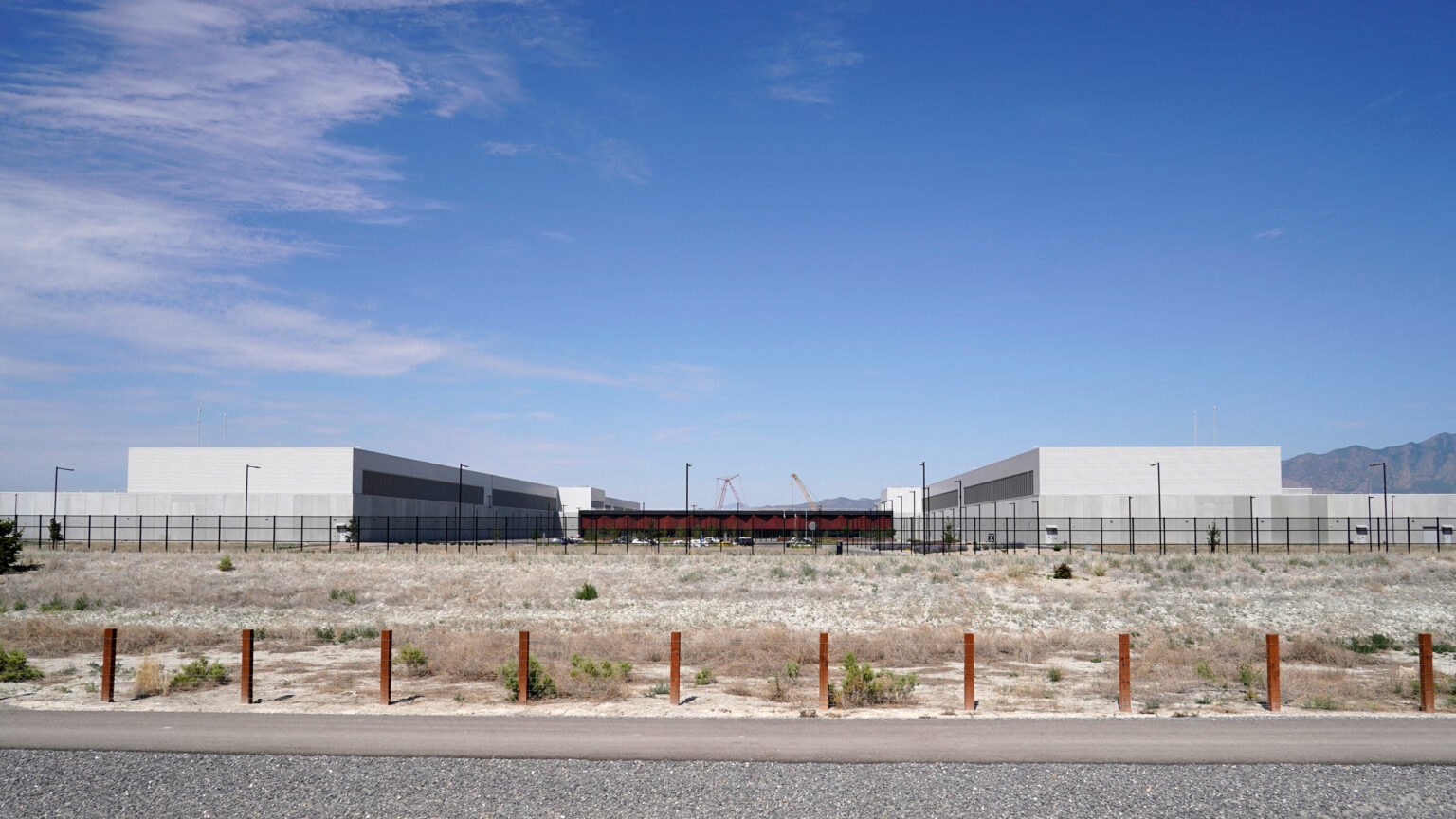
A view of Meta’s newly constructed data center on July 18, 2024, in Eagle Mountain, Utah. Credit: George Frey/AFP via Getty Images

Without a big increase in investment in renewable energy globally, humanity will not limit global temperature rise to 2 degrees Celsius, but much of the data center boom is powered by fossil fuels.

By Jake Bolster

October 29, 2025

This article originally appeared on Inside Climate News, a nonprofit, non-partisan news organization that covers climate, energy and the environment. Sign up for their newsletter here.

Surging electricity demand driven by artificial intelligence is putting humanity’s climate goals out of reach, extending the life of fossil fuels and driving up emissions in the U.S. power sector while contributing to deadly extreme weather, according to two new reports published Wednesday.

With power- and water-hungry data centers forecasted to come online at staggering speeds to serve big tech companies’ seemingly bottomless appetite for AI infrastructure, utility companies have turned to fossil fuels to help meet the explosion in demand for power.

It’s a sharp departure from earlier forecasts of only modest, gradual growth in electricity demand, potentially threatening large countries’ commitments to transition away from fossil fuels. President Donald Trump and his administration have spoken glowingly about how AI will reinvigorate U.S. coal and other fossil fuel markets.

“Accelerating from deployment to a deeply decarbonized, resilient energy system is proving far more complex than simply adding megawatts,” said Prakash Sharma, vice president for scenarios and technologies at Wood Mackenzie, an energy consulting firm, in a press release accompanying his company’s new report.

Wood Mackenzie’s analysis concluded that almost no countries—including Canada, France, Germany, Italy, Japan, the United Kingdom and the United States—were on track to meet their 2030 emissions goals. But if countries across the globe show “extraordinary ambition,” according to the report, and make significant, rapid investments in renewable energy, humanity could limit warming to within 1.5 degrees Celsius (2.7 degrees Fahrenheit) by around 2060.

The 2015 Paris Agreement called for holding Earth’s temperature rise below 2 degrees C (3.6 degrees F) above pre-industrial levels, and ideally to just 1.5 degrees C in order to preserve a livable planet. To do that, scientists estimated the global economy would need by 2050 to achieve “net-zero” carbon emissions, in which human activity produces a negligible amount of greenhouse gases that could be absorbed by natural ecosystems rather than persisting in the atmosphere.

Among the world’s largest economies, the U.S. has the biggest gap between current climate transition investments and the spending necessary to reach net-zero emissions. The country would need to increase its spending on reducing emissions by 76 percent to meet the net-zero goal, more than double the increase the European Union would need to make and more than two-and-a-half times the increased spending necessary in China.

“A new climate leadership is emerging,” Sharma said. “As the U.S. doubles down on fossil fuels, pushing allies to buy its LNG, China is seizing the low-carbon mantle through EV and solar dominance, plus aggressive renewables deployment.”

The United States has signaled a willingness to offer tax breaks and open public lands to data centers—warehouses of servers whose computing power drives AI services and much of the internet, many of which will be powered by fossil fuels, according to International Energy Agency estimates.

Data center energy demand “is threatening to sabotage the country’s already faltering climate goals,” wrote John Fleming and Jean Su, with the Center for Biological Diversity, in a report published Wednesday. Fleming and Su found that, if AI data centers powered by fossil fuels grow as forecasted, all other sectors of the U.S. economy would need to cut emissions by 60 percent in order for the U.S. to meet its emissions targets.

“A gas-fed AI boom is going to hurdle us past any chance of keeping to our climate goal or maintaining a safe and healthy future for our planet,” said Fleming, a senior scientist with the Center for Biological Diversity, in a statement. “To the extent that data center buildout is needed at all, it should be powered only by clean, renewable energy.”

McKenna Beck, the Ralph Cavanagh climate solutions fellow at the Natural Resources Defense Council, who was not involved in either report, agreed with that conclusion, and warned that the current demand for AI runs the risk of spoiling climate pledges at the local level, too.

“The reports confirm what we’ve been seeing in states on the ground for the past year—that there’s a real risk of states with stated climate goals backsliding on those,” she said. As an example, Beck brought up North Carolina, which erased its 2030 climate goals this summer in the face of rising electricity demand.

Beck believes that, if given the right guardrails, AI electricity demand is not destined to add a ton of emissions to the U.S. economy. “With the right incentives and requirements, data centers could actually supercharge clean energy,” she said.

But with the Trump administration actively working to stifle renewable energy growth, Beck acknowledged that any good-governance AI policies would need to be implemented on a smaller scale. 

“States are on the front lines right now,” she said.

Donald Trump urges you to be a Climate Science denier like him. He says that he makes millions and millions for destroying the planet, Burn, Baby, Burn and Flood, Baby, Flood.
Nigel Farage urges you to ignore facts and reality and be a climate science denier like him and his Deputy Richard Tice. He says that Reform UK has received £Millions and £Millions from the fossil fuel industry to promote climate denial and destroy the planet.
Elon Musk urges you to be a Fascist like him, says that you can ignore facts and reality then.
Continue ReadingAI Is Pushing Climate Goals Out of Reach, New Reports Say