Case against Kenyan communist leader Booker Omole already unraveling

Spread the love

Original article by Pavan Kulkarni republished from peoples dispatch under a Creative Commons Attribution-ShareAlike 4.0 (CC BY-SA) license.
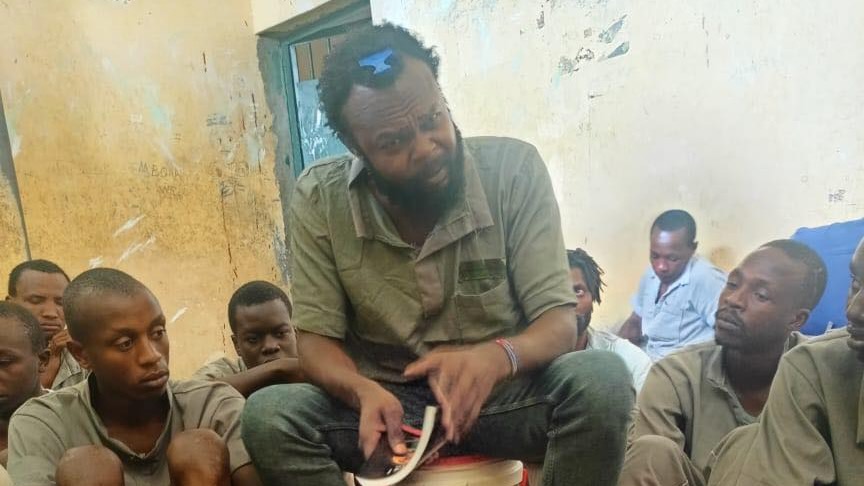
General Secretary of the Communist Party Marxist – Kenya (CPM-K) Booker Ngesa Omole. Photo: BookerBiro/X

Withdrawing from the case, the complainant and the key witness named in the chargesheet has accused the police of fabricating charges and weaponizing the criminal justice system.

The chargesheet against Booker Omole, the general secretary of the Communist Party Marxist – Kenya (CPM-K), began to unravel in the very first pre-trial hearing on March 9. Abducted on February 24 without a warrant by men in plainclothes, tortured in custody, and imprisoned, Omole was released on bail on March 3.

​At his pre-trial hearing on Monday, the complainant and the main witness named by the police in the chargesheet submitted an affidavit in the court, saying that he was “unequivocally” withdrawing his “complaint and all statements recorded” pertaining to the case.

​Stating that “these proceedings are a weaponization of the criminal justice system aimed at … harassing and intimidating” Omole, he added that the police had fabricated the charges.​

“It is clear that the complainant was forced into this by the police,” Omole told Peoples Dispatch. “The Registrar of Firearms Bureau also presented a report to confirm that I am a legally registered owner of the firearm,” he was accused of possessing illegally.

Surviving an assassination attempt

It was the same firearm he had used to survive an assassination attempt last year during the Gen Z protests between June and July, sparked by police brutality amid a worsening cost-of-living crisis under the austerity regime instituted by President William Ruto.​

“Many activists suspected of being involved in the protests were being abducted without warrants and tortured,” Omole recalled. “Six gunmen broke into my house. I shot one dead at my bedroom door.”

​After a gun fight, “one more was found dead outside on the road, probably from a bullet wound. Others who fled were arrested, but the judicial enquiry never concluded.” The case went dark “because they were intelligence officers,” he maintains.

“It was an ambush.”

​“But I did not have this gun with me in the car when I was stopped” on February 24 at a roadblock set up at the bypass to turn to Nairobi on his way back from Isiolo, where he was travelling with a party comrade and a foreign delegate for political work and to raise funds.​

“It was an ambush. Some 20 men, without uniforms, surrounded our car and started to grab us. We did not know who they were. So we resisted and fought back,” he recalled. It was only when the public gathered, demanding to know who the men were, that they identified themselves as police.

​“The accusation that I threatened to kill them during this scuffle is ridiculous. There were 20 of them – armed – how could I have threatened to kill them?”​

They took all three into custody, along with their two cars, and drove them to the apartment the party had rented to host its international delegates. The police named the owner of this apartment, Andrew Amoth, as the main complainant and witness in the chargesheet.

A chargesheet riddled with contradictions

​The police maintain they swung into action after Amoth allegedly made a noise complaint against the guests who had rented his apartment. “But his apartment is in Nairobi. I was abducted on my way from Isiolo. How could I be making noise in Isiolo and Nairobi at the same time? When the police write a cooked story,” Omole remarked, “such contradictions appear.”  

​Upon their arrival at the apartment, the police allege that Omole drew his gun on the landlord. But Omole maintains he was already detained and brought there in police custody. “At no point did … Omole point a firearm at me,” the landlord insisted in his affidavit.

​Upon raiding the apartment, the police found 320,000 Kenyan shillings, equivalent to about USD 2,500, which they insisted was a fund to sponsor an insurgency against the government. They then drove Omole to the Mlolongo police station, where, according to Amoth’s affidavit, they tried to extort this amount from Omole.

“A well-known criminal within the police”

​The Officer Commanding Station (OCS) at Mlolongo is Peter Mugambi, whom Omole described as “a well-known criminal within the police. He is also a sworn anti-communist, Evangelical Christian.” Omole had already had a run-in with him back when he was the OCS of Bamburi. At the time, “he had accused me of organizing a terrorist cell to overthrow the government.”

​Now under his wing again at the Mlolongo police station, the police tortured Omole, dislocating his arm, already injured in the scuffle during his abduction. “They even strangled me”, demanding to know who was financing him for leading the protest outside the US embassy against the abduction of Venezuela’s president, Nicholas Maduro.

​“They insisted I must also be a member of a drug cartel,” like Maduro, echoing the allegation the US had concocted before his abduction. Just as this allegation was dropped by the US prosecution when Maduro was produced in a court, the Kenyan police also dropped this from the chargesheet.

They instead claimed to have found narcotics in the apartment. “Contrary to what is stated in the Charge Sheet, I confirm that no narcotics, drugs, or illegal substances were found in the apartment,” its owner and complainant said in his affidavit. “As the lawful owner and occupant of the premises, I find any suggestion to the contrary to be false and did not originate from any evidence recovered from my home.” 

The chargesheet was made available to Omole only when he was produced in the Mavoko Law Court in Machakos on February 26, well past the 24 hours since detention as mandated by law. His injured arm was crudely bandaged as he was rushed into the courtroom by more than half a dozen policemen who kept out all his comrades and journalists. Denied bail on the technical grounds that the police had not provided the pre-trial document to the court, Omole was sent to Kitengela Remand Prison.

“A prison within a prison where they send you to break your spirit”

​On the night he was brought to this prison, he was held in isolation, in what he estimates to be a 2-by-1 meter cell, where his tall and athletic frame could barely move about. “There is no toilet,” added Omole. “You are given a bucket to defecate in. It is a prison within a prison where they send you to break your spirit.”​

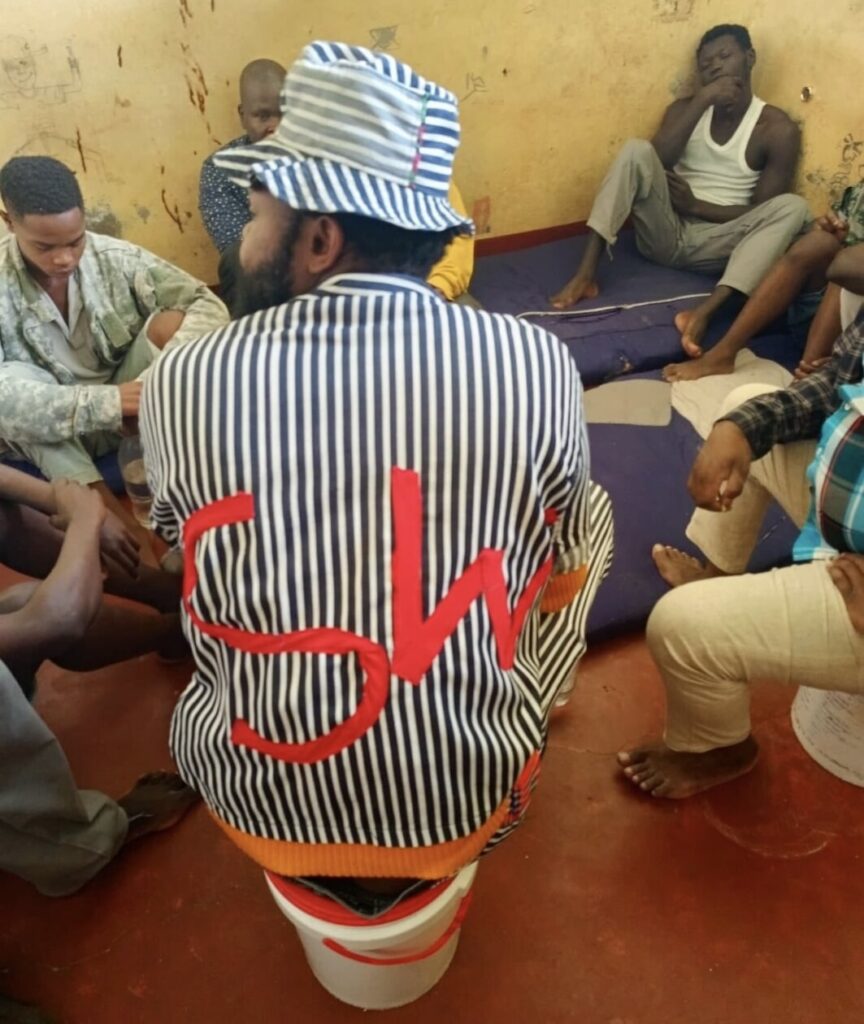
The following day, he was transferred to the “capital remand prison”, in a uniform, scrawled with the red letters “SW”, standing for Special Watch, assigned to those deemed dangerous. His inmates here were charged or convicted with the death penalty, carrying crimes like murder, robbery with violence, etc.​

Booker Omole in prison
Booker Omole in prison. Photo: CPM-K

“We were about 400” held on a floor consisting of what he estimates to be an 8 by 20 meters hall, with rows of 3 by 4 meter cells on either side – 27 prisoners packed in each. Several human rights reports have also documented the overcrowding in Kenyan prisons, requiring inmates to sleep on their sides, facing the same direction to fit in, “packed close to one another like sardines.”

“If a privileged prisoner who could pay the police was brought in, a cell would be emptied for him,” which would further overcrowd other cells, added Omole. “So inmates spend most of their time in the hall.”​

Holding political education sessions for prisoners and wardens

Sitting on the lid over a dustbin in this hall, shuffling between books, Omole can be seen in a video snuck out of prison lecturing the inmates gathered around him about the commonalities between the guerrilla warfare led by Mao in China and the Mau Mau uprising led by Dedan Kimati in Kenya.​

https://www.facebook.com/plugins/video.php?height=476&href=https%3A%2F%2Fwww.facebook.com%2Freel%2F1625557031975745%2F&show_text=false&width=264&t=0

“We had three such sessions at night,” he recalled, observing that the prisoners were readily receptive “to our ideas”. All of them were poor and strongly insisted that it was their instincts to survive poverty that got them into crime.​

“None of them had any regrets for their crimes,” he said, adding that they only swore that if given a second chance, they would not get caught. “This goes to show that the idea of prison as a place to reform criminals and rehabilitate them back into society is a myth.”​

Wealthy criminals, rarely imprisoned, have a relatively comfortable living space and are not crammed in like the rest. They get to “take walks and have a smoke.” Prison authorities, bribed, allow them wholesome meals brought in from outside. The rest, who cannot pay, have to make do with “some soup and corn bread,” perceptible in their bony frames seen in the video. The prisoners were therefore acutely aware of the class contradictions, Omole said.​

This, he said, was “already a firm basis to start the discussion about the capitalist system.” The inmates did not need much explanation to grasp why Kimati, who fought for land, remained criminalized as a terrorist for the most part since independence by the “neo-colonial state”, while the representatives of the wealthier classes were hailed as the heroes of Kenya’s freedom struggle.​

Outside of this floor where the violent criminals were held, there was also the so-called “prison school”, where inmates gather for sort of group therapy sessions, recollecting “what got them into prison” and reiterating “why they must change. I exploited that platform to deliver an agitational lecture.”

Prison wardens live like prisoners themselves

The junior prison wardens took an interest, initially out of simple curiosity about a political prisoner. As it grew, “I also held a session with them,” Omole said. “They needed a public figure to engage with their issues.” Their condition was little better than the prisoners themselves. Their homes were essentially four walls and a roof made of iron sheets, emanating a chilling cold in winters and blistering heat in summers.

​”There are seven gates” between the rows of jails, with two junior prison wardens placed as guards between each. “They are also locked in. They don’t have the keys. If there is a fire outbreak, they can’t escape either. They have to die with the rest of the prisoners. These work conditions,” Omole explained, naturally gravitated them toward the left-wing ideas he was espousing. “We became good friends. They helped us smuggle in political literature.”​

But the political literature was later discovered by the higher authorities. “I was handed another 8 hours in the isolation cell.”

​In the meantime, the police finally provided the court with the pre-bail hearing document, whereupon he was granted bail on March 3 for an amount of 500,000 Kenyan shillings, more than the 320,000 the police had allegedly tried to extort from him.

​The judge also ordered the police to return all the possessions they had seized from Omole and his co-accused. It included “two cars, an iPhone, a laptop, and the 320,000 Kenyan shillings” they found in the apartment. When Omole went with his lawyer to collect them, he said that Mugambi let loose his police to expel him from the station, leading to a scuffle.

Chargesheet unravels

​On March 9, the court issued another order to return them. At the pre-trial hearing that day, Amoth, the complainant and main witness, submitted an affidavit to withdraw from the case, while the Registrar of Firearms also confirmed his gun was legally owned.

​The Department of Public Prosecution then sought leave to amend the chargesheet, to change the accusation of illegal possession of a firearm to misuse of a firearm. However, Amoth said in his affidavit, “At the time the police arrived, the firearm was secured in a safe in the upper bedroom, and the magazine was separated from it.”

So the charge of misusing a firearm will not hold either, Omole said, adding the chargesheet will likely be dropped as “defective and untenable. If that happens, we will file a case for wrongful detention and prosecution, and demand compensation.” 

While confident that the case against him will fall apart, Omole is certain that the “crackdown against our party will only intensify as we grow in strength. The task we face today is to build a revolutionary organization, capable of fighting back.”  

Original article by Pavan Kulkarni republished from peoples dispatch under a Creative Commons Attribution-ShareAlike 4.0 (CC BY-SA) license.

Continue ReadingCase against Kenyan communist leader Booker Omole already unraveling

With War on Iran, Trump Is ‘Flooring the Gas Pedal as He Drives US Economy Over a Cliff’

Spread the love

Original article by Jake Johnson republished from Common Dreams under Creative Commons (CC BY-NC-ND 3.0). 

Gas prices over $5 a gallon are displayed at a Mobil station on March 11, 2026 in Los Angeles, California. (Photo by Justin Sullivan/Getty Images)

“If high costs weren’t already bad enough, Donald Trump’s unnecessary war in Iran has sent gas prices through the roof,” said one House Democrat.

Data released Friday showed that US consumer sentiment hit a new low for 2026 and the American economy expanded by just 0.7% in the fourth quarter of last year, indicators that experts said are only going to get worse due to the cascading impacts of President Donald Trump’s deadly, illegal, and expensive war on Iran.

“President Trump is flooring the gas pedal as he drives our economy over a cliff,” Alex Jacquez, chief of policy and advocacy at the Groundwork Collaborative, said in response to the new data, some of which was collected before the US and Israel launched their assault on Iran, sparking a regional conflict, sending oil prices surging, and destabilizing the global economy.

RECOMMENDED…

Protests In Kashmir Following The Killing Of Iranian Supreme Leader Ayatollah Ali Khamenei

‘This Is Madness’: More Talk of Boots on the Ground as Trump Says ‘Today Iran Will Be Hit Very Hard’

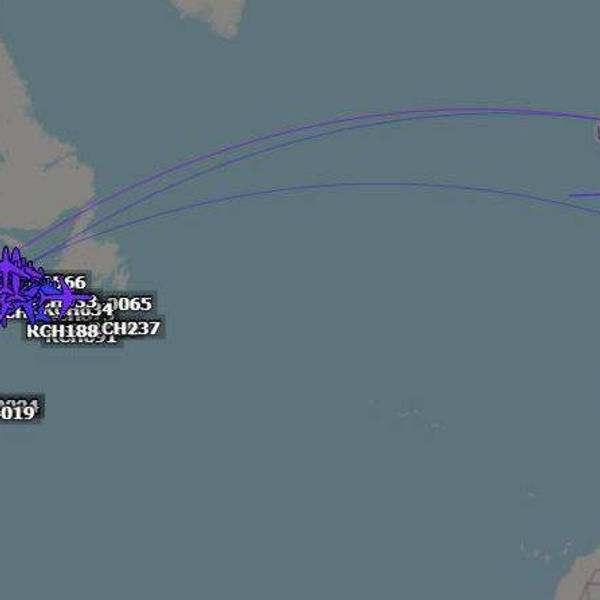
image shoes US military planes headed to the midde east

‘The Tankers Just Keep Coming’: US Military Movements Spike Fears of Imminent Attack on Iran

“As bad as this week’s data is,” Jacquez added, “it understates reality for exhausted consumers who have been hit with even more price hikes caused by the president’s intentional turmoil in the weeks since this data was collected. Instead of working to bring down ever-increasing prices at the pump, the grocery store, and the doctor’s office, the president is betraying working families as his illegal war with Iran stokes inflation.”

Figures released Friday by the US Commerce Department’s Bureau of Economic Analysis (BEA) showed that real gross domestic product increased at half the rate predicted by previous government estimates.

Real GDP was revised down 0.7 percentage points from the advance estimate [of 1.4%], reflecting downward revisions to exports, consumer spending, government spending, and investment,” the BEA said in a news release.

NBC News noted that “economists had expected the revision to go the other way—and show stronger growth.”

The BEA also published data showing that the personal consumption expenditures price index, a key inflation reading, rose at an annualized rate of 2.8% in January.

“Families across the United States are struggling to make ends meet in Donald Trump’s economy,” Rep. Brendan Boyle (D-Pa.), the top Democrat on the House Budget Committee, said in a statement. “If high costs weren’t already bad enough, Donald Trump’s unnecessary war in Iran has sent gas prices through the roof.”

A Harris Poll opinion survey conducted for The Guardian and released Friday found that more than 70% of US voters believe Trump’s tariff regime has driven up their costs.

“In the short run, the economic impact of a sustained loss of Gulf oil could be very ugly.”

Consumer sentiment, meanwhile, continued its steady decline in March, falling about 2% compared to last month, according to the University of Michigan’s Surveys of Consumers. Roughly half of the interviews conducted for the consumer sentiment report were completed before the US and Israel began attacking Iran on February 28.

Joanne Hsu, director of the Surveys of Consumers, noted that “interviews completed prior to the military action in Iran showed an improvement in sentiment from last month, but lower readings seen during the nine days thereafter completely erased those initial gains.”

“Gasoline prices have exerted the most immediate impact felt by consumers, though the magnitude of passthrough to other prices remains highly uncertain,” Hsu noted. “A broad swath of consumers across incomes, age, and political affiliation all reported declines in expectations for their personal finances, down 7.5% nationally.”

“Interviews completed after February 28 exhibited higher inflation expectations than those completed before that date,” Hsu added.

The first six days of Trump’s war on Iran cost US taxpayers over $11 billion, and the price tag is set to rise exponentially as the administration deploys thousands of additional troops to the Middle East and continues aggressively bombing Iran, which has retaliated in part by closing the Strait of Hormuz—choking off the flow of oil through the critical trade route and sending prices surging.

The Trump administration has sought to downplay skyrocketing oil prices even as it takes emergency action in an attempt to bring them down. The International Energy Agency said Thursday that the US-Israeli assault on Iran sparked “the largest supply disruption in the history of the global oil market.”

Economist Paul Krugman warned Friday that “oil prices could easily go much higher,” noting, “The US and other major economies are a lot less oil-dependent than they were in the 1970s, and even at $100 a barrel oil prices are not high enough to provoke a major crisis.”

“In the short run, the economic impact of a sustained loss of Gulf oil could be very ugly,” Krugman wrote. “I’ve seen some alarmists warn that a long war in the Gulf could lead to oil at $150 a barrel. That looks low to me.”

Original article by Jake Johnson republished from Common Dreams under Creative Commons (CC BY-NC-ND 3.0). 

Donald Fuhrump says that Amerikkka doesn't bother with crimes or charges anymore, not being 100% Amerikkkan and opposing his real estate intentions is enough.
Donald Fuhrump says that Amerikkka doesn’t bother with crimes or charges anymore, not being 100% Amerikkkan and opposing his real estate intentions is enough.
Orcas discuss how Trump was re-elected and him being an obviously insane, xenophobic Fascist.
Orcas discuss rotting brain. Front Orca says "Wish someone would lock him up".
Orcas discuss rotting brain. Front Orca says “Wish someone would lock him up”.
Continue ReadingWith War on Iran, Trump Is ‘Flooring the Gas Pedal as He Drives US Economy Over a Cliff’

Time to Grow Out of ‘Playing’ War

Spread the love

Original article by Robert C. Koehler republished from Common Dreams under Creative Commons (CC BY-NC-ND 3.0). 

A video shared by the White House combines footage from Wii golf with video of US strikes on Iran. (Photo: The White House/X/Screengrab)

By saying the quiet part out loud, Trump is revealing that war is based on the least of who we are, the least mature aspect of human nature.

Boys will be boys. Just ask the president.

At a gathering of Republicans a few days ago, Donald Trump talked nonchalantly about the recent sinking of an apparently unarmed Iranian frigate by the US Navy—in the Indian Ocean, more than 2,000 miles from the Persian Gulf. A total of 104 crew members were killed and 32 more were injured.

RECOMMENDED…

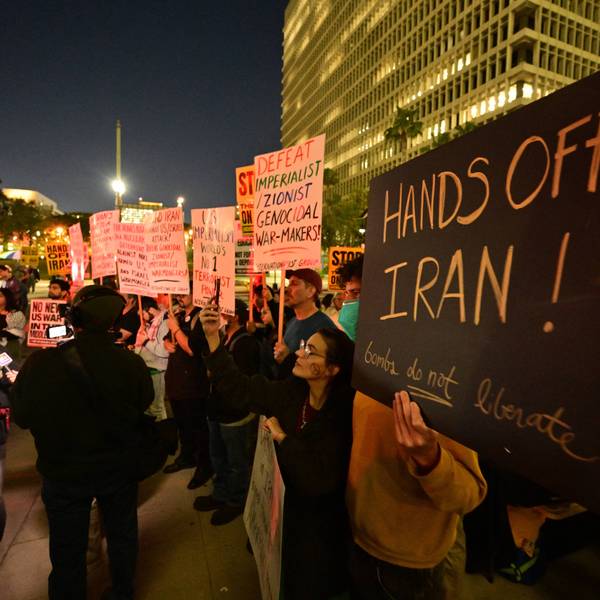
US-IRAN-ISRAEL-WAR-DEMONSTRATION

‘People Are Loving What’s Happening,’ Trump Claims While Massacring Iranian Children as US Oil Prices and Unemployment Spike

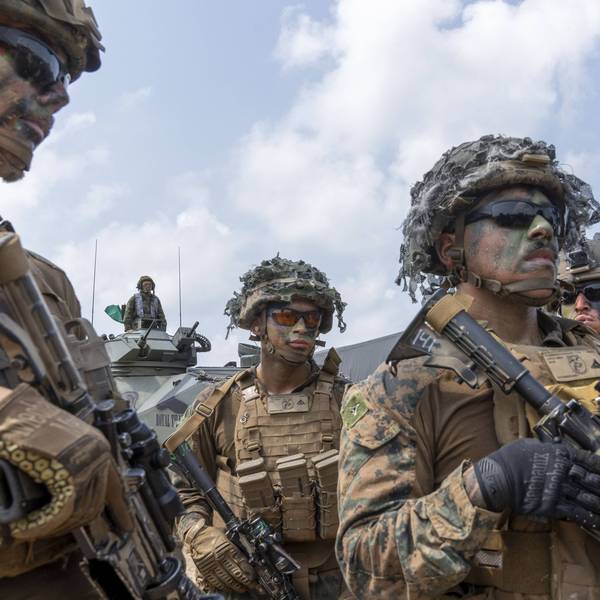
46th Cobra Gold multinational military exercises in Thailand

Warnings of Iran Invasion Grow as US to Send Up to 5,000 Marines, Sailors to Middle East

The president proceeded to make this more than merely another brutal, pointless act of war. He turned it into a glaring—shocking—revelation of truth… about the American-Israeli war on Iran and, quite possibly about all wars: about war itself. He was upset at first, he told the crowd, that the Navy sank the frigate rather than capturing it. But when he expressed this to the military officials, one of them responded, “It’s more fun to sink them.”

And the crowd laughed. Uh… are we “playing” war or waging it, with that trillion-dollar annual military budget America has? No doubt we’re doing both, but normally the “fun” part of war—the dehumanization of the enemy, the abstraction of people’s deaths (including those of children)—is airbrushed from public discussion by politically correct strategic and political blather. But this is Trump, spouting the quiet part out loud—in the process, causing the global infrastructure of nation-states, borders, and militarism to tremble. Could it be that war is based on the least of who we are, the least mature aspect of human nature?

A “global structure of nonviolence” is emerging—pushing, pushing against the deeply embedded infrastructure of war and us-vs.-them consciousness.

In contrast, I quote from a recent essay written by my friend Laura Hassler, founder and director of Musicians Without Borders:

Well, guess what. There are other forces alive in today’s world. Decades of resistance to domination and colonialism, the learnings of movements across the Global South, the freedom that Western hegemony for a few decades inadvertently released on its majority population, and access through social media to some of the reality of the actual horrors perpetrated in our names have together led to a worldwide awakening to fundamental injustices, and a worldwide longing for a livable, connected, survivable future.

She calls this worldwide awakening “Radical Empathy,” a term in widespread use, which means a deeply rooted sense of connection among people, well beyond merely sympathy and shared feelings. We are one planet, one people, and we will survive together or not at all.

“Radical Empathy must be fierce, stubborn, creative, persistent,” she continues. “We must hold on to each other, build community, be willing to take risks and accept consequences. Seek alternatives. Stand in solidarity with all who resist oppression and the violence of power and greed…

“And we artists must nurture artistic bravery, using the power of the arts to tell truth, to build community, to turn our capacity for radical empathy into a force for good.”

In other words, Radical Empathy isn’t simply emotional. You can say it’s spiritual, but it’s also political. It’s a movement: ever changing, ever manifesting in the moment, ever addressing conflict by reaching for connection and understanding. Yes, global nationalism still maintains the power to wage war. And war is everywhere these days. As Jeffrey Sachs noted in a recent interview, “World War III is here…” from Ukraine and Gaza and Iran to Asia to the Western Hemisphere. And the fighting across the world is linked.

But at the same time the world is changing. A “global structure of nonviolence” is emerging—pushing, pushing against the deeply embedded infrastructure of war and us-vs.-them consciousness. Finding understanding with your enemy—connecting with “the other”—can be incredibly difficult, especially in the midst of conflict, but Radical Empathy is making it a reality across the planet.

Laura Hassler’s organization, Musicians Without Borders, exemplifies this movement. The organization was founded in 1999, in Alkamaar, a city in the Netherlands. Laura, who was a choir director and organized music events, had put together a concert for the town’s annual honoring of the dead of World War II.

But as I wrote in a column several years ago:

The bloody war in Kosovo was then raging: Thousands had died; nearly a million refugees were streaming across Europe. Its horror dominated the daily news, and Laura couldn’t ignore it. She couldn’t simply focus on the war dead of half a century ago, not when the hell of war was alive in the present moment, pulling at her soul.

She decided, “We’ll perform music from the people suffering from war now—folk songs from Eastern Europe,” she told me. Her impulse was to reach out, to connect, somehow, with those suffering right now, on the other side of Europe. And something happened the night of the concert. When it ended, there was a moment of profound silence… and then, as the audience stood, applause so thunderous that the rafters shook. It went on for 20 minutes.

One of the musicians, a political refugee from Turkey, said to her afterwards: “This concert was special. We should put it on a train, send it to Kosovo and stop the war!”

And they went to Kosovo. Gradually, Musicians Without Borders became global, working with local people in war-torn regions all over the world—people on both sides of the divide—to create music that transcends the war of the moment. The organization currently has long-term projects in the Balkans, West Asia, Eastern Africa, and Europe.

This is Radical Empathy, or at least one example of it—our complex force of hope even as the world’s leaders continue bleeding away the planet’s resources in order to play war. Radical Empathy transcends war. It’s who we are—when we find ourselves.

Original article by Robert C. Koehler republished from Common Dreams under Creative Commons (CC BY-NC-ND 3.0). 

Climate science denier Donald Trump says that more liquid gold is being secured according to his policy of global privateering
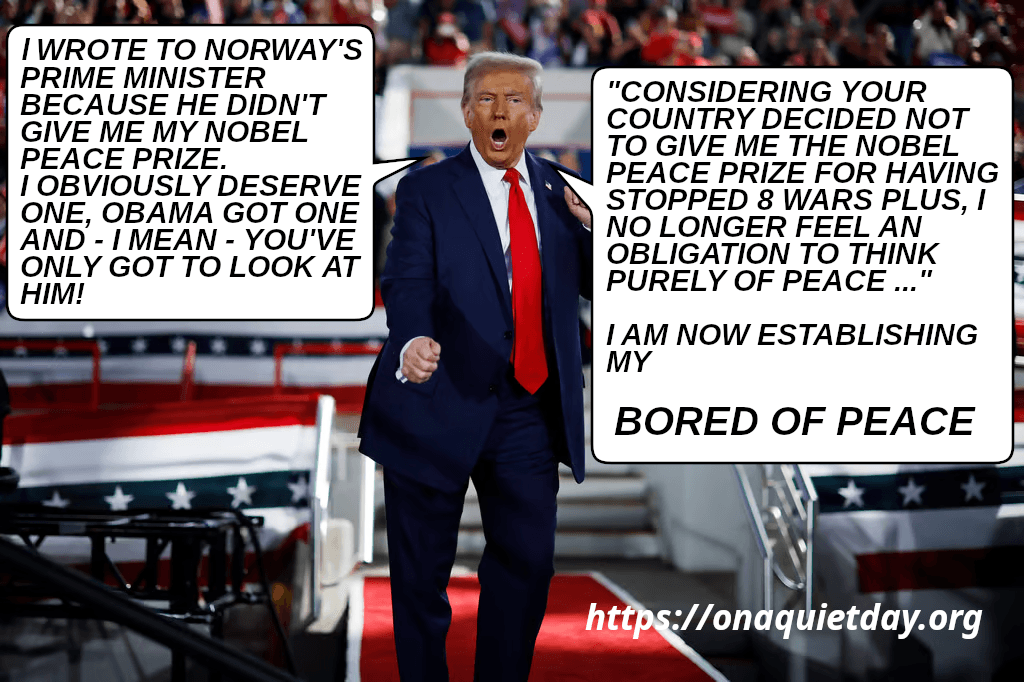
Donald Trump explains why he established his Bored of Peace
Orcas discuss how Trump was re-elected and him being an obviously insane, xenophobic Fascist.
Continue ReadingTime to Grow Out of ‘Playing’ War

Trump’s Environmental Massacre

Spread the love

Original article by Derrick Z. Jackson republished from Common Dreams under Creative Commons (CC BY-NC-ND 3.0). 

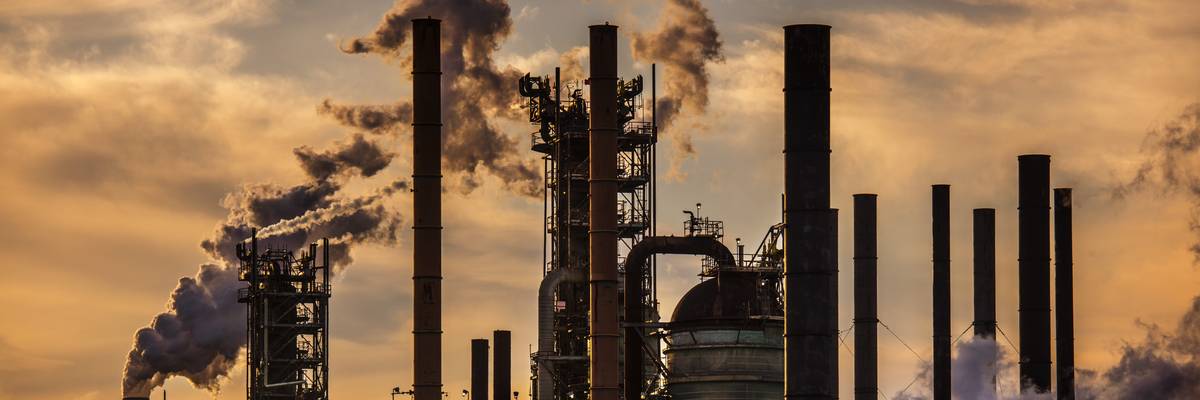
The pictured oil refinery, owned by Exxon Mobil, is the second largest in the country on 28th February 2020 in Baton Rouge, Louisiana, United States.  (Photo by Barry Lewis/InPictures via Getty Images)

The EPA’s decision to erase the value of lives lost or saved by regulations is a horror beyond the pale. It opens the door for government-sanctioned death with a baked-in cover-up.

Last March, I interviewed staffers at the Environmental Protection Agency’s Region 5 headquarters in Chicago who were horrified by the Trump administration’s staff and funding cuts, which notably included eliminating environmental justice and diversity, equity, and inclusion programs.

The threat of those cuts was so severe that Brian Kelly, an on-site emergency coordinator based in Michigan, predicted: “People will die. There will be additional deaths if we roll back these protections.”

RECOMMENDED…

US-IRAN-ISRAEL-WAR-DEMONSTRATION

‘People Are Loving What’s Happening,’ Trump Claims While Massacring Iranian Children as US Oil Prices and Unemployment Spike

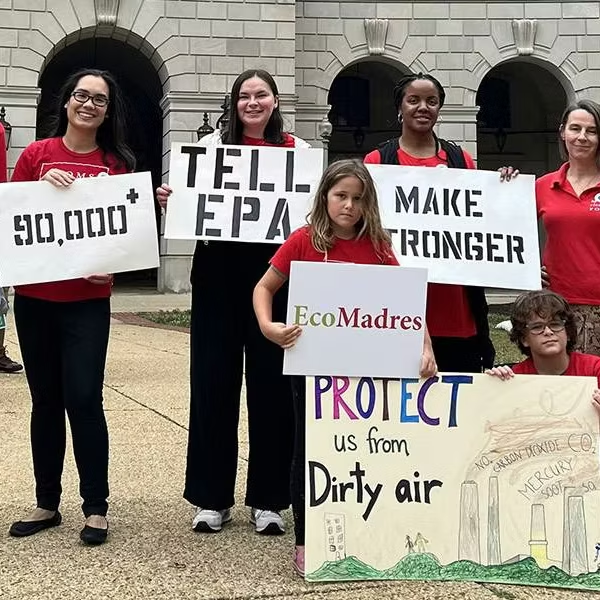
children and parents protest for EPA clean air protections

‘Direct Attack on the Health of Americans’: Trump EPA Greenlights More Mercury Pollution

How many additional deaths? The Trump EPA will not say. As part of President Donald Trump’s crusade to destroy federal science and roll back environmental safeguards, his EPA announced recently that it will no longer consider the monetary value of saving lives by regulating fine particulate matter, commonly called soot, smaller than 2.5 micrometers in diameter (PM 2.5) and ozone smog from vehicles, fossil-fuel-burning power plants, and other polluting industries.

In other words, the agency intends to conduct cost-benefit analyses by only considering the cost.

We Need Stronger Pollution Regs

The data documenting soot’s deadly damage even with environmental rules in place is voluminous, much coming from the federal government itself, suggesting that we need stronger regulations, not weaker ones.

A 1997 EPA report found the first 20 years of the 1970 Clean Air Act were so effective that 205,000 premature deaths were avoided from all air pollution sources in 1990. The same report concluded that the 1990 amendments to the law would save more than 230,000 lives a year by 2020 and prevent 2.4 million asthma attacks.

By disbanding DEI and environmental justice programs, the Trump administration is ensuring that communities of color are collateral damage in sucking the Earth dry of oil and gas and mining for the last lump of coal.

Even so, air pollution remains mortally high in a nation that is now the world’s biggest producer of oil and gas and stubbornly prioritizes individually owned vehicles over public transportation. A 2021 study funded by the EPA and published in the journal Science Advances found that PM 2.5 alone still accounts for 85,000 to 200,000 excess deaths a year.

The conclusions of nongovernmental studies echo the EPA’s own findings. A 2022 University of Wisconsin study, for example, estimated that if the United States eliminated all fine particulate, sulfur dioxide, and nitrogen oxide emissions from electricity generation, vehicles, factories, and buildings, 53,200 premature deaths a year could be prevented, providing $600 billion in health benefits from avoided illness and mortality.

Drill Baby Drill’s Collateral Damage

The Trump EPA’s recent announcement is just another of a string of nonsensical—and dangerous—moves by the agency. They include abandoning the Paris Climate Accord and killing the agency’s 2009 “endangerment finding” determining that carbon pollution threatens human health, which the Environmental Defense Fund (EDF) estimates will cut short the lives of as many as 58,000 people over the next 30 years due to additional pollution.

Taken together, the Trump administration’s assault on public health has the potential of triggering an environmental massacre, particularly among the most vulnerable Americans.

Because of our nation’s history of housing discrimination, communities of color, regardless of income, face more than twice the risk of exposure to PM 2.5 than white communities. According to the 2021 Sciences Advances study, this “phenomenon is systemic, holding for nearly all major sectors, as well as across states and urban and rural areas, income levels, and exposure levels…. Targeting locally important sources for mitigation could be one way to counter this persistence.”

By disbanding DEI and environmental justice programs, the Trump administration is ensuring that communities of color are collateral damage in sucking the Earth dry of oil and gas and mining for the last lump of coal. An August 2025 Science Advances study found that the life cycle of oil and gas extraction, storage, transporting, refining, and combustion results in 91,000 annual premature deaths due to exposure to PM 2.5, nitrogen dioxide, and ozone. It found that, with rare exception, “Asian, Black, Hispanic, and Native American groups experience the worst exposures and burdens for all life-cycle stages and pollutants.” A 2023 New England Journal of Medicine study, meanwhile, concluded that reducing PM 2.5 pollution alone would disproportionately benefit Blacks at all income levels as well as low-income whites.

EPA Now Stands for Every Polluter’s Ally

Without a single fact to back up its claim, the Trump EPA—led by the fossil fuel industry-friendly Lee Zeldin—stated it did away with calculating lives saved because prior estimates were done with “false precision and confidence.” In fact, the agency is now simply repeating the talking points of the oil and gas industry and the US Chamber of Commerce, which has a long history of lobbying Congress to resist climate legislation and filing endless amicus briefs on behalf of polluters to counter environmental lawsuits.

In 2018, during the first the Trump administration, the chamber asserted—also with no evidence—that previous to the Trump EPA, the agency “historically misinformed and misled the public by using inconsistent and opaque analytical and communication methods regarding costs and benefits.”

That same year, the Trump EPA offered a revealing nugget of information that was hardly opaque. It admitted that its effort to kill the Obama administration’s Clean Power Plan, which would have reined in power plant carbon pollution, would result in in as many as 1,400 premature deaths a year by 2030, and thousands more annual cases of respiratory diseases. At the time, Trump was also trying to roll back Obama-era clean air vehicle standards that were projected to save nearly 40,000 lives a year by 2030.

In its last year in office, the Biden administration proposed tightening PM 2.5 standards, estimating that it could prevent as many as 4,500 premature deaths in 2032 and lead to $46 billion in health benefits in 2032.

There is not a single word about protecting lives or lowering healthcare costs in the EPA’s February 12 press release announcing its repeal of the endangerment finding nor in its February 20 press release hailing the repeal of tighter mercury and air toxics standards enacted by the Biden administration. Instead, Zeldin claimed—without proof—that the air pollution rules would have “destroyed reliable American energy” and revoking the endangerment finding would save Americans more than $1.3 trillion, including an average cost savings of more than $2,400 on a new vehicle.

While Zeldin is trying to use the greater availability of cheaper, gas-guzzling cars as a lure to seduce the public to look the other way on environmental regulations, the pollution they emit will smoke the nation. EDF estimates that higher-polluting vehicles could, by 2055:

  • Cost US drivers as much as $1.4 trillion in increased fuel costs;
  • Emit carbon pollution that will intensify climate change-related extreme weather events, costing $1.5 trillion to $4.2 trillion; and
  • Increase respiratory and heart disease, as well as the number of premature deaths, costing $170 billion to $500 billion.

None of that mattered to the first Trump administration, which admitted its regulatory rollbacks could kill people. When the second Trump administration barreled into office with its cutbacks and deep-sixing of environmental justice and DEI programs, staffers in the EPA Chicago Region 5 office feared the worst. They included Kayla Butler, a Superfund community involvement coordinator. The stories her team collects in the field of people living with toxic horrors are precisely the stories she said the Trump administration is “trying to erase.”

The EPA’s decision to erase the value of lives lost or saved by regulations is a horror beyond the pale. It opens the door for government-sanctioned death with a baked-in cover-up. With the death toll from air pollution still so high, the Trump EPA is burying the data with the bodies, so we will never know the cause.

This article first appeared at the Money Trail blog and is reposted here at Common Dreams with permission.

Original article by Derrick Z. Jackson republished from Common Dreams under Creative Commons (CC BY-NC-ND 3.0). 

Donald Trump urges you to be a Climate Science denier like him. He says that he makes millions and millions for destroying the planet, Burn, Baby, Burn and Flood, Baby, Flood.
Orcas discuss how Trump was re-elected and him being an obviously insane, xenophobic Fascist.
Elon Musk urges you to be a Fascist like him, says that you can ignore facts and reality then.
Continue ReadingTrump’s Environmental Massacre

Warnings of Iran Invasion Grow as US to Send Up to 5,000 Marines, Sailors to Middle East

Spread the love

Original article by Stephen Prager republished from Common Dreams under Creative Commons (CC BY-NC-ND 3.0). 

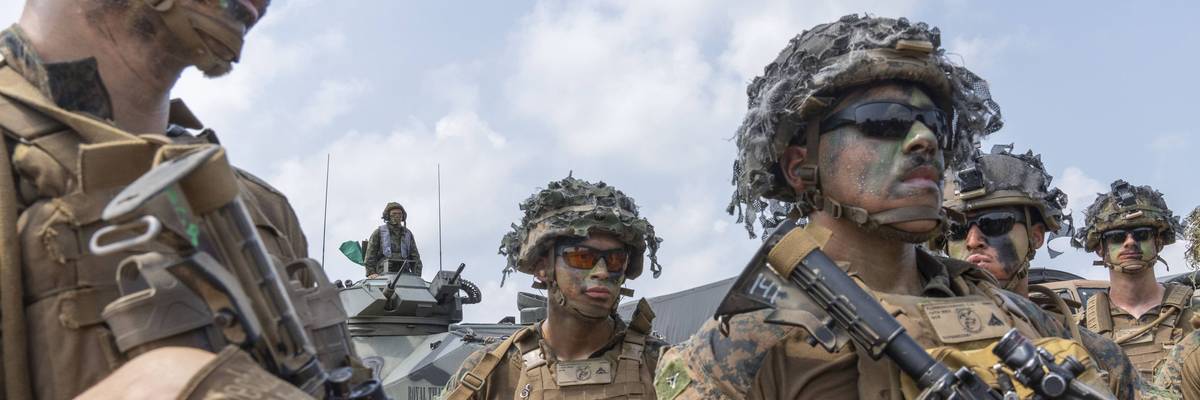
US marines stand on a beach in Sattahip, Thailand after taking part in the 46th Cobra Gold multinational military exercises co-hosted by the Royal Thai Armed Force and the US Indo-Pacific command on February 26, 2026. (Photo by Adryel Talamantes/Anadolu via Getty Images)

“Bringing this war to an end,” said one former US intelligence analyst, “requires recognizing it can still get much, much worse.”

In what has been described as a potential “major escalation” of the Trump administration’s war with Iran, Defense Secretary Pete Hegseth has reportedly approved a request from US Central Command to move more warships and thousands of Marines to the Middle East following Iran’s attacks on vessels in the Strait of Hormuz.

Citing three US officials, The Wall Street Journal reported on Friday that the US was sending “an element of an amphibious ready group and attached Marine expeditionary unit, typically consisting of several warships and 5,000 Marines and sailors.”

RECOMMENDED…

image shoes US military planes headed to the midde east

‘The Tankers Just Keep Coming’: US Military Movements Spike Fears of Imminent Attack on Iran

Sen. Richard Blumenthal speaks to reporters

After Secret Briefing, Dem Senators Warn Trump ‘On a Path’ to Ground Invasion of Iran

According to the Journal, the Japan-based USS Tripoli and its attached Marines are already headed to the Middle East.

While the Journal did not explicitly report that the operation was tied to the volatile situation in the Strait of Hormuz, it noted that “the move comes as Iran’s attacks on the strait have paralyzed traffic through the strategic waterway, disrupting the global economy, driving up gas prices and posing a major military and political challenge for President [Donald] Trump.”

In his first address on Thursday, delivered by a news anchor on Iranian state TV, the country’s new supreme leader, Mojtaba Khamenei, said that “the lever of blocking the Strait of Hormuz must definitely be used” to heighten economic pressure on the US.

Iran’s Islamic Revolutionary Guard Corps (IRGC) has declared that “not a liter of oil” shall pass through the strait, and vowed to attack any ship linked to the US and Israel that may attempt to make the journey.

Iran has reportedly attacked at least six commercial ships in the area since Wednesday, including one marked with a Thai flag that still has three crew members missing. US intelligence sources have also accused Iran of laying mines in the Strait, which Iran has neither confirmed nor denied.

The blockage of the strait, through which about one-fifth of global oil shipments pass each year, has sent the global market into chaos. Prices of Brent crude have surged from under $70 less than a month ago to more than $100 per barrel on the global market, and US gas prices have leaped to $3.63 per gallon on average, up from $2.94 a month ago.

Prices have continued to climb even after the International Energy Agency (IEA) announced its largest-ever coordinated release of oil from nations’ strategic reserves on Wednesday to combat what it called “the largest supply disruption in the history of the global oil market.”

Shashank Joshi, the defense editor at The Economist and a visiting fellow at the Department of War Studies at King’s College London, said that a deployment of such a large Marine force seems to be “a key indicator of a potential ground operation” in Iran.

Trump said earlier this week that he was “nowhere near” sending troops into Iran even as it ramped up threats to block the strait. But privately, he has reportedly been mulling plans to put “boots on the ground” within Iranian territory to accomplish a number of objectives, though officials have characterized them as limited special-operations missions.

Administration officials have reportedly suggested a commando raid on Iran’s nuclear sites to confiscate or sabotage its supply of uranium, according to Axios. They’ve also considered a plan to occupy Kharg Island, which sits 15 miles off Iran’s coast and handles about 90% of its oil exports, serving as an economic “lifeline” for the battered nation.

But Trump has also said that if Iran blocks the strait, “the US Navy and its partners will escort tankers through the strait, if needed.” Chairman of the Joint Chiefs, Gen. Dan Caine, has said the Pentagon is looking at “a range of options” to do this.

In an analysis published Tuesday by Zeteo, Harrison Mann, a former US Army major and executive officer of the Defense Intelligence Agency’s Middle East/Africa Regional Center, suggested that the US may pursue an ambitious plan to “clear Iran’s coastline around the strait” to get tankers moving again.

Mann, who worked under the Biden administration but resigned in protest of its support for the genocide in Gaza, said this plan would require “an indefinite occupation–otherwise missile trucks could just get in position after US forces leave.” Doing this, he added, would require “a full-fledged invasion, possibly beyond even the 10,000 or so rapid-response forces at Trump’s disposal.”

“All of these ground operations risk high casualties while failing to accomplish their missions,” Mann said. “That’s a feature, not a bug. Even if one of these operations met its objectives, troops in peril behind enemy lines demand resupply, evacuation, and revenge, which puts more troops in peril behind enemy lines, and so on.”

The movement of more troops comes as the US public expresses strong disapproval of Trump’s war with Iran. In a Quinnipiac poll published this week, 53% of registered voters said they opposed US military action against Iran, while just 40% approved.

About 74% said they feared that the war would cause oil and gas prices to rise, and 71% feared that the war would last “months” or longer.

Trump’s former chief strategist, Steve Bannon, who remains one of his top allies in media, said on his War Room podcast that deploying such a large military force “sends a signal to Iran, but it also sends a signal to the American people: This is a major escalation.”

Mann said that putting troops on the ground in Iran will only “ensure that Trump can’t back out easily, which is exactly what [Israeli Prime Minister Benjamin] Netanyahu, [US Sen.] Lindsey Graham (R-SC), and their ilk need to fracture Iran.

“Bringing this war to an end,” Mann said, “requires recognizing it can still get much, much worse, refusing to fall for the promise of ‘small special ops raids,’ and calling these courses of action what they are: a prelude to forever war.”

Original article by Stephen Prager republished from Common Dreams under Creative Commons (CC BY-NC-ND 3.0). 

Climate science denier Donald Trump says that more liquid gold is being secured according to his policy of global privateering
Donald Trump explains why he established his Bored of Peace
Orcas discuss rotting brain. Front Orca says "Wish someone would lock him up".
Orcas discuss rotting brain. Front Orca says “Wish someone would lock him up”.

Continue ReadingWarnings of Iran Invasion Grow as US to Send Up to 5,000 Marines, Sailors to Middle East