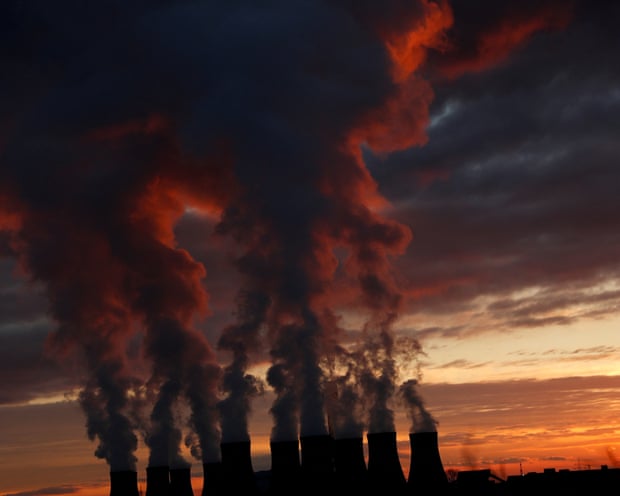
Even ‘weak’ cyclones are being turned into deadly rainmakers by fast-warming oceans
Spread the love
Thomas Wyness / Alamy

Ligin Joseph, University of Southampton

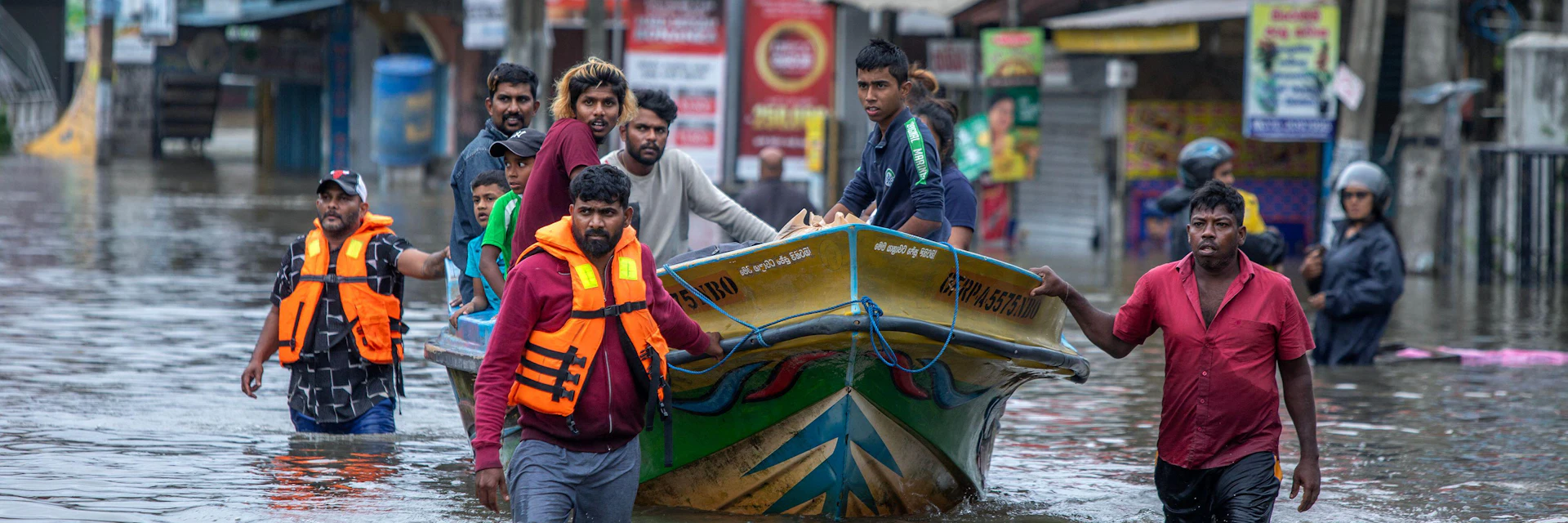
The final week of November was devastating for several South Asian countries. Communities in Sri Lanka, Indonesia and Thailand were inundated as Cyclones Ditwah and Senyar unleashed days of relentless rain. Millions were affected, more than 1,500 people lost their lives, hundreds are still missing, and damages ran into multiple millions of US dollars. Sri Lanka’s president even described it as the most challenging natural disaster the island has ever seen.

When disasters like this happen, the blame often falls on a failure in early warnings or poor preparedness. This was the case with major floods in Kerala, south India, in 2018, which devastated my hometown.

But this time, the forecasts were largely accurate; the authorities knew the storms were coming, yet the devastation was still immense.

So, if the forecasts were good enough, why were the impacts still so severe?

Weak winds, extreme rain

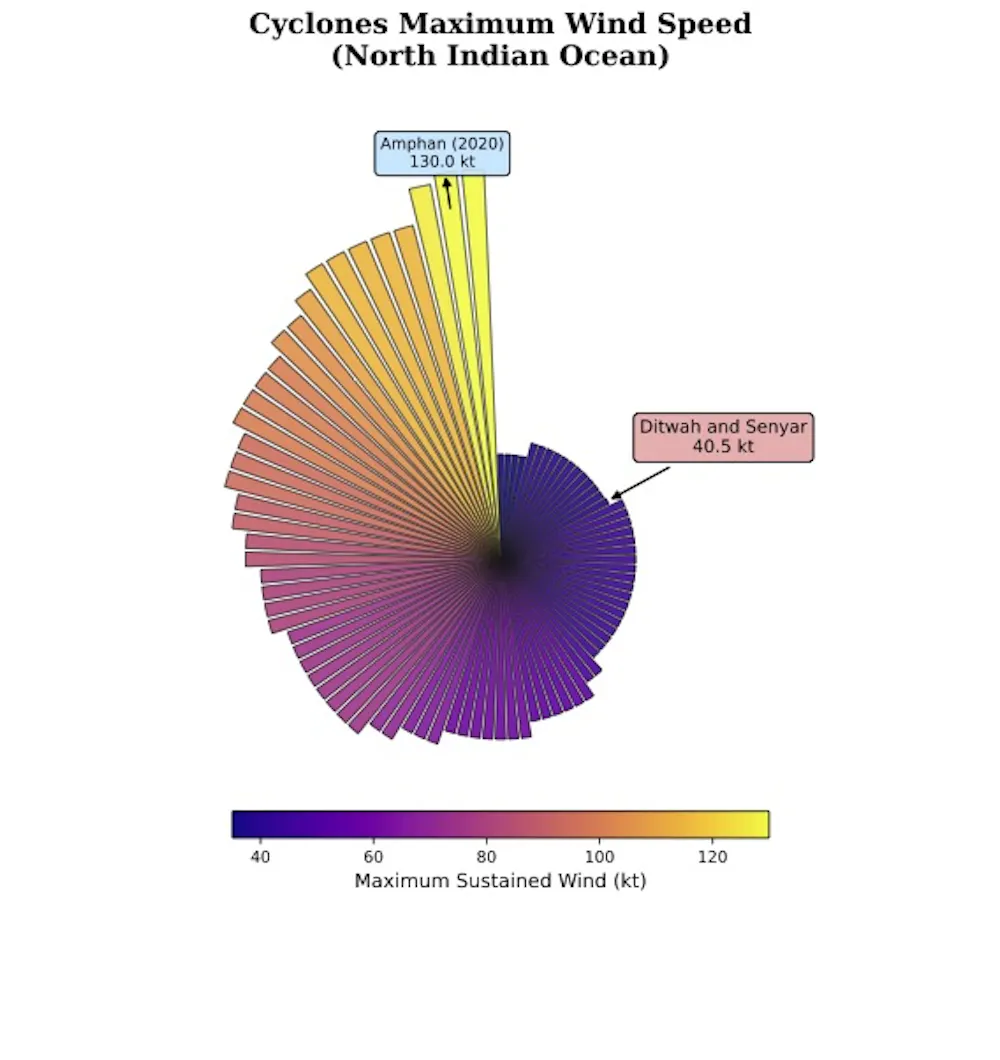
One emerging explanation is that these storms were not dangerous because of their winds, but because they produced unusually intense rainfall.
Graph of wind speeds
This graph of all cyclonic storms over the north Indian Ocean since 2001 shows Ditwah and Senyar weren’t particularly windy. (Wind speed measured in knots. 1 knot is about 1.15 mph or 1.85 kph) Ligin Joseph (data: IBTrACS), CC BY-SA

Consider Cyclone Ditwah. Its peak winds were around 75 km/h (47 mph). That’s windy, but nothing special. In the UK, it would be classified merely as a “gale” rather than a “storm”. It was far weaker than the 220 km/h winds of the powerful 1978 cyclone that also struck Sri Lanka. Yet Ditwah still caused massive devastation.

What explains this apparent contradiction? It’s too early to say definitively, but climate change is likely a part of the story. Even when storms are not especially strong in wind terms, the amount of rain they carry is increasing.

A warmer atmosphere holds more water

A well established meteorological rule helps explain why. For every degree of global warming, the atmosphere can hold about 7% more moisture.

As the planet warms, the air above us becomes a larger reservoir, waiting to dump more water on us. When storms form, they can tap into this expanded supply, often in extremely short bursts. Even if wind speeds are modest, the rainfall alone can be catastrophic.

The oceans matter even more

Warming oceans play an even more powerful role, as cyclones draw their energy from warm ocean waters. Satellite data from late November shows just how warm the eastern Indian Ocean was, with large areas more than 1°C above normal during Ditwah and Senyar.

Coloured map of Indian Ocean and SE Asian seas
In the days before the cyclones formed (20–24 November), the oceans were even warmer than usual, creating conditions that could have fuelled and intensified the rainfall. Ligin Joseph (Data: OISST; track positions are approximate), CC BY-SA

Such warm anomalies are no longer unusual. The oceans have absorbed more than 90% of the excess heat trapped by greenhouse gases, and long-term observations show a clear upward trend in ocean temperatures.

That doesn’t necessarily mean cyclones are becoming more frequent – their formation still depends on other ingredients, such as low wind shear (small differences in wind speed and direction with height) and the right atmospheric structure.

What warmer oceans do change, however, is the amount of energy available to any storm that does manage to form. When the ocean is warmer, cyclones have more fuel and evaporation increases, loading the atmosphere with moisture that can fall as intense rain once a storm develops. Even weak cyclones can therefore hold exceptional amounts of rain.

Coloured map of Indian Ocean and SE Asian seas
Evaporation averaged for 26–27 November. Ditwah especially travelled over warm waters supplying large amounts of moisture to the atmosphere. Ligin Joseph (Data: ERA5), CC BY-SA

The winds near the surface help this process along. As they move across the ocean, they sweep away the moisture-filled air just above the water and replace it with drier air, allowing evaporation to continue. Put together, warmer oceans, higher evaporation, and an atmosphere that can store more moisture, these factors can significantly intensify the rainfall associated with cyclones.

Coastline hugging makes flooding worse

Local geography amplified these effects. Both Ditwah and Senyar formed unusually close to land and travelled along the coastline for an extended period. This meant they stayed over warm waters long enough to continuously draw moisture, but remained close enough to land to dump that moisture as intense rainfall almost immediately.

Cyclone Ditwah, in particular, moved slowly as it approached Sri Lanka. Slow-moving storms can be especially dangerous as they repeatedly dump rain over the same area. Even if winds are weak, this combination of warm seas, coastal proximity and slow forward speed can be devastating.

A new threat

These storms suggest that climate change – especially ocean warming – is reshaping the risks posed by cyclones. The most dangerous storms may no longer simply be the ones with the strongest winds, but also the ones with the most moisture.

Forecasting systems, including new AI-powered weather models, are getting better at predicting cyclone tracks and wind speeds. Yet rainfall-driven flooding remains far harder to forecast. As oceans continue to warm, governments and disaster agencies will need to prepare for storms that may be weak in wind but extreme in rain.

These insights are based on preliminary analysis and emerging scientific understanding. More detailed peer-reviewed studies will be needed to pinpoint exactly why Ditwah and Senyar produced such extreme rainfall. But the pattern that is emerging – weak cyclones delivering outsized floods in a warming world – must not be ignored.

Ligin Joseph, PhD Candidate, Oceanography, University of Southampton

This article is republished from The Conversation under a Creative Commons license. Read the original article.

Donald Trump urges you to be a Climate Science denier like him. He says that he makes millions and millions for destroying the planet, Burn, Baby, Burn and Flood, Baby, Flood.
Nigel Farage urges you to ignore facts and reality and be a climate science denier like him and his Deputy Richard Tice. He says that Reform UK has received £Millions and £Millions from the fossil fuel industry to promote climate denial and destroy the planet.
Continue ReadingEven ‘weak’ cyclones are being turned into deadly rainmakers by fast-warming oceans

UK farmers lose £800m after heat and drought cause one of worst harvests on record

Spread the love

https://www.theguardian.com/environment/2025/dec/04/record-heat-drought-2025-cost-uk-arable-farmers-estimated-800m-climate-crisis-grain-harvest

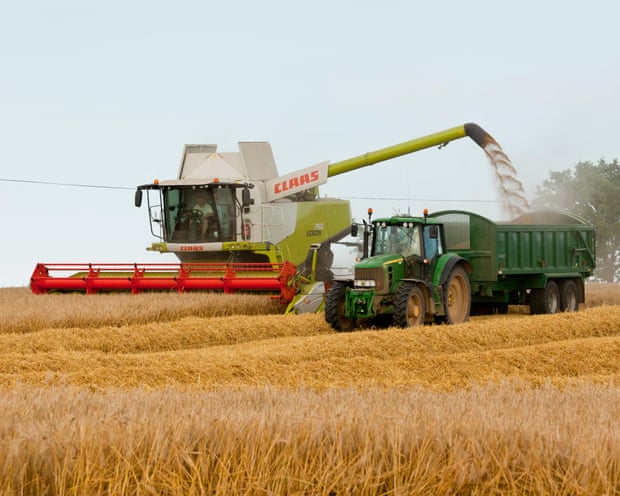
Spring barley is harvested. The ECIU said the evidence suggests climate impacts were driving issues of profitability in the arable sector. Photograph: Diane Randell/Alamy

Many now concerned about ability to make living in fast-changing climate after one of worst grain harvests recorded

Record heat and drought cost Britain’s arable farmers more than £800m in lost production in 2025 in one of the worst harvests recorded, analysis has estimated.

Three of the five worst harvests on record have now occurred since 2020, leaving some farmers asking whether the growing impacts of the climate crisis are making it too financially risky to sow their crops. Farmers are already facing heavy financial pressure as the costs of fertilisers and other inputs have risen faster than prices.

This year Britain had the hottest and driest spring on record, and the hottest summer, with drought conditions widespread. As a result, the production of the five staple arable crops – wheat, oats, spring and winter barley, and oilseed rape – fell by 20% compared with the 10-year average, according to the analysis by the Energy and Climate Intelligence Unit (ECIU). The harvest in England was the second-worst in records going back to 1984.

Supercharged by global heating, extreme rainfall in the winters of 2019-20 and 2023-24 also led to very poor harvests, as farmers were unable to access waterlogged and flooded fields to drill their crops.

“This has been another torrid year for many farmers in the UK, with the pendulum swinging from too wet to too hot and dry,” said Tom Lancaster at the ECIU. “British farmers have once again been left counting the costs of climate change, with four-fifths now concerned about their ability to make a living due to the fast-changing climate.”

Article continues at https://www.theguardian.com/environment/2025/dec/04/record-heat-drought-2025-cost-uk-arable-farmers-estimated-800m-climate-crisis-grain-harvest

Donald Trump urges you to be a Climate Science denier like him. He says that he makes millions and millions for destroying the planet, Burn, Baby, Burn and Flood, Baby, Flood.
Nigel Farage urges you to ignore facts and reality and be a climate science denier like him and his Deputy Richard Tice. He says that Reform UK has received £Millions and £Millions from the fossil fuel industry to promote climate denial and destroy the planet.
Continue ReadingUK farmers lose £800m after heat and drought cause one of worst harvests on record

What we told UK leaders about climate and nature at a national emergency briefing

Spread the love
Food security professor Paul Behrens (centre) joined a panel of climate scientists at the national emergency briefing to MPs in London in November 2025. Vuk Valcic/Alamy

Paul Behrens, University of Oxford

I joined eight other experts to deliver a national emergency briefing in late November on the climate and nature to around 1,200 of the UK’s leaders — across politics, business, faith and culture — in Central Hall Westminster.

Much like the televised national briefings delivered during COVID, the aim was to deliver sober, science-based overviews of the various climate and nature crises that the UK faces. Chaired by the academic and author Mike Berners-Lee, the aim was to set off a tipping point of engagement among politicians, faith leaders, CEOs, sport and cultural figures. TV presenter and naturalist Chris Packham opened the event.

The alignment among the scientists speaking was clear. Several of us had never met before, yet our research all linked to tell a story of unprecedented threat and opportunity.

Nathalie Seddon, a professor of biodiversity at the University of Oxford, laid bare the nature crisis. Nature, she emphasised, is not a luxury. It is critical infrastructure, and the state of depleted nature across the country is a national security issue.

Kevin Anderson, a professor in energy and climate change at the University of Manchester, presented the clear carbon arithmetic of how quickly we need to cut emissions. He pointed out what our political discourse studiously avoids: “It is now too late for non-radical futures.”

Hayley Fowler, spoke about how Valencia-style flooding is perfectly possible in the UK. Tim Lenton, a professor of Earth system science at the University of Exeter, spoke about how climate-driven changes in ocean currents may impact the UK.

I spoke about food security and the great food transformation that’s needed, including dietary change, waste reductions, production improvements and increased resilience. I explained how more plants in our diets are necessary to reduce climate and nature impacts, improve our health, increase food resilience and reduce reliance on imports.

Hugh Montgomery, chair of intensive care medicine at UCL, said: “You don’t respond to an emergency with talk and homeopathy. You respond with genuine action. … Climate change is the greatest threat to human health in the 21st century.”

Lieutenant General Richard Nugee, a retired senior British Army officer, spoke on national security implications and how the energy transition means greater stability and security for the UK, as the country would be less vulnerable to petrostates and the inherent volatility of fossil fuels.

Angela Francis, director of policy solutions at the environmental charity World Wide Fund for Nature, spoke about how innovation is the key to productivity and healthy economies. She highlighted how faster energy transitions are cheaper, and the cost of the UK energy transition is now 73% cheaper than what was thought five years ago. Had we made the transition already, recent inflation would have been 7% lower.

Tessa Khan is an environmental lawyer and the co-founder of the Climate Litigation Network: a global coalition of organisations using litigation to compel governments to ramp up their climate mitigation ambition. She described how the price of renewables has dramatically reduced, their efficiency has soared, and how investment in renewables pays dividends.

The science was news to many

The message was consistent: these are not distant projections but rapidly accelerating realities that will profoundly affect every aspect of British life.

There was anger too. Frustration at vested interests blocking action, and at the inequality of climate impacts. The UN’s annual climate summit, Cop30, had just concluded in Belém, Brazil, attended by a record 1,600 fossil fuel lobbyists.

The words “fossil fuel” were removed from the final Cop30 text. Our current collective response could not be more inadequate.

Some people I spoke to suggested that the panel at this event was preaching to the choir. It’s important to remember that MPs radically underestimate the urgency of the situation. Fewer than 15% of the 100 MPs surveyed in one study knew that global emissions needed to peak by 2025 to have any chance of limiting warming to 1.5°C.

The science was news to many present. The planet is heading into dangerous overshoot above 1.5°C within the next few years. As Anderson pointed out: for the UK to meet its fair share obligations in emissions reductions without relying on highly speculative and costly carbon dioxide removal, we would need to see roughly 13% year-on-year reductions for just 2°C – let alone 1.5°C.

There was a catharsis during the briefing. Knowing that people with the power to act were finally hearing the full picture: the health effects, the extreme weather, the collapsing nature, the food insecurity, the economic and geopolitical risks. As Rabbi Jonathan Wittenberg, senior rabbi of Masorti Judaism (a traditional movement for modern Jews), wrote afterwards in the Observer: “Those facts were hard to hear, but I also felt thank goodness, we’re being told it as it is.”

A just, equitable transition to a clean economy would improve countless aspects of our lives, from creating jobs and improving health to strengthening communities and increasing resilience. We will look back on this moment bewildered that we did not act sooner, if we are able to act in time.

This is why we are calling for a televised national emergency briefing, so that what happened in Central Hall Westminster can reach the public. Anyone can sign this open letter, calling on the prime minister, Keir Starmer, and the heads of the BBC, ITV, Channel 4, Channel 5, S4C and the media regulator Ofcom, for urgent, honest communication about the scale of the crisis and the solutions available.


Don’t have time to read about climate change as much as you’d like?
Get a weekly roundup in your inbox instead. Every Wednesday, The Conversation’s environment editor writes Imagine, a short email that goes a little deeper into just one climate issue. Join the 47,000+ readers who’ve subscribed so far.


Paul Behrens, British Academy Global Professor, Future of Food, Oxford Martin School, University of Oxford

This article is republished from The Conversation under a Creative Commons license. Read the original article.
Donald Trump urges you to be a Climate Science denier like him. He says that he makes millions and millions for destroying the planet, Burn, Baby, Burn and Flood, Baby, Flood.
Nigel Farage urges you to ignore facts and reality and be a climate science denier like him and his Deputy Richard Tice. He says that Reform UK has received £Millions and £Millions from the fossil fuel industry to promote climate denial and destroy the planet.
Orcas comment on killer apes destroying the planet by continuing to burn fossil fuels.
Continue ReadingWhat we told UK leaders about climate and nature at a national emergency briefing

UK using more wood to make electricity than ever, Drax figures show

Spread the love

https://www.theguardian.com/business/2025/dec/03/uk-using-more-wood-to-make-electricity-than-ever-drax-figures-show

Biomass provided almost a fifth of the UK’s electricity for the first time during one morning in September when renewable energy resources were particularly low. Photograph: Lee Smith/Reuters

Giant biomass plant reveals burning of wood pellets made 9% of UK’s electricity in July, its largest ever monthly share

Britain’s reliance on burning wood to generate electricity has reached record highs, even as the government moves to curb the controversial use of biomass power.

The latest figures supplied by the owner of the huge Drax biomass plant in North Yorkshire have revealed that power generated from burning biomass wood pellets provided 9% of the UK’s electricity in July, its largest ever monthly share.

Weeks later, biomass provided almost a fifth (17%) of the UK’s electricity for the first time during one morning in September when renewable energy resources were particularly low.

Britain’s record reliance on biomass generation has reached new heights as the government set out its plans to dramatically reduce the controversial energy source under a new subsidy agreement with the FTSE 250 owner of the Drax power plant.

Under the deal, Drax will continue to earn more than £1m a day from energy bills in exchange for burning wood pellets at its power plant. However, it will only be supported to run just over a quarter of the time, down sharply from almost two-thirds of the time currently.

When the deal was agreed in February, the energy minister, Michael Shanks, said the company’s subsidies had been cut because it “simply did not deliver a good enough deal for billpayers and enabled Drax to make unacceptably large profits”.

Drax has also faced a backlash from green groups amid criticism of the company’s claims that it sources wood only from “well‐managed, sustainable forests” to manufacture the pellets burned at its power plant.

Article continues at https://www.theguardian.com/business/2025/dec/03/uk-using-more-wood-to-make-electricity-than-ever-drax-figures-show

Nigel Farage urges you to ignore facts and reality and be a climate science denier like him and his Deputy Richard Tice. He says that Reform UK has received £Millions and £Millions from the fossil fuel industry to promote climate denial and destroy the planet.
Continue ReadingUK using more wood to make electricity than ever, Drax figures show

Coming soon

Spread the love
Keir starmer warns against following the https://onaquietday.org blog.

Very occasionally I write a piece about the state of politics. It’s often about UK politics but this time will extend to global politics with Farage following the Donald’s policies and no prospect of politicians addressing the climate crisis. To address Wes Streeting and doctor’s strike, David Lammy’s attack on trial by jury, Nigel Farage and Reform UK, Your Party and the Greens.

Donald Trump warns against following the Onaquietday.org blog, says that he's heard that she's a witch with a black cat and a dangerous kitchen.
Donald Trump warns against following the Onaquietday.org blog, says that he’s heard that she’s a witch with a black cat and a dangerous kitchen.
Keir Starmer warns against following the https://onaquietday.org blog.
Continue ReadingComing soon