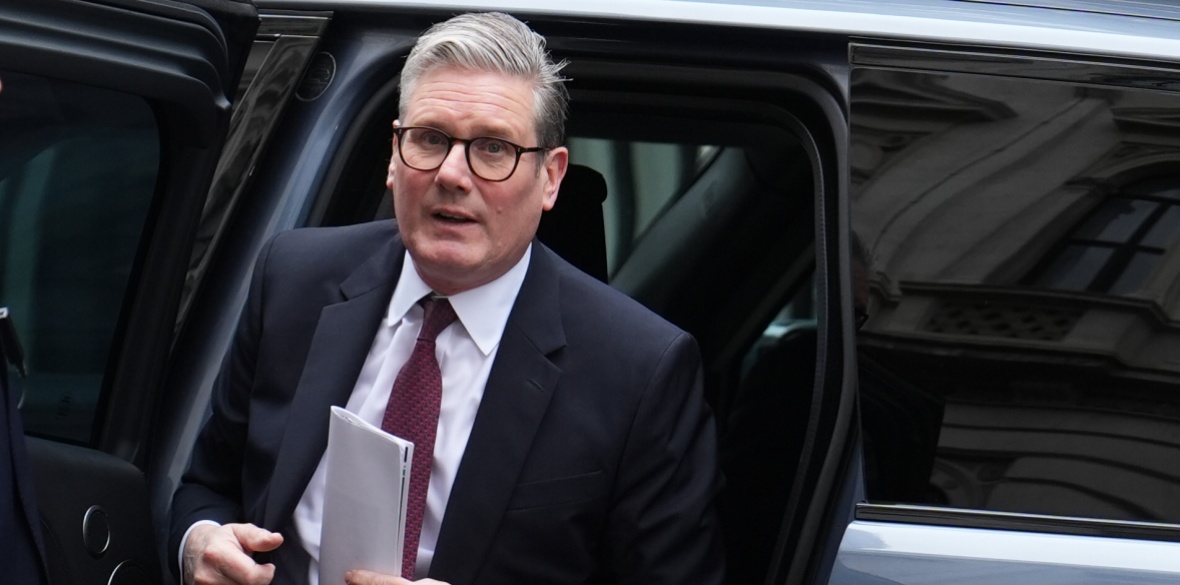
Prime Minister Keir Starmer during his talks with Nato Secretary General Mark Rutte in Downing Street, in London, October 10, 2024
LABOUR and Prime Minister Sir Keir Starmer’s approval ratings are still nosediving as the government marks 100 days in office tomorrow.
New Ipsos polling reveals Sir Keir’s net popularity has fallen to a record low of minus 26 points — worse than Reform leader Nigel Farage.
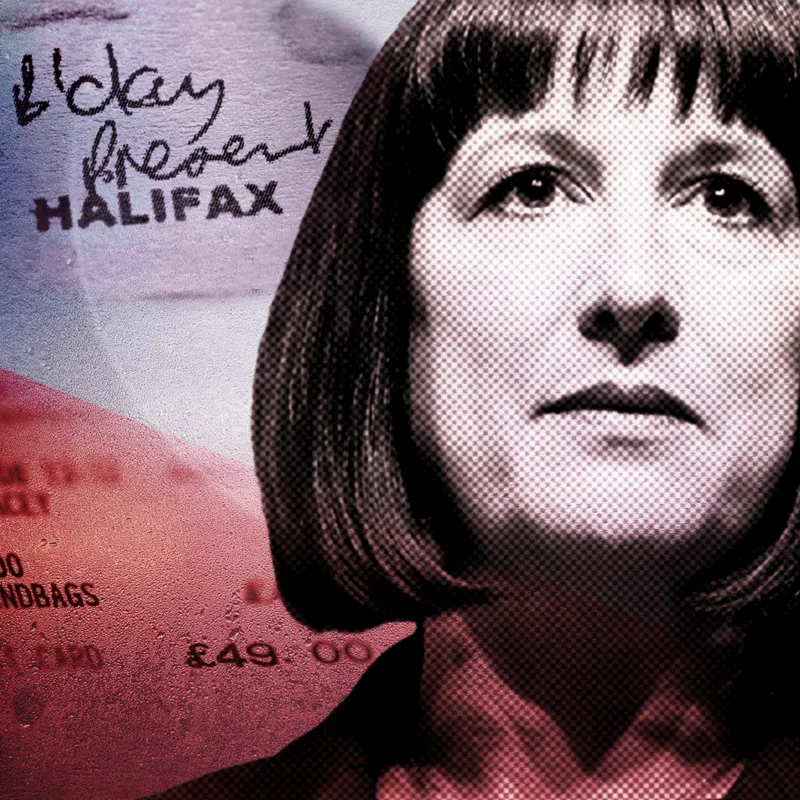
Rachel Reeves was doing even worse at minus 30 points with four in nine saying she is doing a bad job as Chancellor.
Experts blamed No 10 “turf wars,” scandals over ministerial freebies and cutting pensioner benefits as the Labour Party’s net popularity also plummeted 13.5 points to minus 21 points since the general election.
Keir Starmer explains that he feels no shame or guilt benefitting personally from gifts from the rich and powerful while insisting on policies of severe austerity causing suffering and death.Zionist Keir Starmer is quoted “I support Zionism without qualification.” He’s asked whether that means that he supports Zionism under all circumstances, whatever Zionists do.Vote For Genocide Vote Labour.
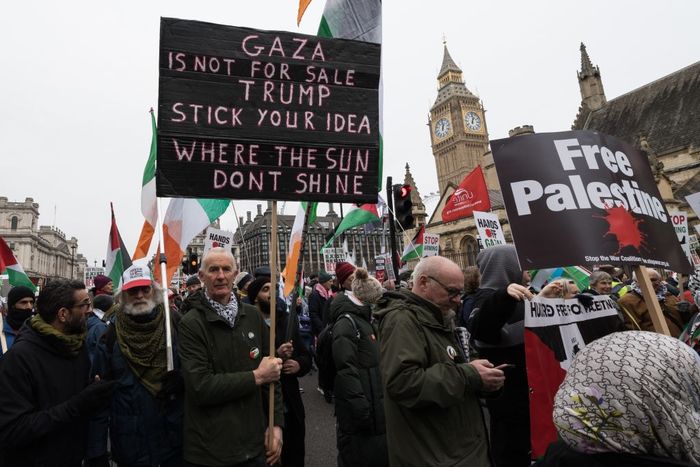
March for Palestine | Mark Kerrison/In Pictures via Getty Images
A new generation across the UK is demanding political representation. But this unstoppable force is meeting an immovable object, the Labour Party
A new generation across the UK is demanding political representation. Yet, this unstoppable force is now meeting an immovable object, the Labour Party.
On one hand, despite its failure to leave behind much grassroots organisation, Jeremy Corbyn’s leadership galvanised millions. This generation now knows what it’s like to have a voice in the political mainstream. It won’t tolerate being shut out of the political process indefinitely. The success of Green and independent candidates at this year’s general election was in part driven by this fact.
Meanwhile, the realities of climate breakdown, renewed austerity and a genocide in Gaza continue to alienate many. The British public backs the renationalisation of energy by a margin of four to one, the introduction of a wealth tax by a margin of eight to one, and a ban on arms exports to Israel by about three to one.
On the other hand, the Labour Party is a fortress. Many advisors and politicians of the Labour right regarded the party’s defeat under Corbyn in 2019 as a lucky escape, and remain terrorised by the prospect of losing their careers to an insurgent political force. Starmerism is a relentless campaign on behalf of this professional political class, which is determined to shut the left out. Their hubris is an existential threat not just to Labour’s role as a political home for the left, but to the party itself.
Both wings of the Labour Party are being blindsided by this process. The Labour right, and the commentariat that lives in its orbit, likes to think in terms of historical cycles and playbooks. The crushing of the post-Corbynite left was a repeat of Kinnock’s expulsion of the Militant Tendency. 2024 was just 1997 with TikTok.
Starmer’s first act in government – blaming the outgoing administration for an economic mess and indicating a shift towards austerity – was both a conscious mimicry of Tory George Osborne and an homage to New Labour’s fiscal hawkishness.
The Labour left’s attachment to the past is more nostalgic. Its leaders – Aneurin Bevan, Tony Benn, Corbyn – are stripped of their failings and revered. Its heroic defeats – the 1981 Deputy Leadership campaign, the Greater London Council’s fight for survival, Corbyn’s general elections – are endowed with their own folklore.
Life on the outside is unthinkable and futile, as illustrated by every past attempt (the Socialist Labour Party, the Socialist Alliance, Respect, the Trade Union and Socialist Coalition, Left Unity) to build an alternative. “It is the Labour Party or it is nothing”, as Bevan once wrote, chiding members of the Independent Labour Party when they split in 1932.
Both wings of Labour are good at producing a sense of collective memory that reinforces the party’s standing as immutable, and which relates new events to past ones. Neither are good at understanding when reality diverges from the historical script.
In 2015, the left challenged for power, and in doing so broke the old system. Tony Blair did not bother to get rid of Tony Benn. Yet Starmer almost immediately expelled Corbyn and changed Labour’s rule to ensure that no one like him could lead the party again. He has already suspended seven MPs for voting to abolish the two-child benefit cap. It is only a matter of time until more feel forced to rebel.
A politics from below
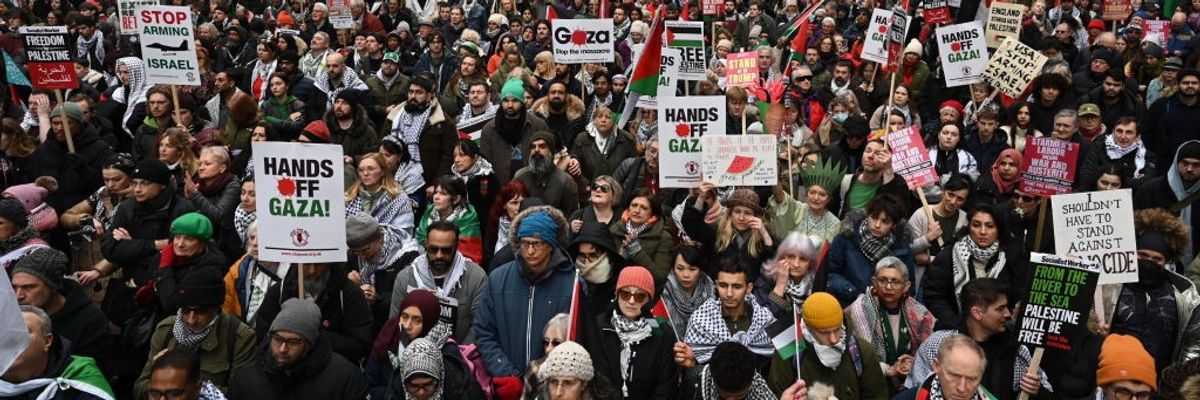
The real politics happens outside parliament. We’ve already witnessed huge protests take shape against the massacre in Gaza, and the coming years could see mass movements and industrial unrest over cuts and living standards. Having lived through the Corbyn years, the participants of these movements are unlikely to be satiated by the prospect of a soft left Labour leader some time in the 2030s.
Labour’s initial plans will provide some relief. The Employment Rights Bill is likely to be the most significant improvement in workers’ rights in decades. The renationalisation of the railways will also prove popular. But what happens once these progressive measures have been exhausted?
The Green Party came second behind Labour in 39 seats. Pro-Palestinian Independent candidates have made inroads into safe Labour areas. For this to have happened while Labour was in opposition is unprecedented. Unless the new government rapidly shifts its approach on public spending, redistribution and green investment, it will face an earthquake.
“Unless the new government shifts its approach on public spending, redistribution and green investment, it will face an earthquake”
To have any success, the post-Corbynite left will have to ditch its obsession with icons and celebrities. Despite its roots in social movements, Corbynism became a tightly centralised project, in which activists were given little, if any, role in determining policy and strategy. Even now, discussion of the left’s future beyond Labour seems to centre on the intentions of Corbyn, his former advisors, prominent commentators, or MPs.
Building a serious political project is about representing a solid base in society. This task flows from organising, and having roots in social and industrial struggle, not how many Twitter followers you have.
The green surge
Much of the left will also have to get over its age-old sectarianism towards the Greens, who have emerged as by far the most serious organised force to Labour’s left.
If you listen to many old Labour left activists, or read many socialist newspapers, you will be presented with a critique of the Greens that is at least two decades old. They are portrayed as ‘Tories on bikes’ and alternative medicine enthusiasts. Their ability to win seats in North Herefordshire and Waveney is said to be the product of triangulation towards right-wing rural voters. The compromises of Green parties in France and Germany are held up as the inevitable destiny of the UK Greens.
On the contrary, the Greens have become a major force precisely by occupying a space to the left of their sister parties in continental Europe. Since the turn of the millennium, their membership has risen twelve-fold to around 60,000. Waves of new members – from the ‘green surge’ of 2014 to today’s recruits – comprise its activist base.
Many joined on a radical environmental basis, but just as many did so to oppose austerity, champion freedom of movement, or fight for Palestinian rights. There might be a case that their time would be better spent in Labour, or that party affiliation often operates more like a consumer identity than a political strategy. But the existence of a genuinely left-wing, and increasingly successful, Green Party in Britain is simply a fact. Any attempt to rebuild the left as an electoral force – from within Labour or outside – must take account of this.
The landscape of the British left following the fall of Corbynism is still emerging. The only people who are definitely wrong are those who claim to know exactly what will happen. Perhaps Starmer will move back to the centre-left. Perhaps the social and industrial movements won’t materialise. There are many socialists – including me – who remain in Labour and will keep chipping away.
One thing we can be certain of is that things will never go back to the way they were before the Corbyn moment. The late 2010s unleashed forces that are only beginning to shape our politics. The left must adapt if it is to survive.
The prime minister may have changed, but the welfare policies are the same | Anthony Devlin/Bloomberg via Getty Images
Disabled people are once again living under a government pursuing ever more surveillance of our lives
The Labour government is barely 100 days into office and even its supporters have been reduced to half-hearted attempts at optimism. But this ‘it’s not all doom and gloom’ narrative rings hollow to many Disabled people.
Yet again, we are living under a government pursuing ever more surveillance of our lives. Another prime minister is happy to subject us to increased benefit sanctions and reduced rights.
So much for the party of change. Keir Starmer used his first Labour Party Conference in power last month to make clear that when it comes to Disabled people, his government’s priorities are the same as its predecessors – namely “getting the welfare bill down”.
To this end, the prime minister will continue plans set out by the previous Conservative government to monitor the bank accounts of the 6.3 million people claiming disability benefits without their knowledge. The proposals are expected to be included in the Fraud, Error and Debt Bill, which was announced by the government last month.
Kieran Lewis, rights and migration policy officer at National Survivor User Network (NSUN), told openDemocracy that he is “disappointed at Keir Starmer’s repackaging of invasive bank-spying powers that we and so many other groups pushed back against under the last government”.
The NSUN – which works with people who have lived experience of mental ill-health, distress, and trauma – was a core part of the coalition opposing these powers when the Tory government proposed them mere months ago.
Lewis continued: “Surveillance of this kind is a threat to everyone, and those of us who live with mental ill-health, distress and trauma will feel its effects particularly sharply.
“The harsh rhetoric espoused by Keir Starmer, a continuation of previous governments’ negative messaging, has had considerable impact on Disabled people and other groups of marginalised people.”
Starmer’s conference pledge to “legislate to stop benefit fraud” may be a familiar rhetoric – but it’s one built on shaky foundations. Some 75% of Universal Credit overpayments recorded by the Department for Work and Pension’s debt manager system in 2021 were due to an ‘official error’ – meaning the government miscalculated the amount to be paid – according to new research from the Public Law Project.
The research also found that the subsequent deductions that the DWP inflicts following such ‘overpayments’ led 26% of people to report resorting to food banks. Almost one in ten said they had slept rough due to a deduction.
Elsewhere in his conference speech, Starmer vowed to be “a great reforming government”. Disabled people have already lost an average of £1,200 a year thanks to the ‘reforms’ of the past 15 years, including the introduction of Employment and Support Allowance, the Work Capability Assessment, Personal Independence Payment, the bedroom tax, the benefit cap, the two-child limit, and Universal Credit.
All of these measures have combined to leave the UK with one of Western Europe’s least generous welfare systems. Staff at the Greater Manchester Disabled People’s Panel, which runs regular peer-support group sessions for those navigating the social security system, told openDemocracy there is a serious risk that Starmer’s plans will lead to welfare payments for Disabled and working-class people being wrongfully suspended, forcing them to deal with burdensome appeals processes.
It is important to recognise that ‘benefits fraud’, which the Labour Party appears likely to dedicate so much time to, is a non-issue. The fraud rate for disability benefits is 0.2%. That’s far lower than the percentage of Labour ministers who took free Taylor Swift concert tickets this summer. When will there be a crackdown on that?
Ironically, Starmer closed his conference speech by saying that “every community” should have “the breathing space, the calm, the control to focus on the little things they love in life, not the anxiety and insecurity we have now.”
This is at odds with the experiences of the Greater Manchester Coalition, whose staff told openDemocracy: “We see Disabled people struggling to obtain much-needed benefits, and if obtained, struggling to keep those benefits.
“Having to already prove and then re-prove they’re not fraudsters, being assessed, reassessed and reviewed is a relentless often degrading, soul-destroying experience that leads many to abandon the process.”
This dire situation will only be worsened by the Fraud, Error and Debt Bill, which will massively increase financial surveillance and create yet another punitive, disabling barrier for Disabled people to contend with.
It will put many of us under tremendous stress and, as the Greater Manchester Coalition noted, could leave even more of us “isolated and particularly vulnerable. For some, especially those in mental health crisis, this places them in great harm.”
In short, Disabled people know this bill is not the way forward. If only our community had more music festivals and football games to invite ministers to – imagine how our social security system could look then.
An IDF spokesman falsely claims Hamas has a command centre under Gaza’s largest hospital. (Photo: IDF)
Britain secretly advised the Israeli military on psychological warfare techniques, Declassified has found.
Leaked documents reveal how the British army’s 77th brigade discussed strategy and tactics with the Israel Defence Forces (IDF).
The 77th brigade uses psychological operations and social media to help fight wars “in the information age”.
It specialises in “non-lethal forms of psychological warfare” such as cyber-attacks, propaganda activities, and counter-insurgency operations online.
Israel’s own information operations have involved using fabricated videos and fake social media accounts to defend the bombing of Gaza.
Two exchanges with the IDF took place at the 77th brigade’s barracks in Hermitage, Berkshire, between 2018-19.
Leaked documents about the encounters originate from a hack of the IDF by a group called “Anonymous for Justice”. The dataset was subsequently published by Distributed Denial of Secrets.
Although some of the documents reference “secret” matters, there is strong public interest in reporting on their contents.
Israel is being investigated by international courts for genocide and war crimes in Gaza, while the UK Ministry of Defence (MoD) refuses to answer freedom of information requests or parliamentary questions about its military assistance to Israel.
Professor Paul Rogers, an honorary fellow of the Joint Services Command and Staff College, commented: “This is a highly significant revelation that shows the extent of high level links between Israeli and British counter-insurgency and psychological warfare operators – and, as ever, the need for greater transparency from the military right across the board”.
An MoD spokesperson said: “We regularly conduct non-operational defence engagements at staff level with partners across the globe. All engagement focuses on best practices and is in compliance with International Humanitarian Law”.
The department refused to clarify whether psychological warfare collaboration with Israel was ongoing.
…
Zionist Keir Starmer is quoted “I support Zionism without qualification.” He’s asked whether that means that he supports Zionism under all circumstances, whatever Zionists do.UK Foreign Secretary David Lammy says that UK is suspeding 30 of 350 arms licences to Israel. He also confirms the UK government’s support for Israel’s Gaza genocide.Vote For Genocide Vote Labour.
Britain’s Labour government has ordered 100 spy flights over Gaza to aid Israeli intelligence, it can be revealed.
This amounts to an average of more than one a day since Keir Starmer became prime minister on July 5.
Starmer’s administration suspended 30 arms export licences for Israel last month, citing “a clear risk” the weapons might be used in a “serious violation” of international law.
But the spy flights, which began in December under the previous Conservative government, have continued apace.
Although the Ministry of Defence (MoD) refused to give details, Declassified independently found the flights departing from Akrotiri – Britain’s sprawling air base on Cyprus – to fly over Gaza on Starmer’s watch.
During Labour’s first full month in office, in August, the Royal Air Force (RAF) flew 42 flights over the devastated Palestinian territory.
The new information is likely to raise further concerns about British complicity in war crimes in Gaza, with pro-Palestine activists protesting outside Akrotiri on Sunday.
International Criminal Court (ICC) chief prosecutor Karim Khan has requested arrest warrants for Israeli prime minister Benjamin Netanyahu and his defence minister Yoav Gallant.
The World Court is also investigating Israel for what it has called a “plausible” genocide in Gaza.
On Monday evening, as Israel invaded Lebanon, Starmer sent a huge A400M military transport plane from Akrotiri to Tel Aviv. The vehicle can carry 116 fully-equipped soldiers and a 81,600lb payload.
Then on Tuesday evening, the UK dispatched Typhoon fighter jets from Cyprus to defend Israel against missiles from Iran.
…
Zionist Keir Starmer is quoted “I support Zionism without qualification.” He’s asked whether that means that he supports Zionism under all circumstances, whatever Zionists do.UK Foreign Secretary David Lammy says that UK is suspeding 30 of 350 arms licences to Israel. He also confirms the UK government’s support for Israel’s Gaza genocide.Vote For Genocide Vote Labour.