People take part in a national demonstration for Gaza from Russell Square to Whitehall in London, June 8, 2024
Hundreds of thousands protest across Britain demanding end to Gaza bloodshed
OVER the weekend, hundreds of thousands of people flooded Britain’s streets, calling for a permanent ceasefire in Gaza and warning political parties to stop arming Israel if they expect support in the upcoming election.
On Saturday, over 150,000 gathered in London for the 15th national march for Palestine.
The march took place as Israel carried out a murderous assault on Nuseirat refugee camp in Gaza.
Israeli forces killed at least 274 Palestinians and injured 698 more, according to Gaza’s Health Ministry.
Four Israeli captives were freed during the raid.
Prime Minister Rishi Sunak ignored the horrific death toll, instead describing the release of the captives as a “huge relief.”
Two days before, an Israeli air strike hit a UN school, murdering 33 people, including nine children.
Speaking at the rally, Palestine Solidarity Campaign director Ben Jamal accused political leaders of having “normalised massacres.”
He said: “Now our political leaders are coming before you asking for your vote. Your answer needs to be clear.
“We will not vote for those who normalise massacres.
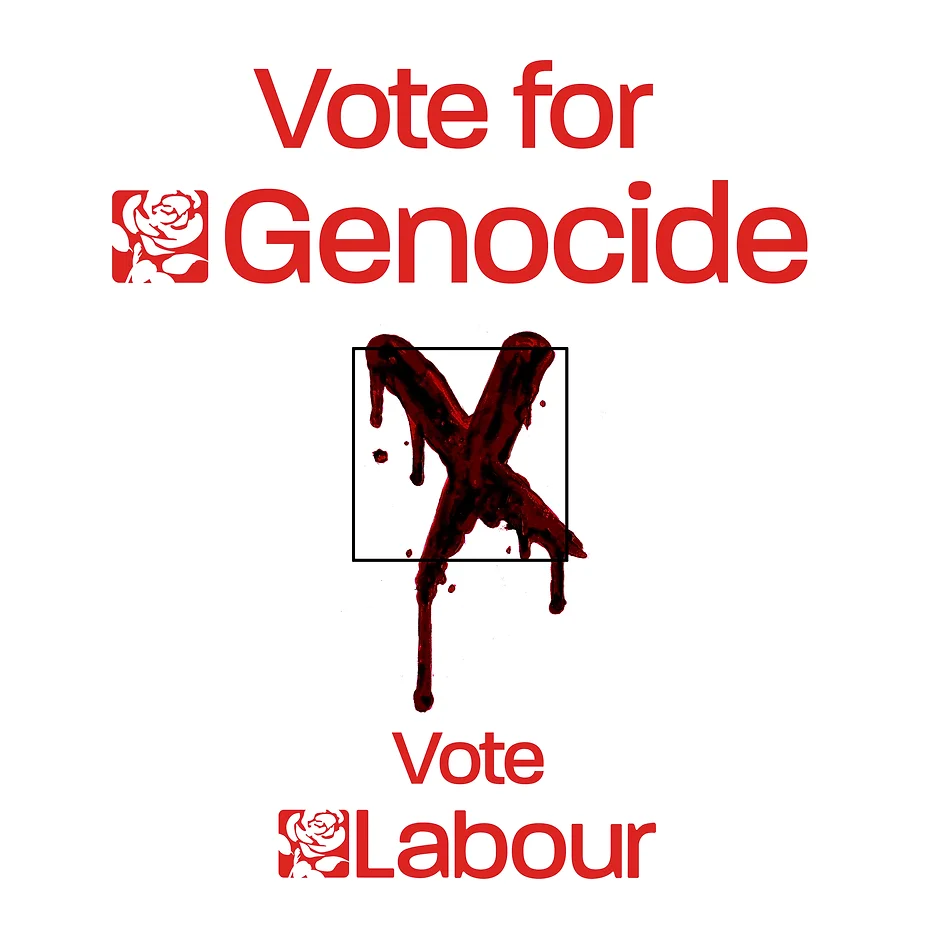
“We will not vote for those who greenlight genocide.
“We will not vote for those who collaborate with systems of apartheid.”
He emphasised that justice for Palestinians needs to be forced onto the election agenda like never before.
Lindsey German from Stop the War said the massive demonstration, which stretched along Whitehall, sent “the loudest possible message to our politicians that the public support an immediate and unconditional ceasefire in Gaza.”
Experienced climbers scale a rock face near the historic Dumbarton castle in Glasgow, releasing a banner that reads “Climate on a Cliff Edge.” One activist, dressed as a globe, symbolically looms near the edge, while another plays the bagpipes on the shores below. | Photo courtesy of Extinction Rebellion and Mark Richards
More than 400 scientists write to political parties urging ambitious action or risk making Britain and the world ‘more dangerous and insecure’
After five years of record heat and record floods, one might assume British politicians would also pay record attention to the climate issue in the current election campaign.
But with the manifestos due this week, concerns are growing that the response of the two main parties will range from tepid progress to a great leap backwards, despite the certainty of further climate chaos during the next parliament.
In a sign of how worried the experts are, more than 400 scientists have signed a public letter to party leaders, urging them to adopt ambitious policies to prepare the country for the coming turmoil and to honour the UK’s international obligation to address the primary causes – the burning of gas, oil, coal and vegetation.
“It is very clear that a failure to tackle climate change with sufficient urgency and scale is making the UK and the rest of the world more dangerous and insecure,” notes the letter, whose signatories include former UK chief scientist Sir David King, former president of the Royal Meteorological Society Prof Joanna Haigh, and the creator of the “climate stripes” graphic, Prof Ed Hawkins.
The 408 scientists urge parties to promise five measures: a credible strategy to reach net zero by 2050, faster action to adapt the UK to now unavoidable climate impacts, leading by example internationally on “transitioning away from fossil fuels”, increasing climate funding for developing countries and respecting Climate Change Committee advice on North Sea oil and gas fields.
“Without such a pledge, we do not believe that your party deserves support in the forthcoming general election,” they write.
…
The case for action is now indisputable. More than 99% of climate scientists are sure that human burning of gas, oil, coal and trees is heating the planet. This is no longer a geographically or temporally distant threat to the UK. It is here and now.
Last year, the northern hemisphere sweltered through its hottest summer in 2,000 years, causing tens of thousands of deaths and billions of dollars worth of economic damage. That should have been a wake-up call for humanity to transition away from fossil fuels. In fact, the reverse has happened. Carbon dioxide is accumulating in the atmosphere faster than ever, the US National Oceanic and Atmospheric Administration announced last week.
The past two years have been the hottest the British Isles have ever seen. For the first time, the UK has experienced temperatures of more than 40C. By the government’s reckoning, extreme heat killed 2,295 people in 2023, and another 4,500 the year before that. By 2050, the toll is expected to rise to 10,000 each year, according to the British Medical Journal.
Image of the Green Party’s Carla Denyer on BBC Question Time.
Carla Denyer, co-leader of the Green Party, said:
“The Green Party is proud to announce that in this election we will have candidates standing in 574 seats in England and Wales.
“All over the country voters will have the opportunity to vote Green and vote for real hope and real change instead of the half measures and broken pledges on offer from The Conservative and Labour.
“We will be putting our manifesto to voters next week with practical solutions to the cost-of-living crisis, building new affordable homes, protecting our NHS from creeping privatisation and cleaning up our toxic rivers and seas.
“If elected, Green MPs will push the next government for bold action to achieve the real changes that are needed to confront the big challenges our country faces.
“This is a historic moment and the first time we’ve had this many candidates. It reflects the incredible journey we’ve been on over the past five local elections in which we’ve increased our number of councillors nearly five-fold.”
I’ve lived in Camden for over 22 years with my family and cherish the diversity and togetherness of our community. I served in Nelson Mandela’s government as an MP and served on the finance and trade industry committee. I founded an organisation investigating corruption into the global arms trade. Through this work, I’ve seen how our tax money is used to fund weapons, while we’re left with the rising cost of rent, food, and bills.
Tories and Labour choose to squeeze working people as the super-rich get richer. The two main parties refuse to tax the extremely wealthy, protect the NHS from further privatisation, or bring in rent caps. Voting for Labour will change nothing.
I was chosen by members of our community to run as an Independent MP, because of my moral values and experience building an economy that works for people, not corporations. As an Independent, I’ll listen to local people, not billionaires. I’ll work for more and improved social housing, funding for our public services, and an end to the main parties’ support for genocide. It’ll be an honor to serve my community and do what’s best for local people.
Graham Stringer, Labour MP for Blackley and Broughton, on GB News. Credit: GB News / YouTube
It’s “a scandal” that the party continues to support Graham Stringer, campaigners say.
The Labour Party has been criticised by campaigners after a board member of the UK’s leading climate science denial group was reselected as a candidate at the upcoming general election.
Graham Stringer, a Labour MP since 1997, has been reselected as the party’s candidate for Blackley and Broughton in Greater Manchester. Since 2015, Stringer has been a director of the Global Warming Policy Foundation, a group founded to contradict established climate science and advocate against policies to limit greenhouse gas emissions.
The GWPF has in the past expressed the view that carbon dioxide has been mis-characterised as pollution, when in fact it is a “benefit to the planet”. GWPF director Benny Peiser has said “it’s extraordinary that anyone should think there is a climate crisis”.
Staff members at the GWPF and its sister group Net Zero Watch have been given a regular platform on the right-wing broadcaster GB News in recent months, during which they have claimed that the climate emergency is simply “scaremongering”, that “net zero is doing enormous damage to the economy”, and that “the lights will go out” if we divest from fossil fuels.
“It’s a scandal that Labour is allowing Graham Stringer to stand again,” said Carys Boughton of the Fossil Free Parliament campaign group. “To keep a forthright, prominent climate denier in the fold is to suggest that the party doesn’t understand the urgency of the crisis we are facing. We need Labour to actively stand against the forces that are compromising good climate policy, be they external or within their own ranks.”
The GWPF is based in 55 Tufton Street, Westminster, which has housed a number of libertarian groups that are opposed to clean energy policies and climate science.
Stringer has vocally questioned climate science and policies to achieve net zero emissions. At a Battle of Ideas event in 2023, he said that the policies adopted by the UK to address emissions “make China stronger, make us vulnerable to supply chains that we have no control over, and cost large amounts of money.”
In 2014, Stringer was one of only two MPs on Parliament’s Energy and Climate Change Committee to vote against accepting the conclusion of the UN’s Intergovernmental Panel on Climate Change (IPCC) that humans are the dominant cause of global warming.
Stringer and Conservative MP Peter Lilley said that they did “not dispute the science of the greenhouse effect”, but that “there remain great uncertainties about how much warming a given increase in greenhouse gases will cause, how much damage any temperature increase will cause and the best balance between adaptation to versus prevention of global warming.”
Stringer also planned to join Reform UK’s Nigel Farage and Richard Tice for their launch of a net zero referendum campaign in 2022 (though he later pulled out of the event). Reform wants to scrap the UK’s 2050 net zero target, while both Farage and Tice are critics of climate science. Tice has claimed that “CO2 isn’t poison. It’s plant food”.
Speaking on GB News about his initial decision to campaign alongside Farage and Tice, Stringer said that “I’ve argued for a long time against the extra costs being placed on people to achieve net zero.”
Energy price rises triggered by Russia’s invasion of Ukraine in 2022 were exacerbated in the UK – the worst hit country in western Europe – due to its over-reliance on gas. The Office for Budget Responsibility, the government’s independent spending watchdog, has said that “the costs of failing to get climate change under control would be much larger than those of bringing emissions down to net zero”.
Conservative peer Lord David Frost is a director of the GWPF alongside Stringer. Tory and Reform donor Terence Mordaunt is also a director of the GWPF, while Conservative politician Andrea Jenkyns is a director of Net Zero Watch.
“Labour can claim a serious commitment to environmental and climate policy. Or it can select as an MP a candidate who is on the board of a Tufton Street climate science denial think tank. But it can’t do both,” said Jolyon Maugham, director of the Good Law Project.
Labour and Climate Change
The Labour Party has this week been finalising its list of candidates for the general election, with its full slate set to be submitted on Friday (7 June) ahead of the 4 July vote.
The party has been campaigning prominently on the issue of clean power, pledging to create a state-owned renewable energy investment vehicle, GB Energy, that it says will help to “speed up and scale the deployment of new technologies”.
Labour has also said that it plans to remove fossil fuels from UK electricity production by 2030, five years earlier than current government plans, and to ban new North Sea oil and gas licences.
Reports suggest that the party views climate change as a key dividing line of the election campaign, with Rishi Sunak’s Conservative government having overseen the watering down of several net zero policies over the last year. Sunak launched the election campaign by claiming that he had “prioritised energy security and your family finances over environmental dogma”.
However, Labour has been criticised for dropping its plan to invest £28 billion a year in green infrastructure to reach net zero. On announcing that the policy would be scaled down, Labour leader Keir Starmer said that “fiscal rules come first”, adding that higher interest rates meant that financing the plan would be more expensive. The pledged investment has now been reduced to £15 billion a year.
Labour did not respond to DeSmog’s request for comment, but a spokesperson previously told The Guardian: “The choice at this election is clear: a Conservative government that pollutes our rivers with record levels of toxic sewage, is led by and funded by climate deniers and fails to meet our climate and nature targets; or a Labour government that will restore nature, deliver the largest investment in clean energy in our history so we can cut bills for families, make Britain energy independent and tackle the climate crisis to protect our home for our children and grandchildren.”