NHS news review: Lib-Dem Neo-Con Conference

Spread the love

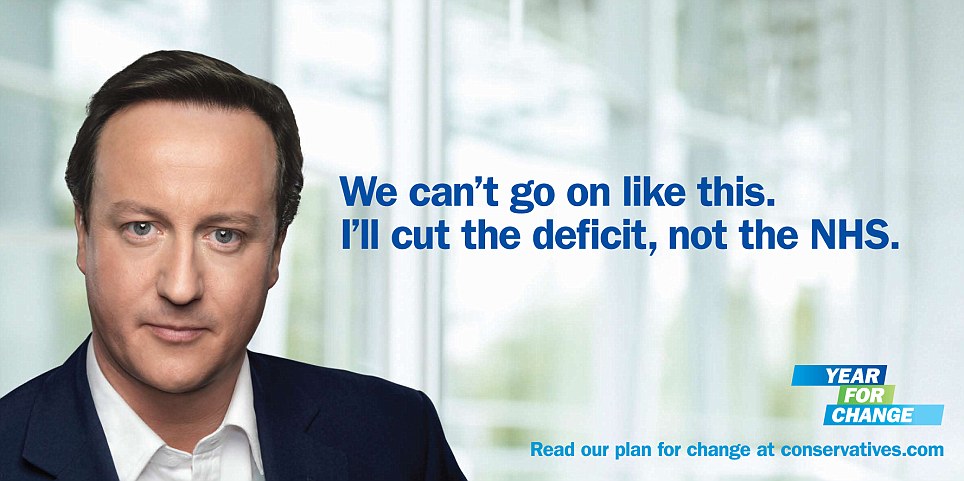
Conservative election poster 2010

A few recent news articles about the UK’s Conservative and Liberal-Democrat(Conservative) coalition government – the ConDem’s – brutal attack on the National Health Service.

The Guardian’s Politics Live Blog has the latest on Lib-Dem support for destroying the NHS. They’ve voted to neither support nor oppose it.

Yesterday’s Guardian Politics blog was correct in identifying that the Lib-Dem debate on health had been framed well as Shirley Williams vs. Andy Burnham.

This framing was extended by Williams attacking twitter and the media generally on the basis of one article by Parrot Tonee. It is wholly unfair to tarnish all media as inaccurate on the basis of one article.

The vast majority of media articles are factally correct: the overwhelming opposition to the Destroy the NHS / Health and Social Care Bill amoung health workers, Lansley censoring the media and getting chased down hospital corridors on hospital visits, Nick Clegg wanting to destroy the NHS since 2005.

The Neo-Liberal ‘Liberal-Democrat’ party supports the destruction of the NHS despite overwhelming opposition from the medical professions. It is huge arrogance from Williams, Clegg, Cammoron and Lansley to promote such a wrecking bill disregarding so much opposition from medical professionals. They are the people who really understand.

How the Orange Bookers took over the Lib Dems


What Britain now has is a blue-orange coalition, with the little-known Orange Book forming the core of current Lib Dem political thinking. To understand how this disreputable arrangement has come about, we need to examine the philosophy laid out in The Orange Book: Reclaiming Liberalism, edited by David Laws (now the Chief Secretary to the Treasury) and Paul Marshall. Particularly interesting are the contributions of the Lib Dems’ present leadership.

Published in 2004, the Orange Book marked the start of the slow decline of progressive values in the Lib Dems and the gradual abandonment of social market values. It also provided the ideological standpoint around which the party’s right wing was able to coalesce and begin their march to power in the Lib Dems. What is remarkable is the failure of former SDP and Labour elements to sound warning bells about the direction the party was taking. Former Labour ministers such as Shirley Williams and Tom McNally should be ashamed of their inaction.

Clegg and his Lib Dem supporters have much in common with David Cameron and his allies in their philosophical approach and with their social liberal solutions to society’s perceived ills. The Orange Book is predicated on an abiding belief in the free market’s ability to address issues such as public healthcare, pensions, environment, globalisation, social and agricultural policy, local government and prisons.

The Lib Dem leadership seems to sit very easily in the Tory-led coalition. This is an arranged marriage between partners of a similar background and belief. Even the Tory-Whig coalition of early 1780s, although its members were from the same class, at least had fundamental political differences. Now we see a Government made up of a single elite that has previously manifested itself as two separate political parties and which is divided more by subtle shades of opinion than any profound ideological difference.


Continue ReadingNHS news review: Lib-Dem Neo-Con Conference

Bank of England gives yet another £50B to bankers

Spread the love

“…quantitative easing – printing money by another name – is the last resort of desperate governments when all other policies have failed.”

George Osborne, speech January 9 2009

The Bank of England announced today that it intends to do a further £50billion round of Quantitative Easing. Quantitative Easing involves pumping money into the economy in an apparently futile – it hasn’t yet been shown to work – attempt to stimulate the economy. There is a problem that there is very little to show for so many billions after billions that have already been squandered on Q.E.

It appears that it’s austerity for the vast majority and rolling in lolly for the rich elite. No money for the NHS for the plebs, plenty of billions to stimulate the markets for rich multi-millionaire traders and bankers to get yet richer.

There is an argument that the poor would stimulate the economy far more – since they would have to spend the money.


 10/2/12:

Quantitative Easing is stimulating commodity trading, not the real economy

As the economy slides towards recession, the Bank of England today announced today it was creating a further £50bn worth of ‘quantitative easing’ (QE).

If you read articles on the topic in the media, you will see statements like “the Bank is ‘printing’ money” or the Bank  will “pump a further £50 billion in to the economy”.  Both these statements are misleading.

QE actually involves the Bank of England buying financial assets – usually government bonds – belonging to institutional investors and sitting in Banks. The Bank buys these assets with newly created central bank reserves.  These reserves can only be held by banks – they do not and cannot go to businesses the real economy.

As explained in nef’s Where Does Money Come From?, central bank reserves are used by commercial banks to settle payments with each other.

By ‘pumping’ more reserves in to the intra-bank clearing system the idea is that banks will feel more confident about making loans to the real economy because they will know that other banks are in a stronger position to settle with them.

In addition, by buying up ultra-safe government bonds in vast quantities and thus pushing down the yield (the interest received on holding) on these assets, the central bank hopes to encourage investors to buy higher yielding corporate bonds – which again provides money for real businesses.

QE may reduce long-term interest rates, but there is little evidence it has stimulated commercial banks to start lending more to businesses, in particular small businesses, or soften the conditions banks are attaching to loans.

In fact the most recent figures published by the Bank show that net lending – the amount of loans minus the amount repaid – to small businesses has contracted by six per cent in the year to November 2011. And this despite the banks being given small business lending targets by the government through ‘Project Merlin’.  Not much wizardry there then.

The hard truth is that commercial banks are still in a process of ‘de-leveraging’, more keen on getting their loans repaid and building up their capital base than making new loans to productive businesses in what is perceived to be a risky real economy.

Evidence suggests the additional funds provided by QE are more likely to be used by banks to create more speculative credit, not least commodity speculation,  that provides shorter term returns.  As a result, the money supply in the real economy is contracting just at the point where new investment is most needed.


Continue ReadingBank of England gives yet another £50B to bankers

NHS news review: Lansley responds to criticism

Spread the love

Conservative election poster 2010

A few recent news articles about the UK’s Conservative and Liberal-Democrat (Conservative) coalition government – the ConDem’s – brutal attack on the National Health Service.

Health Secretary Andrew Lansley responds to criticism by a committee of MPs by calling their brand new report “out of date” and “unfair”.

MPs criticise Lansley over viability of health cuts / Britain / Home – Morning Star

The government’s controversial NHS shake-up is hindering efforts to find ways of slashing health spending without cutting vital services, MPs warned yesterday.

In a highly critical report, the health select committee said hospitals were resorting to short-term “salami slicing” as they try to find £20 billion in efficiency savings by 2014/15.

But in a stinging criticism of Health Secretary Andrew Lansley’s reorganisation, it said the process “continues to complicate the push for efficiency gains.”

There was a “marked disconnect between the concerns expressed by those responsible for delivering services and the relative optimism of the government” over achieving cuts, the committee noted.

The attack is especially wounding as the committee is chaired by former Tory health minister Stephen Dorrell and is dominated by Conservative and Lib Dem MPs.

It comes days after all the major health unions – representing doctors, nurses and midwives – expressed their “outright opposition” to the Health and Social Care Bill.

The British Medical Association, the Royal College of Nursing and the Academy of Medical Royal Colleges are also holding a summit on Thursday evening to discuss the Bill.

RCN concerns echoed by MPs – RCN

The Royal College of Nursing has today (24 January) responded to a Health Select Committee report into public expenditure saying it agrees that forging ahead with reforms has caused disruption and distraction at a time of austerity within the NHS.

“We concur with the report findings,” said RCN Chief Executive & General Secretary Dr Peter Carter. “We feel that the dual impact of the reform process and the full extent of the efficiency savings is now seriously destabilising the NHS. Indeed, in our opinion the bill has created such turmoil that it should be stopped. Now is the time for the Government to get a grip of the situation and work with organisations such as the RCN to stabilise the health service.”

The findings of the Health Select Committee chime with many of the concerns nursing staff have raised about efficiency savings. RCN research has shown that some NHS trusts are making short-term cuts to services and nursing posts in an attempt to make savings, rather than engaging in intelligent service redesign. The RCN says that in England alone, 48,000 NHS posts are earmarked to go.

“This will undoubtedly have a deep and potentially dangerous impact on patient care,” added Dr Carter. “As the report acknowledged, long-term planning and more integrated health and social care services could provide huge benefits for patient care.

Andrew Lansley: criticism of NHS reforms is ‘out of date and unfair’ – Telegraph

Andrew Lansley, the Health Secretary, has defended his NHS reforms, describing a highly critical report by MPs as “out of date” and “unfair” to the health service.

Mr Lansley insisted that the NHS was delivering efficiency savings and improvements for patients following a warning from MPs that the overhaul of the NHS is hindering efforts to slash health spending without cutting vital services.

“I think the select committee’s report is not only out of date but it is also, I think, unfair to the NHS, because people in the NHS, in hospitals and in the community services are very focused on ensuring that they deliver the best care to patients and that they live within the financial challenges that clearly all of us have at the moment,” Mr Lansley told ITV Daybreak.

“I am afraid the evidence points to the fact that they are doing that extremely well.”

His remarks follow a highly critical report from the Commons Health Select Committee which said hospitals were resorting to short-term “salami slicing” as they try to find £20 billion in efficiency savings by 2014/15.

In a stinging criticism of Mr Lansley’s reorganisation, it said the process “continues to complicate the push for efficiency gains”.

Continue ReadingNHS news review: Lansley responds to criticism

NHS news review: Cameron confirms that the intention is to privatise the NHS

Spread the love

Best wishes for the new year.

Seven former presidents of the Faculty of Public Health accuse the Prime Minister of ploughing ahead with an “unprecedented marketisation” of services, which poses a “major threat” to the integrity of the NHS.

David Cameron confirms that the intention is to “… drive the NHS to be a fantastic business“. How is that anything other that the privatisation of the NHS?

Watch the video here VIDEO BLOG: Cameron wants the NHS “to be a fantastic business” « sturdyblog

Drop perilous NHS reforms, say leading health professionals – Health News – Health & Families – The Independent

David Cameron faces fresh calls to abandon his NHS reforms, as a group of leading public-health experts predicts that the changes will “exacerbate inequalities” in the health of the nation.

Seven former presidents of the Faculty of Public Health accuse the Prime Minister of ploughing ahead with an “unprecedented marketisation” of services, which poses a “major threat” to the integrity of the NHS.

In a letter to Mr Cameron, the group warns: “The Bill is likely to produce a ‘patchwork quilt’ health system that will vary hugely across the country, failing to meet the diverse needs of the population and undermining the health of vulnerable, minority groups.”

27/11/13 Having received a takedown notice from the Independent newspaper for a different posting, I have reviewed this article which links to an article at the Independent’s website in order to attempt to ensure conformance with copyright laws.

I consider this posting to comply with copyright laws since
a. Only a small portion of the original article has been quoted satisfying the fair use criteria, and / or
b. This posting satisfies the requirements of a derivative work.

Please be assured that this blog is a non-commercial blog (weblog) which does not feature advertising and has not ever produced any income.

dizzy

Continue ReadingNHS news review: Cameron confirms that the intention is to privatise the NHS

NHS news review – Colin Leys

Spread the love

Healthy alternatives | Red Pepper

Colin Leys looks at how Scotland and Wales have rejected marketising the NHS

As expert commentators have amply shown, the coalition’s plan to privatise the NHS lacks any basis in evidence – no surprise there. What is less well recognised, and so far amazingly unmentioned in the debate, is that powerful evidence against privatisation exists on our own doorstep – namely, the fact that in Scotland and Wales the NHS is working well as a publicly provided and managed system, based on planning and democratic accountability.

Marketisation was tried, especially in Scotland, and rejected. The purchaser-provider split, which is at the root of the marketisation project, was introduced but then abandoned in both nations, and neither foundation trusts nor payment by results were introduced in either of them. PFI was used in Scotland under the first Labour government in Holyrood, and one private treatment centre for NHS patients was opened, but the SNP has since scrapped the use of PFI and taken the treatment centre into public ownership. Wales has used neither PFI nor private treatment centres. The NHS in both countries is once again planned and managed through a mix of democratically accountable central and local structures, as it was in England before the 1990s.

We have an excerpt of The Plot Against the NHS reviewing Scotland and Wales’ approaches.

Selected excerpts from ‘The Plot Against the NHS’ by Colin Leys and Stewart Player. Chapter One is available here. I highly recommend this book available from Merlin Press for £10.

The Plot Against the NHS #1

The Plot Against the NHS #2


Continue ReadingNHS news review – Colin Leys