An open letter to the Government, signed by a coalition of environmental and civil society groups
Dear Keir Starmer, Prime Minister and Steve Reed, Secretary of State for Environment and Rural Affairs,
We demand an urgent end to the sewage scandal through systemic transformation of the water industry – public and environmental good must be put before private profit.
A year ago, you began your premiership with a clear commitment to deliver on your election mandate to end the sewage pollution crisis and clean up our waters. On Monday, the Independent Water Commission is set to publish its final recommendations but it will fall fatally short if it fails to confront the root cause of the crisis: a system built towards serving private profit cannot deliver an end to sewage pollution.
Your election mandate has given you a once-in-a-generation opportunity to fix our broken water system. But this will take more than incremental change—it demands a decisive break from the failed model that has deluged our coastlines, rivers and lakes with sewage.
The need for a full system overhaul is painfully clear. Since privatisation in 1990, water companies have paid shareholders over £74 billion in dividends—while burdening the system with £69 billion in debt. Despite repeated promises to invest, shareholders have actually withdrawn more than they have put in, meanwhile essential infrastructure has been left to crumble. In 2024 alone, untreated sewage was dumped 565,383 times across England and Wales. It’s a 35-year tale of broken pipes, broken promises and a fundamentally broken system.
The consequences of inaction are shocking. Coastal economies and communities are being hammered. Rivers declared ecologically dead. Pollution poisoning our wildlife. Thousands of people are falling ill after swimming in raw sewage. Yet water bills will keep rising – to service debt, to fund dividends – and so it is the public who will continue to pay the price.
Enough is enough. You must act now. Rebuild a system that people can be proud of, not angry about. A system that serves the public and protects nature – not private profit. Anything less would be a betrayal of the promise you made to the electorate.
Yours,
Surfers Against Sewage
River Action
Greenpeace UK
WWF UK
GMB Union
Compass
Zero Hour
Friends of the Earth England, Wales and Northern Ireland
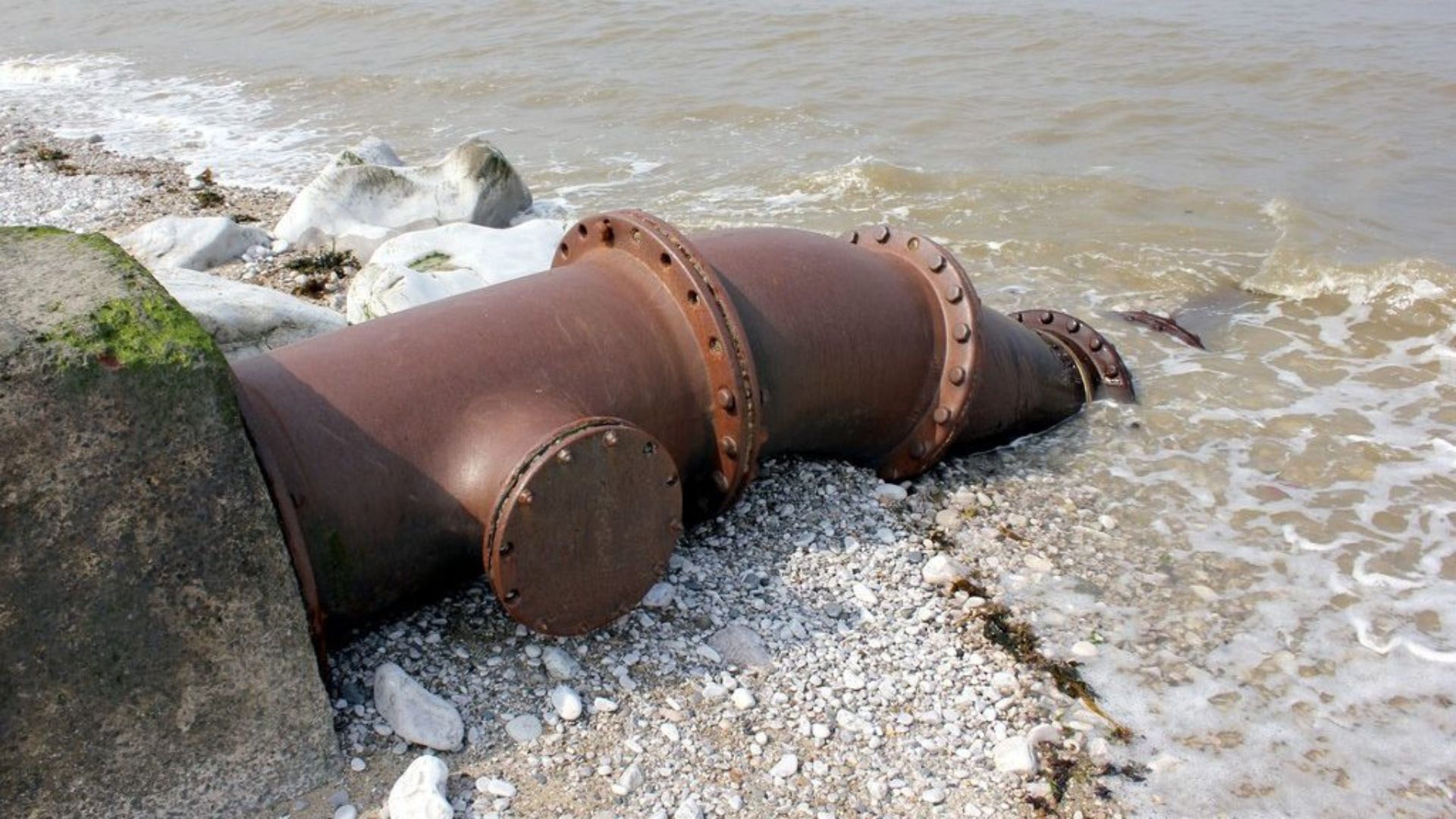
Sewage is only supposed to be discharged following extreme weather. Image: Jeff Buck (cc-by-sa/2.0)
Some 27% of English billpayers have considered withholding their bill payments due to water supplier failings, a survey shows.
The public don’t believe private companies can fix the worsening sewage crisis, a report has found – and at least a quarter are considering boycotting water bill payments.
Water bills will surge by an average of £31 per year over the next five years.
Suppliers have justified the increase – which will bring the average annual bill to £588 by the end of the decade – as the only way to fund fixes to Britain’s crumbling sewage infrastructure.
But according to a blistering new Surfers Against Sewage (SAS) report, just a third (33%) of English adults believe that their supplier will take the necessary action to end sewage pollution.
And around a quarter (27%) have considered withholding their bill payments due to the actions of their water supplier.
This disillusionment is little surprise. Pollution is surging: Water companies in England have collectively failed their targets to reduce pollution incidents, SAS’s 2024 Water Quality Report shows, with 2,487 incidents recorded in 2024.
Advertising helps fund Big Issue’s mission to end poverty
That’s more than double the target set by the Environment Agency – and it’s the tip of the iceberg. In 2024 alone, raw sewage was released into UK waterways 592,478 times, for a combined 4.7 million hours. That’s the equivalent of 535 years’ worth of waste, pouring into the lakes and rivers people swim in, kayak through and drink from.
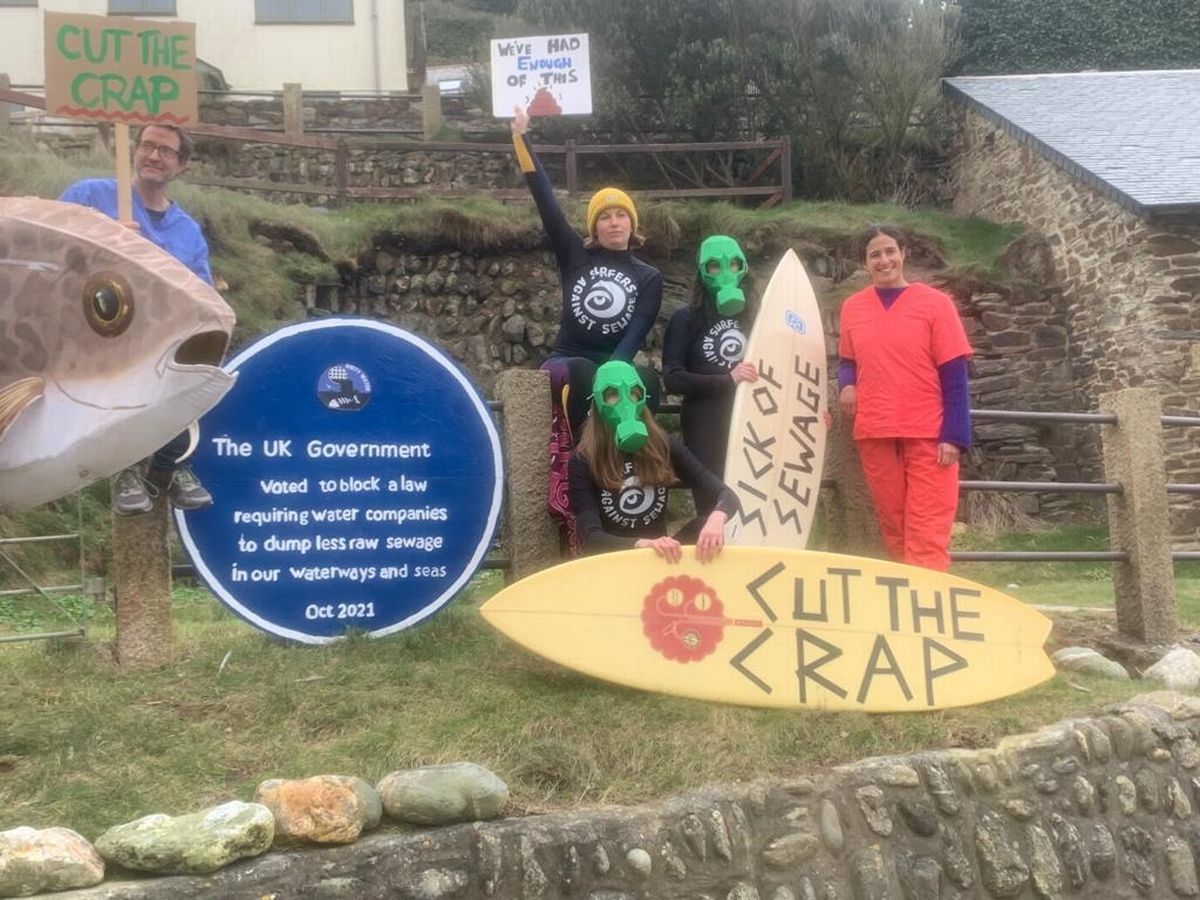
April 2023 Surfers Against Sewage and Extinction Rebellion protests in St Agnes, Perranporth, Truro and Charlestown which unveiled spoof Blue Plaques to the MPs and Conservative Government who allowed raw sewage to be dumped in the sea (Image: Surfers Against Sewage)
The snow-covered peak of Beinn Eighe and the mountains of Torridon are reflected in Loch Droma near Ullapool, Wester Ross, December 3, 2023
RAW sewage could have been pumped into Scotland’s rivers, lochs, and seas every 90 seconds last year, according to a new report by campaign group Surfers Against Sewage (SAS).
While Scottish Water recorded 23,498 sewage discharges lasting a total of 208,377 hours in 2024, this accounts for only 6.7 per cent of the company’s total network, the research found.
Just 1,116 of Scottish Water’s 4,080 “combined sewage overflows” — where sewage is released directly into waterways or the sea — appear on its real-time sewage discharge map.
That 73 per cent data gap means SAS’s Safer Seas and Rivers Service providing sewage alerts across Britain is forced to leave Scotland blank, but their latest report estimates the public are being put at risk with as many as 364,629 effectively unreported discharges a year — amounting one every 90 seconds.
SAS chief executive Giles Bristow slammed “Scottish Water’s reckless approach to monitoring and public safety.”
He said: “Scotland’s coastline, lochs and rivers are some of the most stunning on the planet, with surfers, swimmers and paddle boarders wanting to make the most of these beautiful blue spaces.
“But these waters are far from pristine.
“With no legal requirement to issue sewage alerts in Scotland, water users have no idea whether or not it’s safe to enter the water.
AS FRUSTRATION grows over failure to tackle pollution, new research revealed yesterday that over a quarter of adults in England have considered withholding water bill payments.
A new report from Surfers Against Sewage (SAS) has accused the water industry of falling short of the Environment Agency’s target to reduce pollution incidents by 40 per cent.
Instead, they recorded a 30 per cent increase to 2,487 incidents, the highest in a decade.
Polling 2,000 adults, SAS found that 27 per cent of people in England have considered not paying their bill due to the actions of their water supplier.
Water bills surged by 47 per cent this month and are expected to keep rising, with customers projected to pay £160 more in 2030 compared with 2024.
April 2023 Surfers Against Sewage and Extinction Rebellion protests in St Agnes, Perranporth, Truro and Charlestown which unveiled spoof Blue Plaques to the MPs and Conservative Government who allowed raw sewage to be dumped in the sea (Image: Surfers Against Sewage)
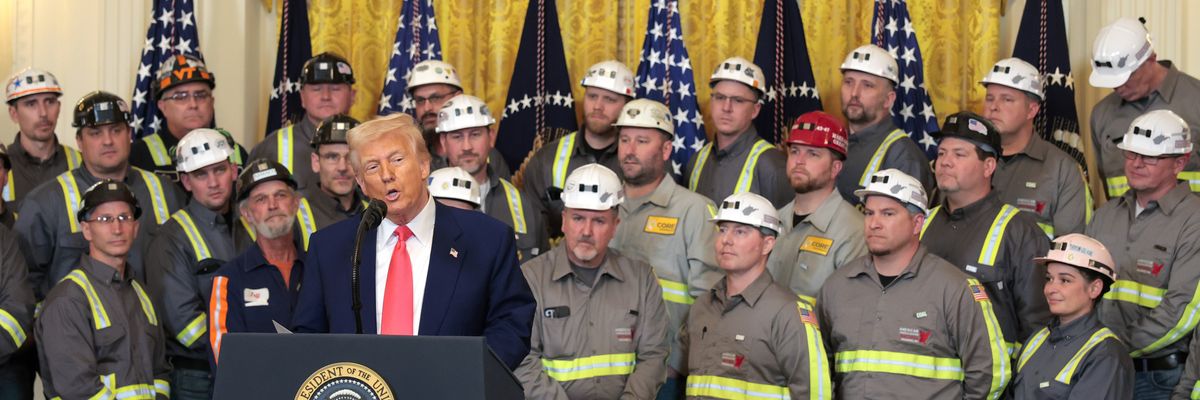
U.S. President Donald Trump speaks alongside coal and energy workers during an executive order signing ceremony in the East Room of the White House on April 8, 2025 in Washington, D.C. (Photo: Anna Moneymaker/Getty Images)
“Coal is a disaster for our health, our wallets, and the planet,” said one environmental lawyer.
U.S. President Donald Trump on Tuesday signed multiple executive orders that aim to boost the coal industry, a move that critics denounced as “reckless” and “breathlessly stupid” even before the orders were officially unveiled.
Among the orders signed Tuesday, Trump directed U.S. Secretary of the Interior Doug Burgum to acknowledge the end of a moratorium that had halted new coal leasing on public lands and to prioritize coal leasing and related activities, and also directed U.S. Secretary of Energy Chris Wright to determine whether coal used in steel production can be considered a “critical material.” According to Reuters, permitting this classification would pave the way for the administration to use emergency powers to boost production.
Trump also paused environmental regulation imposed under former President Joe Biden that applied to certain coal-burning power plants thereby purportedly “safeguarding the nation’s energy grid and security, and saving coal plants from closure.”
Additionally, one order directed the “Energy Department to develop a process for using emergency powers to prevent unprofitable coal plants from shutting down in order to avert power outages,” according to The New York Times, a move that may face court challenges.
Jill Tauber, vice president of litigation for climate and energy at the green group Earthjustice, said Tuesday: “Coal is a disaster for our health, our wallets, and the planet. President Trump’s efforts to rescue failing coal plants and open our lands to destructive mining is another in a series of actions that sacrifices American lives for fossil fuel industry profit. Instead of investing in pollution, we should be leading the way on clean energy.”
“The only way to prop up coal is to deny reality, and the reality is that people no longer rely on coal because it’s expensive, unreliable, and devastating to public health,” said Julie McNamara, an associate policy director with the Union of Concerned Scientists, in a statement on Tuesday.
“Instead of supporting the economy-boosting clean energy transition that maintains widespread public support across the country, President Trump is relentlessly attempting to tear it down.”
Trump has vowed to support what he calls “beautiful, clean coal,” though the industry has been in decline for years. Coal-fired electricity generation has dropped from 38.5% of the country’s generation mix in 2014 to 14.7% in 2024, according to a 2025 factbook from BloombergNEF and the Business Council for Sustainable Energy. Coal is also the dirtiest fossil fuel.
The executive order builds on previous moves by the Trump administration. Last month, Environmental Protection Agency Administrator Lee Zeldin announced an effort to rollback a host of EPA regulations, including some that will impact coal producers.
On the first day of his second term, Trump declared a “national energy emergency” intended to help deliver on his campaign pledge to “drill, baby, drill.” That emergency defined energy to include oil, natural gas, uranium, coal, biofuels, geothermal, flowing water, and critical minerals—but it omitted solar and wind.
Reporting earlier Tuesday indicated that Trump would sign an order invoking presidential emergency authority to force coal-fired power plants to stay open.
In a statement released in response to that reporting, Tyson Slocum, energy program director at the watchdog Public Citizen, said: “Reviving or extending coal to power data centers would force working families to subsidize polluting coal on behalf of Big Tech billionaires and despoil our nation’s public lands.”
“Coal kills. In the last two decades, nearly half a million Americans have died from exposure to coal pollution,” said Ben Jealous, executive director of the environmental organization the Sierra Club in a statement on earlier on Tuesday, also in response to reports that executive orders were forthcoming.
In another move that generated swift criticism, Trump signed an executive order on Tuesday directing U.S. Attorney General Pam Bondi to investigate state policies that are aimed at confronting the climate crisis and to take action to stop enforcement of those laws.
According to The Washington Post, it is unclear what authority would the agency would rely on. The order specifically calls out state climate superfund laws in New York and Vermont.
“President Trump’s executive order weaponizes the Justice Department against states that dare to make polluters pay for climate damage,” said Cassidy DiPaola, communications director of Make Polluters Pay—a campaign to build public support for climate litigation—in a statement on Wednesday.
“This is the fossil fuel industry’s desperation on full display—they’re so afraid of facing evidence of their deception in court that they’ve convinced the president to launch a federal assault on state sovereignty. We are watching corporate capture of government unfold in real time,” DiPaola added.
Power-mad orange gasbag Donald Trump says Burn, Baby, Burn.Elon Musk urges you to be a Fascist like him, says that you can ignore facts and reality then.Orcas discuss how Trump was re-elected and him being an insane, xenophobic Fascist.