Lynn Perry, Chief Executive of the children’s charity Barnardo’s, says: ‘The Spring Statement today offered little hope to the 4.3m children and their families who are living in poverty. In fact, the welfare changes announced today will make things even worse, putting an extra 50,000 children into relative poverty. These children face devastating impacts on their health, well-being and life opportunities long into adulthood.
‘While we welcome the investment to recruit 400 new foster carers, much more action is urgently needed to achieve the government’s ambition to create the healthiest generation of children. Planned freezes to universal credit will add to the worry facing families already struggling to make ends meet. Looking ahead to the Spending Review, we urge the government to prioritise investment in lifting children out of poverty – an investment in children is an investment in the country’s future.’
…
Dr Sarah Hughes, CEO of mental health charity Mind, adds: ‘The extra cuts to benefits announced today are devastating and will push more people into a mental health crisis.
‘It’s a political choice to try fixing the public finances by cutting the incomes of disabled people, including people with mental health problems. Benefits are a lifeline for so many people. Cuts will push people into poverty. This is policy making by numbers with little recognition of the impact on real people’s lives.
THE number of children living in poverty in Britain has reached a record high of almost 4.5 million, official figures revealed today.
Data from the Department for Work and Pensions (DWP) showed 4.45 million children in households with relative low income after housing costs in the year to March 2024, up from 4.33m the previous year — the highest since records began in 2002-03.
A household is considered in relative poverty if its income falls below 60 per cent of the median after housing costs.
The official figure comes a day after government estimates showed that its welfare cuts will push 50,000 more children below the poverty line by 2030.
And a Resolution Foundation analysis said a weak economic outlook and benefit cuts will disproportionately impact lower-income families, reducing the average income for the poorest half by £500 on average over the next five years.
The think tank also said that Chancellor Rachel Reeves’s welfare cuts amount to £8.1 billion — far exceeding the £4.8bn stated by the government.
Keir Starmer says that his Labour Party is intensely relaxed about assaulting the very poorest and most vulnerable.Keir Starmer explains that he feels no shame or guilt benefitting personally from gifts from the rich and powerful while insisting on policies of severe austerity causing suffering and death.
The Labour government has been making it increasingly difficult to organise the National Palestine marches, now they are using the draconian Public Order Act in an attempt to intimidate us.
It’s a truism to say governments don’t like protest, and after 18 months of Palestine demonstrations ours is making its distaste for mass mobilisation abundantly clear. It’s using the Met police as its enforcer and the BBC as its propaganda tool.
Smearing protesters as anti-semitic hate marchers failed to have any impact on the size or frequency of the demonstrations, so the government has resorted to the using the Public Order Act against the march organisers and is placing ever more restrictive exclusion orders on the protests.
Negotiations between organisers and the police have become increasingly arduous as time after time conditions are changed at late notice, restrictions are imposed for no justifiable reason other than to deter and confuse protesters and make organising more difficult. And now the police have charged and questioned under caution various members of the movement’s leadership, alongside some of its high profile supporters.
In this Orwellian world, 87 year-old Jewish Holocaust survivor, Stephen Kapos, was called in for questioning by the Met. Refusing to be cowed Kapos made clear that it is vital for us all to continue to protest for Palestine and speak out against our own government’s complicity in Israel’s genocide.
Khalid Abdalla, actor and activist, was also called in by the Met for questioning. In a statement made as he approached Charring Cross police station in central London he said he was both ‘incredibly sad’ but also ‘proud’ to attend his police interview. Sad because of what it says about the British state’s intension to subjugate the movement, proud to be on the right side of history.
Alex Kenny, Chair of StW, Lindsey German, StW Convenor, Andrew Murray, StW Deputy President and Sophie Bolt, General Secretary of CND, were all interviewed under caution this week.
Chris Nineham (StW) and Ben Jamal, Director of PSC have been charged under the Public Order Act and are awaiting trial.
The police hope that through a duel process of intimidating the movement’s leaders and imposing large restriction zones London marches will become confined to ever smaller areas and routes, especially on Saturdays, when it is becoming almost impossible to march through the centre of the city.
Heavily lobbied by Israeli zionists, including the Chief Rabbi, organisers have been told that protesters cannot march in the vicinity of a synagogue on Saturdays, regardless than there has been no reported incidents of intimidation at synagogues or indeed of Jewish people on the marches, and regardless that thousands of marchers themselves are Jewish. When the march organisers requested to also meet with Mark Rowley, the head of the Met Police, they were met with silence.
The police have even suggested we stop marching altogether, saying the marches have been going on too long. No acknowledgement that it’s the war on Gaza that has been going on for too long, or that it’s time for the genocide to stop.
Democratic governments are expected to facilitate demonstrations, whether they like it or not. Demonstrating is how our rights are won, and in this country we have a long and proud history of demonstrations. The right to protest is a fundamental part of living in a democracy. When opposition to government policy is significant, protest poses a challenge to the ruling elite, and the bigger the protest the bigger that challenge.
Genocide denier and Current UK Prime Minister Keir Starmer is quoted that he supports Zionism without qualification. He also confirms that UK air force support has been essential in Israel’s mass-murdering genocide. Includes URLs https://www.declassifieduk.org/keir-starmers-100-spy-flights-over-gaza-in-support-of-israel/ and https://youtu.be/O74hZCKKdpAUK Foreign Minister David Lammy confirms that UK government and military are active participants in Israel’s genocides and that the F-35 parts that they suspended from supplying to Israel are instead simply diverted via the United States. He says see https://youtu.be/QILgUHrdWRE
Since the UK Labour government took office in summer 2024, calls have intensified to scrap both the “two-child limit” – which restricts support for children through universal credit to two children – and the overall benefit cap. With Chancellor Rachel Reeves resisting this pressure as she tries to manage deteriorating public finances, ways of tweaking the two-child limit policy have been proposed.
But as researchers of child poverty, we have no doubt that the best place to start reducing the high and rising numbers of children growing up in poverty in Britain today is by fully abolishing the two-child limit and the benefit cap.
We argue that both policies are astoundingly unfair. As our four-year research programme has documented, both are causing wide-ranging harm to children. They restrict children’s everyday experiences and damage their ability to thrive – which in the long run affects everyone in the UK.
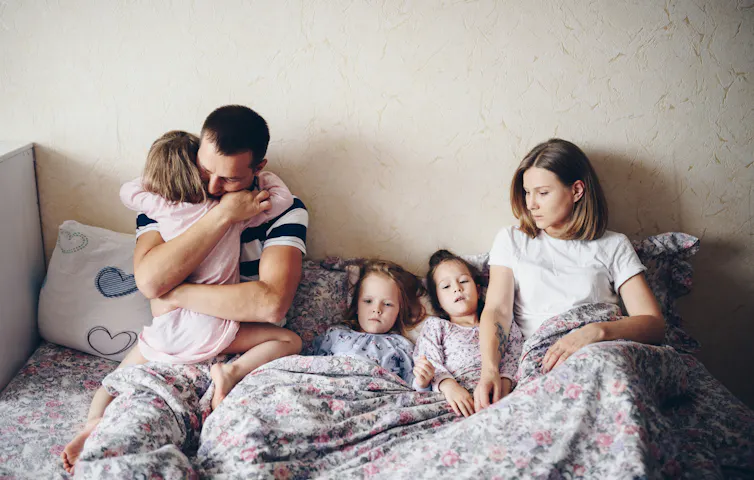
Children live in poverty because their families don’t have an adequate income. This is partly a simple question of maths: wages don’t adjust when there are more mouths to feed. It’s also partly because things happen unexpectedly for some families – job loss, disability, relationship breakdown – leaving them needing extra support for a period of time.
Countries across Europe respond to these dual challenges by providing financial support that adjusts to family needs. Until recently, the UK did too. Indeed, the UK welfare state was one of the pioneers of “family allowances” in the post-war period.
But since 2017, the UK has reformed the system so that in families with three or more children, the support on offer when things go wrong deliberately and explicitly falls far short of what is needed. The UK’s two-child limit, an approach that differs to other countries in Europe, restricts means-tested support to two children in a family only. It bakes child poverty into the fibre of the UK.
Its sister policy, the benefit cap, limits the maximum benefit amount available to households without adults in work. This removes further help from some of the most vulnerable.
Want more politics coverage from academic experts? Every week, we bring you informed analysis of developments in government and fact check the claims being made.
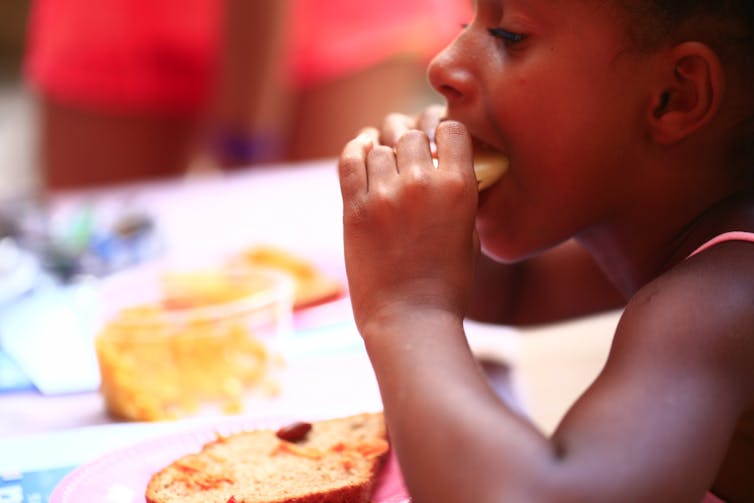
The parents we spoke to frequently talked of difficulties in affording basic necessities for their children, including clothes and food. Many parents had resorted to using foodbanks or cut back on food spending.
The material impacts also affected children’s education and their social and emotional wellbeing. Jessica is a single mum of four. Her business went under during the pandemic and her partner left the household, leaving her affected by both the two-child limit and the benefit cap.
When a hole appeared in Jessica’s daughter’s school shoes, there was no money to replace them straight away. Her daughter went to school wearing trainers and was put in isolation for not adhering to the dress code. Jessica explained:
I got the phone call to say she had to go into isolation and, and things and I just said, “I’m not the type of person that just has £20 sat in the bank” … it was kind of a bit public shaming her really, taking her away and putting her in isolation.
Our interviews also showed that, despite parents’ best efforts to shield them, children are often aware of household financial hardship and in turn try to protect their parents. Christina, a mum of three affected by the two-child limit, said of her middle child:
He won’t say he needs new clothes and he won’t say his shoes don’t fit anymore … I think he’s got it into his head now that we can’t go out and spend or he can’t ask, and I feel so bad for that.
Our research also documents the importance of abolishing the benefit cap alongside the two-child limit. Otherwise, some families affected by the two-child limit won’t see much financial gain, while others will be newly pushed into the benefit cap.
Complete removal
Suggested alternatives to the full abolition of the two child limit include a “three-child limit”, or an exemption for children under five. These options would undoubtedly help some families, but would leave many of those in the greatest need still struggling.
Pound for pound, a three-child limit is less effective at reducing poverty than simple abolition, precisely because it is less well targeted on those in deepest poverty. An exemption for under fives would create a new cliff edge, removing significant support on a child’s fifth birthday, even though we know that the costs of children rise as children get older.
Further, these approaches continue to enforce a separation between what a family needs and its entitlement to support, and therefore will continue to embed child poverty as an institutional feature of our social security system. Children’s life chances will continue to be circumscribed by the number of siblings they have. Given what we know about the long-term costs of child poverty for society, these are short-sighted ways to save money today.
It is very encouraging that the government has committed to a child poverty strategy, and that the prime minister has said he will be “laser focused” on tackling child poverty.
But, as we wait for the strategy to be published, the number of children harmed by the two-child limit rises daily. Nearly two-in-five larger families are now affected and this is predicted to rise to 61% of larger families by the time the two-child limit has full coverage.
If the child poverty strategy is to have real impact, its starting point is straightforward: both the two-child limit and the benefit cap need to go, and urgently, before more damage is done to children’s lives.
Keir Starmer says that his Labour Party is intensely relaxed about assaulting the very poorest and most vulnerable.Keir Starmer, Angela Rayner and Rachel Reeves wear the uniform of the rich and powerful. They have all had clothes bought for them by multi-millionaire Labour donor Lord Alli. CORRECTION: It appears that Rachel Reeves clothing was provided by Juliet Rosenfeld.