This work by Middle East Monitor is licensed under a Creative Commons Attribution-NonCommercial-ShareAlike 4.0 International License.
A view of Ofer Prison located between Ramallah and Jerusalem as preparations for the release of Palestinian prisoners continue, on January 30, 2025. [Issam Rimawi – Anadolu Agency]
The Palestinian Prisoner Society (PPS) renewed its demand that international human rights organisations take effective decisions to hold Israeli occupation officials accountable for committing crimes against Palestinian prisoners who are subject to systematic torture in Israeli prisons, the Palestinian Information Centre reported.
The PPS said in a statement today that Israeli practices of repression against prisoners have escalated significantly recently in Ofer Prison, as an extension of the policy of repression and raids, which reached its peak during the genocidal war on Gaza.
The PPS revealed testimonies from prisoners which were obtained by their lawyers, specifically regarding the attack on prisoners on the evening of 16 February when the Israeli Metzada prison forces stormed several sections in Ofer Prison, using police dogs and stun grenades to intimidate detainees. They assaulted the prisoners, injuring dozens of them.
The PPS indicated that the Israeli prison administration uses the cold weather to torture the prisoners, by refusing to allow the entry of adequate clothes and appropriate covers.
prisoner D.P. said: “The repression that is carried out in prisoners’ rooms has lately escalated. The last attack took place last Saturday, when jailers assaulted prisoners, beating them and wreaking havoc on the contents of their rooms.” He added that such attacks happen every two to three days.
In another testimony, prisoner G.M., who suffers from an injury, said the Metzada unit assaulted him and broke his walker, which he uses to get to the medical clinic.
A number of injured detainees told their lawyers that they were suffering from constant pain due to the lack of treatment, in light of the policy of medical neglect and the severe cold.
This work by Middle East Monitor is licensed under a Creative Commons Attribution-NonCommercial-ShareAlike 4.0 International License.
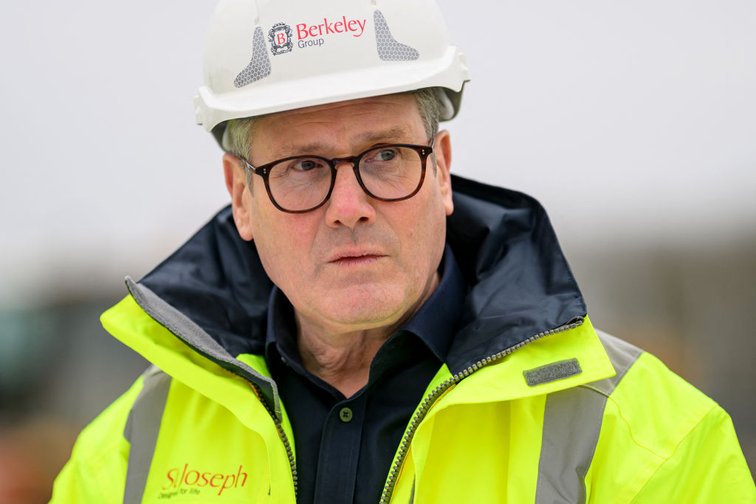
Genocide denier and Current UK Prime Minister Keir Starmer is quoted that he supports Zionism without qualification. He also confirms that UK air force support has been essential in Israel’s mass-murdering genocide. Includes URLs https://www.declassifieduk.org/keir-starmers-100-spy-flights-over-gaza-in-support-of-israel/ and https://youtu.be/O74hZCKKdpAUK Foreign Minister David Lammy confirms that UK government and military are active participants in Israel’s genocides and that the F-35 parts that they suspended from supplying to Israel are instead simply diverted via the United States. He says see https://youtu.be/QILgUHrdWRE
Inheriting the worst set of public finances for decades, Labour was always going to face an uphill struggle trying to fund improvements to the UK’s public services.
Inflated debt and recent hikes in the cost of borrowing mean the government is faced with stark choices. For it will be difficult to meet the chancellor’s own tight fiscal rules without further tax rises or cuts in public spending.
But as the former chief economist at the Bank of England, Andy Haldane, has warned, further spending cuts would be “deeply counterproductive”.
One solution for avoiding ongoing austerity lies in raising a higher proportion of taxes from assets. For despite the UK enjoying a long personal wealth boom, little of this boom is the result of new wealth creation or higher productivity.
Much of it is unearned. Some is the product of corporate wealth extraction, where dividend payments and personal fortunes have have been prioritised over the long-term health of a company. Some privatised water firms, for example, have been turned into cash cows for their owners.
Another large part of British unearned wealth is the product of state-induced asset inflation. Since 1999, house prices in England have risen almost three times faster than incomes.
This kind of asset inflation is a classic example of “passive accumulation”. Or, as the 19th-century philosopher John Stuart Mill described it, getting rich in your sleep.
As a result, household wealth currently stands at over six times the UK’s GDP. It was three times in the 1970s.
Yet while Britain is asset rich, its tax system is heavily based on earnings from work. Taxes on income from dividends, capital gains and inheritance make a tiny contribution to the public purse.
This is a fundamental flaw of the tax system which does little to dent the growing concentration of wealth owned by the few. Through political inertia, the tax system has failed to catch up with the growing importance of wealth over income.
Inherit the earth?
The fallout from the low taxation on wealth is well illustrated by the role of inheritance.
Levels of wealth passed on after death in the UK have been rising sharply. Over the next three decades, some millennials are expected to inherit a staggering £5.5 trillion, dwarfing all previous transfers of wealth between generations.
The lion’s share of this transfer will go to the most affluent. The lifetime wealth of those with parents in the richest fifth will see their wealth grow by 29% – compared with 5% for those born to the poorest fifth.
This will only intensify the reproduction of the wealth divide of the past.
Extending the tax base is not just about fairness or revenue raising. Asset holdings are often little more than unused resources, while big inter-generational wealth transfers can play a counterproductive role in the economy.
Over a third of the UK’s wealth is stored in property (with the rest in pensions, savings and possessions). This is mostly only realised when passed on through inheritance , where its benefits accrue to the already privileged. Little of this process contributes to more productive activity, with one of its most malign effects being to fuel higher house prices, because the money is largely reinvested in property.
The unfairness of inherited wealth has long been recognised. The patron saint of economics, Adam Smith called it “manifestly absurd”.
A modest and phased rise in capital taxation would help to reduce the passive role played by wealth holdings. Even small changes would release funds which could be used to improve social infrastructure from schools to hospitals.
One approach would be to build on the existing tax system through higher rates and fewer reliefs and loopholes. The second would be to introduce new taxes.
In her first budget, Rachel Reeves took steps to raise revenue through the first option, from both inheritance and capital gains tax. But these were too modest to alter the overwhelming dominance of tax on earnings.
A more fundamental shift would be to reform the existing system of council tax with a larger number of tax bands at the top. Still based on 1991 property values, this is perhaps the least defensible tax in Britain. The most effective alternative would be to replace council tax and stamp duty with a single proportionate “property tax”.
Another option would be for a modest annual 1% tax on wealth over £2 million, which has the potential to raise around £16 billion a year, or double that on wealth over £1 million.
Such a measure could be sold politically as a “solidarity tax” to help pay for the things the UK needs. And while governments have been wary of the political reaction to higher taxes on wealth, the tide is turning.
Those supporting higher taxes on wealth include the Conservative-aligned think tank Bright Blue and an influential campaign group called the Patriotic Millionaires. There is also growing public support.
Continued public spending austerity would drive more years of stagnation. It would also be politically suicidal for this government, as it was for Labour in 1931 and in the 1970s. But harnessing a little more of the country’s immense private wealth would make the tax system more equitable and by providing the resources to boost social investment, ease the path to economic recovery.
RACHEL REEVES’S decision to protect fat cat bankers has lost the public £15 billion — money that could have saved freezing pensioners and hundreds of thousands of children from going hungry, a damning new report found today.
Campaigners for a windfall tax on banking profits slammed the Chancellor after it emerged that Britain’s four biggest banks made a record £45.9bn in profits for 2024.
Positive Money found that the policy, called for by unions and left MPs, would have brought in an additional £14.7bn for the Exchequer this year after Lloyds Bank became the last of the so-called Big Four to announce its £6bn pre-tax profits for last year.
The group calculated that increasing the existing surcharge on bank profits from 3 to 35 per cent, in line with the government’s windfall tax on energy companies, could have raised this sum from Lloyds, HSBC, Barclays and NatWest alone.
This would be enough to cover the cost of scrapping the two-child benefit cap — fives times over.
Keir Starmer, Angela Rayner and Rachel Reeves wear the uniform of the rich and powerful. They have all had clothes bought for them by multi-millionaire Labour donor Lord Alli. CORRECTION: It appears that Rachel Reeves clothing was provided by Juliet Rosenfeld.Keir Starmer says pensioners can freeze to death and poor children can starve and be condemned to failure and misery all their lives.
There are plenty of ways we could enter a new global crisis. One might stem from a pandemic, a cyber attack, or any one of the current wars escalating out of control. Already underway, though, is the crisis of accelerating climate change.
That unfolding global catastrophe has long existed but is becoming more urgent week by week, as climate scientists issue increasingly strident warnings over what is happening and we see hard evidence in the form of extreme weather around the world.
The crisis is not remotely being met by the changes required to turn things around, and certainly not by the essential rapid economic decarbonisation.
The one saving grace is that there may still be time to make the changes, which raises the question of whether individual countries can push them forward. In a previous openDemocracy column, I briefly explored this question in relation to the UK, which was thought to be in a strong position to push change last July, when the apparently climate-focussed Labour Party had just won the general election.
Yet within a few months, there was bitter disappointment among climate activists and many others as Labour’s plans were scaled down and replaced by the dominant theme of ‘growth at almost any price’.
But, still, it is worth taking a more thorough look at what could be done by a country such as the UK – which is wealthy and has huge national potential for developing renewable energy resources – if it had a government determined to respond to climate breakdown in time.
We start with the need to implement an immediate and sustained acceleration of wind and solar power at a considerable scale, effectively trebling the rate of development within at most a couple of years. It will be supported by heavy investment in the power grid and by expanding the national skills base.
In parallel to this, the UK should immediately begin national investment in home and workplace insulation, as well as increasing the use of solar panels and solar thermal systems.
The experience of the late Noughties and early 2010s is relevant here, showing how modest fiscal measures can act as effective catalysts for wider progress. Before leaving office in 2010, Labour had set out to encourage home-based solar panels with a generous feed-in tariff system. That scheme survived and indeed thrived during the 2010-15 coalition government, mainly because of the Liberal Democrats’ insistence, but collapsed when the Conservatives came to power in 2015 and cut it back.
The UK could also speed up the transition from petrol and diesel transport to electric power, coupled with much-increased investment in public transport. There are many other steps to take relating to issues such as methane emissions and food production, but these are also areas where investment will pay off handsomely.
Of course, even if we succeed in curbing carbon dioxide emissions, it will take at least another 30 years to reverse the effects they’ve had, so we will need to invest heavily in the many resources needed to minimise the impact of storms, floods and wildfires to come. Coping with these will require increases in emergency services, which can be aided by a substantial change in the role of the military.
One eye should be kept on Donald Trump and the likely damage he and his people will do in the next four years. As well as head-hunting sacked US climate researchers (which will do much to restore optimism across the whole climate science community), the UK and other rich nations can do much to plug the research gaps that will inevitably emerge as the US president uses his wrecking ball.
We should at least treble our funding for key research into the whole global ecosystem, including atmospheric, oceanographic and polar studies and those in relatively under-researched regions of the world. Funding for carbon capture and storage, meanwhile, should be scaled back, as this will take far too long to have an impact.
A further task will be to boost the transition to renewables across the more marginalised parts of the Global South, especially if that enables states to make the transition to low-carbon economies by leap-frogging their current mix of energy uses.
All of this will be hugely beneficial in straight political terms, with the impact increasingly obvious within two or three years. Energy prices will fall, fuel poverty will ease, and effective political leadership will act as an effective catalyst. The UK would get a reputation for a truly relevant response to a manifest global security challenge.
The costs will not be exorbitant, either. Money could be redirected from the military, which is expected to cost UK taxpayers £59.8bn over the next financial year, up from £56.9, despite climate breakdown exceeding just about every other security challenge facing us.
There are plenty of other sources of funding, too. One symbolic if small option would be to remove all subsidies for fossil fuel production and transfer them to renewables. A more substantial one would be to increase efforts to prevent tax avoidance, and beyond that will be to greatly increase the control of illegal tax evasion, including the myriad forms of tax havens in which the UK is a world leader.
Beyond that there is plenty of scope to increase tax on those best able to bear it, undoing the cuts made under Thatcher in the 1980s, when the top rate of tax was slashed from 83% to 40% and even now is only 45%. Given the obscene levels of wealth that we have in 21st century Britain, largely down to the changes of those Thatcher years, just a thousand people now possess close to a trillion pounds of wealth. That surely calls for the introduction of substantial wealth taxes.
Devil’s advocates might say that the changes required are too big and too expensive, but that misses one key point. A decade or two ago, one might have reasonably argued that we needed proof that something was going wrong before we took such ‘extreme’ action. But we can now see with our own eyes that climate breakdown is happening.
This point will only be reinforced every time a catastrophic weather event hits any part of the world. The UK could be at the forefront of the necessary transformation that has to come globally. It could finally have found a worthwhile post-imperial role.
An F-35 arriving back at RAF Akrotiri in Cyprus, June 24, 2019
…
Al-Haq general director Shawan Jabarin said: “F-35 partner nations, including the Netherlands and the United Kingdom, have assessed Israel’s use of these jets and concluded that the risk of violations of international humanitarian law is significant enough to halt direct sales of key components.
“However, components continue to reach Israel indirectly, highlighting the urgent need for the entire F-35 programme to be brought into compliance with international law.”
Human Rights Watch UK director Yasmine Ahmed said: “The government must close the loopholes and end its legal gymnastics — failure to do so displays either a misunderstanding of the government’s legal obligations or a wilful disregard for them.”
Marte Hansen Haugan, president of Norwegian campaign group Changemaker, said: “The unwillingness to halt or pause the production of F-35 components reflects an interpretation of national and international law that excludes Palestinian lives.”
Henry Off, of Canadian Lawyers for International Human Rights said: “In clear violation of its legal obligations, Canada continues to maintain its regulatory loopholes that allow components and parts to reach Israel’s F-35s indirectly through the United States.”
UK Foreign Minister David Lammy confirms that UK government and military are active participants in Israel’s genocides and that the F-35 parts that they suspended from supplying to Israel are instead simply diverted via the United States. He says see https://youtu.be/QILgUHrdWREGenocide denier and Current UK Prime Minister Keir Starmer is quoted that he supports Zionism without qualification. He also confirms that UK air force support has been essential in Israel’s mass-murdering genocide. Includes URLs https://www.declassifieduk.org/keir-starmers-100-spy-flights-over-gaza-in-support-of-israel/ and https://youtu.be/O74hZCKKdpA